Somatic exercises are slow, attention-led movements where you focus on how your body feels from the inside, not how it looks, using that awareness to release held tension and move more easily. The word somatic comes from the Greek for body. The practice is about noticing, softening and letting your body relearn a comfortable way to move.
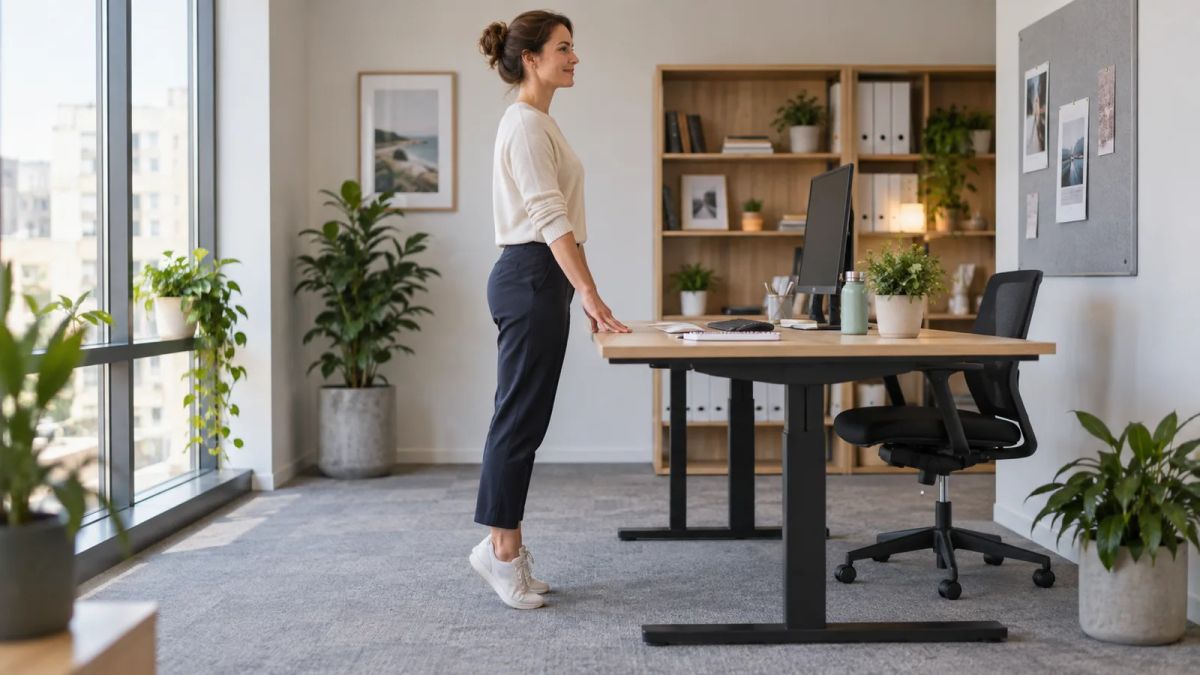
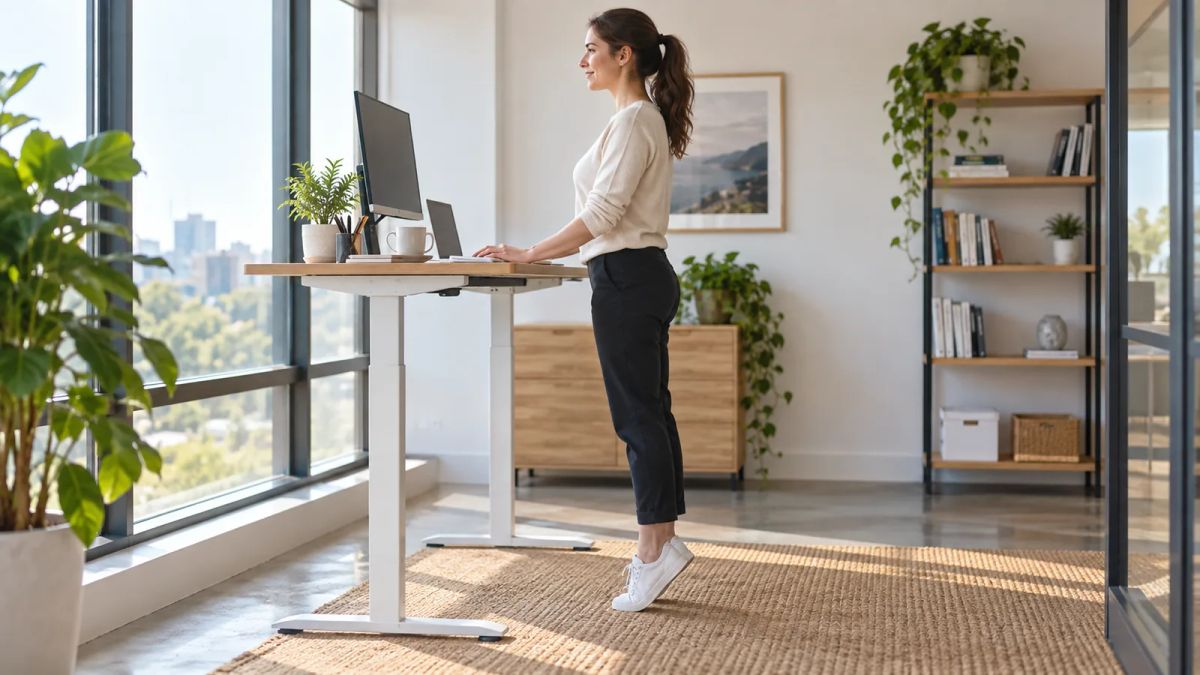
Here is a small version to try now. Sit or stand comfortably, lift both shoulders slowly towards your ears as you breathe in, hold for a beat, then let them drop on a long breath out and notice the difference between the braced version and the released one. That loop, a slow movement paired with close attention to sensation, is the thread running through everything below.
This guide covers what somatic exercises are, how they differ from stretching and breathwork, a beginner routine of six gentle moves, the honest evidence and its limits, safety, and a calm way to build a small practice.
What somatic exercises are
Somatic exercises are gentle movements done with your attention turned inward. You move slowly and track the sensations that come with it, the pull of a muscle, the weight of a limb, the small release when something lets go.
The focus is the point. Cleveland Clinic puts it plainly: a somatic workout "doesn't focus on form, goals or competition. It revolves around how your body feels."
The idea is that many of us move in habitual, guarded ways that are not ideal for us, and that sensing a movement gives the brain a chance to find something easier. Harvard Health describes the shift from effort to attention, where you "do the movement, and sense it," and that retrains the brain to control the movement. Body scanning, breath awareness and tiny, slow micro-movements are the common building blocks.
Almost any movement can become somatic if you bring that inward focus to it. Yoga, tai chi, Pilates and free-form dance all carry somatic elements when you lead with feeling.
How they differ from stretching and breathwork
Stretching leads with range. You reach into a position, feel a pull, and the aim is a longer, looser muscle. Our morning stretch routine works that way, moving through the body to wake it up. Somatic exercises lead with sensing and re-patterning. The goal is to notice how you move and let a guarded pattern soften.
Breathwork leads with the breath. You pick a technique, follow the counts, and the rhythm itself is the target, which our guide to somatic breathwork covers. In somatic movement the breath rides along, but your attention rests on the moving body.
The line between all three is soft. Slow any stretch down, turn your focus to the sensation, and you are already moving somatically.
A beginner routine: six gentle moves
Do these on a mat, a carpet or a bed, somewhere you will not be rushed for about ten minutes. Move slowly, keep everything small and easy, and let it be an exploration, not a workout. Nothing should hurt, so if a movement feels sharp, ease off.
1. Arrive and scan
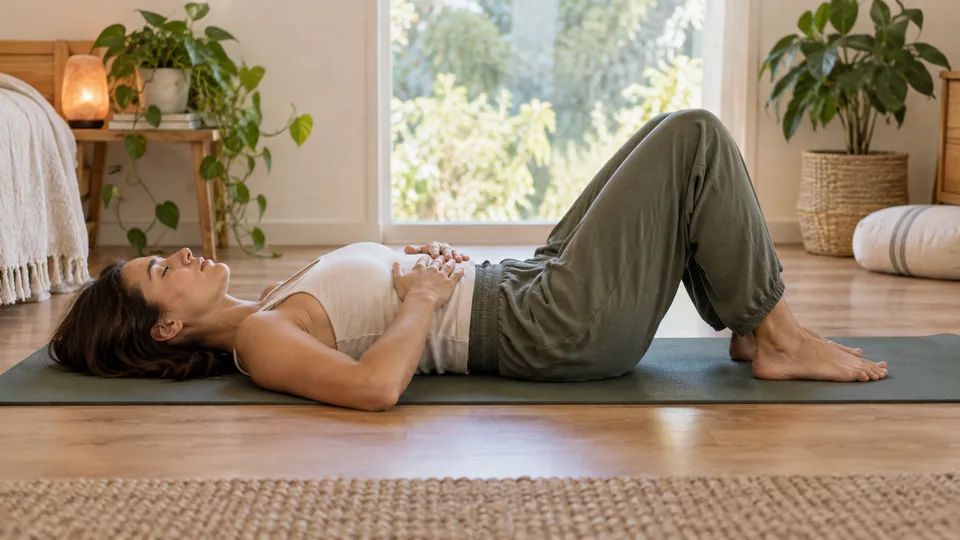
This sets the baseline you will notice changes against.
- Lie on your back with your knees bent and feet flat, or sit if lying down is awkward.
- Let your weight sink and breathe normally.
- Move your attention slowly from your feet up to your head, noticing where you feel heavy, light, tight or at ease, without changing anything.
- Stay for a minute so you have a felt sense to come back to at the end.
2. The pandiculation

This is the slow, whole-body wake-up stretch, the same one a cat or a dog does after a nap, and it gently resets how tight or slack a muscle sits.
- Lying or standing, reach both arms overhead and lengthen through your whole body as if waking from a long sleep.
- Build the stretch gradually to about three-quarters of your full effort, feeling it from fingertips to toes.
- Release very slowly, taking several seconds to let the effort drain away. Don't drop it all at once.
- Pause, notice the settling, and repeat two or three times.
3. Slow pelvic tilts
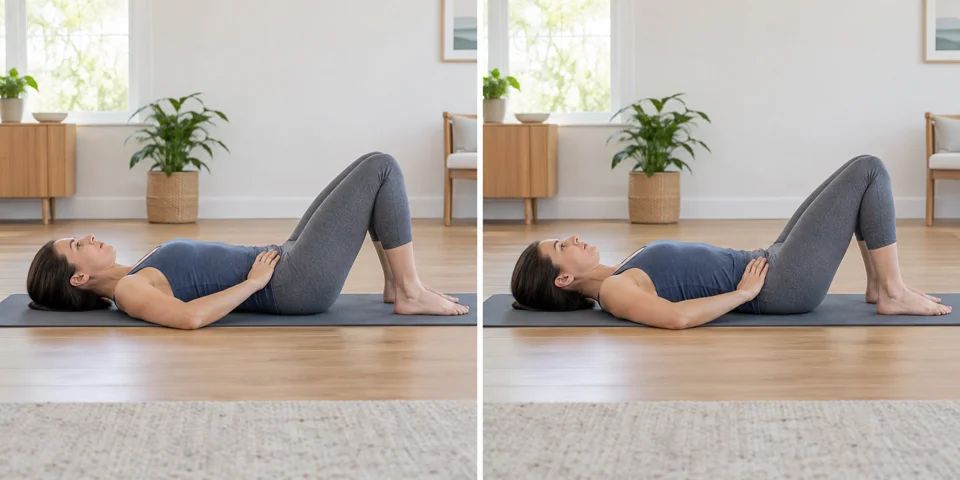
A small movement that brings awareness to the lower back and hips.
- Lie on your back with knees bent, feet flat, and hands resting on your hips or belly.
- Breathe in and tip your pelvis so your lower back arches a little away from the floor.
- Breathe out and tilt the other way so your lower back flattens gently towards the floor.
- Rock slowly between the two for six to eight rounds, keeping it smooth and noticing how the movement travels up your spine.
4. Side-to-side knee sway
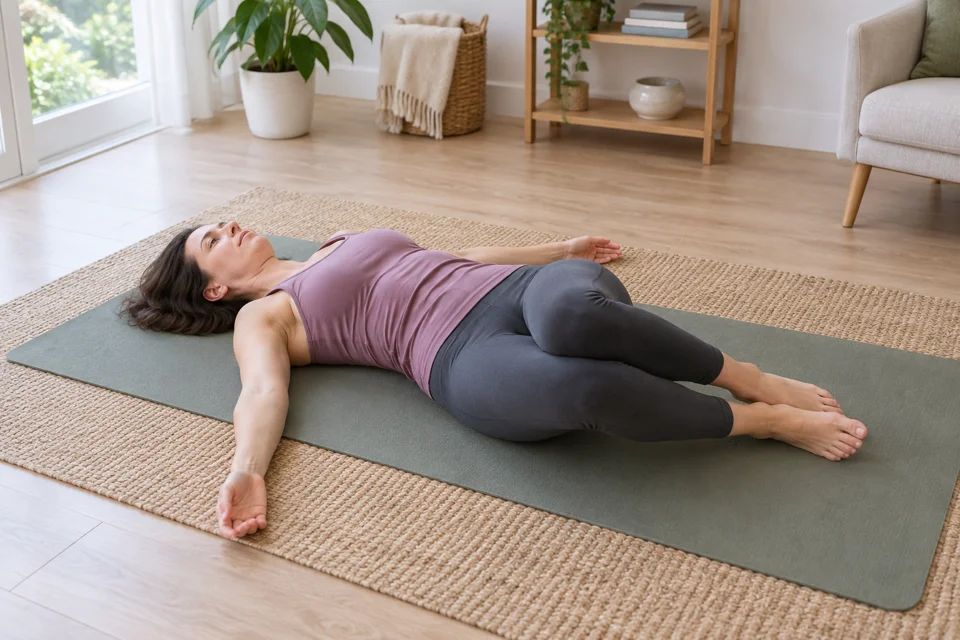
This lets the lower back and hips unwind without any effort from you.
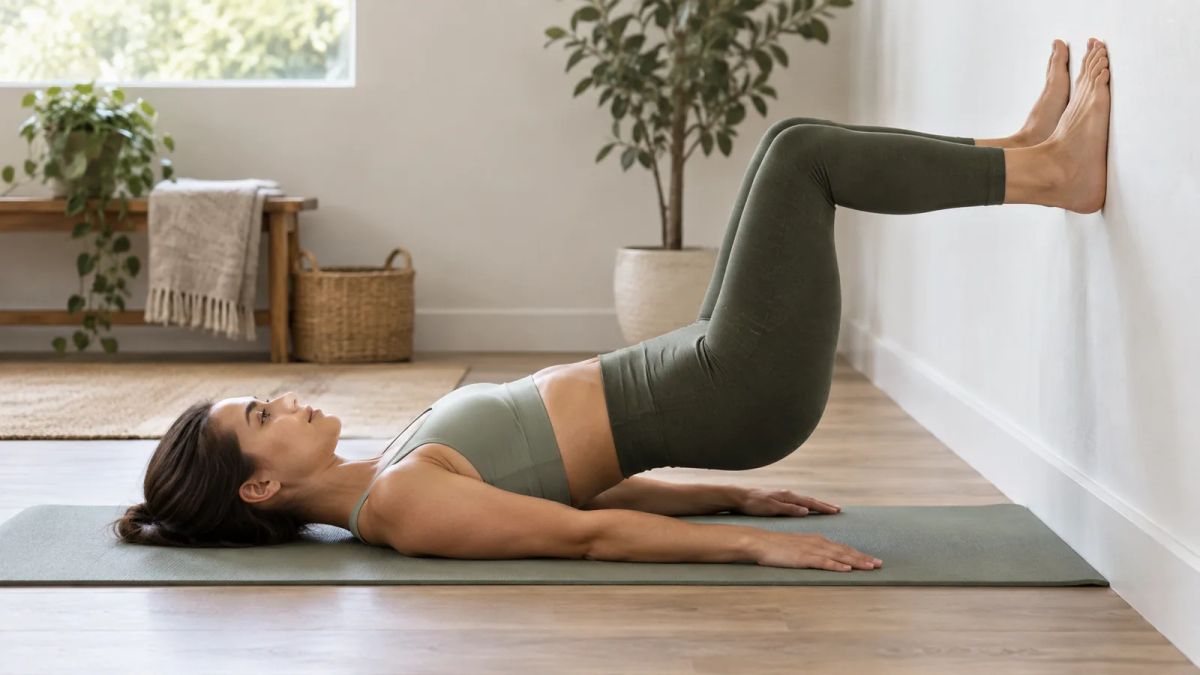
- Stay on your back with knees bent and feet flat, set a little wider than your hips.
- Let both knees drop slowly to one side as far as is comfortable, keeping your shoulders resting on the floor.
- Bring them back through the middle and let them fall to the other side.
- Sway gently from side to side for about a minute, easing a touch further only if it stays comfortable.
5. Shoulder rolls, one side at a time

Working one side then the other is a hallmark of somatic practice, because the comparison sharpens your body awareness.
- Sitting or standing tall, roll one shoulder slowly backwards five or six times, paying attention to the whole circle.
- Let that arm rest, and pause. Notice whether that side feels different from the other, looser, warmer or lower.
- Roll the second shoulder the same way, then pause again.
- Sensing the two sides side by side is part of the exercise, not an extra.
6. Gentle shaking to finish
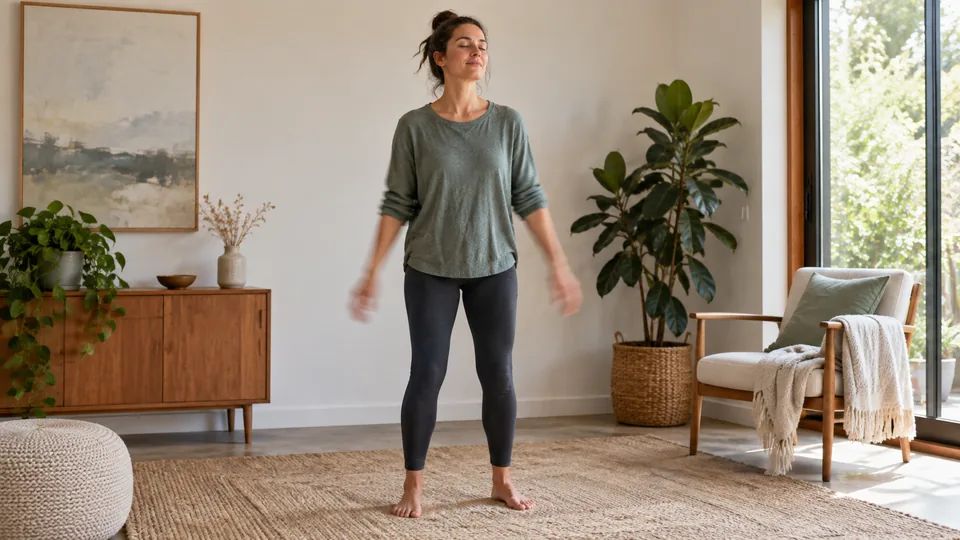
A loose shake helps the body let go of leftover tension.
- Stand with your knees soft and let a light bounce start in your legs.
- Let the shake spread up through your hips, arms and hands, keeping it loose and easy.
- Carry on for twenty to thirty seconds, then slow to a stop.
- Stand still and feel the hum settle before you move on.
Decide your smaller version now, before a stiff or rushed day forces the question. When ten minutes feels beyond you, one slow pandiculation and a minute of knee sways still count, and a short go keeps the thread alive.
What the evidence shows and where it stops
Somatic movement is popular, and the research behind it is young, so it helps to hold both.
Cleveland Clinic is blunt that there is very little research on the health benefits of somatic exercises, and that what does exist tends to look at specific schools, not the broad idea.
The firmer evidence sits with named methods. A systematic review and meta-analysis of the Feldenkrais Method, a somatic approach built on slow, attention-led movement, pooled sixteen randomised controlled trials and found it improved pain, disability and interoceptive awareness in people with chronic low back pain, with results comparable to conventional physiotherapy, and improved mobility in older adults on a timed sit-to-walk test. The same authors are careful about the limits, noting the risk of bias across the trials stays high and that larger, better-quality studies are needed.
Related slow, mindful movement has a longer track record. Reviewing tai chi, a practice of slow gentle movements paired with a meditative state of mind and controlled breathing, NCCIH reports high-certainty evidence that it reduces the number of older people who have a fall by around a fifth, alongside more modest, lower-certainty benefits for pain and quality of life.
Harvard Health points to early signs that somatic movement can lower cortisol, a stress hormone, and notes a 2025 study in which older adults in a twice-weekly somatic programme moved their spines more easily after ten weeks. The fair takeaway is that slow, attentive movement is a helpful everyday way to ease tension and feel more at home in your body, with effects that are associated with the practice rather than guaranteed by it.
Safety and when to take care
For most healthy people, gentle somatic movement is a low-risk thing to try. Tai chi, its close relative, appears to be safe in reviews, with only minor aches reported.
Move within comfort. Every movement above should feel like an easy exploration or a mild pull, never a sharp or pinching pain, and Cleveland Clinic advises stopping or adjusting anything that hurts.
If you have a joint problem, a recent injury, are pregnant, or have not been active for a while, it is worth checking with your GP or a physiotherapist first. The NHS gives the same steer in its activity advice, suggesting you get advice from a GP if you have not exercised for some time or have a health condition.
One limit is worth stating clearly. Somatic exercises are a wellbeing and body-awareness practice, and they are not the same as somatic therapy, which Harvard describes as a form of mental health counselling led by a trained professional. Turning attention inward can sometimes bring feelings to the surface. If a movement leaves you feeling worse, it's fine to stop and come back to the room, and if difficult emotion or the weight of past experience feels like more than you can manage, speaking to your GP or a qualified professional is a sound next step.
Building a small practice
Finding a few moves you like is the easy part. Remembering to do them, on the flat days as well as the tense ones, is where good intentions slip, so give the practice a fixed home.
Attach it to something you already do. The American Heart Association suggests tying a new action to a routine you already have, so it rides along with something automatic instead of asking for a fresh decision each day. "After I get out of bed, I do two minutes of pelvic tilts and knee sways" ties the practice to a cue that happens anyway, and our guide to tiny habits covers why small and attached beats big and vague.
Miss a day and you've undone nothing. The tension eases with the next session, not with guilt about the last one, so pick the next ordinary moment and begin again.
A short checklist keeps the practice light while it settles in.
My gentle somatic check-in
☐ Somewhere I will not be rushed for a few minutes
☐ Arrive and scan, noticing how my body feels
☐ Move slowly, keeping everything small and easy
☐ Sense one side, then the other, and compare
☐ Stop anything that turns sharp
☐ Scan again at the end and notice what changed
A small record helps you see the practice becoming part of your week. Keep one on paper, writing the habit and its cue, then ticking the days you show up.
Habit: Two minutes of somatic moves Cue: after I get out of bed
Mon ☐ Tue ☐ Wed ☐ Thu ☐ Fri ☐ Sat ☐ Sun ☐
A filled week might look like this, gaps and all.
Habit: Two minutes of somatic moves Cue: after I get out of bed
Mon ☑ Tue ☑ Wed ☐ Thu ☑ Fri ☐ Sat ☑ Sun ☑
If you would like more structure than these moves, gentle chair yoga covers similar ground with a clearer shape.
Give the practice a home
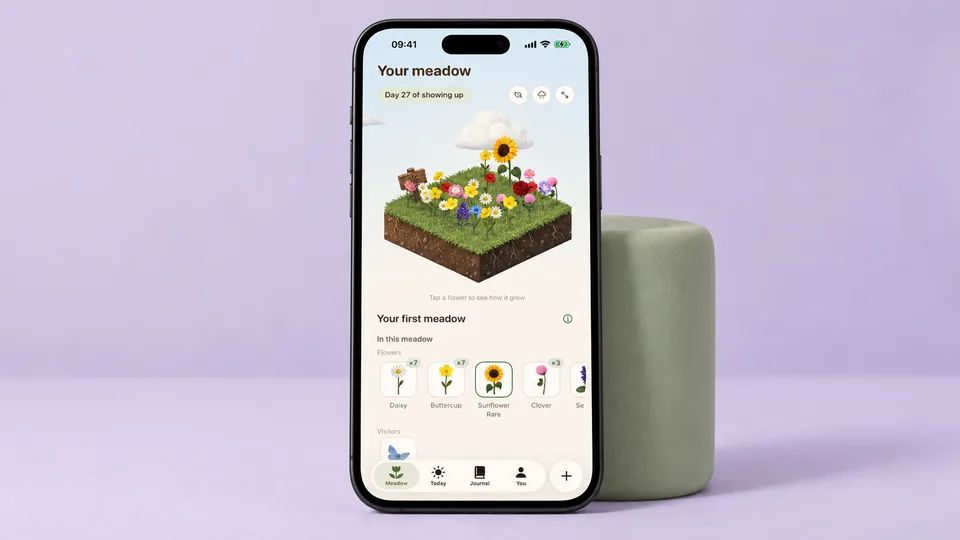
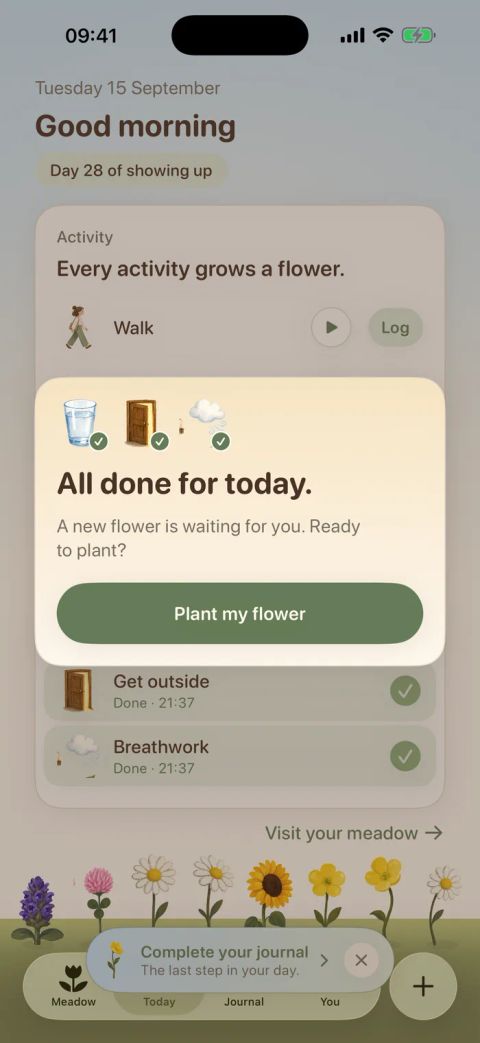
If you want these exercises to settle into a routine, Meadow gives them somewhere to live on your iPhone. Made by Wildcard Wellness, it lets you log the movement you enjoy, a little somatic work, some stretching or a walk, tick off small daily habits, and note your mood and energy. Every day you show up grows a wildflower, and rare flowers and little animal visitors appear as your patch fills in. There are no streaks, so a skipped day resets nothing and your flowers never wilt.
Frequently asked questions
What is the difference between somatic exercises and stretching?
Stretching aims at range, reaching into a position to lengthen a muscle. Somatic exercises use slow movement and close attention to how you move, so the goal is releasing a tense, guarded pattern and improving body awareness, not reaching further.
Do somatic exercises work?
The broad idea has little direct research so far. Named methods like the Feldenkrais approach have improved pain and body awareness in trials, and related slow movement like tai chi has firmer evidence for balance in older adults, though the studies are often small. Many people find the moves ease tension and leave them calmer, which is a fair reason to try them.
Are somatic exercises a treatment for trauma?
No. They are a wellbeing and body-awareness practice. Somatic therapy for trauma is a separate thing, led by a trained professional, and if past experience feels overwhelming it is best to speak to your GP or a qualified therapist.
How often should I do them?
A few minutes most days does more than a long session now and then. Something short and regular, even two or three moves after you get up, works well, and showing up is what counts.
The one thing to do today is small. Lie down for two minutes, arch and flatten your lower back a few slow times, and notice what changes. Then choose the everyday moment tomorrow it will follow.
AUTHOR
Co-founder of Meadow.
Ash is co-founder of Meadow, a habit and movement tracking app that turns small acts of self-care into a growing wildflower meadow.
Every little bit counts
Five minutes counts. So does a dance in the kitchen.
Log the movement you enjoy and the small habits that help you feel good, and watch them bloom into something you can see.
Download Meadow