Somatic breathwork is body-based breathing, where you slow the breath while paying close attention to what you feel inside your body, using that felt sense to release held tension and settle your nervous system. The word somatic comes from the Greek for body. The practice is about noticing, softening and letting go, and the count stays loose.
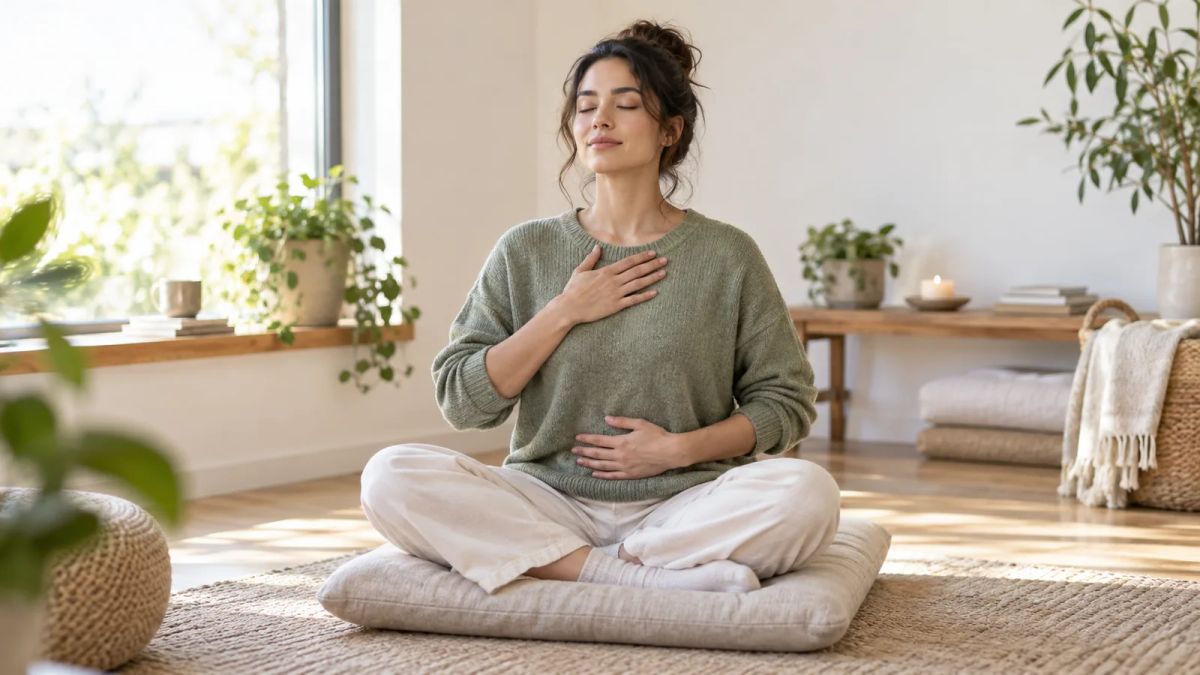
Here is a small version to try now. Rest one hand on your belly, breathe in slowly through your nose so the hand rises, then let the out-breath run longer than the in-breath, and as you exhale notice where your shoulders, jaw or belly grip, and let them ease. That loop, a slow breath paired with attention to sensation, is the heart of everything below.
This guide covers what somatic breathwork is, how it differs from ordinary breathwork, a handful of techniques with cues, the honest evidence, who should take care, and a gentle way to start.
What somatic breathwork is
Somatic breathwork is intentional breathing joined to body awareness. You breathe in a slower, fuller way, and at the same time you track the physical sensations that come with it, the rise and fall of the belly, a loosening in the chest, a tightness behind the eyes.
The idea is that tension and stress live in the body as much as in the head, and that meeting them through sensation can help them move. You feel your way to calm.
Most of the gentle practices here draw on diaphragmatic, or belly, breathing. Cleveland Clinic describes breathwork as breathing techniques that intentionally focus on the breath, and notes that slow, deliberate breathing helps you tap into the parasympathetic nervous system, the rest-and-digest side that calms you after stress.
There is a more intense end of the spectrum too, sometimes run as long, fast, continuous breathing in guided sessions. That version can stir up strong feeling and is a different thing from the calm daily practice here.
How it differs from ordinary breathwork
Ordinary breathwork tends to lead with the pattern. You pick a technique, follow the counts, and the goal is the rhythm itself. Our breathwork guide walks through those counted methods, box breathing, 4-7-8 and the rest.
Somatic breathwork leads with the body instead. The breath is the tool, but your attention rests on what you notice inside, so the same slow breath becomes a way to find and release tension.
That inward attention has a name. Researchers call it interoception, the sense of your body's internal state, and a review of body-based trauma therapy in Frontiers in Psychology describes how directing attention to internal sensations gives a route into the nervous system that thinking alone does not reach.
The line between the two is soft. Take any counted technique, slow it down, turn your attention to how your body feels, and you are already breathing somatically.
How it settles the body
Under stress your breathing changes. It speeds up and climbs into the upper chest, small and shallow, part of the body readying for action.
Slow belly breathing does the reverse. Drawing the breath low and letting it out gently nudges you toward the calming branch of the nervous system. The exhale does most of that work. The American Lung Association suggests extending the exhale, breathing in normally and then letting the out-breath run longer than the in-breath, to bring the body back toward baseline.
The felt sense adds a second layer. When you notice your shoulders drop or your belly soften on an out-breath, you get direct feedback that something is shifting, and that noticing tends to deepen the release. You don't need to follow the biology to feel it, as a slower breath and a curious attention are enough to start.
A few techniques to try
Learn one and get comfortable before adding another. Keep the breath easy throughout, and if any of them make you feel worse, stop and breathe normally.
Belly breathing with a body scan
This is the foundation, pairing the slow, low breath with the body awareness that makes the practice somatic.
- Sit or lie somewhere comfortable and rest one hand on your belly, one on your chest.
- Breathe in slowly through your nose so the lower hand rises and the upper hand stays fairly still.
- Let the breath out gently through your mouth, longer than the in-breath.
- As you breathe, move your attention slowly from your face to your shoulders, chest, belly and hands, pausing wherever you feel gripping.
- On each out-breath, invite that spot to soften, and carry on for a few minutes.
Cleveland Clinic suggests practising diaphragmatic breathing a few minutes at a time and building up gradually, so keep early goes short and unhurried.
The long, slow exhale
When you want a quick settle without much thinking, lean on the out-breath.
- Breathe in gently through your nose for a count of about four.
- Let the air out slowly through your mouth for a count of about six.
- Notice the small drop of tension that comes at the end of each exhale.
- Keep it smooth and continue for a minute or two.
Lengthen the exhale only as far as stays comfortable. There's no prize for straining.
The physiological sigh
For a sharp spike of stress, this is the fastest tool here, and you can do it standing, eyes open.
- Breathe in through your nose.
- Without breathing out, take a second, smaller sip of air on top to fill your lungs.
- Let it all go slowly through your mouth in one long exhale.
- Feel your shoulders and chest release as the air leaves.
One or two rounds can take the edge off, or repeat for a few minutes. The American Lung Association lists this double inhale and long exhale among its techniques for stress.
Humming breath
A soft sound gives your attention something to rest on and sends a gentle vibration through the chest and throat, which some people find grounding.
- Breathe in slowly through your nose.
- Close your lips and hum quietly all the way through the out-breath.
- Notice the buzz in your chest, throat and face.
- Repeat for several breaths, keeping the hum soft.
The trauma-therapy review notes that vocal sounds like a low voo or a hum can help shift the nervous system toward a calmer, more parasympathetic pattern.
What the evidence shows and where it stops
Breathwork has real support, and it is also oversold in places, so it helps to hold both.
A 2023 meta-analysis in Scientific Reports pooled twelve randomised controlled trials with 785 adults and found breathwork was associated with lower stress than control conditions, a small-to-medium effect, with similar effects for anxiety and depression. The same authors are careful about the limits, noting most trials were at moderate risk of bias and urging caution. The findings are not settled.
Reviewing relaxation techniques including breathing, the US National Center for Complementary and Integrative Health reports modest benefits across conditions such as anxiety and blood pressure, while flagging that much of the research is small and of low quality.
Evidence for somatic breathwork specifically, as its own named method, is thinner still. The reasonable takeaway is that slow, attentive breathing is a helpful everyday way to take the edge off stress and reconnect with your body, with effects that are associated with the practice rather than guaranteed by it, and that vary from person to person.
Safety and when to take care
For most healthy people, gentle breathing is safe. A few sensible cautions apply.
Slow techniques and breath awareness are calming for many, but turning attention inward can occasionally bring the opposite. The trauma-therapy review notes that deep relaxation can trigger a sudden upwelling of difficult material, which is one reason skilled practitioners approach trauma slowly and in small doses.
NCCIH echoes this from the safety side, noting that a small number of people report increased anxiety, intrusive thoughts or a fear of losing control with relaxation practices, and that there are rare concerns for people with epilepsy or certain psychiatric conditions, or a history of trauma. If a practice leaves you feeling worse, it's fine to stop, open your eyes, and come back to the room.
The intense, fast, continuous styles deserve extra care. Cleveland Clinic advises that these are not something to try alone and are best done with a trained professional, especially where trauma is involved.
The gentle techniques above can bring up feeling too, so go slowly, and if strong emotion surfaces, ease off and reach out to someone you trust. Somatic breathwork is a wellbeing practice for ordinary stress and tension, not a treatment for trauma, anxiety or depression. If low mood, worry or the weight of past experience carries on for weeks, gets in the way of daily life, or feels like more than you can manage, the NHS advises speaking to your GP, which is a sound next step.
A gentle way to start
Finding a technique you like is the easy part. Remembering to use it, on the flat days as well as the fraught ones, is where good intentions slip, so give the practice a fixed home.
Attach it to something you already do. "After I sit down in the evening, I take five slow belly breaths" ties the new habit to a cue that happens anyway, so you are not leaning on willpower to remember. Our guide to tiny habits covers why small and attached beats big and vague.
Decide your smaller version now, before a hard day forces the question. When five minutes feels beyond you, three slow breaths with a hand on your belly still count, and a short go keeps the thread alive. Miss a day and you've undone nothing, because your breath is right there next time, so pick the next ordinary moment and begin again.
A short checklist keeps the practice light once you are settled.
My gentle somatic breathing check-in
☐ Sit or lie somewhere I will not be disturbed for a few minutes
☐ One hand on my belly, one on my chest
☐ Slow breath in through the nose, longer breath out
☐ Scan from face to hands, noticing any tight spots
☐ Soften one of those spots on each out-breath
☐ Notice how my body feels before I get up
A small record helps you see the practice becoming part of your week. Keep one on paper, writing the habit and its cue, then ticking the days you show up.
Habit: Five slow belly breaths Cue: after I sit down in the evening
Mon ☐ Tue ☐ Wed ☐ Thu ☐ Fri ☐ Sat ☐ Sun ☐
A filled week might look like this, gaps and all.
Habit: Five slow belly breaths Cue: after I sit down in the evening
Mon ☑ Tue ☑ Wed ☐ Thu ☑ Fri ☐ Sat ☑ Sun ☑
If a paper grid is not your thing, our habit tracker guide covers gentler ways to keep score, and self-care ideas has more small practices to fold in alongside it.
Somewhere to return to your breath
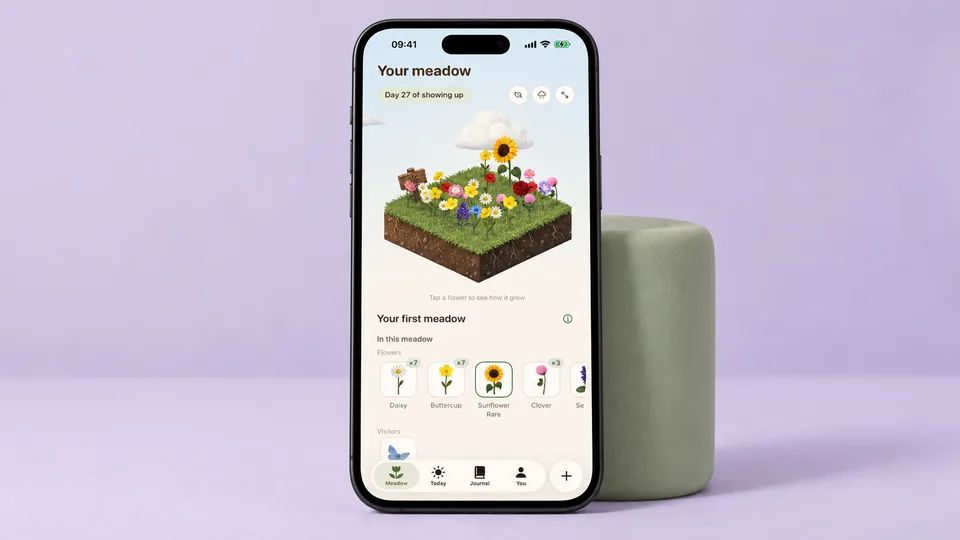
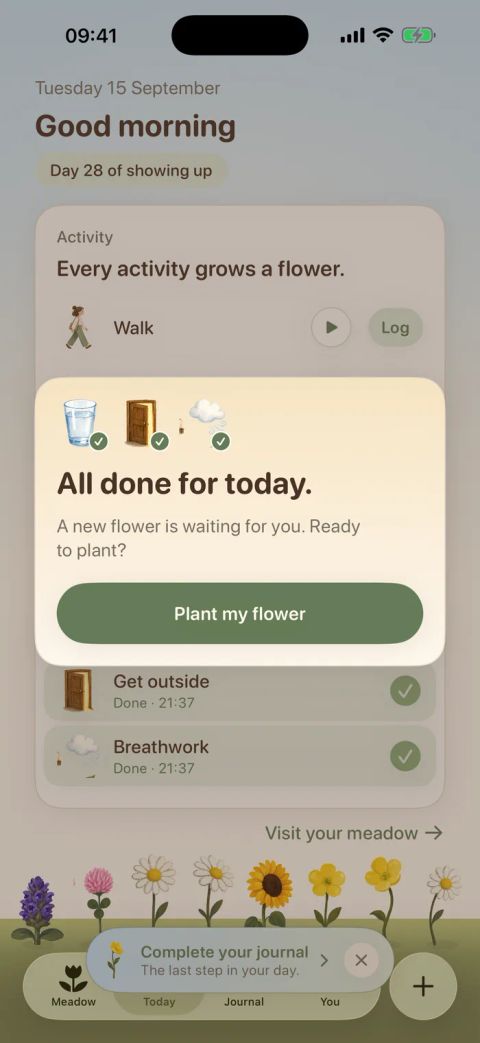
Meadow has a built-in breathwork feature, so you can practise your breathing alongside the wildflower meadow you have grown. It is a gentle iPhone app from Wildcard Wellness, and around the breathing you can tick off small daily habits, log the movement you enjoy, and note your mood and energy. Every day you show up grows a flower, and rare blooms and small animal visitors arrive as your patch fills in. There are no streaks, so a day you forget to slow down resets nothing and your flowers never wilt.
Frequently asked questions
What is the difference between somatic breathwork and breathwork?
Ordinary breathwork leads with the breathing pattern and its counts. Somatic breathwork uses a similar slow breath but keeps your attention on the physical sensations in your body, using that felt sense to notice and release tension.
Can somatic breathwork release emotion?
It can. Turning attention inward while you breathe sometimes brings feelings to the surface, which is part of why gentle, slow practice is sensible and why intense styles are best done with a trained professional.
Is somatic breathwork a treatment for trauma?
No. It is a wellbeing practice for everyday stress and tension. Trauma is best worked through with a qualified professional, and if past experience feels overwhelming, speak to your GP.
How long should I practise?
For a stress spike, one to three minutes is usually enough. As a daily habit, around five minutes once or twice a day is a sensible target, and showing up often is what counts. The gentle techniques here need no course or guide, though the intense, continuous forms are best learned with a trained professional.
The one thing to do today is small. Try belly breathing with a body scan for two minutes now, and choose the everyday moment tomorrow it will follow.
AUTHOR
Co-founder of Meadow.
Ash is co-founder of Meadow, a habit and movement tracking app that turns small acts of self-care into a growing wildflower meadow.
Every little bit counts
Five minutes counts. So does a dance in the kitchen.
Log the movement you enjoy and the small habits that help you feel good, and watch them bloom into something you can see.
Download Meadow