A habit tracker is a record of whether you did the thing you meant to do. It can be a tick on a wall calendar, a line in a notebook, or a tap in an app. The format matters far less than the habit of keeping it, and the real value turns up later, when you look back and see the pattern you have been building.
If you have started habits before and watched them fade by the third week, a tracker gives you two things that help. It shows you what is happening instead of leaving you to guess, and it hands you a small moment of "done" each time you mark it.
What a habit tracker is good for
A record shows you what memory blurs. You can see the days you managed and the gaps where life got in the way, and a short note beside a gap often points straight at what to change next time.
There is good evidence that keeping an eye on your progress helps. A meta-analysis of 138 studies found that prompting people to monitor their progress towards a goal improved how often they reached it. Those studies covered many different goals, so this does not prove that one particular sheet or app will make your habit stick, but the direction is consistent and worth having on your side.
Keep the meaning of a tick honest. It records that you did the action on that day. Whether the habit feels automatic yet, or changes anything about your health, is a separate question that a row of ticks cannot answer.
Pick one habit and decide what counts
Choose an action you can recognise the moment it happens. "Read more" leaves you arguing with yourself about whether a paragraph counts. "Read one page after I get into bed" gives you a clean yes or no and a place in your day. James Clear's habit tracker guide describes the classic version of this, marking the date on a calendar each time you complete the action.
Start with one habit while you find your feet. That keeps the setup light, not because there is a scientific cap on how many habits you can build, but because a single habit is easy to keep honest.
Decide when it happens by tying it to something already in your day. The American Heart Association suggests attaching a new action to an established routine, whether that is before, during or after something you already do without thinking. "After I finish lunch" holds up better than "at 1pm" if your days tend to move around.
Decide your smaller version before you need it
Every habit needs an easier setting for the days when the full version is not going to happen. If the plan is one page, the smaller version might be one paragraph. Give it its own label so your record stays truthful. You did the smaller version, which is not the full one, and both beat an empty box.
This is where most trackers quietly die. People treat one missed day as proof they have failed, and they stop. The research is kinder than that. In a well-known habit-formation study, volunteers repeated a daily action over twelve weeks, and missing a single opportunity did not derail the process. The same study found wide differences in how long habits took to feel automatic, so a full calendar cannot tell you the date yours will click into place. Miss a day, keep your earlier marks, and carry on from the next one.
Choose a format you will open again
Use paper if you want the record right next to the action, a slip tucked in your book or a notebook by the kettle. Use your phone if that is where your attention already lives. The best format is the one you will not have to remember to check.
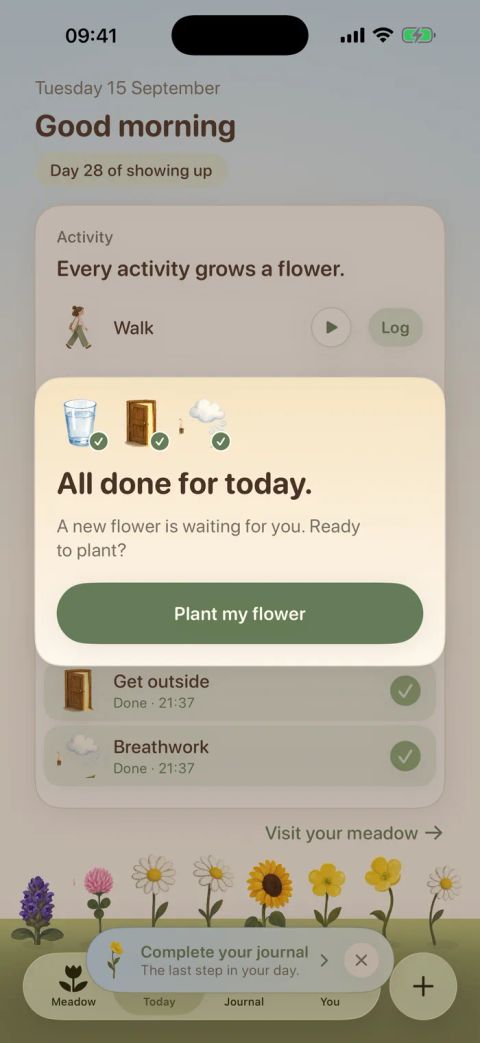
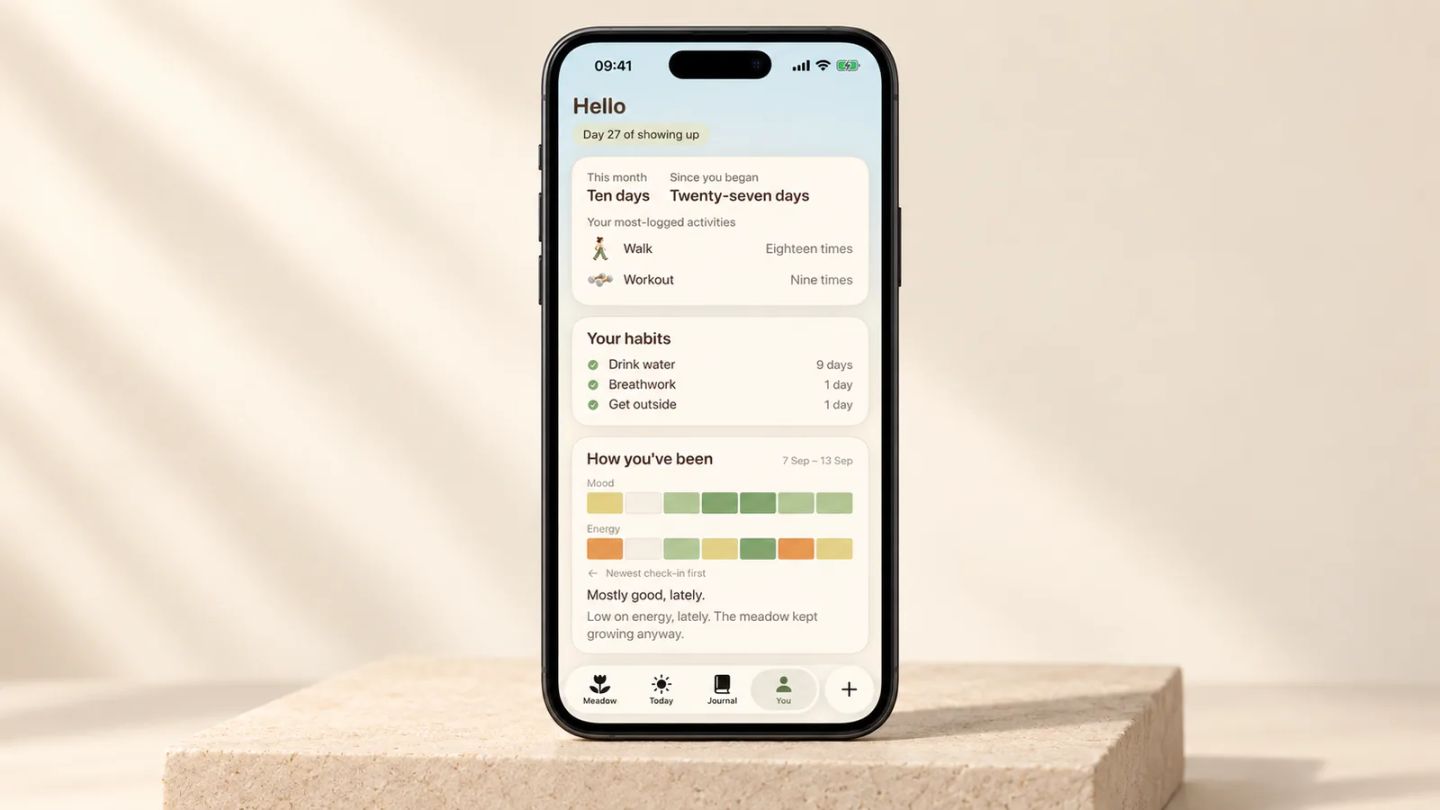
Meadow, the habit-tracking app our team makes, lets you tick off a chosen habit and grows a small garden as the days add up. It keeps your flowers even after a missed day, which suits the pick-it-back-up approach rather than punishing a gap. Meadow costs $39.99 a year or $9.99 a month after a seven-day free trial. A dated column in a notebook does the same core job for nothing, so start with whichever one you will open tomorrow.
Put the record to work
Log the result soon after the action, while you still remember what happened. If you forget, fill it in later only when you can recall it accurately, and leave it blank when you cannot, so a gap always means the same thing.
After a week, read the entries back before you change anything. If you keep missing the same slot, move the cue somewhere that fits better. If you mostly reach for the smaller version, make that your plan for the next week. If logging itself has become the chore, shorten the record down to a date and a tick. The record is there to help you decide, not to sit in judgement.
Write down your one habit and the everyday moment it will follow. That single line is your tracker, already started.
Every little bit counts
Five minutes counts. So does a dance in the kitchen.
Log the movement you enjoy and the small habits that help you feel good, and watch them bloom into something you can see.
Join the Meadow waitlist