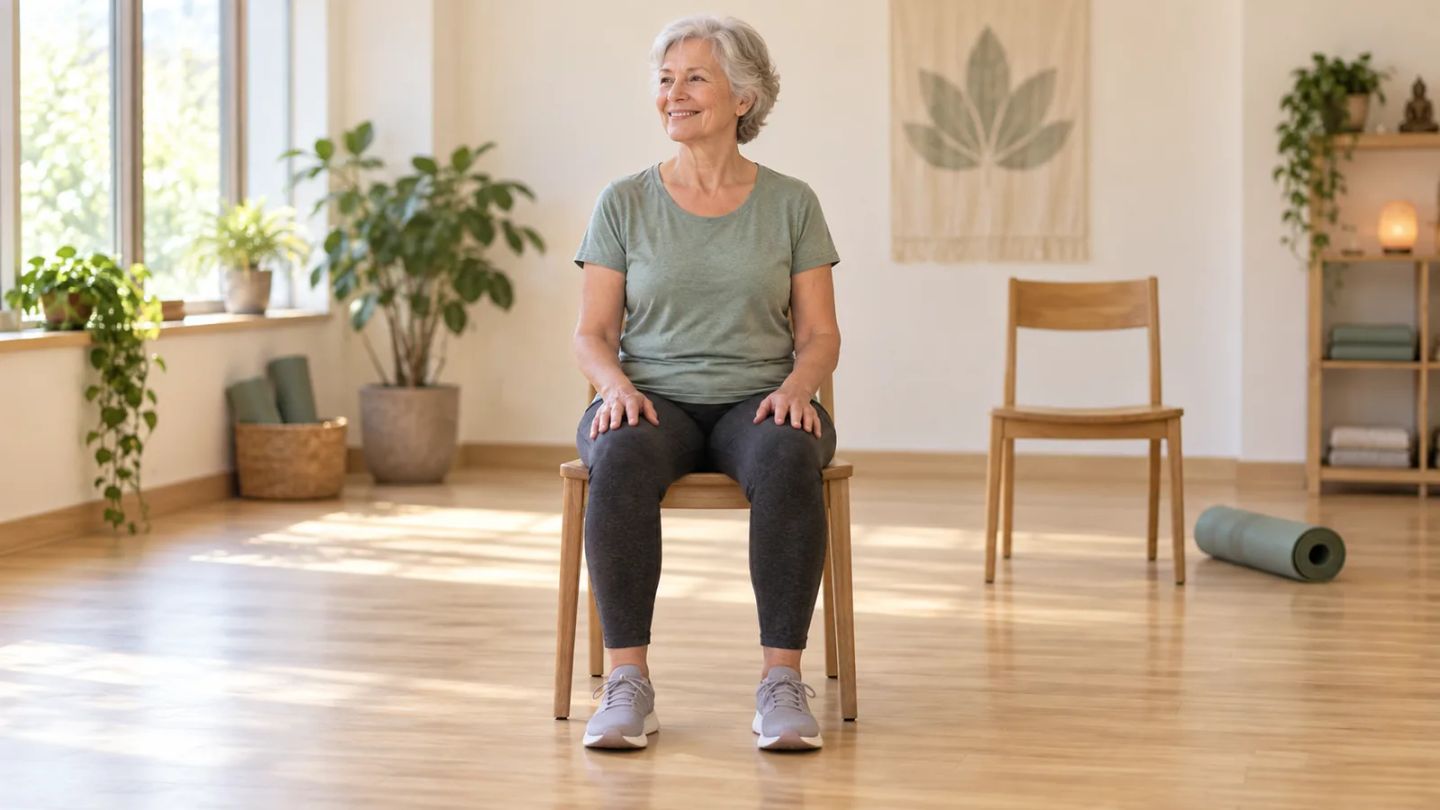
Chair yoga is yoga you do sitting down, or standing with a hand on a chair for support. It keeps the stretching, breathing and slow strength work of a floor class and removes the part that puts many people off, which is lowering yourself to a mat and getting back up again. If your balance has changed, if standing for a whole class feels like too much, or if you are easing back into movement after a break, a chair gives you a way in that still counts as a real practice.
It suits a lot of people, and older adults in particular, which is why so many classes are labelled "chair yoga for seniors". That label covers a wide range, so a little care up front saves disappointment later.
What chair yoga involves
The name gets used two ways. Harvard Health explains that chair yoga can mean a practice done entirely seated, or a standing practice where the chair is there for balance and support. Both are common, and a class advertised as "chair yoga" might be either.
That matters when you book. If you want to stay seated the whole time, read the class description or ask the teacher before the first session, because a "gentle" class can still include standing poses. It is a small question to ask, and it tells you straight away whether the class fits what your body wants to do that day.
Two free ways to try it this week
You do not need a studio or a subscription to start. Two reliable, no-cost options let you see whether chair yoga suits you.
The US Department of Veterans Affairs has a free nine-minute chair-yoga video led by Mandie Johnson, one of its yoga instructors. Nine minutes is short enough to fit into a morning without rearranging your day, and short enough to repeat, which matters more than length when you are building something new.
If you would rather read than follow a screen, the NHS sitting exercises page gives free written instructions for gentle seated movement. It sits outside the yoga label, but it covers the same ground of easing stiff joints and moving within your range. The NHS suggests a stable chair without wheels and a seat low enough that your feet rest flat on the floor. That is a sensible setup for any seated practice, wherever you found the routine.
When you look further afield, weigh the description more than the headline. A clear account of what the session involves, who is teaching it and how to join tells you far more than the word "best" in a title.
What the research can and cannot promise
Chair yoga has been studied in older adults, and the honest summary is that it may help with some things and has not been shown to fix others.
One pilot trial put 131 older adults with lower-limb osteoarthritis, none of whom could manage standing exercise, into either a chair-yoga programme or a health-education group. The chair-yoga group reported less pain interference, meaning pain got in the way of daily activities a little less, and that held at the three-month check. Balance did not improve. It was a small, early study in a specific group, so it points a direction rather than settling the question.
A larger 2024 trial followed 454 adults aged 65 and over who each lived with at least two long-term conditions. A twelve-week chair-based yoga programme added on top of usual care produced no significant improvement in overall quality of life or in falls over the following year, though some measures of pain did improve.
Put together, the studies give you good reasons to try chair yoga and no grounds to expect a guaranteed result. You might take it up because the movement feels good, because a teacher explains things in a way that lands for you, or because sitting down to stretch is a calmer start than you have had in a while. Those are reasons enough.
One safety note before you begin. The US National Center for Complementary and Integrative Health advises older adults and anyone with a health condition to talk over their own needs with a GP and with the yoga teacher first. A recorded video cannot adjust a pose for your hip or your blood pressure, so a real conversation with a teacher is worth having if anything about your health gives you pause.
The part that decides whether it sticks
Finding a good ten minutes of chair yoga is the easy bit. Doing it often enough to feel a difference is where most plans quietly fall apart, and that has little to do with willpower.
Anchor the practice to something you already do. "After I make my morning tea, I sit down for the nine-minute video" gives the habit a home in your day, which works better than a loose plan to fit it in somewhere. Pick a cue that happens anyway, most days, without you having to think about it.
Decide your smaller version now, before you need it. On a stiff or busy morning, two minutes of seated shoulder rolls and a few slow breaths still counts. A short practice keeps the thread going, and keeping the thread going is what builds a habit. If you miss a day, you have not undone anything. Choose the next morning and pick it back up.
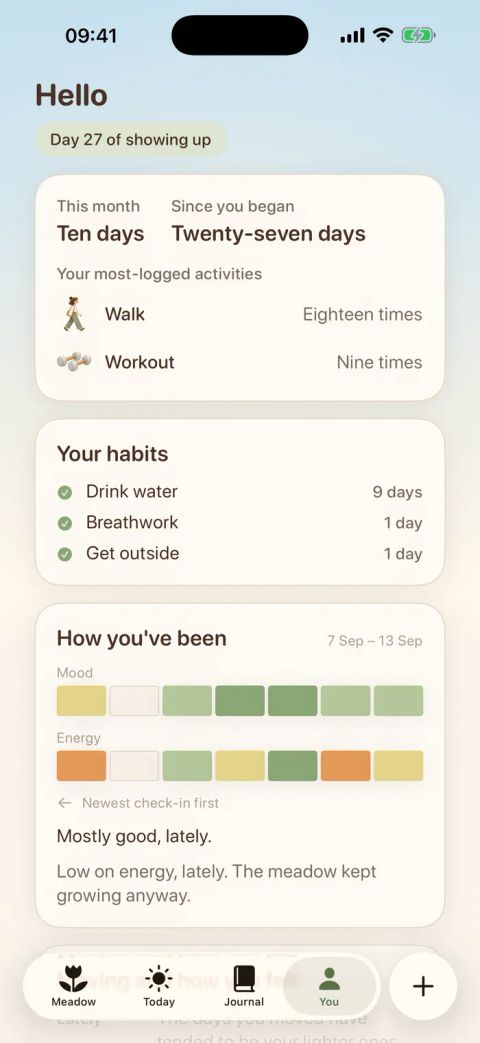
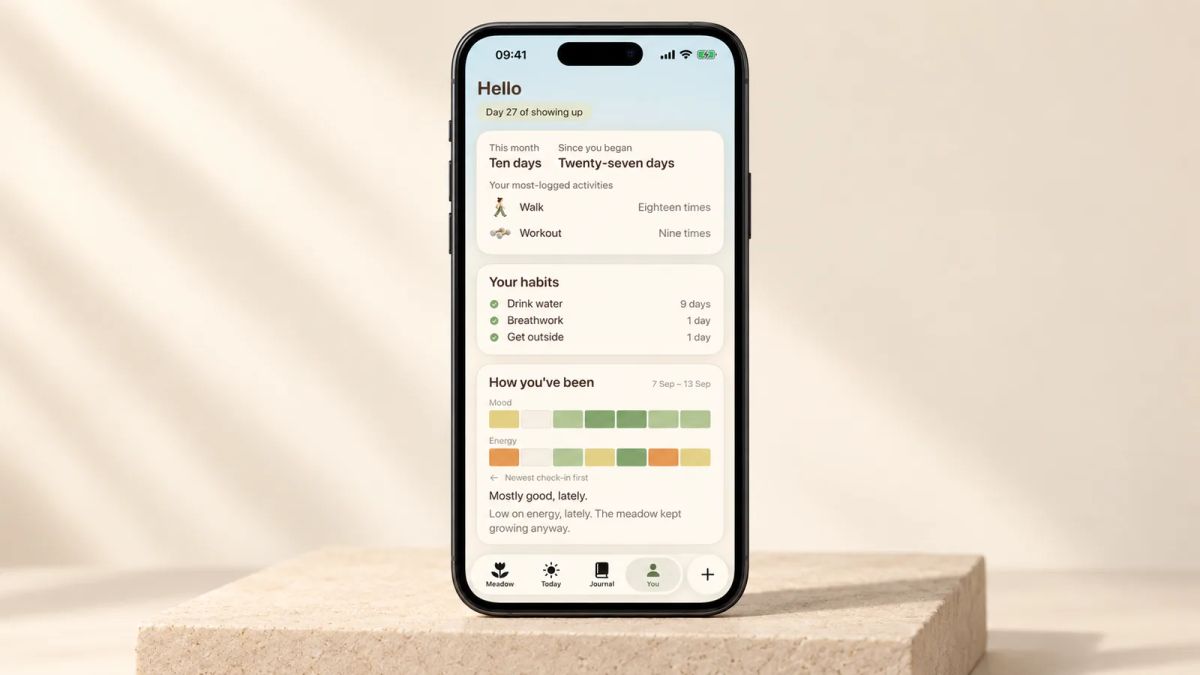
If you like to see the thread you are building, some people keep a tick on a calendar and others use an app. Meadow, the habit-tracking app our team makes, has yoga as one of its built-in activities, so you can check it off after your chosen cue and watch the days add up. It costs $39.99 a year or $9.99 a month after a seven-day free trial, and a paper calendar does the same job for nothing if you would rather start there. Either way, a small record helps you notice the practice becoming part of your week.
Open the nine-minute video, check it plays on your device, and decide which everyday moment tomorrow it will follow.
See how far you've come
Your habits, moods and little wins, all in one place
Meadow keeps track of the walks, the water and the good days, so you can look back and watch your effort add up.
Join the Meadow waitlist