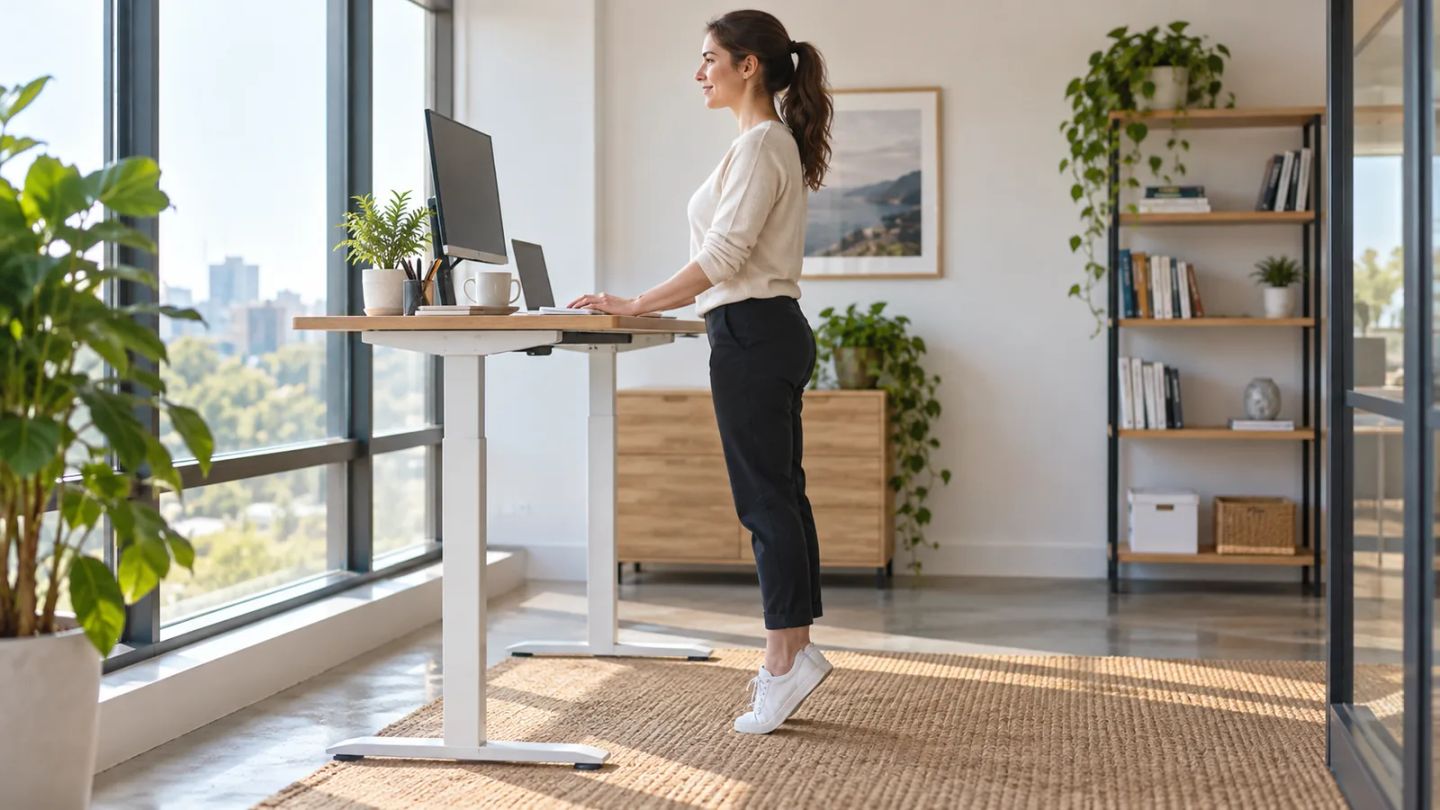
A standing desk gets you upright, but upright and still is closer to standing in a queue than to moving. The moves below are small things you can do while you work: calf raises between emails, a few heel-to-toe rocks on a call, a slow squat each time you go from sitting to standing. Do a couple every so often and a static desk becomes one that keeps your legs, hips and back ticking over.
None of it needs kit, a change of clothes or floor space. You stay at your screen for most of it, and the whole set takes about five minutes if you run it start to finish.
One honest caveat before the routine. If you bought the desk hoping standing would do the work for you, it won't, and that's exactly why these small moves earn their place.
Why a standing desk isn't the whole answer
Standing burns a little more energy than sitting and takes some of the stiffness out of a long day at a screen. On its own, it trades one held position for another. Cleveland Clinic's Michael Milicia, an occupational therapist, says the payoff comes from breaking the day up, and that small breaks to stand, stretch and walk around do more for your comfort and health than the desk by itself.
We dig into that trade-off in is standing all day better than sitting. The useful part is the movement, and the standing is the smaller piece of it.
The numbers make the case. The NHS notes that many adults spend more than seven hours a day sitting, and that you can hit your weekly activity target and still be at risk if the rest of your time is spent motionless. The CDC keeps it plain: move more, sit less, and any amount of moderate activity beats none. A standing desk helps with the sitting-less half. Small movements handle the moving-more half.
The routine: small moves at a standing desk
Open our free Your standing-desk movement menu (PDF). Save or print it to use alongside this guide. No sign-up needed.
Run these slowly, breathing steadily, holding the edge of the desk for balance whenever a move needs it. Where a move works one leg at a time, do both. You don't have to do all eight at once. Two or three whenever you notice you've been planted in one spot is the pattern that helps.
1. Calf raises
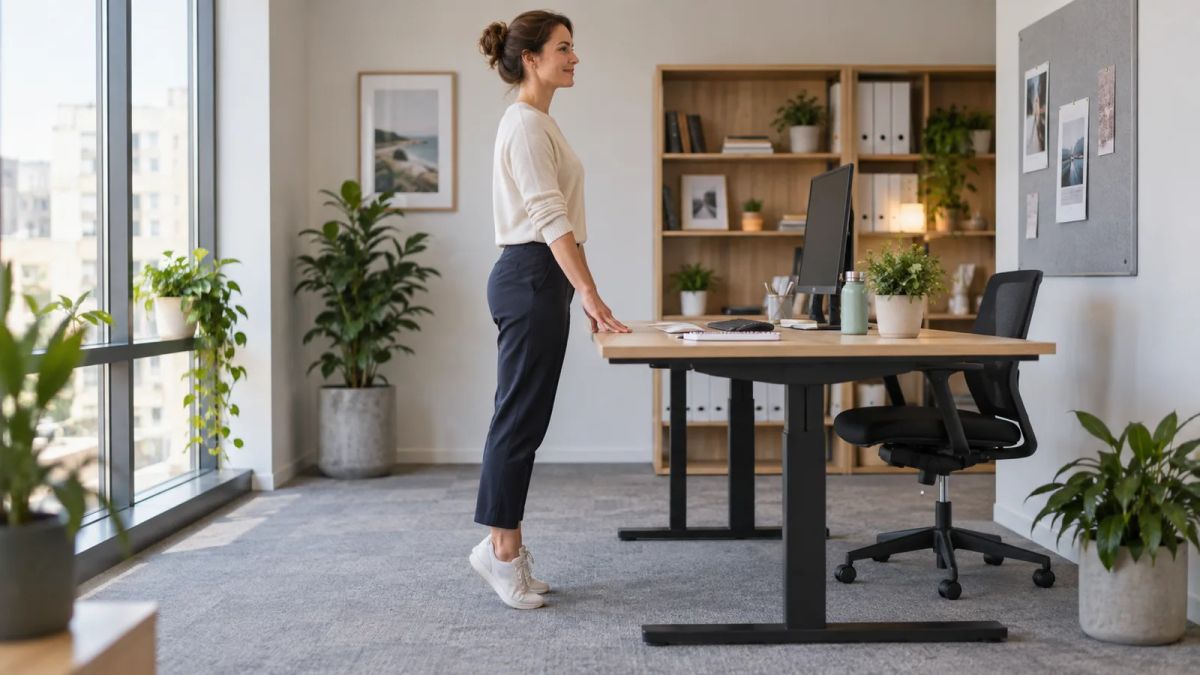
Rise onto the balls of both feet, hold at the top for a second, then lower slowly. Do 10 to 15. Cleveland Clinic's physical therapist Eric Moogerfeld lists calf raises as a desk-friendly move, and standing gives you the full version. Standing still lets blood pool in the lower legs, so this is the one to start with.
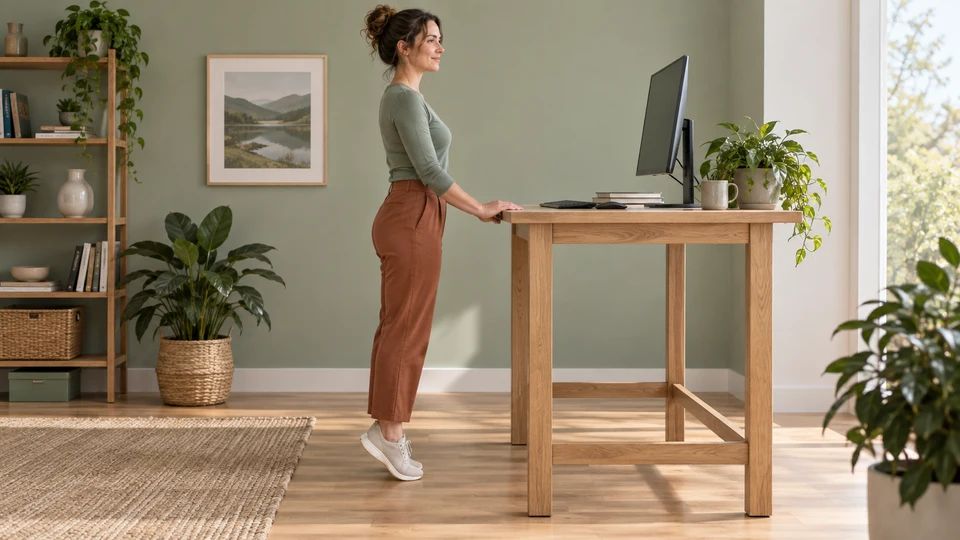
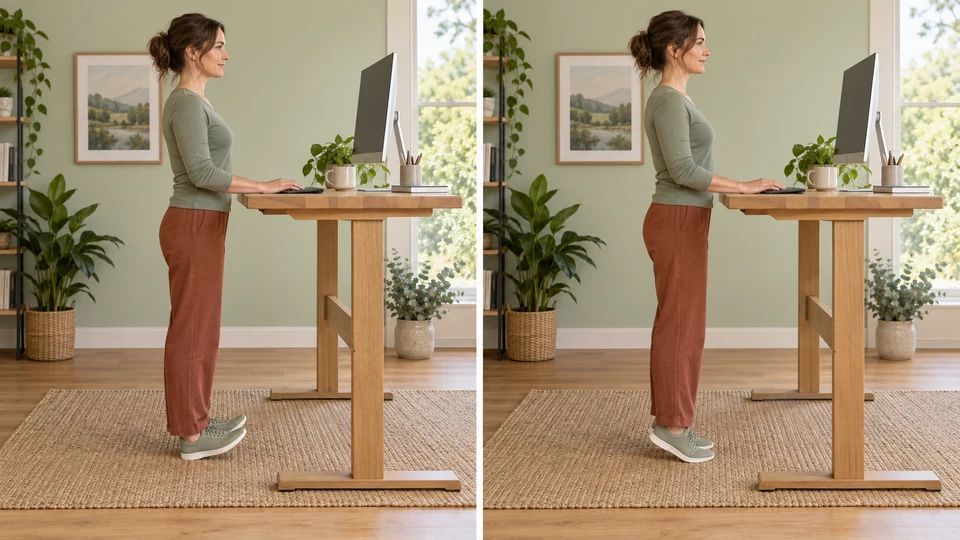
2. Heel-to-toe rocks
With feet hip-width apart, rock your weight back onto your heels, then forward onto your toes, in a slow, steady sway. Do 15 or so. It wakes up the ankles and calves and gets the lower legs pumping without you leaving your spot.
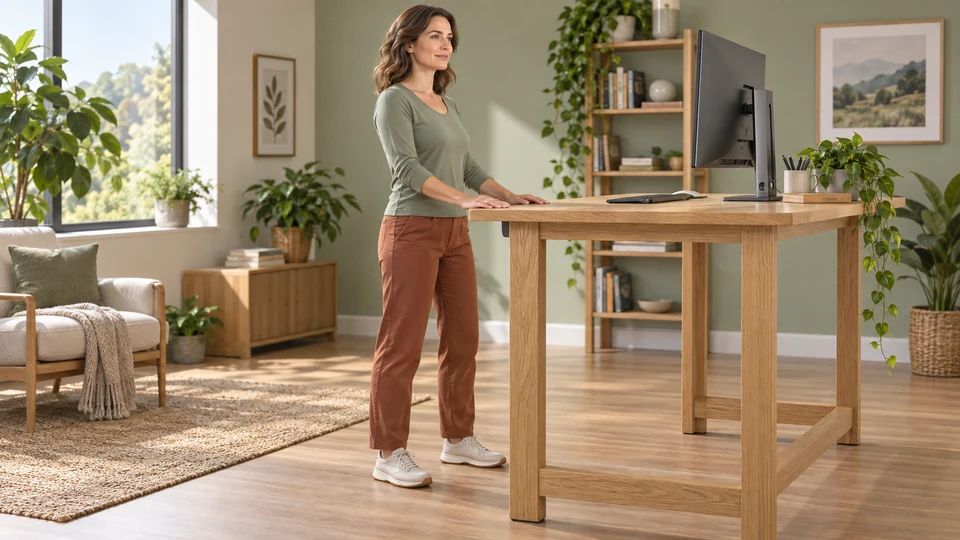
3. Weight shifts
Shift your weight onto one foot, pause, then onto the other, letting the free hip drop a little each time. The CCOHS ergonomics guidance suggests shifting your weight from leg to leg to stop standing turning static. A footrest to prop one foot on works the same way.
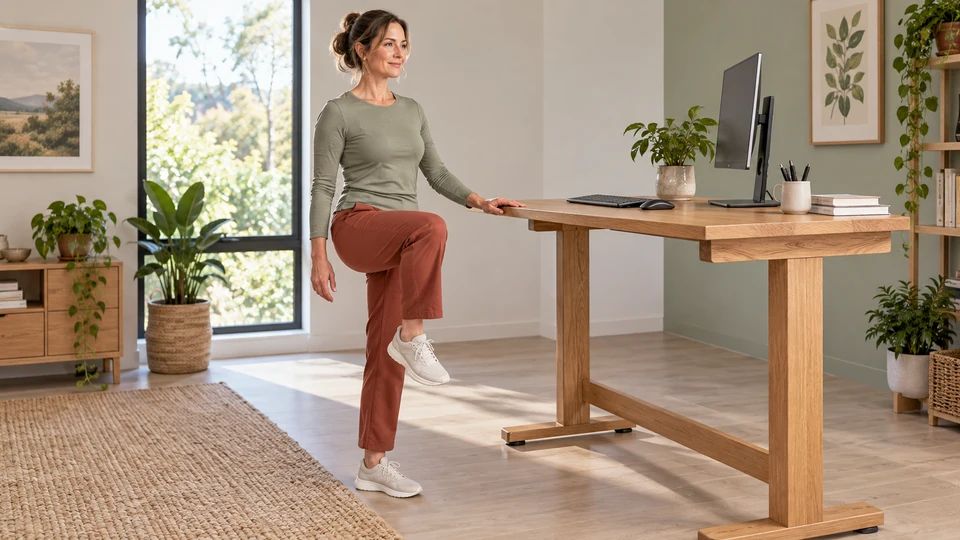
4. Standing marches
Lift one knee towards your chest as high as is comfortable, set the foot down with control, then lift the other. Do 10 on each side. Your hip flexors shorten while you hold still, and a few marches remind them how to work.
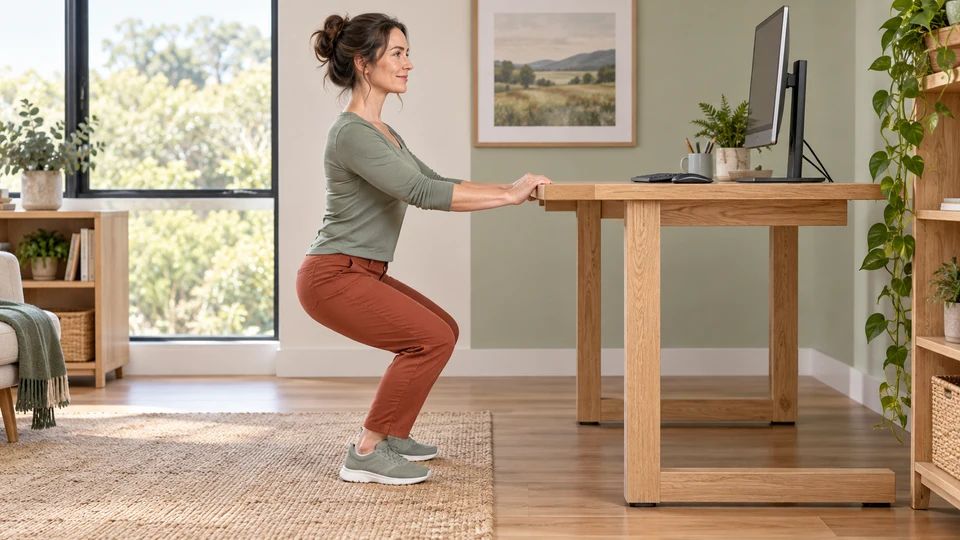
5. Gentle squats
With feet shoulder-width apart and a light hold on the desk, push your hips back and bend your knees, going down as far as feels easy, then stand back up. Do 8 to 10. Moogerfeld includes squats among his desk moves, and keeping them shallow means no change of clothes and no red face.
6. Standing hamstring curls
Take your weight onto one leg, bend the other knee to bring your heel up towards your backside, then lower it. Alternate legs for 10 each. This balances the marches, working the back of the leg while they work the front.
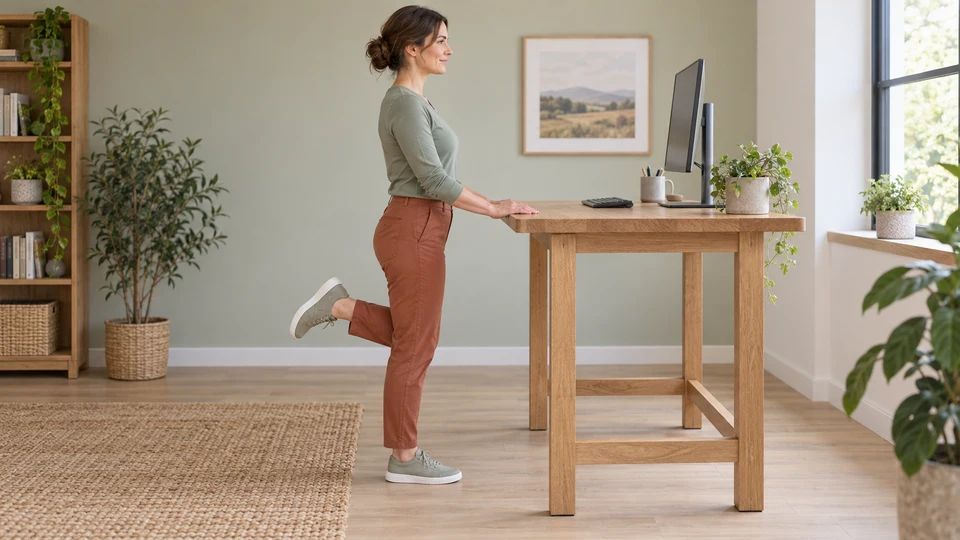
7. Thoracic reset
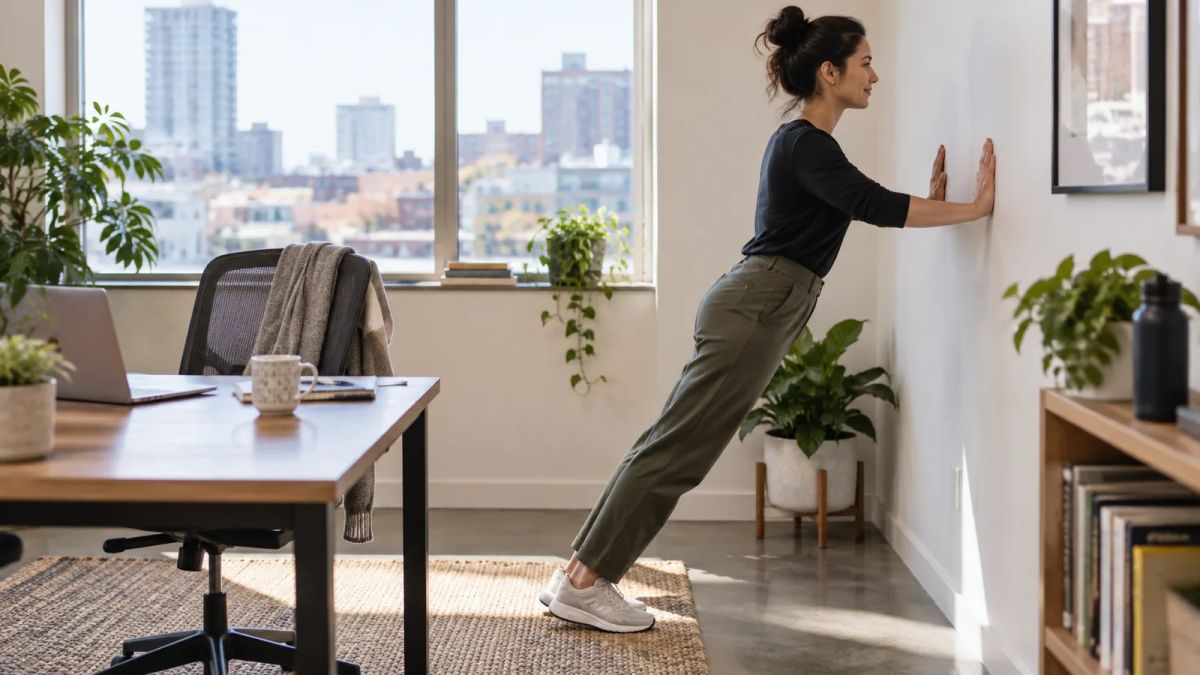
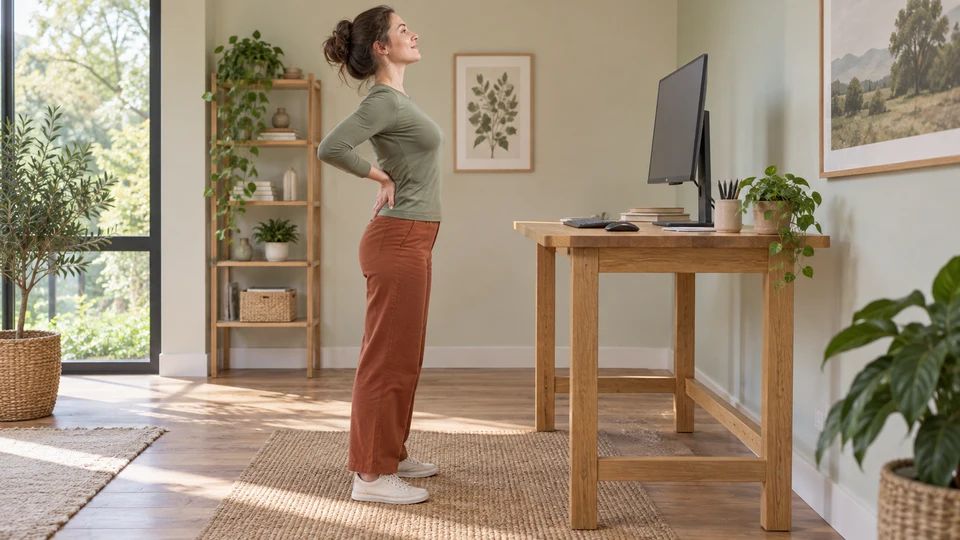
Rest your hands on your lower back, draw your shoulders back and down, and ease into a small backward arch through your upper back, looking slightly up. Hold a breath or two and release. Leaning towards a screen rounds you forward all day, and this opens the front back up.
8. Neck reset
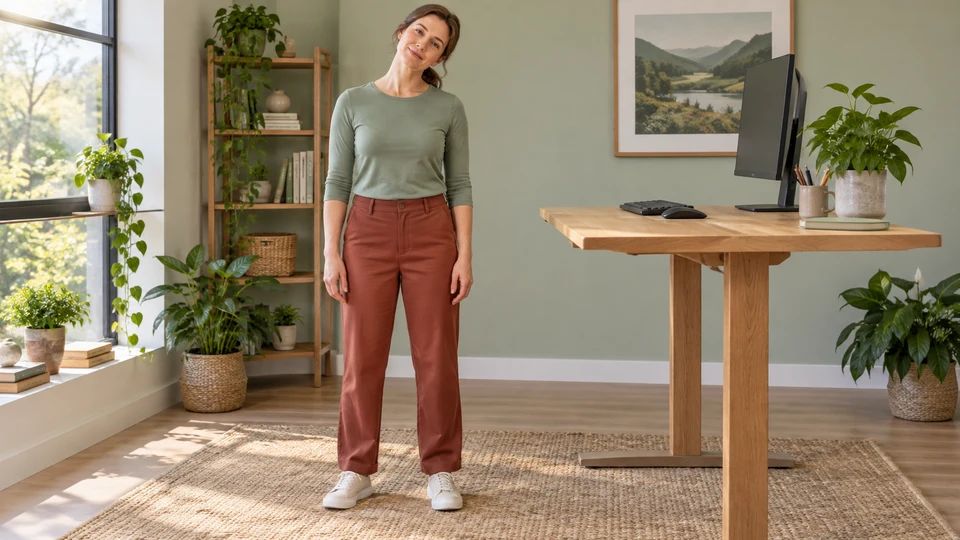
Draw your chin gently back, as if making a double chin, hold for a few seconds, then drop one ear slowly towards that shoulder until you feel a light stretch down the other side. Swap sides. The head drifts towards the monitor over hours, and this walks it back.
That's the full round. Most days you won't do the lot in one go, and you don't need to. Scatter a few across the morning and afternoon and you've broken up the standing the way the evidence rewards.
Set the desk up so standing doesn't ache
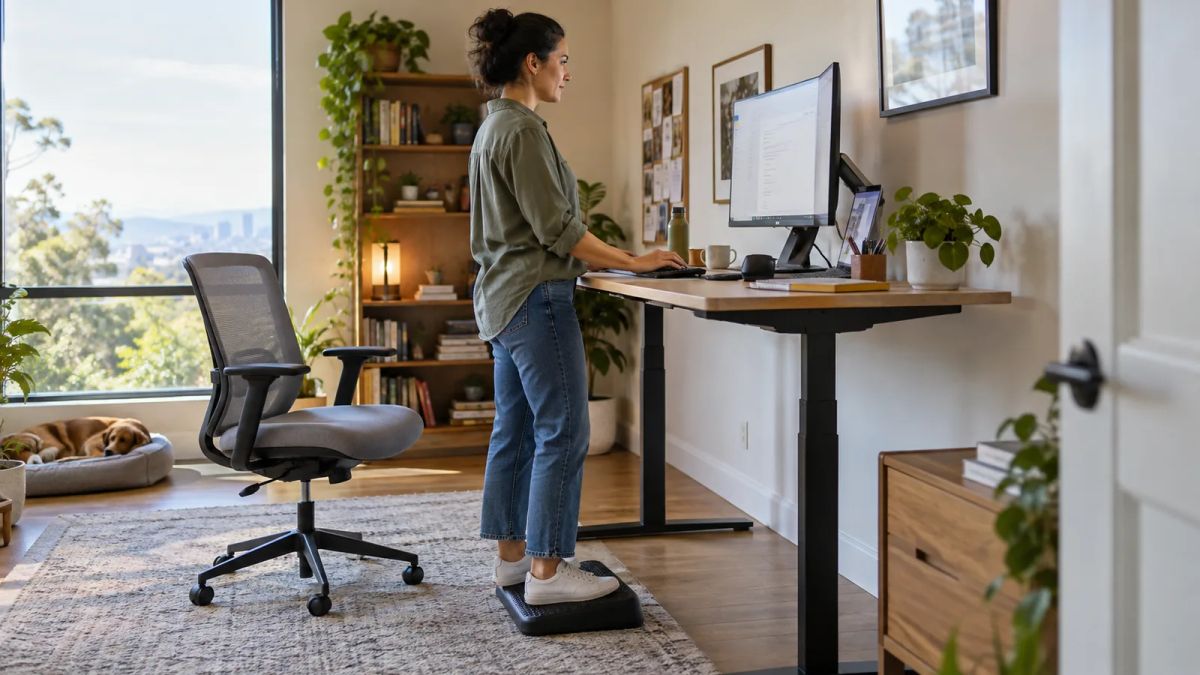
Getting the height right keeps a day on your feet from becoming sore feet and a stiff back. The CCOHS advice is to set the work surface at about your standing elbow height, with your arms in the same position they'd be if you were sitting, so your elbows stay near a right angle. The top of the monitor sits around eye level, an arm's length away, so you're not craning down or up at it.
Then there's how you hold yourself. Harvard Health describes good standing alignment as your ear, shoulder, hip, knee and ankle stacked in a line, with your weight spread evenly across both feet and your chest open. Keep your knees soft. A locked-out knee is a common standing-desk mistake, and it's hard on the joint over hours.
Two bits of kit make standing kinder. An anti-fatigue mat cushions your feet and, as the CCOHS notes, encourages the small ankle and foot movements that keep circulation going, so it does double duty. Supportive shoes do a similar job, which is worth remembering on the days you'd rather be barefoot at your desk.
None of this is a pose to hold for eight hours. Harvard's own advice is to avoid staying in one position for long and to shift or move every 30 minutes to an hour. Good posture is a position to keep coming back to through the day.
Alternate sitting and standing
The best rhythm at a sit-stand desk is a changing one. The CCOHS guidance doesn't set a single rule and lists options from standing five minutes an hour up to swapping every 20, 30, 45 or 60 minutes, with the key being to change position as your body asks. Long spells of standing bring their own aches in the feet, knees, hips and back, so all-day standing is no more the goal than all-day sitting.
If you like a starting point to tweak, here's a gentle sit-stand rhythm you can pin to a sticky note:
Stand for the first half-hour with a set of calf raises and heel rocks
Sit for focused work, then get up when the task ends
Stand after lunch, add marches and a couple of gentle squats
Walk a lap of the floor mid-afternoon to refill your water
Sit or stand by feel for the last stretch, whichever your legs prefer
Treat it as a suggestion, not a timetable. The one thing to hold onto is variety, swapping position and dropping in a move or two before your body starts to complain.
Somewhere to log the small breaks
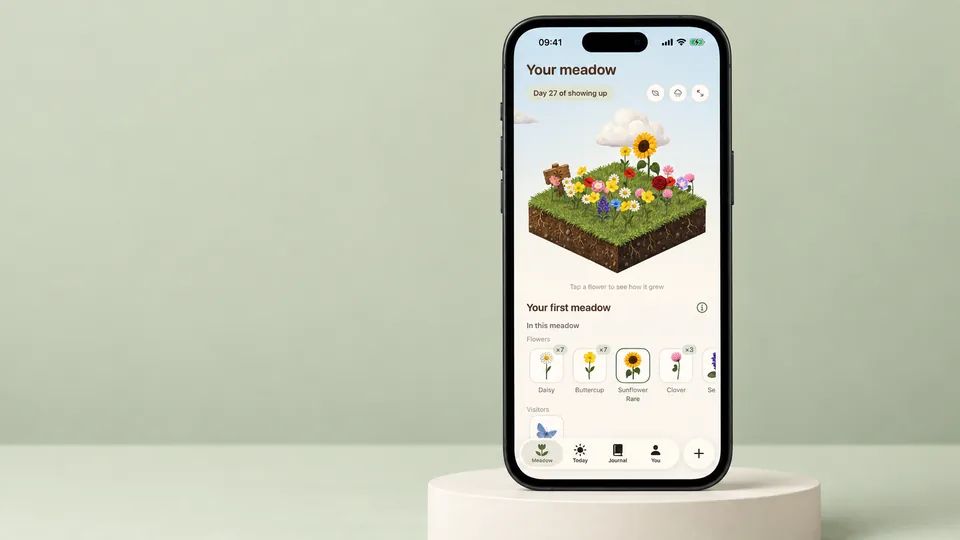
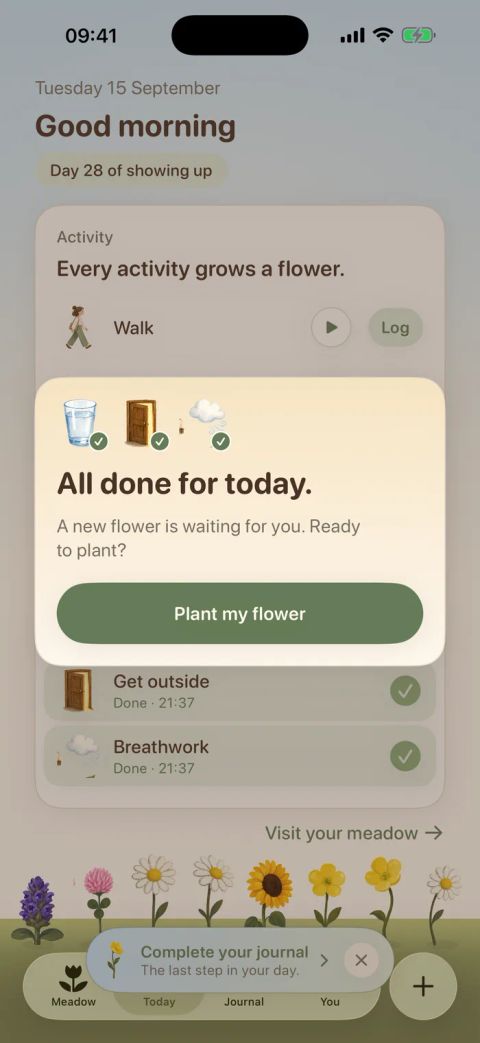
If a nudge on your phone helps you remember, Meadow gives these standing-desk breaks somewhere to land. It's a gentle habit app for iPhone from Wildcard Wellness where you log the movement you enjoy with a timer, a lunchtime walk or a few minutes of stretching at the desk, and tick off small daily habits like standing up more or drinking more water. You can note your mood and energy as the day goes, and each day you show up grows a wildflower in your own meadow. There are no streaks, so a head-down day where you stood still and forgot the lot resets nothing you've built, and you pick it up again whenever you're ready.
On a flat-out day, and after you fall out of the habit
Decide your smaller version before you need it. On a day so busy the routine's the last thing on your mind, one move still counts. Ten calf raises while a page loads keeps the thread going, and keeping the thread going is what turns this from a chore into something your legs start to expect.
You'll fall out of it too. A run of deadlines will bury the whole thing, and nothing you built is undone by the gap. The stiffness that creeps back is the standing-still catching up, not a mark against you. Tomorrow, next time you rise onto your toes, you're back in. Start there, not with an hour of making up for lost time.
Common questions
Are standing desk exercises worth doing? They won't replace proper exercise outside work, and they burn very little on their own. What they do is break up the long, still spells that the sitting and standing research flags as the real problem, and calf raises and weight shifts in particular keep the blood moving in your legs. Think of them as a way to stop a standing desk becoming a standing-still desk.
How often should I move at a standing desk? There's no magic number, but a move or two every half hour to an hour lines up with the ergonomics advice, and it's the same window Harvard suggests for shifting position. If deep work makes that too frequent, move at the end of each task instead.
Is standing all day at a desk bad for you? Long, unbroken standing brings its own foot, knee, hip and back aches, which is why the guidance is to alternate sitting and standing and to keep moving, not to stand rigid for the whole day.
Do I need an anti-fatigue mat? A mat isn't essential, though it does help. The cushioning eases pressure on your feet and lower back and nudges the small foot movements that keep circulation going. Supportive shoes cover some of the same ground if a mat isn't an option.
For the seated version of all this, our guide to desk exercises at work covers the moves you can do from a chair, and if a long day leaves you tight through the hips and back, these stretches for sitting all day loosen the spots a desk stiffens most.
Right now, before you move on, do one thing. Rise onto the balls of your feet, hold for a second, and lower slowly, ten times. That's the first break of the day, and the habit starts with it.
AUTHOR
Co-founder of Meadow.
Ash is co-founder of Meadow, a habit and movement tracking app that turns small acts of self-care into a growing wildflower meadow.
Every little bit counts
Five minutes counts. So does a dance in the kitchen.
Log the movement you enjoy and the small habits that help you feel good, and watch them bloom into something you can see.
Download Meadow