An active rest day is a day off from hard training where you still move a little, keeping the effort light instead of stopping completely. A walk, some easy mobility work, a slow cycle or a short yoga flow all count. The aim is to keep the blood moving and the habit alive while your body does its repair work, without piling on more strain.
Here is the part that gets missed. Recovery is when your body turns the hard work into fitness.
Why the day off is doing the real work
When you exercise hard, you're breaking your body down a bit, and the improvement comes afterwards, while you rest and it rebuilds slightly stronger than before. Push again before that has happened, day after day, and the sums stop adding up. A review in Sports Health describes this as a spectrum: a short spell of overreaching followed by appropriate rest can lead to a jump in performance, whereas overreaching with too little recovery tips into a slump that can take weeks or months to clear. The same review notes this milder overreaching is common, affecting around 60% of elite runners at least once.
For most of us the risk isn't a dramatic training crash. It's smaller and duller. Legs that feel heavy, sessions that go flat, sleep that gets patchy, a niggle that won't settle. A rest day is how you head those off before they stack up.
This is education, not a training plan for a specific goal. If you have a health condition, you're coming back from injury, or you're new to exercise, check with your GP or a physiotherapist about what suits you.
Rest doesn't have to mean the sofa
Complete rest is fine, and some days it's the right call. An active rest day is the middle option. Cleveland Clinic describes active recovery as low-intensity movement after strenuous exercise, and sums up the effort level like this: you're paring back from what you usually do while continuing to move in a way that's comfortable. If you're breathing hard or counting reps, it isn't an active rest day any more.
The honest case for moving on your day off is modest, so it's worth being straight about it. Light movement can take a little of the edge off sore muscles. A meta-analysis of recovery methods found active recovery gave a reduction in delayed muscle soreness that held only for a short while after exercise, and made no difference at all to how tired people felt. Don't expect it to erase aches either. A well-known BMJ review found that stretching around exercise gives only small and non-significant reductions in soreness. Think of an active rest day as keeping you loose and in the habit of moving, not as a cure for stiffness.
Ideas for an easy active rest day
Pick something you'd happily do while chatting to a friend. That conversational pace is the whole test.
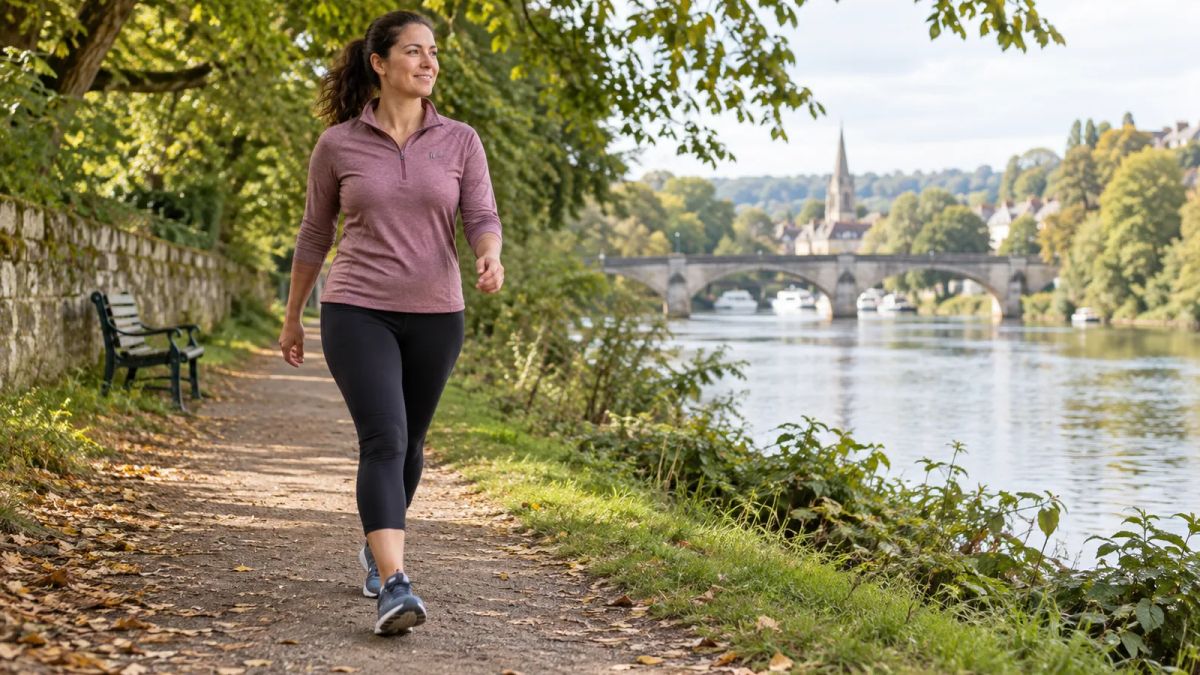
A walk. The simplest option, and the one most people reach for. Twenty minutes at an easy pace loosens tight legs and gets you outside, and there's a long list of other reasons to walk besides recovery. Keep it flat and unhurried on a rest day, no hills or power-walking.
Mobility and light stretching. Working each joint through a comfortable range feels good after a hard session and takes the morning stiffness off. A short morning stretch routine covers the main areas in five to ten minutes and needs no kit.
Gentle yoga. A slow, easy flow gives you movement and a bit of calm at once. Research pulled together by the NCCIH found yoga has beneficial effects on perceived stress across the studies they looked at. If you're over 65 or managing a condition, the NCCIH suggests you talk to your instructor and your provider about what's right for you, since injury rates in older adults are higher.
An easy spin or swim. Cycling and swimming let you move without loading your joints, which suits a day when your legs are tired. Keep the resistance light and the pace gossipy.
If you want a touch more structure than a wander round the block, a low-impact workout done at an easy effort works well as active recovery too. The trick is holding back and doing the same movements at a lower effort.
Your active rest day menu
Decide the day before, not in the moment. Here's a blank menu to keep on the fridge or in your notes, then a filled-in example.
My active rest days: __________ and __________
Pick one, keep it easy:
☐ 20-minute flat walk ☐ 10-minute mobility flow ☐ Slow yoga ☐ Easy 20-min cycle/swim ☐ Potter in the garden
Tired-day version (5 minutes): __________
Rule: if I'm out of breath or counting reps, I've gone too hard.
And filled in:
My active rest days: Wednesday and Sunday
Pick one, keep it easy:
☑ 20-minute flat walk ☐ 10-minute mobility flow ☐ Slow yoga ☐ Easy 20-min cycle/swim ☐ Potter in the garden
Tired-day version (5 minutes): neck, shoulders and a slow walk to the corner and back
Rule: if I'm out of breath or counting reps, I've gone too hard.
How long the soreness should last
If you can barely get down the stairs two days after a heavy leg session, that is delayed onset muscle soreness behaving normally. A 2024 review in the German Journal of Sports Medicine puts the first symptoms at 6 to 12 hours after exercise, the peak between 48 and 72 hours, and healing usually within a week. The worst day is often the second one. Knowing that is half the battle, because it means the bad morning is the peak and not the start of something.
The same review is straight about the treatments. Cold, heat, compression and massage all have some study support behind them, and the authors describe the overall picture as uncertain. Gentle movement sits in the same bracket. Move on those days because it feels better and keeps your week ticking over, and let time do the rest of the work.
Soreness that still has you limping after a week, or a sharp pain in one spot, is a different matter. Get that looked at.
How to tell when to rest, and when to push
The honest answer is that it depends on the person and the week, so learn to read your own signals. A few are worth watching. Legs that stay heavy across several days, sleep that's gone broken, a low or short-tempered mood, and workouts that keep dropping off despite your effort are the classic signs that recovery is lagging behind training. The Sports Health review lists exactly this pattern of performance drops and fatigue as the marker of doing too much.
Soreness is a softer signal. Mild stiffness that eases as you warm up is normal and fine to move through gently.
On the flip side, if you feel fresh, slept well and are itching to move, you probably don't need to force a full rest day. Trust that as much as you trust the tired days.
Fitting a rest day in without the guilt
Rest days feel like slacking to a lot of people, which is backwards. The UK guidance is 150 minutes of moderate activity a week plus strengthening on two days, spread over four or five days. That leaves room for days that are lighter or off entirely. Those days belong in the week on purpose, and they count as part of doing the guidance properly.
To stop the light-movement habit slipping on those days, pin it to something you already do. James Clear's habit stacking gives you the wording for it: after an existing habit, you do the new one, with the anchor being something specific you never skip. A walk after lunch, a mobility flow while the coffee brews. The cue is already in your day, so the movement rides along with it instead of needing a fresh decision.
If a planned day off still makes you feel like you're getting away with something, rest day guilt is common enough to have a name, and it's worth understanding before it talks you into a session you didn't need. And if a rest day turns into doing nothing at all, that's allowed. One flat day changes nothing over a month of showing up. Consistency comes from picking the habit back up the next day, and one quiet day is no reason to stop.
Common questions
How many rest days a week do I need?
It depends on how hard and how often you train. Someone doing intense sessions most days needs more built-in recovery than someone taking a couple of classes a week. A common shape is one or two lighter or off days across the week, adjusted by how your legs, sleep and mood are holding up.
Is a full rest day or an active rest day better?
Both have a place. A full rest day suits a week where you're wiped out, run down or sore in a way that movement aggravates. An active rest day suits the more common in-between feeling, tired but fine, where a walk or a stretch leaves you looser than sitting still would. Our side-by-side on active recovery vs a rest day goes through the evidence for each and how to pick on the morning.
Can I do an active rest day every day?
You can, as long as the effort stays light on those days. The danger is turning every "easy" day into a moderate one, so the body never gets the drop in load it needs. Keep the conversational-pace rule and it works.
A place to log the easy days too

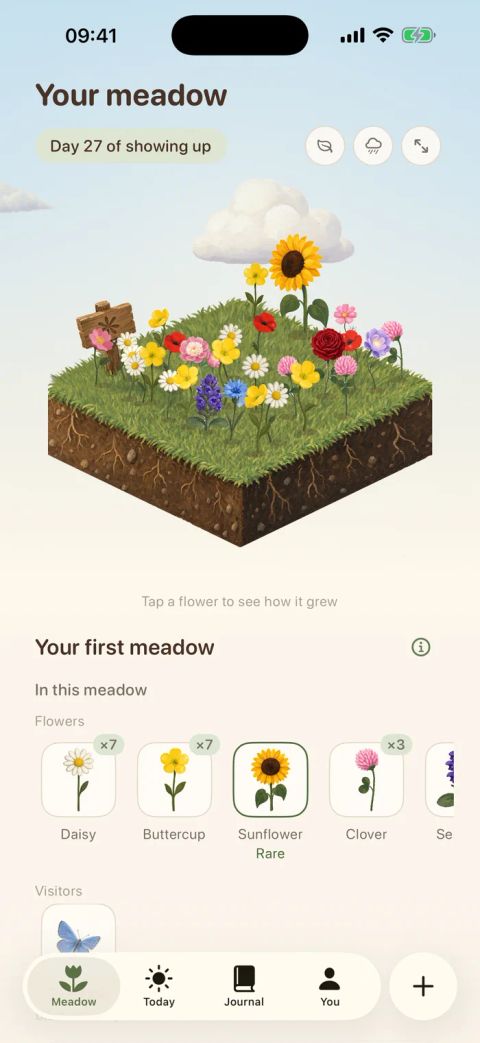
Most tracking apps are built around the hard sessions, which can make a walk or a slow stretch feel like it doesn't count. Meadow takes the opposite view. It's a movement and habit app for iPhone from Wildcard Wellness where you log whatever movement you enjoy with a timer, a rest-day walk or a little yoga very much included, and tick off small daily habits alongside it. Every day you show up grows a wildflower in your own meadow. There are no streaks, so a rest day, a rained-off walk or a whole week away resets nothing and your flowers never wilt. That forgiving setup suits rest days particularly well, because the days you deliberately do less shouldn't feel like a break in the chain.
On a hard day, and after a missed one
Keep a five-minute version ready for the days you can't face even an easy walk. A couple of neck turns, some shoulder rolls, and a slow stroll to the end of the road and back is enough to keep the thread going. A minute of movement counts.
If you skip a rest-day walk, or a fortnight of them, nothing unravels. The stiffness after a gap comes from staying still, not from any mark against you, and the way back is the same as always. Pick the next easy day and move a little.
Tomorrow, if it's a rest day, put your shoes by the door tonight and walk ten flat, unhurried minutes when you get the chance. That's the whole job.
AUTHOR
Co-founder of Meadow.
Ash is co-founder of Meadow, a habit and movement tracking app that turns small acts of self-care into a growing wildflower meadow.
Little and often, with Meadow
Consistency, not intensity.
Meadow turns the movement you enjoy and the habits that help you feel good into a meadow of wildflowers. No streaks to break, and your flowers never wilt.
Download Meadow