Stretching before bed won't knock you out on its own, and the research behind it is thinner than most bedtime articles let on. What a few slow stretches can do is help you wind down, and a calmer body settles into sleep more easily than a tense one.
So here's the honest version. The stretching itself is unlikely to be the active ingredient. The unwinding around it, the low light, the slow breathing, the ten minutes of not looking at a screen, is the part that helps. Gentle floor stretches are a pleasant way to get there. They ask nothing of a tired body, and there's little that can go wrong.
Below is a short evening sequence of six easy floor stretches, paced to slow breathing, plus what the evidence shows and what to keep well away from close to bedtime.
Does stretching before bed help you sleep?
Sort of, and mostly for an indirect reason.
The Sleep Foundation puts it carefully, describing stretching as a natural, effective strategy for relaxing the muscles that "can alleviate stress and make it easier to fall asleep." Notice the framing. The benefit runs through relaxation and stress relief, not through the stretch doing something clever to your sleep.
The harder evidence is more modest. A 2024 scoping review gathered sixteen studies of regular stretching in people with sleep disorders. Of the studies that measured sleep quality, only three of thirteen reported a significant improvement, and the reviewers concluded there is little evidence that stretching exercises positively impact sleep quality in that group. A few studies did show real gains, including a large drop in insomnia severity in one. The overall picture is mixed, and the researchers asked for better trials before anyone claims more.
Slow, stretch-based movement looks a little better once breathing and attention come into it. A 2025 network meta-analysis in BMJ Evidence-Based Medicine compared exercise types across 22 trials in people with insomnia and found yoga had the strongest support, with nearly two hours more sleep a night in the trials. About two thirds of those trials had design flaws, so the size of the effect is shaky. The direction is still encouraging for a calm, yoga-style wind-down like the one below.
So why suggest it at all? Because the wind-down effect is plausible and worth having. Cleveland Clinic's yoga therapist Judi Bar describes a few gentle minutes before bed as a way to let go of the tension that built up over the course of the day, so "your muscles should feel relaxed" and "your mind should be quieted." That shift, out of the day's alertness and into something slower, is what makes sleep easier to reach. Think of the stretching as a way in, and the unwinding as the part that does the good.
Set your expectations there and you won't be disappointed. If you sleep badly most nights, stretching is a nice addition to your routine, not a treatment. Sleep that stays broken for weeks is worth taking to a GP, who can look at what else might be going on.
A gentle bedtime stretch routine
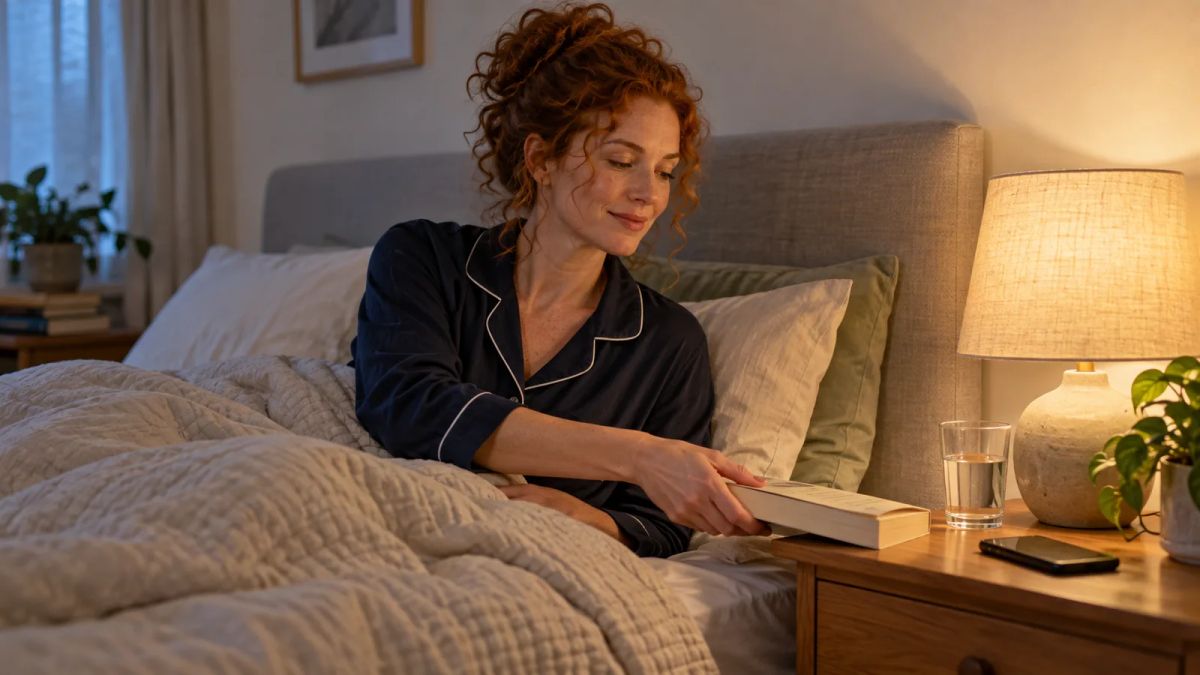
Six stretches, on the floor, done slowly. The whole thing takes about ten minutes. Keep the lights low, put your phone out of reach, and let each stretch be a mild, comfortable pull and never a strain.
The breathing does a lot of the work here, so make it the point. Breathe in through your nose, then let a slow breath out that lasts a little longer than the breath in. One steady breath per movement is a good rhythm. If your mind drifts to tomorrow, bring it back to the out-breath.
- Child's pose. Kneel and sit back towards your heels, then walk your hands forward and lower your chest towards the floor, arms stretched out ahead. Let your forehead rest down. Breathe into your back and stay for five or six slow breaths. This one quietly eases the lower back and hips after a day of sitting.
- Cat-cow. Come onto all fours. Breathe out as you round your back towards the ceiling and drop your head, then breathe in as you let your belly sink and lift your gaze. Move slowly with the breath for eight rounds. It's the one moving stretch in the set, and it loosens a stiff spine.
- Reclining knee hug. Lie on your back and draw both knees in towards your chest, wrapping your arms around your shins. Rock gently side to side if it feels good. Hold for five slow breaths. It's a small, comforting stretch for the lower back.
- Reclining figure-four. Still on your back, cross one ankle over the opposite thigh, then reach through and draw that thigh towards you until you feel a stretch deep in the buttock and outer hip. Hold for five breaths, then swap sides. Tight hips are common if you sit all day, and this reaches them with no effort.
- Reclining spinal twist. Lie flat, bring both knees up, then let them drop gently to one side while you turn your head the other way. Keep both shoulders on the floor. Breathe into the stretch along your back and ribs for five slow breaths, then take the knees to the other side. Go easy. There's no need to force the knees down.
- Legs up the wall. Shuffle one hip close to a wall, lie back, and swing your legs up so they rest against it. Let your arms fall open and stay for a minute or two, breathing slowly. It's a restful way to finish, and many people find it the calmest part of the whole routine.
Here's the sequence at a glance, if you'd rather not scroll while you're on the floor:
Six stretches, about ten minutes, one slow breath per movement:
Child's pose (5 to 6 breaths). Cat-cow (8 slow rounds). Reclining knee hug (5 breaths). Reclining figure-four (5 breaths each side). Reclining spinal twist (5 breaths each side). Legs up the wall (1 to 2 minutes).
You don't have to do all six. On a tired night, child's pose, a spinal twist and legs up the wall is a fair version and still counts. Three stretches keep the thread going on an evening when six feels like too much.
If night-time leg cramps wake you
This is where stretching before bed has its firmest evidence. In a 2012 randomised trial, 80 adults over 55 who got night cramps did calf and hamstring stretches every night, straight before sleep, for six weeks. They ended up with about one fewer cramp a night than a group who didn't stretch, and the cramps they did get hurt less.
The NHS gives similar advice, suggesting regular calf stretches, with the last of the day before bed. It also says they may cut cramps down without stopping them completely.
Two stretches cover it. For the calf, stand facing a wall with your hands on it, step one foot back, keep that heel down and lean in until you feel a stretch low in the back of the leg. For the hamstring, lie on your back and raise one straight leg, holding behind the thigh, until you feel the back of it lengthen. Hold each for a few slow breaths, then swap sides. Our guides to stretches for calves and stretches for hamstrings give more options.
See a GP if cramps are disturbing your sleep, last longer than ten minutes, or come with numbness or swelling.
What to avoid before bed
The main thing to keep away from close to bedtime is anything that revs you up.
Save intense stretching and hard exercise for earlier in the day. A deep, straining stretch or a vigorous workout lifts your heart rate and can leave you wired, which is the opposite of what you want at night. The Sleep Foundation suggests keeping vigorous activity out of the two hours before bed for that reason, and sticking to slow, static holds in the evening.
Timing helps too. Cleveland Clinic's Judi Bar warns against stretching too early, since there's a chance something happens to get you hyped back up before you make it to bed. Somewhere in the thirty to sixty minutes before you turn in is a sensible window, close enough that the calm carries over.
A few other things are worth skipping in that final hour. Bright screens held up to your face, a big or heavy meal, and caffeine, which can linger in your system for hours. None of that is about the stretching, but all of it can undo the wind-down you're building.
How to make it stick
A stretch you mean to fit in somewhere tends to vanish. A stretch pinned to something you already do every night tends to survive.
James Clear calls this habit stacking, tying a new action to a routine you already have, so it rides along with an existing habit instead of asking for a fresh decision each night. Brushing your teeth is a reliable anchor. "After I brush my teeth, I do three floor stretches" is the kind of plan that holds, because the cue is already built into your evening.
Start smaller than feels necessary. One or two stretches every night beats the full six done twice and then dropped. You can always stay down longer on a night when it feels good.
And when you miss a night, which you will, let it go. One skipped evening undoes nothing, and the routine picks up the next night with no catching up to do. The people who keep a bedtime habit for years are the ones who treat a gap as a gap, not a failure.
For the wider picture on winding down, our guide to better sleep habits covers the schedule, the room and the screens around all this, and an evening routine gives the stretches somewhere to sit. If mornings are stiff, a short morning stretch routine loosens overnight tightness by the kettle, and a full full-body stretching routine goes head to toe when you have more time.
A place to breathe before bed

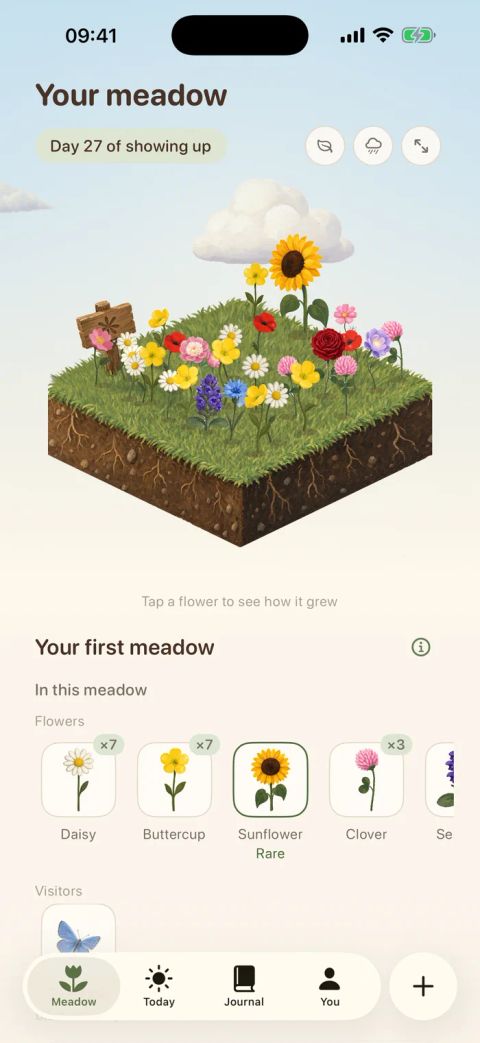
Since the slow breathing does most of the work in this routine, a breathing tool can carry the calm a little further. Meadow is a gentle habit app for iPhone from Wildcard Wellness with a built-in breathwork feature you practise alongside a wildflower meadow you've grown through your own efforts. You can tick off the stretch as a small daily habit, note how you're sleeping, and watch a flower bloom each day you show up. There are no streaks, so a night you fall straight into bed and skip it resets nothing.
Common questions
Is stretching or yoga better before bed?
There's no need to choose. A gentle bedtime yoga sequence is mostly slow stretching with breathing added, and Cleveland Clinic's own bedtime routine uses the same sort of slow poses, cat curls and knees to chest among them. Do whichever feels calmer to you. What counts is the pace, slow and unhurried, not the label.
How long before I feel a difference?
Some people feel calmer the first night, because the wind-down works straight away. Any effect on sleep itself, if it comes, tends to show up over weeks of doing it regularly, not from a single session. Treat it as part of your evening, not a one-off fix.
Is it better to stretch in the morning or before bed?
Both have a place, and they do different jobs. Evening stretching is about slowing down. Morning stretching eases the stiffness of a night lying still and helps you feel more awake. Our guide to the benefits of stretching in the morning covers that side. If you only have time for one, choose the one you'll keep doing.
How long should I hold each stretch?
For a bedtime routine, think in breaths, not seconds. Five slow breaths is roughly half a minute, which is plenty. Go to a mild pull and stop there. Mild discomfort is fine. Ease off if it hurts.
Can I do the stretches in bed instead of on the floor?
Yes, for the reclining ones. The knee hug, the figure-four and the spinal twist all work on a mattress, which is handy if getting down to the floor is awkward. A firmer surface gives you a bit more to press against, so use whichever you'll come back to.
Tonight, once your teeth are brushed, lie down and do only legs up the wall for two slow minutes. That's the whole habit in miniature, and it's enough to begin.
AUTHOR
Co-founder of Meadow.
Ash is co-founder of Meadow, a habit and movement tracking app that turns small acts of self-care into a growing wildflower meadow.
Little and often, with Meadow
Consistency, not intensity.
Meadow turns the movement you enjoy and the habits that help you feel good into a meadow of wildflowers. No streaks to break, and your flowers never wilt.
Download Meadow