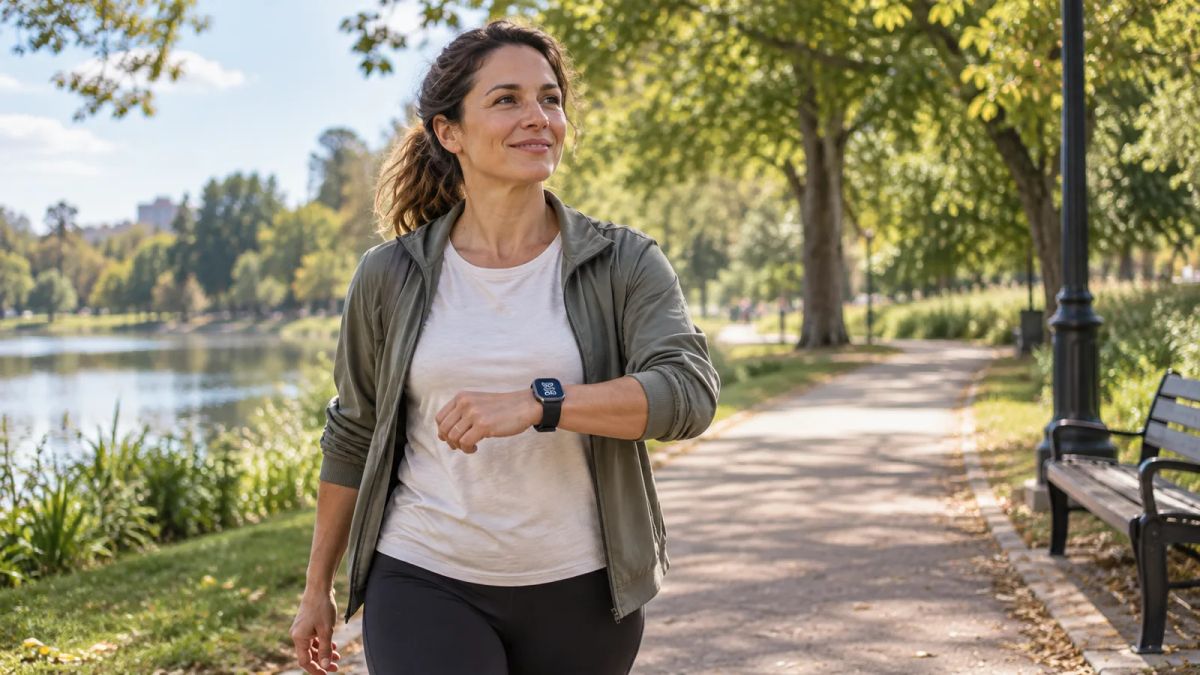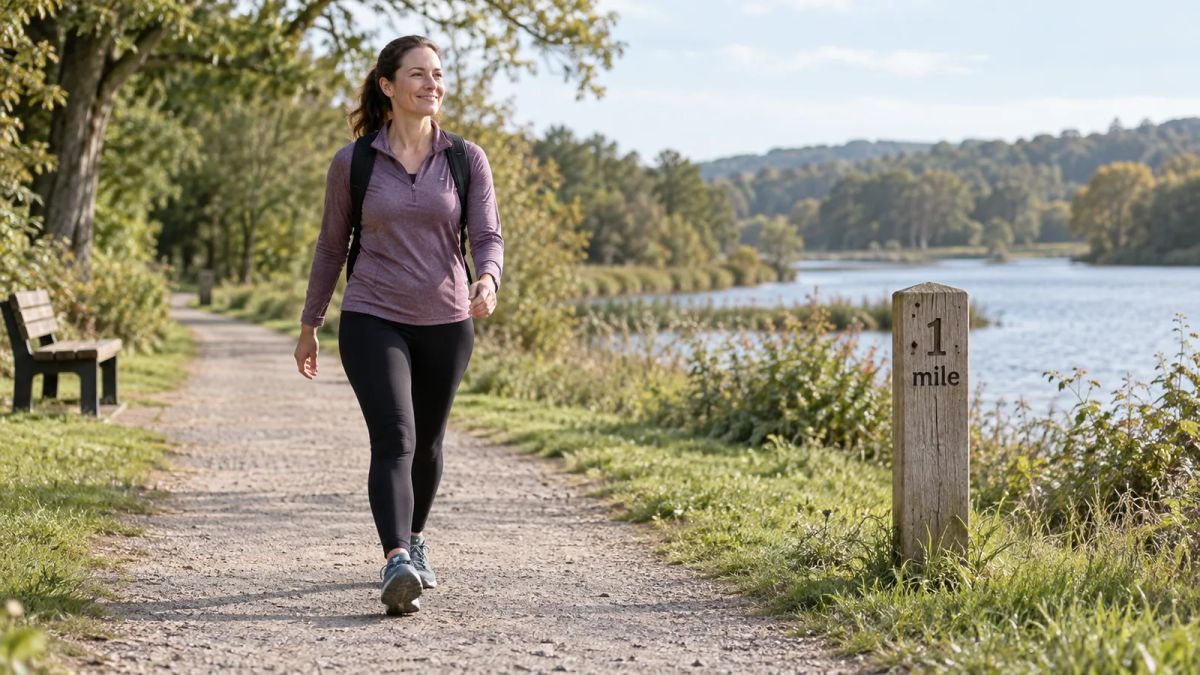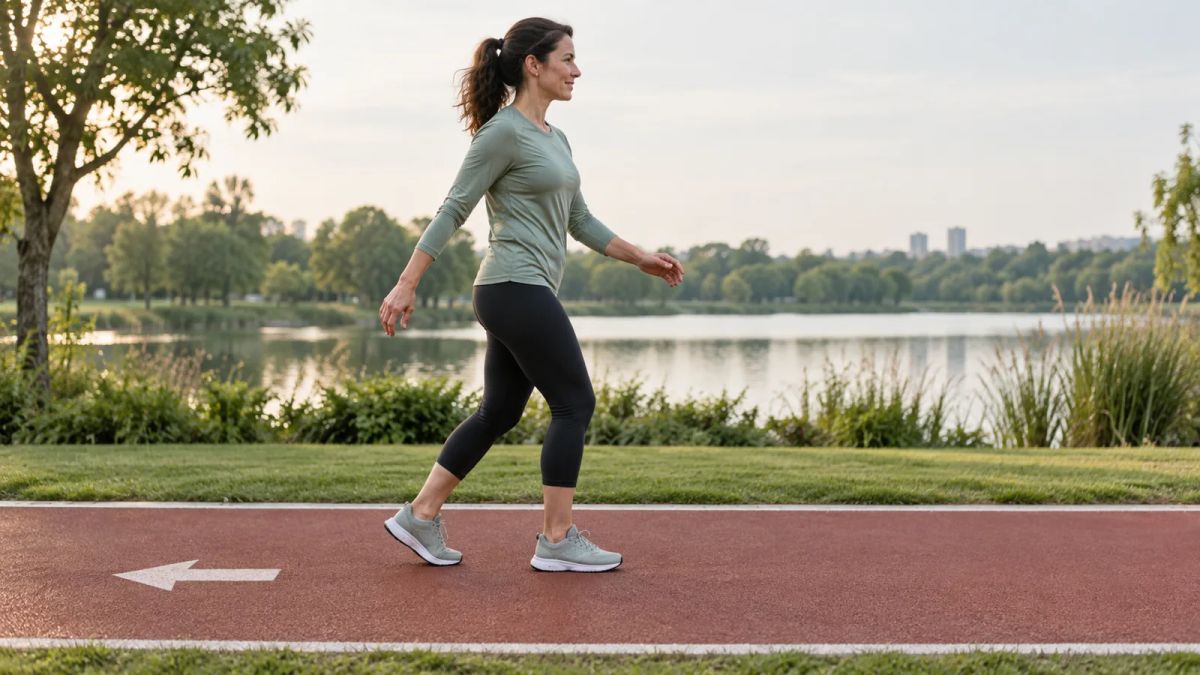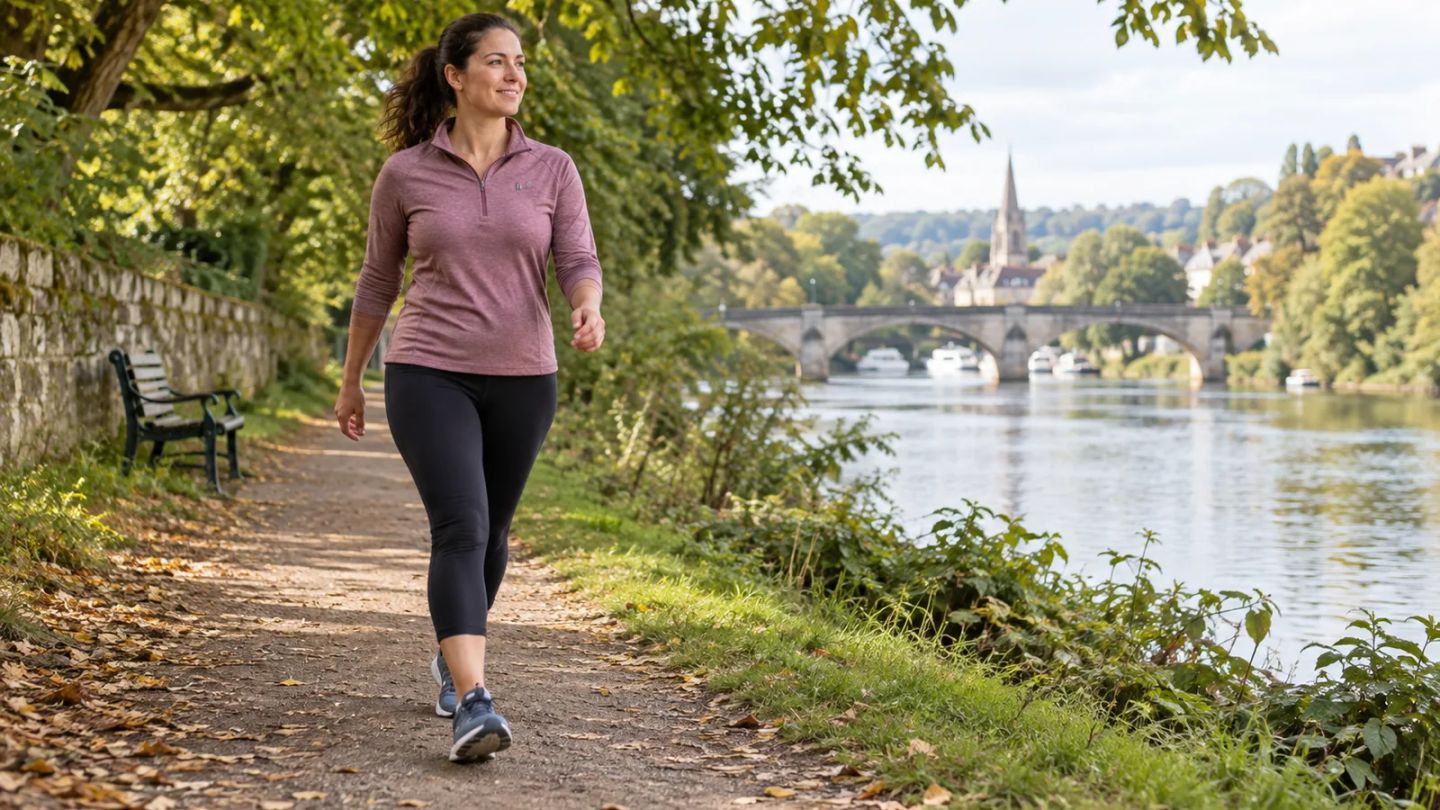
A mile a day is a small dose of walking with a decent amount of evidence behind it. At roughly 2,000 steps and 15 to 20 minutes at an easy pace, it's enough to reach your heart, your blood sugar and your mood, and short enough that most people can hold it through an ordinary week.
It's a starting dose, and more brings more up to a point, which this guide is straight about.
What follows is the plain version. What one mile a day does, what it won't do on its own, who it fits, and how to turn it into a habit that survives the days when everything else falls apart.
What a mile a day looks like
For most adults a mile works out at around 2,000 steps, and at a brisk pace of about three miles an hour it takes roughly 20 minutes. Your height and stride shift that a little, but the shape holds. Walk one most days and you're covering something like seven miles a week without setting foot in a gym.
That's the appeal. One short, repeatable slot, no kit, no travel, and a target you can picture. A mile is close enough that you can walk it before you've talked yourself out of it.
What one mile a day does for your body
Start with the heart, because the evidence there is settled. A systematic review of outdoor walking groups, pooling 42 studies and 1,843 people, found that walkers dropped their systolic blood pressure by about 3.7 mmHg and their diastolic by about 3.1 mmHg, with resting heart rate down too. The same review logged a handful of falls and one calf injury across more than 74,000 hours of walking. That's a reassuring record for something you're meant to do most days.
Blood sugar responds quickly, and it doesn't take much walking to see it. A meta-analysis of short activity breaks showed that light walking, in bursts as brief as two to five minutes, blunted the post-meal glucose rise by around 17% compared with staying sat down. Break your mile into a slow lap after lunch and you get some of that. We've a separate guide on walking after eating if blood sugar is your main reason for going.
Walking is kinder to joints than a lot of people expect. Harvard Health reports that walking five to six miles a week can help stop arthritis forming in the first place, and a mile a day clears that on its own. Cartilage has no blood supply, so it feeds on the fluid that moves when you do, which is part of why a daily walk tends to ease stiff knees instead of wearing them down.
There's an immune effect worth naming. The same Harvard page describes research in which people who walked at least 20 minutes a day, five days a week, had 43% fewer sick days than those who exercised once a week or less, with milder symptoms when they did go down with something. Twenty minutes is about a mile for most people.
The mind side of a mile
The mood returns are as well documented as the physical ones. A 2024 review of 33 studies covering more than 96,000 adults found that people averaging 7,000 or more steps a day had about a 31% lower risk of depression than those walking less, with each extra 1,000 steps linked to lower risk again. This is observational work, so it can't prove the walking caused the difference, but the pattern points the right way.
A mile won't fix a hard day, and it's no substitute for treatment when you're struggling. What it tends to be is a small, repeatable thing that helps a bit, and a short one outside often takes the edge off before you're home. If low mood or anxiety hangs around, talk to your GP alongside anything you do for yourself.
Why a small mile does more than it looks
Small as it is, a daily mile tends to do more than its 20 minutes suggests, in two ways.
The first is the company it keeps. Once the walk is fixed in your day it tends to pull other small things along with it, the extra glass of water when you get back, the earlier night because you're pleasantly tired, the slightly better lunch. A walk you never skip makes a sturdy anchor for the next change you want to make.
The second is where it puts you on the risk curve. A meta-analysis of nearly 50,000 people found that taking more steps a day was associated with progressively lower mortality, measured against a least-active group who averaged about 3,553 steps. Adding a mile's 2,000 steps to a quiet day moves a lot of people up off the bottom of that curve. The benefit levels off around 6,000 to 8,000 steps for older adults and 8,000 to 10,000 for younger ones, so a mile is a firm start with plenty of room above it. These are associations across big groups, not promises about your particular week.
Time tells the same story as steps. Cambridge researchers pooled 196 studies covering more than 30 million people and found that 75 minutes of moderate activity a week, about 11 minutes a day, was linked to a 23% lower risk of early death and a 17% lower risk of cardiovascular disease. That's half the recommended amount. A brisk mile takes 15 to 20 minutes, so a daily one clears that bar with room to spare. The data came from people reporting their own activity, and it shows a link, so read it as encouragement.
The limits of a daily mile
One mile a day is a starting dose, and it leaves things it can't reach.
It won't remake your body by itself. Walking is often sold as a way to drop weight, and that's where the claims outrun the science. Movement burns energy, but body weight turns on far more than steps, including how you eat, how you sleep, and any medication or condition you live with. The CDC is blunt that the activity people need varies a great deal from one person to the next, and that lasting change needs eating patterns alongside the movement. The calorie sums are modest too. By the CDC's figures a person of about 11 stone (70kg) burns roughly 140 calories in half an hour of walking at 3.5 miles an hour, which works out near 80 calories a mile. Heavier people burn more, lighter people less. If weight is your aim, our guide to walking for weight loss sets out what a walk can and can't do there.
It also doesn't cover everything the guidelines ask for. The CDC puts the adult target at 150 minutes of moderate activity a week plus muscle-strengthening on two days. A brisk mile a day chips a real share off that 150 minutes, but it isn't the lot, and it does nothing for strength. A couple of short bodyweight sessions, or carrying the shopping, sits neatly beside the walking. Our benefits of walking guide goes wider on what a bigger walking habit does across the board.
None of that is a reason to skip the mile. It's a reason to keep your expectations fair, so a good habit doesn't start to feel like failure when your body or your week does something a walk was never going to fix. Start at a mile, and add distance or pace when it stops feeling like enough. When you're ready for that, here's how many miles a day to walk.
Who a mile a day suits
A mile a day earns its place for anyone easing in rather than chasing a personal best. If you're starting from very little movement, it's a target you can hit today and again tomorrow, which is where a habit is won. If your days are full, 15 to 20 minutes is findable in a way a spare hour rarely is. And if you're coming back after illness, injury or a long gap, a mile lets you test the water before you add more.
The NHS advises anyone who isn't very active to increase their walking distance gradually, and says any comfortable, supportive shoes that don't give you blisters will do. If you've been inactive for a long while or you live with a health condition, have a word with your GP before you push on.
How to make the mile stick
A mile only helps if it happens, so tie it to something that already does. James Clear calls this habit stacking, using the shape "after [current habit], I will [new habit]", so an existing routine becomes the cue. A mile after the school run, or straight after lunch, asks less of your memory than one you have to summon from nowhere. Our benefits of walking 30 minutes a day guide has more on scaling the walk up once the cue holds.
Give the mile a fallback for the days that come apart. A shrunk walk, to the end of the road and back, keeps the habit alive far better than a skipped one, and it's easier to start again tomorrow when you didn't break anything. Copy this out and fill it in:
My mile: after I ____ Fallback: ____ minutes to ____ and back
Mon ☐ Tue ☐ Wed ☐ Thu ☐ Fri ☐ Sat ☐ Sun ☐
And one filled in, so you can see the shape:
My mile: after I finish breakfast Fallback: 5 minutes to the postbox and back
Mon ☑ Tue ☑ Wed ☐ Thu ☑ Fri ☐ Sat ☑ Sun ☐
Miss a day and it counts for less than you'd fear. A study of how everyday habits form found that one missed occasion didn't stop a habit taking hold, and that the time it takes to feel automatic varies widely from person to person. There's no streak to protect and no set number of days after which the mile turns effortless. When you miss one, take the next chance instead of walking two miles to make up for it.
Give the daily mile somewhere to live
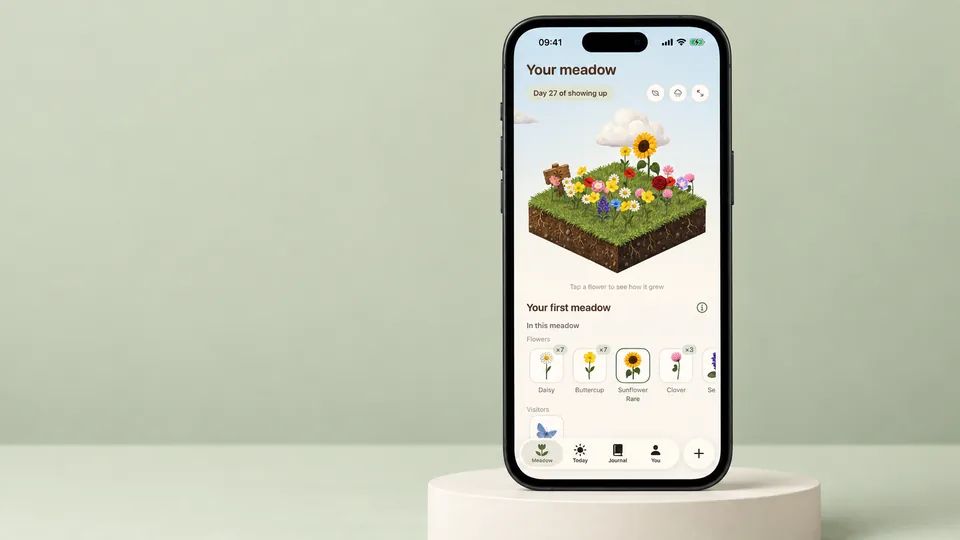
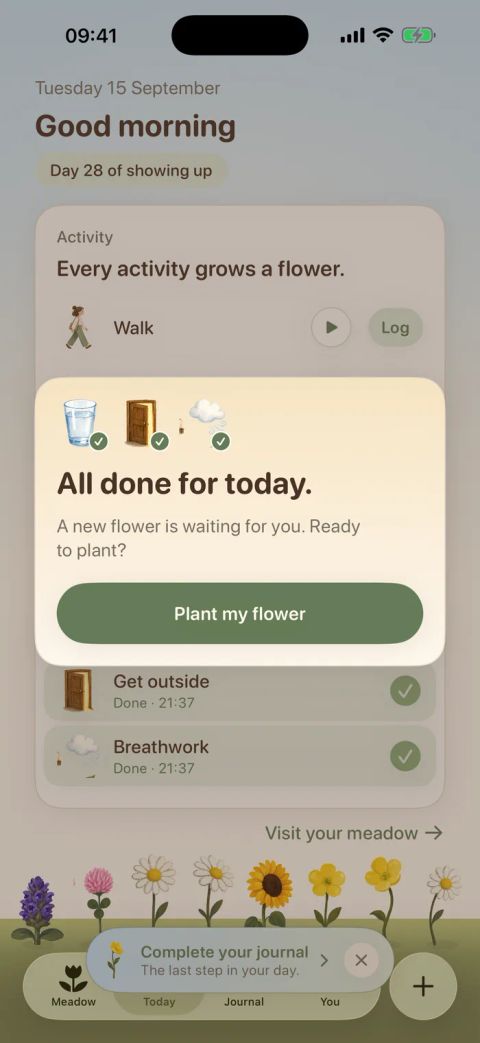
A record of the miles you've walked can be the thing that keeps you walking, and Meadow turns each day you move into a wildflower. It's a movement and habit app for iPhone from Wildcard Wellness, with walking among its built-in activities, so you can log your mile with a timer, note your mood and energy, and watch your own meadow fill in over the weeks. It counts consistency over a perfect run, so there are no streaks, and a day you miss the mile resets nothing you've grown.
Common questions
Is walking a mile a day enough?
For a beginner or a busy week, it's a strong floor. A daily mile supports your heart, blood sugar and mood, and it's a dose you can keep, which beats a bigger plan you drop by Wednesday. It won't cover muscle strength, or by itself shift weight, so treat it as the base you build on. At a brisk pace it also comes to roughly 105 to 140 minutes a week, most of the 150 the guidelines ask for.
How long does it take to walk a mile?
About 15 to 20 minutes at a comfortable pace for most adults, a little less if you push it. If you can talk but not sing as you go, per the NHS talk test, you're at a brisk, moderate pace of roughly three miles an hour.
Will a mile a day help me lose weight?
Not on its own, for most people. It burns some energy and helps the habits around eating and sleep, but weight depends on far more than steps, so a mile is better judged by how steady it makes the rest of your day than by the scales.
How many calories does walking a mile burn?
Somewhere near 80 for a person of about 11 stone at a brisk pace, going by the CDC's activity tables, and more if you weigh more. It's a small number. A daily mile earns its keep through your heart, blood sugar and mood far more than through calories.
Is a mile a day better than 10,000 steps?
Different goals. Ten thousand steps, about five miles, does more, but a mile is the dose most people can hold, and steadiness is what turns a walk into a health habit. Start at a mile and let it grow.
Can I split the mile into shorter walks?
Yes. The NHS counts a brisk 10-minute walk towards your weekly total, and the blood sugar research above used bursts of two to five minutes. Two half-miles, or three short laps after meals, add up to the same distance.
Is a mile a day good for older adults?
It's a sound target at any age, and you can slow the pace to suit. The mortality research above found the benefit levelling off at fewer steps for people over 60, so a mile covers more of the ground. Our guide on how far a 65-year-old should walk goes into the detail.
When is the best time to walk it?
The time you'll keep. A mile after a meal has an edge for blood sugar, a morning one can set the day up, and an evening one can wind it down. Fit it to your day.
One thing to do today
Pick one thing that already happens tomorrow, your morning coffee, the end of lunch, the school run, and add a mile straight after it. If a full mile feels like a lot, walk to the end of the road and back. A short walk you take beats a long one you plan and skip.
AUTHOR
Co-founder of Meadow.
Ash is co-founder of Meadow, a habit and movement tracking app that turns small acts of self-care into a growing wildflower meadow.
Every little bit counts
Five minutes counts. So does a dance in the kitchen.
Log the movement you enjoy and the small habits that help you feel good, and watch them bloom into something you can see.
Download Meadow