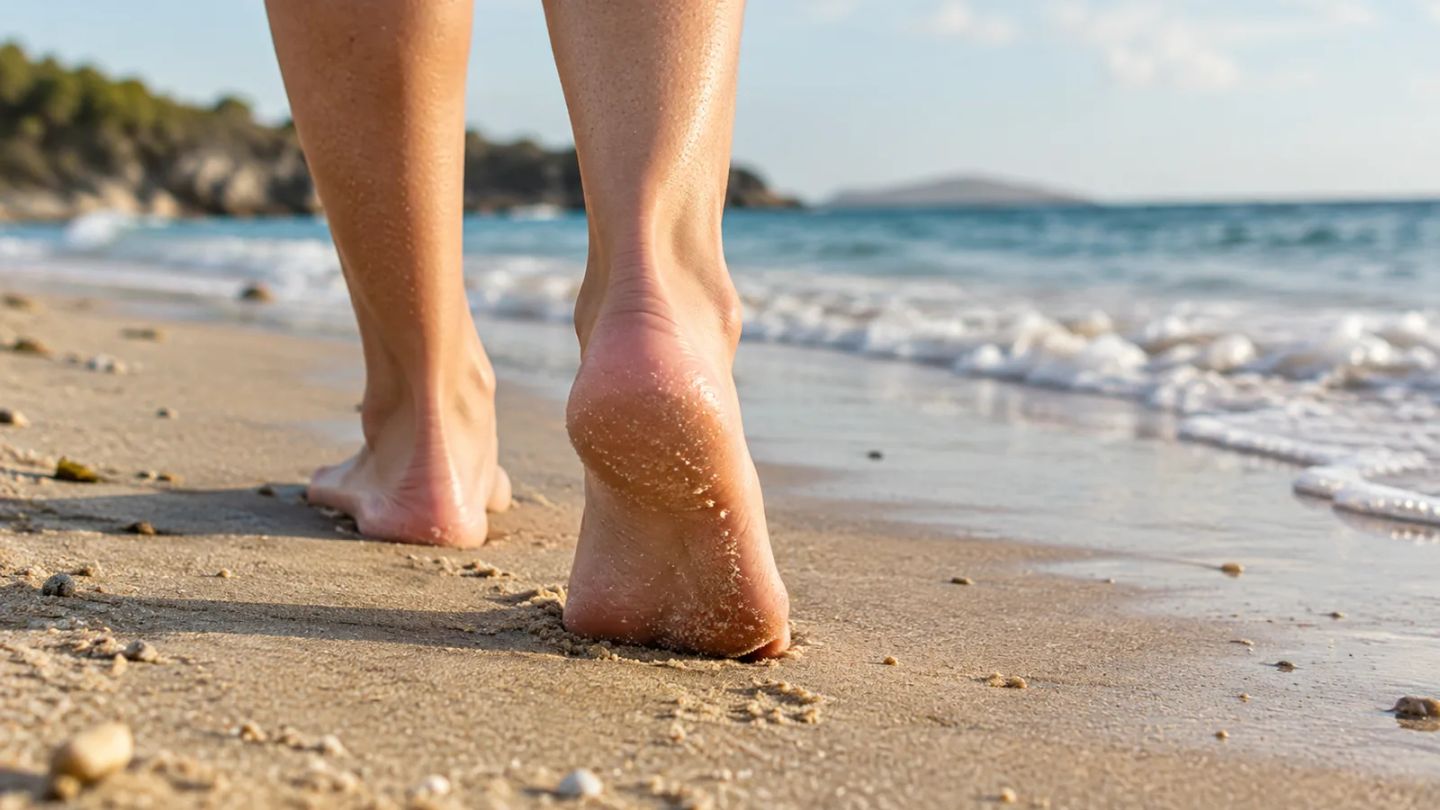
Barefoot walking means moving without shoes or socks, letting your feet meet the ground directly, whether that is a wooden floor, a stretch of lawn or damp sand. The honest picture is mixed. There is decent evidence that going shoeless some of the time builds stronger foot muscles and sharper balance, and there is much weaker evidence for the popular "grounding" idea that bare skin on the earth soaks up healing energy. This piece separates the two and shows you how to try it without hurting yourself.
Shod walking is still the foundation. If you want the broad, well-tested case for putting one foot in front of the other, the benefits of walking sit there. Barefoot walking is a small variation to layer on top, worth a go for your feet, not a swap for your daily walk.
What barefoot walking does to your feet
Take your shoes off and your gait shifts within a few steps. Most people land more towards the ball of the foot and less on the heel, the stride shortens, and the small muscles in the arch and toes start doing work a cushioned, supportive shoe usually does for them.
That is the whole point of it. A modern trainer holds your arch, grips the floor and softens every landing. Useful, but it also means the muscles, tendons and nerves in your feet get an easier ride than they would on bare ground. Barefoot walking hands some of that work back to the foot.
The benefits that hold up
Two claims survive scrutiny reasonably well, and a third is starting to get tested. Barefoot or minimal-shoe walking tends to strengthen the feet, and it sharpens the feedback your feet send your brain about where your body is.
Stronger feet
This is the clearest finding. A six-month study put 22 habitually shod Western adults into minimal shoes for most of their walking and measured their toe flexion strength against a control group who carried on as normal. The minimal-footwear group gained an average of 57.4% in toe flexion strength. The control group barely changed. Six months was enough to reach what looked like full strength.
Population comparisons point the same way. Researchers who compared 75 minimally shod Tarahumara men in Mexico with 26 conventionally shod American men found larger foot muscles and stiffer, higher arches in the barefoot-habituated group. Only 1% of the minimally shod men had low arches, against 31% of the shoe wearers.
Here is the honest caveat. That second study is observational, so it can show a link but can't prove the shoes caused the weaker feet. The two groups differed in how active they were, and footwear was one factor among several. The authors say plainly that prospective studies are needed to confirm cause and effect. The six-month trial is stronger evidence, and together they make a fair case: giving your feet more to do tends to make them work harder and get stronger.
Better balance and body awareness
Your feet are covered in sensors. When bare skin reads texture, slope and pressure straight off the ground, your brain gets richer information about where you are and how to stay upright. Physiotherapists call this proprioception, your sense of your body's position without looking.
A small study had 23 healthy adults walk for three minutes on a rugged textured surface, barefoot and in various shoes, then measured how much they swayed. Barefoot and near-barefoot walking improved short-term postural stability more than a conventional shoe did. The barefoot condition also hurt more, at 79 out of 100 on a discomfort scale against 30 for a thin protective shoe, which is a useful clue about surfaces.
Keep the finding in proportion. This measured sway minutes after a short walk, not fewer falls over months, and there is no good trial showing barefoot walking on its own stops people falling. What it does support is that bare feet feed your balance system more to work with, and balance is worth guarding as you age. The NHS advises building strength and balance activity into the week from 65 onwards. Barefoot time on a safe surface can be one small input to that, alongside steadier options like chair yoga or these mobility exercises for seniors.
Focus and the brain
One newer claim is that barefoot walking sharpens your thinking. It rests mostly on a 2024 Korean study of 59 teenage boys, split into a barefoot walking group, a group who walked in trainers and a group who sat and studied. The walkers did 40 minutes, four mornings a week, for 12 weeks. Brainwave readings and scores for concentration and cognitive speed improved in the barefoot group, and brain stress scores fell.
It's an interesting result and a thin one. The groups were about 20 boys each, everyone knew which group they were in, and the authors say themselves that the sample was small and limited to one age group. Call it a reason to run bigger trials. It isn't yet a reason to take your shoes off before a meeting.
A word on knees and heels
You will read that walking barefoot fixes knee and heel problems. Be cautious. A forefoot landing does spread impact differently, and some clinics note it may ease certain knee conditions by changing how load passes through the joint. The signals are early and specific, not a general promise. The same page tells anyone who feels heel pain while barefoot to switch back to a more supportive shoe. If a joint is already sore, treat this as something to raise with a physiotherapist before you experiment.
Where the evidence gets thin: grounding and earthing
Much of the barefoot buzz online is not about muscles at all. It is about "grounding" or "earthing", the idea that bare contact with the ground lets your body take in electrons from the earth and that this calms inflammation, improves sleep and lifts mood.
The research here is a different quality altogether. A widely cited review reports improvements in sleep, cortisol and pain, but it leans on small pilot studies of roughly 8 to 60 people, several of them using conductive mats rather than bare feet on soil, and the authors disclose financial interests in earthing products. Independent coverage is blunter. Healthline's overview points to trials of around 16 to 21 participants, notes they rely heavily on self-report without controlling well for the placebo effect, and says outright that grounding is under-researched with few independent, quality studies.
Here, honesty has to win out over enthusiasm. The stronger case for barefoot walking is mechanical, about the feet and balance you can measure. The grounding claims may turn out to hold something, but the evidence so far is too small and too conflicted to bank on. Enjoy the grass under your feet because it feels good and gets you moving, not because a charge is curing you. Time outdoors has a better evidence base of its own, which we cover in the benefits of spending time in nature.
Why barefoot walking took off in Korea
South Korea is where the trend is most visible. The country's culture ministry called barefoot walking a craze in 2024, with many people taking it up after hearing reports that it could help with illness, and councils have been laying red clay paths in parks to meet the demand. The best known is the 14.5km red clay trail on Gyejoksan mountain in Daejeon, which takes more than three hours to walk.
The ministry's own account of the benefits is close to the one above. Bare feet make the foot muscles work, which may help balance. The grander health claims are the same grounding claims, with the same thin evidence behind them.
The risks are real, so respect them
The ground is not designed for bare skin. Podiatrists flag the obvious hazards: glass, nails and sharp debris you would never notice through a sole, plus more exposure to bacteria and a higher chance of infections such as athlete's foot. Healthline's guide adds wet or rough surfaces and extremes of temperature to the list. Hot paving in July is not the place to learn.
Their advice is sensible. Go barefoot in moderation, start slow on ground you trust, and check your feet afterwards for cuts you might have missed. Anywhere you can't control what's on the ground is the wrong place to try it, and that includes changing rooms, gym floors and public pavements. Your own clean floor, a familiar lawn or clean sand are the best.
Who should check with a GP first
If you have diabetes, this section is the one that counts. Nerve damage affects about half of people with diabetes, usually in the feet, and it can dull or remove the pain that would normally warn you about a cut or blister. A small wound you cannot feel can turn serious fast. The CDC is direct about it: "Never go barefoot. Always wear shoes and socks or slippers, even inside, to avoid injury."
The same caution applies if you have peripheral neuropathy from any cause, poor circulation, or reduced feeling in your feet for another reason. Barefoot walking leans on your feet to report back, and if the wiring that does the reporting is damaged, you lose the early warning that keeps it safe. Talk to your GP or a podiatrist about whether it suits you before you start, and keep your shoes on until you have.
How to start barefoot walking safely
If your feet are healthy and you are steady, build up slowly. Feet that have spent decades in shoes are undertrained, and the injuries here come from doing too much on day one.
- Start indoors, on a clean floor. A few minutes of walking barefoot around the house, most days, is enough to begin waking the foot muscles up. There is nothing to stand on and nothing to catch you out.
- Move outside to soft, known ground. A familiar lawn or clean, smooth sand is the next step. Walk it once in shoes first to clear any hidden glass, stones or mess.
- Keep the first outdoor sessions short. Five to ten minutes is plenty. Toe flexion strength took months to build in the trial, so there is no rush and nothing to gain from overdoing it early.
- Add minutes, not intensity. Lengthen your barefoot time gradually as your feet stop feeling sore the next day. Let comfort set the pace.
- Check your feet every time. Look for cuts, blisters or splinters after each session, and stop if you feel a new ache in the arch, heel or a joint. Soreness that lingers is a sign to ease off or see a physiotherapist.
A thin, flexible minimal shoe is a fair middle path if bare ground feels risky where you live. It keeps most of the ground feel while covering your skin, which is close to what the balance study tested. It is also a gentler option than full barefoot for anyone nervous about surfaces. If your ankles feel stiff once the shoes are off, a few ankle mobility exercises pair well with barefoot time.
On a hard day, and picking it back up
This is an easy habit to shrink. On a rushed or tired day, one minute barefoot across the kitchen while the kettle boils keeps the pattern alive, and that beats skipping it because a proper walk on the grass felt out of reach.
Missing days does little harm. A study of how everyday habits form found that one missed occasion did not stop a habit taking hold, and that the time it takes to feel automatic varies a lot from person to person. There is no streak to protect. When you skip a day, take the next chance instead of trying to make it up. If you like the idea of varying your walks, walking backwards is another low-key add-on with its own small evidence base.
Common questions
How long should you walk barefoot?
Start with a few minutes indoors and five to ten minutes on grass or sand, then add time as your feet stop feeling sore the next day. Healthline's guide suggests sessions of 15 to 20 minutes for people starting out, which is a fair ceiling for the first few weeks. The foot strength trial ran for six months, so think in months.
Is walking barefoot all the time good for you?
Probably not. The podiatrists quoted above recommend going barefoot in moderation, on ground you can check, with shoes for everywhere else. Your feet get the extra work from regular short spells, and your skin stays in one piece.
Is it good to walk barefoot at home?
A clean floor at home is the safest place to do it, with no glass and no surprises. The exception is anyone with diabetes or reduced feeling in their feet, who should keep shoes or slippers on indoors too.
See your barefoot minutes add up
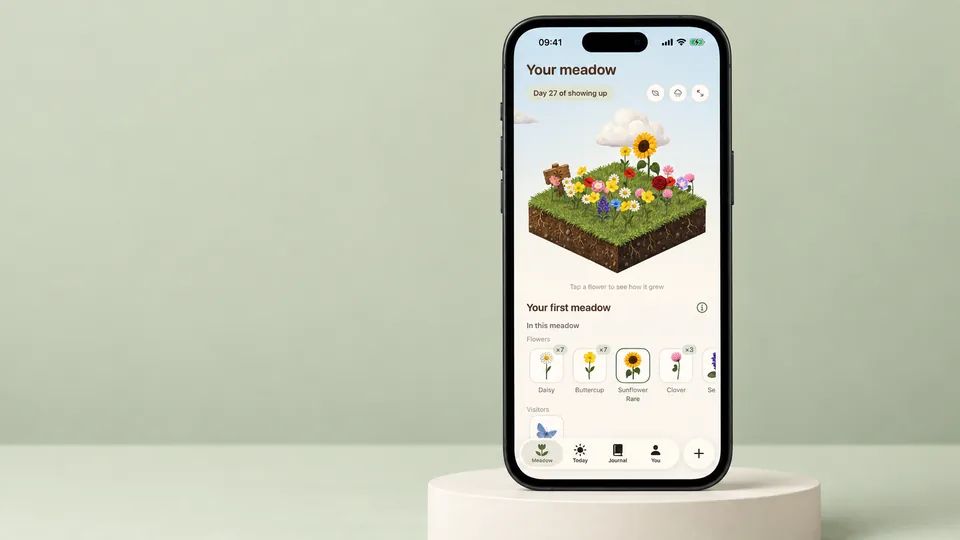
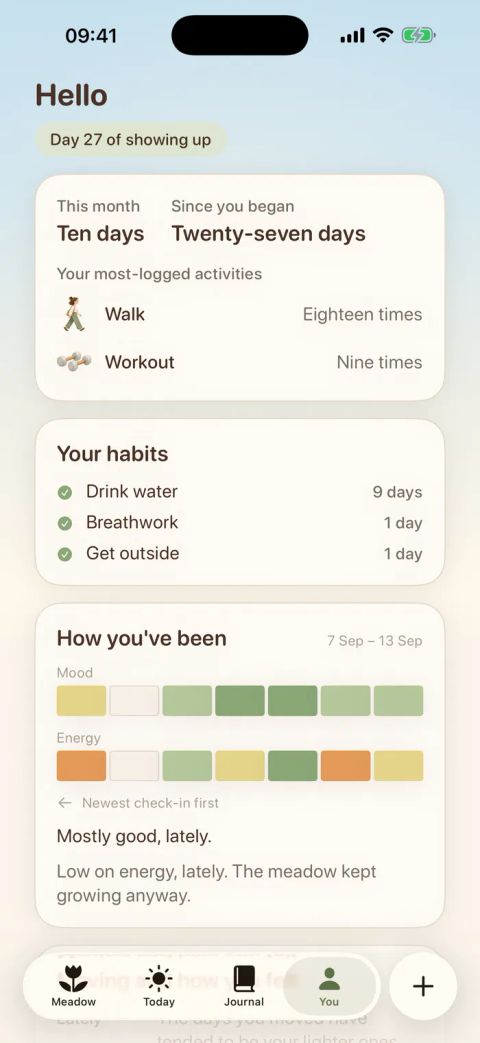
If you like to see the small sessions counted, Meadow gives each one somewhere to go. It's a movement and habit app for iPhone from Wildcard Wellness, where you log the movement you enjoy with a timer, whether that is a barefoot turn round the garden, a longer walk or a little yoga, tick off small daily habits, and note your mood and energy. Every day you show up grows a wildflower in your own meadow. There are no streaks, so a rained-off day resets nothing and your flowers never wilt.
Here is the one action worth taking today. Kick your shoes off and walk barefoot around a clean floor for two minutes, paying attention to how much more of the ground you feel. If it feels good and your feet are healthy, take it to the lawn next, short and slow, and let your feet get stronger from there.
AUTHOR
Co-founder of Meadow.
Ash is co-founder of Meadow, a habit and movement tracking app that turns small acts of self-care into a growing wildflower meadow.
See how far you've come
Your habits, moods and little wins, all in one place
Meadow keeps track of the walks, the water and the good days, so you can look back and watch your effort add up.
Download Meadow