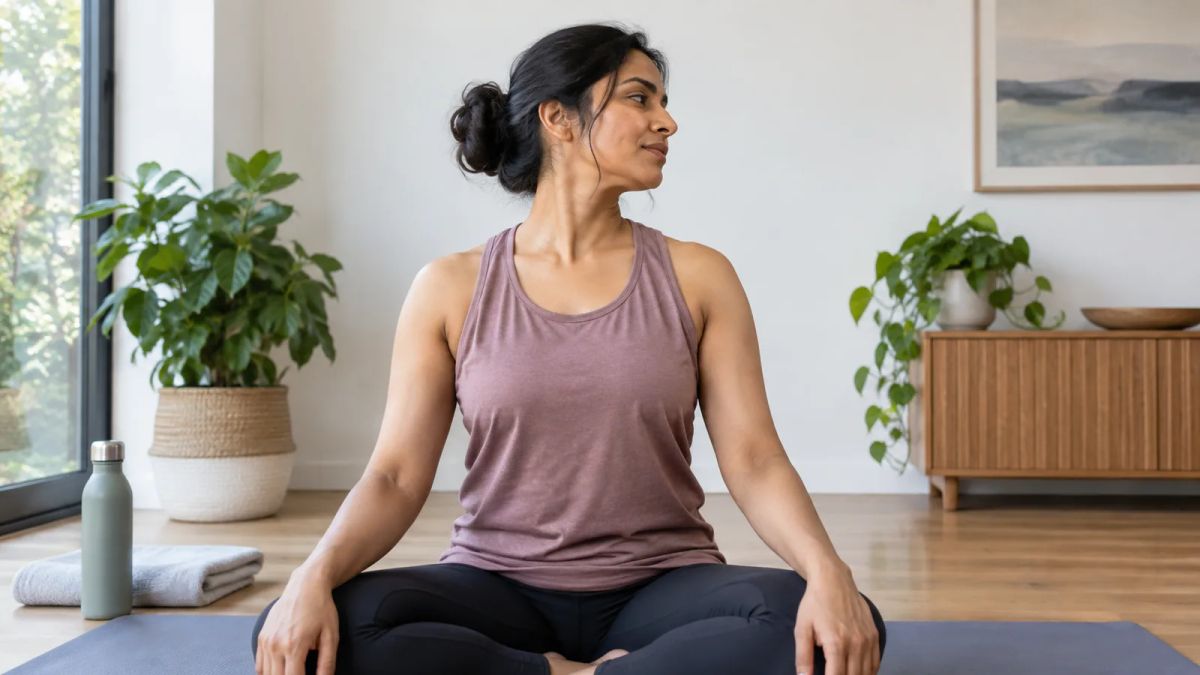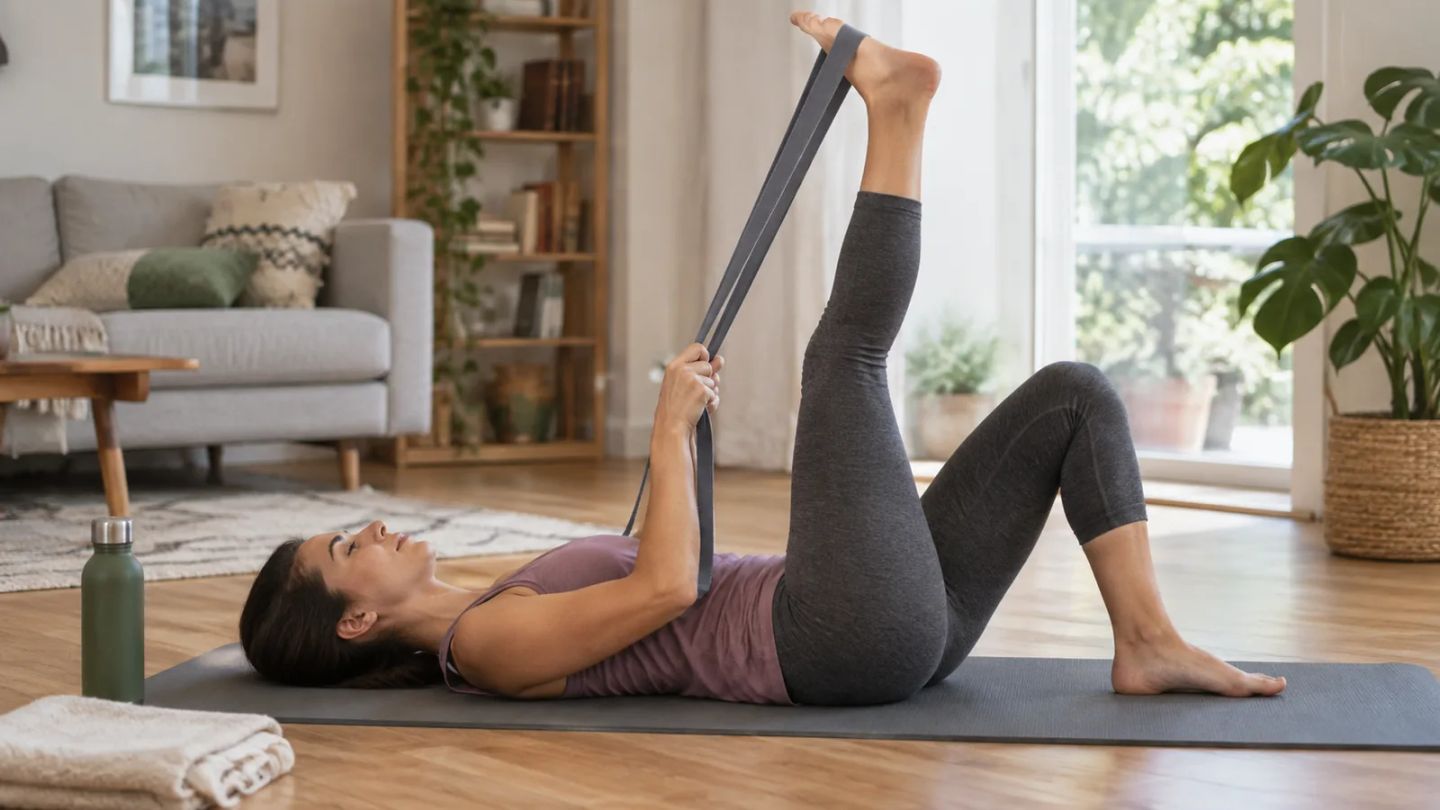
If the backs of your thighs feel short and tight when you bend to reach your toes or your laces, a few minutes of stretching, done a few times a week, can loosen them. What follows is a plan of six hamstring stretches, starting with a warm-up and moving through standing, seated, lying and doorway holds, that takes about ten minutes and needs nothing more than a chair, a wall and a strap or a towel.
Your hamstrings run down the back of each thigh, from the base of your pelvis to a point below the knee. When they are tight they limit how far you can bend forward, pull on your pelvis, and often leave the backs of your legs feeling stiff first thing or after a long sit.
One thing to get out of the way before the sequence. Cold muscle does not stretch well and pushing a cold, tight hamstring hard is how people tweak one. The first move here is a warm-up for exactly that reason, and a study of previously injured people found that a short warm-up on its own significantly increased hamstring range of motion before any stretching was added.
Why hamstrings get tight in the first place
Most tight hamstrings come from sitting. When you sit, your knees are bent and your hips are folded, which holds the hamstrings in a shortened position for hours at a time. Do that most days for years and the muscles settle into that shorter length. As one physiotherapy clinic puts it, sitting for long periods at a desk or while driving shortens the hamstring muscles over time.
Sitting is not the only cause. Hard training without enough recovery, an old injury that never fully settled, and plain genetics all play a part, so two people who sit the same amount can have very different flexibility.
There is also a catch worth knowing. That tight feeling comes partly from your nervous system deciding how far it will let the muscle go, and partly from the length of the tissue itself. It is why stretching often gives you more range within a single session and why the gains fade if you stop.
Warm up, then work through the six stretches
Open our free printable: Your hamstring stretch card (PDF). Save or print it to use alongside this guide. No sign-up needed.
Do the warm-up first, then take the static holds slowly and breathe through them. Each hold should feel like a mild pull along the back of your thigh and nothing sharper. Cleveland Clinic gives the plainest test for this: you should feel a gentle stretch along the back of your leg, and if you feel pain, you have gone too far.
1. Standing leg swings (your warm-up)
Hold a wall or the back of a chair for balance and swing one leg forwards and backwards in an easy arc, letting it travel a little further each time. Do 10 to 15 swings, then swap legs. This is a moving stretch, so there is nothing to hold. It gets blood into the muscle and takes your hamstrings through their range before you ask them to hold a position.
2. Standing hamstring stretch
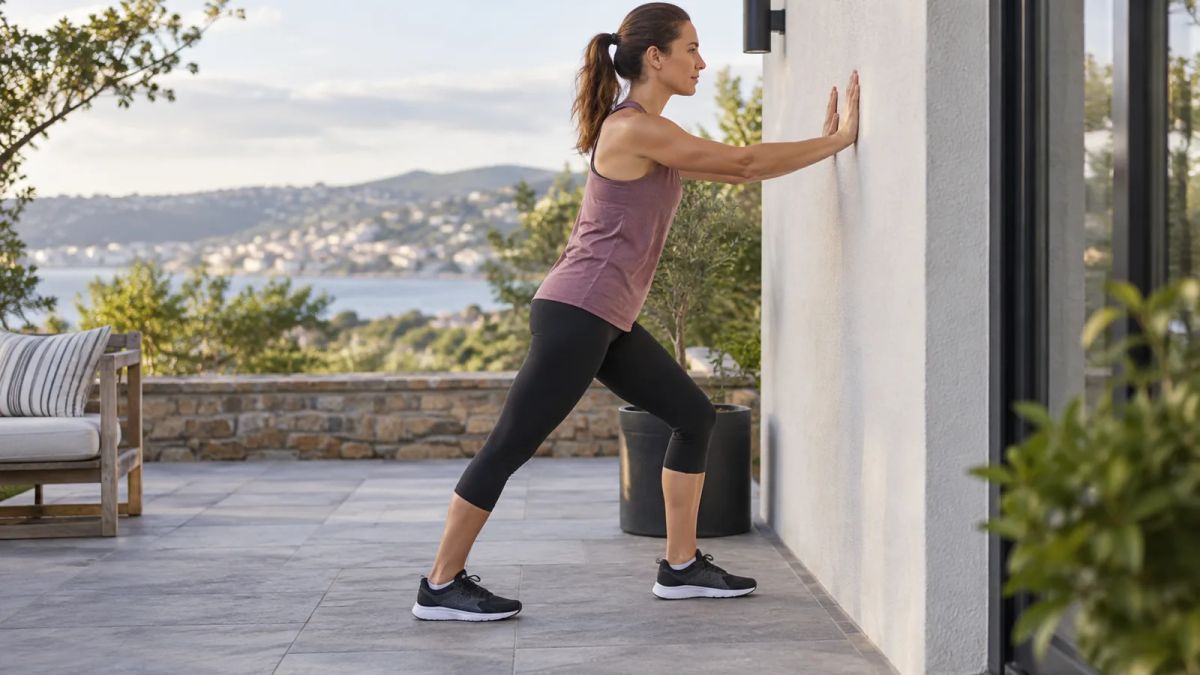
Rest one heel on a low step or a sturdy chair, keep that leg straight, and stand tall. Hinge forward from your hips, not by rounding your back, until you feel the stretch up the back of the raised leg. Hold for around 30 seconds, then swap. Do each side three times. Leading with your chest keeps the stretch in the hamstring instead of the lower back.
3. Seated hamstring stretch
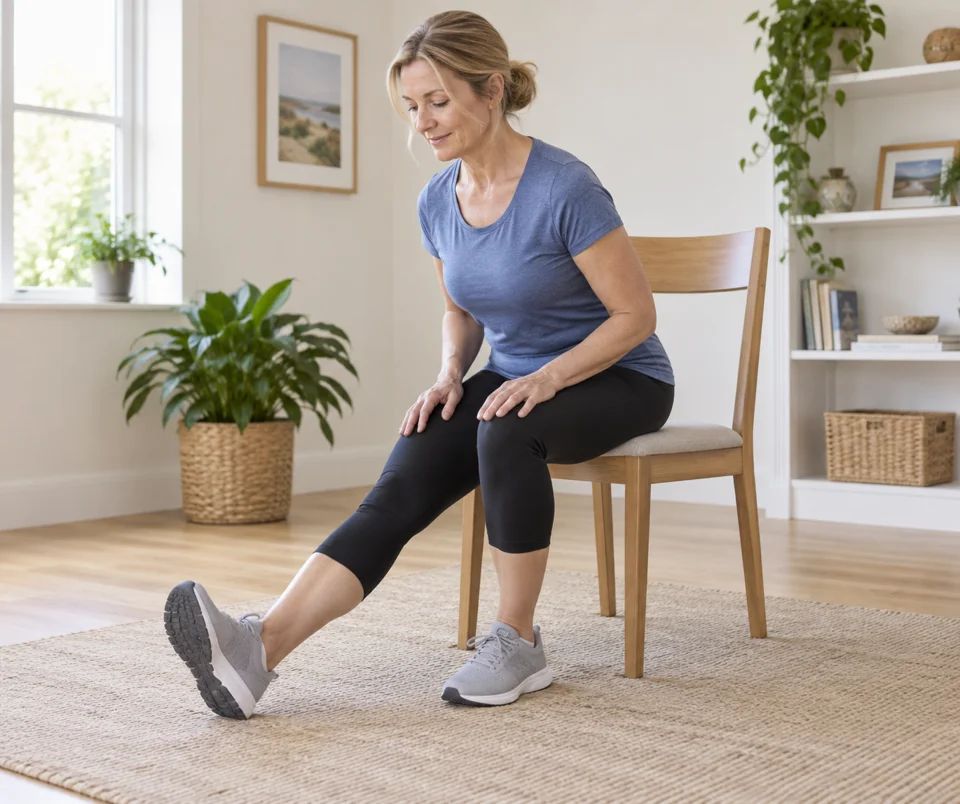
Sit near the front edge of a chair with both feet flat. Straighten one leg out in front, heel on the floor and toes pointing up, and sit up tall. Slide your hands down the front of that thigh and lean forward gently from the hips until you feel the pull. Hold for 20 to 30 seconds each side. This is the easiest one to slot in at a desk.
4. Lying hamstring stretch with a strap
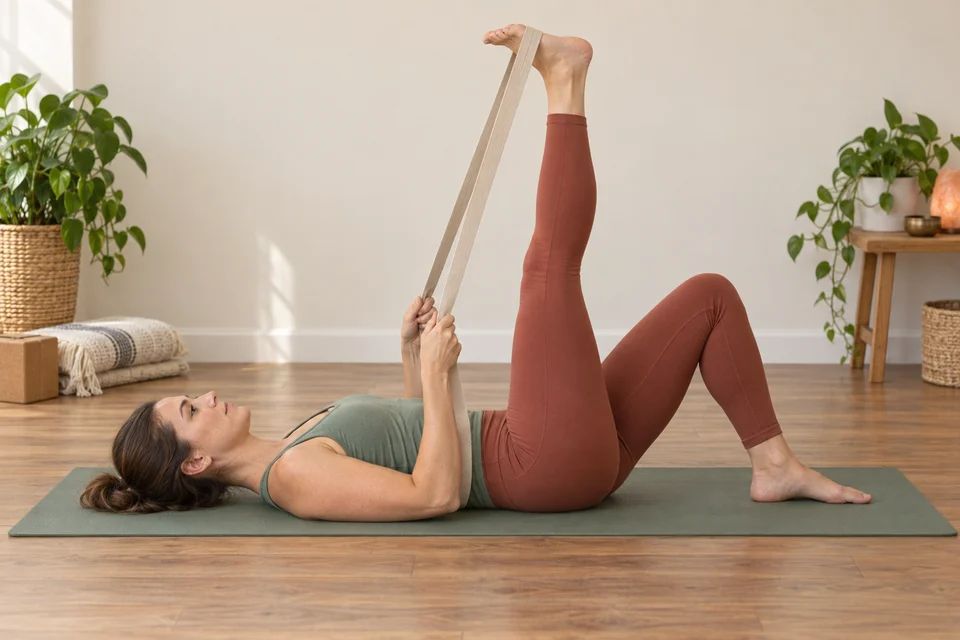
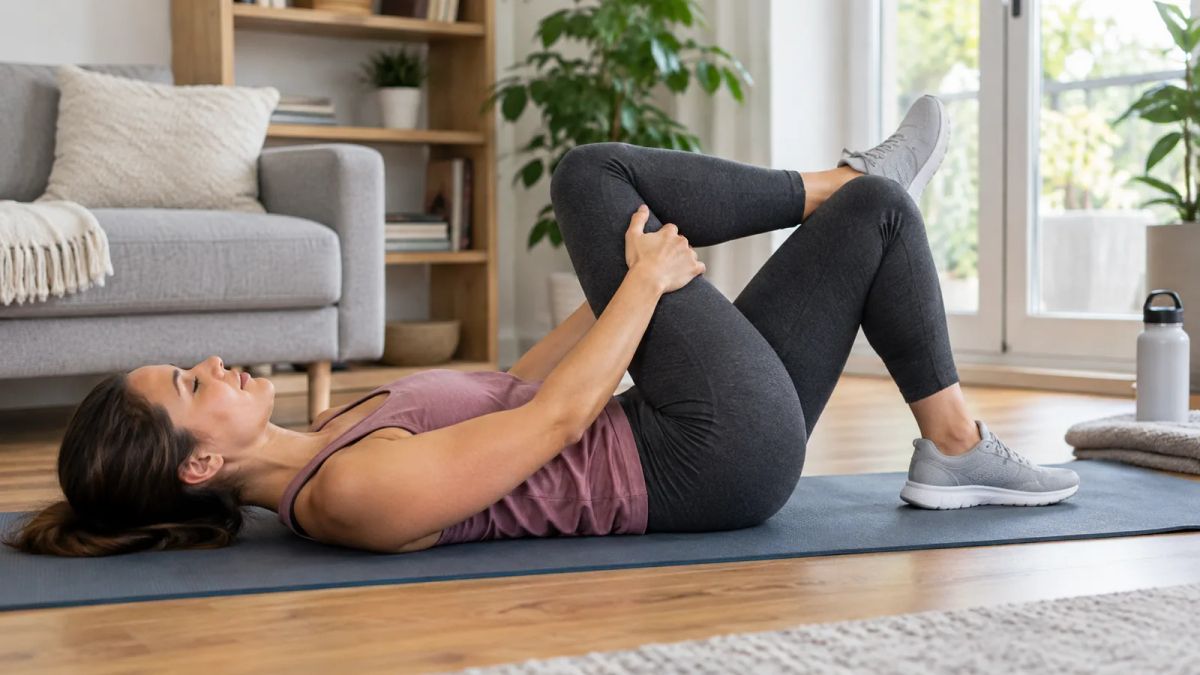
Lie on your back with both knees bent. Loop a strap, a belt or a rolled towel around the sole of one foot, then straighten that leg up towards the ceiling, using the strap to draw it gently towards you while the other foot stays planted. Keep the leg as straight as is comfortable and hold for around 30 seconds each side. The floor supports your back here, which makes it a kinder option if standing versions bother you.
5. Doorway hamstring stretch
Lie on your back in an open doorway with one leg extended flat through the gap along the floor. Rest the heel of the other leg up against the wall or door frame beside the opening, keeping that leg straight. Shuffle closer to the wall for more, further away for less. Hold for 30 seconds to a minute. It is a slow, passive stretch you can hold while you breathe, with no effort to keep the leg up.
6. Standing forward fold
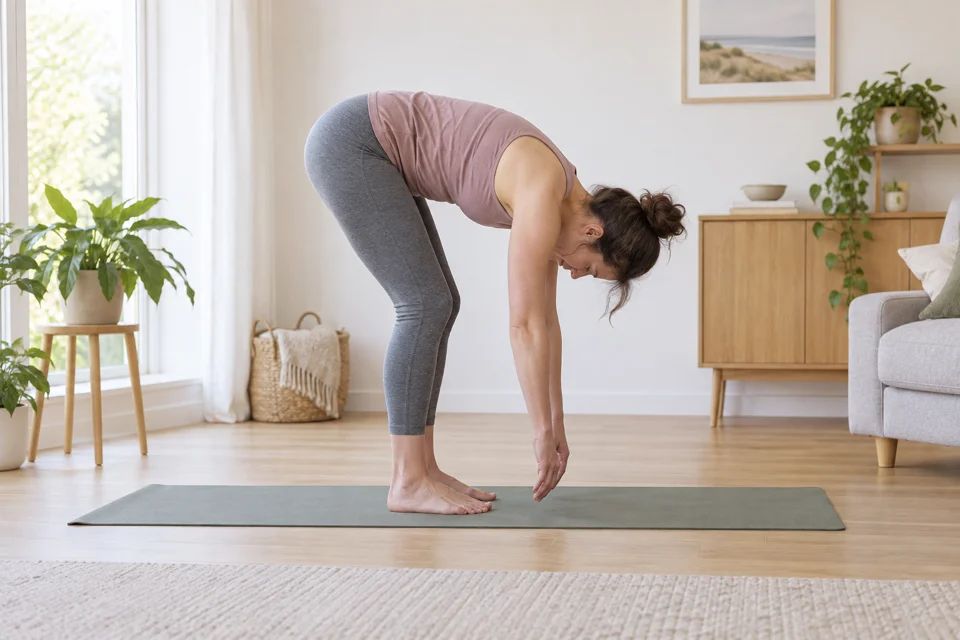
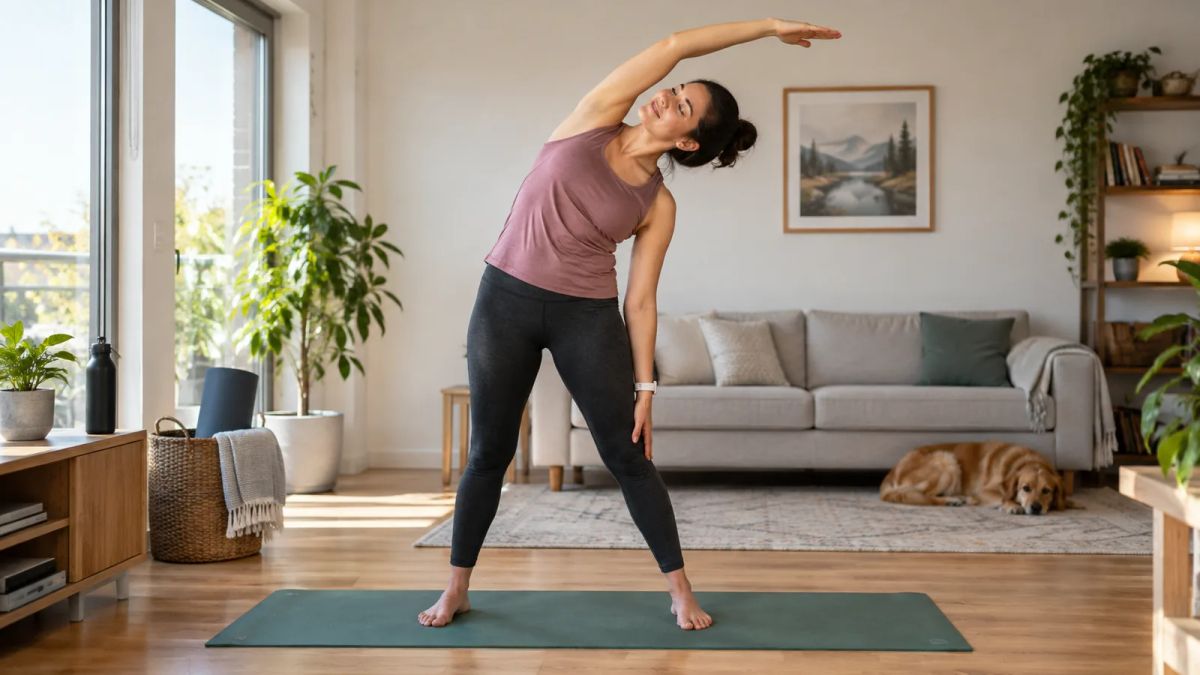
Stand with your feet hip-width apart, a small bend in your knees, and fold forward from your hips, letting your head and arms hang towards the floor. Go only as far as feels easy and let gravity do the work. Hold for 20 to 30 seconds. Bend your knees a touch more if your back rounds or the pull turns sharp.
Here is the whole thing at a glance, so you can follow it without scrolling back:
Warm-up: Leg swings, 10 to 15 each leg
1. Standing hamstring stretch, 30 sec, 3 times each side
2. Seated hamstring stretch, 20 to 30 sec each side
3. Lying strap stretch, 30 sec each side
4. Doorway stretch, 30 to 60 sec each side
5. Standing forward fold, 20 to 30 sec
Total: about 10 minutes. Aim for 3 to 5 days a week.
How often, and what to expect
Stretching once will not change a tight hamstring, but it does not take a punishing schedule either. Three to five sessions a week is a sensible target, and you can spread the individual stretches through the day if a single block is hard to find. The seated one at your desk, a couple of leg swings by the kettle, and it adds up.
Flexibility builds slowly and steadily. In one randomised trial, 60 young adults with shortened hamstrings did passive stretches held for 30 seconds, three times, and the plain stretching group gained about six degrees of knee-extension range. Real, but modest, and that was under supervision. Expect weeks of regular practice before a lasting change, not days.
Be honest with yourself about the ceiling too. The warm-up study found that the extra range from stretching dropped off within 15 minutes of rest, though it stayed above where people started. Some of what you feel is short-term looseness, which is fine for moving more comfortably now, but it is the reason you have to keep the habit up to hold any lasting gain.
Stretching also is not a fix for everything a tight hamstring might signal. Hospital for Special Surgery makes the point that for people who keep straining a hamstring, stretching alone was not enough to prevent it, and the strategies that worked combined stretches with dynamic warm-ups and targeted strength work. If one hamstring is sharply painful, weak, or sore in a specific spot rather than generally tight, that is worth a word with your GP or a physiotherapist before you stretch into it.
Look after your back while you do it
The commonest mistake with hamstring stretches is rounding the lower back to chase your toes. That takes the stretch off the hamstring and loads the spine instead. In every seated and standing stretch here, keep a long back and hinge from the hips, letting your chest lead and stopping when you feel the pull behind the thigh. If you can only reach your shin, that is the right depth for you today. Ease into each hold rather than forcing it, and never bounce at the end of the range.
Log the stretch and watch it add up

A few minutes of stretching counts as movement, and Meadow gives you somewhere to mark it. It is a habit app for iPhone from Wildcard Wellness where you log the movement you enjoy with a timer, a stretch, a walk or a little yoga, and tick off small daily habits alongside it. Every day you show up grows a wildflower in your own meadow, and because there are no streaks, the week you skip your stretches resets nothing. Your flowers stay put and you pick up where you left off.
If you want to build out a fuller session, this pairs well with a full-body stretching routine and with hip mobility exercises, since tight hips and tight hamstrings usually travel together. And if sitting is the root of it, the stretches for sitting all day break up the hours that shortened the muscles in the first place.
On a busy day, and after a gap
Decide your shorter version now, before a rushed morning makes the decision for you. Two leg swings each side and one seated hamstring stretch at your desk still count, and a single stretch keeps the thread going far better than skipping the day entirely.
If you fall off for a week or a month, nothing you built is wiped out. Tightness after a break is the result of sitting still again, not a mark against you, and the cure is the same as it ever was. Pick the next quiet moment and do the seated stretch.
Right now, before you move on, straighten one leg out from your chair, hinge forward from the hips, and hold for a slow count of twenty. That is the first of your three to five sessions this week.
AUTHOR
Co-founder of Meadow.
Ash is co-founder of Meadow, a habit and movement tracking app that turns small acts of self-care into a growing wildflower meadow.
Little and often, with Meadow
Consistency, not intensity.
Meadow turns the movement you enjoy and the habits that help you feel good into a meadow of wildflowers. No streaks to break, and your flowers never wilt.
Download Meadow