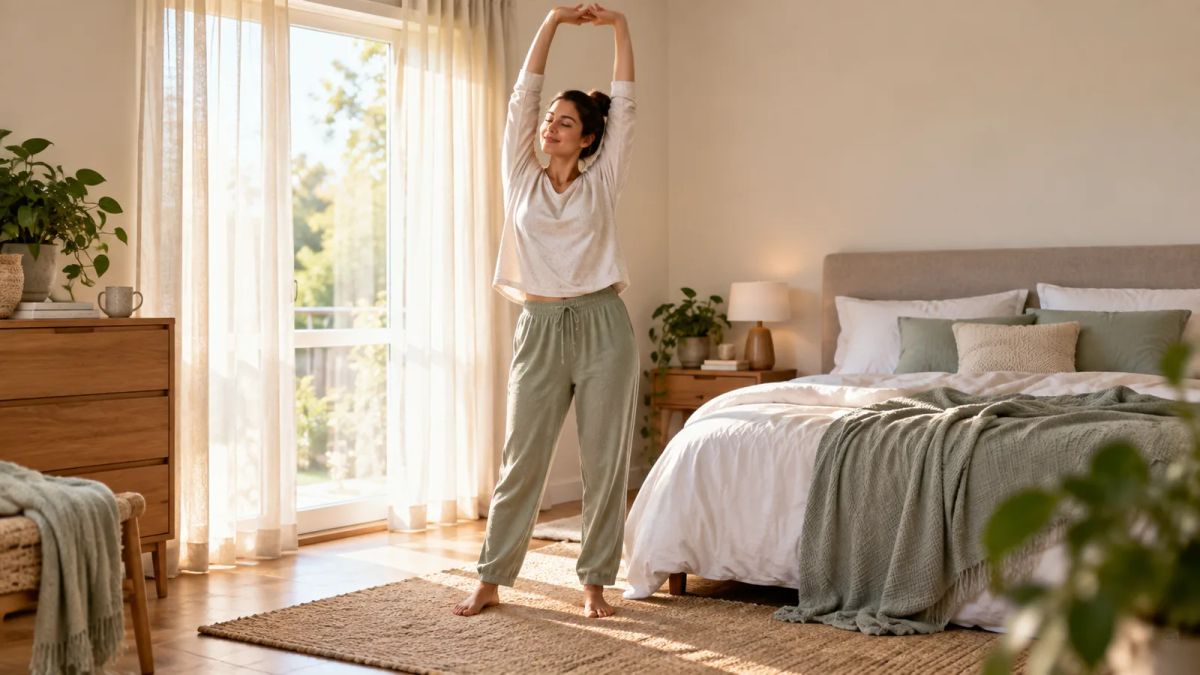
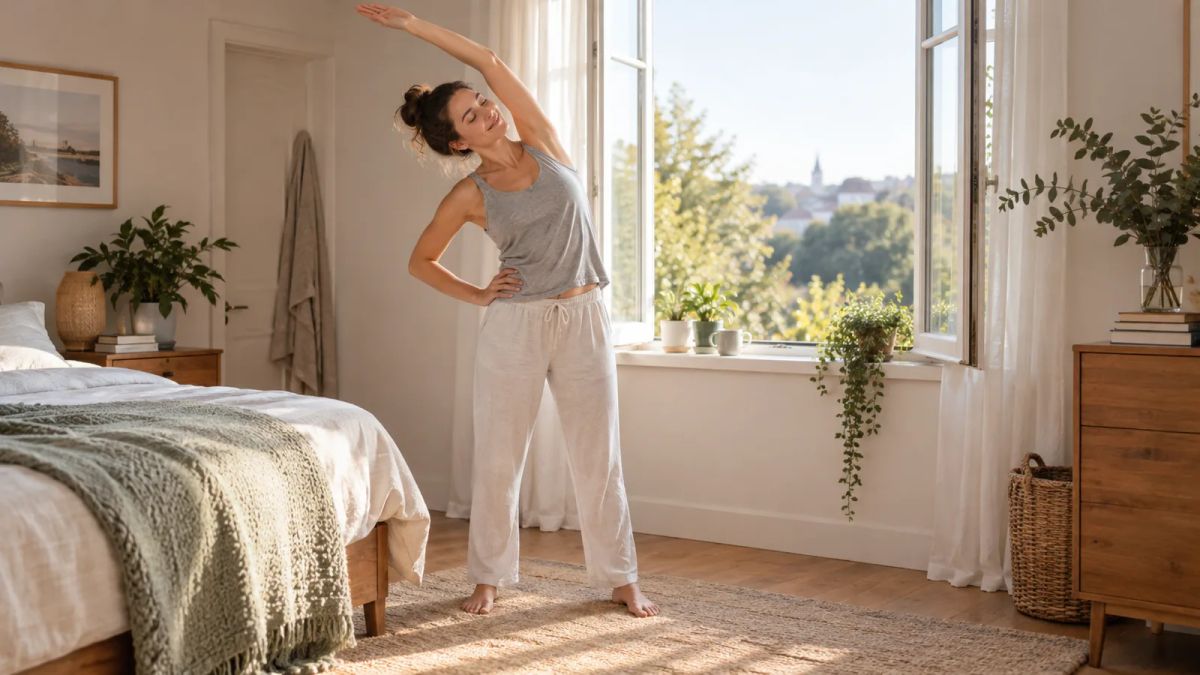
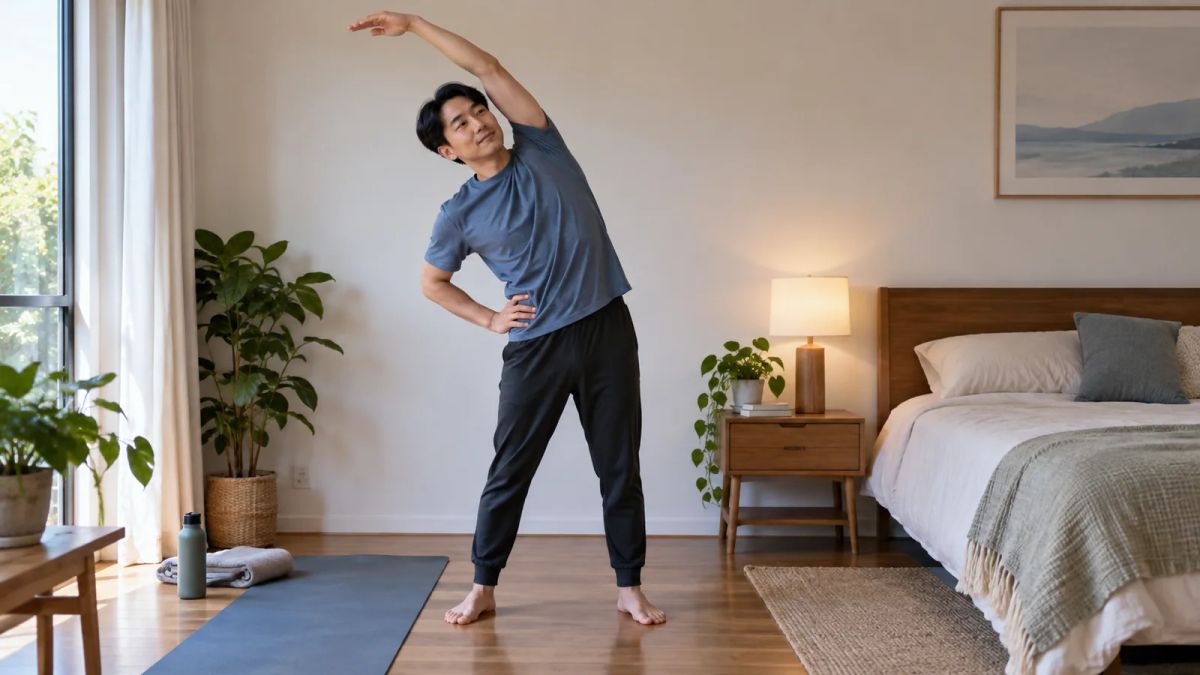
A morning stretch does two things well. It takes the edge off the stiffness that builds while you sleep, and it gives your body a calm, unhurried start before the day speeds up. Some of the bigger claims made for it are softer than they sound, so here is an honest look at what a few minutes of stretching first thing can do for you, and where it falls short.
You wake up stiff because you have been still for hours. Your joints have settled, your muscles have cooled, and the first walk to the kettle can feel creaky. A short stretch is a way of easing yourself back into moving, and that alone is a fair reason to do it. The rest of the benefits sit on a spectrum, from solid to plausible to oversold, and it is worth knowing which is which before you rearrange your morning around it.
This is the case for stretching in the morning, and the honest limits that come with it.
Why the morning is a good time for it
Overnight, you barely move. Blood pools, fluid settles in the joints, and the muscles that held one position for hours lose a little of their give. That is why a stiff back or tight hips are common first thing and tend to ease once you are up and about.
A gentle stretch speeds that easing along. You are moving each area through a comfortable range before you ask it to carry you around all day. Cleveland Clinic frames the everyday payoff plainly, noting that stretching helps with ordinary movements like climbing stairs, changing direction and standing up from a chair. Loosening off before you do any of that is a sensible way to start.
The morning also suits it for a simpler reason. Your body has been calm and still, the house is often quiet, and a slow sequence fits the mood of that hour better than it fits a rushed lunchtime. Habits that ride along with a quiet moment tend to last.
What a morning stretch can do for you
Here is what the evidence and everyday experience support, strongest first.
- It eases overnight stiffness. This is the benefit you can count on. A few slow movements through the neck, back, hips and calves take you from that heavy, half-asleep tightness to something looser within minutes. You feel it straight away, which is part of why the habit sticks. It will not last all day on its own, but as a way to start moving, it works.
- It gives you a gentle wake-up. A slow stretch gets you breathing a little deeper and shifts you out of standstill, which helps you feel more awake. Whether it does much for your circulation is less settled. A 2022 review found the blood-flow benefits of stretching are promising but drawn mostly from animal studies and small trials in older or unwell people. So treat the wake-up feeling as the reliable part and any circulation boost as plausible but unproven.
- It can leave you calmer. Paired with slow breathing, a few quiet minutes before the day gets loud can settle you. The calm likely comes from the pause and the breathing as much as the stretch. The NHS describes slow, counted breathing as a calming breathing technique for stress, anxiety and panic you can do anywhere, and a morning stretch is a natural place to fold it in. Direct evidence that stretching itself lifts mood is limited to small studies, so keep the hope modest. A steadier start, not a fix for a rough morning.
- It builds a little body awareness. A stretch is a minute of noticing where you are tight and how you are moving, before you fold yourself into a car seat or hoist a bag onto one shoulder. That check-in can nudge you to move more carefully through the day. It is a soft benefit and hard to measure, but people who stretch in the morning often mention it, and it costs nothing to have.
Notice what is not on the list. No claim that it burns fat, fixes your posture for good, or fireproofs you against injury. Those show up in a lot of morning-stretch articles, and the evidence for them first thing is thin.
What a morning stretch will not do
Being clear about the limits keeps the habit honest and stops you feeling let down when it does not deliver a miracle.
- It will not transform your flexibility on its own. Flexibility comes slowly. Harvard Health notes it takes weeks to months to get flexible, and you have to keep at it to hold any gains. Even then the change can be smaller than it feels. A ten-week programme in older adults raised ankle range of motion by around nine degrees, and the researchers put that down to the body tolerating the stretch better, not to a change in the tissue itself. Five minutes by the kettle helps you feel loose today. Real, lasting flexibility is a longer project.
- It will not replace exercise. Stretching is not cardio and it is not strength work. It does not count towards the heart-and-lung side of staying well, and it will not build muscle. It also will not clear the ache after a hard session. A well-known review found stretching produces only small and non-significant reductions in muscle soreness. Think of a morning stretch as a good companion to walking and movement, not a stand-in for them.
None of this is a reason to skip it. It is a reason to do it for what it gives, a looser, calmer start, and to get your movement and strength from elsewhere.
Go easy on cold muscles
First thing, your muscles are cool and your joints have been still for hours, and that changes how you should stretch. Harvard Health warns that stretching muscles before they are warmed up can hurt them, because when everything is cold the fibres are not prepared and may be damaged.
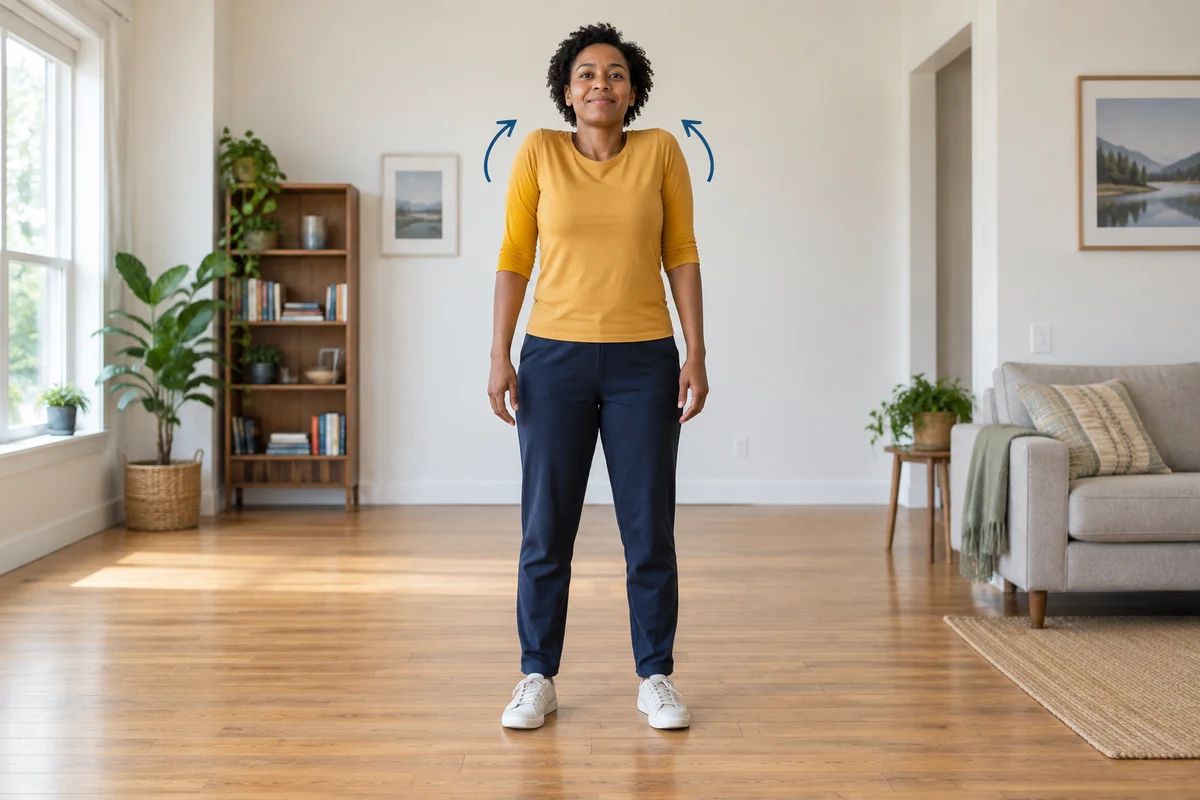
So do not drop into a deep, straining hold the moment you swing your legs out of bed. Start with soft, moving warm-ups, a few shoulder rolls, some slow neck turns, a round or two of cat-cow, and let those ease you in before any longer holds. The NHS flexibility advice is to move as far as is comfortable and build up slowly over time. A mild, tolerable pull is the target. A sharp or pinching pain means come out of it.
If you have a joint problem, a recent injury, or a condition that affects how you move, it is worth a word with your GP or a physiotherapist before you start, so the movements suit you.
How to make it a habit
A stretch you mean to fit in somewhere tends to slip. A stretch pinned to something you already do every morning tends to survive.
The American Heart Association suggests tying a new action to a routine you already have, so it rides along with something automatic instead of asking for a fresh decision each day. The kettle is a good anchor. "While the kettle boils, I do my neck, shoulders and one round of cat-cow" is the kind of plan that holds, because the cue is already built into your morning.
Decide your smaller version now, before you need it. On a stiff, rushed or low morning, two slow neck turns and a few shoulder rolls still count. A minute keeps the thread going, and keeping the thread going is what turns this into something your body expects.
And when you miss a morning, let it go. One skipped day undoes nothing, and the next morning picks up with no catching up to do. Stiffness after a gap is the result of staying still, not a mark against you.
Open our free Stretching starter plan (PDF). A six-move reference and a weekly planning page for a gentle stretching habit. Choose the movements and timing that suit you. Save or print it; no sign-up needed.
For the actual moves, a short morning stretch routine runs neck to calves in about five to ten minutes, and our good morning stretch sequence covers a quick wake-up you can do beside the bed. If evenings are where you have the quiet time, the benefits of stretching before bed piece does the same honest job for winding down.
Somewhere to keep the habit

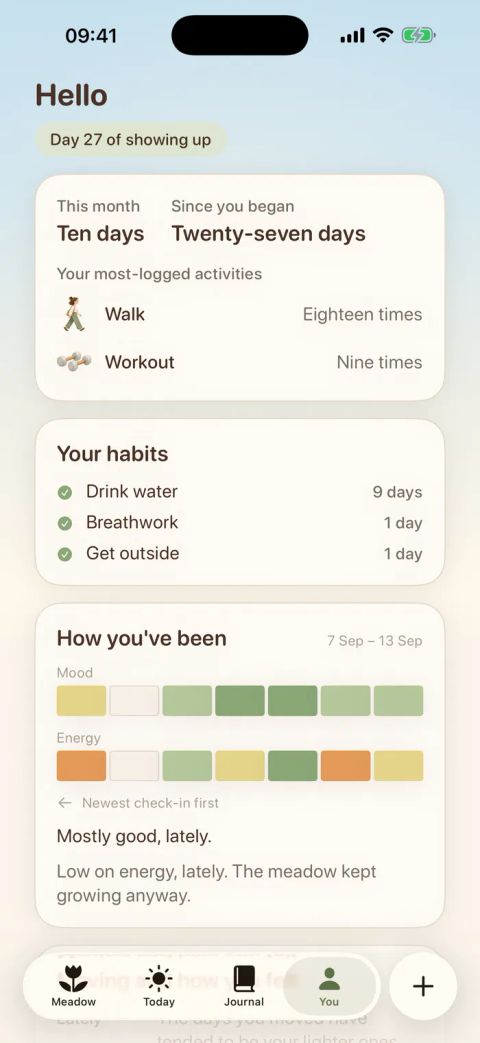
If a nudge on your phone helps the stretch stick, Meadow gives it a home. It is a movement and habit app for iPhone from Wildcard Wellness where you log the movement you enjoy with a timer, whether that is a stretch, a short walk or a little yoga, and tick off small daily habits alongside it. You can note your mood and energy and add a daily win, which fits the calmer-start side of a morning stretch. Every day you show up grows a wildflower in your own meadow, and there are no streaks, so a morning you skip resets nothing and your flowers never wilt.
Common questions
Is it better to stretch in the morning or at night?
Both have their place, and you can do either or both. Mornings are good for easing overnight stiffness and starting the day looser. Evenings suit winding down, where slow stretching and breathing help you settle. Pick the time you will come back to, since a habit you keep beats the theoretically better one you drop.
How long should a morning stretch be?
Five to ten minutes is plenty. That is enough to move the main areas through a comfortable range without eating into your morning. On the deeper holds, somewhere around twenty seconds each is a reasonable guide. A single minute on a busy day is still worth doing.
Does stretching in the morning boost your metabolism or help you lose weight?
Not in any way you would notice. Stretching burns very few calories and does not raise your metabolism enough to matter for weight. If weight is your goal, regular walking and movement, along with what you eat, do the heavy lifting. A morning stretch is for feeling looser and calmer, and it is best judged on that.
Tomorrow morning, while the kettle boils, do three slow neck turns and one round of cat-cow. That is the whole habit in miniature, and it is enough to begin.
AUTHOR
Co-founder of Meadow.
Ash is co-founder of Meadow, a habit and movement tracking app that turns small acts of self-care into a growing wildflower meadow.
See how far you've come
Your habits, moods and little wins, all in one place
Meadow keeps track of the walks, the water and the good days, so you can look back and watch your effort add up.
Download Meadow