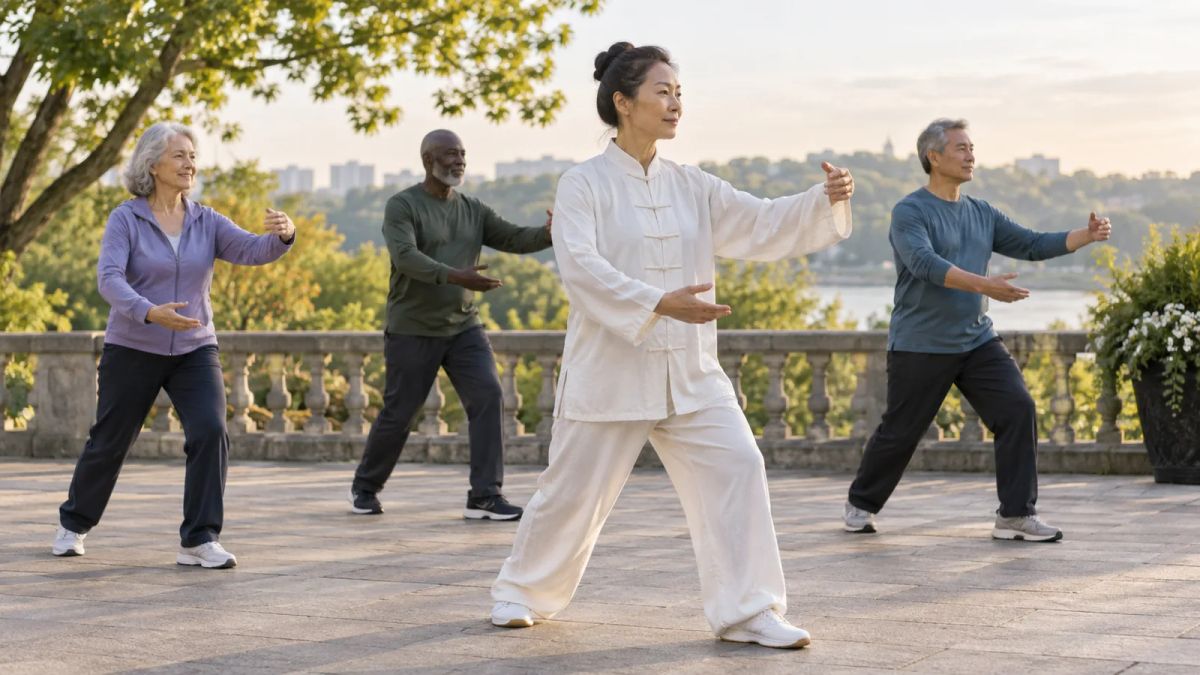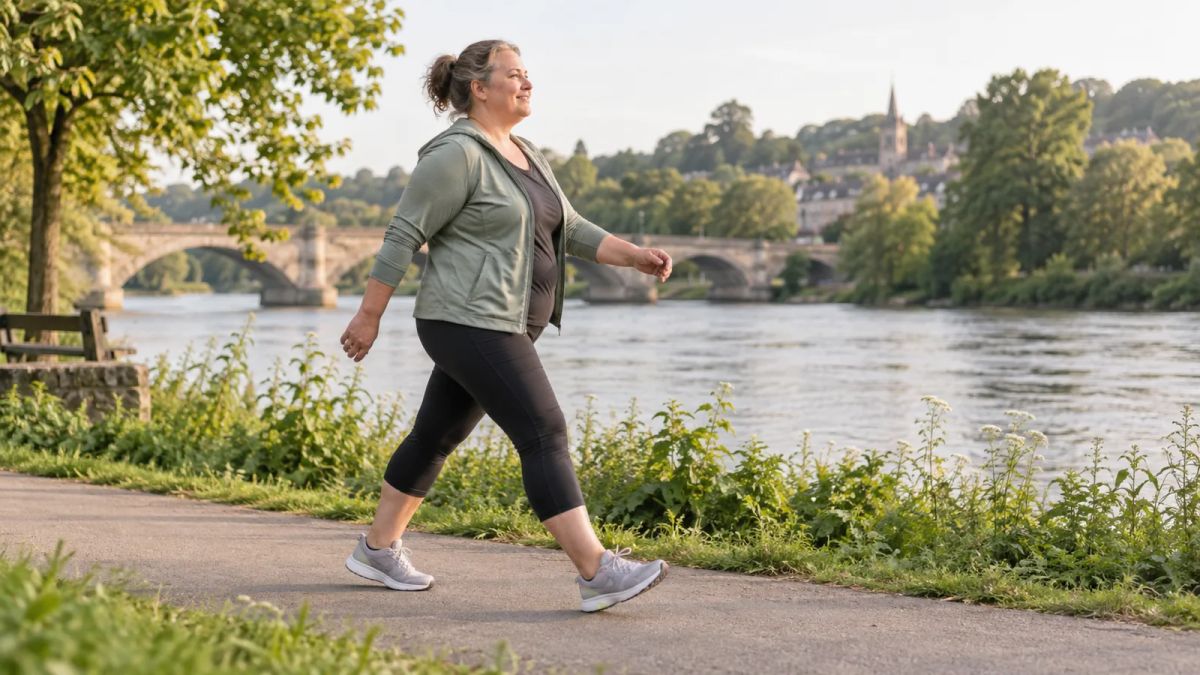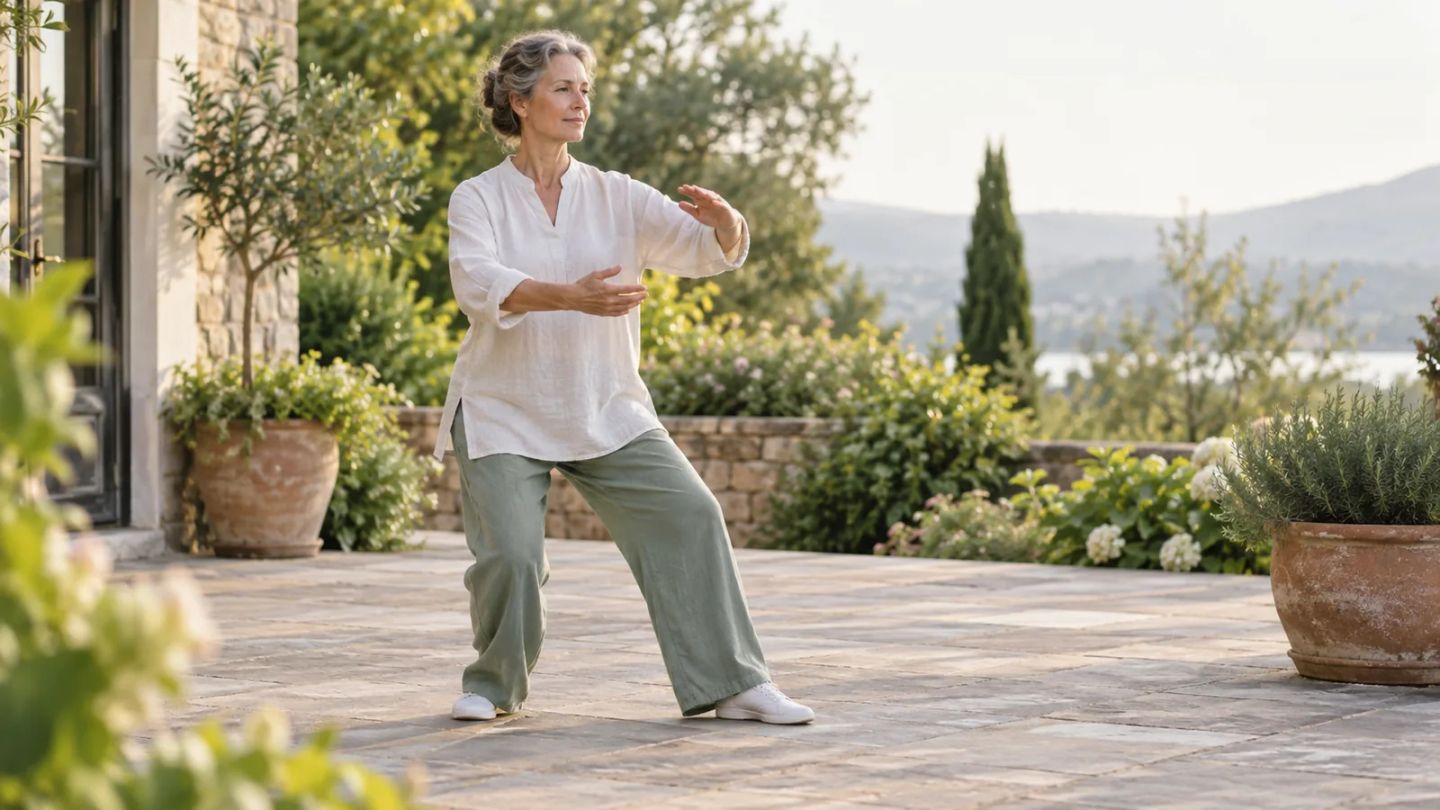
Tai chi walking is a slow, mindful way of walking borrowed from tai chi, where you move a few controlled steps at a time and shift your weight fully onto each foot before the next one lifts. If you have found it while looking for a gentle way to lose weight, the honest version comes first: it burns modest energy and the evidence for it as a weight method is thin, so it works best as a calm movement habit you can keep rather than a plan for the scales.
That does not make it a waste of your time. Slow, deliberate walking is kind to your joints, steadies your balance, and hands you a few quiet minutes in a busy day. Those are the things it does well, and they are worth having on their own terms.
What tai chi walking is
Ordinary walking runs on autopilot. You fall forward, catch yourself, and repeat, barely noticing your feet. Tai chi walking slows the whole thing down until every part of the step becomes something you choose. You stand tall and relaxed, soften your knees, and move your weight onto one leg until it feels settled. Only then does the other foot step forward, touching down heel or toe first and rolling through before your weight travels across to meet it.
That deliberate weight transfer is the heart of it. Keeping control of where your weight sits, the whole way through each step, is what turns a walk into a balance exercise. A few steps done with care can take the better part of a minute, which tells you how far it sits from a brisk march.
You can practise it down a hallway, across a room, or in any few metres of clear floor. It asks for no equipment, no class and no space to speak of, which is part of why people who find harder exercise off-putting or unsafe often find a way in here. For a fuller run through free videos, classes and how to pick one, our guide to free tai chi walking covers where to start without spending anything.
The basic technique, step by step
You need flat, supportive shoes or bare feet, and a stretch of floor a few metres long so you are not reaching for furniture halfway through.
- Stand with your feet about hip width apart, knees soft, weight even and shoulders dropped.
- Shift all your weight onto your right leg and pause until it feels steady.
- Step your left foot slowly forward, placing the heel or the ball of the foot down first.
- Roll through that foot and move your weight onto it before your right foot lifts.
- Keep going at a pace that feels almost too slow, breathing evenly the whole time.
Start with two or three minutes rather than a set distance. If your balance is uncertain, do it beside a wall or the back of a sturdy chair so support is a hand away, and slow down further rather than push through a wobble.
What it is good for
Tai chi as a whole has its strongest evidence around balance and steadiness. The US National Center for Complementary and Integrative Health, reviewing the research, reports high-certainty evidence that tai chi may reduce the number of older people who have a fall by around 20 per cent, with lower-certainty evidence that it may cut the rate of falls too. The same review notes small benefits for blood pressure, quality of life and low mood, while being clear that many of the studies are small or of lower quality.
Tai chi walking draws on the same slow, weight-shifting movement behind those findings, so it is a reasonable way to rehearse balance and coordination at home. Keep the size of the claim honest. The research covers tai chi practice broadly, mostly in older adults, and shows association and modest average effects rather than a promise for any one person.
The calm is real too. Moving slowly, with attention on your feet and your breath, gives the mind something quiet to hold, which is why many people describe it as settling.
Because it is low-impact, Harvard Health describes tai chi as gentle enough to suit people who cannot manage a harder workout, while still touching the key parts of fitness. If standing balance feels risky, a seated or supported practice such as chair yoga can build some of the same steadiness first.
The weight-loss verdict
Here is where it pays to separate two different things.
Slow tai chi walking at home, a few minutes at a time, sits at the very gentle end of movement and burns little energy, so on its own it will not shift much weight. Weight change depends far more on overall energy balance across everything you eat and do, and the US Centers for Disease Control and Prevention notes that the amount of activity a person needs varies a great deal, with no single figure that works for everyone.
Structured tai chi, practised as a proper programme, is a different dose. In one 12-week trial of 374 middle-aged adults, a group doing 45 minutes of tai chi five days a week lost a modest amount of weight, around half a kilogram on average, and trimmed their waist by about 3 centimetres, an effect comparable to a matched walking group. That is a meaningful change to central fat, but notice the dose. It came from more than three hours of tai chi a week for three months, not a few slow steps by the kettle.
So the fair verdict is this. Casual tai chi walking is a gentle-movement habit with small, real benefits for balance and calm, and any effect on weight is a bonus rather than the point. If losing weight is your main goal, tai chi walking can be one supportive piece alongside how you eat and a fuller mix of activity, in the same way a regular walking habit supports the picture without deciding it alone. Set the expectation there and the practice stops disappointing you.
Fitting it into a wider week
Tai chi walking works well sitting beside brisker movement rather than replacing it. NHS guidance for adults suggests at least 150 minutes of moderate activity a week plus strengthening on two days, and gentle balance work like this complements a brisk walk that gets your heart going. If you want a walking style with more pace to it, Japanese walking alternates faster and slower intervals and covers more ground.
A short safety note. If you have been inactive for a while, live with a health condition, are recovering from illness, or have had a fall or feel unsteady, have a word with your GP before starting something new, which is the same advice the NHS gives about returning to exercise. Stop if anything hurts in a way that feels wrong rather than merely unfamiliar.
A smaller version, and starting again
On a low-energy day, shrink the practice rather than skip it. Five slow, controlled steps across the kitchen while the kettle boils keeps the thread alive and asks almost nothing of you. There is no minimum session that counts, and a single mindful minute is a real one.
Missing a day, or a fortnight, undoes nothing here. This is a patient habit with nothing to make up and no penalty for the gap. Pick the next quiet moment, take a handful of slow steps, and you have restarted, with no ledger to balance.
Keeping track of the days
If seeing the days add up helps you keep going, a simple record does the job. James Clear, who writes about habits, makes the case that marking each day you show up is a small motivator in itself, because you would rather not lose the progress you can see. Some people mark a paper calendar on the fridge, which tracks a habit perfectly well.
Meadow, without the streak

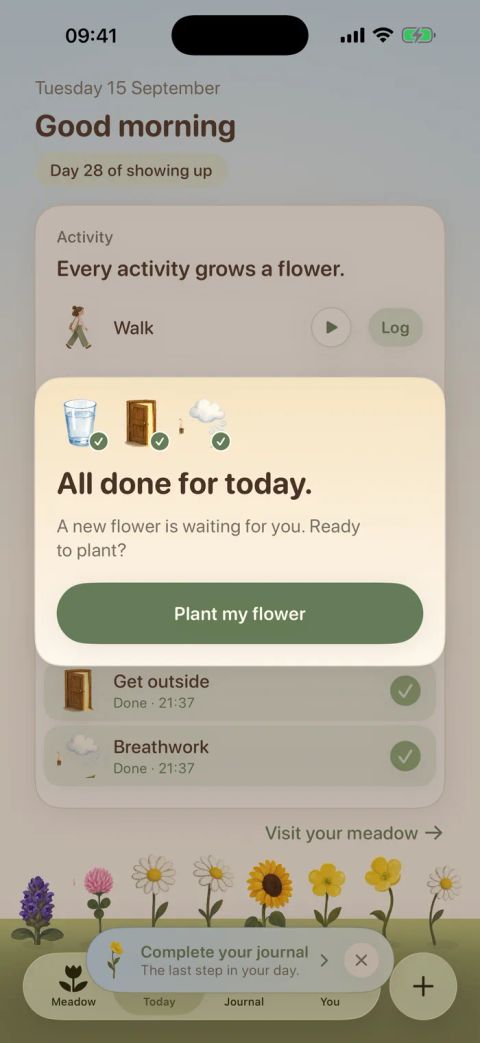
Another app worth checking out is Meadow, the gentle habit tracker our team makes, because it is built for exactly this kind of low-pressure practice. It is an iPhone app from Wildcard Wellness where you log movement you enjoy, a walk, a little yoga, a dance, alongside small daily habits, and note your mood, a daily win and an affirmation. Every day you show up grows a wildflower, and rare flowers and small animal visitors turn up over time. There are no streaks, so a missed day resets nothing and your flowers never wilt, which fits a practice you are meant to return to gently. Meadow costs $39.99 a year or $9.99 a month after a seven-day free trial.
Common questions
Is tai chi walking good for beginners?
Yes. It is slow, low-impact and needs no equipment, so it is one of the more approachable ways to start moving. Begin with a couple of minutes near a wall or chair and build from there.
How long should I do it for?
Start with two or three minutes and let it grow as it feels comfortable. Little and often beats one long session you dread, and even a minute of mindful steps counts.
Will tai chi walking on its own help me lose weight?
On its own, not much, because it burns modest energy. It helps most as a calm habit within a wider mix of activity and sensible eating, rather than as a weight method by itself.
Is it safe if I feel unsteady on my feet?
Often yes, with support to hand, though check with your GP first if you have had a fall or live with a health condition. Practising beside a wall or a sturdy chair lets you try it safely.
One thing to do today
Clear a few metres of floor and take five slow steps, shifting your weight fully onto each foot before the next one moves. That short trial tells you more about whether tai chi walking suits you than any amount of reading, and it costs you a minute.
Every little bit counts
Five minutes counts. So does a dance in the kitchen.
Log the movement you enjoy and the small habits that help you feel good, and watch them bloom into something you can see.
Join the Meadow waitlist