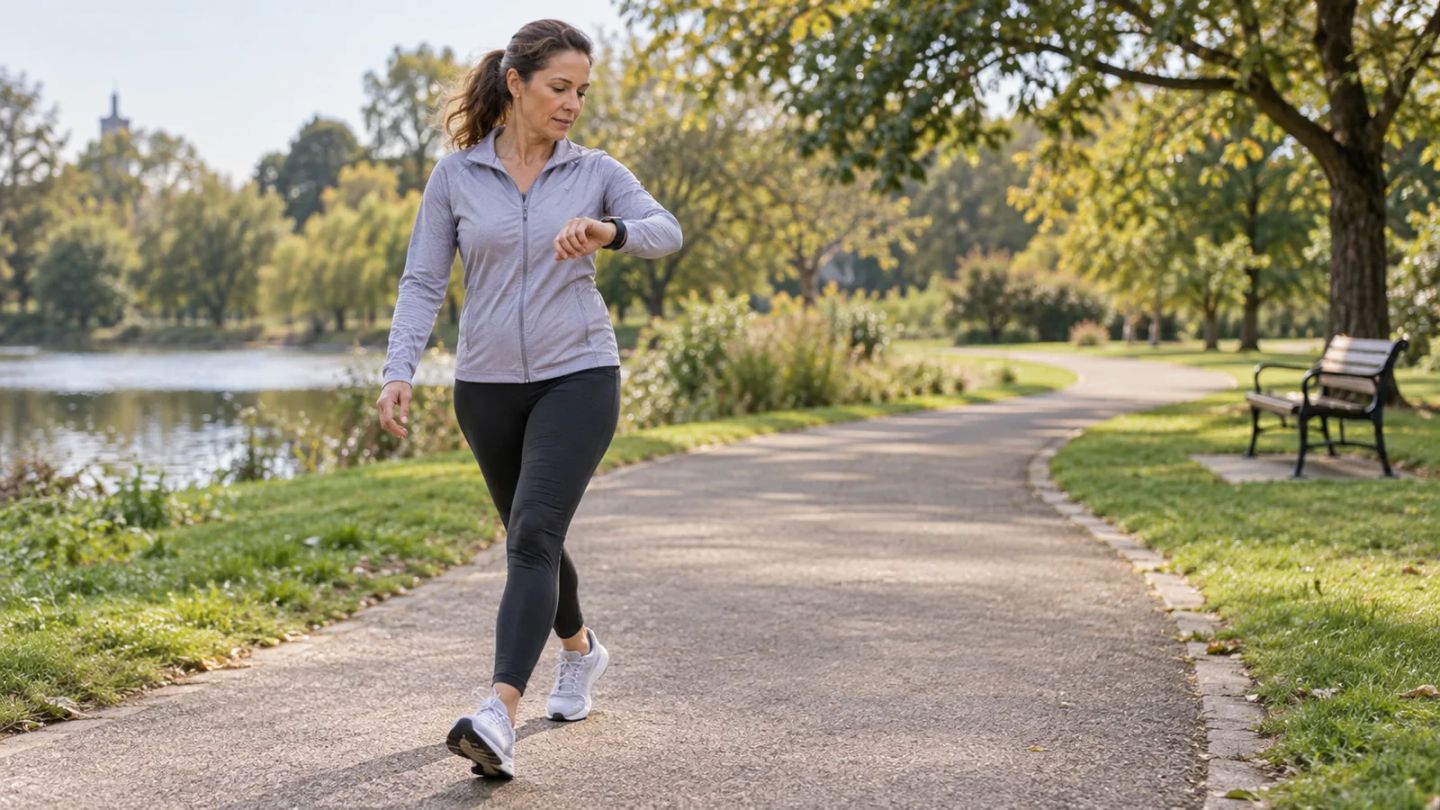
Japanese walking is an ordinary walk with its pace turned up and down on a timer. You walk briskly for about three minutes, ease into a gentle stroll for about three minutes, and swap between the two five times over, which comes to roughly thirty minutes. The proper name is interval walking training, and the whole appeal is that it takes a walk you might already take and asks only one new thing of you: change your speed on a schedule.
No gym, no kit beyond shoes you can move in, and a structure plain enough to hold in your head on the pavement.
If you want the method in a single line, here it is. Five rounds of three minutes brisk and three minutes easy, a few times a week. Everything below is where that came from, what the research does and does not show, and how to try it without wrecking your first week.
Where Japanese walking came from
The method grew out of research at Shinshu University in Japan, led by Professor Shizue Masuki alongside Professor Hiroshi Nose. It was first described in the scientific literature in 2007, and the foundational trial was published in the journal Mayo Clinic Proceedings, which is partly why the idea has stuck around long enough to become a social media trend nearly two decades later.
What sets their design apart is that the two speeds are measured against your own fitness rather than a fixed number on a treadmill. In the studies, the brisk intervals sit at around 70 per cent or more of a person's peak aerobic capacity and the easy intervals at about 40 per cent. The Shinshu team describe the protocol as walking "at 70% or more of their peak aerobic capacity for 3 minutes then at 40% of their peak capacity for the next 3 minutes".
You do not need a laboratory to translate that. The brisk stretch should feel a little hard, and the easy stretch should let you gather yourself before the next one. The alternation is the point, and it is also what makes half an hour pass more comfortably than thirty unbroken minutes at one effort.
What the research found
The reason this walk gets attention is that the intervals seem to earn their keep. Across studies following hundreds of middle-aged and older adults, the Shinshu team report that improvements in fitness and in markers of lifestyle-related disease were "proportional to the total time of fast walking per week, but not to the total time of normal walking or total time walked". The brisk minutes appear to do the work.
The numbers give that finding some shape. In the original five-month trial of middle-aged and older adults, interval walkers came out ahead of steady, moderate-pace walkers on resting blood pressure, thigh muscle strength and peak aerobic capacity, despite spending a similar amount of time on their feet. Later peer-reviewed work has echoed this. One randomised study notes that middle-aged women doing five months of interval walking achieved "∼10% increased thigh muscle strength and peak aerobic capacity", and a wider analysis of the training records average gains of around 14 per cent in estimated peak aerobic capacity with a 17 per cent drop in a combined lifestyle-disease score.
Three things stand out from all of that, and they are worth holding separately.
Blood pressure tended to fall further with intervals than with a steady walk of the same length. Leg strength, measured around the knee and thigh, improved in a way plain walking rarely delivers, which matters because leg strength is one of the things that quietly protects independence as people age. Aerobic capacity, the engine that lets you climb stairs or catch a bus without stopping, went up.
That is a believable, useful set of results, and it deserves to be held at the right size. This is a body of research built largely on middle-aged and older adults, a good deal of it from a single research group, and studies of this kind describe averages across groups rather than a promise to any one person. Interval walking may improve your fitness and it may help some health markers, and it is not a treatment for any condition. It is also not a weight-loss scheme. The evidence here is about fitness, strength and blood pressure, not the number on a scale. If you have a diagnosed condition or take medication for blood pressure, keep your GP in the loop rather than treating a walk as a replacement for anything they have advised.
How brisk is brisk?
The word "brisk" carries a lot of quiet weight, so it helps to pin down. The NHS describes a brisk walk as about three miles an hour, and offers a test that travels with you anywhere: you are walking briskly if you "can still talk but cannot sing the words to a song".
That talk-not-sing gauge is the most practical tool you have, and it needs no watch. If you can hold a conversation in full sentences, pick the pace up. If you have gone quiet and cannot get a sentence out, ease into your recovery stretch a little sooner.
Your brisk will not match anyone else's, and it will shift as you get fitter. The effort is set against you, not against the person striding past.
A sample interval walking session
Here is a full session you can follow the first time out. Warm up, run five brisk rounds with easy recovery between them, then cool down. The whole thing lands at around thirty-four minutes.
- Warm up with three minutes of easy, comfortable walking.
- Walk briskly for three minutes, at the talk-not-sing pace.
- Ease back to a gentle stroll for three minutes.
- Repeat that brisk-then-easy pair four more times, for five brisk rounds in total.
- Cool down with three minutes of easy walking, letting your breathing settle.
If it helps to see the shape at a glance, here is the same plan as a timing sheet you can glance at on your phone:
Warm-up: 3 min easy
Round 1: 3 min brisk, then 3 min easy
Round 2: 3 min brisk, then 3 min easy
Round 3: 3 min brisk, then 3 min easy
Round 4: 3 min brisk, then 3 min easy
Round 5: 3 min brisk, then 3 min easy
Cool-down: 3 min easy
Total: about 34 minutes, five brisk rounds
New to brisk walking? Run three rounds instead of five and add one when the last session felt manageable. A shorter session done today beats the full protocol you keep putting off.
How it compares to 10,000 steps
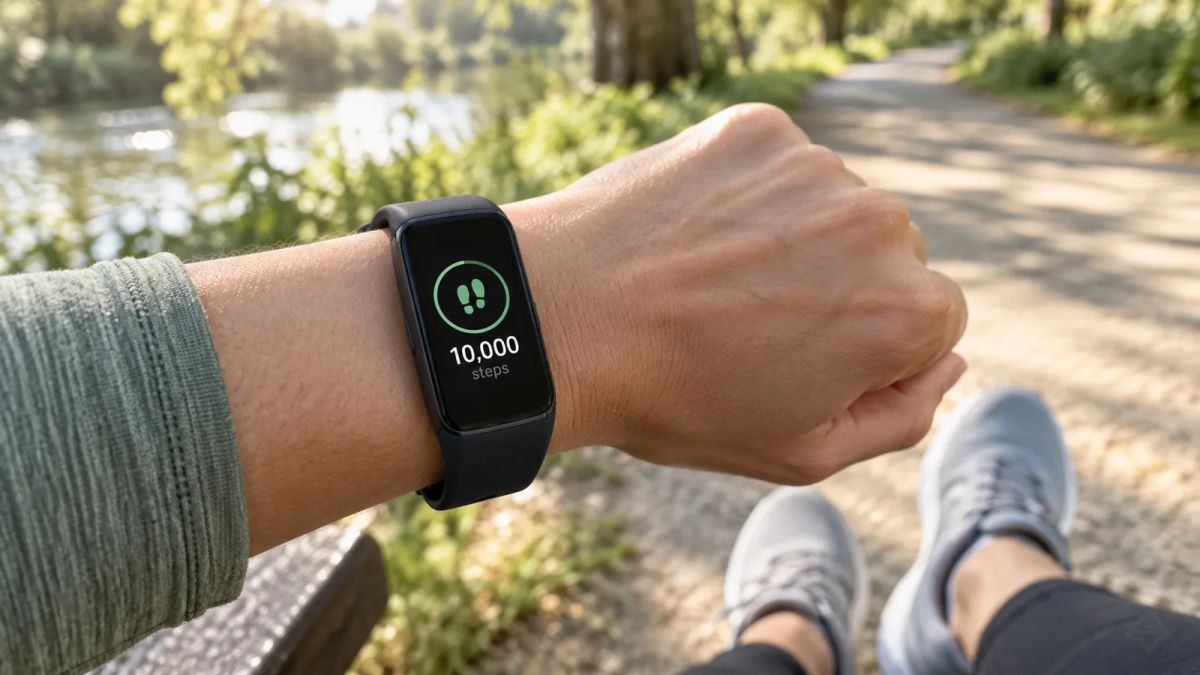
The 10,000-steps target is the yardstick most people reach for, so it is worth saying plainly where it came from. It was not handed down by research. A review of walking in lifestyle programmes points out that common step goals "have been determined arbitrarily (i.e., 10,000 steps/day)", and that health benefits from walking appear well before that round number.
The two approaches answer different questions. A step count measures how much you moved across a whole day, and the honest reading of the interval research is that total volume was not what tracked with fitness gains: fast time was. So counting to 10,000 and doing thirty minutes of intervals are not rivals. You can hit a decent step total on an ordinary day and still fold one interval walk into it, and those brisk rounds are where the strength and aerobic changes seem to concentrate.
If step counting is the habit that gets you out of the door, keep it. If it has started to feel like a chore that never quite pays off, intervals give you something to aim at inside a shorter, more purposeful walk. We cover the step question in more detail in our guides to 10,000 steps a day and how many steps a day.
Trying it safely and fitting it into your week
Start smaller than the full protocol if brisk walking is new or you are coming back after a long gap. The NHS advice on walking is to build up your distance and pace gradually, and there is no prize for arriving at thirty minutes in the first week.
A short safety note matters here. If you have been inactive for a while, are living with a health condition, or are recovering from illness, have a word with your GP before you start something more strenuous than a stroll, which is the advice the NHS gives about returning to exercise. Always begin with a few minutes of easy walking to warm up, and stop if anything hurts in a way that feels wrong rather than merely effortful.
Fitting the walk into a normal week matters more than any single perfect session. Three interval walks of half an hour put you inside the NHS recommendation of at least 150 minutes of moderate activity a week for adults aged 19 to 64, with the brisk rounds nudging you towards the harder end of that range. You can also split a session. If a full thirty minutes will not fit around a shift, a school pick-up or a caring hour, two shorter interval walks in a day still count, and the walk to the bus stop can carry a couple of brisk rounds inside it. Our guide to the wider benefits of walking has more on why the everyday version tends to last.
Log a walk with Meadow

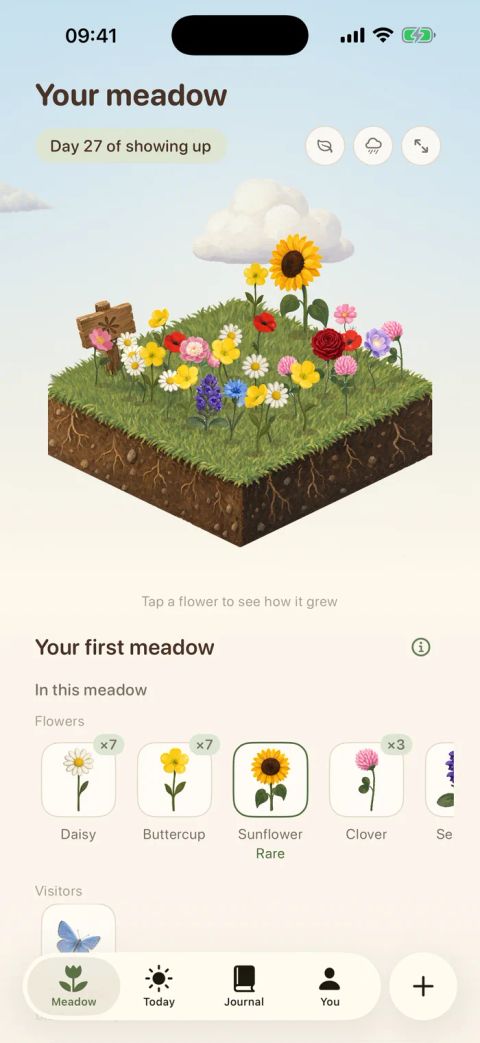
Seeing your walks stack up can be the thing that keeps the rhythm going, and a simple record does the job whether it lives on a paper calendar or a phone. Another app worth checking out is Meadow, because it has walking built in as one of its activities, so you can tick off an interval walk in a few seconds and watch the days add up. It is a gentle habit tracker for iPhone made by Wildcard Wellness, and it has no streaks, which means missing a day resets nothing and your flowers never wilt. Every day you show up grows a wildflower, and rare flowers and little animal visitors turn up along the way. Meadow costs $39.99 a year or $9.99 a month after a seven-day free trial.
A smaller version, and starting again after a gap
On a low-energy day, shrink the session rather than skip it. One brisk round of three minutes tucked into a walk you were taking anyway keeps the thread alive and asks almost nothing of you. Some movement at your own pace beats a perfect plan you abandon.
Missing a day, or a week, undoes nothing. Fitness is patient, and the method waits for you. Pick your next ordinary walk, add one brisk round, and you have restarted. There is no need to make up lost sessions or punish the gap with a harder week.
One thing to try today
Next time you are already out walking, set a timer for three minutes and walk at a pace where you can talk but not sing, then three minutes easy, and notice how two or three rounds feel. That short trial will tell you more about whether Japanese walking suits you than any amount of reading, and it costs you nothing beyond the walk you were taking anyway.
Little and often, with Meadow
Consistency, not intensity.
Meadow turns the movement you enjoy and the habits that help you feel good into a meadow of wildflowers. No streaks to break, and your flowers never wilt.
Join the Meadow waitlist