Motivation to lose weight usually runs out for one reason: it's tied to the scale, and the scale is a slow, jumpy judge of a week's work. You can walk more, eat differently and sleep better, then step on in the morning to the same number, or a higher one, because of water, hormones or last night's dinner.
So the trick to staying motivated for the long haul is to stop letting one number decide how the week went. Pin your motivation to the things that change day to day, the habits you repeat and the way you feel, and the scale becomes one slow signal among many rather than the whole scoreboard.
This guide is about keeping going when the number stalls. Why scale-only motivation fades, how to set a pace you can live with, how to build motivation into habits so it doesn't lean on willpower, how to spot the wins that have nothing to do with weight, how to be kind to yourself after a slip, and how to set up a life that makes the next day easier.
One note before we start. Weight is shaped by sleep, stress, medication, hormones, life stage and plenty else, so treat all of this as general information and talk to your GP about a plan for your own situation.
Why the scale alone stops motivating you
The scale measures one thing, badly, on any given day. Your weight swings with water, salt, the time of the month and what you ate the night before, so a morning reading can move a couple of pounds in either direction without a scrap of fat changing hands.
There's a slower catch too. When you start moving more, your body can hold a little extra water in the muscles you're using, and muscle takes up less room than fat, so the scale can sit still while your body changes underneath it. The Obesity Action Coalition makes this point plainly: even if the number isn't budging, it doesn't mean you aren't moving in the right direction.
Used as your only fuel, the scale teaches the wrong lesson. A good week with no drop starts to feel like failure, and a jump feels like proof the effort was pointless, when neither is true. That's a quick route to quitting something that was working.
Decide why you want this, in your own words
Motivation lasts longer when the reason is yours. Looking at what helps people stay with a weight plan, Healthline notes that people tend to do better when the motivation comes from inside, from something they want, than when it's pressure from a doctor, a partner or a photo they're dreading.
Write your reasons down, and keep them concrete and close to your day. Not "lose two stone" but "get up the stairs without stopping", "keep up with the kids in the garden", "sleep through the night", "feel easier in my own clothes". Put the list where you'll pass it. On a flat week, a reason you can feel beats a target you can't.
Set a pace you can live with
The pace you pick decides how long your motivation holds. The US Centers for Disease Control and Prevention says that people who lose weight at a gradual, steady pace, about one to two pounds a week, are more likely to keep it off than people who drop it faster. It also warns that unrealistic goals, like losing twenty pounds in two weeks, leave you feeling defeated.
Aim for a target you'd be glad to reach and could hold on to. Losing five to ten per cent of your starting weight over about six months is a figure Healthline describes as both doable and worth having for your health. Slower feels less exciting on day one. It's also the version you're still doing at Christmas.
Build motivation into your habits
Motivation is a feeling, and feelings come and go. What carries you through the days it's gone is a habit small enough to do without a pep talk.
Keep the action tiny to start. A ten-minute walk, a glass of water before each meal, vegetables on half the plate. Then anchor it to something you already do every day, so an existing routine does the remembering for you. After I put the kettle on, I fill a glass of water. After the school drop, I walk one loop of the park.
Now keep a record, because watching the days add up is motivating in a way the scale isn't. James Clear describes a habit tracker as doing three jobs at once: it creates a visual cue to act, it's motivating to see progress, and it's satisfying to record in the moment. A tick on a wall calendar does all three, and it rewards the part you control, which is turning up.
The CDC lays out the roles plainly. Most weight loss comes from eating fewer calories, and regular activity is how you keep the weight off once it's gone. Both pull the same way, so a habit that changes how you eat and a habit that gets you moving are worth more together than either on its own.
Notice the wins that aren't on the scale
Some of the best evidence you're on track never shows up as a number. In a 2024 study of adults living with obesity, researchers found that patients defined success far more by what they could do than by their weight: taking part fully in life, and small wins like tying shoelaces, crossing their legs or hugging family more easily. One described success as "all of the things that you can do".
These wins are worth tracking on purpose, because they move while the scale sulks. The Obesity Action Coalition points to more energy, better sleep, clearer thinking, clothes that fit more comfortably, and being able to climb stairs or exercise without pain.
Give them somewhere to live. Here's a weekly check-in you can copy onto a card or into your phone. Start with the blank version:
This week I noticed: ________________________________
Energy ☐ Sleep ☐ Mood ☐ Clothes ☐ Stairs/strength ☐ A habit I kept ☐
A filled one might read:
This week I noticed: walked to work three days and the hill got easier
Energy ☑ Sleep ☐ Mood ☑ Clothes ☐ Stairs/strength ☑ A habit I kept ☑
Fill it in on the same day each week, a Sunday say, and read last week's back before you weigh yourself, if you weigh yourself at all. It keeps the wins in view on the weeks the number won't cooperate.
Be kind to yourself after a slip
You'll miss days. A holiday, an illness, a fortnight where everything falls apart. What you say to yourself next decides whether the plan survives it.
Harsh self-talk feels like discipline and works like the opposite. Summarising Kristin Neff's research, the Greater Good Science Center reports that self-criticism makes people feel inadequate and less able to correct course, while people who meet a slip with self-compassion, the "everybody goofs up now and then" response, take more responsibility and are more open to change. Talk to yourself the way you'd talk to a friend in the same spot.
Then start again the next day, not the next Monday. James Clear's rule is "never miss twice", on the logic that missing once is an accident and missing twice is the start of a new habit. One skipped walk or one big dinner changes nothing on its own. The damage is in the not-restarting, so make the comeback small and quick.
Our guide on how to be consistent goes deeper into building habits that survive a bad day, if that's the part you find hardest.
Shape a life that makes it easier
Motivation is easier to keep when your surroundings aren't fighting you. James Clear argues that much of what you do all day is a response to the space around you, and that you can make a good habit easier by cutting the steps between you and it, so the good choice becomes your default. Lay your walking shoes by the door. Put the fruit at eye level. Keep the biscuits off the counter.
People help too. Healthline points to research that support from friends and family lifts your odds, whether that's someone to walk with, a friend changing something of their own, or a partner who cheers the effort instead of policing the plate. Ask for the kind of support you want, because encouragement lands better than being watched.
If the missing piece is enjoying the movement itself, our guide on exercise motivation has more on finding activity you'll come back to.
A kinder way to keep count
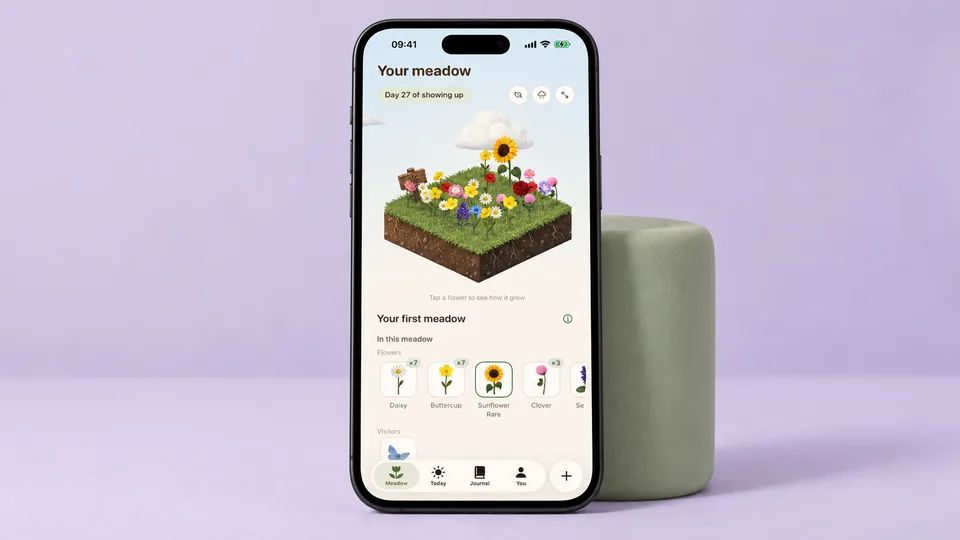
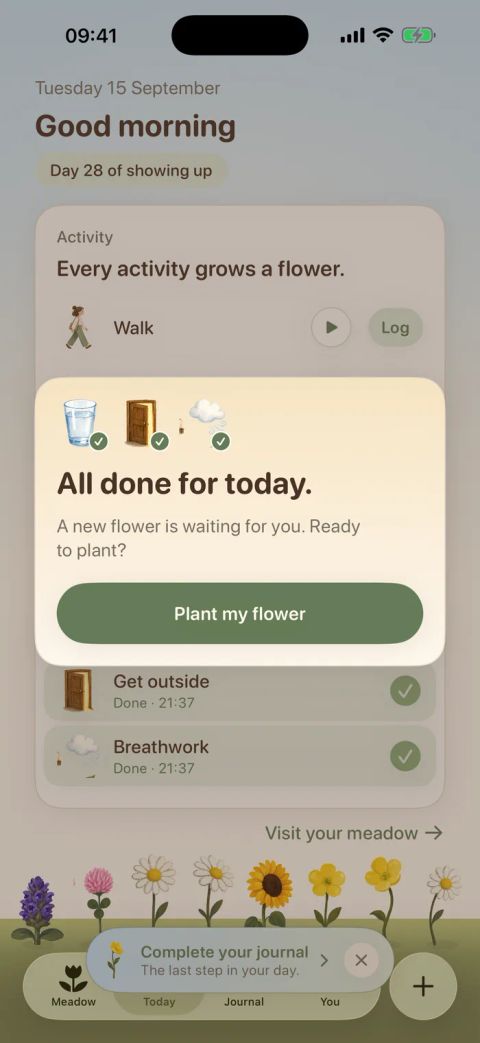
If you'd like the tracking on your phone, Meadow is built to reward the turning up rather than the weighing. Meadow is a movement and habit app for iPhone from Wildcard Wellness, where you log the movement you enjoy, tick off small daily habits like drinking water or getting outside, and note your mood, energy and one daily win. Each day you show up, a wildflower blooms in a meadow that's yours, and because there are no streaks, a missed day resets nothing and your flowers never wilt. For a plan measured in months, that's a record that keeps the good days in view on the weeks the scale won't move.
When to talk to your GP
If you have a lot of weight to lose, a health condition, or your weight is affecting your health, your GP is the place to start. They can talk you through your options, check anything that might be making weight loss harder, and point you to support that reaches past diet and walking. If you've been inactive for a while, get their go-ahead before you build up. And if food, weight or how you feel about your body is causing you real distress, raise that too, because that's health, not vanity.
Common questions
Why am I doing everything right and not losing weight?
Short-term weight is noisy. Water, hormones, muscle changes and ordinary daily variation can hide fat loss for a week or more, and the CDC's own guidance is to expect a gradual one to two pounds a week at most. Keep going, look at the trend across a month, and check your non-scale wins.
How do I stay motivated when I don't see results?
Change what counts as a result. Track the habits you're keeping and the wins like energy, sleep and easier stairs, because those move while the scale stalls, and they're the proof the work is landing.
Should I weigh myself every day?
Up to you. Daily weighing suits some people and rattles others. If the number sets the tone for your whole day, try weighing weekly, or park the scale for a while and go by how your clothes fit and how you feel.
How long does it take to see weight-loss results?
It varies a lot between people. Health improvements like steadier energy and better sleep can show up within a couple of weeks, while a change in weight is slower and depends on your whole routine, including how you eat.
What if I lose motivation completely?
Shrink the goal until it's almost too small to skip, one short walk or one glass of water, and do that. Motivation tends to follow action more than it leads it, so the smallest restart often brings the wanting back with it.
Pick one reason this journey means something to you and write it on something you'll pass tomorrow, then choose one tiny habit to anchor to a thing you already do. That's your motivation moved off the scale and onto something you can keep.
If you want to go further, our guide on walking for weight loss covers how much, how often, and why diet does most of the lifting.
AUTHOR
Co-founder of Meadow.
Ash is co-founder of Meadow, a habit and movement tracking app that turns small acts of self-care into a growing wildflower meadow.
Every little bit counts
Five minutes counts. So does a dance in the kitchen.
Log the movement you enjoy and the small habits that help you feel good, and watch them bloom into something you can see.
Download Meadow