There is no daily step count that guarantees weight loss. If your watch is set to buzz at 10,000, hitting that number tells you that you moved, not what will happen to your weight. Walking burns energy, and weight change depends on far more than one figure, including how you eat, how you sleep, medication, and plenty that sits outside anyone's control. The US Centers for Disease Control and Prevention explains that how much activity people need varies a great deal from one person to the next.
The useful question, then, is not "what is the magic number" but "what walking can I add that fits my day, and how should I read the figure on my counter". Treat your step total as a record of movement rather than a prediction about your body.
Where 10,000 steps came from
The 10,000 figure is a fine personal target if you like a round number, but it was never a weight-loss threshold. You can walk your way to a more active week well below it, and crossing it does not switch on fat loss. Use it as a nudge if it motivates you, and drop it if it turns a good day into a failure.
The 8,500 figure needs the same care
A more recent number doing the rounds is around 8,500 steps. A 2026 systematic review looked at adults with overweight or obesity in lifestyle programmes that also changed how people ate. About 8,500 steps a day was an average people reached in that research, and the authors were clear that it should not be treated as a prescription. Those programmes changed several things at once, so no one can separate out how much the walking alone did. Copy the step count and you have copied one ingredient, not the recipe.
Headlines mix up different questions too. An NIH report on steps and health, for example, described an observational study of older women that counted later deaths, not weight. That is useful in its own right, but it cannot tell you how many steps you personally need to lose weight. Before you adopt any number, check what the researchers measured and who took part.
Look past the daily total
A step count misses how hard you were working. The NHS describes brisk walking as a pace where you can still talk but cannot sing, and a short brisk walk counts towards your week. Ten brisk minutes is a real contribution, and it may barely register in a step tally.
For general health, NHS guidance for adults aged 19 to 64 recommends at least 150 minutes of moderate activity or 75 minutes of vigorous activity a week, plus strengthening on two or more days. These are health recommendations, not a weight-loss dose, and they do not convert into a single daily step number. They make a better compass than any one total.
Choose a walking goal you can keep
Start by watching a few ordinary days. If you already have a counter, notice the gap between a workday and a day off. If you do not, jot down when you walk and roughly how long for. You do not need to buy anything to do this.
Then pick one place a walk could fit. A five-minute walk after lunch is an example of a small start, not a promise about your weight. Choose a length and a route that suit you. A lunch break might be too short, a path might feel unsafe after dark, or caring responsibilities might make leaving home hard, so pick the version that survives a normal week rather than a perfect one.
The NHS walking guide advises building up gradually, so give a small addition a week or two before you decide whether to extend it. If you have not exercised in a while, or you have a health condition or any concerns, the NHS suggests speaking to your GP first, because a step target cannot account for your particular situation.
Keep a record you will trust
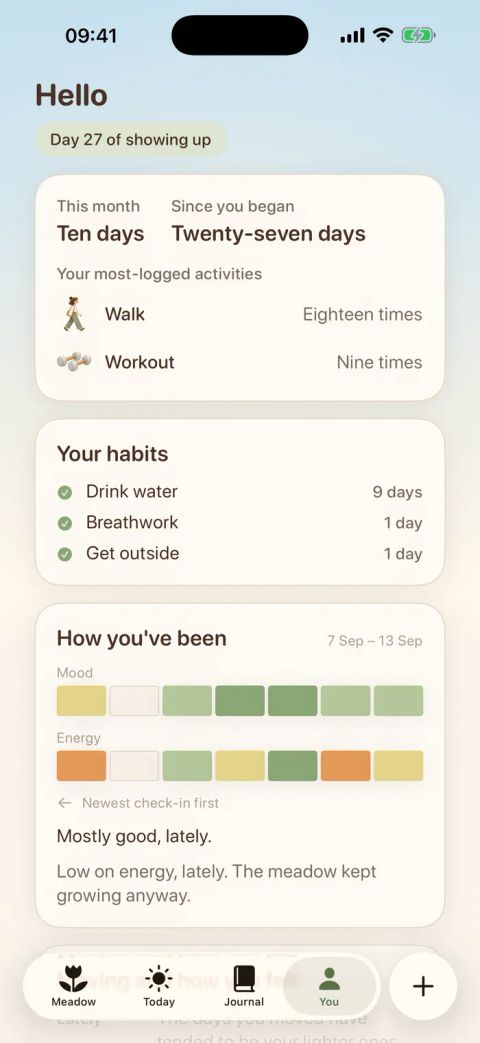
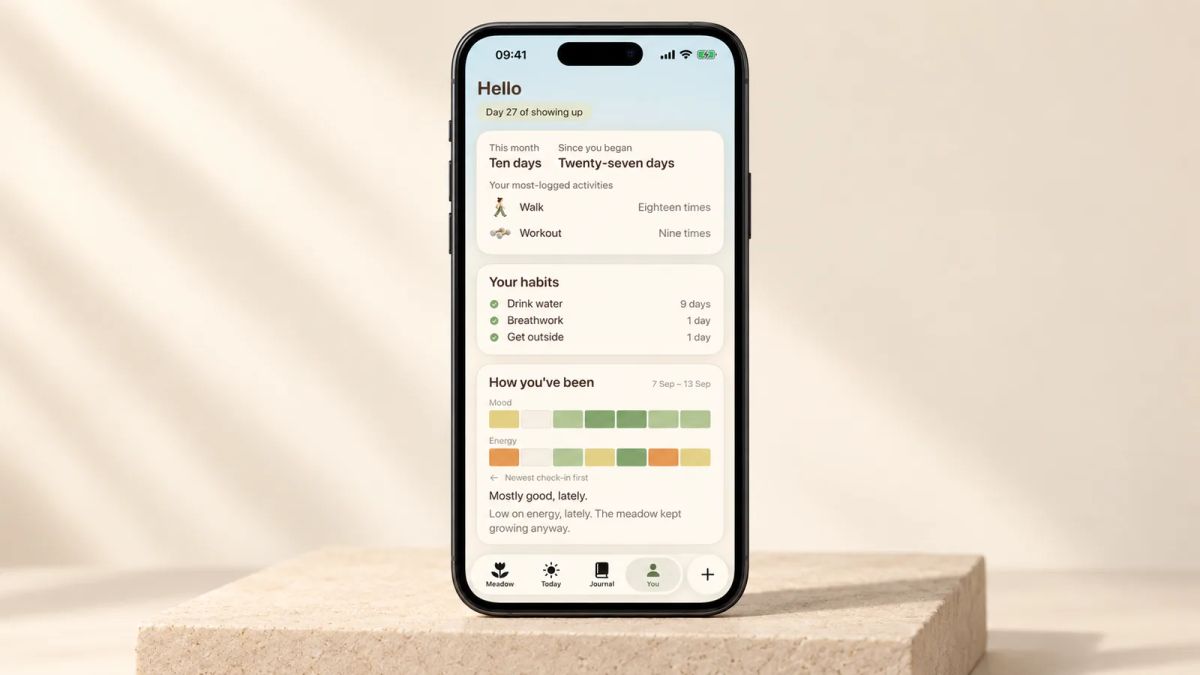
Marking each walk gives you something concrete to look back on, which helps more than chasing the same total every day. A tick on a calendar works. So does an app. Meadow, the habit-tracking app our team makes, lets you tick off a walk and watch the days add up, and it keeps going after a missed day rather than resetting you to zero. Meadow is $39.99 a year or $9.99 a month after a seven-day free trial, and a notebook does the same job for free.
On a stretched day, take the shorter walk and record it as the shorter walk, so your log stays truthful about what you did. If you miss it, pick the next chance rather than trying to make the distance up.
Write down one realistic slot for a short walk tomorrow, including when and where. That is a walking habit starting, with no number attached to it.
See how far you've come
Your habits, moods and little wins, all in one place
Meadow keeps track of the walks, the water and the good days, so you can look back and watch your effort add up.
Join the Meadow waitlist