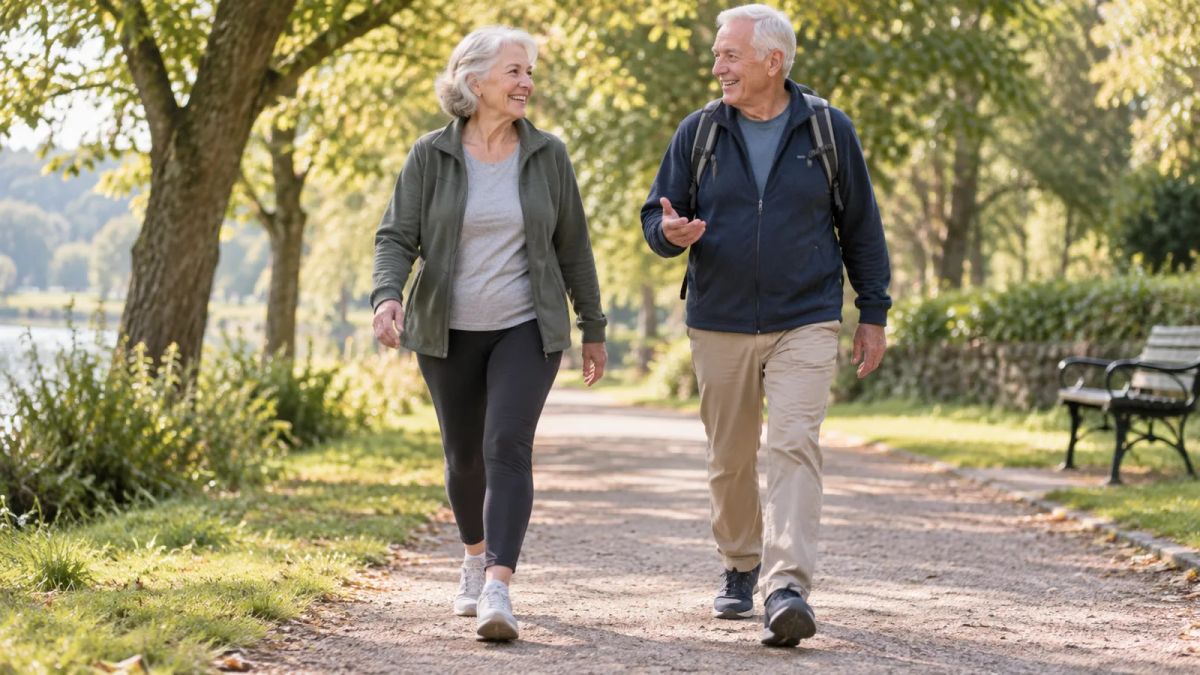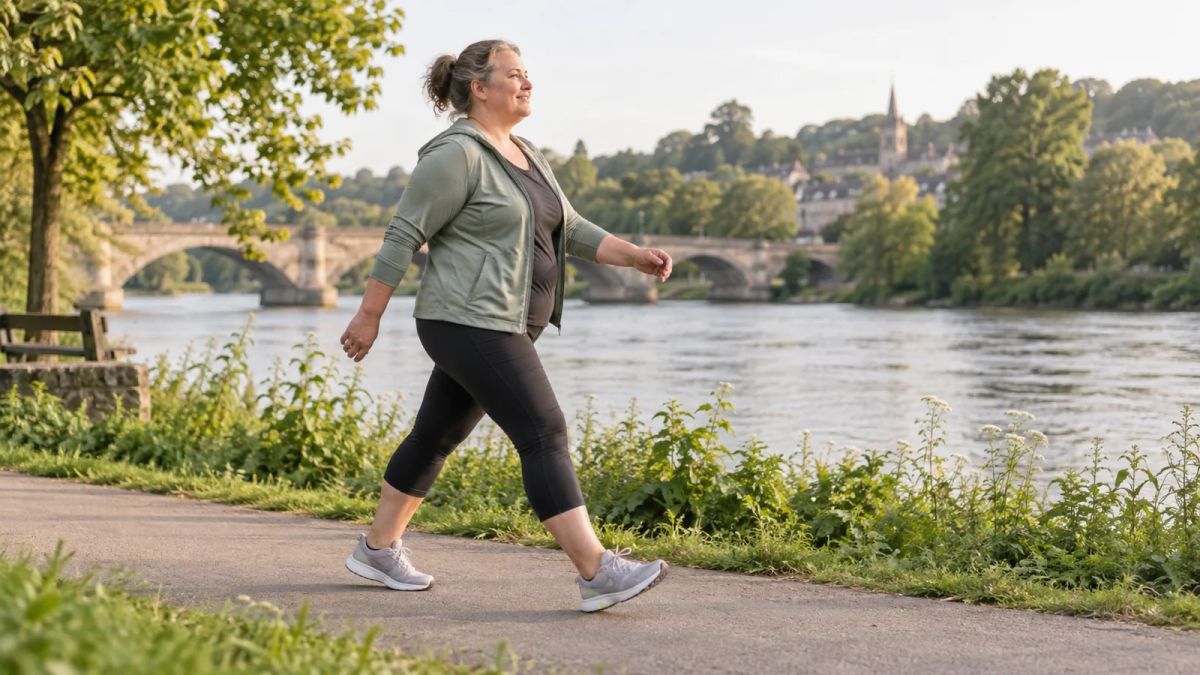
Half an hour of walking a day is close to the daily version of the 150 minutes of moderate activity most health bodies suggest, and for a lot of people it does more for their health than any other change they could make to a normal week. It won't remake your body by itself, but the returns across your heart, blood sugar, mood, joints and sleep are real, and they turn up at a dose you can keep.
The rest is the practical version: what the half hour tends to do, where it falls short, how to fit it in, and how brisk to go.
Why thirty minutes keeps coming up
The number isn't plucked from the air. The CDC puts the target for adults at least 150 minutes a week of moderate-intensity aerobic activity, and spread over five days that works out at thirty minutes a day. The NHS lands in the same place with its 150-minute-a-week guideline for adults aged 19 to 64.
Brisk walking counts as moderate activity, so a daily half-hour brisk walk carries most of a week's recommended movement on its own. That's the appeal. One repeatable slot, no kit, no travel to a gym, and a target you can hit on foot.
Thirty minutes is also a dose the research tends to use, which makes it easier to say what it does with a straight face.
What half an hour a day does for your body
Start with the heart, because the evidence there is steadiest. Harvard's Nutrition Source describes a meta-analysis of 32 randomised trials in which walking raised the heart's aerobic capacity, lowered blood pressure, and brought down body mass index and body fat. The same page notes that people who met the 150-minute weekly guideline had a 31% lower risk of dying early than those who did no exercise at all.
Blood sugar responds fast, and a walk after a meal is where a half hour earns its keep. In a small crossover trial of 14 adults with type 2 diabetes, a 30-minute walk starting an hour after lunch lowered blood glucose by about 17% at a natural pace, and by a third or more when they walked 10 to 20% faster. Same half hour, bigger effect for a slightly brisker one. Our piece on walking after eating goes further into the timing.
Walking is kinder to joints than many people fear. Most joint cartilage has no blood supply of its own and feeds on the fluid that moves when you do. The Arthritis Foundation explains that the compression of each step "squishes" that cartilage and pushes oxygen and nutrients into it, which is part of why a daily walk tends to ease stiff knees instead of wearing them out. Weight-bearing movement helps bone hold its strength too.
Australia's Better Health Channel sums the daily-walk package up plainly. Thirty minutes a day can build cardiovascular fitness, strengthen bones, reduce body fat, and boost muscle power and endurance, and over time it lowers the risk of heart disease, type 2 diabetes and some cancers.
What it does for your mood and sleep
The mind gets a share of the half hour. Harvard reports that walking has a positive effect on mental health, with the strongest evidence for depression. A walk won't fix a hard day and it's no substitute for treatment, but a short one outside often takes the edge off, and it's a small thing you can repeat when bigger fixes feel out of reach. If low mood or anxiety sticks around, see your GP alongside whatever you do for yourself.
Sleep improves too. A 2026 meta-analysis of 21 trials and 1,707 people found that walking programmes produced a medium-to-large improvement in how well people rated their sleep, with the biggest gains for those who slept worst to begin with. The sessions that worked sat at thirty to sixty minutes, three to five times a week, for twelve to twenty-four weeks, which is the same half-hour habit seen from another angle. The authors rated the certainty of the evidence as very low, because of bias and patchy results across trials, so read it as promising and not settled.
What thirty minutes a day won't do on its own
Walking is often sold as a way to drop weight, and that's where the promises outrun the evidence. Movement burns energy, but body weight turns on far more than steps, including how you eat, how you sleep, and any medication or condition you live with. The CDC is blunt that the amount of activity needed to keep a healthy weight varies greatly from one person to the next, and that lasting change needs eating patterns alongside the activity. If weight is your aim, our guide to walking for weight loss sets out what a walk can and can't do there.
A daily walk also won't cancel out a full day of sitting by itself, and it leaves one gap on purpose. The guidelines pair the 150 aerobic minutes with muscle-strengthening work on two days a week, which walking supports but doesn't fully cover. A couple of short sessions of bodyweight moves, or carrying the shopping, sits neatly beside the walking.
If you've been inactive for a while, or you live with a health condition, have a word with your GP before you build up. Add the time gradually.
One walk, or a few shorter ones
The thirty minutes doesn't have to happen in one go. Split into three ten-minute walks across the day, it counts the same toward your week, and for blood sugar the after-meals version has its own perk. That flexibility is the point. A ten-minute walk to the shops, a lap at lunch, and a wander after dinner add up to the same half hour as one unbroken block.
If you'd rather think in steps than minutes, a 2018 review in the British Journal of Sports Medicine found that about 100 steps a minute marks the start of moderate-intensity walking for most adults. At that pace, a brisk half hour comes to roughly 3,000 steps.
That's a useful chunk. A 2025 review of 57 studies in The Lancet Public Health found that people walking 7,000 steps a day had a 47% lower risk of dying over the study periods than people at 2,000, close to the benefit seen at 10,000. The studies were observational, so they show a link and not proof, but a daily half hour plus the ordinary walking in your day gets many people near that range. Our guides to how many steps a day and whether 7,000 steps a day is good unpack what the numbers do and don't mean.
How brisk to go
Pace changes the payoff, and the test for it is easy to carry. The NHS calls a walk brisk when you can still talk but can't sing the words to a song, which works out at roughly three miles an hour, faster than a stroll. Harvard notes that the faster the pace, the greater the benefit, with the most gain past three miles an hour.
None of that means a gentle amble is wasted. On a tired day, a slow thirty minutes still moves cartilage, still nudges blood sugar after a meal, still beats the version you skip. Aim brisk when you can, and take the stroll when that's what's on offer.
Making the thirty minutes stick
A half hour only helps if it happens, so tie it to something that already does. James Clear calls this habit stacking, using the shape "after [current habit], I will [new habit]", so an existing routine becomes the cue. A walk after you finish lunch, or straight after the school run, asks less of your memory than one you have to summon from nowhere.
Give the walk a fallback for the days that fall apart. A shrunk walk keeps the habit alive far better than a missed one, and it's easier to start again tomorrow when you didn't break anything. Copy this out and fill it in:
My walk: ____ minutes Cue: after I ____ Fallback: ____ minutes
Mon ☐ Tue ☐ Wed ☐ Thu ☐ Fri ☐ Sat ☐ Sun ☐
And one filled in, so you can see the shape:
My walk: 30 minutes Cue: after I drop the kids at school Fallback: 10 minutes to the postbox and back
Mon ☑ Tue ☑ Wed ☐ Thu ☑ Fri ☐ Sat ☑ Sun ☐
Miss a day and it counts for less than you'd think. A study of how everyday habits form found that one missed occasion didn't stop a habit taking hold, and that the time it takes to feel automatic varies widely from person to person. There's no streak to protect. When you miss the walk, take the next chance instead of trying to make up the lost time.
Watch the daily walk add up

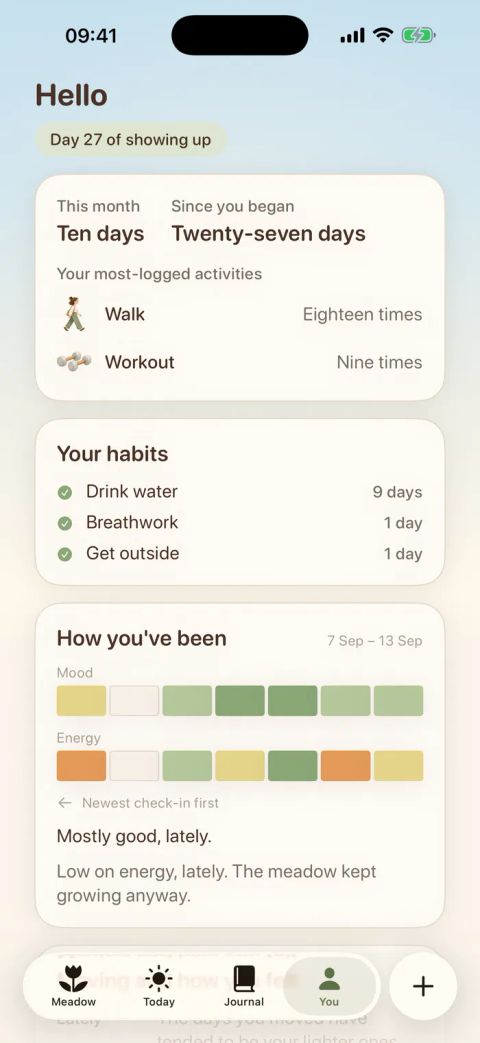
If you like seeing effort collect somewhere, Meadow turns each day you move into a wildflower. It's a movement and habit app for iPhone from Wildcard Wellness, with walking among its built-in activities, so you can log your half hour with a timer, note your mood and energy, and watch your own meadow fill in over the weeks. It counts consistency over a perfect run, so there are no streaks, and a rained-off day resets nothing you've grown.
Common questions
Is thirty minutes a day enough?
For a lot of people, most of the time, yes. A daily half-hour brisk walk carries most of the 150 weekly minutes the CDC and NHS suggest, and it supports your heart, blood sugar, mood and sleep along the way. The one thing it leaves out is muscle and bone strength, which the guidelines cover with strengthening work on two days a week. Our benefits of walking guide goes wider on what a walking habit does across the board.
Is it better to walk for thirty minutes at once or in shorter bursts?
Both work, so pick whichever survives your day. One unbroken half hour is simple to plan, while three ten-minute walks fit around work and family and give you the after-meal blood-sugar benefit more than once. The total is what counts toward your week. If even ten minutes is hard to find, our guide to exercise snacks shows how shorter bursts add up.
Can you lose weight walking 30 minutes a day?
Some people do, but it's rarely the walk alone. A half hour burns a modest amount of energy, and the CDC is clear that the activity needed to keep a healthy weight varies a lot from person to person and works alongside how you eat. Treat the walk as one part of the change, and see our walking for weight loss guide for the fuller picture.
How long before I see results?
Some changes can start on day one. In the diabetes trial above, a walk after lunch brought blood sugar down within the same half hour. Fitness and sleep take longer. The walking programmes that improved sleep in the 2026 meta-analysis ran for twelve to twenty-four weeks. Give it a couple of months of regular walks before you judge it.
Is the NHS rewarding people for walking 30 minutes a day?
The NHS has announced plans for a "marathon a month" challenge, developed with a former Olympic medallist, offering incentives or discounts to people who log about 30 minutes of walking a day. It hasn't launched yet, so the rewards and details may change. You don't need a scheme to start, though.
How fast should the thirty minutes be?
Brisk enough that you can talk but not sing is the sweet spot, and a quicker pace does more for your heart and your blood sugar. On low-energy days a slower walk still counts, so don't let pace be the reason you stay in.
When's the best time to walk?
The best time is the one you'll keep. That said, a walk after a meal has a specific edge, since the movement blunts the blood-sugar rise that follows eating. A morning walk can set the day up and an evening one can wind it down. Fit it to your life.
One thing to do today
Pick one fixed point in tomorrow that already happens, your morning coffee, the end of lunch, the school run, and add a half-hour walk straight after it. If thirty feels like a stretch, start at ten. A short walk you take beats a long one you plan and skip.
AUTHOR
Co-founder of Meadow.
Ash is co-founder of Meadow, a habit and movement tracking app that turns small acts of self-care into a growing wildflower meadow.
See how far you've come
Your habits, moods and little wins, all in one place
Meadow keeps track of the walks, the water and the good days, so you can look back and watch your effort add up.
Download Meadow