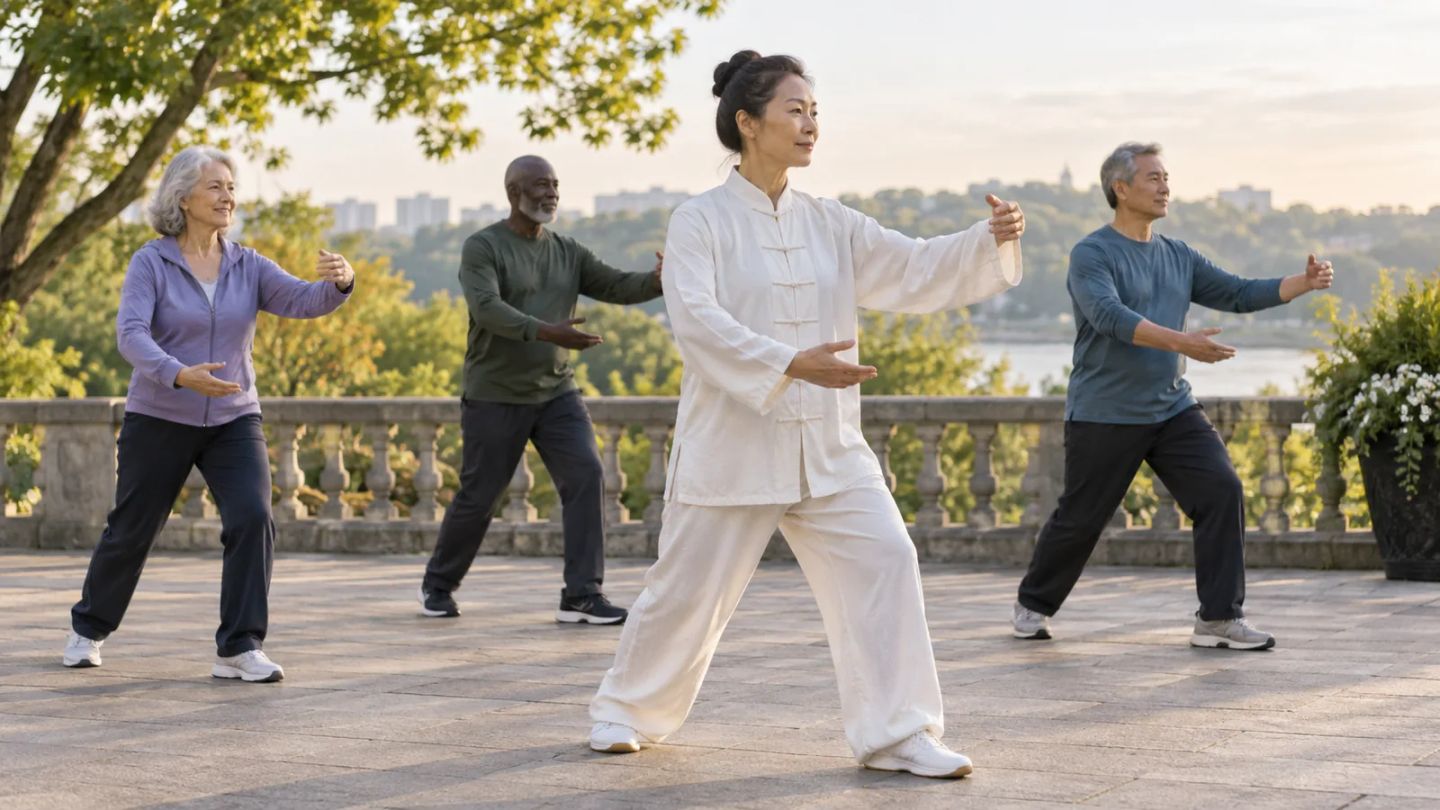
You can try tai chi walking without spending a penny, using free videos at home or a searchable directory to find a local teacher. Before you do, one honest note: it is a gentle, low-intensity practice, the evidence linking it to weight loss is limited, and it is best treated as a calming movement habit you keep rather than a way to shift the scales.
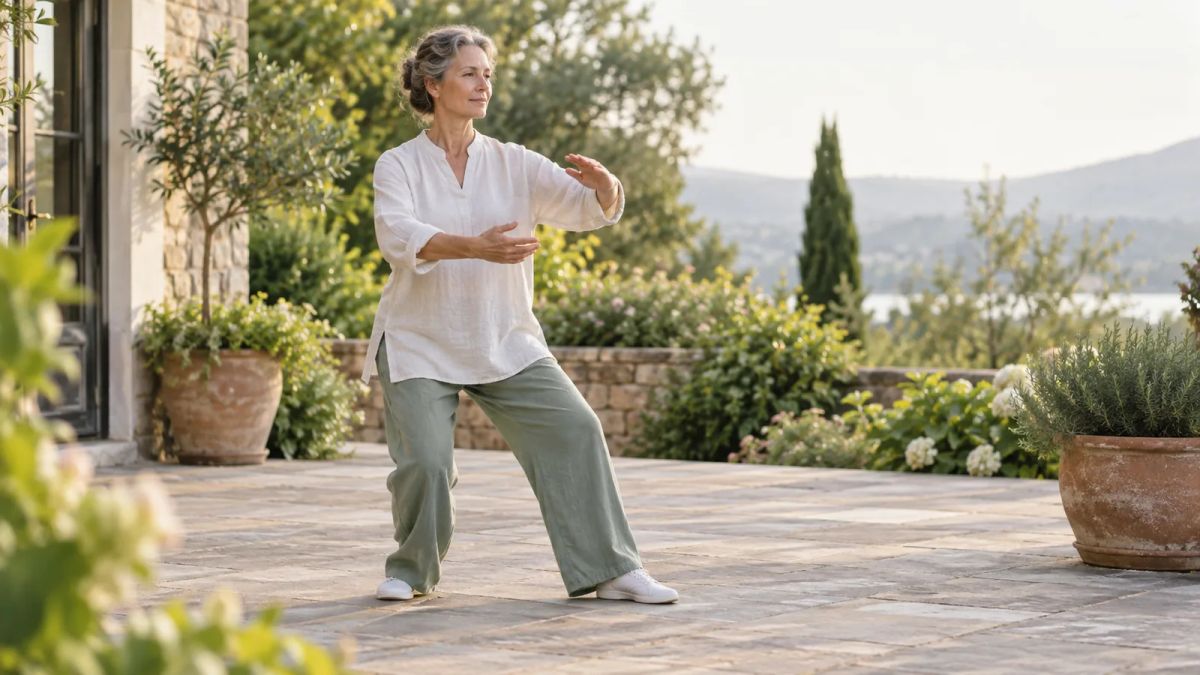
Tai chi walking is slow, deliberate walking borrowed from tai chi. You move your weight fully onto one foot before the other lifts, breathe steadily, and travel at a fraction of your usual pace. It needs no equipment, no membership and no special floor, which is what makes cost such a small barrier. The real questions are where to find a good free session and how to hold your own body while you follow along.
This guide points you to free resources that stay useful year after year, shows you how to pick a session that suits you, walks through the basic technique so you can start today, and stays plain about what gentle movement can and cannot do for weight.
Free videos you can follow at home
Video is the most flexible free option, because you can pause it, repeat a move and revisit it whenever you like. The place to start is the Tai Chi for Health Institute, founded by Dr Paul Lam, a family physician who has taught tai chi for health for decades. The institute offers free introductory lessons, including a Tai Chi for Beginners series built around six easy steps that almost anyone can learn, and a gentler Tai Chi for Arthritis programme for people managing chronic conditions.
Dr Lam has also published more than a hundred free clips on YouTube covering beginner lessons and specific movements, all free to watch. His institute keeps a full guide to tai chi walking that breaks the footwork down in detail, which is a reliable reference to read alongside any video.
Beyond a single teacher, the main video platforms carry a large number of beginner routines at no cost. A search for "tai chi walking for beginners" brings up short sessions from many instructors. Favour a teacher who explains the weight shift slowly and shows the move from more than one angle, and skip anything that rushes you into a long sequence on day one.
Free and low-cost classes near you
Following a person in a room has its own value, and an in-person class need not cost much. The Tai Chi Union for Great Britain runs a free instructor finder you can search by postcode, with a range in miles and filters for online, face-to-face or private lessons. Results come back in distance order with contact details, so you can message a teacher and ask whether they run a taster session, a drop-in rate or a community class before you sign up for a term.
Many teachers work from church halls and community centres rather than costly studios, and some hold free or donation-based sessions through local wellbeing schemes and park activity groups. It is always worth asking.
Your local library is easy to overlook. Public libraries in England and Wales give free access to reading and learning materials, free internet and community activities, and that often stretches to borrowable exercise DVDs and books, free online video you can stream with a library card, and noticeboards advertising nearby movement groups. A card is free, and it opens up more than the shelves.
How to pick a good free session
Free is a fine starting point, but a session also has to fit your body and your week. A few things separate a session you will keep from one you quietly abandon.
- Look for "beginner" or "gentle". A good teacher spends time on the weight shift itself, not on memorising a long form.
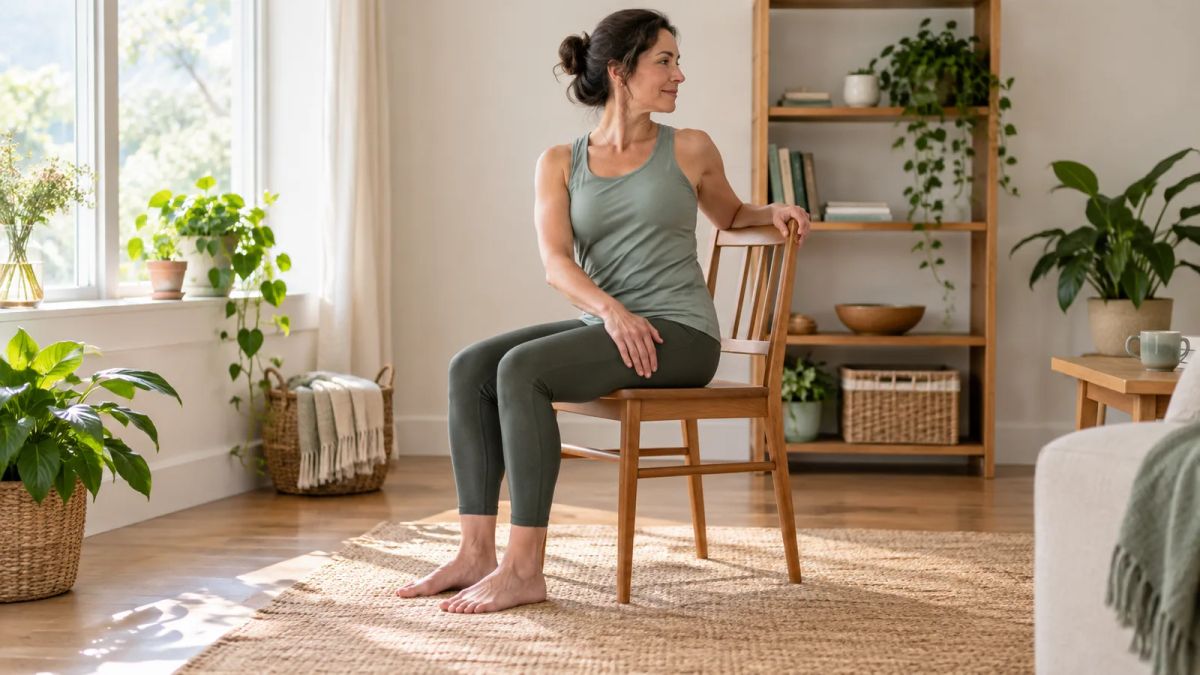
- Check for a supported option. If your balance is uncertain, favour a class or video that offers a standing-supported or seated version, or one held near a wall or a sturdy chair. A chair-based practice is a sensible on-ramp if standing feels risky today.
- Watch the pace. Slow is the point. A clip that has you moving at normal walking speed has missed what tai chi walking is.
- Mind the practical details for a class. Step-free access, parking or a bus route, and a warm, uncluttered room all decide whether you turn up at all.
Trying before you commit matters more than finding the perfect class first time. A free video costs you ten minutes, and a taster session tells you whether a teacher's manner suits you. A session you can get to and enjoy beats a highly rated one you dread.
The basic technique you can start today
You can feel what tai chi walking is in your own hallway, right now, with nothing but flat shoes or bare feet and a few metres of clear floor.
- Stand tall with your feet about hip width apart, knees soft rather than locked, arms hanging loose.
- Shift your weight fully onto one leg until the other foot feels light, almost empty.
- Step that light foot slowly forward and place the heel down first.
- Lower the rest of the foot flat and roll your weight smoothly across onto it.
- Pause, feel steady, then repeat with the other leg.
The Tai Chi for Health Institute suggests taking at least three to five seconds per step and shifting your weight completely onto the standing leg before the other moves. That full, controlled transfer is the whole exercise, and it is what turns a walk into balance practice.
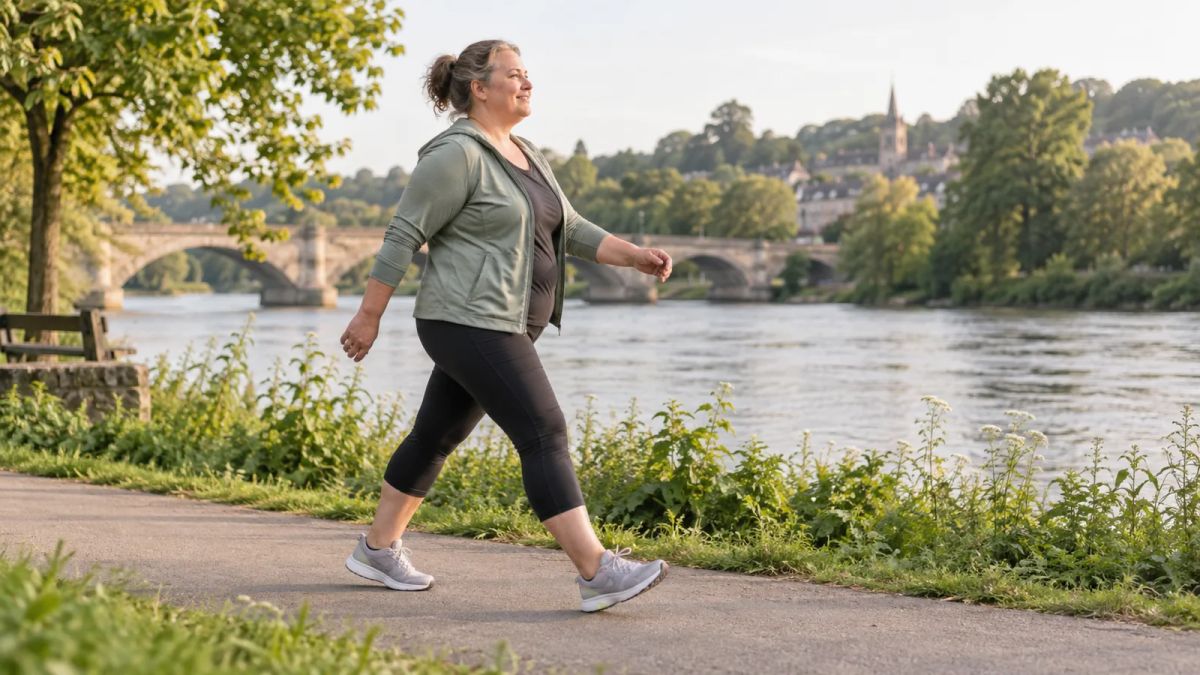
This is a world away from a power walk. The NHS describes a brisk walk with the talk-not-sing test, where you can still talk but not sing the words to a song. Tai chi walking sits well below that, closer to careful, mindful movement than to raising a sweat. That gentleness is the appeal, and it is why the practice works for people who find harder exercise off-putting or unsafe. If you want the fuller picture of how it fits into a week, our guide to the practice goes deeper.
An honest note on weight loss
Here is the straight version. Tai chi walking is low in intensity, so on its own it burns relatively few calories, and gentle movement is not a reliable route to losing weight. The US Centers for Disease Control and Prevention explains that weight change rests on overall energy balance across everything you eat and do, and that the amount of activity any one person needs to manage their weight varies a great deal from person to person. There is no single figure that works for everyone, and no guaranteed outcome from one habit.
Where tai chi has more support is elsewhere. Reviewing the research, the US National Center for Complementary and Integrative Health reports high-certainty evidence that tai chi may reduce the number of older people who have falls by around 20 per cent, alongside lower-certainty signals for blood pressure and a small lift in quality of life and low mood. It is clear that many studies are small or of lower quality, and that the findings are averages across groups rather than a promise for any one person.
So if weight is your reason for looking, treat tai chi walking as one supportive piece alongside how you eat and your wider activity, not the engine of it. What it reliably offers is a way to move more that costs nothing, feels calming, and is easy to keep up. Building any regular movement into your week supports your general health, and the NHS suggests adults aim for at least 150 minutes of moderate activity a week, which a mix of gentle and brisker movement can meet.
If you have been inactive for a while, are living with a health condition, or are recovering from illness, have a word with your GP before you start something new. Stop if anything hurts in a way that feels wrong rather than merely unfamiliar.
A smaller version, and starting again after a gap
On a flat, tired day, shrink the practice rather than skip it. Two or three slow steps across the kitchen while the kettle boils keeps the thread alive and asks almost nothing of you. There is no minimum that counts, and a single mindful minute is a real one.
Missing a day, or a fortnight, undoes nothing. This is a gentle habit with nothing to make up and no penalty for the gap. Pick a quiet moment, take a few deliberate steps, and you have restarted. The free videos and finders are still there whenever you come back.
Meadow, without the streak

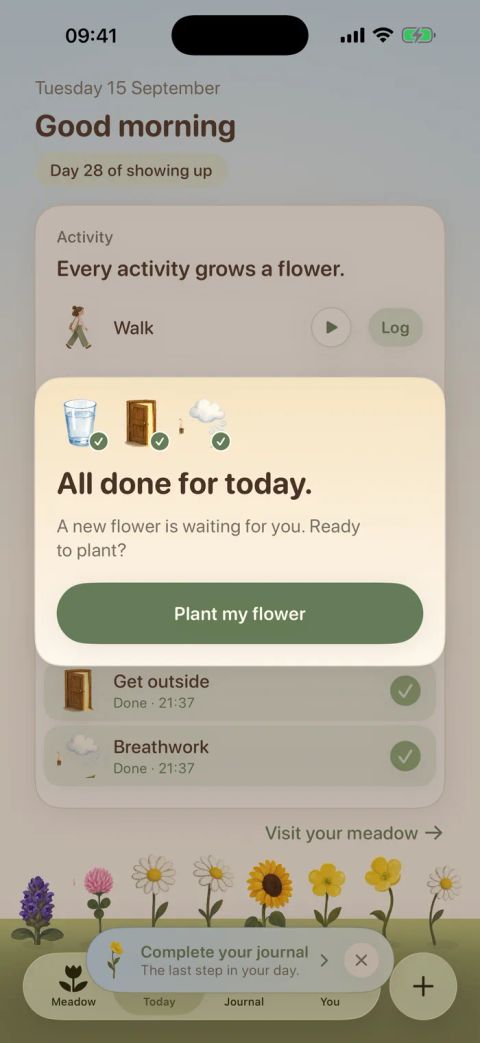
If watching the days add up helps you keep going, a simple record does the job, and a paper calendar on the fridge tracks a habit perfectly well for nothing. If you would rather use your phone, another app worth checking out is Meadow, because it is built to be kind about gaps. Made by Wildcard Wellness, it is a gentle habit tracker for iPhone with walking among its built-in activities, so you can tick off a tai chi walking session, note your mood and a daily win, and watch a wildflower grow as the days build. There are no streaks, so a missed day resets nothing and your flowers never wilt. It costs $39.99 a year or $9.99 a month after a seven-day free trial.
One thing to do today
Search "tai chi walking for beginners" on a free video site, pick one short clip, and try five slow, weight-shifting steps along your hallway, heel down first and your weight moving fully onto each foot before the next one lifts. That small trial tells you more about whether the practice suits you than any amount of reading, and it costs you nothing but a few minutes.
Every little bit counts
Five minutes counts. So does a dance in the kitchen.
Log the movement you enjoy and the small habits that help you feel good, and watch them bloom into something you can see.
Join the Meadow waitlist