Ten thousand steps has the ring of a medical rule, the sort of figure a doctor might have handed down after decades of study. It is not one. The number began as a slogan, and the health research that came later points somewhere gentler. You do not have to reach 10,000 to be doing your body good, and treating that total as a pass or fail mark can quietly turn a decent, active day into a disappointment. It helps to know where the figure came from and what walking seems to offer, so you can decide how much of it, if any, belongs in your own week.
Where the number came from
The 10,000 figure traces back to 1965, when a Japanese company launched a pedometer it called the Manpo-kei, which translates as "10,000 steps meter". Harvard Health describes the name as a marketing tool rather than a research finding. The round number was memorable and easy to sell, and it spread around the world as though it had been tested and confirmed. It had not. So if the target has ever made you feel behind, it is worth remembering that no study set it as the line between healthy and unhealthy. It was a product name that stuck.
What the evidence suggests
The reassuring part is that the health benefits of walking appear to start well below 10,000 steps. Harvard Health reports on a study that followed more than 16,000 older women and tracked how many steps they took against how long they lived. Compared with the least active group, women who managed around 4,400 steps a day had a lower risk of dying during the study, and the benefit kept improving as steps rose before levelling off at roughly 7,500. The US National Institutes of Health covered the same kind of observational work, which counted later deaths rather than any single health measure.
A few honest caveats come with that. This was research on older women, so the exact figures may not map onto you. It was also observational, which means it can show that more steps went hand in hand with better outcomes without proving that the steps alone caused them. People who walk more may differ in other ways too. What the pattern does suggest is steady rather than dramatic: more movement tends to be better than less, the biggest gains seem to come when a very inactive person starts doing a bit more, and the returns flatten out at some point rather than climbing forever. Chasing an ever-higher number is not where the value sits.
What the NHS points to instead
British guidance leans on time and effort more than on a step tally, which sidesteps the whole problem of a magic number. The NHS recommends that adults aged 19 to 64 aim for at least 150 minutes of moderate activity a week, or 75 minutes of vigorous activity, plus strengthening work on two or more days. A step counter cannot see how hard you were working, and that effort matters. The NHS describes brisk walking as a pace where you can still talk but cannot sing, and it notes that even a short brisk walk counts towards your week. Ten brisk minutes is a real contribution that might barely move a step total, so a number on your wrist tells you part of the story at best.
Using it as a personal target
None of this means you have to throw the number away. A round goal can be a friendly nudge if you like something to aim at, and there is nothing wrong with picking 10,000, or 6,000, or whatever fits, as a personal marker. The shift worth making is in how you read it. Treat the figure as a record of movement rather than a verdict on your health, and let it flex with your life instead of ruling it.
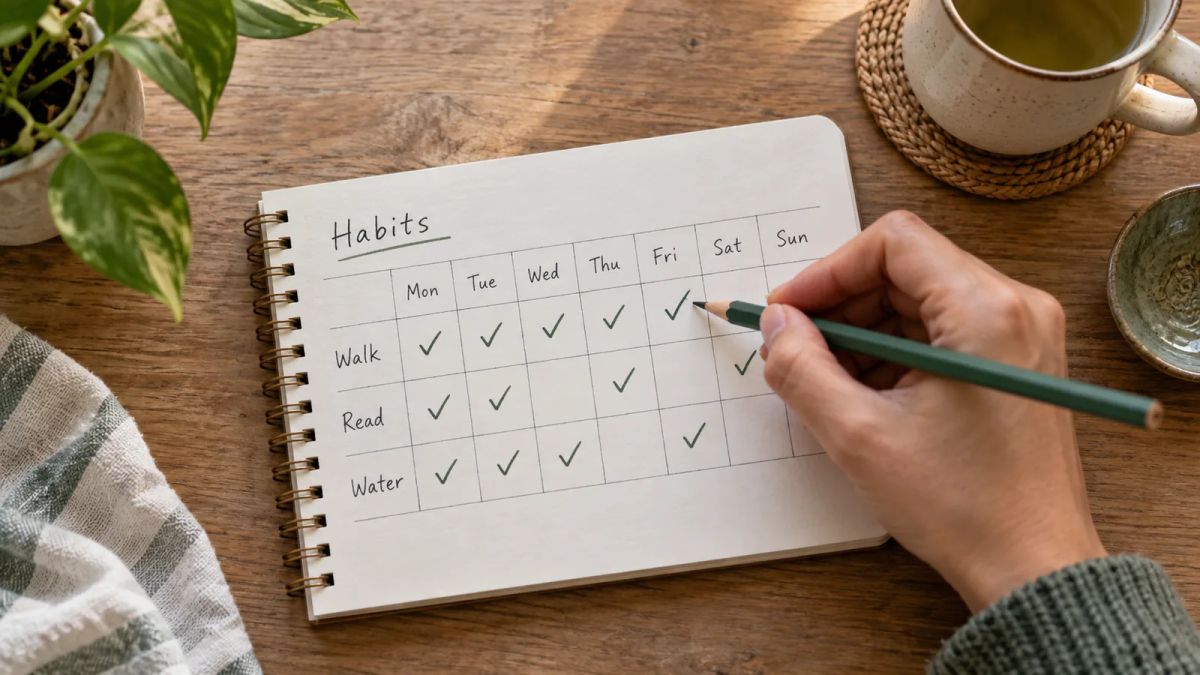
Start by watching a few ordinary days. If you already have a phone or watch that counts, notice the gap between a busy workday and a quiet one, and set your target a touch above your usual rather than at somebody else's headline number. If you do not track anything, you do not need to buy a device to begin. Jotting down when you walk and roughly how long for tells you plenty.
Then pick one place a short walk could slot in. A ten-minute loop after lunch is an example of a small start, not a promise about your body. Choose a length and a route that suit your day, because a lunch break might be tight, a path might feel unsafe after dark, and caring or shift work can make leaving the house at set times hard. The NHS advises building up gradually, so give any addition a week or two before deciding whether to stretch it. If you are returning to exercise after a long break, or you have a health condition or any concerns, the NHS suggests speaking to your GP first, since a general target cannot account for your particular situation.
On hard days, and after a gap
Some days the full walk will not happen, and that is worth planning for rather than dreading. Keep a smaller version ready. If ten minutes is too much, step outside for three, or walk to the end of the road and back. A shorter walk recorded plainly as a shorter walk keeps your habit alive and keeps your log truthful about what you did.
If you miss a day, or several, the walking still counts when you pick it up again. There is no streak to protect and no debt to repay by doubling up. Take the next reasonable chance and carry on. The point is a pattern you can return to, not a perfect run of days.
Keep a record you will trust
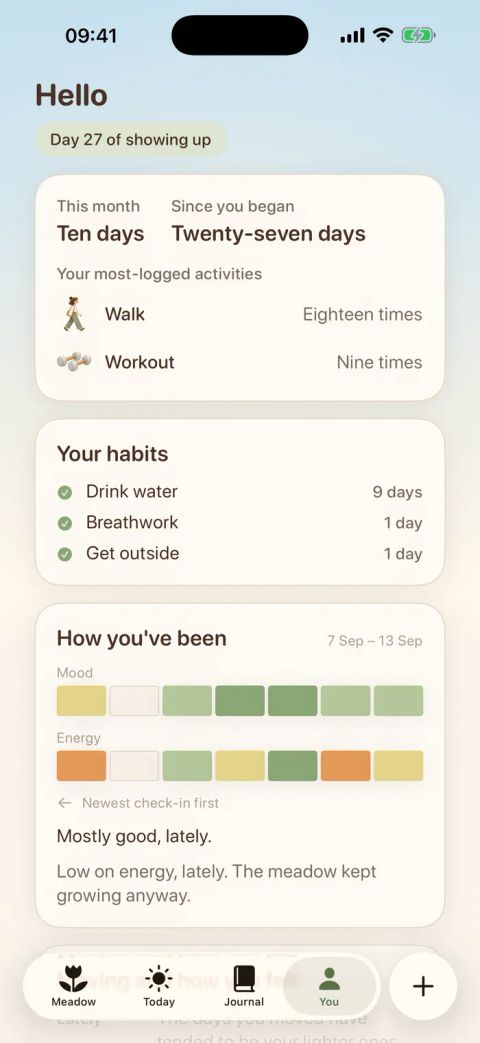
Marking each walk gives you something steady to look back on, which tends to help more than staring at the same daily figure. A tick on a wall calendar does the job. So does an app. Meadow, the habit-tracking app our team makes, lets you tick off a walk and watch the days add up, and it keeps your flowers after a missed day rather than resetting you to zero. If you want to try it, Meadow runs a seven-day free trial, and a notebook or a free calendar reminder does the same tracking job at no cost.
For your first step this week, write down one realistic slot for a short walk tomorrow, naming when and where it will happen. That is a walking habit beginning, with no particular number attached to it.
See how far you've come
Your habits, moods and little wins, all in one place
Meadow keeps track of the walks, the water and the good days, so you can look back and watch your effort add up.
Join the Meadow waitlist