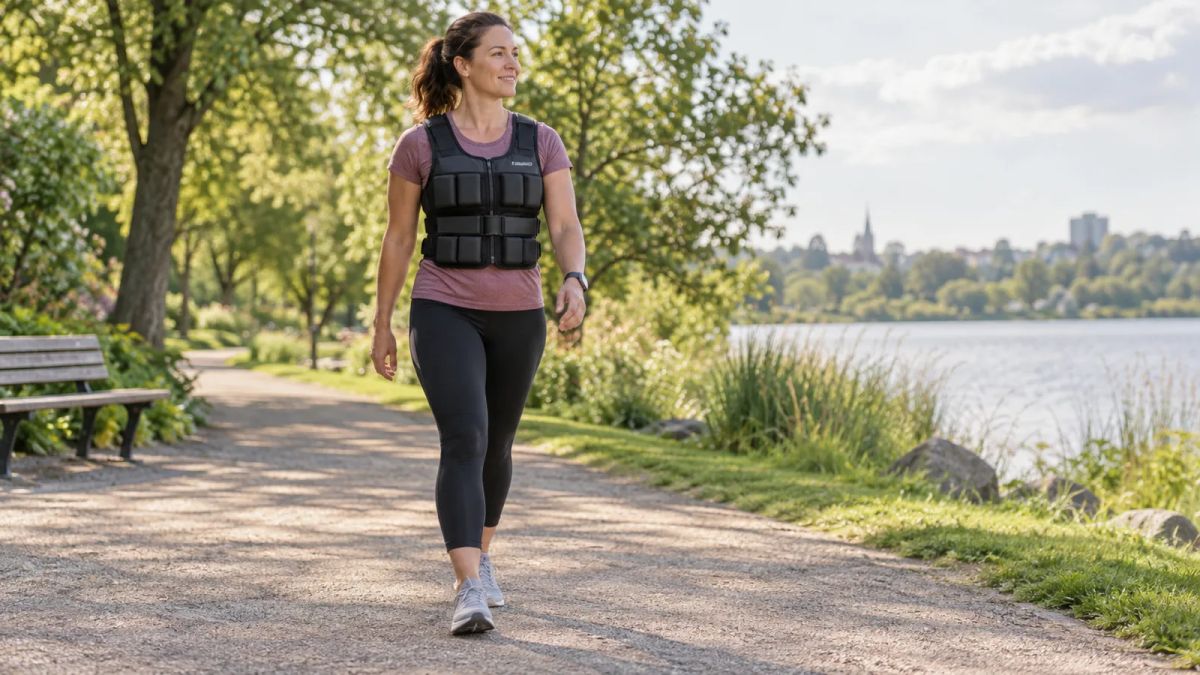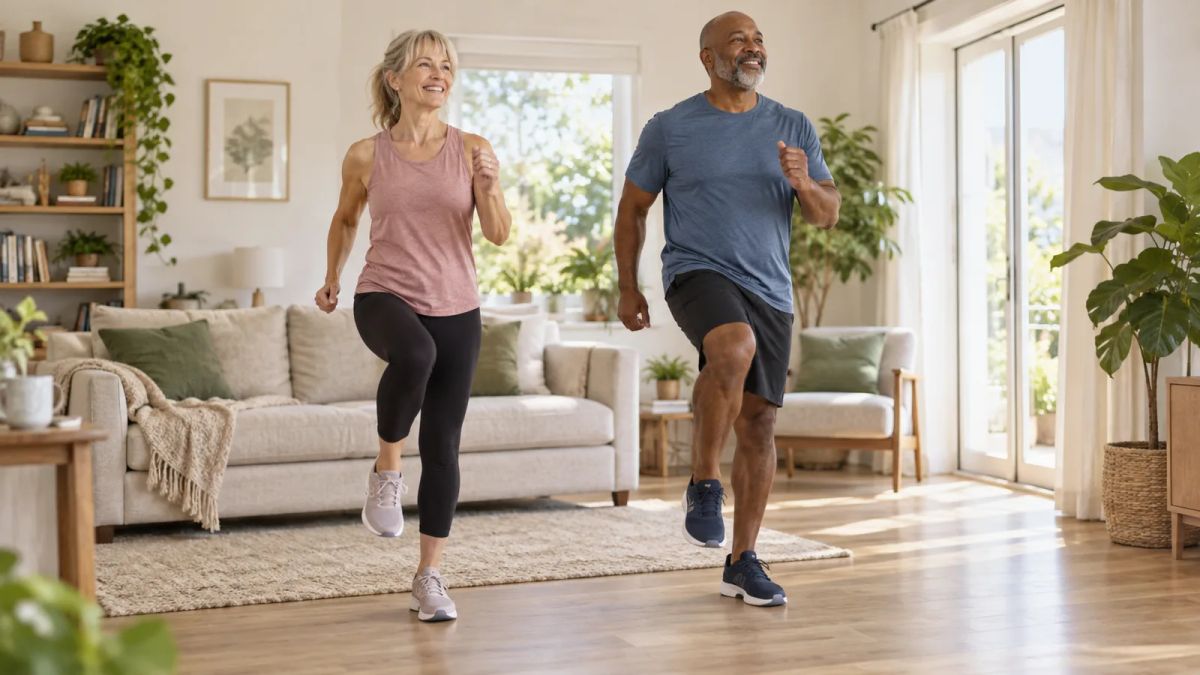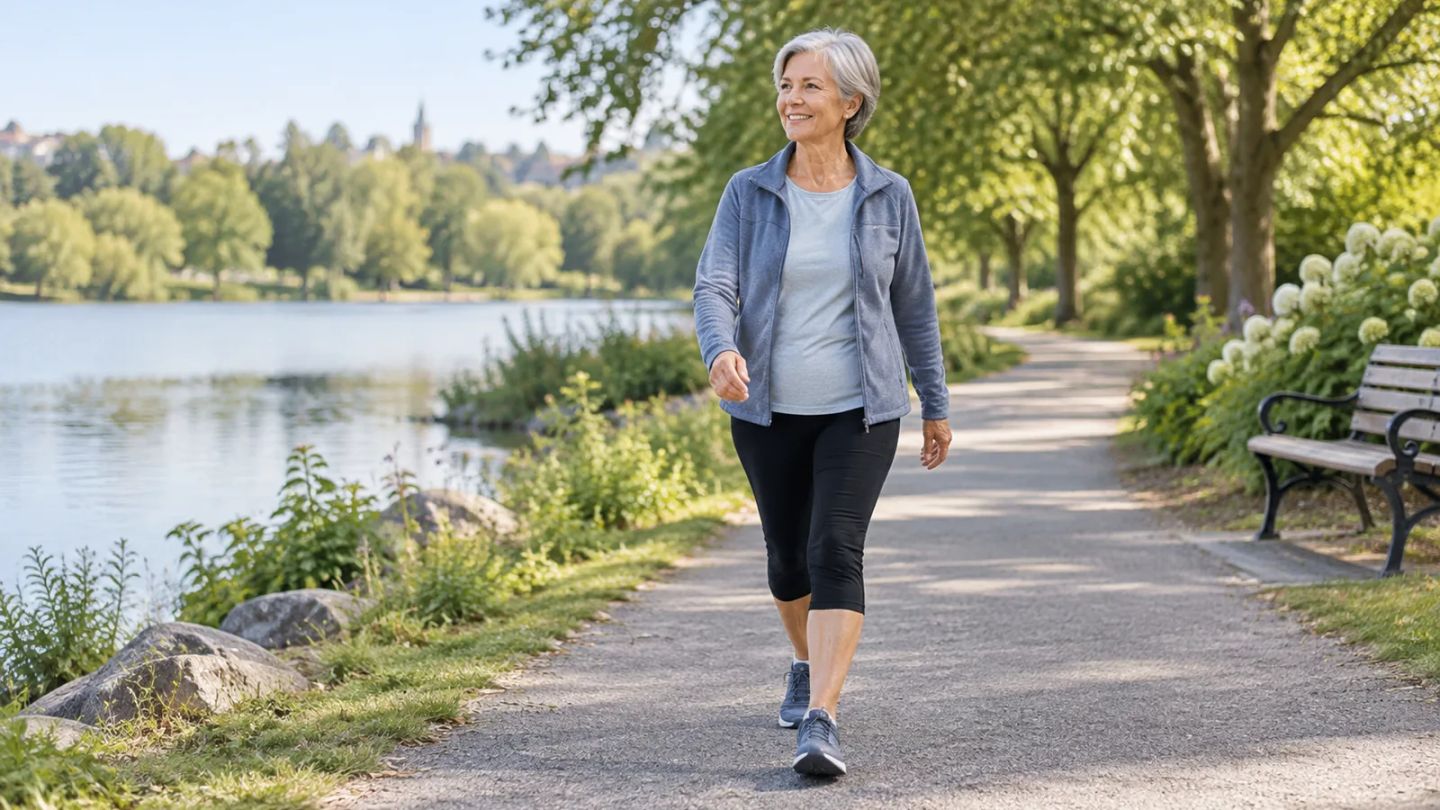
There is no single distance a 65-year-old has to walk each day. For most people over 65, the strongest evidence links clear health benefits to somewhere around 6,000 to 8,000 steps a day, and doing less than that still helps a great deal.
Think of that range as a signpost. Missing it on a given day is not a failure, and some days you will do more while plenty of days you will do less. Those days still count.
Here is what the numbers say, why a shorter walk is worth taking, and how to walk in a way that stays safe and steady as the years add up.
What the evidence points to after 65
The most useful figure comes from a 2022 analysis led by Amanda Paluch that pooled 15 studies and nearly 50,000 people across four continents. For adults aged 60 and older, the risk of early death kept falling as daily steps rose, then levelled off at about 6,000 to 8,000 steps a day. Beyond that, more steps did not add much to the longevity benefit. Younger adults saw the same plateau a little higher, at roughly 8,000 to 10,000.
That is well below the famous 10,000-step figure, which was never based on research to begin with. For a 65-year-old, reaching 6,000 to 8,000 steps on most days is a sensible place to aim.
The gains reach beyond living longer. In a separate study of 452 older adults with an average age of 78, every extra 500 steps a day was associated with a 14% lower risk of heart disease, stroke or heart failure. People walking around 4,500 steps a day had a much lower observed risk of a cardiovascular event than those doing fewer than 2,000.
Both of these are observational studies. They show a strong link, not proof that the steps themselves cause the benefit, and very low step counts can also be a sign of existing illness. Even so, the pattern holds across large groups of older people. Moving more is tied to better health, and the jump from very little to a moderate amount is where most of the benefit sits.
Why a smaller number still counts
If 6,000 steps feels a long way off, start where you are. The biggest health returns in these studies came from the people doing the least, once they began doing a bit more.
Someone going from 2,000 steps to 3,500 is making a change that shows up in the data. That 14% figure attached to each 500 steps means a short loop around the block is worth taking. It is a measurable step in the right direction.
The CDC puts it plainly for older adults: what counts is that you avoid being inactive, and any activity is better than none. A ten-minute walk you take beats a 6,000-step goal you keep putting off.
What a daily walk gives you after 65
Regular walking does more than tick an activity box. For older adults, the CDC links doing enough aerobic, muscle-strengthening and balance activity to better physical function and a lower risk of falling, which is a big part of staying independent at home. Brisk walking covers the aerobic side, and being on your feet feeds the balance that keeps you steady.
It is also easy on the joints compared with harder forms of exercise, and it needs no gym, kit or class. A pair of shoes and a front door will do. Our guide to the benefits of walking goes further into what a regular walk does for the body and the mind.
Turning steps into a distance and a time
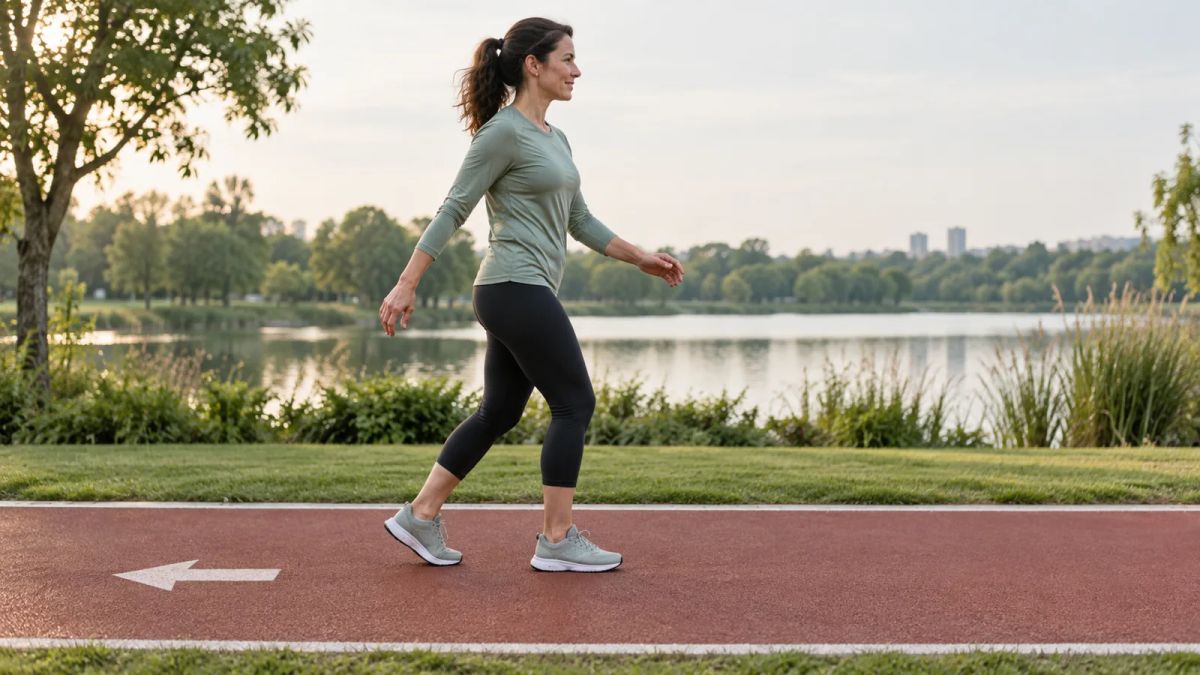
Steps are easier to picture as time on your feet. For an older adult at a comfortable pace, 6,000 to 8,000 steps works out to roughly two and a half to three and a half miles, spread across the whole day rather than done in one go.
You do not have to count steps at all. The CDC and the NHS both frame the goal for people over 65 as at least 150 minutes of moderate activity a week, which is about 30 minutes a day on five days. Brisk walking is their go-to example of moderate activity.
Moderate has a simple test. You should be able to talk but not sing as you walk. If you can belt out a tune, pick up the pace a little. If you cannot get a sentence out, ease off.
It also breaks into pieces. Three ten-minute walks do the same job as one half-hour walk, which helps if standing for long stretches is uncomfortable or the day is busy. For more on the numbers behind daily totals, see our guide to how many steps a day.
Walking safely at 65 and beyond
Walking is one of the safest ways to stay active, and a handful of habits keep it that way.
- Warm up first. March in place or swing your arms gently for a minute or two so your heart rate and muscles get going before you set off.
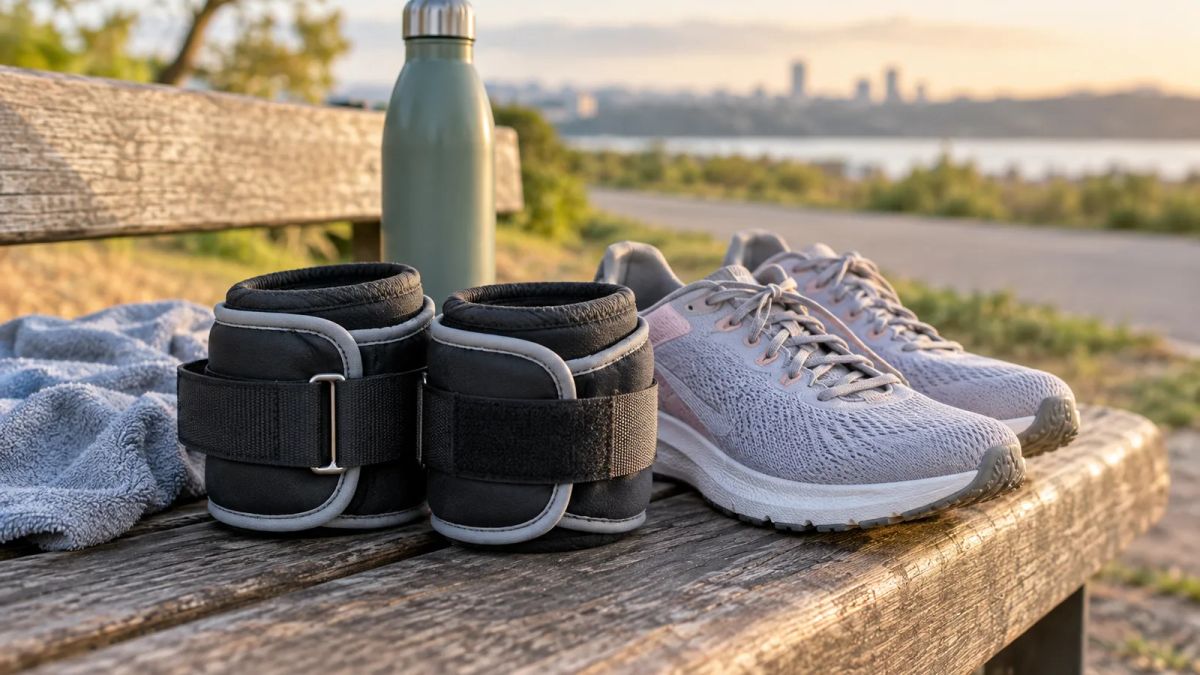
- Wear shoes that fit and grip. Comfortable trainers with non-slip soles and proper support suit most people. If you have foot trouble, ask a healthcare professional about the right shoe.
- Pick your ground. Flat, even pavements and paths are kinder than loose gravel, wet leaves or uneven grass, especially early on. Choose routes with a bench or two so you can rest.
- Mind your balance. Walking helps balance, and the CDC suggests adding simple balance work such as standing on one foot. A pole or a walking stick is sensible if you feel unsteady.
- Bring water and dress in layers you can peel off as you warm up.
- Check with your GP first if you have not been active for a while, or if you have a heart condition, dizziness, joint pain or any worry about starting.
None of this needs to turn walking into a project. It comes down to good shoes, a sensible route and easing in.
Building up without overdoing it
If you are starting more or less from scratch, build slowly. The American Geriatrics Society suggests beginning with as little as five minutes and working up to 30, adding a small amount as it starts to feel easier.
A gentle four-week build might look like this.
- Week 1: a 5 to 10 minute walk on most days, at a pace where you can chat.
- Week 2: stretch it to 15 minutes, or add a second short walk later in the day.
- Week 3: aim for 20 to 25 minutes, or two 15-minute walks.
- Week 4: settle into around 30 minutes on five days, brisk enough to pass the talk test.
Twice a week, add something for strength and balance, which the guidance for over-65s treats as equal in importance to the walking. That can be as ordinary as sit-to-stands from a chair, carrying the shopping or a short session of gentle mobility work. Our mobility exercises for seniors routine sets out a full-body version you can do at home.
Some days the full walk will not happen. Take the smaller version instead. A five-minute turn around the garden or up and down the street keeps the habit alive and still adds to your week.
And if you miss a day, or a week, you have not undone anything. Walking is forgiving. Put your shoes on tomorrow and carry on from there.
A gentle way to keep the walk in view

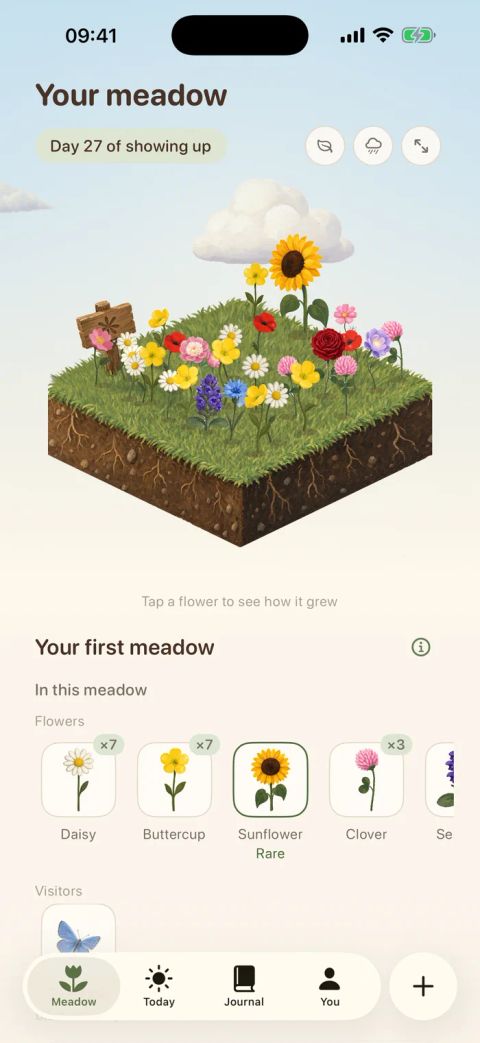
Some mornings you set out as planned and some mornings the weather or a stiff knee has other ideas. Meadow is a habit app that treats those off days kindly. You log a walk, even a short one, and a new wildflower blooms in your own meadow, so the effort you did make is the thing you see. There are no streaks to break, which means a rained-off day resets nothing you have grown, and you pick the walking back up whenever you are ready. You can find it at growyourmeadow.com.
Common questions
Do people over 65 still need 10,000 steps?
No. The 10,000 figure began as a pedometer marketing slogan, not a health guideline. For adults over 60, the longevity benefit in the research levels off around 6,000 to 8,000 steps a day.
How far is that in miles?
Roughly two and a half to three and a half miles for most older adults, added up over a whole day rather than walked in one stretch.
What if I cannot manage that far?
Do what you can and add small amounts over time. The research is clear that the move from very little activity to a bit more is where the biggest gains are, so a short daily walk is worthwhile on its own.
How fast should I be walking?
At a pace where you can talk but not sing. Your comfortable speed will be your own, and it is normal for that to be slower than it was at 40.
Does gardening or housework count?
Yes. Light pottering adds to your daily movement, and heavier jobs such as carrying the shopping or digging count toward the strength side of the guidance. A step tracker misses a lot of the useful activity you already do.
Is it too late to start at 65 or 70?
No. Older adults in these studies who did more saw lower risks of early death and heart trouble, and the benefits of a regular walk are open to people who begin later in life.
Where to start today
Put on comfortable shoes and take a ten-minute walk at a pace where you can still chat. That is enough to begin, and everything else builds from there.
AUTHOR
Co-founder of Meadow.
Ash is co-founder of Meadow, a habit and movement tracking app that turns small acts of self-care into a growing wildflower meadow.
Little and often, with Meadow
Consistency, not intensity.
Meadow turns the movement you enjoy and the habits that help you feel good into a meadow of wildflowers. No streaks to break, and your flowers never wilt.
Download Meadow