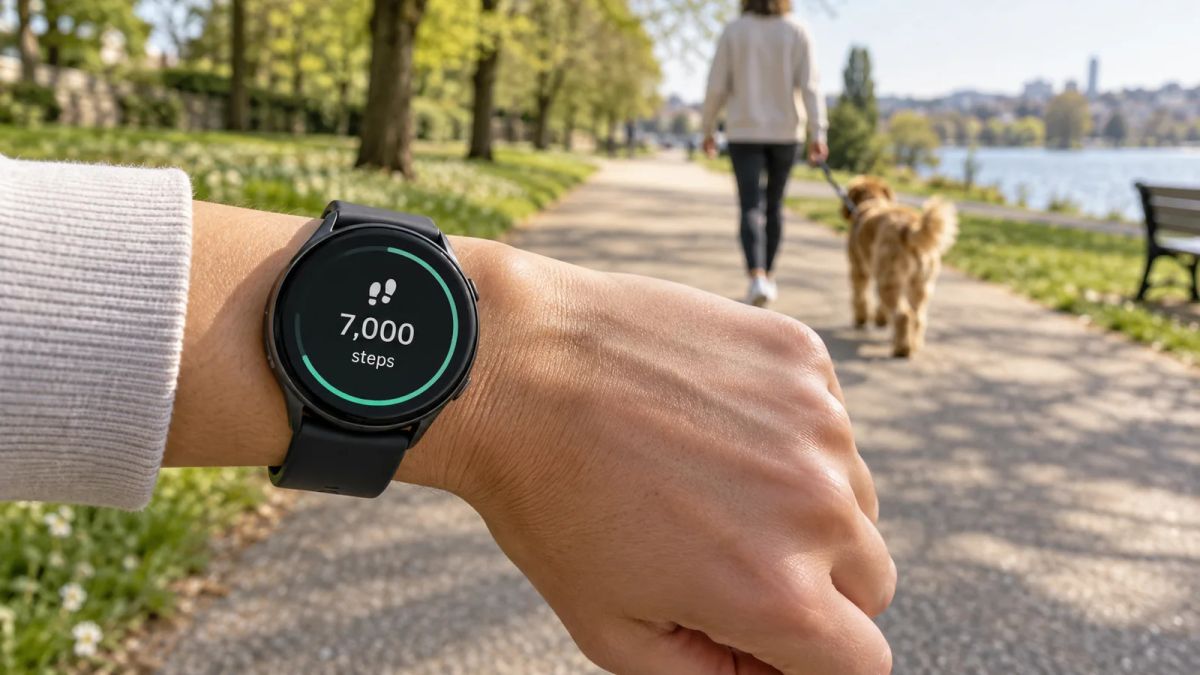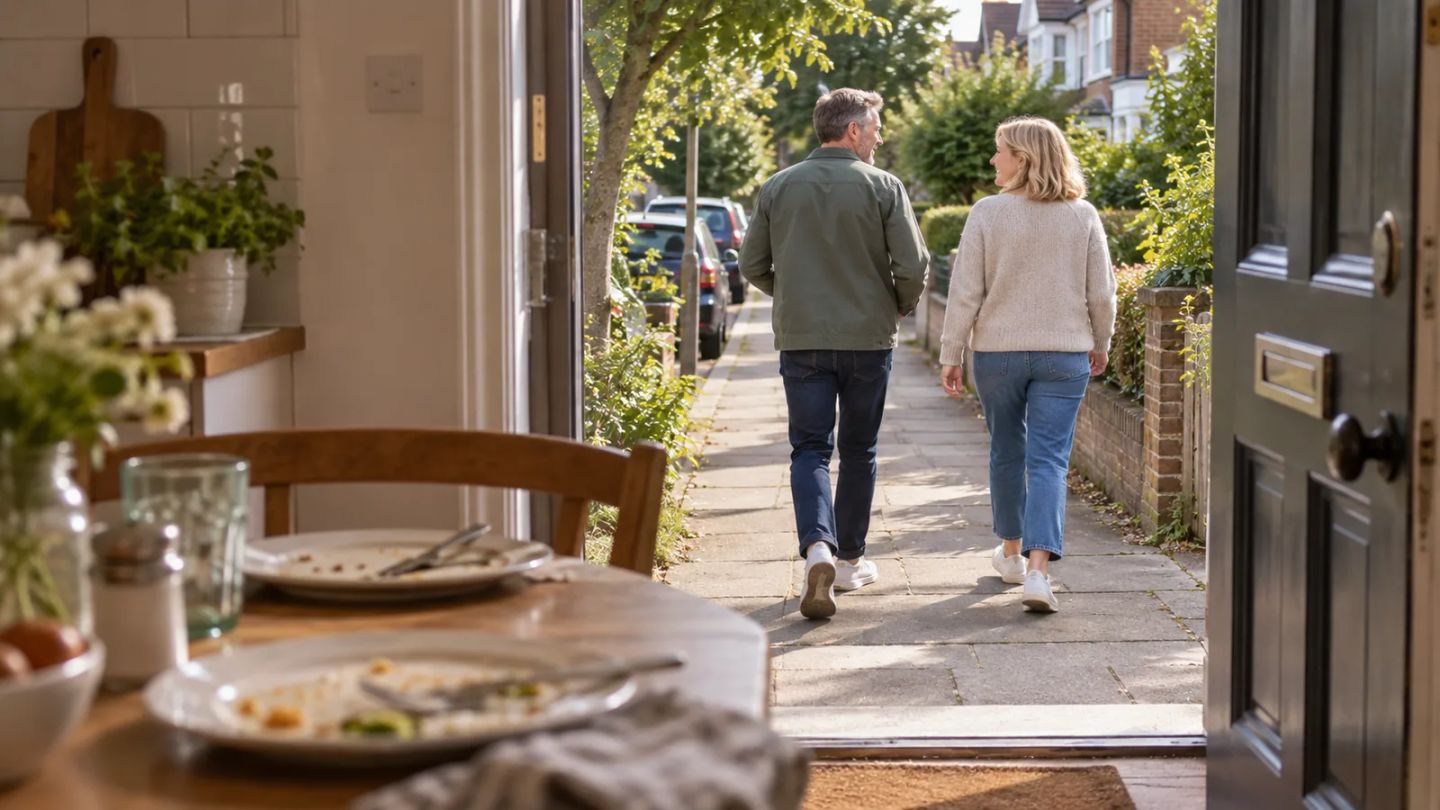
Walking after eating is one of the most useful small habits going, and the clearest reason is blood sugar. Even a few minutes on your feet after a meal softens the rise in glucose that follows eating, and the effect shows up fast. It helps digestion too, it asks almost nothing of your day, and for something this easy the research behind it is unusually consistent.
The rest of this piece is the plain answer. What a post-meal walk does, how long and how brisk it needs to be, when to fit it in, who gains the most, and where the claims run ahead of the evidence.
What walking after eating does to your blood sugar
Eat a meal and your blood sugar climbs, then your body works to bring it back down. Move while that is happening and you help the process along, because working muscles pull glucose out of the bloodstream to burn for energy and become more sensitive to insulin at the same time. UCLA Health describes how even a five-minute walk after a meal made the change in blood sugar both smaller and more gradual, with the benefit sitting in a 60 to 90 minute window after eating.
Timing turns out to matter as much as effort. A systematic review with meta-analysis in the journal Sports Medicine pooled eight randomised crossover trials and found that exercise taken after a meal lowered the post-meal glucose rise more than the same exercise taken before eating, and that the sooner you moved after eating, the bigger the effect. Roughly twenty minutes of walking was the example the authors used.
You do not need a long session for this. A separate meta-analysis by Buffey and colleagues, also in Sports Medicine, showed that light walking in bouts as short as two to five minutes lowered post-meal glucose more than sitting, and did better than standing as well. A slow amble to the end of the road is doing measurable work.
The clearest single study comes from older adults at higher risk. DiPietro and colleagues had ten inactive people around 69 years old, all at risk of impaired glucose tolerance, try three 15-minute walks after meals against a single 45-minute walk. The three short post-meal walks matched the long one for 24-hour glucose control, and the walk after the evening meal beat the longer daytime walk at holding blood sugar down overnight. This was a small trial, so read it as a strong hint rather than a settled rule, but it points the same way as everything else.
What it does for digestion
The blood sugar story gets most of the attention, and the digestion side is worth knowing too. Cleveland Clinic explains that a gentle walk speeds up gastric emptying, meaning food moves out of the stomach a little faster. That can ease the heavy, overfull feeling after a big meal and take the edge off reflux, bloating and abdominal discomfort for some people.
You do not have to march for this to work. The same source notes that even a change in position helps, so if a walk round the block is out, standing up and pottering about the house still nudges the stomach along.
How long, when, and how brisk
Short counts. As little as two to five minutes moves the needle on blood sugar, and ten to fifteen minutes is a comfortable target if you have it. There is no need to build up to something heroic before it starts working.
On timing, blood sugar tends to peak somewhere between 30 and 90 minutes after you eat, so a walk inside that window catches the rise. Sooner is better than later, which is a gentle argument for stepping out soon after you put your knife and fork down, not an hour later.
Brisk is optional here. Plenty of the research used easy, moderate walking, and a relaxed pace is enough to get the glucose benefit. If you do want a marker for brisk, the NHS uses the talk-but-not-sing test, a pace of about three miles an hour. After a full meal, though, a slower stroll is often kinder on your stomach and still does the job.
Who benefits most
Everyone gets a blood sugar spike after eating, so a post-meal walk has something to offer most people. The gains look largest for those whose bodies handle glucose less smoothly, including people with prediabetes, type 2 diabetes or impaired glucose tolerance, and older adults, which is the group the DiPietro trial focused on.
Meal size and timing play a part too. The walk pays off most after your biggest meal of the day and after the evening meal, when blood sugar tends to stay raised the longest. If you can only manage one walk, that is the one to choose.
The honest limits
A post-meal walk is a helpful nudge, not a treatment. Cleveland Clinic is clear that it is no magic fix for diabetes, and it does not replace medication, sensible eating, sleep or the care your GP provides. It sits alongside those things and makes them a little easier.
The evidence has edges too. Several of the sharpest findings come from small crossover trials with a high risk of bias, and they measure the immediate response to a meal, not years of health outcomes. The direction of travel is consistent and the downside is close to zero, which is a fair reason to do it, so long as you keep the claims in proportion.
One practical caution. Walking hard straight after a large meal gives some people indigestion, nausea or a stitch. If that is you, keep the pace easy, or wait ten to fifteen minutes before you set off. If you take glucose-lowering medication, or you live with a health condition or any concerns, have a word with your GP before you change your routine, because a general tip cannot account for your situation.
Fitting a walk into a real day
The walk that survives a normal week is the one attached to something that already happens. James Clear calls this habit stacking, using the shape "after [current habit], I will [new habit]", so an existing routine becomes the cue. A meal is close to the perfect cue, because it happens every day at roughly the same time, so "after I finish lunch, I walk to the postbox and back" needs almost no willpower to remember.
Fit it to the meal that suits your day. A short loop after breakfast before work, ten minutes at lunch instead of staying at your desk, or a wander after dinner while the kettle boils all count. If you want the wider case for a daily walk, our guide to the benefits of walking covers what it does for your heart, joints and mood, and if you are tracking movement in steps, how many steps a day unpicks the numbers that matter.
On a stretched day, shrink the walk. Don't skip it. Two minutes to the end of the garden, a lap of the office, or standing to clear the table all keep the habit alive when a proper walk is off the table. A tiny walk you took beats a long one you meant to.
And when you miss one, take the next chance instead of writing off the day. There is no streak to protect and no penalty for a gap. The habit is the pattern over weeks, not a perfect record.
Tie the walk to your meals
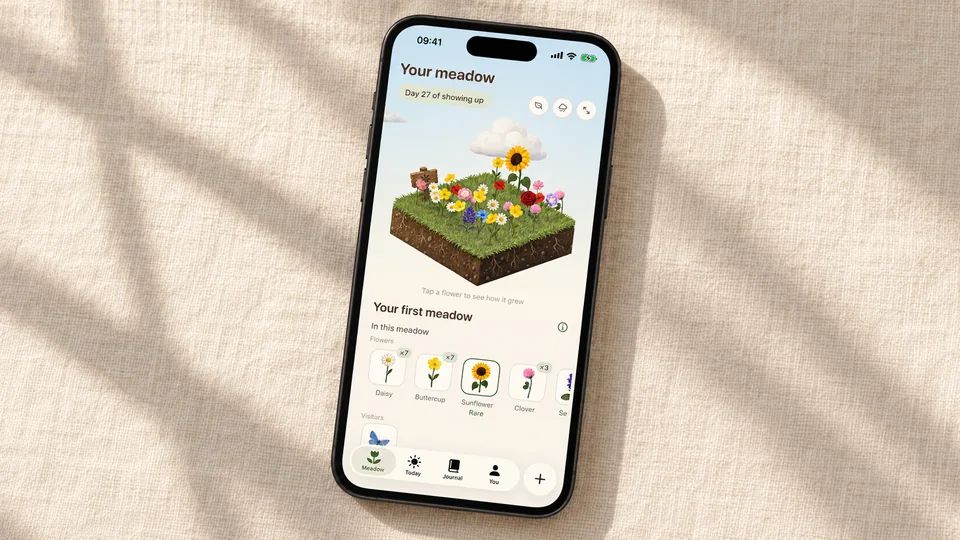
Watching your walks add up can be the thing that keeps you going, and a plain record does most of that work. A tick on a wall calendar counts. So does an app.
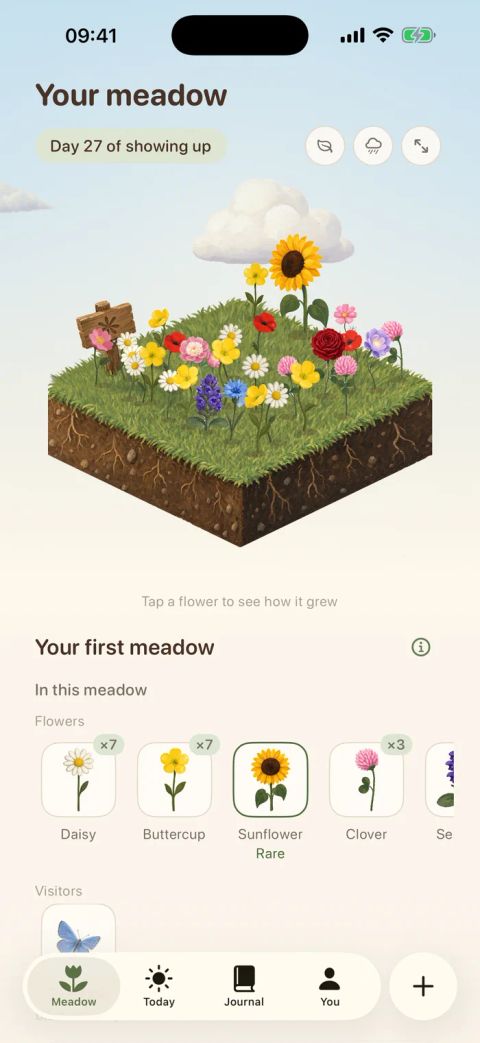
Meadow works well here, a gentle habit app for iPhone with walking among its activities, so you can log a post-meal stroll while the kettle is on and watch a wildflower grow for each day you move. It is made by Wildcard Wellness and built around showing up rather than a perfect run. There are no streaks, so a day you forget the walk resets nothing and your flowers never wilt.
Common questions
Is it better to walk before or after eating?
After, if blood sugar is your reason. The Sports Medicine meta-analysis found that exercise taken after a meal lowered the glucose rise more than the same exercise before eating, and that moving sooner after the meal worked better than leaving a long gap. A walk before a meal has its own value, but for smoothing the spike, the post-meal timing wins.
How long should I wait after eating before walking?
You do not need to wait at all for the blood sugar benefit, and stepping out soon after your meal tends to work best. The one reason to pause is comfort. If brisk walking on a full stomach leaves you queasy or gives you a stitch, wait ten to fifteen minutes and keep the pace gentle.
Does a short walk make any difference?
Yes. Bouts as brief as two to five minutes of light walking lowered post-meal glucose more than sitting in the Buffey meta-analysis, and a five-minute walk had a measurable effect in the UCLA Health summary. Short and frequent beats saving it all for one long session you might not get to.
Can walking after eating upset your stomach?
It can, for some people, especially at a fast pace right after a large meal. Indigestion, nausea and cramping are the usual complaints. Slowing down or leaving a short gap before you walk usually sorts it, and a gentle stroll is less likely to cause trouble than a march.
Is walking after dinner especially good?
It tends to be. Blood sugar often stays raised longest after the evening meal, and in the DiPietro trial the post-dinner walk was the standout for keeping glucose down overnight. If you pick one walk a day, the after-dinner one is a strong choice.
One thing to do today
After your next main meal, set a two-minute timer and walk until it goes off, even if that means laps of the kitchen. That is a post-meal walking habit starting, with none of the pressure a bigger target would bring.
AUTHOR
Co-founder of Meadow.
Ash is co-founder of Meadow, a habit and movement tracking app that turns small acts of self-care into a growing wildflower meadow.
Little and often, with Meadow
Consistency, not intensity.
Meadow turns the movement you enjoy and the habits that help you feel good into a meadow of wildflowers. No streaks to break, and your flowers never wilt.
Download Meadow