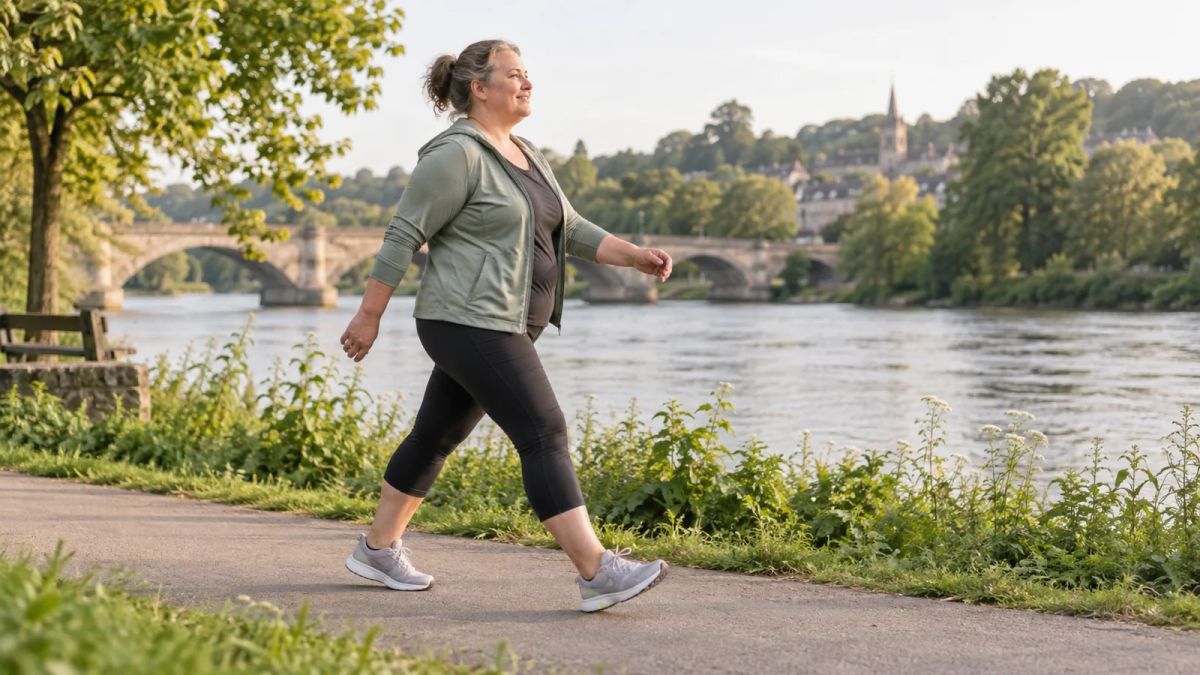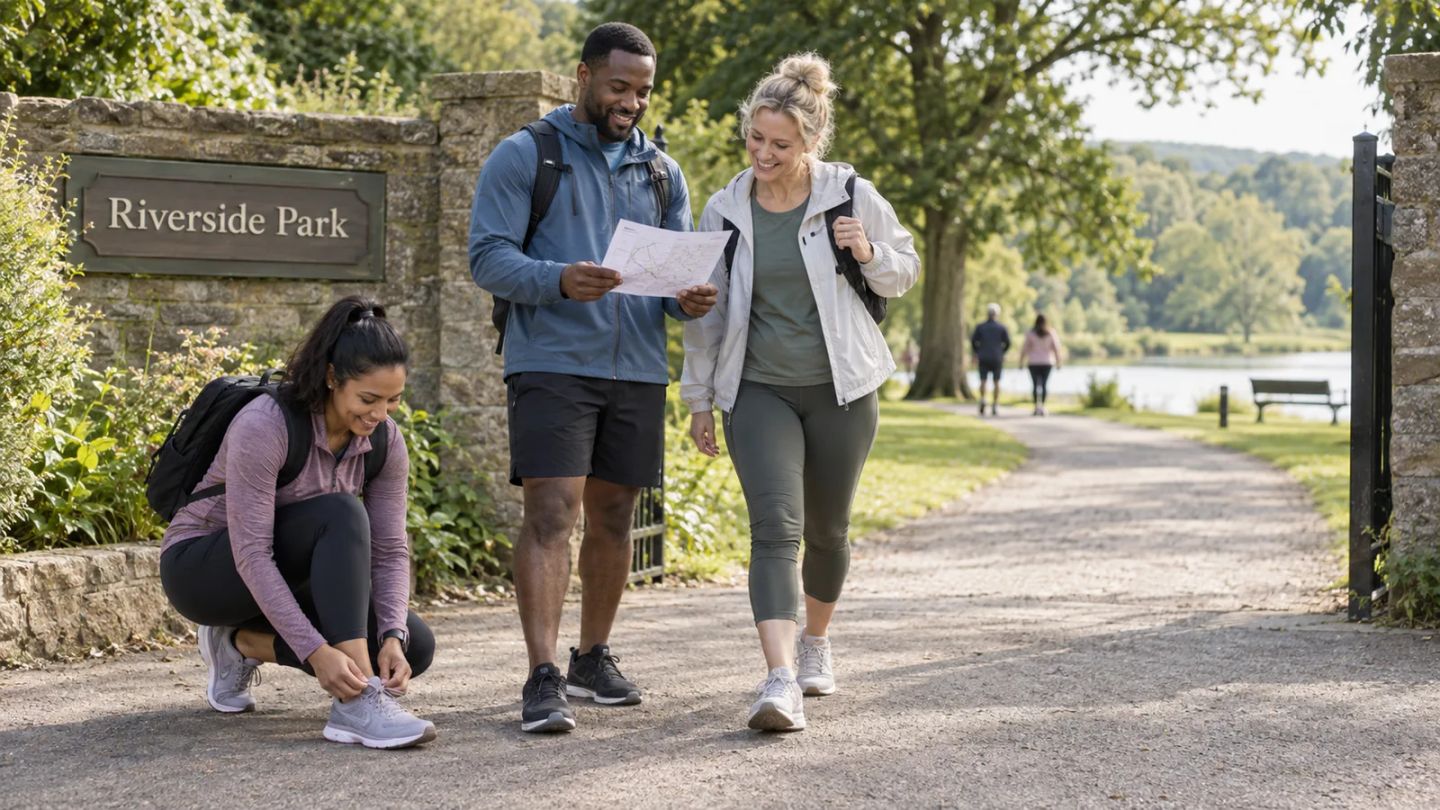
A walking challenge is a set stretch of days where you agree, on your own or with other people, to walk a little more than usual and to keep a record of it. You can run one solo, rope in a few friends, or set one up at work, and the only things you need to begin are a start date and a way to mark the days off.
This is the whole thing in one place. What a challenge is, the shapes it can take, how to run it alone or with a group, a four-week beginner plan you can follow as written, the honest benefits, and how to keep people showing up once the novelty wears off.
What a walking challenge is
A challenge is a container. It puts a start date, an end date and a shape around walking, and that shape is most of why it works. Left to good intentions alone, "I should walk more" tends to stay a plan. Give it edges and a way to see your progress and it becomes something you do.
Any goal works, as long as you set one. A challenge you can hit on a busy Tuesday will still be running in week three. One built around your best possible day collapses the first time life gets in the way.
Two things separate a challenge from ordinary walking: a defined window, usually a week to a month, and tracking, so each day you walk leaves a visible mark. That little mark does more than you would think, as we will come to.
The types of challenge, and which one to pick
Most walking challenges are a version of one of these. Pick the shape that fits how you are wired.
- A daily step goal. Everyone aims for a number of steps a day, often between 6,000 and 10,000, tracked on a phone or watch. Clear and easy to compare, though it can nudge people into competing when they meant to encourage each other.
- A consistency challenge, with no streak to break. The win is showing up. You tick each day you move, however small the walk, and a missed day costs you that day and nothing more. This suits anyone who has been burned by a streak that snapped and took their motivation with it.
- A streak challenge. Walk every single day for the length of the challenge. Streaks can be a strong pull, but they carry a trap: miss once and the number resets to zero, and that reset is where a lot of people quit instead of starting again.
- A distance or destination challenge. You add up miles over the month, sometimes mapped onto a real route so the group "walks to" a chosen landmark. Good for a team, because the destination gives everyone a shared finish line.
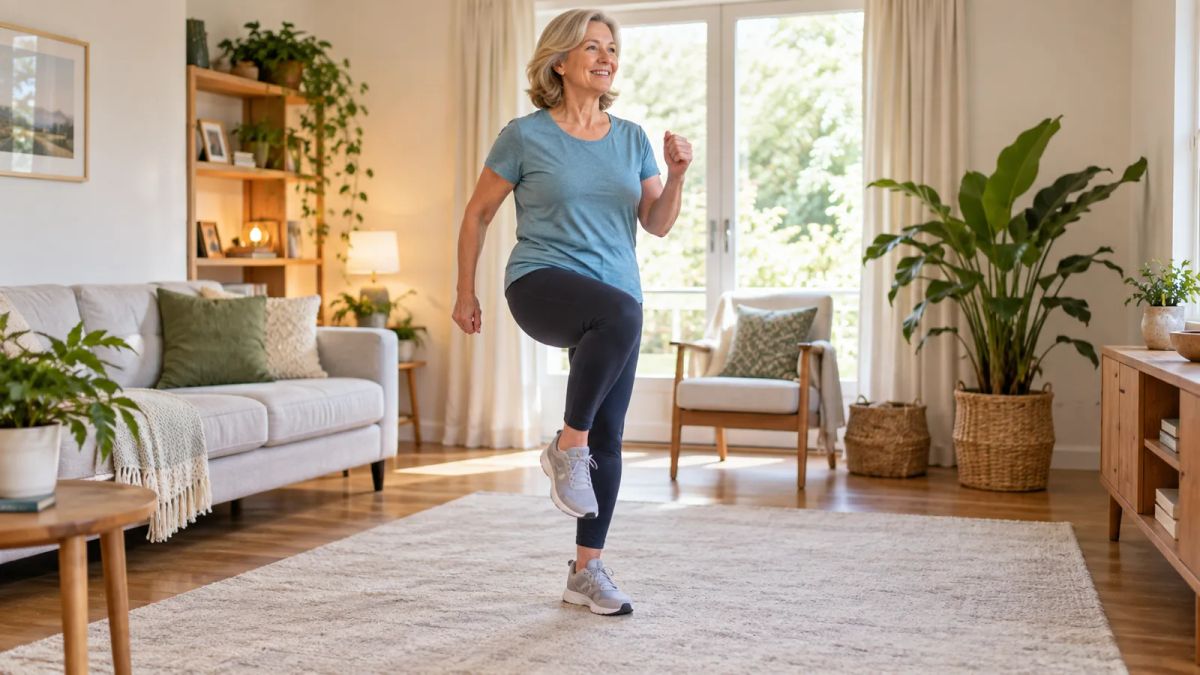
- A time-based challenge. You aim for a number of minutes a day instead of steps, which helps if you march on the spot, walk hills, or do not want to stare at a step count.
You can blend them. A common mix is a modest daily minimum for consistency plus a shared group total, so nobody feels left behind and there is still a reason to do extra laps.
Two of these are worth running on their own terms. If you would rather stay off the pavement, our indoor walking challenge turns a living room into a walking route, and the 28-day walking challenge lays out a longer run day by day.
Running it solo, with friends, or at work
The shape changes a little depending on who is in it.
On your own, the point is to make walking automatic before the challenge ends. Attach the walk to something you already do every day, like the first coffee or the end of work, so you are not relying on memory. Keep a tracker somewhere you will see it, and set a floor so low that a bad day still counts.
With friends, three to eight people tends to work best, big enough to feel like a group and small enough that nobody can hide. Let each person set their own daily goal instead of forcing one number on everyone, since a target that suits a marathon runner will crush a beginner. Agree how you will track it, whether that is a group chat, a shared note or an app, and share progress daily. Walking beside someone, even on a phone call, turns the walk into the social part of your day.
At work, keep it light and optional. A destination challenge, where the team pools its steps to "reach" a chosen place, gets people involved without singling anyone out, and a walking meeting once a week folds movement into the day instead of adding to it. Let people join at their own level, because a workplace challenge that becomes a leaderboard for the already-fit tends to put everyone else off.
Your ready-to-use four-week beginner plan
Start where you are, not where you think you should be. The plan below builds from ten minutes a day to around forty, five days a week, with two rest days you choose. Read the minutes as a rough guide and walk to how you feel. If week two feels like plenty, stay there an extra week.
Week 1, find the rhythm. 10 minutes a day, 5 days, at an easy pace where you can chat the whole way. The job this week is turning up, not speed.
Week 2, add a little. 20 minutes a day, 5 days. Walk the first and last few minutes easy, and pick the pace up in the middle so you are breathing harder.
Week 3, pick up the pace. 30 minutes a day, 5 days. Aim for a brisk pace for most of it, easing off whenever you need to.
Week 4, make it yours. 35 to 40 minutes a day, 5 days. Keep it brisk, add a hill or a longer loop if you fancy it, and notice how much easier week one would feel now.
Here is one filled day from week two, so you can see how a walk fits together:
Wednesday, 20 minutes. 4 min easy to warm up, 12 min brisk (the pace where you can talk but not sing), then 4 min easy to cool down. Around 2,000 to 2,500 steps.
Copy this blank tracker onto paper or a shared note, one week per row, and tick each day:
Week 1: Mon ☐ Tue ☐ Wed ☐ Thu ☐ Fri ☐ Sat ☐ Sun ☐
Week 2: Mon ☐ Tue ☐ Wed ☐ Thu ☐ Fri ☐ Sat ☐ Sun ☐
Week 3: Mon ☐ Tue ☐ Wed ☐ Thu ☐ Fri ☐ Sat ☐ Sun ☐
Week 4: Mon ☐ Tue ☐ Wed ☐ Thu ☐ Fri ☐ Sat ☐ Sun ☐
Aim for five ticks a week, not seven. Building rest in from the start makes a day off part of the plan, not a failure.
What a walking challenge does for you, the honest version
Walking is one of the best-studied things you can do, and the evidence holds up well. A systematic review of walking programmes found that taking one up lowered systolic blood pressure by about 3.7 mmHg and diastolic by about 3.1 mmHg on average, brought resting heart rate down, and did it with almost no injuries across more than 74,000 hours of walking.
There is a payoff on the timescale of a challenge too. Harvard Health describes research in which people who walked at least 20 minutes a day, about five days a week, had 43% fewer sick days than those who exercised once a week or less, with milder symptoms when ill. That is close to what this plan builds towards.
The steps add up over years as well. A meta-analysis of 15 international studies following nearly 50,000 people found that more daily steps were associated with a lower risk of dying over the follow-up, with the benefit levelling off around 6,000 to 8,000 steps a day for adults over 60 and 8,000 to 10,000 for younger adults. Our guides to the benefits of walking and how many steps a day go deeper on both.
Now the honest part.
If your goal is weight loss, a walking challenge helps but will not do it alone. The CDC notes that the amount of activity people need varies a great deal from one person to the next, and that a healthy weight rests on how you eat as much as how you move. These findings are associations drawn from large groups, not promises about your four weeks. Run the challenge because it makes your days feel steadier and gives you a reason to get outside, and treat the scale as a bonus.
Keeping people motivated
The tracker is the engine, not the paperwork. A meta-analysis of 138 studies found that monitoring your progress towards a goal makes you more likely to reach it, and the effect was stronger when that progress was written down or shared with other people. Ticking a box quietly holds the whole thing together. A challenge with tracking beats a vague resolution every time.
A few things keep a group going once week one wears off. Share progress daily, and cheer the person who did ten minutes as loudly as the one who did an hour. Let people set their own goals so nobody is quietly losing a race they never entered. And build in a bit of fun, like a shared total or a route you are walking towards.
On a stretched day, shrink the walk instead of skipping it. Five minutes to the end of the road and back keeps the habit alive, and a short walk beats a long one you planned and missed.
When someone misses a day, and someone always will, take the next walk instead of trying to make up the lost one. James Clear calls this "never miss twice", the idea being that missing once is an accident and missing twice is the start of a new pattern. This is where streak-based challenges lose people. A consistency challenge has nothing to reset, so a gap costs you one walk and no more.
A challenge that survives a missed day
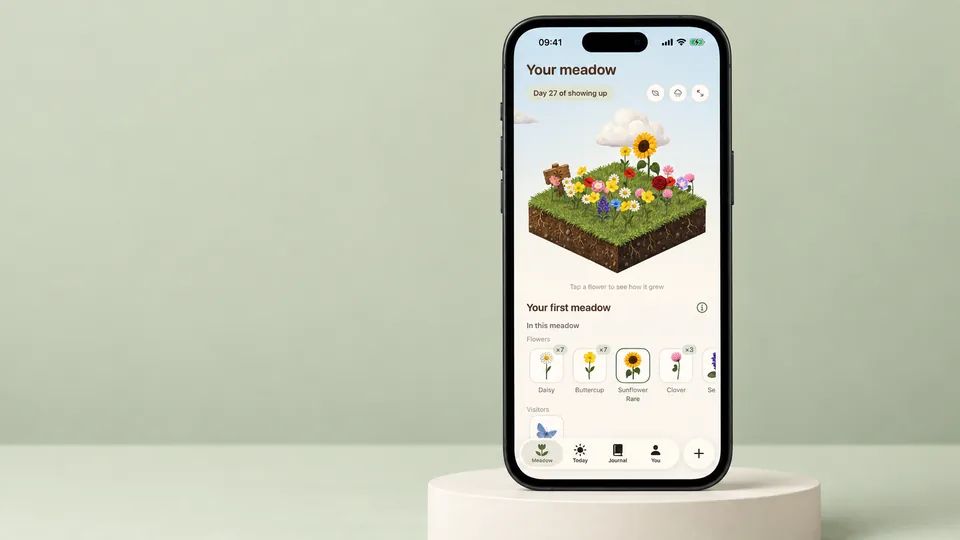
A paper tracker does a lot of this work, and so can an app, especially one that counts the days you show up.
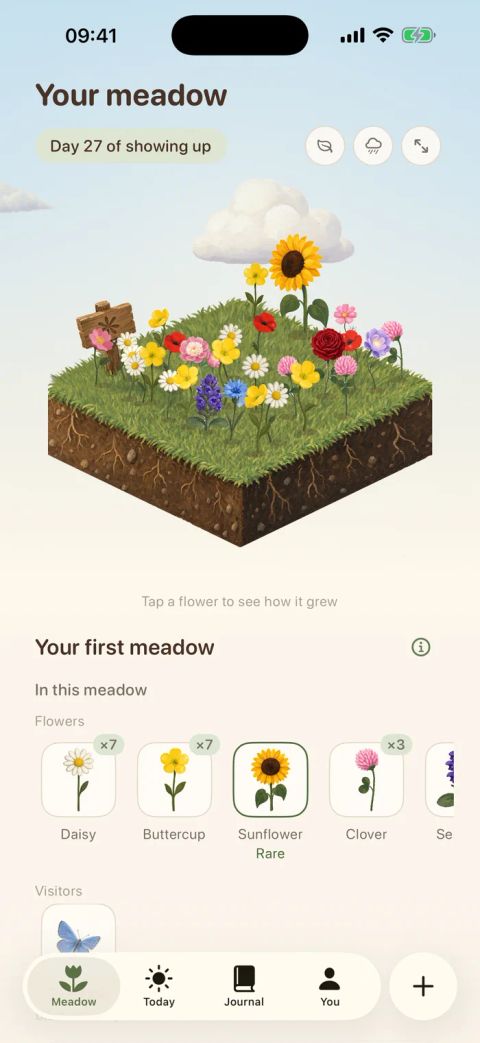
Since a walking challenge lives or dies on turning up, Meadow takes the pressure off by counting the days you move rather than the ones you miss. It is a gentle iPhone app from Wildcard Wellness with walking built in, so you can log each walk, note your mood and a small daily win, and watch a wildflower grow for every day you get out. There are no streaks, so a missed day resets nothing and your flowers never wilt, which takes the sting out of a slip. If you would rather keep it on paper, our habit tracker guide covers that.
Common questions
How long should a walking challenge be?
Long enough to build a habit, short enough to feel doable. A week is a good first try, two weeks tests whether it will stick, and a month gives the walking time to become routine. If you are new to it, start with seven days.
How many steps should the daily goal be?
Whatever is a small stretch on your current normal, not a round number you saw online. If you average 4,000 steps now, 6,000 is a fair target. Most of the benefit arrives well before 10,000, so there is no need to treat that figure as a pass mark.
What if I cannot walk far, or at all right now?
Start with what you can manage, even two or three minutes at a time, and rest between. Time-based and consistency challenges suit this better than step goals, because turning up counts more than distance. If standing or walking is difficult, our guide to chair yoga covers gentle options from a stable chair. Anyone with pain, balance worries or a health condition should check with their GP before building up.
How do you stop a group challenge fizzling out?
Keep the goals personal, keep the tone kind, and keep it visible. Groups fade when a leaderboard makes the slower walkers feel they have already lost, so favour shared totals and personal bests over a ranking. A daily check-in holds a group together better than any prize at the end.
One thing to do today
Pick your start date and your daily floor right now, and make it small, like ten minutes or 2,000 steps. Write it where you will see it, message one person to join you if you want company, and take the first walk today instead of waiting for Monday.
AUTHOR
Co-founder of Meadow.
Ash is co-founder of Meadow, a habit and movement tracking app that turns small acts of self-care into a growing wildflower meadow.
Little and often, with Meadow
Consistency, not intensity.
Meadow turns the movement you enjoy and the habits that help you feel good into a meadow of wildflowers. No streaks to break, and your flowers never wilt.
Download Meadow