Reformer Pilates is Pilates done on a sprung machine called a reformer, and the honest benefits are a stronger core, better flexibility, steadier balance and a form of low-impact strength work that goes easy on your joints. It won't torch fat or reshape your body in a fortnight, whatever the class marketing suggests.
What it does well, it does well. The machine adds adjustable resistance and support that a mat can't, which is why physiotherapists reach for it in rehab and why a beginner can attempt moves they'd struggle with on the floor.
What reformer Pilates is
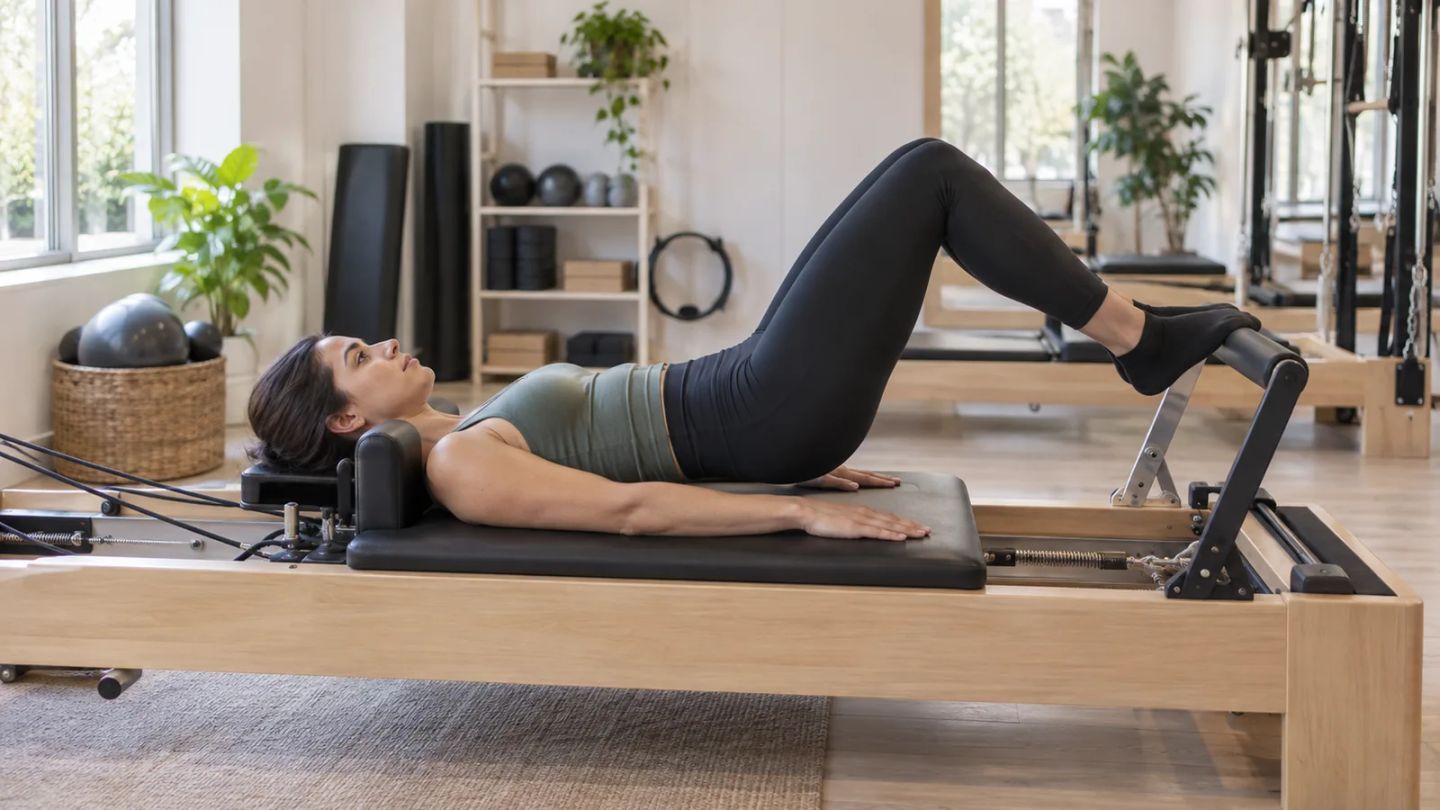
A reformer is a low wooden and metal frame with a padded platform, the carriage, that slides back and forth on rails. The carriage runs against a set of springs you can add or remove to change the resistance, and it comes with long straps for your hands or feet and a padded bar to push against. You lie, sit, kneel or stand on it and move the carriage in and out against the spring tension.
Joseph Pilates built the first versions almost a century ago, partly to help bedbound patients exercise against resistance. The modern studio version is the same idea with better upholstery.
Every exercise works two ways at once. You move the carriage out, and you control its return. That slow, resisted return is where a lot of the work happens, and it's hard to copy on a mat.
How it differs from mat Pilates
Mat Pilates uses your body weight against gravity on the floor. Reformer Pilates uses the springs, so you can dial the load up when you want a challenge or down when you need support.
That one difference changes a few things.
The springs can make a move harder or easier than the mat version. A press that's punishing on the floor can be scaled back on the reformer, and a gentle mat stretch can be loaded up into a strength exercise. Healthline notes the sliding carriage and straps can take pressure off your joints and give extra support, which suits people recovering from injury or working around movement restrictions.
Cleveland Clinic makes a point that surprises people new to this. Working against gravity on a mat can be harder on your back than using a reformer, because the machine supports and guides the movement. So the reformer isn't the advanced option and the mat the beginner one. They're different tools.
The reformer also opens up exercises the mat can't, using the straps and the moving carriage for range and control you can't get lying still on the floor.
Which is harder? It depends on the springs. A heavy spring setting can make reformer work tougher than anything on the mat, while a light one can make a move easier than its floor version. That's why both suit beginners.
What the evidence supports
Most Pilates research studies the method broadly, mat and reformer together, so treat the reformer as a strong way to do Pilates, not a separately proven upgrade. With that caveat, here's where the evidence is solid and where it thins out.
Core strength and stability. Pilates is built around the deep muscles that hold your spine and pelvis steady. Cleveland Clinic describes the core as reaching well beyond the abdomen into your sides, your mid and lower back, your buttocks and your hips, and Pilates trains all of it. A 2023 systematic review of Pilates for chronic low back pain found it was not inferior to equivalently dosed exercise for building core strength, and better than no exercise, though the authors rated the overall certainty of the evidence as very low and called for better trials.
Flexibility. Most Pilates exercises move your joints through a controlled range, with a fair amount of stretching built in. Cleveland Clinic lists improved flexibility and a wider range of motion among the more reliable results.
Balance. The balance evidence is strongest in older adults. A 2023 meta-analysis pooled 20 randomised controlled trials with 930 participants and found Pilates significantly improved balance, with the clearest gains in dynamic balance, the kind you use when you're moving instead of standing still. Better balance lowers the risk of falls. The authors flagged that most participants were women, so the picture is thinner for older men.
Rehab and joint-friendly strength. The low-impact, supported nature of reformer work is part of why it turns up in physiotherapy. That same low back pain review found meaningful within-group drops in pain and disability, and Cleveland Clinic notes Pilates can help long-running issues like back pain by addressing tight muscles, poor alignment and a weak core.
Body composition, modestly. One of the few reformer-specific trials, published in Scientific Reports in 2025, gave 47 women with overweight or obesity either three reformer classes a week for eight weeks or no exercise. The reformer group lost about 1.4kg and around two percentage points of body fat on average, while the control group gained a little. Their grip strength and trunk endurance improved, and scores for depression and anxiety dropped. It's a small, short study, diet wasn't controlled, and the comparison was with doing nothing, so read it as a sign that regular classes help, with the weight-loss side still resting on what you eat.
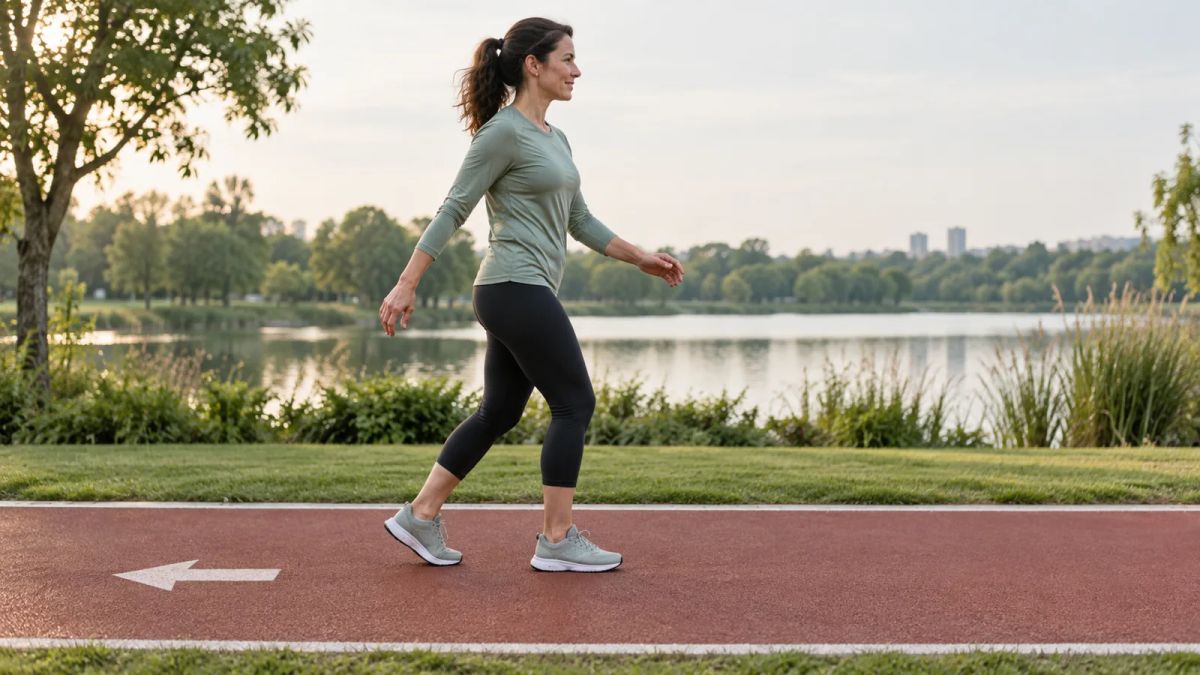
Where does it fall short? Fat loss on its own. Reformer Pilates is low to moderate intensity, so it burns some calories but far fewer than a run or a heavy strength session. The CDC is clear that most weight loss comes from eating fewer calories, with activity helping you keep the loss off, so no Pilates class on its own is a weight-loss plan. If that's your aim, pairing it with regular walks does more, and our guide to walking for weight loss covers how to build that base.
Who it suits
Reformer Pilates is a good fit if you want low-impact strength and mobility work, sit at a desk and feel it in your back and shoulders, are easing back in after a break or an injury, or like the structure and correction of a coached class.
It's also friendly to a wide range of bodies. Cleveland Clinic says Pilates can be adapted for almost any age, sex, health status and fitness level, and the springs are a big reason why. An instructor can meet you where you are and change the resistance mid-exercise.
It's less of a fit if you're chasing a big cardiovascular workout or heavy barbell strength. Reformer work sits alongside those and doesn't replace them. Our wider guide to the benefits of Pilates covers how it fits with the rest of your week.
The cost and access reality
This is where reformer Pilates gets awkward. You can't do it at home without a machine, and machines run into the hundreds or thousands of pounds. So most people pay per class.
In the UK a group reformer class typically runs £20 to £35 or more, according to 2026 pricing data from Airtasker, with London group classes at £20 to £37 and private one-to-one sessions there at £65 to £100 or more an hour. Class packs and memberships usually knock 10 to 30% off the per-class price, but this is not a cheap habit.
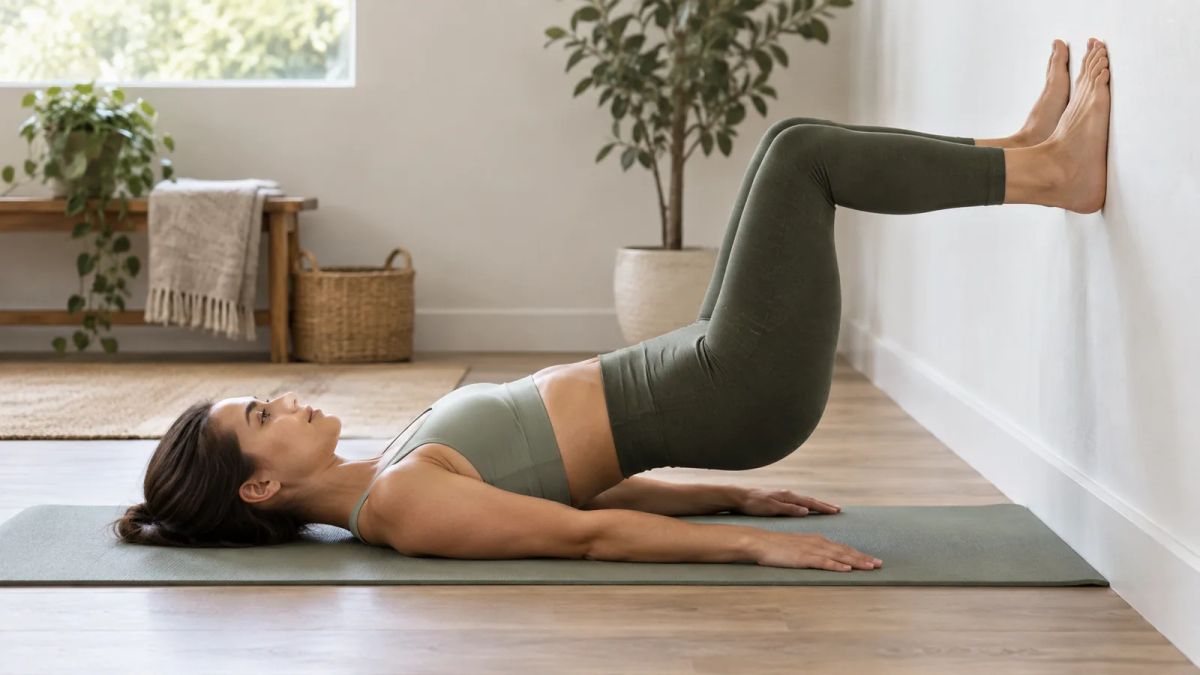
Mat Pilates, by contrast, costs around £10 to £25 a class and needs nothing but a mat at home. If the reformer's price puts you off, mat classes and home workouts cover a lot of the same ground for far less. Our wall Pilates exercises need nothing but a wall, and yoga for beginners is a good free starting point if you'd like to mix things up.
Safety and starting sensibly
Reformer Pilates is low-impact, but it's still resistance exercise on a moving machine. A few sensible steps before your first class:
- Check with your GP first if you're pregnant, recovering from an injury or surgery, or managing a health condition. Harvard Health advises clearing any new exercise with a doctor, and notes some moves may not suit you if you have back or spine problems. Healthline lists pregnancy, spinal conditions, and a recent injury or operation as situations where reformer work may be unsafe.
- Book a beginners' or introductory class, not a fast general one. You want to learn the machine before you chase a workout.
- Tell the instructor about any injuries or pregnancy before you start, so they can adjust the springs and swap exercises.
- Let form lead. The controlled return of the carriage is the exercise, so slow down and keep your spine steady instead of rushing reps.
- Stop if something hurts in a sharp or lasting way, and get it looked at.
What your first class looks like
Most beginner classes open with footwork. You lie on your back with your feet on the bar and press the carriage away, working your legs and glutes while your core holds you steady. From there you might put your feet in the straps for leg circles, which work your hips and middle, pull the straps with your arms for upper-body work, and finish with moves that roll your spine along the carriage. Healthline describes these four as typical reformer exercises.
Expect the instructor to change your springs between moves and to correct your position a lot. That's normal. Most studios ask for bare feet or grip socks, so check when you book, and wear close-fitting clothes that won't catch on the springs.
How to start as a beginner
You don't need any kit for your first month of working out whether this is for you. You need a couple of classes and a plan you'll keep.
Start with a beginners' reformer class or a short intro course, where the instructor sets up the springs and teaches the basics. Aim for two sessions a week to begin with, with rest days between, because muscles adapt on the days off.
On a stretched week, shrink the plan instead of dropping it. One class plus a short home stretch keeps the thread going, and keeping the thread going beats a perfect week you can't repeat. Our piece on tiny habits goes deeper on making the small version stick.
Here's a simple first-month plan you can copy or print:
Reformer Pilates: first month
Week 1 ☐ One beginners' class. Goal: learn the carriage, springs and straps.
Week 2 ☐ Two classes. Goal: get comfortable with footwork and basic core moves.
Week 3 ☐ Two classes plus one 10-minute home stretch. Goal: notice your balance and posture.
Week 4 ☐ Two classes. Goal: decide whether it earns a regular slot and a membership.
Miss a class, or a whole week, and pick it up at the next one. A gap doesn't undo the strength you've built.
Keep the practice growing between classes

Classes give you the machine. The bit that decides whether reformer Pilates does anything for you is turning up week after week, and that's the part Meadow is built to help with. It's a gentle movement and habit app for iPhone where you log the movement you enjoy with a timer, a Pilates class, a walk or a few minutes of stretching, and tick off small daily habits alongside your mood and a daily win. Every day you show up grows a wildflower in your own meadow, and there are no streaks, so a rest week resets nothing and your flowers never wilt.
Frequently asked questions
Is reformer Pilates better than mat Pilates?
Neither is better across the board. The reformer adds adjustable resistance and support, which suits rehab, progression and beginners who want guidance. The mat is cheaper, needs no kit and builds strong foundations. Cleveland Clinic points out mat work can even be harder on your back than the supported reformer. Pick the one you'll keep doing.
Do I need to be fit or flexible to start?
No. The springs let an instructor scale exercises up or down, so reformer Pilates adapts to most starting points. Book a beginners' class and say you're new.
How often should I do reformer Pilates?
Two sessions a week is plenty to see benefits, with rest days between. More is fine if you keep the intensity sensible, but a schedule you can maintain beats a punishing one you drop by week three.
How soon will I see results?
Expect changes in how you move and feel first, steadier balance, easier posture, a bit more flexibility, within a few weeks of regular classes. Visible changes in muscle tone take longer and depend on your overall diet and activity, not the class timetable.
Is reformer Pilates enough exercise on its own?
Probably not, if it's all you do. It counts towards the strength side of the UK guidelines, but you'd still want some brisk walking, cycling or other cardio to reach 150 minutes of moderate activity a week. Two reformer classes plus a few walks is a well-rounded week.
Is reformer Pilates good for belly fat?
It strengthens the muscles around your middle, which can make your stomach feel firmer, but no exercise burns fat from one spot. In the 2025 trial above, eight weeks of classes shifted body fat by around two percentage points. Losing fat from your middle comes down mostly to your overall diet and activity.
Can reformer Pilates change your body shape?
Over a few months it can change how you hold yourself and how toned you look, especially through your core, legs and glutes. It can't change your frame or build long, lean muscles on demand. Posture tends to change first, and that alone can make you look taller.
Is reformer Pilates good for back pain?
It can help. Reviews of Pilates for chronic low back pain show reduced pain and disability, though the evidence quality is low and it works about as well as other equivalent exercise. Clear it with your GP or physiotherapist first if your back pain is ongoing.
Is reformer Pilates safe in pregnancy?
It isn't right for everyone, and Healthline lists pregnancy among the situations where reformer work may be unsafe. Some people carry on with a prenatal-trained instructor and heavy modifications, but that's a decision for you and your GP or midwife. If you get the go-ahead, choose an instructor experienced in pregnancy and tell them how far along you are.
Book one beginners' reformer class this week. That single session on the machine will tell you more about whether reformer Pilates suits you than any before-and-after reel, and it's enough to decide if it earns a place in your week.
AUTHOR
Co-founder of Meadow.
Ash is co-founder of Meadow, a habit and movement tracking app that turns small acts of self-care into a growing wildflower meadow.
Little and often, with Meadow
Consistency, not intensity.
Meadow turns the movement you enjoy and the habits that help you feel good into a meadow of wildflowers. No streaks to break, and your flowers never wilt.
Download Meadow