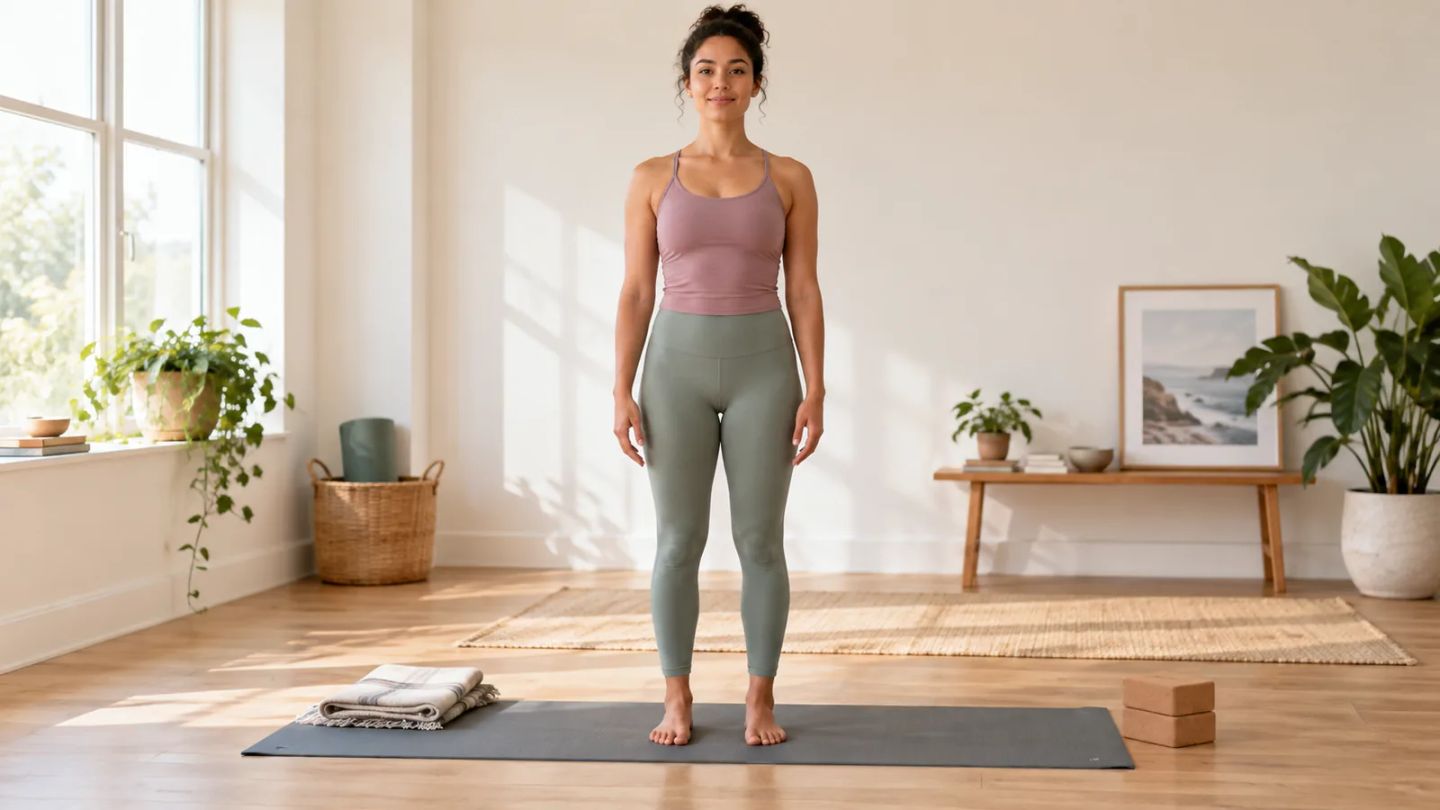
Yoga for beginners is slower, quieter and more forgiving than the photos suggest, and you can start this week at home for nothing. You do not need to be flexible, thin, calm or young to begin. You need loose clothes, a bit of floor, and ten minutes.
This is a plain guide to getting going. It covers what yoga is, which styles suit a first-timer, the small amount of kit you need, a first sequence of six beginner poses to try at home, how to find a class, what yoga can and cannot do for you, how to stay safe, and how to turn it into something you keep doing.
What yoga is
Yoga brings together three things: physical postures, breathing, and a settled kind of attention. The US National Center for Complementary and Integrative Health describes it as a practice built around postures, known as asanas, breathing techniques, and meditation, spanning many styles from gentle to physically demanding.
A beginners class weaves those three together at a pace you can follow. You move slowly, the teacher names each shape and shows an easier way in, and you copy along as best you can. There is no test at the end and no level you have to reach before you are allowed to be in the room.
Flexibility is not the entry fee. It is one of the things a regular practice slowly gives you, not something you need before you start.
Beginner-friendly styles
The word yoga covers a wide spread, and some styles are far kinder to a first-timer than others. Look for classes labelled Hatha, gentle, slow flow, or beginners.
Hatha moves at a slower pace and holds each posture a little longer, which gives you time to find the shape before the next one arrives. Cleveland Clinic rates it as a good starting point for exactly that reason.
Gentle and restorative styles slow things down further. Restorative yoga uses props to support your body in a few resting shapes so you can relax into them, which makes it one of the calmer ways in.
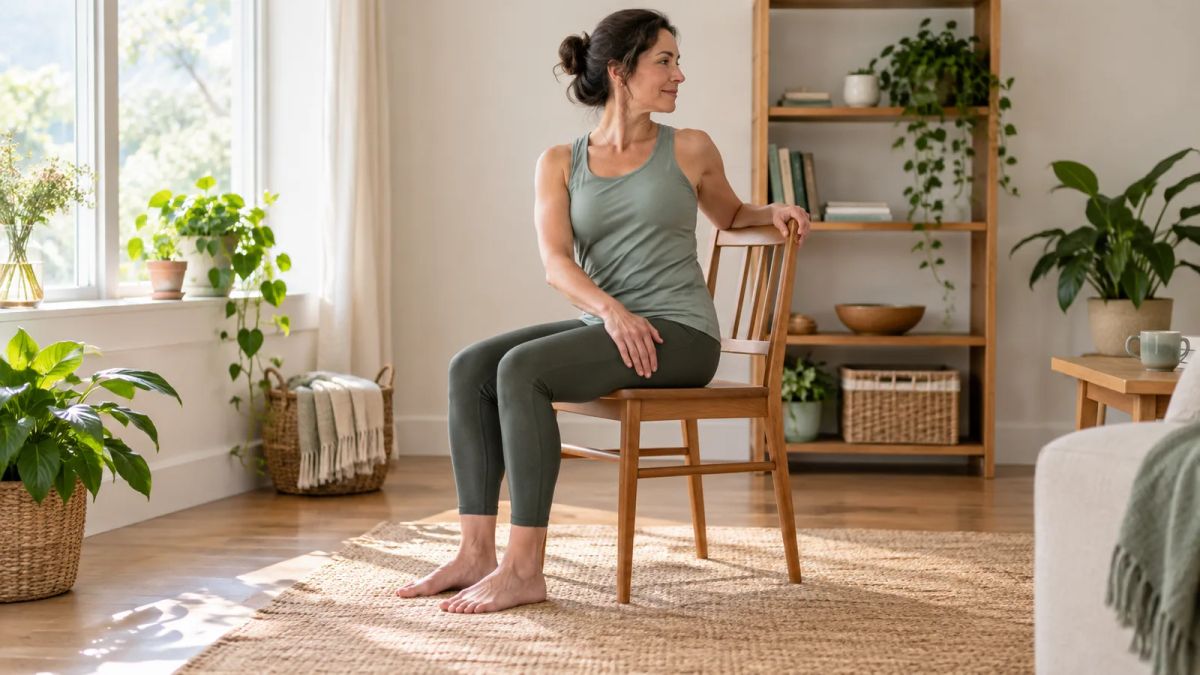
Chair yoga is worth knowing about if getting down to a mat and back up again is the barrier. It is done seated, or standing with a hand on a chair for support, and it suits older adults and anyone easing back into movement. Our chair yoga guide covers that route in full.
It is worth steering clear of hot yoga, power yoga and fast vinyasa at the start. They assume you already know the postures and can move between them quickly, which is a lot to take on while you are still learning what your body does. You can try a faster style later once the basics feel familiar. There is no rush to get there.
What you need to start
Very little, which is one of the quieter pleasures of yoga.
Loose, comfortable clothes you can bend and stretch in are enough. Most people practise in bare feet, so trainers stay by the door. A mat gives you grip and a little cushioning, and a folded towel or rug does the same job while you decide whether you want to carry on.
Everything else is optional. Blocks and straps help you reach the floor or hold a posture without straining, and a couple of firm cushions or a rolled towel stand in for them at home. You do not need special kit to find out whether yoga suits you.
Your first at-home sequence
You can get a feel for yoga in about ten minutes with the six poses below. Move slowly, keep your breath easy, and go only as far as feels comfortable. If a shape does not suit your body today, skip it or swap in the child's pose rest at step three.
- Mountain pose, to settle. Stand with your feet hip-width apart, arms by your sides, palms facing forward. Let your shoulders drop away from your ears and lengthen up through the crown of your head. Take five slow breaths in and out through the nose. This sets the pace for everything after it.
- Cat-cow, to warm the spine. Come onto your hands and knees, wrists under shoulders, knees under hips. Breathe in and let your belly soften towards the floor as you lift your chest and look slightly up. Breathe out and round the other way, tucking your chin and drawing your navel up so your upper back curves. Move with your breath for six slow rounds.
- Child's pose, to rest. From all fours, bring your big toes together, widen your knees, and sit your hips back towards your heels as your arms stretch forward and your forehead rests on the mat. Stay for four or five breaths. This is your home base, so return to it any time a later pose feels like too much.
- Downward-facing dog, to stretch. From all fours, tuck your toes and lift your hips up and back so your body makes a loose upside-down V. Keep a soft bend in your knees and let your head hang between your arms. Press the floor away and breathe for four or five rounds. Bent knees are the beginner-friendly version, so do not chase straight legs.
- Low cobra, to open the front. Lie on your front, hands under your shoulders, elbows tucked in. Breathe in and lift your head and chest a small way off the floor using your back, keeping your hips down and your shoulders relaxed. Rise only as far as feels easy on your lower back. Hold for two or three breaths, then lower. Repeat twice.
- Standing forward fold, to release. Stand tall, then hinge forward from the hips with a soft bend in your knees, letting your head, neck and arms hang heavy towards the floor. Sway gently if it feels good. Rest for a few breaths, then roll up slowly, one vertebra at a time. Keep it shallow, or skip it, if your blood pressure tends to drop when you stand.
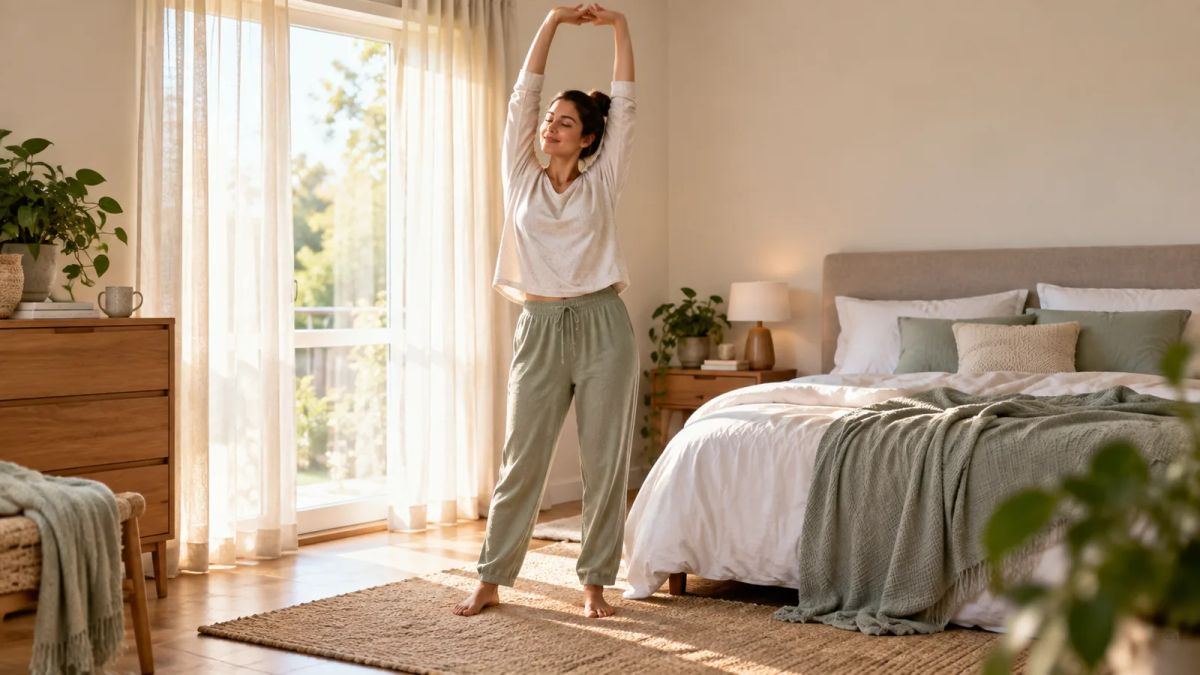
Finish by lying on your back for a minute or two with your eyes closed and your breath slow, the rest known as savasana. For more gentle mobility you can fold into a morning, our morning stretch routine works well as a companion to this sequence.
How to find a class
If you would rather learn with a teacher in the room, there is a good case for it. A screen cannot see when your shoulders are creeping up towards your ears, and a real person can. Community centres, leisure centres and village halls often run affordable beginners sessions, and many studios offer a discounted first class or a taster.
When you are weighing up where to go, read what the class description says rather than trusting the word "beginner" in the title. A clear account of the pace, who the class is for, and whether postures are adapted tells you far more.
Have a quick word with the teacher beforehand too. Mention that you are new and flag anything about your body they should know, so they can offer you the right options as the class goes.
What yoga can and cannot do for you
Yoga has been studied a fair amount, and the honest picture is encouraging without being a cure-all.
Harvard Health reports that a regular practice can build muscle strength and endurance, improve flexibility, help lower blood pressure in people with hypertension, and soothe tension and anxiety. The NCCIH adds that research links yoga to lower perceived stress, some improvement in balance for older adults, and support for sleep and general wellbeing.
Back pain is the area people ask about most, so it is worth being precise. A 2022 Cochrane review found low to moderate certainty evidence that yoga, compared with no exercise, produces small improvements in back-related function and pain, and that it works about as well as other back exercises rather than better. In plain terms, yoga is a reasonable option for a stiff, achy back, and the choice between it and another form of exercise comes down to cost, availability and what you enjoy enough to keep doing.
These are associations and averages, not promises for any one person. Yoga also counts towards staying active in general. The NHS lists yoga among the muscle-strengthening activities adults are encouraged to do on at least two days a week, on top of the aim of 150 minutes of moderate activity spread across the week. So the time you spend on the mat is doing more than one job.
What yoga will not do is fix everything, and it is not a replacement for treatment if you have a health problem that needs one. Take it up because the movement feels good, because a class gives your week a calmer anchor, or because you leave the mat a little less wound up than you arrived. Those are reasons enough.
Staying safe and knowing your limits
The single most useful habit in yoga is to work within your range and not into pain. A posture should feel like a stretch, never a sharp warning. Some discomfort as you learn is normal. Pain is the signal to ease off or come out of the shape.
A few situations call for a conversation first. The NCCIH advises that beginners avoid extreme practices such as headstands, shoulder stands, the lotus position and forceful breathing, and that people who are pregnant, older, or living with a health condition talk over how to adapt their activity with a healthcare provider. Injury rates treated in emergency departments are higher in people aged 65 and over than in younger adults, which is a reason for care rather than avoidance.
If you are pregnant, new to exercise, or managing something like high blood pressure or a back problem, a quick chat with your GP before you start is a sensible move. Harvard makes the same point about checking with your doctor before beginning anything new. And if you are following a video at home, choose one clearly aimed at beginners, since a screen cannot see you or correct your alignment.
Making it a habit that lasts
Finding a good routine is the easy part. Doing it often enough to feel a difference is where most plans quietly slip, and that has little to do with willpower.
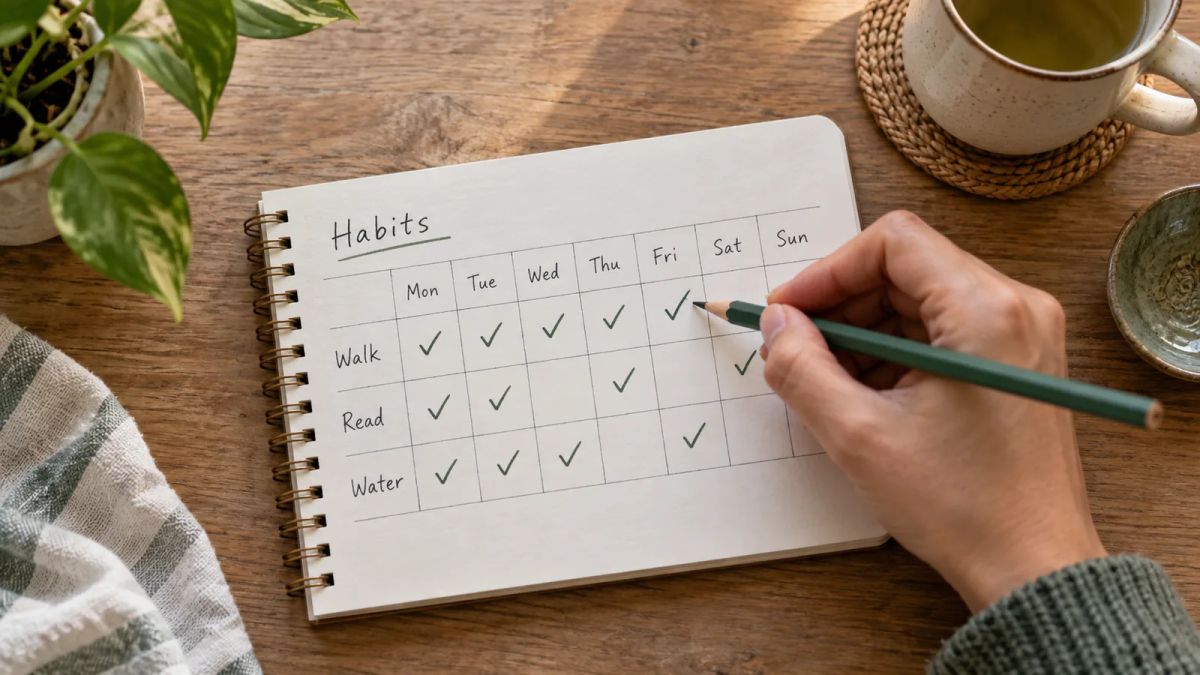
Anchor the practice to something you already do. "After I get home from the school run, I roll out the mat for ten minutes" gives the habit a home in your day, which works better than a vague plan to fit it in somewhere. The American Heart Association suggests tying a new action to an existing routine for exactly this reason.
Decide your smaller version now, before you need it. On a stiff or hectic day, five minutes of cat-cow, child's pose and a few slow breaths still counts and keeps the thread going.
If you miss a day, nothing is undone. Pick the next day and start again. A run of practice is not a fragile streak that shatters the first time life gets in the way.
Meadow, without the streak
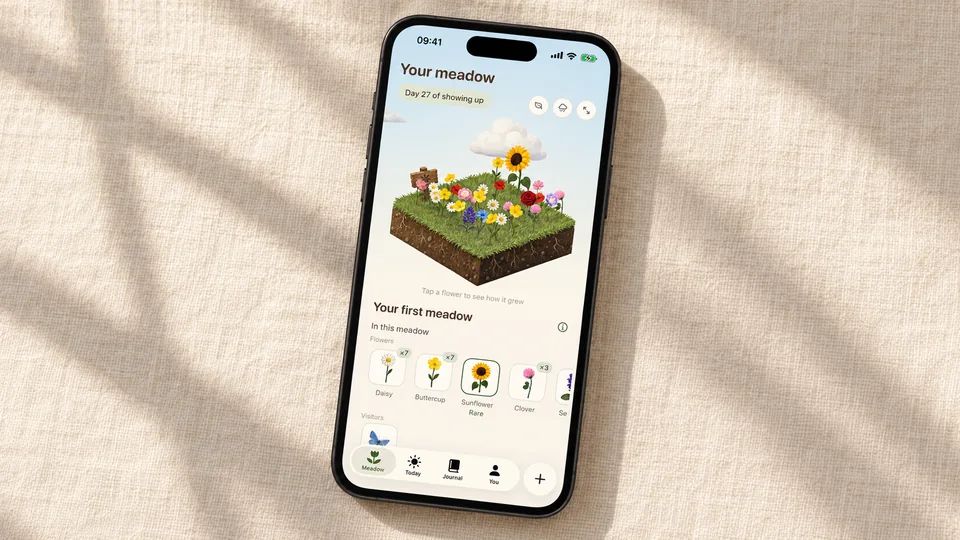
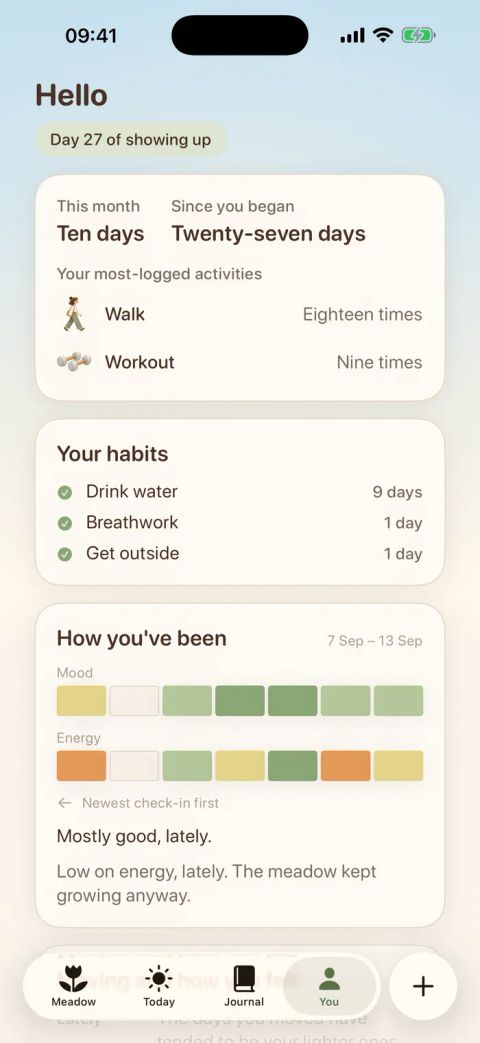
Another app worth checking out is Meadow, because it treats a missed day gently, which is what a new movement habit needs. It is a habit tracker for iPhone made by Wildcard Wellness, with yoga as one of its built-in activities, so you can tick it off after your chosen cue alongside notes on your mood, a daily win and an affirmation. Every day you show up grows a wildflower, and rare flowers and small animal visitors turn up over time. There are no streaks to break, so if you skip a day nothing resets and your flowers never wilt. It costs $39.99 a year or $9.99 a month after a seven-day free trial.
Frequently asked questions
Do I need to be flexible to start yoga?
No. Flexibility is something a regular practice builds over weeks and months, not something you need in advance. Beginners at every level of stiffness, age and fitness can start, and props like blocks and cushions bridge the gap while your body adapts.
How often should I practise as a beginner?
A short practice done often beats a long one done rarely. Ten minutes most days does more for a new habit than an hour once a fortnight. Start with two or three sessions a week if daily feels like too much, and let it grow from there.
Is it safe to learn yoga at home from videos?
For gentle beginners routines, yes, with sensible limits. Choose a video clearly aimed at beginners, keep to the easier postures, and treat anything advanced as off-limits for now. The NCCIH advises against extreme practices for newcomers, and a screen cannot correct your alignment, so a class or a word with a teacher is worth it once you want to go further.
How long until I feel a difference?
It varies from person to person. Many people notice small shifts in how they move, sleep or feel within a few weeks of practising consistently, while deeper changes in strength and flexibility take a couple of months. There is no fixed timeline, so treat any promise of a set number of days with caution.
What is the difference between yoga for beginners and chair yoga?
This guide assumes you can get down to a mat and back up. Chair yoga is done seated or with a hand on a chair for support, which removes that barrier and suits older adults or anyone easing back into movement. If a full standing practice feels like too much, start with our chair yoga guide instead.
Pick one free beginners routine tonight, check it plays on your device, and decide which everyday moment tomorrow it will follow.
See how far you've come
Your habits, moods and little wins, all in one place
Meadow keeps track of the walks, the water and the good days, so you can look back and watch your effort add up.
Join the Meadow waitlist