Active recovery means moving gently on a day off from hard training, a walk or an easy cycle or some mobility work, kept light on purpose. A full rest day means little or no exercise at all, so your body can get on with repairing. Both count as recovery, and the choice between them mostly comes down to how worn out you feel that morning.
Neither is magic. Most of the repair happens while you sleep, whichever day you pick.
This is general education, not a training plan for a specific goal. If you have a health condition, you're coming back from injury, or you're new to exercise, check with your GP or a physiotherapist about what suits you.
What active recovery is
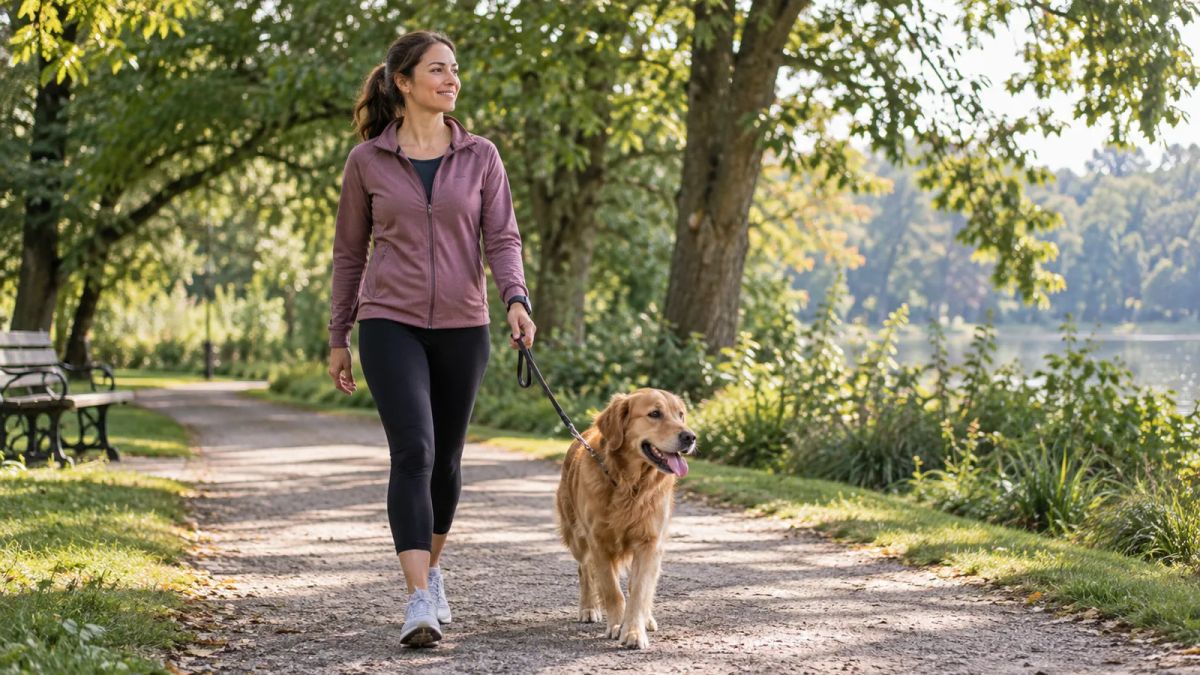
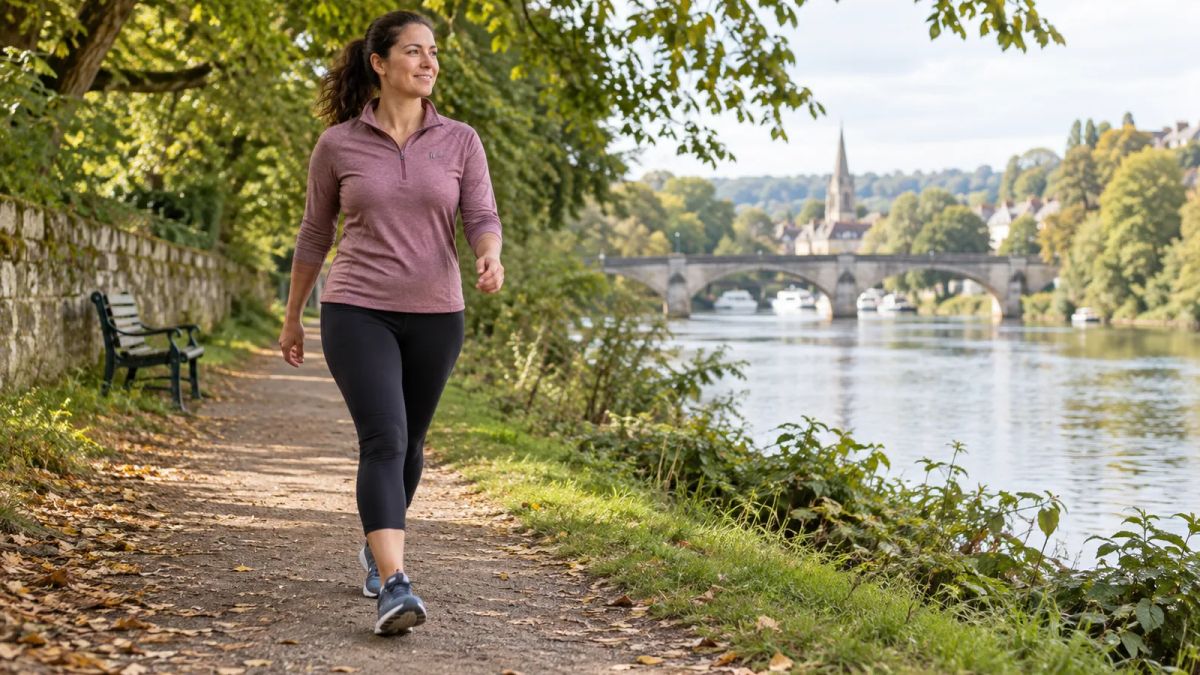
Active recovery is low-intensity movement done after a session that was hard for you. Cleveland Clinic describes it as paring back from what you usually do while continuing to move in a way that's comfortable. A twenty-minute flat walk, an easy spin on the bike, a gentle swim, a slow yoga flow, ten minutes of mobility work. All of it counts, as long as the effort stays low.
There's one test that settles it. If you could hold a conversation the whole time without getting breathless, you're doing active recovery. If you're counting reps or watching the clock for it to be over, you've drifted into a workout.
The point of the movement is to keep you loose and keep the habit ticking over on a day you're not training properly. It is not a session in disguise.
You'll also see the same choice written as active versus passive recovery. Passive recovery is the full rest day under another name, and active recovery is the gentle-movement day. The words change, the decision is the same one.
What a full rest day is
A full rest day is a day with no structured exercise. You still live your life, walk to the shops, carry the washing upstairs, potter in the garden, but you don't set out to train. The training load for the day is close to zero, and that's the whole idea.
It doesn't mean lying on the sofa from morning to night. It means giving the systems you've been stressing, muscles, joints, heart, head, a clear day to catch up. Some weeks that's exactly what your body is asking for, and pushing past it does more harm than good.
What the evidence shows for each
Start with the rest day, because this is the part people skip. You don't get fitter during a hard session. You get fitter afterwards, while you recover.
Strength work, as Harvard Health puts it, causes tiny tears in muscle tissue, and muscles grow stronger as the tears knit up. That knitting happens on the days off, which is why the same guidance says to allow at least 48 hours between sessions for a muscle group. The American College of Sports Medicine sums the whole loop up in one line: performance plus recovery equals peak performance potential, and suggests one to two rest days a week when your training is heavy.
Get the balance wrong and it shows. A review of overtraining in the journal Sports Health describes a spectrum: a short spell of pushing hard followed by appropriate rest can lead to a jump in performance, while the same load with too little recovery tips into a slump that can take weeks to months to clear. The milder version is common, turning up in around 60% of elite runners at least once. For most of us the risk is duller than a full crash, but the mechanism is the same, and a rest day is how you head it off.
Now the honest bit about active recovery. The case for it is real but modest, so it's worth being straight. The theory is that gentle movement lifts blood flow to tired muscles and helps clear the by-products of hard exercise, and both Cleveland Clinic and ACSM point to better circulation as the mechanism. When you measure the payoff, though, it's small. A meta-analysis of recovery methods found active recovery gave a reduction in delayed muscle soreness that lasted only a short while after exercise and made no difference to how tired people felt. It also wasn't the best method going, with massage coming out ahead for both soreness and fatigue.
So the fair summary is this. A rest day is where hard training becomes fitness. Active recovery keeps you loose, keeps your legs moving and keeps the daily habit alive, and it takes a little of the edge off soreness for a short spell. It won't erase aches or make you fitter on its own, and it's no substitute for the actual day off when you need one.
Which one to pick today
One question sorts most mornings: is the tiredness in your legs, or in all of you? Stiff quads and sore shoulders after a heavy session are local, and you can move around them. Flat mood, broken sleep, no appetite for anything at all, that's the whole system asking for the day, and a walk won't touch it.
From there the tired feeling tells you most of what you need. Sore but otherwise fine, restless, keen to move, then a gentle active recovery day usually leaves you looser than sitting still would. Wiped out, sleeping badly, run down, sick, carrying an injury or sore in a way that movement makes worse, then a full rest day is the better call. If you're not sure which camp you're in, our guide on how to tell if you need a rest day walks through the signals worth reading.
Here's a quick check to run in the morning. Keep it on your phone or by the kettle.
How's your sleep been the last night or two? Good ☐ Rough ☐
Any soreness, and does moving ease it or worsen it? Eases ☐ Worsens ☐
Fancy some gentle movement, or dreading it? Fancy it ☐ Dreading it ☐
Mostly left column: an easy active recovery day suits you. Mostly right column, or feeling run down or sore in a way movement aggravates: take a full rest day.
A week with both built in
Deciding the shape of the week in advance beats negotiating with yourself each morning. Here's one common shape for someone training three or four times a week, then a blank to fill in.
Mon hard session Tue active recovery, 20-minute walk Wed hard session Thu full rest Fri hard session Sat active recovery, easy cycle or yoga Sun full rest
And yours:
Mon ________ Tue ________ Wed ________ Thu ________ Fri ________ Sat ________ Sun ________
My swap rule: if I wake up ________________, the day becomes a full rest day.
The bigger point is that both belong in a normal week on purpose. You're not choosing one forever. Most weeks have room for a couple of lighter or off days woven through the harder ones. If a planned day off makes you twitchy, rest day guilt is common enough to have a name, and it's worth reading about before it talks you out of the day.
Examples of each
For an active recovery day, pick something you'd happily do while chatting to a friend.
- A twenty-minute flat walk, no hills, no power-walking.
- An easy cycle or swim, resistance light and pace gossipy.
- A slow yoga flow or ten minutes of mobility to take the morning stiffness off.
- A gentle, low-effort version of a session, and our low-impact workout works well here as long as you hold the effort right back.
If you want more ideas and a ready-made menu to choose from, our guide to what to do on an active rest day lays them out.
For a full rest day, the aim is to let the training load drop while you top up the things that do the real repairing.
- A proper lie-in, or an earlier night than usual.
- A gentle potter, garden, kitchen, a short amble, nothing that raises a sweat.
- A decent meal or two, with some protein, rather than skipping food because you didn't train.
- Whatever winds you down, a bath, a book, time outside.
The part neither day can do for you
Whichever day you pick, the heavy lifting happens somewhere else. ACSM points out that while you're asleep your body does some of its most important restorative work and suggests seven to nine hours a night. A gentle walk can't make up for three nights of broken sleep, and neither can a day on the sofa if you're not eating enough to rebuild.
Treat active recovery and rest days as the small, controllable end of recovery. Sleep and food are the larger end, and they carry on doing their job on every day of the week. If your nights are the weak link, our guide to healthy sleep habits is a better use of an evening than any recovery gadget.
Room for the easy days as well as the hard ones

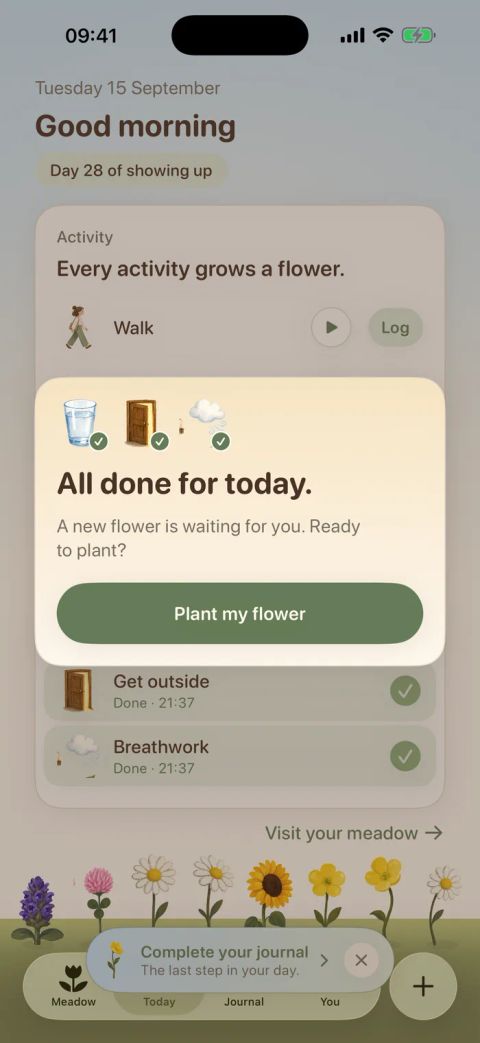
Most tracking apps are built around the hard sessions, which can leave a rest-day walk or a quiet day off feeling like it doesn't count. Meadow takes the other view. It's a gentle movement and habit app for iPhone from Wildcard Wellness where you log whatever movement you enjoy with a timer, an easy recovery walk very much included, and note your mood and energy each day. Every day you show up grows a wildflower in your own meadow. There are no streaks, so a full rest day, a poorly week or a fortnight away resets nothing and your flowers never wilt, which suits recovery days well, because the days you deliberately do less shouldn't feel like a break in the chain.
Common questions
Can I do active recovery instead of ever taking a full rest day?
You can go a fair while alternating hard days with easy ones, but the body still needs the load to drop to zero sometimes. The trap is that every "easy" day quietly creeps up to moderate, so you never rest properly. If you're training most days, build in at least one full day off a week and keep the active days light.
Is active recovery better than resting completely?
Neither wins across the board. Active recovery suits the common in-between feeling, tired but fine, where gentle movement leaves you looser. A full rest day suits the weeks you're wiped out, run down or sore in a way movement aggravates. The honest evidence for the soreness benefit of active recovery is modest and short-lived, so don't force a walk on a day your body clearly wants off.
How many of each should I have in a week?
It depends on how hard and how often you train. A common shape is one or two rest or lighter days across the week, with more built in if your sessions are intense most days. Nudge it up or down by how your legs, sleep and mood are holding up.
Do rest days lower cortisol?
A day without a hard session is a day without the stress response that session brings, so the short answer is that it probably helps. What you can't do is check. A systematic review of the hormone research in overtraining found resting cortisol came out normal in most studies of affected athletes, and the authors concluded that basal hormone levels are not good markers of overreaching or overtraining. A one-off cortisol reading won't tell you whether you need a day off. Your sleep, your legs and how your sessions are going will.
How long should an active recovery day last?
No guideline puts a number on it. Cleveland Clinic frames active recovery by effort and leaves the length open, which is a fair reflection of the evidence. Ten minutes of mobility counts, so does a forty-minute amble. The test is how you finish: looser than you started is right, tired is too long or too hard.
Are recovery runs better than rest days?
Neither wins as a rule. A recovery run keeps the legs turning over and the habit alive on a day you'd otherwise do nothing, which suits people running most days. It's still a run, though, and it still adds load. Short sleep, legs that stay heavy across several days, sessions going flat, and the day off does more for you than the shuffle does. The conversational-pace test applies either way.
Does active recovery get rid of soreness?
Not much, and not for long. Gentle movement can take a little of the edge off while you're doing it, but a meta-analysis found the effect was small and faded soon after. Mild stiffness that eases as you warm up is normal. Sharp pain, a spot that hurts at rest, or swelling is a reason to stop and, if it lingers, get it looked at.
One thing to try this week
Pencil in one full rest day and one active recovery day, and treat them differently. On the active day, walk twenty flat, unhurried minutes. On the rest day, go for an earlier night. Notice which one leaves you fresher for your next session, and let that guide how you split the two from here.
AUTHOR
Co-founder of Meadow.
Ash is co-founder of Meadow, a habit and movement tracking app that turns small acts of self-care into a growing wildflower meadow.
Every little bit counts
Five minutes counts. So does a dance in the kitchen.
Log the movement you enjoy and the small habits that help you feel good, and watch them bloom into something you can see.
Download Meadow