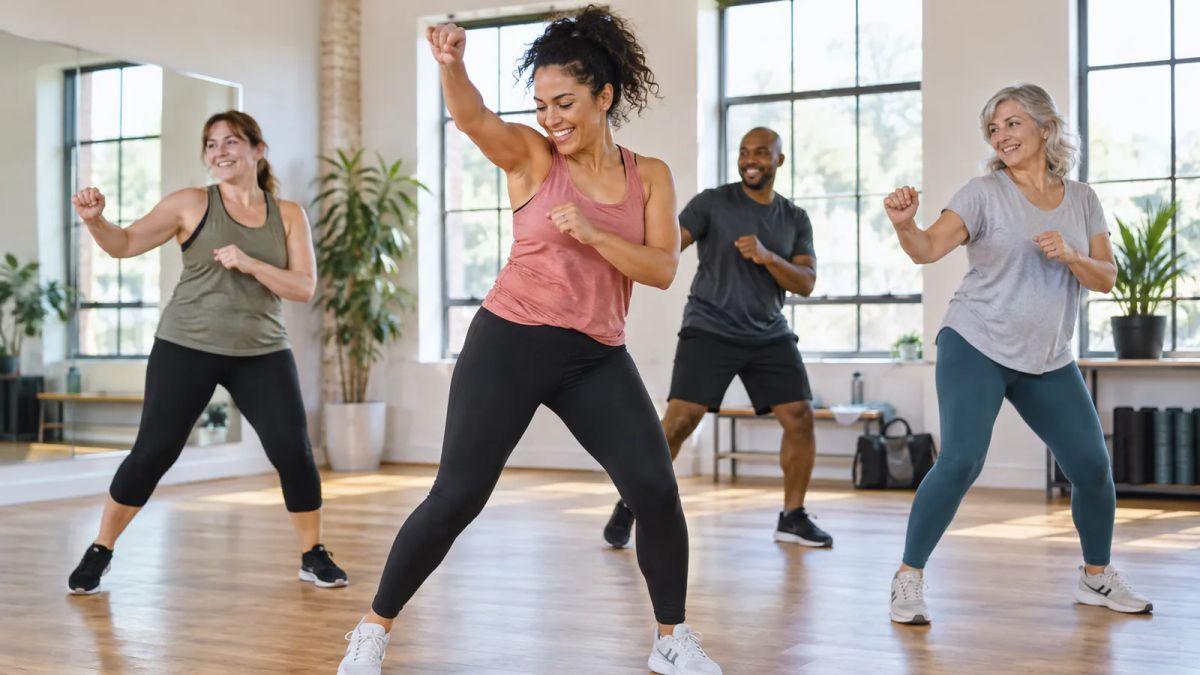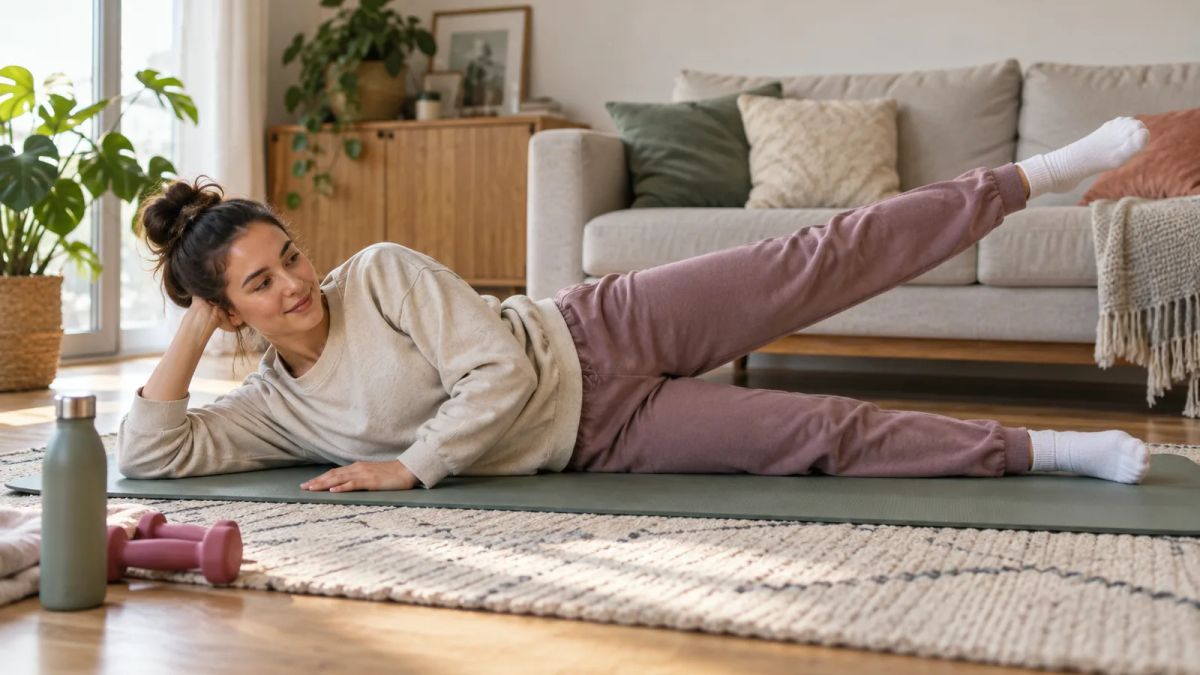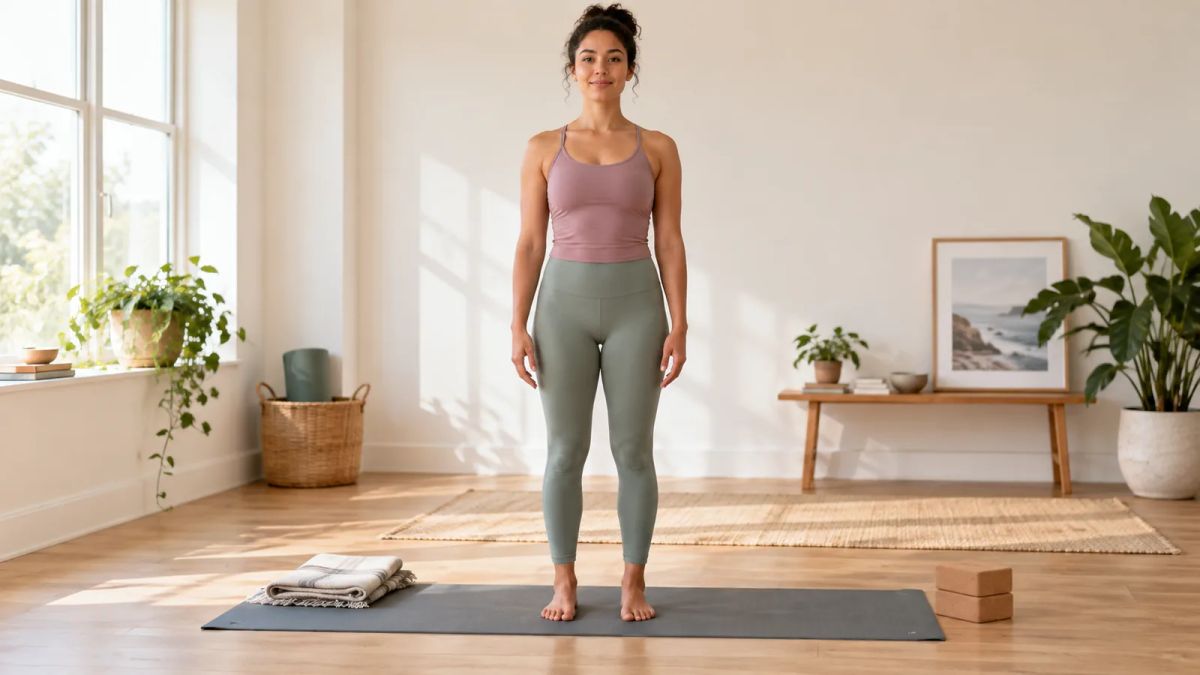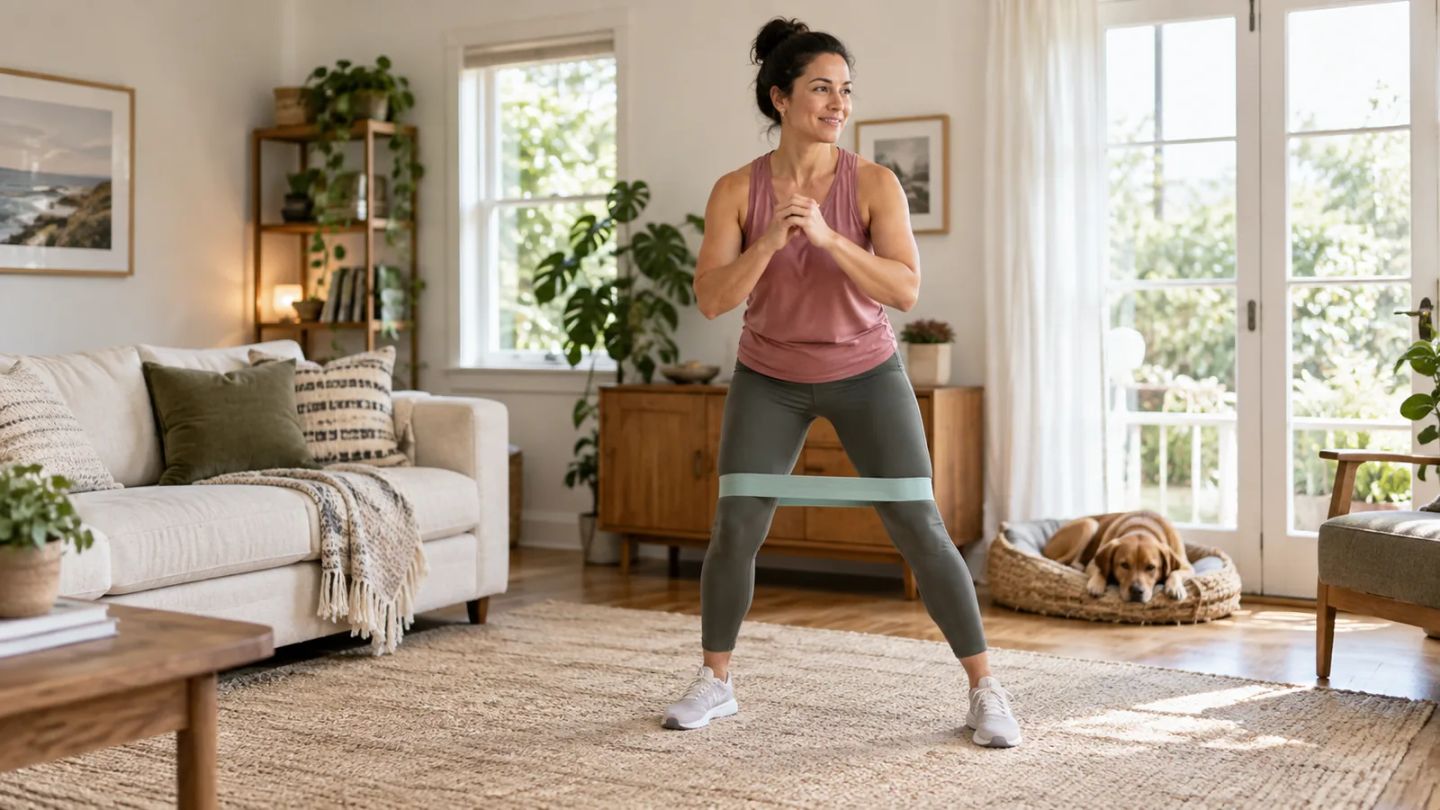
Low-impact exercise is any movement that spares your joints the hard jarring of running or jumping, usually by keeping at least one foot on the ground, or by letting water or a machine carry some of your weight. It gives you the heart, muscle and mood benefits of exercise with far less pounding through your knees, hips, ankles and spine, which is why it suits so many people who find high-impact training painful, daunting or plain unappealing.
Low-impact does not have to mean low effort. You can raise your heart rate, build strength and break a sweat while your feet stay kind to the ground.
This guide covers what counts as low-impact, why it helps, a real eight-move circuit you can do at home with no equipment, who it suits, what the evidence does and does not promise, and how to keep it going once the first burst of motivation fades.
What counts as low-impact exercise
The simplest test is what happens at the bottom of each movement. High-impact work sends both feet off the floor and lands them hard again, as in running, jumping or star jumps. Low-impact work keeps one foot down, or takes the weight off your feet entirely.
Cleveland Clinic describes low-impact cardio as activity that raises your heart rate and tests your lungs without putting as much wear and tear on your body. The effort can still be high. It is the shock through the joints that stays low.
Common examples span the whole week. Walking, cycling, swimming, water aerobics, rowing, using an elliptical or cross-trainer, yoga, Pilates and tai chi all strain the joints less than running or tennis, as Harvard Health notes in its guidance on exercising with joint pain. Strength work counts too, whether you use your own bodyweight, resistance bands or weights.
Why it helps
Three things make low-impact movement worth building a habit around: it protects your joints, it opens the door to more people, and it is easier to keep doing.
Start with the joints. Because the loading is gentler, low-impact activity puts less strain on knees, hips, ankles and the spine, which matters if you have arthritis, ongoing joint pain or you are easing back after an injury. Movement itself helps here. Harvard Health notes that aerobic exercise eases stiffness and lubricates the joints while boosting your body's own painkilling compounds, so the right amount of the right movement can leave a stiff knee feeling better rather than worse.
The health payoff is as real as any other kind of exercise. Low-impact cardio can improve heart and vascular health by working on blood pressure, cholesterol and weight, and it supports the same broad protection against heart disease and type 2 diabetes that any regular activity brings.
Then there is who gets to take part. Lower-impact activity is doable for a wide range of ages and abilities, which is a fairer starting line than a workout that assumes you can already jump and land without pain.
Sustainability is the quiet advantage. Gentler sessions leave you less sore and quicker to recover, so you are more likely to show up again tomorrow. Consistency, not intensity, is what turns exercise into results, and low-impact work is built for turning up often.
A low-impact workout you can do at home
Here is a full-body circuit that needs no equipment beyond a sturdy chair and a wall. Every move keeps a foot on the ground. Work at a pace where you can still talk, move slowly and with control, and stop any movement that brings sharp pain.
Do each move for the reps or time listed, resting for 20 to 30 seconds between them. That is one round. Beginners can do one round, around ten minutes. Build towards two or three rounds as it starts to feel easier.
1. March on the spot
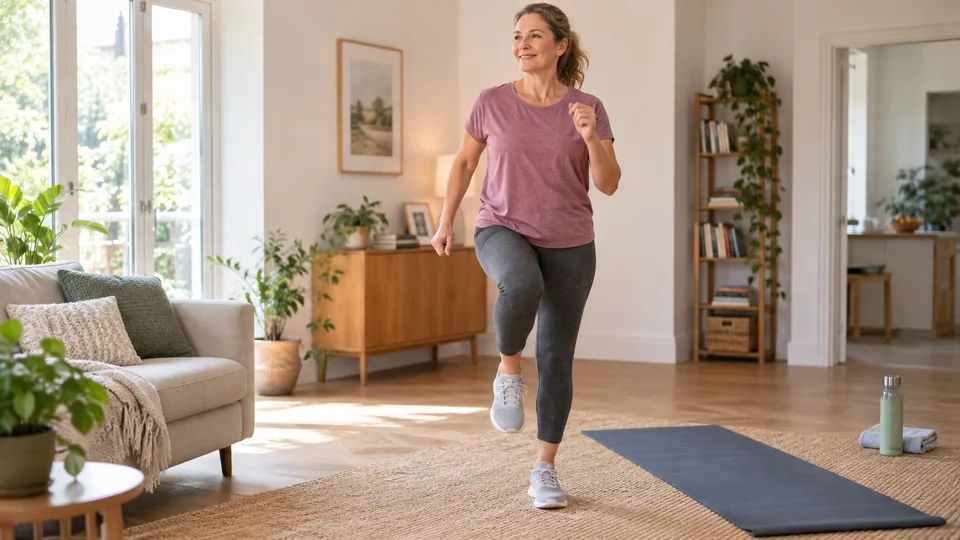
Stand tall and march, lifting each knee to a comfortable height and swinging your arms. Keep it going for 60 seconds. This warms your muscles and lifts your heart rate before the harder work.
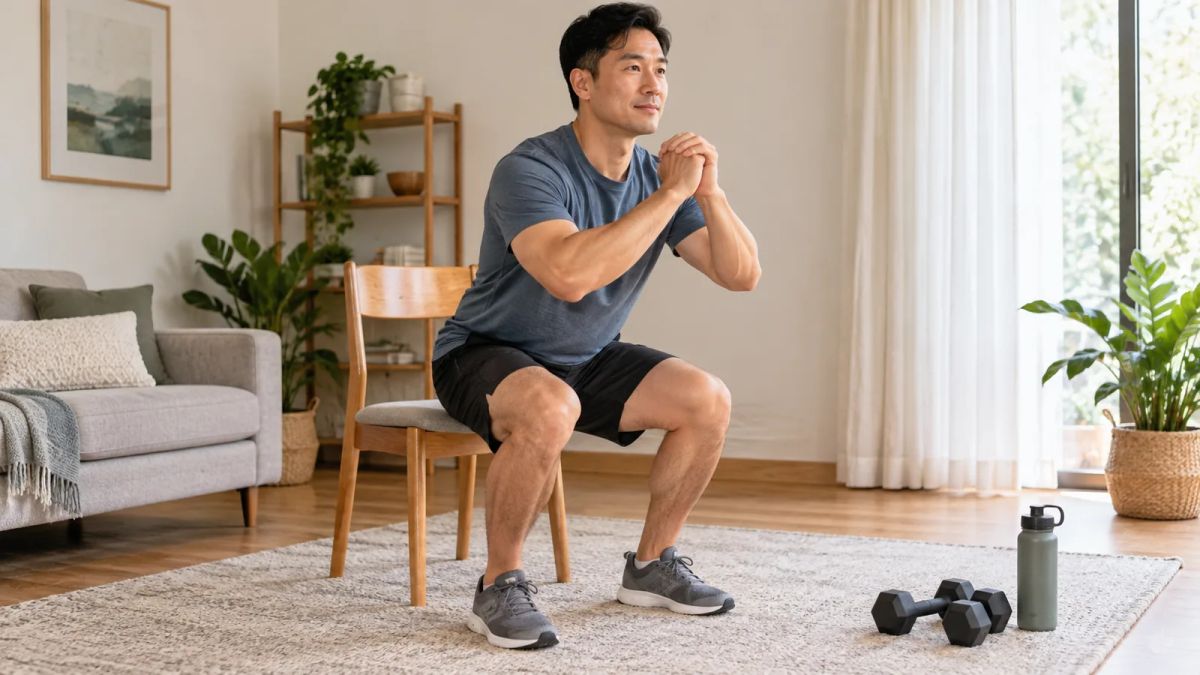
2. Sit-to-stand
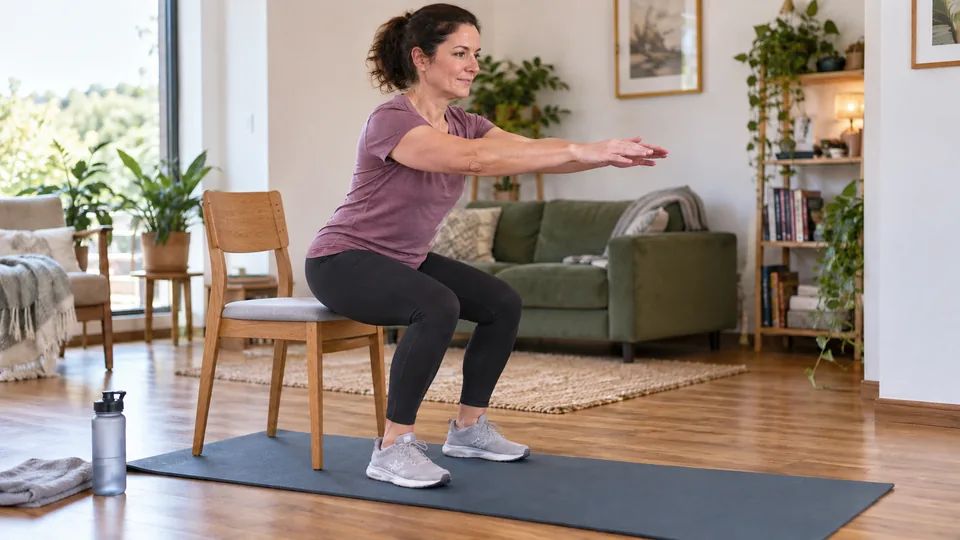
Sit on the front of your chair, feet flat and hip-width. Lean forward slightly, press through your heels and stand up, then lower back down with control. Do 10 to 12. This trains the leg and hip strength you use to get off the sofa and up the stairs.
3. Step-touch

Step your right foot out to the side, then tap your left foot to meet it, then step back the other way, adding a gentle arm reach as you go. Keep a steady rhythm for 60 seconds. It is cardio without a single jump.
4. Wall press-up
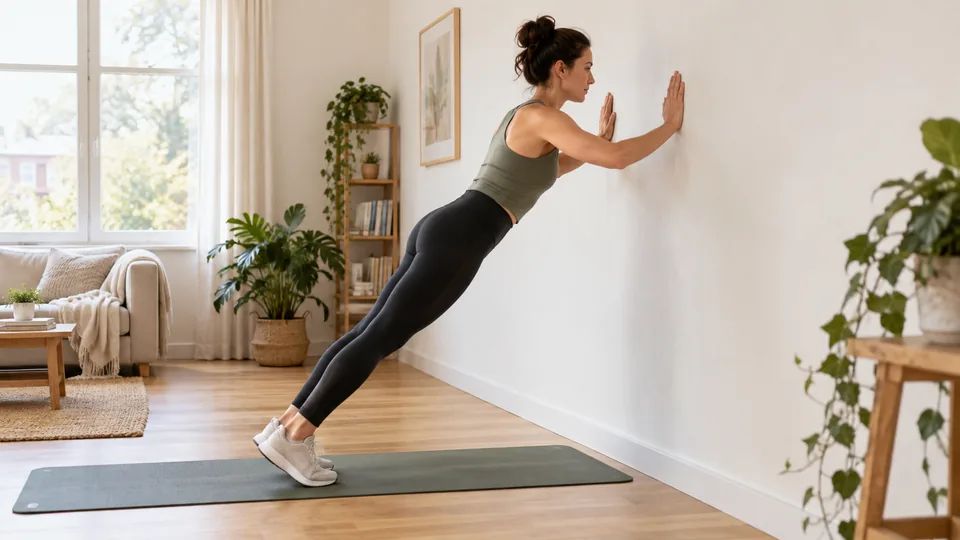
Stand an arm's length from a wall, hands flat at shoulder height and width. Bend your elbows to bring your chest towards the wall, then press back. Do 8 to 12. Move your feet closer to the wall to make it easier, further away to make it harder.
5. Heel raises

Stand behind your chair with a hand resting on it for balance. Rise onto the balls of both feet, pause for a second, then lower slowly. Do 12 to 15. This builds calf strength and steadier ankles.
6. Standing side leg lift

Keep a hand on the chair. Lift one leg out to the side, keeping it straight and your torso tall, then lower with control. Do 8 to 10 each side. This works the hip muscles that support your balance.
7. Knee-to-elbow
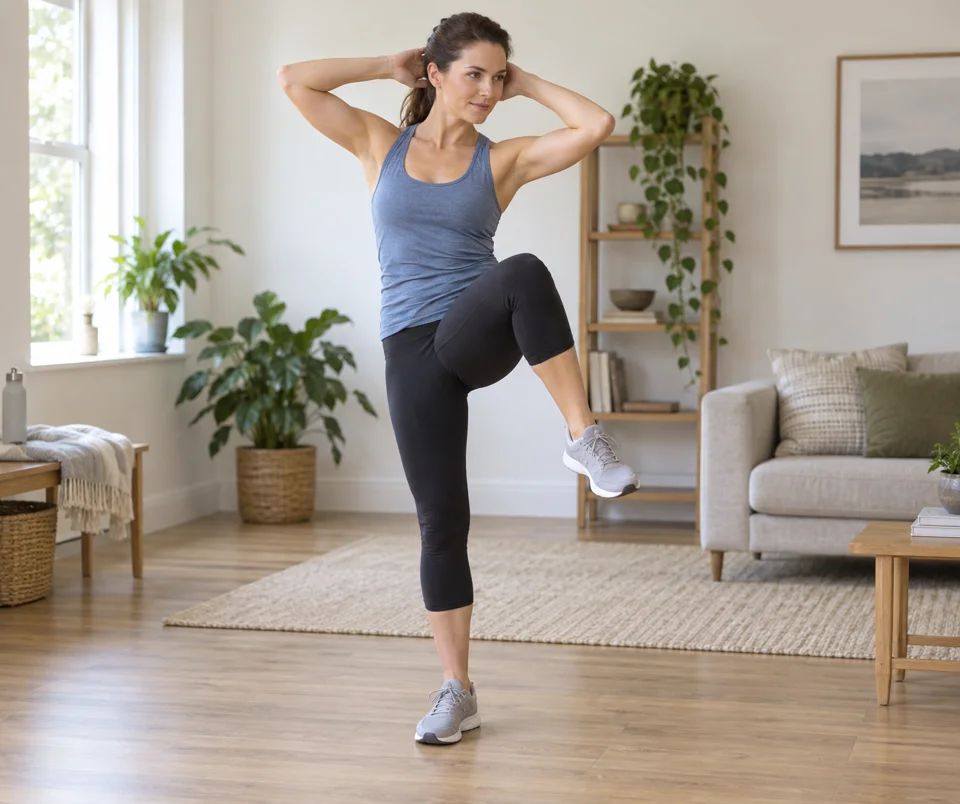
Stand tall, hands behind your head. Slowly bring one knee up and across towards the opposite elbow, then return. Do 8 to 10 each side, unhurried. This wakes up your core and coordination without any lying down.
8. Standing forward fold and chest opener
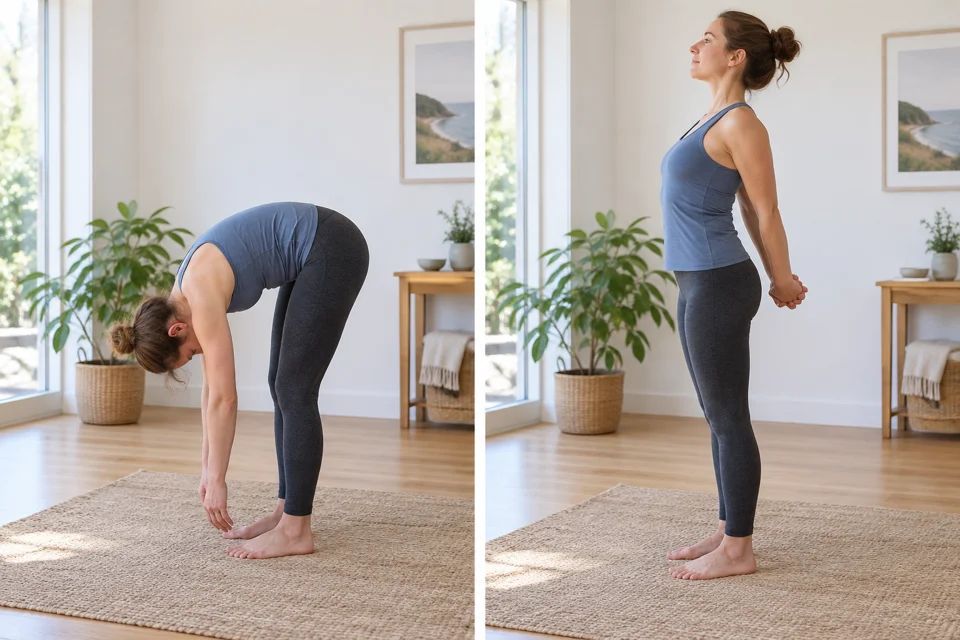
To finish, hinge forward from the hips with soft knees and let your head and arms hang for a few breaths. Roll up slowly, then clasp your hands behind your back, lift your chest and breathe into the front of your body. This stretches out the work and settles you down.
If getting down to and up from the floor is hard, this whole circuit stays standing or seated for you. For a gentler seated option built around the same idea, our chair yoga guide walks through moves you can do without leaving the chair, and our wall Pilates exercises guide uses a wall for support and resistance in much the same way.
Who low-impact training suits
The short list is almost everyone, and it earns its place for particular groups.
Beginners get a forgiving on-ramp. You can start at a low intensity, a slow pace and light effort, and build up over time, which Harvard Health recommends alongside starting with short sessions of a few minutes until movement feels more comfortable.
Older adults gain strength, balance and mobility without the fall risk and joint load of high-impact drills. Anyone with arthritis, ongoing joint pain or a recent injury can keep moving while the loading stays kind, and movement often helps the joint, not harms it.
People in larger bodies benefit from activity that does not hammer weight-bearing joints with every stride, so walking, cycling, water-based work and standing strength moves can feel achievable and repeatable.
Pregnancy is another common reason people move to low-impact work, and Cleveland Clinic lists it among the situations where gentler cardio makes sense. If you are pregnant, check with your midwife or GP about what suits your stage and your health before you start or change a routine.
That last point holds for everyone with a health condition, a recent injury or any doubt. If you have not been active for a while or you are unsure whether a movement is right for you, speak to your GP first, as the NHS advises building up gradually and getting medical advice after a long spell of inactivity.
What it can and cannot do
Low-impact exercise earns real, well-evidenced benefits, and it is worth being honest about their size.
For general health, the targets are the same whichever style you choose. The American College of Sports Medicine recommends at least 150 to 300 minutes of moderate activity a week, or 75 to 150 minutes of vigorous activity, plus muscle-strengthening work for all the major muscle groups on two or more days. Reassuringly, that total does not have to come in long blocks. Everyday movement in bite-sized amounts counts towards it, which makes a ten-minute home circuit a genuine contribution, not a warm-up for the real thing.
For joint pain, the picture is positive but measured. A systematic review of 20 randomised trials of aquatic exercise, one of the gentlest low-impact options, found small to moderate reductions in pain and improvements in physical function for people with osteoarthritis compared with no exercise, with little difference from land-based exercise. That is a real help for many people, not a cure, and the certainty of the evidence in this area is often modest. Low-impact movement is one useful part of managing a joint condition, alongside the care your clinician recommends.
What it will not do is work as a treatment for a medical problem on its own, or promise a fixed result on a fixed timeline. Use it as general support for your health and comfort, and keep anything specific about a condition, weight or medication a conversation with your GP.
Building the habit
Finding a good ten minutes is the easy part. Doing it often enough to feel a difference is where most plans quietly fall apart, and that has little to do with willpower.
Attach the workout to something you already do. "After I put the kettle on in the morning, I run one round of the circuit" gives the habit a fixed home in your day, which works better than a loose plan to fit it in somewhere. Pick a cue that happens anyway, most days, without you having to remember it.
Decide your smaller version now, before you need it. On a stiff or rushed day, three moves and a stretch still counts. A short session keeps the thread going, and keeping the thread going is what builds a habit.
Miss a day and you have undone nothing. Choose the next ordinary moment, your morning kettle or your lunchtime break, and pick it straight back up. One gap is a gap, not a failure.
A small record helps you notice the routine becoming part of your week. Keep one on paper if you like. Write the move and its cue, then tick the days you show up.
Move: Low-impact circuit Cue: after I put the kettle on
Mon ☐ Tue ☐ Wed ☐ Thu ☐ Fri ☐ Sat ☐ Sun ☐
A filled week might look like this, with a couple of gaps and no drama about them.
Move: Low-impact circuit (one round) Cue: after I put the kettle on
Mon ☑ Tue ☑ Wed ☐ Thu ☑ Fri ☐ Sat ☑ Sun ☑
Walking is the easiest low-impact habit to layer on top of a home circuit, and our benefits of walking guide is a good place to start if you want a movement you can do anywhere, any day.
A gentle place to keep the habit
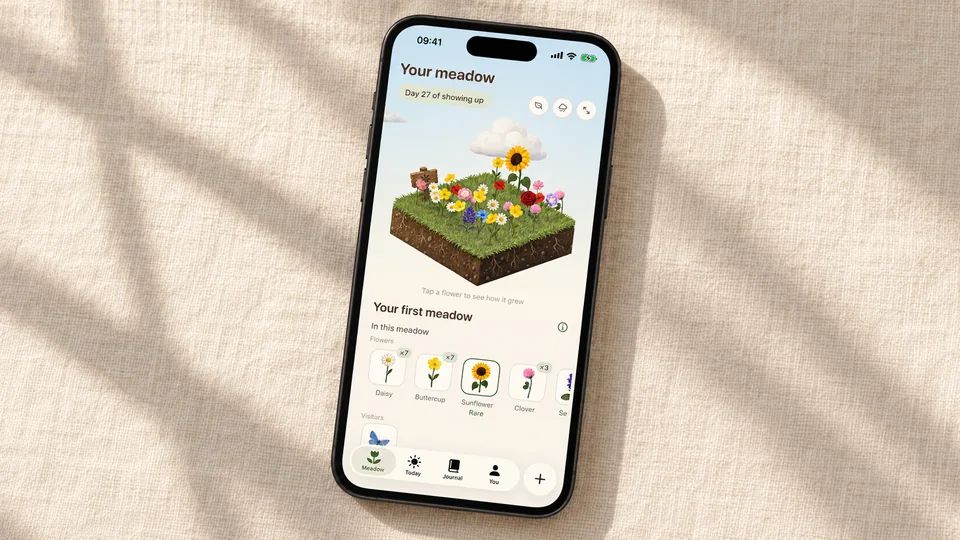
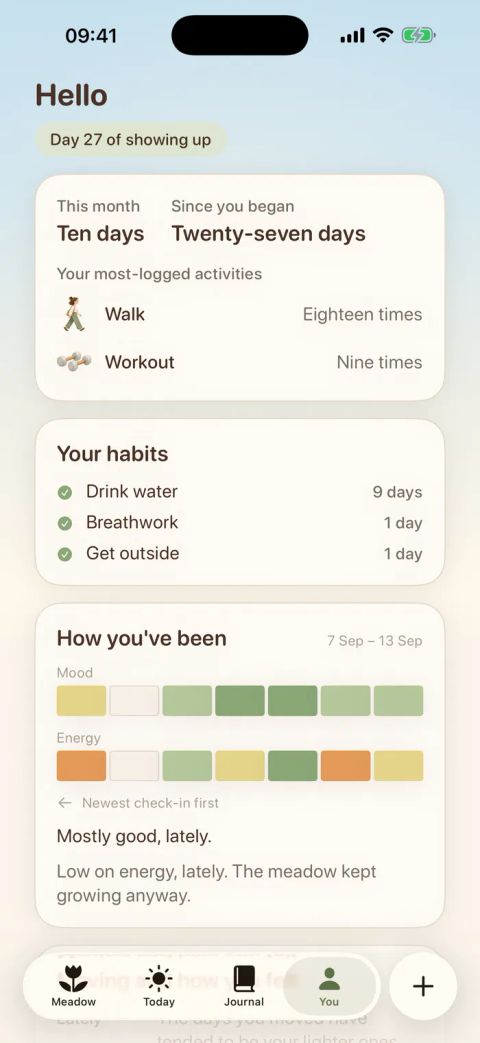
If a new movement habit needs room to be imperfect, Meadow is built for exactly that. It is a gentle habit app for iPhone from Wildcard Wellness, where you log the movement you enjoy, a walk, a little yoga, a home circuit, tick off small daily habits, and note your mood, a daily win and a daily affirmation. Each day you show up grows a wildflower in your own meadow, with rare flowers and small animal visitors arriving over time. There are no streaks to break, so skipping a day resets nothing and your flowers never wilt.
Common questions
Is low-impact the same as low-intensity?
No. Impact is the force through your joints, and intensity is how hard you are working. You can do a low-impact workout that leaves you breathless, such as fast cycling or a brisk step-touch circuit, and a high-impact one that feels easy. The two dials move independently.
Can I lose weight with low-impact exercise?
It can support weight management as part of the picture, because it burns energy and builds muscle, and the ACSM activity targets apply whatever style you choose. Weight itself depends on many things, including food and sleep, so treat exercise as one helpful factor, not a guarantee, and get personal advice from your GP if weight is a health concern.
How often should I do this workout?
Two to four times a week is a sensible aim for a strength-based circuit, leaving a day here and there to recover. Fill the other days with gentler movement like walking, and let the weekly total build towards the 150 minutes of moderate activity that the guidelines suggest.
Do I need any equipment?
No. The circuit above uses only a sturdy chair and a wall. A non-slip mat can add comfort and grip if you have one, but it is optional.
Pick tomorrow's cue now, your morning kettle or your lunch break, and run one round of the eight-move circuit straight after it.
AUTHOR
Co-founder of Meadow.
Ash is co-founder of Meadow, a habit and movement tracking app that turns small acts of self-care into a growing wildflower meadow.
See how far you've come
Your habits, moods and little wins, all in one place
Meadow keeps track of the walks, the water and the good days, so you can look back and watch your effort add up.
Download Meadow