The clearest sign you need a rest day is a body that won't bounce back: muscles still sore days later, a resting heart rate that's crept up, patchy sleep, a flat mood, sessions that keep going backwards, a niggle that won't settle, or one cold after another. No single one of these means stop. A few together, or one that drags on, is your body asking for a day off.
Learning to read those signals is a more useful skill than any fixed rule about how many rest days a week you should take. The rule changes with your week. The signals don't lie.
This is general education, not a training plan for a specific goal. If you have a health condition, you're coming back from injury, or you're new to exercise, check with your GP or a physiotherapist about what suits you.
The signs worth watching
Most of these are ordinary and pass on their own. What you're looking for is the version that sticks around, or several turning up at once.
- Soreness that won't clear. A day or two of ache after a hard session is normal. Soreness that's still there on day three or four, or that shows up after sessions you'd usually shrug off, is a sign the repair work isn't keeping up.
- A resting heart rate that's crept up. If your morning pulse is sitting several beats above your normal, that can point to a body still under strain from the last session. One high reading means little. A run of them is worth noting.
- Sleep that's gone rough. Trouble dropping off, waking in the night, or waking up as tired as you went to bed. Poor sleep both signals under-recovery and makes it worse.
- A mood that's dipped or gone short-tempered. Feeling low, irritable or flat, or losing the urge to train at all, often shows up before the physical signs do.
- Sessions that keep going backwards. Weights that felt fine last week feel heavy, your usual pace drags, or you can start a workout but can't finish it with anything left. A drop that holds across several sessions, despite decent effort, is one of the surest markers.
- A niggle that keeps nagging. A specific spot, a joint or tendon, that grumbles session after session rather than settling. That's overuse talking, and it's the one most worth acting on early.
- Catching every cold going. Hard training with too little recovery can leave you run down and picking up minor bugs more often than usual.
How to read the signals without overthinking it
The trap is reading one bad reading as a verdict. Your resting heart rate, your sleep and your mood all wobble day to day for reasons that have nothing to do with training, from a late night to a stressful week to a coming cold. Watch the trend, not the single morning.
Heart rate variability, the small beat-to-beat changes a lot of watches now track, works the same way. In a 14-day study of 41 adults, higher daily HRV lined up with better sleep, lower fatigue and lower stress, though the effects were modest and varied a fair bit between people. The researchers were clear that HRV is most useful as a within-person trend over time, not a single-day score. If you use a wearable, treat a one-off dip as noise and a run of them as information.
Soreness needs the same read. Mild stiffness that eases once you're warm is fine to move through. Sharp pain, a spot that hurts at rest, or swelling is a different thing, and that's a day to stop and, if it lingers, get it looked at.
A quick morning check beats any gadget. Ask yourself three things before you decide.
Slept badly, or woken up unrefreshed? ☐ yes ☐ no
Still sore, or carrying a niggle from last time? ☐ yes ☐ no
Dreading the session rather than fancying it? ☐ yes ☐ no
One yes, you're probably fine to train, maybe lighter. Two or three, take the day, or keep it very easy.
Why the rest day is where the work pays off
Here's the part that gets missed. You don't get fitter during the workout. You get fitter afterwards, while you rest.
Training breaks your body down a little. Strength work, as Harvard Health puts it, causes tiny tears in muscle tissue, and muscles grow stronger as the tears knit up. That knitting-up happens on the days off, which is why the same guidance suggests at least 48 hours between sessions for a muscle group. Push the same muscles hard again before they've mended and you interrupt the very thing you trained for.
There's a sweet spot, and it's easy to overshoot. A review of overtraining in the journal Sports Health describes a spectrum: a short spell of pushing hard followed by proper rest can lead to a jump in fitness, while the same load with too little recovery tips into a slump that can take weeks to months to clear. Sleep and mood take a knock along with performance, and the review notes this milder overreaching is common, turning up in around 60% of elite runners at least once. For most of us the risk is duller than a full crash, but the mechanism is the same. Rest is when the training becomes fitness.
That's why a planned day off isn't slacking. It's part of the programme. Sports doctors at the Hospital for Special Surgery put it plainly: adequate rest is not a sign of weakness, and you need at least one complete day of rest every week.
A rest day and an active rest day aren't the same
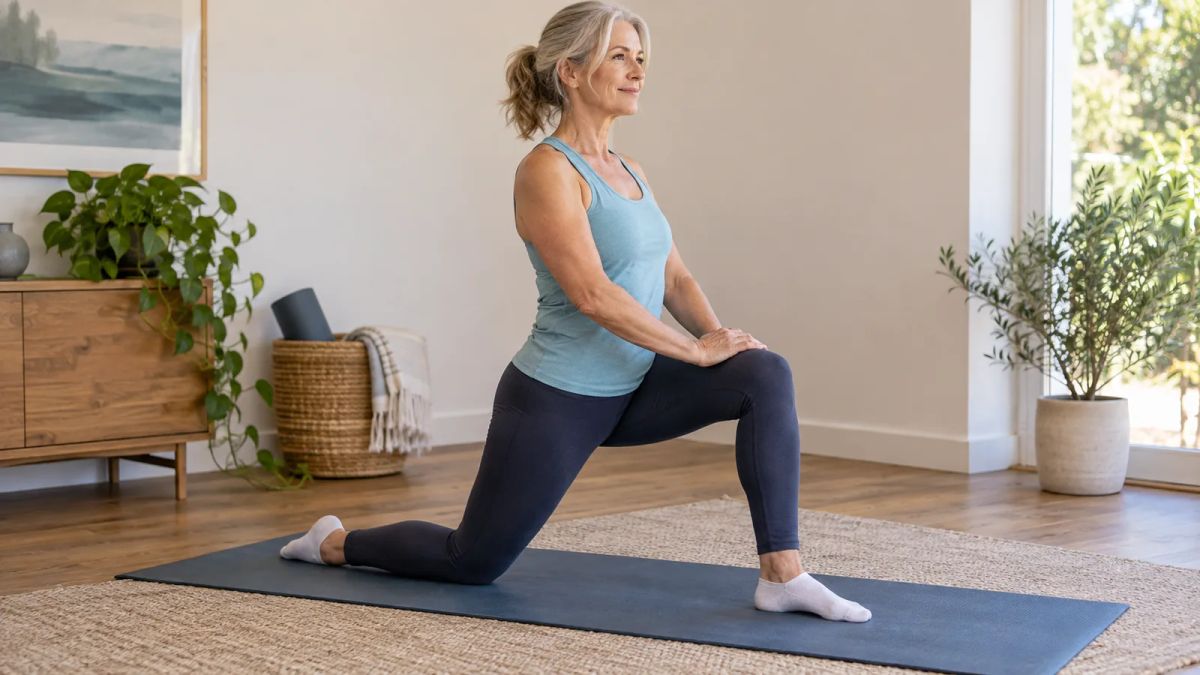
A full rest day means little or no training. An active rest day means you still move, gently, a walk or an easy stretch, to keep loose and keep the habit alive while your body repairs. Both have their place. The signs above tell you a rest day is due. What you then do with it is a separate question, and if you'd rather keep moving lightly, our guide to what to do on an active rest day covers the easy options. If you're wiped out, sore in a way movement aggravates, or fighting off a bug, a proper day off the training is the better call.
How to take the day without the guilt
Plenty of people feel like they're going soft the moment they skip a session, which gets the whole thing backwards. The UK guidance is 150 minutes of moderate activity a week plus strengthening on two days, spread across four or five days. That leaves days that are lighter or off entirely, and those days belong in the week on purpose. Taking them is doing the guidance properly, not falling short of it.
It helps to remember what movement is for on the harder weeks. Exercise does as much for your head as your body, and the mental health payoff comes from turning up consistently over months, which a run of exhausted, resentful sessions quietly undermines. A rest day protects the habit as much as the muscles.
If you're worried a day off will break your momentum, tie your training to a cue you already have so it starts again on its own. The American Heart Association's advice for making a habit stick is to attach the new action to an existing routine: trainers by the door for the morning after, a class booked for Tuesday. And if you're only starting to build the habit and every session already feels like a lot, our guide to starting exercise gently is a better starting point than pushing through fatigue.
One quiet day changes nothing over a month of showing up. Consistency comes from picking the habit back up, and a day off is not a broken chain. It's a link in it.
A place to notice how you're doing

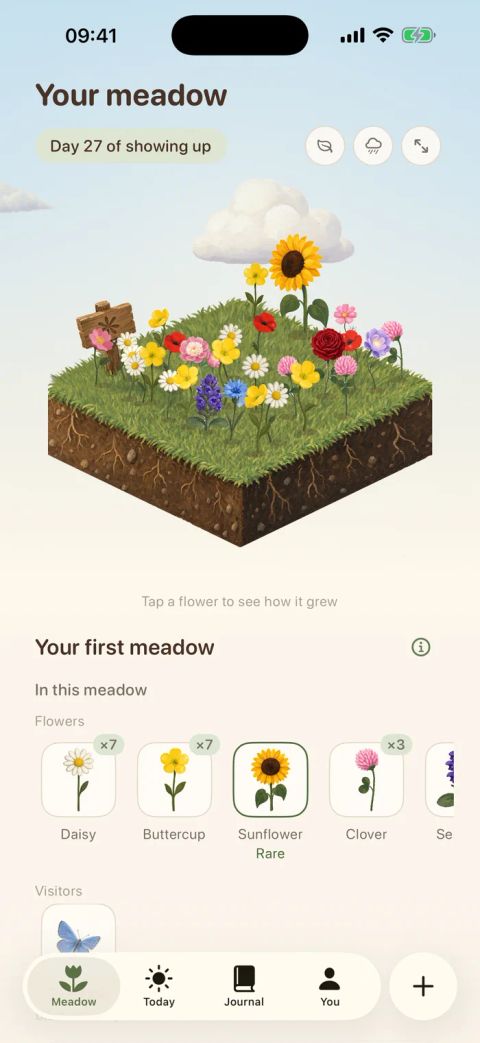
Reading your body gets easier when you can see the pattern. Meadow is a gentle movement and habit app for iPhone from Wildcard Wellness that lets you log the movement you enjoy with a timer and note your mood and energy each day, so a flat week or a run of tired mornings is there in front of you instead of half-remembered. Every day you show up grows a wildflower in your own meadow. There are no streaks, so a rest day, a poorly week or a fortnight away resets nothing and your flowers never wilt, which takes the sting out of the days you choose to do less.
Common questions
How many rest days a week do I need?
It depends on how hard and how often you train. Someone doing intense sessions most days needs more built-in recovery than someone taking a couple of classes a week. A common shape is one or two lighter or off days across the week, nudged up or down by how your legs, sleep and mood are holding up. The floor is at least one full day off a week.
Is it normal to feel worse after a rest day, not better?
Sometimes, yes. Stiffness can settle in when you go still, and it usually eases once you start moving the next day. That's the stillness, not a sign the rest was a mistake. If genuine soreness or fatigue is still there after a couple of days off, that points to needing more recovery, not less.
Can I push through and skip rest days?
You can for a while, and then the signs above start stacking up: flat sessions, poor sleep, a low mood, a niggle that won't quit. Pushing through those is how a good patch turns into a slump that takes weeks to shift. Reading the signals early is cheaper than ignoring them.
Do I need a wearable to track this?
No. A watch that shows resting heart rate or HRV can help you spot a trend, but the three-question morning check does most of the job. How you slept, how sore you are and whether you fancy the session tell you most of what you need.
The one thing to do tonight
Before your next session, run the three-question check in the morning: how you slept, how sore you are, and whether you want to train. If you get two yeses, take the day or keep it very light. That single habit, answered truthfully, will keep you training for years.
AUTHOR
Co-founder of Meadow.
Ash is co-founder of Meadow, a habit and movement tracking app that turns small acts of self-care into a growing wildflower meadow.
Little and often, with Meadow
Consistency, not intensity.
Meadow turns the movement you enjoy and the habits that help you feel good into a meadow of wildflowers. No streaks to break, and your flowers never wilt.
Download Meadow