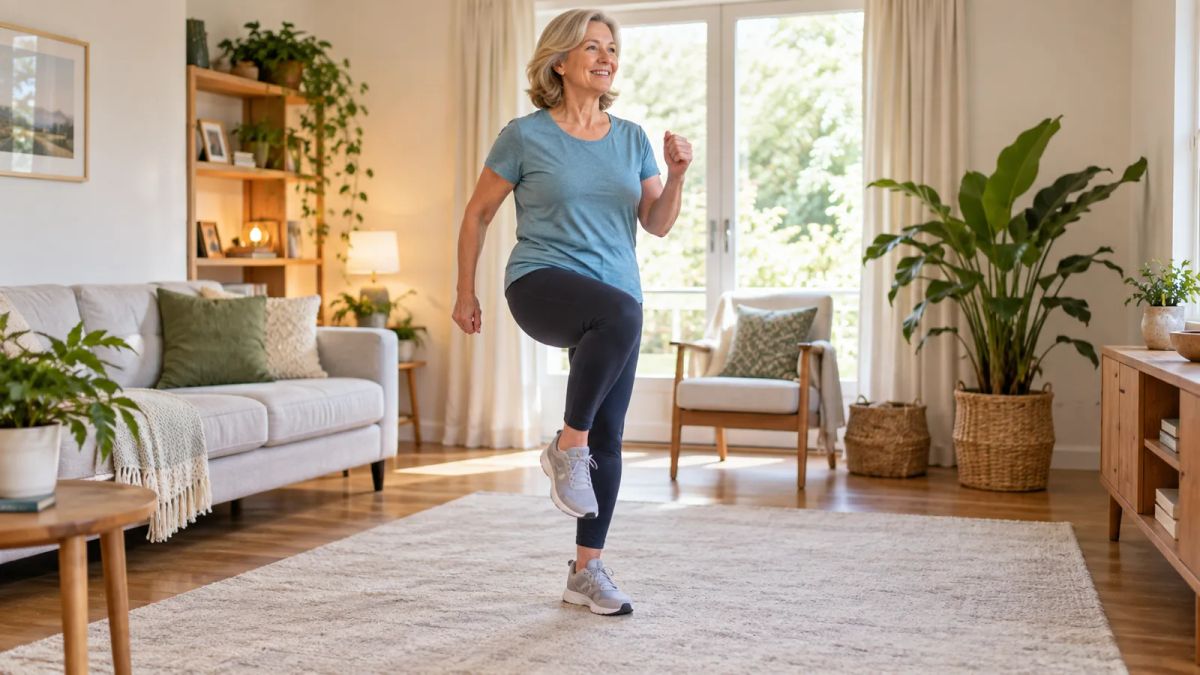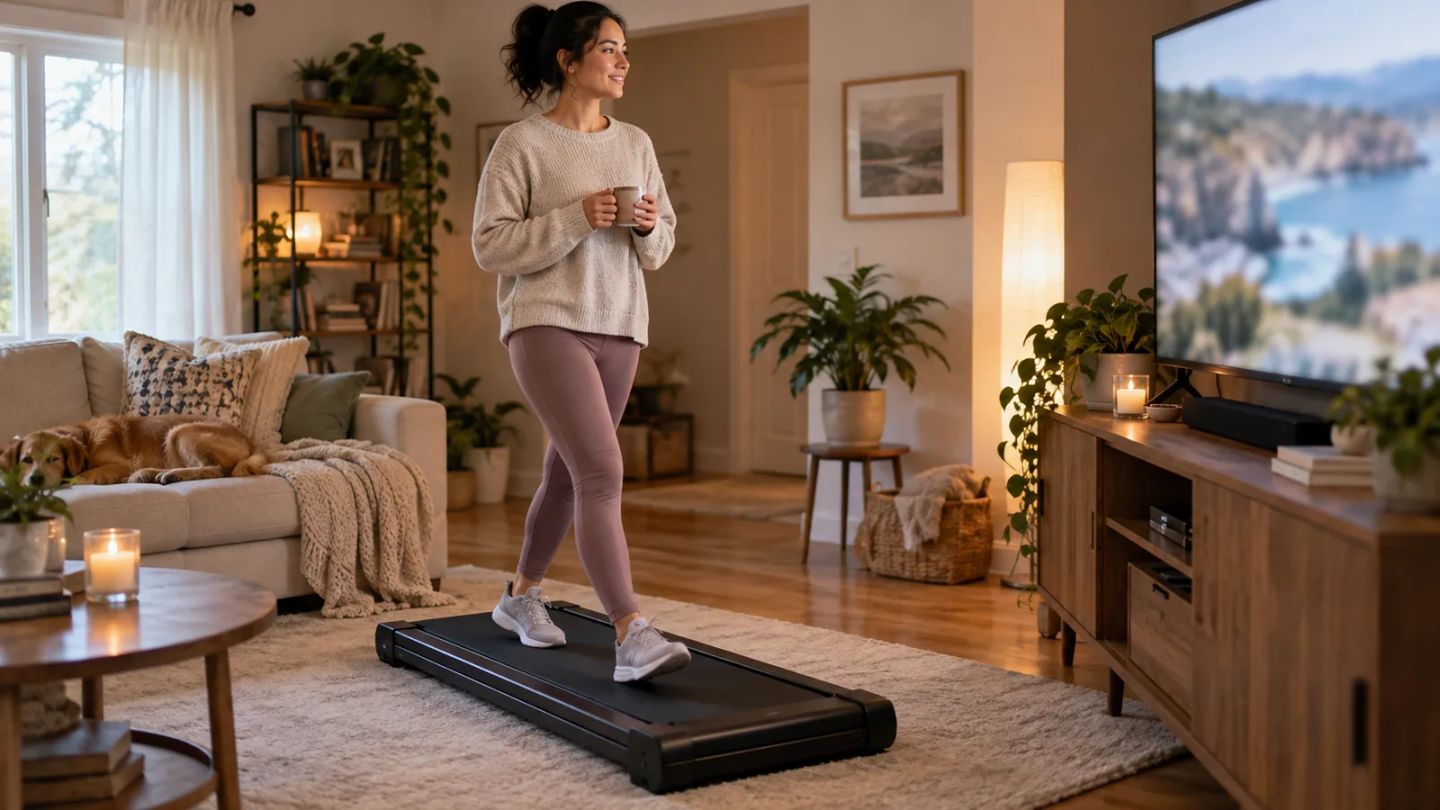
Cozy cardio is a low-intensity indoor workout you do somewhere comfortable, usually a slow walk on a walking pad or a steady march on the spot while a show plays and a warm drink sits within reach. The whole point is to make moving feel inviting, so you come back tomorrow.
It started on TikTok. It has caught on with people who bounce off boot camps, 6am spin classes and apps that nag at them. If hard workouts have left you quietly dreading exercise, this is worth a look.
Where cozy cardio came from
The trend traces back to Hope Zuckerbrow, a creator in Texas who posted it on TikTok. She'd woken early one morning and couldn't drop back to sleep. Instead of forcing a strict session, she pulled on her pyjamas, made a coffee, put on a comfort show and stepped onto her walking pad. She filmed it with the caption "Cardio... but make it cozy," and the clip drew close to two million views, according to TODAY's write-up of the trend.
None of the ingredients are new. Walking indoors is old. What Zuckerbrow named was the mood around it: candles or a lamp, soft clothes, a favourite programme, and nobody watching. She's since moved to trademark the phrase and build a following around it, so treat "cozy cardio" as her coinage rather than ours.
The name did something clever. It gave people permission to count the pleasant, easy movement they'd been talking themselves out of because it didn't look like a "proper" workout.
Why the low-pressure version works when hard workouts don't
Plenty of people start a demanding plan in January and stop by February. The plan wasn't the problem. The all-or-nothing framing was. When a session has to be an hour of sweat or it doesn't count, a bad night's sleep or a chaotic morning becomes a fair reason to skip, and one skip slides into ten.
Cozy cardio lowers the bar on purpose. You're not psyching yourself up for something you'll hate. You're settling in for twenty minutes with a coffee and a show, and the walking happens alongside it. That reframing is the point. The barrier to starting drops so low that showing up stops being a fight.
Charlotte Fox Weber, a psychotherapist quoted by TODAY, describes the appeal as beginning where you are, without a picture of perfection standing in the way. Moving at home, away from mirrors and other people, takes out the comparison and self-consciousness that put so many off gyms in the first place. When exercise feels private and pleasant, coming back the next day isn't a test of willpower.
That's the real strength here. A workout you look forward to is one you'll repeat, and repetition is the thing that changes anything.
There's a warm, sensory hook too. Lighting a candle, pulling on thick socks and pressing play on a comfort series turns a chore into a small ritual you own. It feels like an evening you'd have chosen anyway, with a walk folded into it.
Does cozy cardio count?
Yes, and it helps to be clear about what "counts" means.
Any movement beats sitting still. The CDC puts it plainly: some physical activity is better than none, and adults who sit less and move gain health benefits. A slow indoor walk breaks up long stretches in a chair, and that on its own does something useful for you.
The evidence on lighter movement is encouraging. One study of middle-aged and older adults found that light physical activity was linked to a lower body mass index, a smaller waist and lower blood pressure. It was observational, so it points to an association rather than proof that the walking caused those numbers, but the direction is friendly. Walking studies tell a similar story. Research summarised by the NIH has tied more daily steps to a lower risk of early death in older women, even at modest step counts.
The honest limit is intensity. Katie Lawton, an exercise physiologist at Cleveland Clinic, points out that there's a difference between activity and cardiovascular exercise. To train your heart and lungs, you generally need to reach at least a moderate effort, the kind where you can talk but not sing. A slow stroll in front of the telly may not get you there on its own.
Think of cozy cardio as a starting point. It's a fine way to begin, to move on a low day, or to recover between harder sessions. Over time, most people do well to nudge some walks brisker and add a couple of muscle-strengthening sessions a week, which is the pattern health bodies recommend for adults: 150 minutes of moderate activity spread across the week, plus strengthening on two days. If you have a health condition, are pregnant, or have been inactive for a long stretch, have a quick word with your GP before you push the pace.
Cozy cardio sits within the wider family of low-impact workouts, so it's kind to your joints and easy to keep up as you get older. That's what makes it sustainable. It's also the ceiling to keep in mind, so let it be your floor and build from there when you're ready.
How to set up your own cozy cardio
You don't need much, and you don't need to buy anything to begin.
- Pick your movement. A walking pad or treadmill is the classic choice, but marching on the spot, a slow loop of the house, or a treadmill walking workout on the flat all work. No kit? A steady on-the-spot march during your show is plenty.
- Set the scene. Dim the main light, switch on a lamp, and light a candle if that's your thing. Put on soft clothes and warm socks, whatever says comfortable to you.
- Sort a drink. A coffee, a herbal tea or a big glass of water. Part of the ritual is that it feels like a small treat.
- Queue up something you like. A comfort series, a film you've seen ten times, a podcast or a playlist. The show carries you, and the minutes pass without you clock-watching.
- Start short. Ten to twenty minutes is a good opening. You can always stay on longer, and it's better to finish wanting a bit more than to burn yourself out on day one.
- Keep it loose. Miss a day and nothing's ruined. The habit is the return. Missing once doesn't undo it.
If you'd rather follow along with a set time and pace, an indoor walking workout gives you structure to match while you settle in.
Somewhere to log the walk

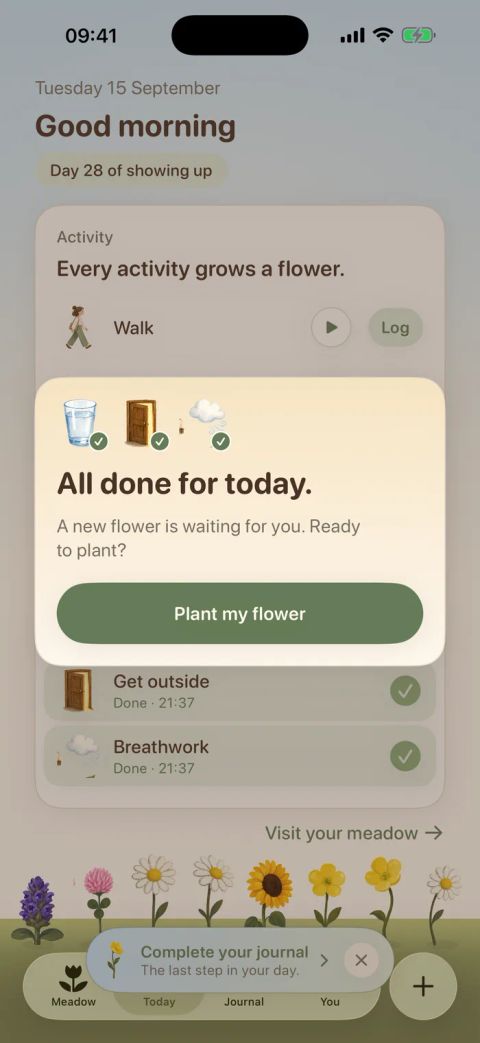
Some mornings the walk happens and some mornings it doesn't, and Meadow is built for exactly that. When you log a walk or a few minutes of movement, a wildflower blooms in a meadow that's yours alone, and it fills in over time as you keep turning up. There are no streaks, so a day you skip resets nothing you've grown. You can also tick off small habits like drinking water and note how your mood and energy feel, which sits well beside a workout meant to be kind to you. It's an iPhone app made by the team behind this site, and you can find it at growyourmeadow.com.
Cozy cardio, answered
Do I need a walking pad?
No. A walking pad makes it easy to move indoors while you watch something, but marching on the spot or pacing a hallway does the same job for free. Buy the kit once you know the habit has stuck, not before.
How long should a session be?
Start around ten to twenty minutes and let it grow if you want to. Length isn't the goal. A short walk you repeat most days does more for you than a long one you dread and skip.
Is cozy cardio enough to lose weight?
It can help, though on its own it's a small piece. Weight involves food, sleep, stress and movement together, and the CDC notes that the amount of activity any one person needs varies a lot. Cozy cardio is a sustainable way to move more, which supports the effort, so keep your eye on the habit and not the scales.
Does it work for sore knees or complete beginners?
Usually, yes, because it's low impact and you set the pace. That's part of why it suits people easing back in after a break or an injury. If a specific joint or condition worries you, check with your GP or a physiotherapist first.
Is cozy cardio better than regular cardio?
It's not competing. Regular cardio builds fitness faster because it asks more of your heart and lungs. Cozy cardio wins on the thing that trips most people up, which is turning up day after day. The best routine is the one you'll keep doing, and for a lot of people that's this.
Where to start
Tonight, before your evening show, set a lamp low, pour yourself a drink and walk for ten minutes while you watch. That's the whole thing. Do it again tomorrow, and you've started.
AUTHOR
Co-founder of Meadow.
Ash is co-founder of Meadow, a habit and movement tracking app that turns small acts of self-care into a growing wildflower meadow.
Every little bit counts
Five minutes counts. So does a dance in the kitchen.
Log the movement you enjoy and the small habits that help you feel good, and watch them bloom into something you can see.
Download Meadow