Type "self improvement app" into the App Store and you'll get thousands of results, most of them promising a calmer, fitter, more organised you by the weekend. Finding one is not the hard part. Finding the one you'll still open in a month is.
Here's how it usually goes. You download four in a burst of Sunday-night motivation, a habit tracker, a meditation app, a planner, something to help you read more, and by the following weekend you've opened none of them. The apps you pile on in one burst are the ones you've forgotten by the next, and stacking several at once is a reliable way to end up using none of them.
So this roundup is sorted by the one thing you want to change, not by which app has the loudest reviews. Pick the goal that keeps nagging at you, then choose the single app built for it. Every pick below says what it runs on and whether it's free or paid, so there's no surprise at the checkout.
One note before the list. Our own app, Meadow, appears in the habits section below, and there's a plain disclosure with it. We've tried to be straight about who it suits and who'd do better elsewhere, and if it doesn't suit you, read past it, because most of what follows is good and several cost nothing.
Building habits that stick
Most people arrive at a personal development app wanting to change a daily behaviour, and this is where the streak problem does the most damage. An app that punishes a missed day tends to get deleted on the first missed day. So the picks here vary a lot in how they treat a slip, and that's the thing to match to yourself.
A kinder home for the habit
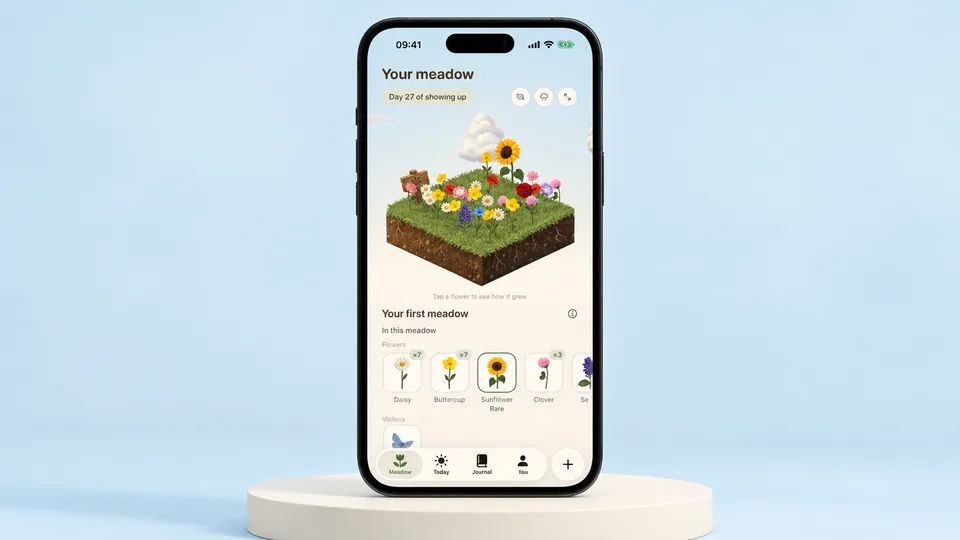
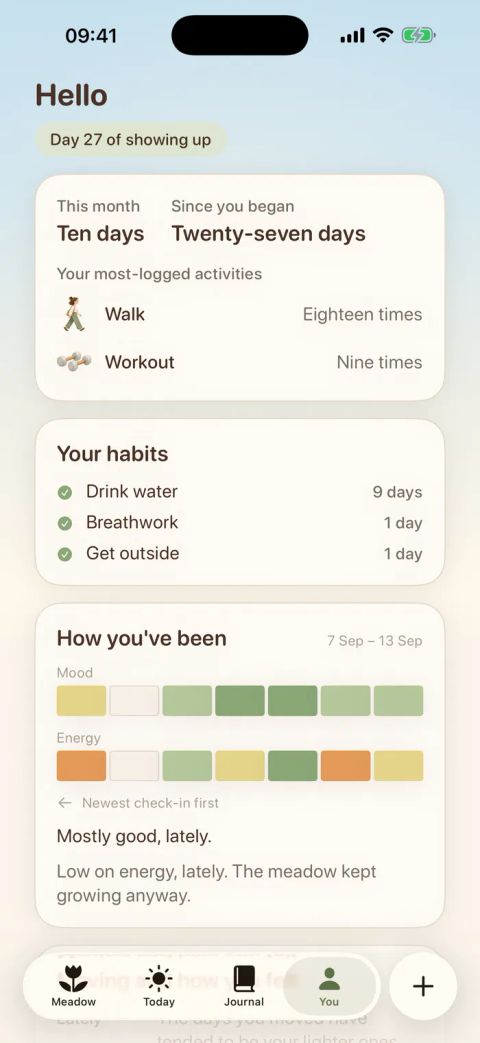
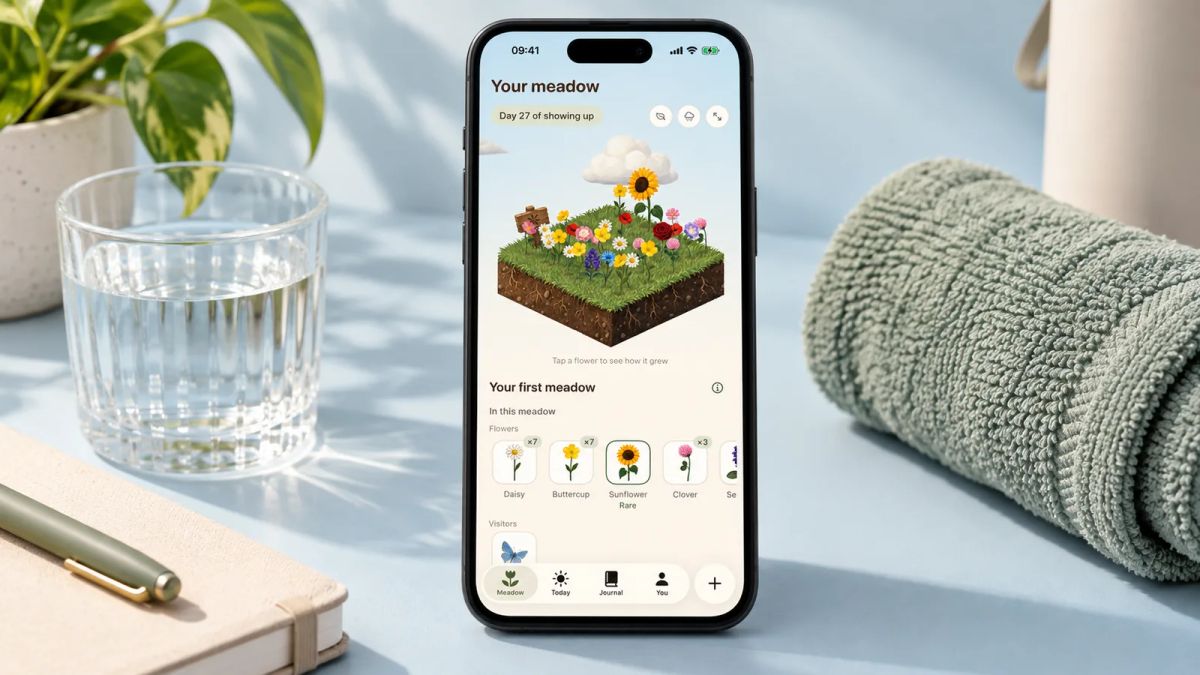
If the reason your last habit app got deleted was a broken streak, Meadow takes that pressure off completely. It's a paid app for iPhone, made by Wildcard Wellness, and the whole idea is showing up often instead of showing up perfectly. You log the movement you enjoy with a timer, a walk, some yoga, a dance round the kitchen, tick off small daily habits like drinking water or getting outside, and note your mood and energy as you go.
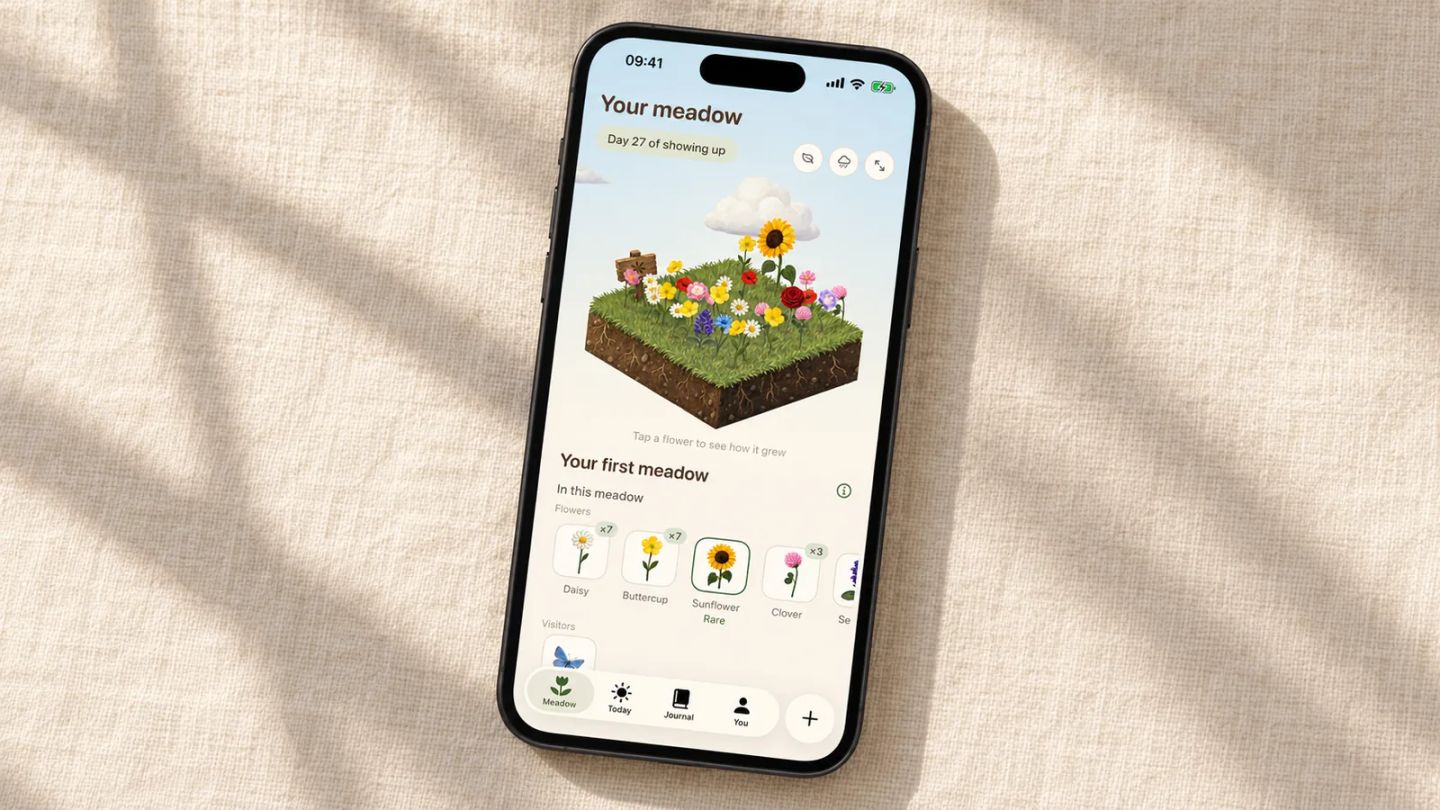
Each day you turn up, a new wildflower blooms in a meadow that's yours alone, and rare flowers and small animal visitors arrive as it fills out. Here's the part that changes how it feels. There are no streaks to break, so a day, a week or a month away resets nothing and your flowers never wilt. There's a built-in breathwork feature you can practise alongside the meadow you've grown, plus a daily journal for one good thing and a short morning affirmation. Little and Often is run by the Meadow team, and you'll find Meadow on iPhone.
Best for: anyone who's given up before, the first time a day went sideways. Not for you if: you're on Android, or a free tool is a hard requirement.
Finch: self-care with a bird to raise
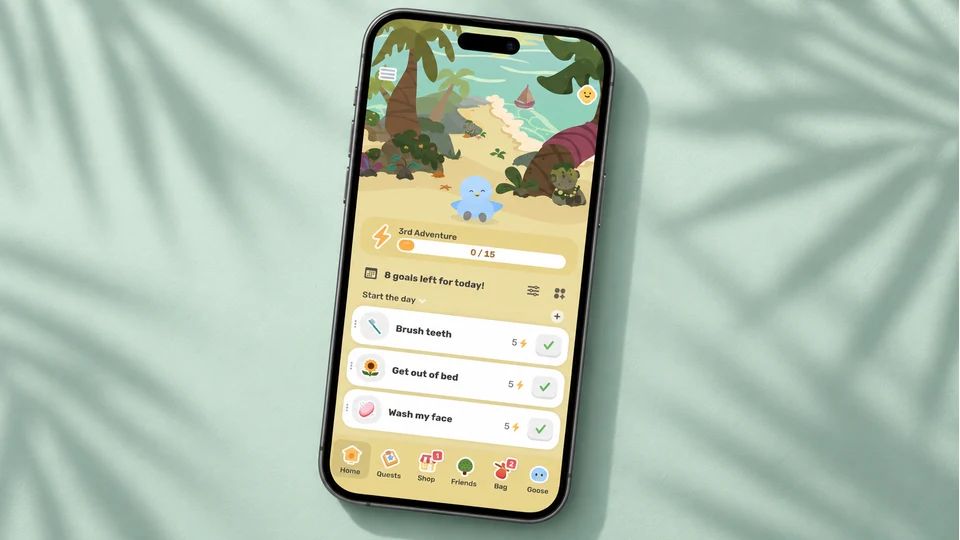
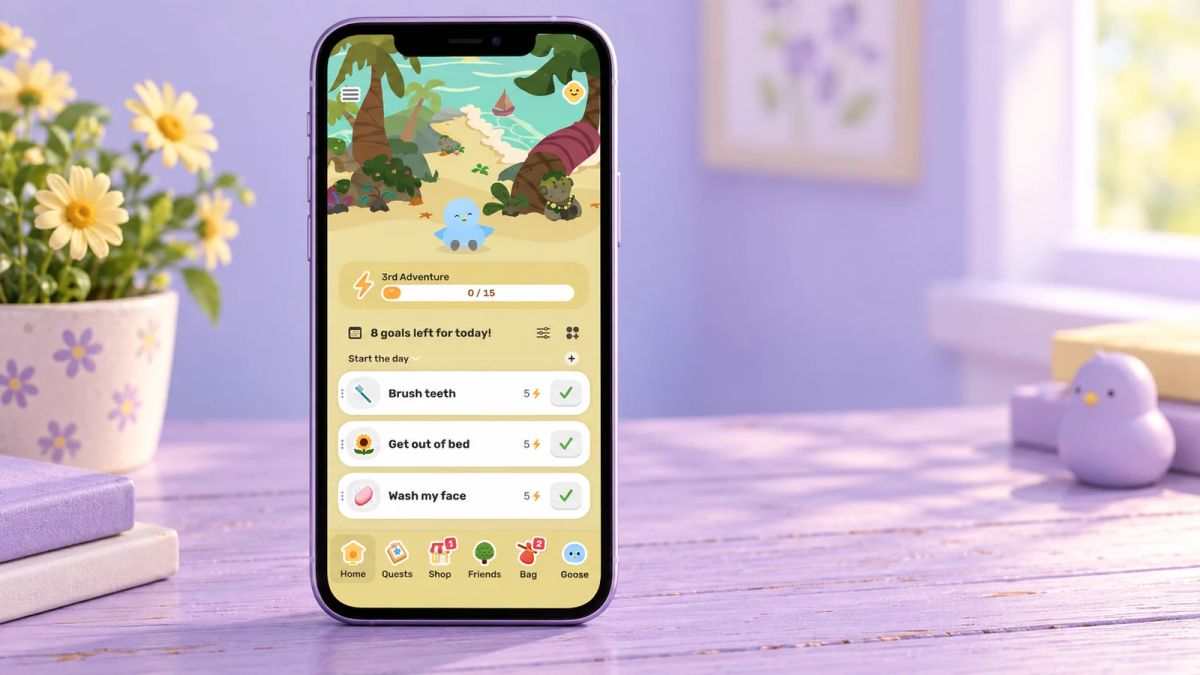
Finch wraps habit tracking around a small bird you look after by looking after yourself. You tick off a short walk, a glass of water or a breathing exercise, the bird earns energy and heads off on a little adventure, and the whole app tilts towards self-care as much as ticking boxes. For anyone who finds a plain checklist joyless, the softer framing does the coaxing.
It's free to download on iPhone and Android, with an optional Finch Plus subscription for the extras. Prices move, so check your own store page. The one thing worth knowing before you commit is that some people find the bird's "missing you" nudges start to feel like one more person to let down.
Best for: people who want warm prompts towards small daily care. Not for you if: a needy pet is exactly the pressure you're trying to escape.
Fabulous: coaching that builds the whole routine
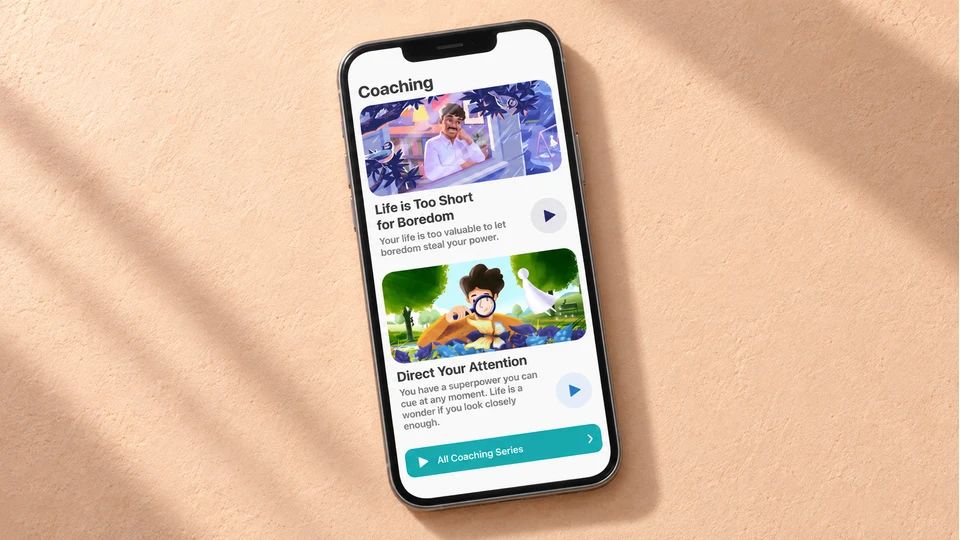
Fabulous is the most hand-holding option here. Instead of a bare tracker, you follow "journeys", sets of small daily steps tied to a goal like a calmer morning, better sleep or drinking more water, wrapped in coaching, affirmations and structured routines. It's science-flavoured and polished, and it's good at turning a vague intention into a concrete first step for tomorrow.
The catch is the money. Fabulous is free to download on iPhone and Android, but the journeys and most of the good stuff sit behind a paid subscription, and the free layer is thin. So treat it as a paid app if you want the parts people rave about.
Best for: people who like being walked through a routine step by step. Not for you if: you want a free tool, or a chatty coach grates on you.
Habitica: habits as a role-playing game
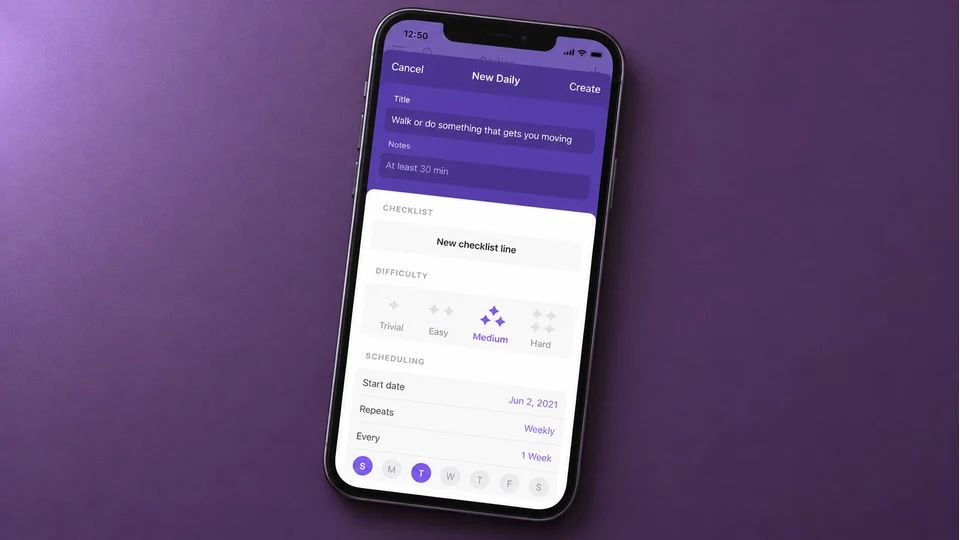
Habitica sits at the opposite end from Meadow, and that's why it's here. It turns your habits into a retro role-playing game. You build an avatar, earn gold and experience for finishing tasks, kit out your character, and join parties to quest with friends. Skip your dailies and you lose health, and your teammates take a hit too.
Read that last line twice if you came here to get away from guilt, because Habitica piles accountability on instead of stripping it off. For the brains wired to respond to points and a bit of social stakes, though, it's sticky in a way nothing else here is. It's properly free with full core features, runs on iPhone, iPad, Mac and the web, and everything syncs, with an optional subscription for mostly cosmetic extras.
Best for: gamers and ADHD brains who thrive on levels and a party counting on them. Not for you if: losing progress or letting a team down is the stress you're leaving behind.
Calming a busy mind
If the thing you want to change is a head that won't quiet down, a meditation app is a sensible first buy, with one honest caveat. The evidence for mindfulness on stress and low mood is reasonable but uneven, and no app replaces treatment if you're struggling, so treat it as support and see a GP if things are heavy.
Headspace is the one to hand a beginner who finds the whole idea a bit much. The sessions are short, the tone is warm and plain, and there are guided courses for stress, focus and sleep, plus quick breathing exercises for the moments a day comes apart. It leans on structure, so you never face a blank timer. It runs on iPhone, iPad, Apple Watch, Android and the web, and it's a paid subscription after a trial.
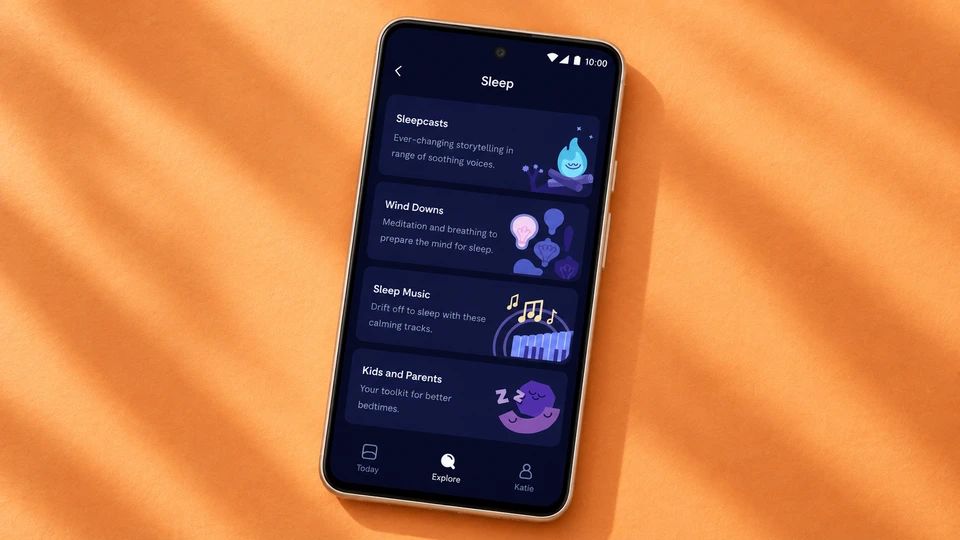
If your problem is more the bedtime end of the day, Calm covers similar ground and pushes harder on winding down, with its Sleep Stories the headline draw. It's on the same range of platforms and also runs on a subscription.
Best for: first-timers who want a guided hand into meditation. Not for you if: you already sit daily and want a large free library, where a no-cost meditation app will stretch further.
Protecting your focus
The distraction here is the phone in your hand, which is a strange thing to fix with an app on that same phone. Forest pulls it off with one clever mechanic. You plant a virtual tree at the start of a focus session, and if you leave the app to scroll, the tree withers. Sit with your work and a little forest grows instead.
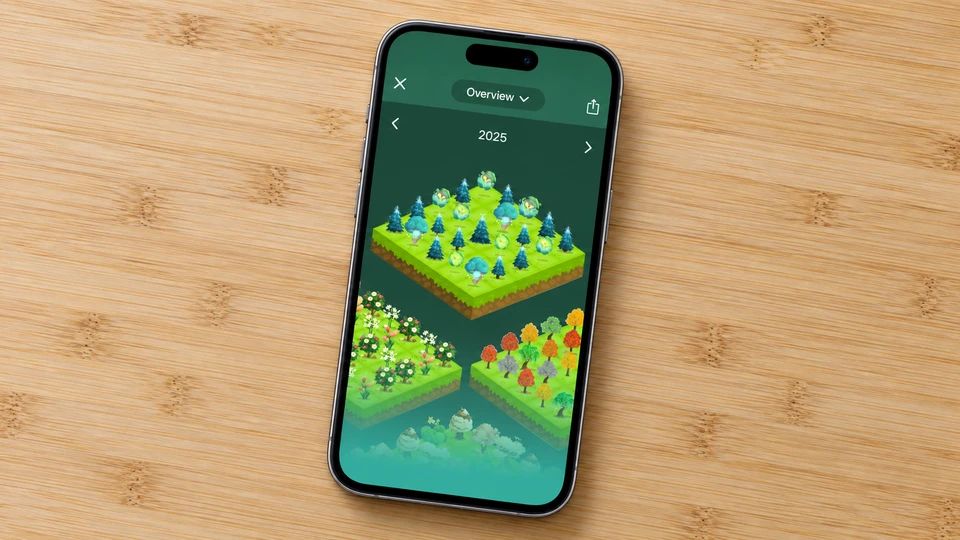
It sounds daft and it works, because nobody wants to kill a tree over a quick peek at Instagram. Through a partnership with a tree-planting charity, the coins you build up can go towards planting real trees, which adds a small stake beyond the pixels. Forest is free to download on iPhone and iPad with in-app purchases, has an Android version and browser extensions, and offers a Forest Plus subscription for extra species, soundscapes and analytics.
Best for: anyone who reaches for the phone every few minutes and wants a gentle deterrent. Not for you if: you want deep productivity analytics, which live behind the paid tier.
Learning in the gaps of the day
If self-improvement to you means reading more of the books you keep meaning to get to, Blinkist is the shortcut. It condenses non-fiction books, and now podcasts, into roughly fifteen-minute summaries you can read or listen to, so a commute or a kettle-boil becomes a chapter's worth of the main ideas.
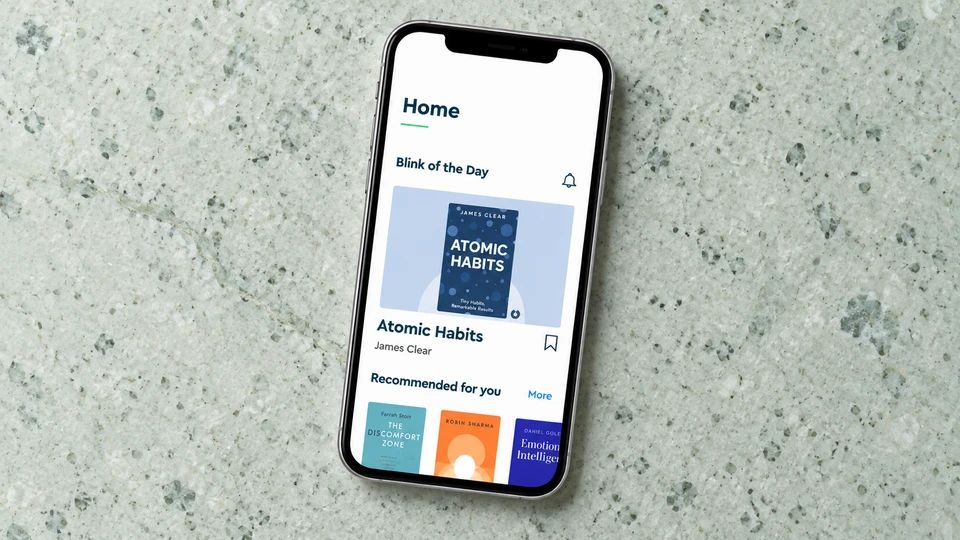
The honest limit is in the format. A fifteen-minute summary gives you the shape of a book, not the texture, and some readers find the newer AI-assisted summaries a bit padded. It's a paid subscription for the full library on iPhone, iPad, Android and the web, with a free tier that hands you one editor's pick a day. Treat it as a way to decide which books deserve the full read, and it earns its keep.
Best for: busy people who want the gist of a lot of ideas fast. Not for you if: you'd rather sit with one book properly than skim thirty.
Getting the day to hang together
Sometimes the problem isn't a single habit but the whole shape of the day. Structured is the pick for visual thinkers, laying your tasks and calendar out on one vertical timeline so the gaps, the clashes and the free hours are obvious at a glance. Blocking your time this way, instead of staring at a flat to-do list, is a common relief for people who find lists overwhelming, and it's popular with ADHD planners for that reason.
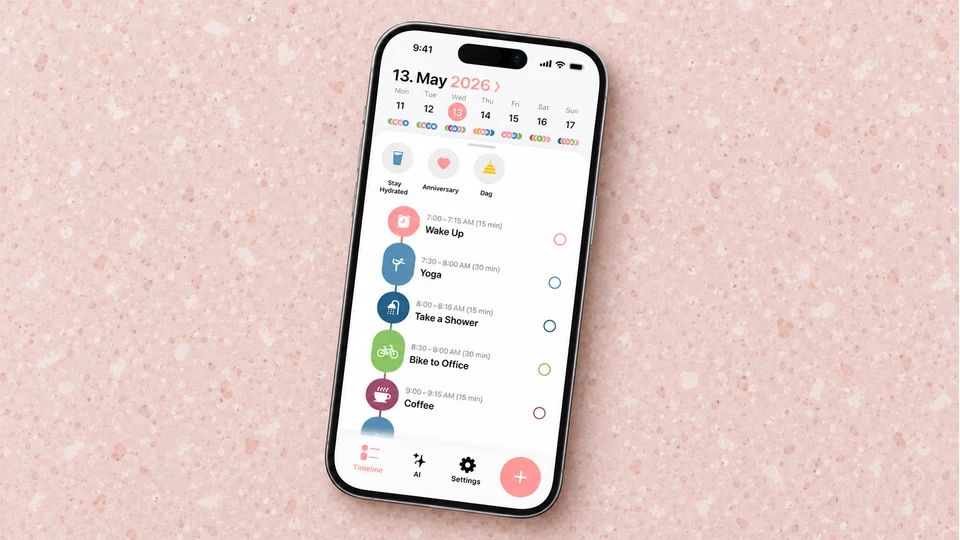
The free version covers the timeline, an inbox for stray thoughts, syncing and a Pomodoro timer, which is plenty for a lot of people. Structured Pro, on subscription or a one-off lifetime purchase, adds calendar integration, recurring items and AI-assisted scheduling. It runs on iPhone, iPad, Mac and Apple Watch.
If you want your planning wrapped in a proper daily ritual, and you spend your day in email and work tools, Sunsama does a guided morning-and-evening plan across the two, though it's a heavier paid app aimed at knowledge workers.
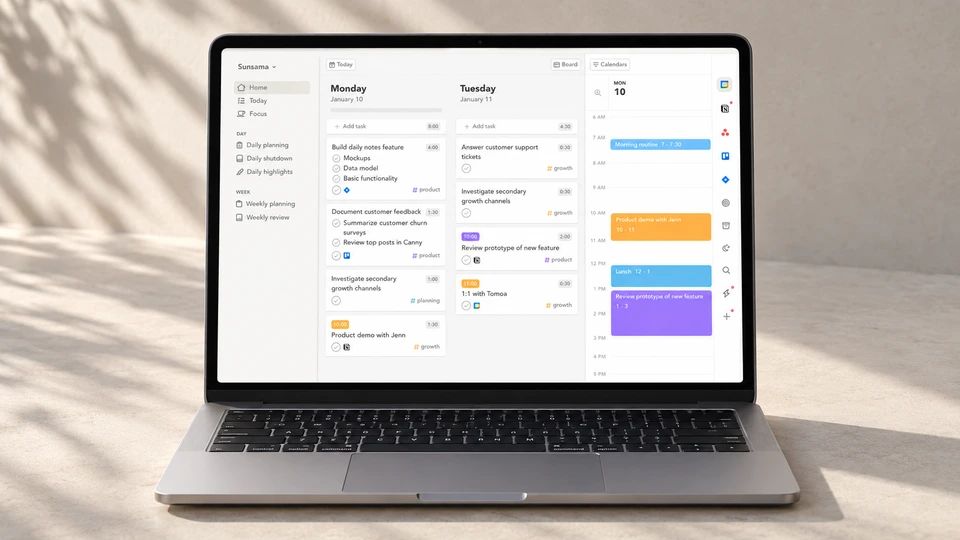
Best for: people who plan better when they can see the whole day on a timeline. Not for you if: a bare list already works fine for you, in which case save your money.
How to choose the one that sticks
Start with the single goal that pushed you to search in the first place, and ignore the rest. One tool you open daily beats four you feel guilty about. You can always add a second in a month, once the first has held.
Then be honest about how you take a slip. Work through it in this order:
- Name the goal: habits, a calmer head, focus, learning or a better-planned day.
- Pick the app from that section, and no others, for now.
- Ask how you react to missing a day. If a broken streak makes you want to bin the whole thing, steer clear of anything built on unbroken chains and choose a tool that shrugs off an off week.
- Set it up tonight with one small thing to do tomorrow, and give it a fortnight before you judge it.
That third step catches more people than any feature list, because the reaction to a missed day is the quiet reason most of these apps get uninstalled.
If you want the groundwork before you download anything, our guide to building healthy habits covers why some stick when others don't, how to be consistent goes deeper on staying with it, and self-discipline is worth a read if willpower is the part that keeps failing you.
The app that helps is the one still open on your phone next month. Whichever you pick, the point was never the bird, the trees or the flowers. It was the walk, the ten quiet minutes, the page you read, and any of these can carry that if you let the first step be small.
AUTHOR
Co-founder of Meadow.
Ash is co-founder of Meadow, a habit and movement tracking app that turns small acts of self-care into a growing wildflower meadow.
See how far you've come
Your habits, moods and little wins, all in one place
Meadow keeps track of the walks, the water and the good days, so you can look back and watch your effort add up.
Download Meadow