The best wellness app is the one still open on your phone in a month. Most people download three in a rush of motivation on a Sunday night and have forgotten all of them by the following weekend. Fit is what decides whether an app survives that first week.
So this is a roundup organised by what you want help with, whether that is moving more, calming a busy head, sleeping better or noticing your moods. Every app below is a current option you can download today, and each one comes with its platform and price written out plainly, so nothing surprises you at the checkout.
One thing to say clearly before the list. Little and Often is run by the Meadow team, so our own app sits at the top of our own roundup. We think it earns the spot for the kind of reader this site is written for, and we're honest about who it suits and who would do better elsewhere. If it's not for you, read straight past it, because most of the apps here are good and some are free.
1. Meadow: a gentle habit and movement tracker
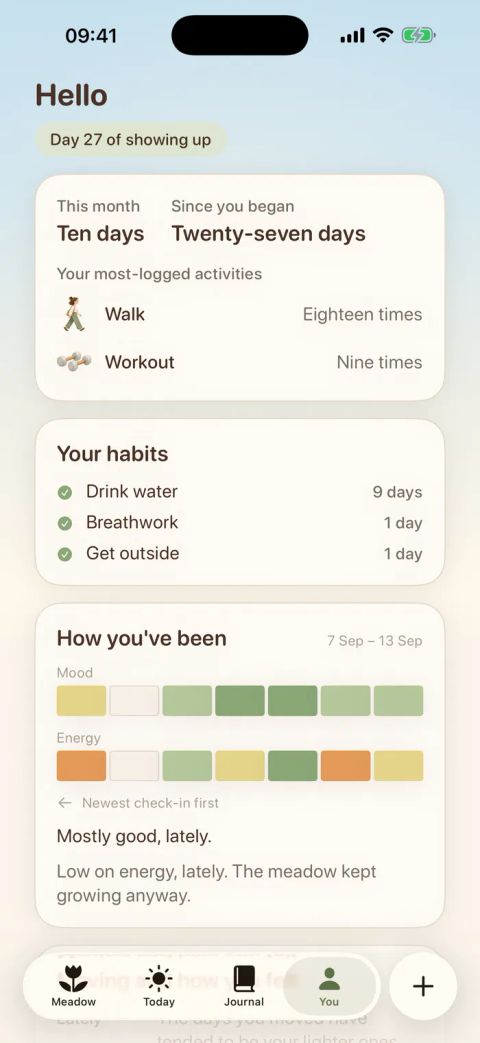
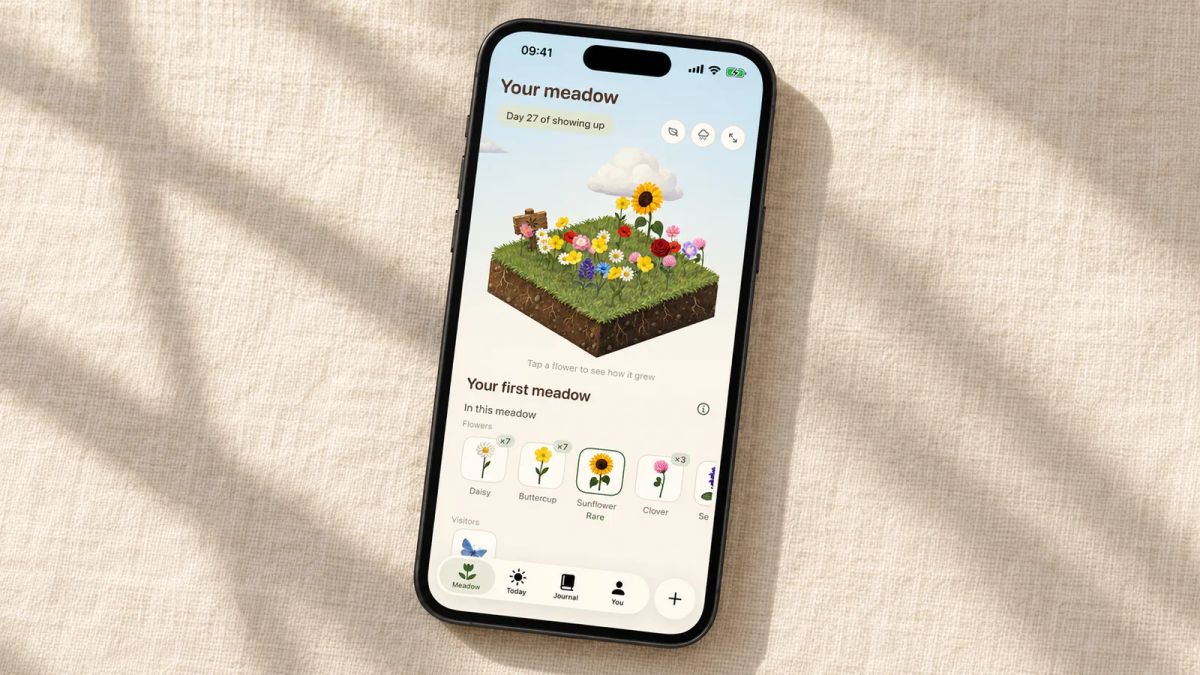
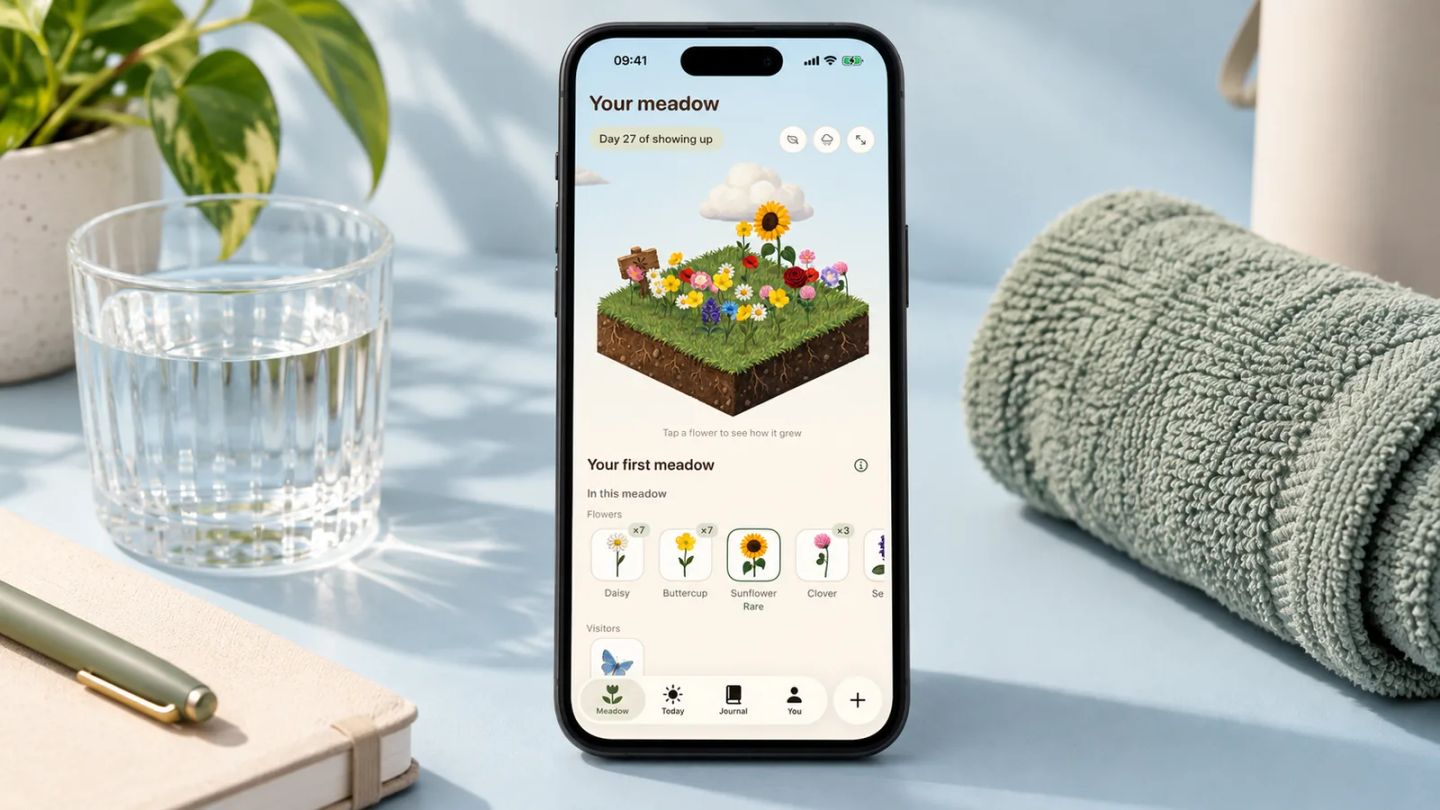
Meadow is a gentle movement and habit app for iPhone, built on the idea that showing up often beats the odd big effort. You log the movement you enjoy with a timer, a walk, some yoga or a dance, tick off small daily habits like drinking water or getting outside, and check in on your mood and energy. There is a daily journal for one good thing, a short affirmation to start the day, and breathwork you can practise alongside the wildflower meadow you have grown.
Each day you show up a new wildflower blooms, and rare flowers and little animal visitors appear as your meadow fills out. There are no streaks, so a missed day, week or month resets nothing and your flowers never wilt. Little and Often is run by the Meadow team, and Meadow is available on iPhone.
Best for: anyone who has started before and given up the first time they missed a day. Not for you if: you want Android, deep charts or a free forever tier, in which case keep reading.
2. Headspace: a friendly way into meditation
Headspace is the app to hand a beginner who finds the whole idea of meditation a bit much. The sessions are short, the tone is warm and plain, and there are guided courses for stress, focus and getting to sleep, plus quick breathing exercises for the moments a day goes sideways.
It leans on structure, walking you through the basics so you never face a blank timer.
Headspace runs on iPhone, iPad and Apple Watch, with an Android app and a web player too, and costs $12.99 a month or $69.99 a year after a free trial.
Best for: first-timers who want a guided hand through the basics. Not for you if: you already meditate and want a huge free library, where Insight Timer does more for nothing.
3. Calm: meditation with sleep built in
Calm covers similar ground to Headspace but pushes harder on winding down at night. Its Sleep Stories are the headline draw, calm bedtime narrations read by familiar voices, sitting next to guided meditations, breathing tools and a library of ambient sound for focus or rest.
If your main problem is a mind that will not switch off at bedtime, this is the one built for that hour.
Calm is on iPhone, iPad and Apple Watch, with Android and web versions, and costs $14.99 a month or $69.99 a year after a free trial.
Best for: people who want meditation and sleep help in a single, soothing app. Not for you if: you resent a subscription for content you might find free elsewhere.
4. Insight Timer: the best free meditation library
Insight Timer is the pick when money is the sticking point. The free tier is generous, with thousands of guided meditations, talks and ambient tracks, plus a plain timer for anyone who would rather sit in silence with a gentle bell at the end.
Most people never need to pay a penny.
If you want the extras, Insight Timer offers a Member Plus subscription at $9.99 a month or $59.99 a year, and it runs on iPhone, iPad, Android and the web.
Best for: anyone who wants a deep meditation library without a subscription. Not for you if: the sheer amount of choice leaves you unsure where to start, where Headspace's guided path is calmer.
5. Finch: self-care with a bird to look after
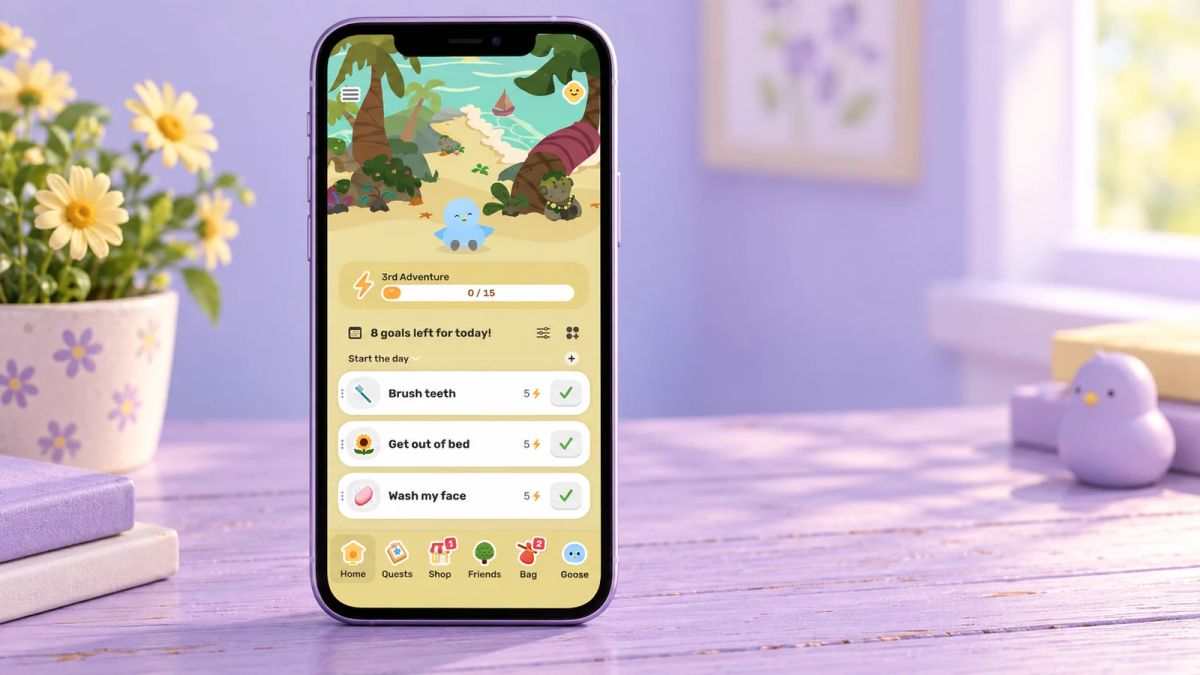
Finch wraps habit and mood tracking around a small pet you raise by looking after yourself. You care for a baby bird by doing gentle daily things, a breathing exercise, a short walk, a mood check-in, so the app tilts towards self-care as much as ticking things off. For readers who find plain checklists a bit joyless, the softer framing does the coaxing.
Finch is free to download on iPhone, with an optional Finch Plus subscription for extra features, commonly around $9.99 a month or $39.99 a year, and there is an Android version too. Prices shift, so it is worth checking your own App Store page.
Best for: people who want warm nudges towards looking after themselves. Not for you if: you want precise progress data, where a tracker like Daylio is sharper.
6. Daylio: mood tracking without the writing
Daylio is a diary for people who never keep a diary. You pick a mood and tap a few icons for what you did, no blank page to fill, and over time the app shows you patterns, which activities tend to sit alongside your better days and which do not. There is no pressure to write a single line, which is why people keep it up.
Daylio is free on iPhone and Android, with a Premium subscription at $4.99 a month or $35.99 a year after a seven-day free trial that adds deeper statistics, unlimited entries and backups.
Best for: anyone curious about their mood patterns who hates the idea of journaling. Not for you if: you want long-form reflection, where a proper journal app suits better.
7. Sleep Cycle: for the morning you wake up groggy
Sleep Cycle tackles the other end of the day. It tracks your sleep through the night using sound, then its smart alarm tries to wake you during a lighter phase inside a window you set, so you come to more gently than a fixed alarm that goes off mid-deep-sleep. You also get a record of how your nights are trending.
The free tier covers the smart alarm and basic tracking, which is enough for many people.
Sleep Cycle is free to download on iPhone and Android, with a Premium subscription at $39.99 a year for the fuller analysis and extras.
Best for: people who wake up groggy and want a kinder alarm. Not for you if: ongoing sleep trouble is the real issue, in which case a GP will help more than an app.
8. Nike Training Club: free workouts you can do at home
Nike Training Club is the surprise on this list because the whole thing is free. You get guided strength, yoga, pilates, mobility and recovery sessions from Nike's trainers, filterable by how long you have and what kit you own, which means a fifteen-minute living-room workout is never more than a few taps away.
No subscription, no locked library.
Nike Training Club is free on iPhone and Apple Watch, with an Android version as well, and you sign in with a free Nike account.
Best for: anyone who wants structured movement at home without paying for it. Not for you if: you want personalised coaching that adapts week to week, which the free tier does not promise.
How to choose the one for you
Start with the one thing you want to change, and ignore which app has the best reviews. Pick one lane, movement, calm, sleep or mood, and choose the app built for it, because one tool you open daily beats four you ignore. You can always add a second later once the first has stuck.
Then think about how you react to a slip. If a broken streak makes you want to give up, avoid anything that leans hard on unbroken chains and pick something that treats a missed day kindly. That reaction is a common reason habit apps get deleted, so it's worth being honest with yourself before you commit.
Weigh cost against what you need. Plenty here is free or has a real free tier: Insight Timer for meditation, Daylio for mood, Sleep Cycle's smart alarm, and every Nike Training Club workout. Pay only once a free option has shown you the habit is going to hold.
Here are the honest shortcuts by what you want:
- Move more, gently: Meadow, or Nike Training Club for free workouts.
- Calm a busy head: Headspace to start, Insight Timer if you want it free.
- Sleep better: Calm for bedtime, Sleep Cycle for a kinder morning.
- Notice your moods: Daylio, or Finch if you want a warmer nudge.
A quick word on what these apps can and cannot do. Meditation has reasonable evidence behind it for stress and low mood, though the research body reviewed by the NCCIH is uneven and best read with caution, and no app is a substitute for treatment if you are struggling. The habit of checking in with yourself does hold up, though. A meta-analysis of 138 studies found that prompting people to monitor their progress towards a goal improved how often they reached it, which is a fair reason to keep some kind of tracker, whatever tool it lives in.
If you want the groundwork before you download anything, our guide to building healthy habits and our list of self-care ideas are good places to start, and breathwork is worth a look if calming down is your aim.
Tonight, before you put the phone down, pick the one lane you most want to fix this month, download a single app from that section, and set it up with one small thing to do tomorrow. That one choice, made now rather than next Sunday, is where it starts.
AUTHOR
Co-founder of Meadow.
Ash is co-founder of Meadow, a habit and movement tracking app that turns small acts of self-care into a growing wildflower meadow.
See how far you've come
Your habits, moods and little wins, all in one place
Meadow keeps track of the walks, the water and the good days, so you can look back and watch your effort add up.
Download Meadow