A dopamine detox means taking a deliberate break from the things that keep you reaching for your phone, the biscuit tin or the shopping app, in the hope of feeling calmer and more focused afterwards. The name is wrong, and knowing why changes how you should go about it. You can't drain, reset or fast your way out of dopamine, because it's a chemical your brain makes all the time and can't run without.
That doesn't mean the practice is useless. Stripped of the pseudoscience, a "detox" is a short, planned break from a specific compulsive behaviour, and that part can help.
This guide covers what people mean by the term, where it came from, why the science behind the name falls apart, and what's going on when a break makes you feel better. Then it gives you a sensible version you can try this week, plus the point where you should stop and talk to a GP instead.
What people mean by a dopamine detox
The usual picture is a day, a weekend or a longer stretch spent avoiding anything stimulating. No social media, no games, no junk food, no online shopping, sometimes no music or television either. The idea, as it's sold online, is that cutting off these hits lets your dopamine "recover", so ordinary life feels rewarding again.
Medical News Today sums up the popular version as "fasting from dopamine producing activities, or 'pleasures,' with the hope of decreasing reward sensitivity." People report all sorts of goals: better focus, less doomscrolling, more patience for slow things like reading.
The instinct behind it is sound. The mechanism people imagine is not.
Where the idea came from
The term was coined in 2019 by Dr Cameron Sepah, a clinical psychologist at UCSF, as a catchier name for a technique borrowed from cognitive behavioural therapy. Cleveland Clinic describes his original method as a way to reduce problem behaviours like emotional eating and compulsive internet use by stepping away from them for a set time and putting something better in their place.
Sepah never claimed you could lower your dopamine. He said the opposite. He told the New York Times, quoted by Harvard Health, that dopamine is "a mechanism that explains how addictions can become reinforced, and makes for a catchy title", and that the name was never meant to be taken at face value.
The internet ignored that caveat anyway. A clinical tool for curbing a habit turned into a wellness trend about purging a brain chemical, and the two are not the same thing.
Why you can't detox dopamine
Dopamine isn't a toxin waiting to be flushed out. It's a neurotransmitter your body needs every day. Cleveland Clinic's Dr Susan Albers puts it plainly: "We need dopamine in every system in our body, to move, to sleep, to experience pleasure." Too little of it is linked to serious problems, from Parkinson's disease to depression.
So a true detox isn't possible. Medical News Today is blunt about it: halting all dopamine activity "is not possible," because "The human body naturally produces dopamine, even when it is not exposed to certain stimuli." Your brain keeps making it while you sleep, while you sit in a quiet room, the whole time you think you're "resetting".
Here's the other half people miss. Avoiding stimulating activities doesn't lower your dopamine either. Harvard Health notes that although dopamine rises with a reward, it doesn't fall when you avoid overstimulating activities, so a dopamine "fast" doesn't lower your dopamine levels. There's no meter draining down over your quiet weekend and refilling to give you a bigger hit on Monday. That's a misreading of how drug tolerance works, applied to a weekend off Instagram.
There's also no good research showing the branded practice does what it promises. Medical News Today is clear that "No substantial evidence supports the concept of a 'dopamine detox'" and that any benefits reported are anecdotal.
What's happening when a break helps
Plenty of people do feel better after unplugging for a while, and that's real. The mistake is crediting dopamine for it.
What you're doing is taking a rest from overstimulation. Cut out the endless feed, the pinging notifications and the sugar spikes, and a few ordinary things follow. Medical News Today lists them: more focus on the task in front of you, less of that overwhelmed feeling, fewer impulsive grabs for the phone. Writing in Psychology Today, addiction specialist Dr Mark Gold reports that people who step back from social media, gaming or pornography often describe sharper focus, and that some rediscover the pleasure of quieter things like reading or a proper conversation.
Notice what's doing the work. The behaviour you dropped is doing it, and dopamine never came into the picture. You gave your attention a rest and stopped feeding a compulsive loop. Gold points to the same catch, though. A break gives short-term relief, but without a lasting change to the habit, most people drift back to where they started.
That's the honest reframe. What you're practising is doing less of a specific thing that had a grip on you. It's a normal, useful skill, and it has nothing to do with purging your brain.
How to do a sensible version
Forget the monastic weekend of silence and staring at walls. The version worth doing is narrow, short and aimed at one behaviour you already know is a problem for you. This follows the CBT-style steps Cleveland Clinic lays out.
- Pick one behaviour, not all of them. The scroll, the late-night snacking, the game you open without deciding to. One target beats a vague ban on all fun.
- Set a time limit. An evening, a Sunday, a week. Short and specific is easier to keep than open-ended and heroic.
- Decide the rule in advance, so you're not negotiating with yourself in the moment. "No social media after 7pm" is checkable. "Use my phone less" is not.
- Line up a replacement. An empty gap fills itself with the old habit, so choose what goes in the space. A walk, a book, a phone call, ten minutes of stretching.
- Notice your triggers. When does the urge hit, and what sets it off? Boredom, a certain time of day, a particular room. Jot it down.
- Take stock at the end. What felt easier, what you missed, what you'll keep. Then shrink it into something you can repeat, because one dramatic weekend changes little on its own.
If the urge itself is the hard part, learning to sit with a craving rather than obey it is a skill you can practise. Our guide to mindfulness for beginners covers a simple way to let an urge rise and pass without acting on it.
A plan you can fill in
You can set the whole thing up on a scrap of paper in two minutes. Fill in the blanks and stick it where the behaviour usually happens:
The one behaviour I'm cutting back on: ________
How long for: ________
My rule (a stranger could check it): ________
What I'll do instead: ________
When the urge usually hits: ________
My bad-day version: ________
Filled in, it might read like this:
The one behaviour I'm cutting back on: Scrolling in bed
How long for: One week
My rule (a stranger could check it): Phone charges in the kitchen overnight
What I'll do instead: Ten pages of a novel before lights out
When the urge usually hits: The moment I get under the covers
My bad-day version: Phone on the far side of the room, face down
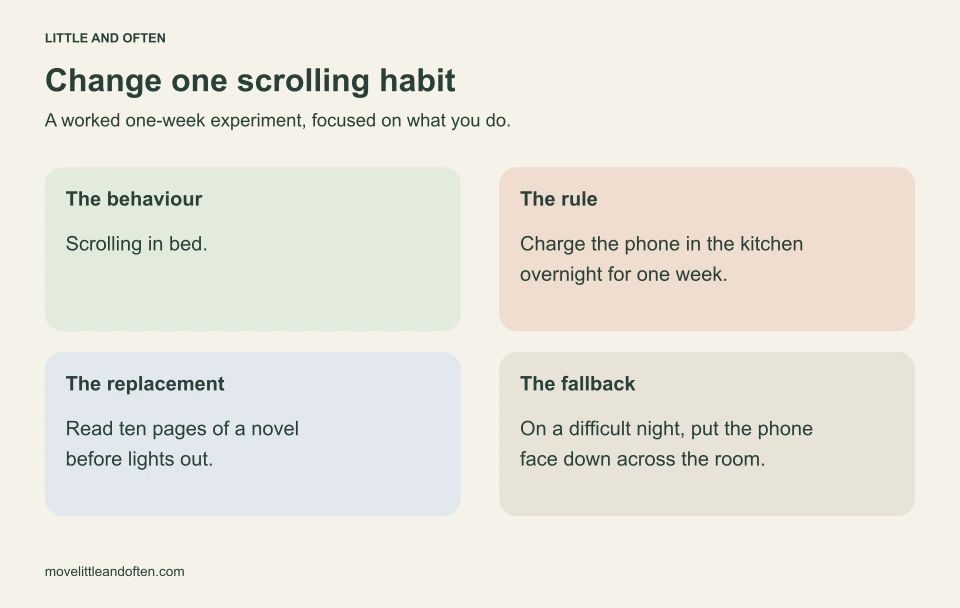
The bad-day version is the part most people skip and the part that keeps the whole thing alive. On a rough night you don't abandon the plan, you run the smaller version of it. And if you do slip, the move is to start again at the next chance instead of writing off the week. Staying with something through the ordinary misses is a skill in itself, and our guide to how to be consistent digs into it.
Keep it gentle, and know its limits
The extreme versions of this trend can do harm. Medical News Today warns that hardline dopamine-fasting, the kind that has people avoiding food, exercise, music and other human beings, can lead to "anxiety, malnutrition, and loneliness." Cutting out a compulsive app is healthy. Cutting out lunch and your friends is not, and it was never part of the original idea.
There's also a line where a self-directed break isn't the right tool. Psychology Today makes the distinction: a fast can help with behavioural habits like too much social media or gaming, but a genuine addiction needs proper support, whether that's cognitive behavioural therapy or medical treatment. If a behaviour is affecting your work, your relationships or your health and you can't step back from it on your own, that's a conversation for your GP, not a weekend project.
And you don't need to demonise your own dopamine to change a habit. What you're building is a slightly different daily pattern, which is the same quiet work behind any change worth keeping. If it's your relationship with the phone you want to shift more broadly, our guide to self-discipline looks at how to arrange your day so the good choice is the easy one.
Somewhere to put the habit you're building
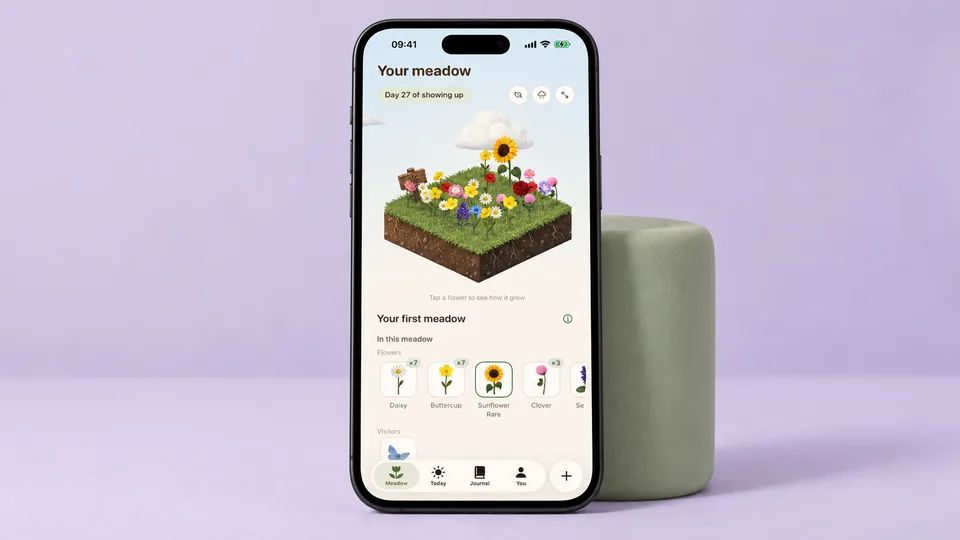
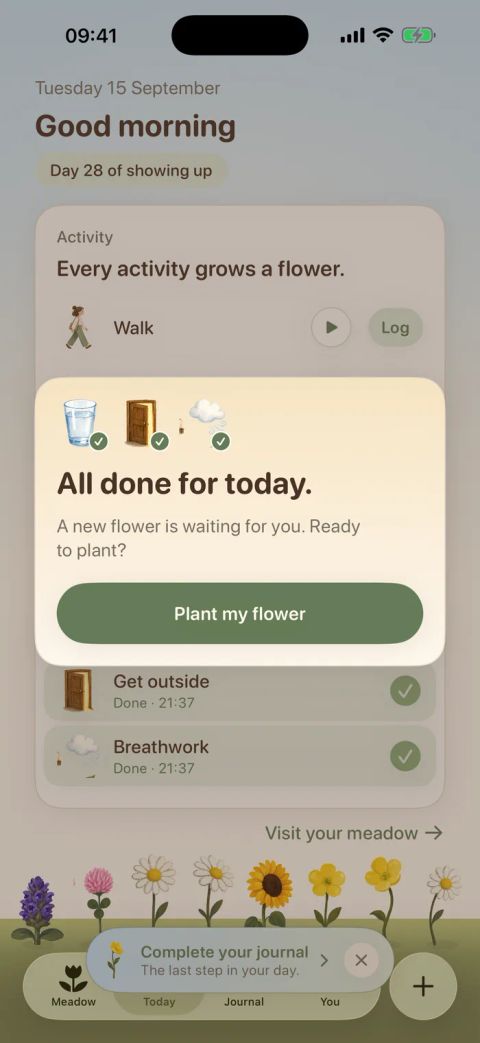
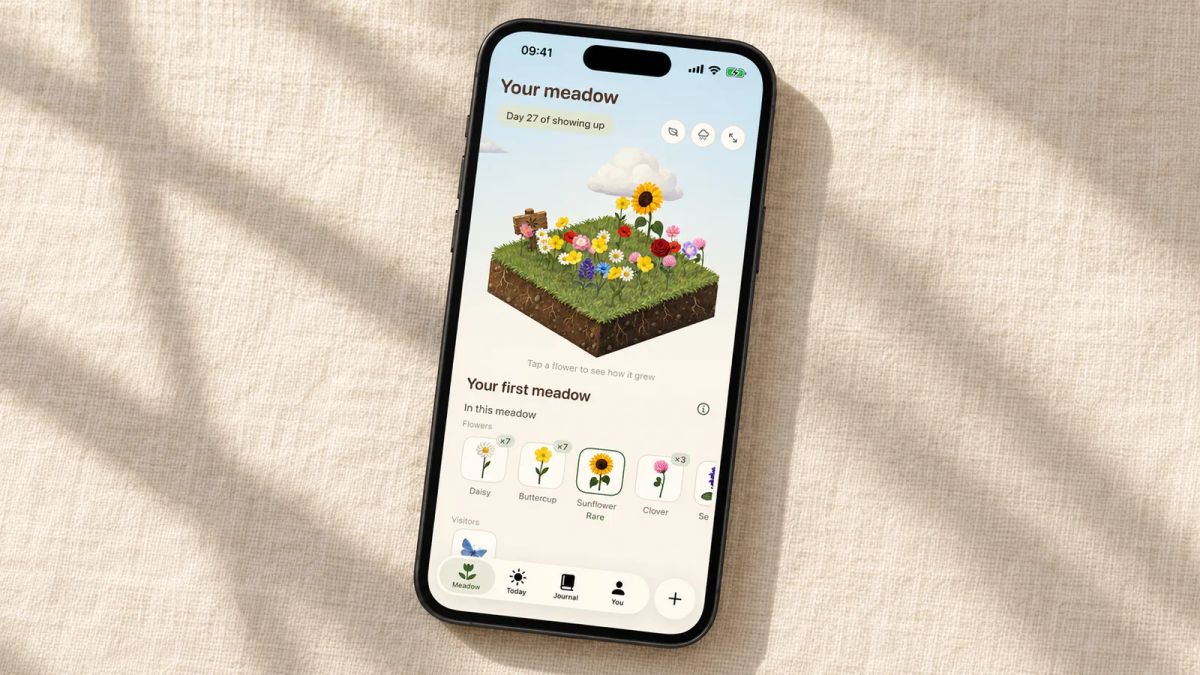
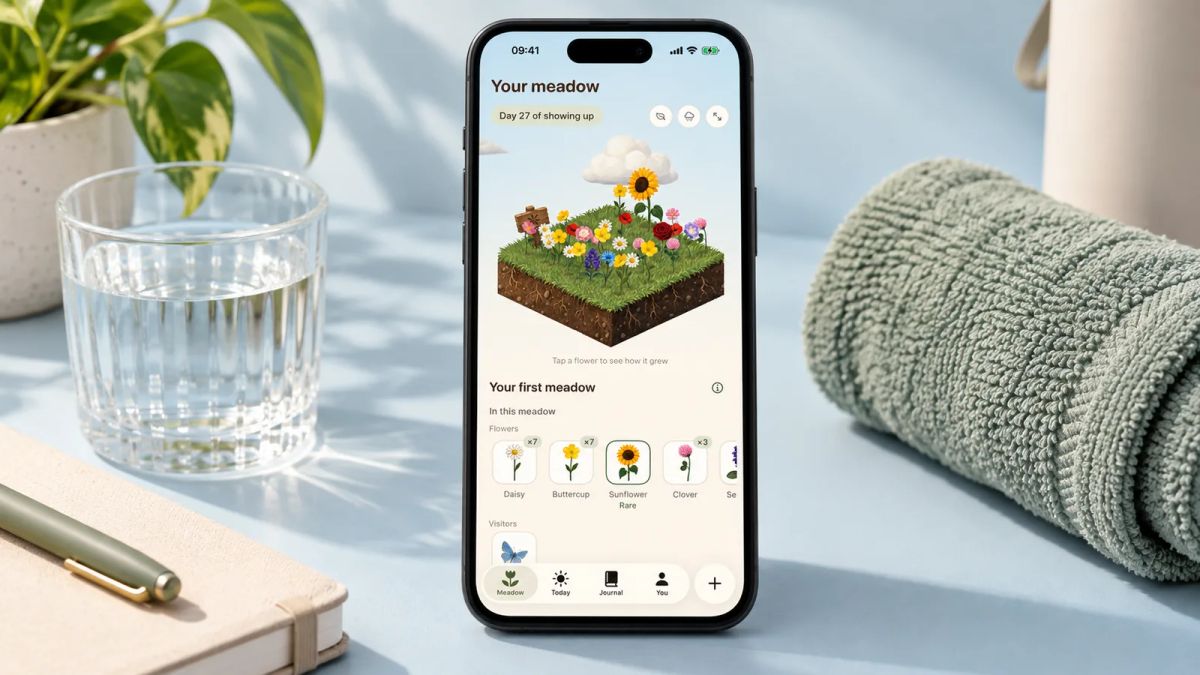
The gap a detox leaves is the tricky bit, and filling it with a small, real action is what makes the change last. That's the thinking behind Meadow, a gentle iPhone app from Wildcard Wellness. Instead of tracking what you're avoiding, you log the thing you're doing instead, a short walk, a few minutes of movement, a moment of breathwork, and each day you show up grows a new wildflower in a meadow that's yours. You can note your mood and energy too, which is a kinder gauge of a break than counting hours offline. There are no streaks, so the evening you cave and scroll resets nothing you've grown, and the practice stays easy to come back to. You can try it at Meadow.
Common questions
Is a dopamine detox backed by science? Not as it's usually described. There's no substantial evidence for "detoxing" dopamine, and the reported benefits are anecdotal. The underlying idea, taking a short break from a compulsive behaviour, is a recognised CBT technique, but the dopamine explanation attached to it is a misunderstanding.
Can you reset your dopamine levels? No. Your brain produces dopamine continuously, and avoiding stimulating activities doesn't lower it or top it back up. You can change a habit, which is what helps. You can't recalibrate a brain chemical by having a quiet weekend.
How long should a dopamine detox last? There's no proven length, so pick something short and specific you can keep. An evening, a Sunday or a week is plenty to break a loop and see what you learn. Marathon fasts with strict rules tend to backfire and aren't more effective.
Will it fix my phone addiction? A break can give real relief and space to think, but on its own it rarely holds. Lasting change comes from a smaller, repeatable adjustment you keep after the detox ends. If a behaviour feels out of your control, speak to your GP.
Pick the one behaviour that has the firmest grip on you, and set a single rule for the next week that a stranger could check. That's the whole method worth keeping, and it's small enough to write down before you close this page.
AUTHOR
Co-founder of Meadow.
Ash is co-founder of Meadow, a habit and movement tracking app that turns small acts of self-care into a growing wildflower meadow.
Every little bit counts
Five minutes counts. So does a dance in the kitchen.
Log the movement you enjoy and the small habits that help you feel good, and watch them bloom into something you can see.
Download Meadow