Standard habit advice runs on a simple loop: choose a behaviour, repeat it every day, and let willpower hold the line until it turns automatic. With ADHD that loop tends to fall apart inside a week, and not because you lack discipline. An ADHD brain engages with what interests it, takes longer to make a routine feel automatic, and has a shaky sense of time passing, so the usual advice leans on the three things your brain supplies least reliably.
What works instead is to stop relying on memory and motivation and build the habit into the world around you: a cue you can't miss, progress you can see, a reason your brain finds worth turning up for, and a plan for the days it doesn't happen. This is a method for building a single habit, general support for building a habit and not treatment for ADHD, with a note near the end on when to talk to a GP. If you're specifically trying to fix mornings, the ADHD morning routine guide is the place to start, and this piece is about the habit-building method underneath it.
Why standard habit advice often fails with ADHD
Most habit guides are written for a brain that will do a thing because it's important. Psychiatrist William Dodson describes the ADHD nervous system differently. In his account people with ADHD "primarily get in the zone by being interested in, or intrigued by, what they are doing," which he calls an interest-based nervous system. A task labelled only important often reads as background noise, so "repeat it every day because it's good for you" has little to push against.
The second problem is automaticity. A habit is meant to fade into the background until you do it without deciding to, and that fading takes longer and holds less firmly when executive function is stretched. CHADD defines executive function as "the brain's ability to prioritize and manage thoughts and actions," the same machinery that starts a task, holds the sequence and keeps half an eye on the clock. When it's running short, a new behaviour needs a scaffold to stay upright.
Then there's time. Ten minutes and forty minutes feel much alike when you're mid-task, so a habit you meant to slot into your evening quietly gets swallowed. None of this is a character flaw. It's a brain that needs the habit set up in a particular way, and the rest of this guide is that setup.
Put the cue where you can't miss it
A habit needs a trigger, and "I'll remember" is the weakest trigger there is. The fix is to move the reminder out of your head and into a place your day already passes through.
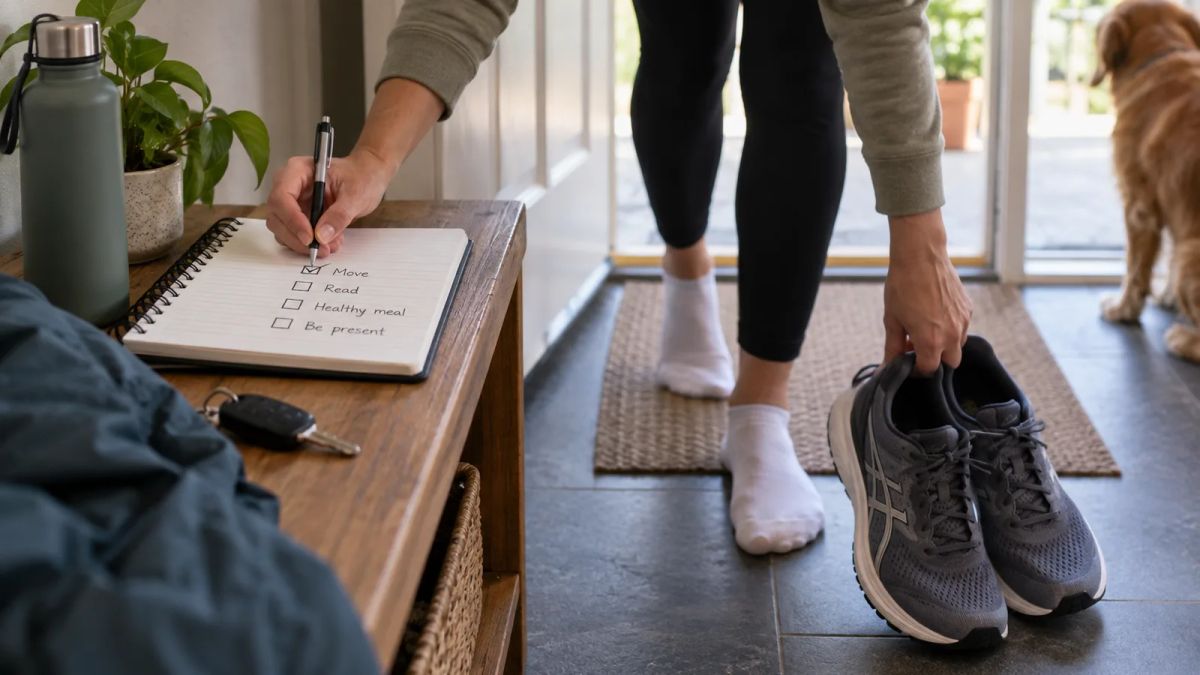
ADDitude puts the general principle plainly: "outsource the work of remembering" with alarms, voice assistants and sticky notes, so the cue doesn't depend on a working memory that's already busy. A water bottle left on your desk is a cue. A resistance band hung on the door handle is a cue. A phone alarm named after the action itself, not the time, is a cue.
Make it visible and specific. "Vitamins by the kettle" beats a vague plan to take vitamins, because the kettle does the reminding every morning whether or not your brain volunteers it.
Track it somewhere you can see it fill up
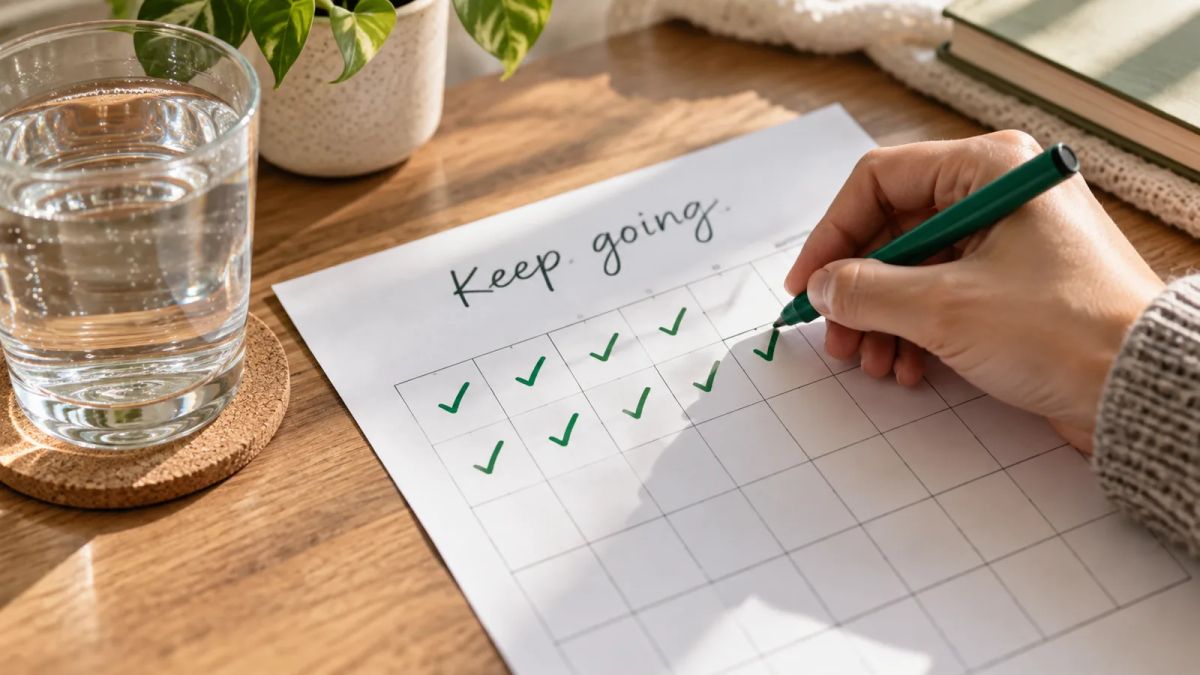
Ticking a habit off does more than record it. A meta-analysis of 138 studies found that monitoring your progress towards a goal makes you more likely to reach it, and the effect was stronger when people recorded it somewhere physical. For an interest-based brain a visible tracker adds something extra: each mark is a small, immediate hit of done, the kind of quick feedback that a distant "it'll pay off in six months" can't give.
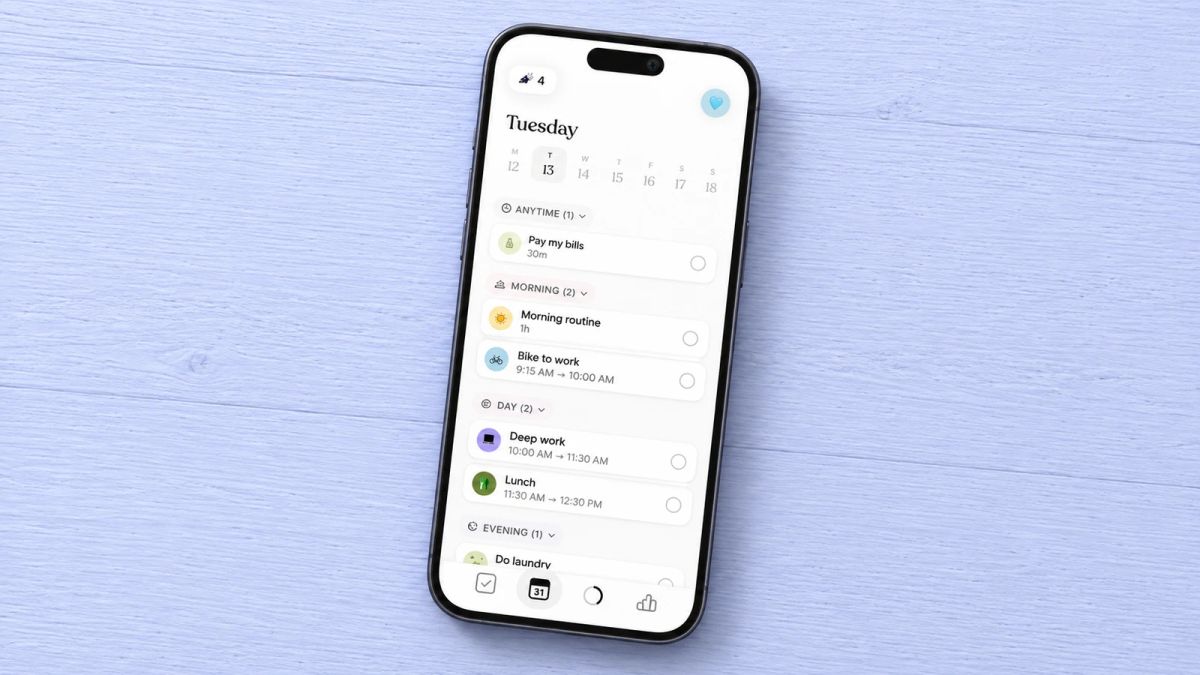
Keep the tracker in your eyeline. A wall calendar you mark with a thick pen, a row of boxes on the fridge, a habit app you open. A habit tracker you never look at tracks nothing, so pick the one that sits where your day already goes.
Borrow someone else's focus to get started
Task initiation is a classic ADHD wall. You know what to do, you want to do it, and the first move still won't come. For that exact problem there's a strategy with a name: body doubling.
Body doubling means doing your task while another person is present, each of you working on your own thing. ADDA describes the other person's job as being to "keep the individual with ADHD focused on the task at hand," partly through a quiet sense of accountability, the feeling that "I can't waste this gift of time." You're not being supervised. You've got company that makes starting easier.
In practice that's a friend on a silent video call while you both crack on, a partner reading in the same room while you stretch, or a co-working stream on a laptop. If nobody's around, a specific playlist or podcast gives you a lighter version of the same nudge.
Give your brain a reason it responds to
Since interest and novelty drive an ADHD nervous system, you can build them in on purpose. Dodson lists novelty as one of the things that switches ADHD attention on, with the honest caveat that "novelty is short-lived." So use it, and expect to refresh it.
Change the surface details when the habit goes stale. A new playlist for your walk, a different route, a fresh colour of pen for the tracker, a small prize when you hit ten ticks. Turn the dull part into a quick game: beat yesterday's tidy-up in five minutes flat, or race the kettle.
Pair the habit with something you enjoy rather than treating it as medicine. ADDitude notes that exercise produces "feel-good hormones" that reinforce your motivation to keep going, and the same logic applies to any reward you can feel now instead of some day. The reward doesn't have to be big. It has to arrive quickly.
Stack the new habit onto one you already have
A brand-new habit has no cue and no home. An existing routine has both, so the fastest way in is to hang the new thing on the old one. The American Heart Association advises attaching a new action to a routine you already have so it rides along on something that runs itself.
The shape is simple. After something you already do without thinking, do the new tiny thing. After I pour my morning coffee, I take my tablet. After I sit down at my desk, I fill my water bottle. The old habit becomes the cue, which spares your brain the job of generating one.
ADDA calls this habit stacking and gives everyday examples like "folding laundry while coffee brews." Pick an anchor that already happens like clockwork, because a stack is only as reliable as the habit at the bottom. The tiny habits method is this idea worked out in full if you want the deeper version.
Shrink the habit until it's almost too small to skip
Open our free printable: My visible habit plan (PDF). Save or print it to use alongside this guide. No sign-up needed.
The most common mistake is starting too big. A brain that struggles to begin will bounce off "go to the gym for an hour", so shrink the habit to the smallest version that still counts.
Put on your trainers. Read one page. Do two minutes of stretching. ADDitude describes swapping an all-or-nothing target for a "lower-friction goal" that proved sustainable over hundreds of days, which is the point of shrinking: a version so small that a bad day can't take it away. You can always do more once you've started, and starting was the hard part.
Here's a builder to fill in for one habit. Keep it where you'll see it.
Habit builder (blank)
The habit, shrunk small:
After I (existing anchor):
Cue I can see:
Quick reward:
Bad-day version:
And the same thing filled in.
Habit builder (example)
The habit, shrunk small: two minutes of stretching
After I: make my morning coffee
Cue I can see: yoga mat left unrolled by the kettle
Quick reward: tick the fridge calendar, then drink the coffee
Bad-day version: one stretch, standing, while the kettle boils
Restart without making it a punishment
You will miss days. A flat week, a chaotic patch, a stretch where the habit doesn't happen at all. Most advice treats a slip as a failure to atone for, which for an ADHD brain usually ends the whole project.
The habit research is kinder than that. A well-known study found that a single missed day "had little impact on later automaticity gains," and that the time to feel automatic ran from 18 days to a predicted 254, with a median of 66. There's no clean number to hit and no streak worth protecting. Miss a day, drop to the bad-day version, and pick the habit back up in its usual spot with no attempt to make up the gap. Being able to restart easily is the skill, and staying consistent over months comes from forgiving restarts, not flawless weeks.
See the habit grow without a streak to break

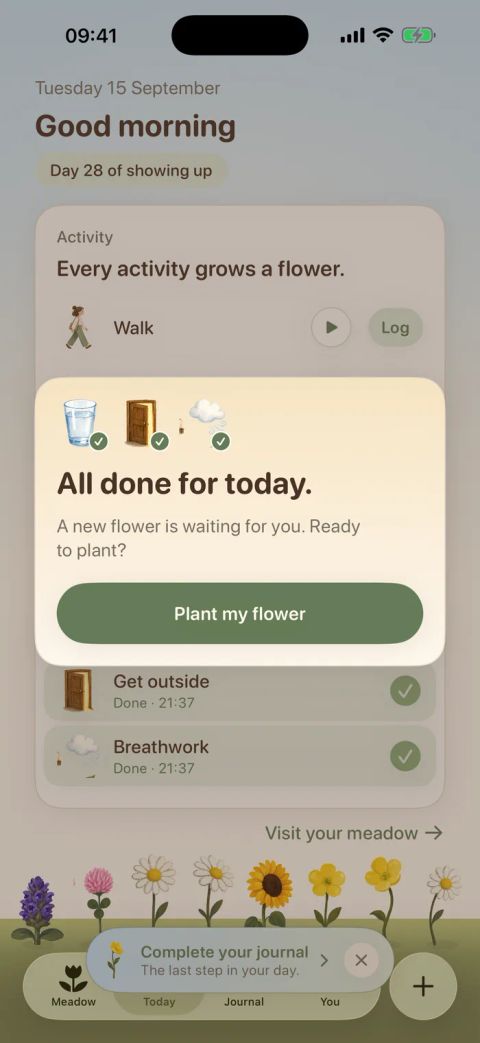
Meadow is built for the way this tends to go, some days on and some days off. It's a gentle habit app for iPhone from Wildcard Wellness where you tick off a small daily habit, log any movement you manage, and note your mood and energy. Each day you show up grows a wildflower in your own meadow, with rare flowers and little animal visitors turning up as it fills in, so your progress is visible in a way that gives an interest-based brain something to come back for. There are no streaks, so a missed day resets nothing you've grown and you carry on whenever you're ready.
A note on getting support
Building a habit is a coping tool, not a treatment for ADHD. If your symptoms are wearing you down at work, in your studies or in your relationships, that deserves proper support from a professional. The NHS advises that "if your ADHD symptoms are affecting your studies, work or relationships, make an appointment with a GP" to find out what help is available. If you've never been assessed and this pattern has followed you your whole life, that same appointment is a good place to start.
Common questions
How long does it take to build a habit with ADHD? Longer than the myths suggest, and it varies a lot from person to person. Habit research found a median of about 66 days with a wide range, so treat the early weeks as practice, not a test you can fail.
Why can't I stick to habits, even ones I want? An ADHD brain engages with interest and novelty more than with importance, so a habit that's only "good for you" gives it little to hold. Build in a cue you can see, a quick reward and a bit of novelty, and the habit has something to run on.
Is it better to use an app or paper? Whichever you'll look at. A wall calendar by the door works, and so does an app you open daily. The best tracker is the one that lands in your eyeline when the cue fires.
What do I do when I lose interest halfway? Refresh the novelty instead of forcing the same stale version. Change the route, the playlist, the pen, or the small reward, and treat the dip as a signal to tweak, not to quit.
Should I build several habits at once? Start with one. Stacking a single tiny habit onto an existing routine gives your executive function far less to manage, and you can add the next one once the first runs on its own.
Pick one habit, shrink it to its two-minute version, and write it into the builder above with an anchor you already do every day. That single line, stuck where you'll see it tomorrow, is the whole method in miniature.
AUTHOR
Co-founder of Meadow.
Ash is co-founder of Meadow, a habit and movement tracking app that turns small acts of self-care into a growing wildflower meadow.
Every little bit counts
Five minutes counts. So does a dance in the kitchen.
Log the movement you enjoy and the small habits that help you feel good, and watch them bloom into something you can see.
Download Meadow