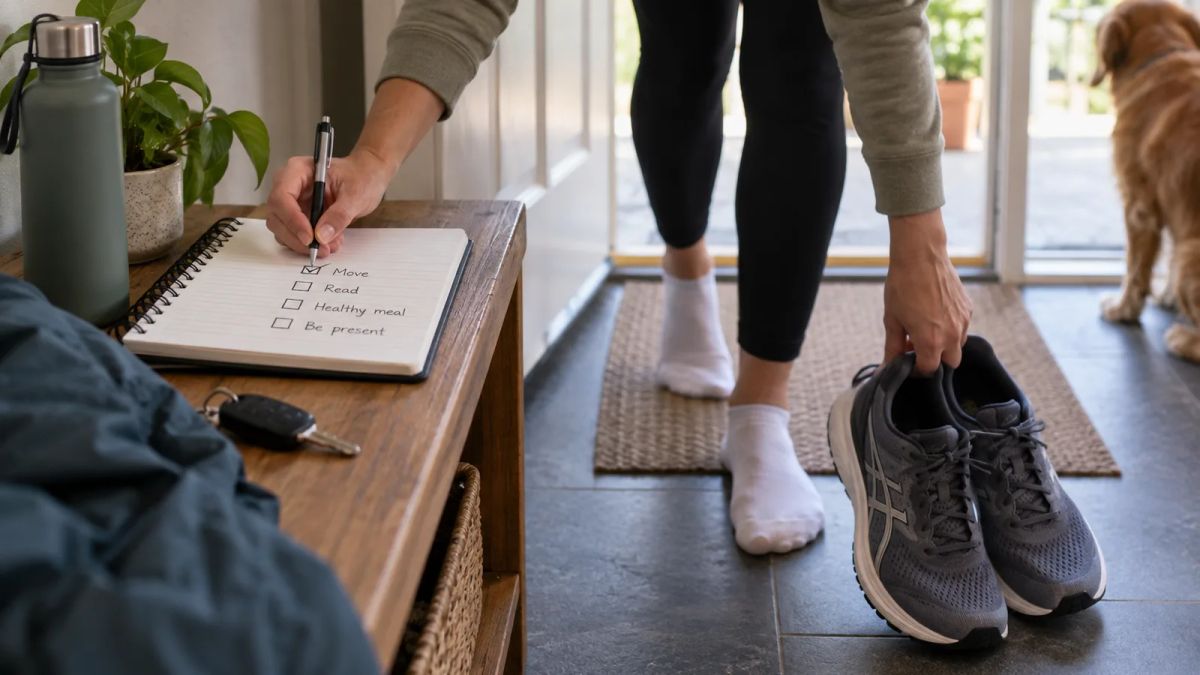
To build a daily habit that sticks, pick one small action, tie it to something you already do every day, and repeat it in that same spot until it runs on its own. Doing it daily helps more than doing it big. A habit you do every day gets a fixed home in your routine, while one you do "a few times a week" has to be renegotiated each morning.
Most habits fall apart because the plan was built for good days. Willpower is rarely the problem. This guide covers the parts of a daily habit and how they fit together, why daily is the easier setting to keep, how to choose and shrink the action, a fill-in plan you can complete in a minute, how to track it without a fragile streak, and what to do on the days you miss.
The anatomy of a daily habit
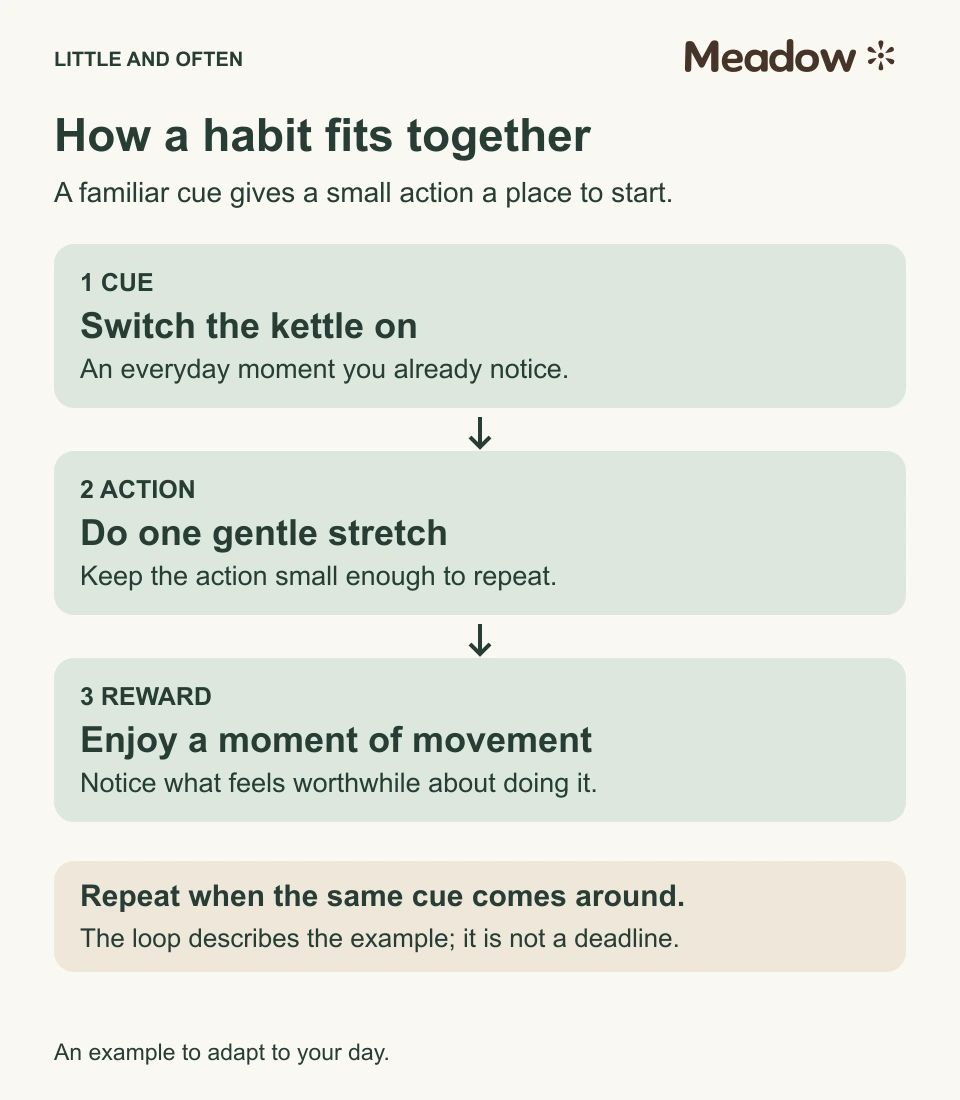
Every habit runs on a small loop: a cue, the action itself, and a reward. Learn to see those three parts and you can build one on purpose.
The cue is the trigger that tells your brain the action is due. The steadiest cue is a routine you already run without thinking, like filling the kettle or sitting down at your desk. Gardner and colleagues, in a review of how health habits form, put it plainly: repeat a chosen behaviour in the same context until it becomes automatic, and a cue inside an existing daily routine gives that behaviour a stable place to live.
The routine is the action you take. Early on this is a decision you make each time. With enough repetition in the same context, the cue starts to pull the action out of you on its own, which is what people mean when a habit feels like second nature.
The reward is what makes the loop worth running again. It can be the feeling of a job done, a tick on a chart, or the small lift of a walk in fresh air. James Clear breaks the middle of the loop down further, into a four-step version of cue, craving, response and reward, where the reward closes the loop and teaches your brain to notice the cue next time.
Miss any part and the habit wobbles. With no cue the action drifts to a "later" that never arrives. With no reward there is nothing telling your brain the loop was worth it.
Why daily is easier than every few days
It sounds backwards, but a habit you do every single day is usually easier to keep than one you do three times a week. A daily action removes a decision. There is no "is today a walk day?" to lose, no working out whether you went yesterday. The cue turns up, you act, and the question never gets asked.
Daily repetition also gives the loop more chances to bed in. In the study most often quoted on habit formation, Phillippa Lally's team had volunteers repeat a daily action and rate how automatic it felt over about twelve weeks, as covered by the British Psychological Society. Actions repeated more consistently climbed towards automatic sooner. A behaviour you perform once every few days gets fewer of those reps across the same stretch of calendar.
There is a fair worry that "every day" sounds like more work. It's more days, but each day asks less, because the action never has to overcome the friction of a fresh start. The version you do daily should be small enough that daily is no burden, which is the next piece.
Daily does not mean identical. A daily walk can be five minutes in the rain or half an hour in the sun. What stays fixed is the showing up.
Choose one habit, then make it small
Pick one habit to start. One is easier to remember, easier to fit around a shift pattern or caring for someone, and easier to forgive when a day goes sideways. A list of five new things asks for five new decisions every morning, and a full day has no room for that.
Then shrink it. A reliable way to keep a daily action is to make it so small that a bad day cannot knock it out. BJ Fogg, who studies behaviour design at Stanford, sums up behaviour as B=MAP: a behaviour happens when motivation, ability and a prompt arrive together. Motivation is the part you cannot count on, because it runs high when you are fresh and low when you are tired. So lean on ability instead. Make the action easy enough that you can manage it on your flattest evening.
The test is honest and quick to apply. Could you do this on your worst day of the month, tired and short of time? If not, it is still too big. Not "go for a run" but "put my trainers on and step outside". Not "twenty minutes of yoga" but "one stretch on the mat". On days with more in the tank the action grows by itself, so keep the official target tiny and let any extra be a bonus. Our guide to tiny habits goes deeper on the method.
Be specific about the cue while you are at it. James Clear's habit stacking formula is "After [current habit], I will [new habit]", and he warns that vague triggers fail. "After I brush my teeth" beats "sometime in the morning", because a vague habit has no moment to live in.
Your fill-in daily habit plan
Here is a plan you can complete in under a minute. Fill in the blanks and you turn a vague intention into a working daily habit.
My habit (small version): ________
My cue (something I already do daily): After I ________
My reward (what closes the loop): ________
My worst-day version: ________
And here is the same plan filled in, so you can see the shape of a good one.
My habit (small version): Drink one glass of water
My cue (something I already do daily): After I brush my teeth in the morning
My reward (what closes the loop): Tick it off and take a slow breath
My worst-day version: Two sips straight from the tap
Keep the card where the cue happens. A note by the kettle, a glass left by the toothbrush, trainers by the door. The environment can carry half the reminder for you.
Track it without the streak trap
Tracking helps, and there is good evidence behind it. A meta-analysis by Harkin and colleagues pooled 138 studies with almost 20,000 people and found that monitoring your progress towards a goal makes reaching it more likely, with a stronger effect when you write progress down instead of keeping it in your head. Writing it down is part of what makes it work.
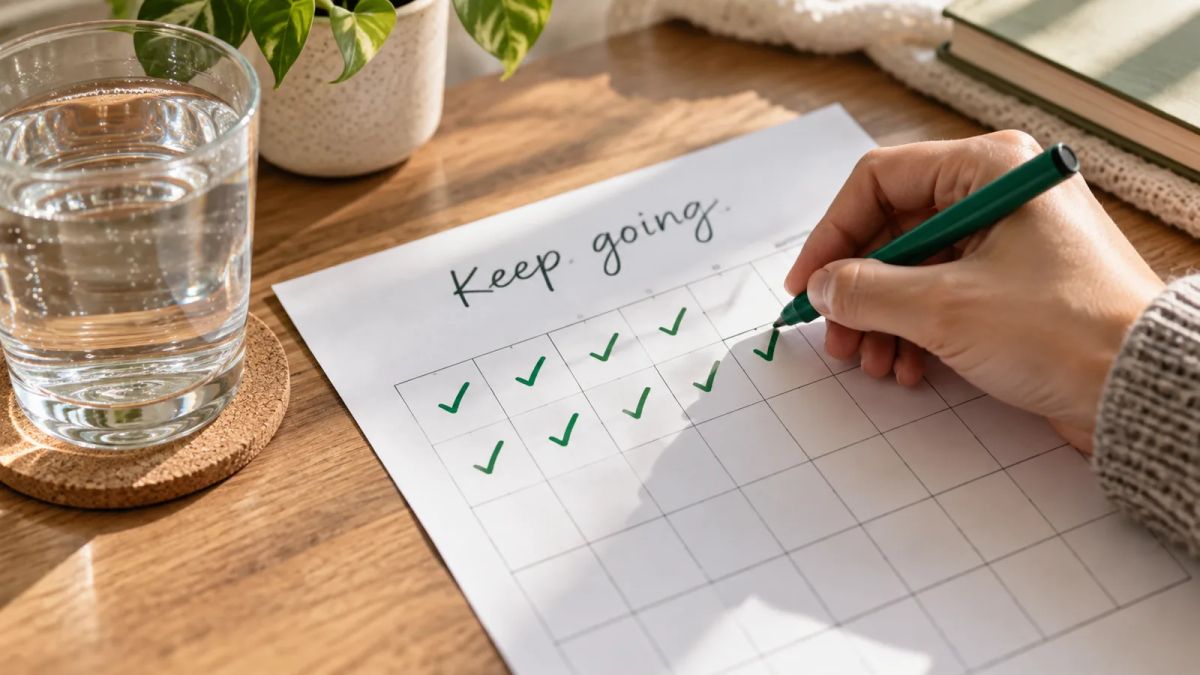
The plainest method needs a calendar. James Clear describes getting a wall calendar and crossing off each day you do the habit, so the growing line of crosses becomes its own small reward. Seeing the chain build is motivating, and it turns an invisible effort into something you can look at.
There is a catch worth naming. A long streak can start to feel fragile, and the day you break it the whole thing can feel ruined, which is a fast route to quitting. A tracker should show you the shape of your month, not hold a grudge. Aim for "most days", not a flawless run. Treat a gap as information. If you want a fuller comparison of methods, we have a guide to using a habit tracker.
Watch the habit take root
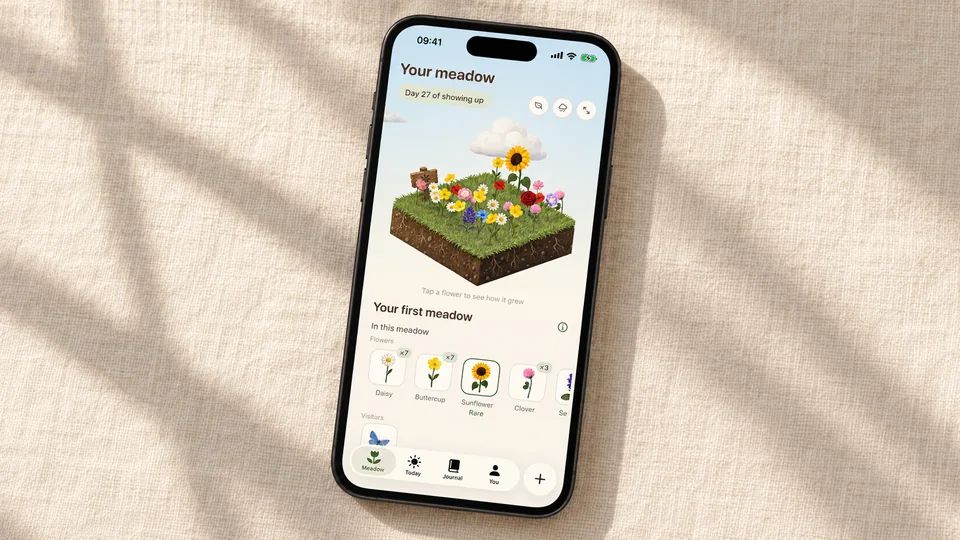
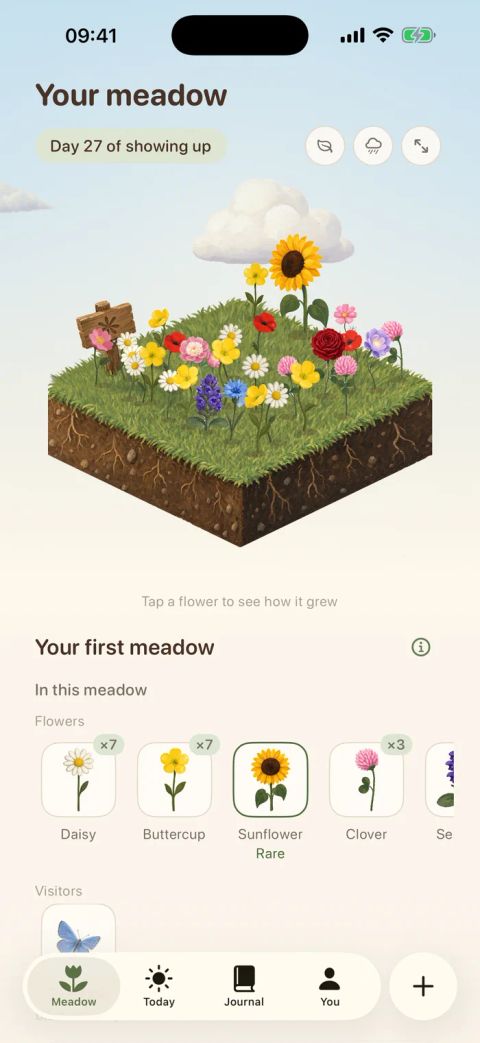
If a broken streak is usually the thing that ends a habit for you, Meadow is worth a look, because it shows your progress as a garden rather than a number to protect. It is a gentle movement and habit app for iPhone. You tick off small daily habits, log movement you enjoy with a timer, and note your mood, energy and one good thing, and every day you show up grows a wildflower, with rarer blooms and little animal visitors arriving over time. There are no streaks, so a missed day resets nothing and your flowers never wilt.
When you miss a day
You will miss days. Everyone does, and the research says one miss is not the problem it feels like. In Lally's study, a single missed day had little impact on how automatic the habit became, whether it happened early or late in the process. One gap does not undo the weeks around it.
What damages a habit is a miss turning into a stop. James Clear's rule is worth keeping in mind: never miss twice. Missing once is an accident. Missing twice is the start of a new pattern, so the aim is not a flawless record but a quick return. Do the worst-day version the moment you notice, even if it is late and tiny, and the thread stays intact.
Be careful with the story you tell yourself on a miss. "I always give up" is a heavier weight than the missed walk. The next day's cue is a clean slate, and taking it is the whole skill.
Frequently asked questions
How long before a daily habit feels automatic?
There is no fixed number, and anyone promising one is guessing. In Lally's research the average was around 66 days, but individuals ranged from about 18 days to well over 200, depending on the person and the action. A light habit like a glass of water beds in sooner than a demanding one. We cover the timeline in full in how long it takes to build a habit.
Is it better to do a habit at a set time or after a cue?
Tying it to an existing action tends to hold up better than a clock time. Your day can shift by an hour, but the moment after you brush your teeth or switch the kettle on arrives whatever the schedule does. A cue you already keep does the remembering for you.
How many habits can I build at once?
Start with one. There is no hard scientific limit, but each new habit competes for the same attention and the same tired evenings, and one habit you keep beats three half-kept ones. Add the next once the first runs without effort. Our guide to healthy habits has a menu to choose from.
Do I need an app to build a habit?
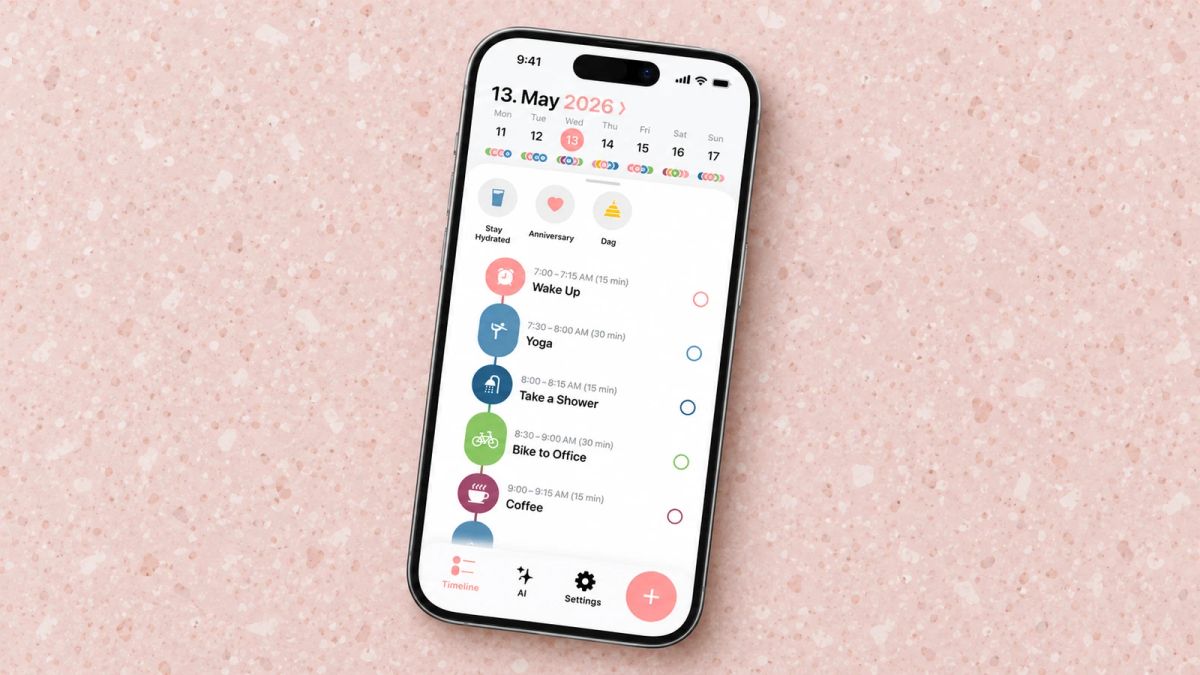
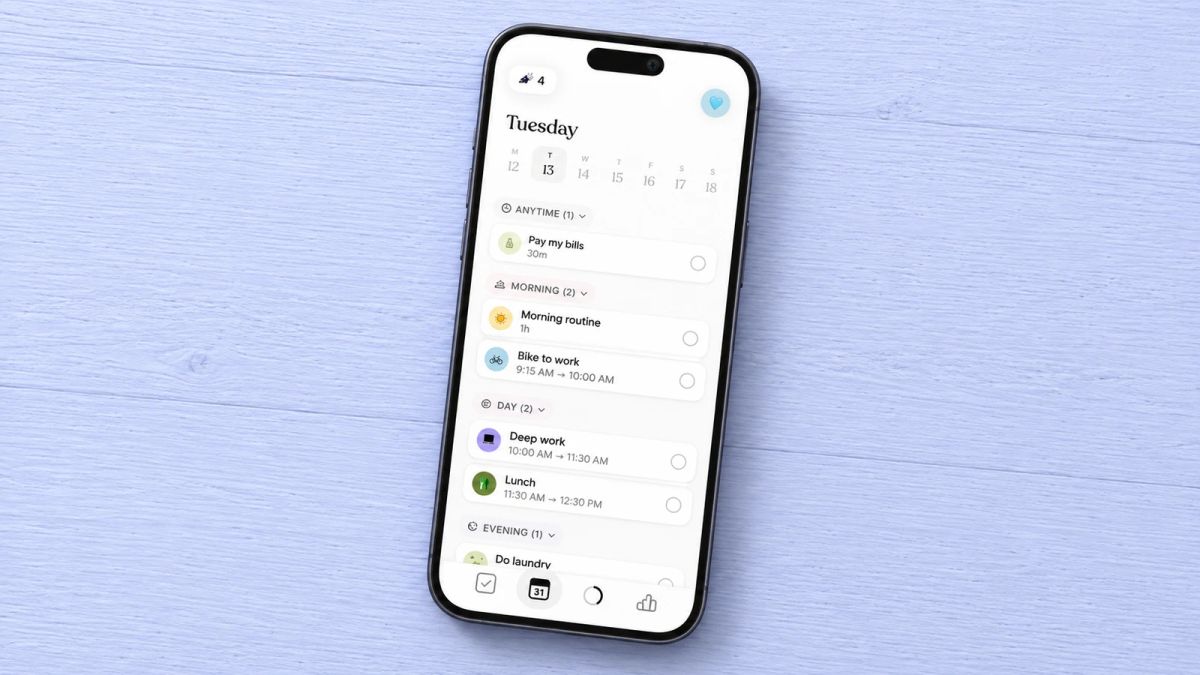
No. A wall calendar and a pen do the core job, which is recording the action so you can see your progress. An app helps if it lowers friction or removes the streak pressure that makes you quit. The method does the work. The app only carries it.
One thing to do today
Pick a single small action and write one sentence: "After I ________, I will ________." Put it where the cue happens, do it once today, and let tomorrow's cue take care of tomorrow.
AUTHOR
Co-founder of Meadow.
Ash is co-founder of Meadow, a habit and movement tracking app that turns small acts of self-care into a growing wildflower meadow.
Little and often, with Meadow
Consistency, not intensity.
Meadow turns the movement you enjoy and the habits that help you feel good into a meadow of wildflowers. No streaks to break, and your flowers never wilt.
Download Meadow