Micro-habits are habits shrunk so small they take under a minute: one glass of water, a single squat, three slow breaths at your desk. The size is the whole point. A task this small slips past the rushed mornings and flat evenings that sink bigger plans, and doing it over and over is what turns a one-off into something automatic.
Most advice tells you to think bigger. This does the opposite. You pick the smallest honest version of a change you want, you tie it to something you already do, and you let it grow only once turning up feels normal. If that sounds close to the tiny habits method, it's a cousin of it. Micro-habits are the far end of the same idea, the under-a-minute floor you drop to when a habit keeps slipping.
What counts as a micro-habit
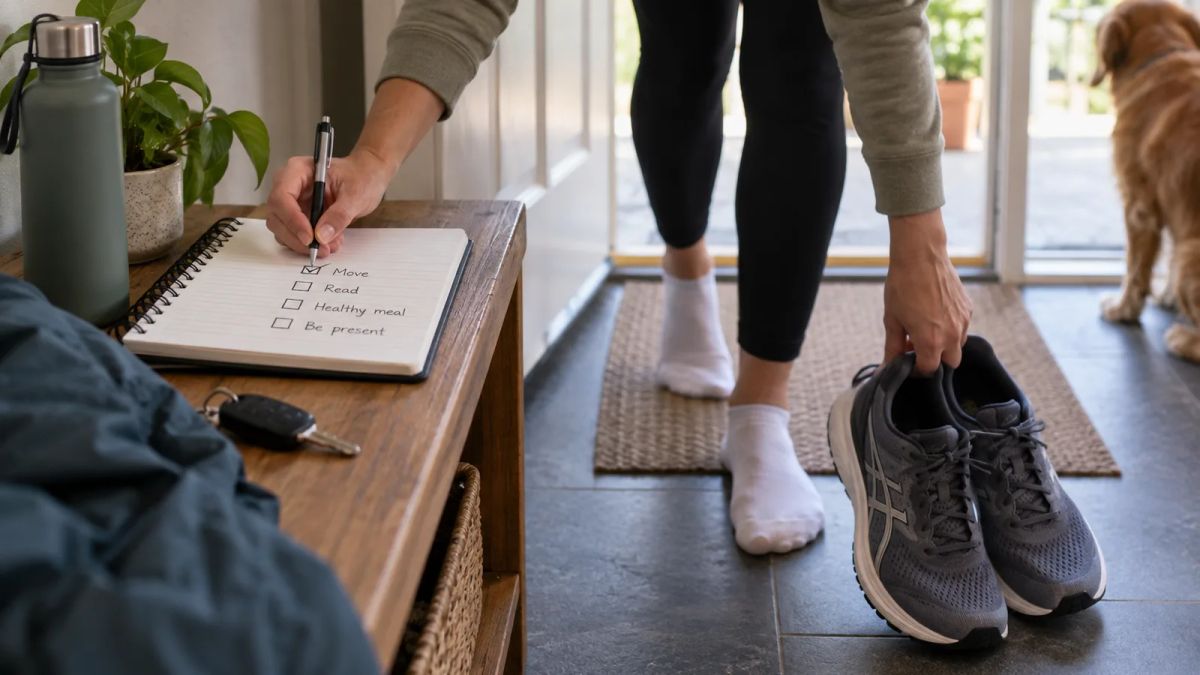
A micro-habit is any new behaviour cut down until it takes less than sixty seconds and asks almost nothing of you. Read one page. Do one press-up. Put your walking shoes by the door. Write a single line in a notebook.
The tiny habits method from Stanford behaviour scientist BJ Fogg runs on the same principle, and it's the fuller system: an anchor, a small action, and a small celebration straight after. Our guide to tiny habits walks through that recipe in full. Micro-habits are what you reach for when even a tiny habit feels like too much, or when you want a starting point so small there's no honest excuse to skip it. Think of it as the bottom setting on the same dial.
The bit people trip over is the target. The one-minute version is the habit itself. Anything you do beyond it on a good day is a bonus you never have to repeat, and it never becomes the new bar you have to clear tomorrow.
Why they beat big resolutions
A big resolution needs two things you can't count on: a clear stretch of free time and the drive to fill it. January is full of them, and most are gone by February. The problem isn't weak character. It's that the plan was built for your best day, and your best day isn't most days.
Fogg sums up behaviour with a short equation, B=MAP: a behaviour happens when motivation, ability and a prompt land at the same moment. Motivation is the part that betrays you. It runs high when you're fresh and inspired and drains away when you're tired, which is most evenings. His design insight is that making an action easier is a steadier route to a habit than trying to pump up motivation, because simplicity holds when enthusiasm does not. A micro-habit takes that to its limit. When the action fits inside a minute, ability stays high even on a rough day, so you need almost no push to get it done.
There's a fair objection. One glass of water or a single squat looks far too small to change anything. It's meant to look that way. You're not trying to get fit or hydrated in one go. You're making the start so light that it stops being a decision you have to win.
Micro-habits worth stealing
The best micro-habit is one you can pin to a moment that already happens every day. Here's a menu across a few areas of life. Pick one, not ten.
Movement: one squat while the kettle boils · a single flight of stairs · lace up your walking shoes and step outside
Hydration and food: a glass of water before your morning coffee · one piece of fruit with lunch
Mind and calm: three slow breaths before you open your laptop · one line in a journal · name one good thing from the day
Home and order: make the bed the moment you're up · clear one surface before bed
Connection: send one message to someone you've been meaning to text
On hydration, the NHS suggests six to eight cups or glasses of fluid a day, and tea and coffee count towards it. A single glass tied to your first coffee is a sane place to start, and it tends to pull the rest along with it.
To turn a menu item into a plan, finish this one line:
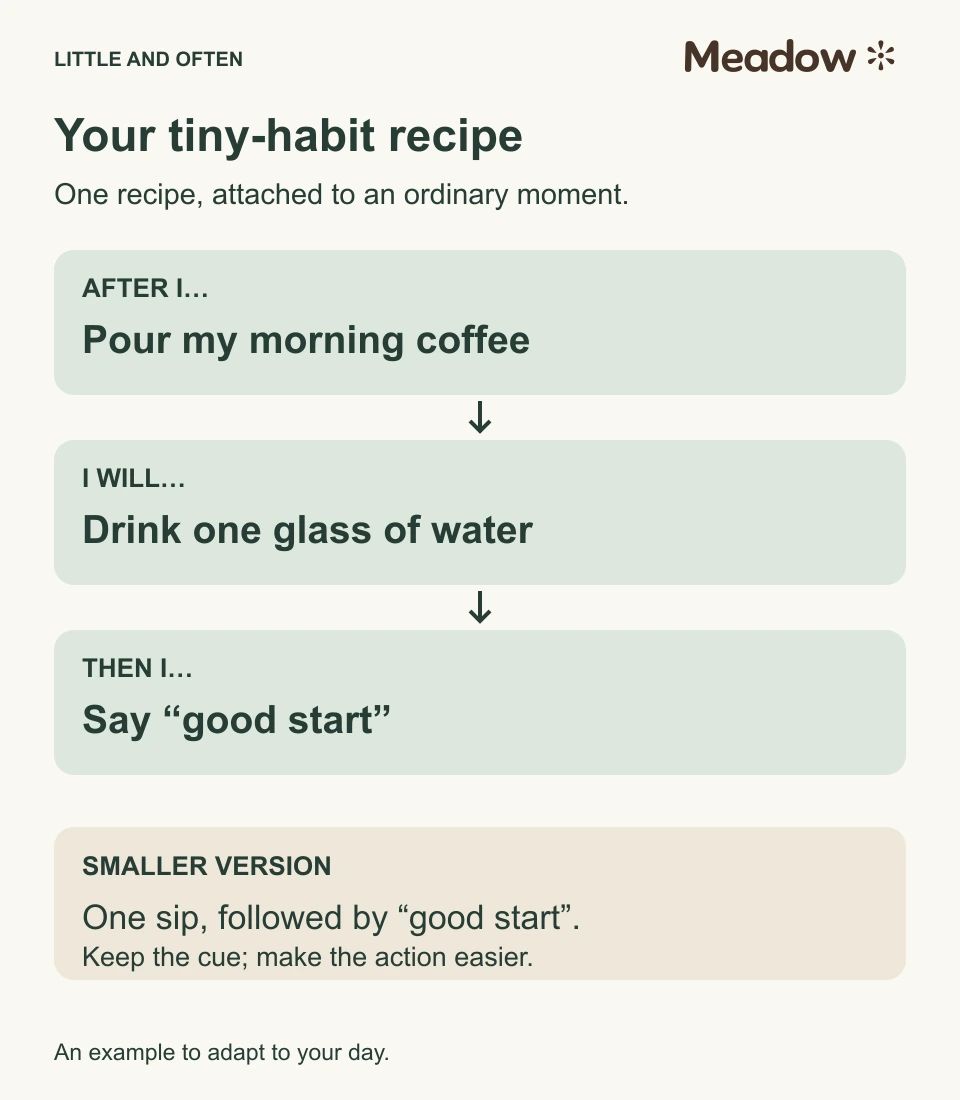
After I ________, I will ________.
The first blank is a fixed event you already do without thinking, like the kettle going on or brushing your teeth. The second is your micro-habit. James Clear calls this habit stacking, and he's firm on one thing: be specific. "After I close my laptop for lunch" beats "sometime in the afternoon", because a vague cue has no moment to live in and drifts to a later that never comes. A filled example:
After I pour my morning coffee, I will drink one glass of water.
How to grow a micro-habit
Open our free printable: Small Habit Planner (PDF). Save or print it to use alongside this guide. No sign-up needed.
The one-minute version is the floor, not the ceiling. On days when you have more in you, the action stretches on its own. One squat becomes five. One page becomes a chapter. The step outside becomes a lap of the block, then a loop of the park. You're allowing that growth, not chasing it, and it tends to show up once the starting takes no effort.
James Clear calls the small version a two-minute gateway and puts the skill plainly: master showing up first, because you can't improve a habit that doesn't exist yet. Standardise before you optimise.
Here's the trap. The moment you decide success now means the twenty-minute session, you've rebuilt the wall you knocked down, and the first hard day sends you back to nothing. Keep the official target at one minute and treat everything above it as extra. A rushed day still ends with the box ticked, and the habit lives to the next one.
Scale down when you stall
Most habit advice, the moment a habit slips, tells you to try harder. Micro-habits tell you to go smaller.
If you keep missing a two-minute stretch routine, the honest size is smaller than two minutes. Drop it to one stretch. If you're still skipping that, drop it to sitting on the mat for ten seconds. Going smaller protects the thread of showing up, which is the thing you can rebuild from. A habit you do badly and small still exists. A habit you've walked away from doesn't.
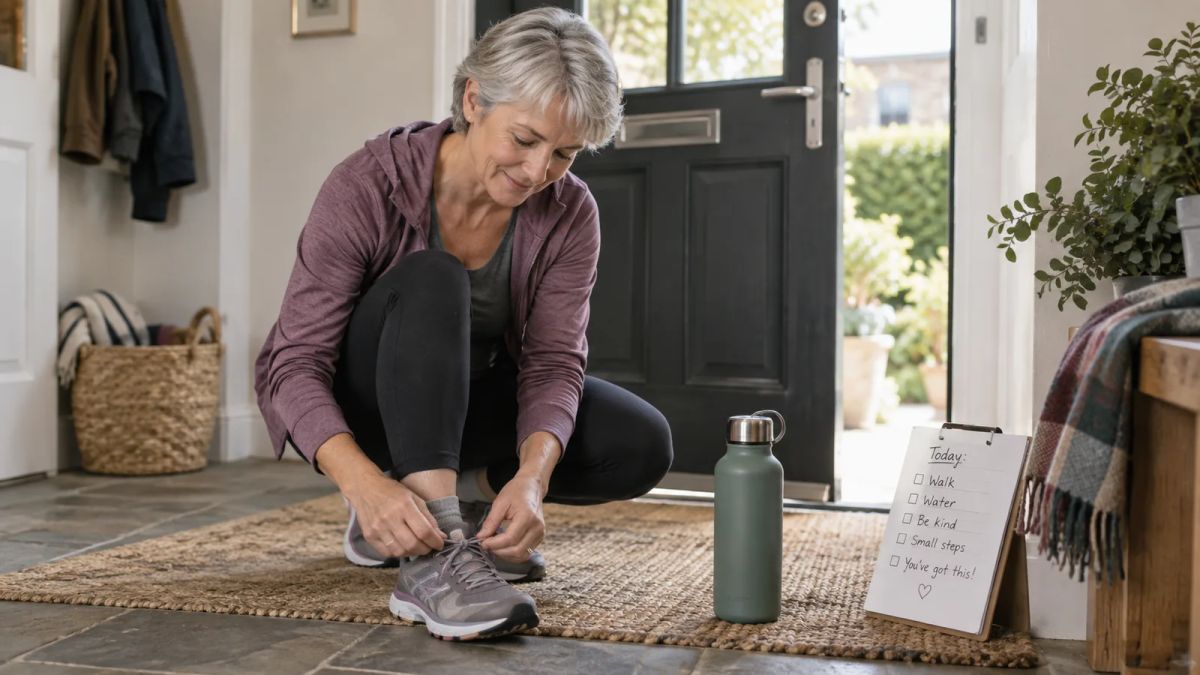
Decide the shrunk version now, while you're thinking clearly, so a bad day has a plan instead of a blank. If your habit is a short walk, the scaled-down version might be opening the front door and breathing the cold air for ten seconds. It sounds almost silly, and that's why it works. It keeps the habit alive when the alternative is dropping it altogether.
Scaling down is also why micro-habits sit well under the ones that ripple outward. A keystone habit is a small routine that pulls other good behaviour along behind it, and a keystone is far easier to hold when its floor is set at one honest minute.
What to do when you miss a day
Missing a day is not the failure it feels like. In one real-world study of how habits form, a single missed day had little effect on how automatic the behaviour eventually became. One gap doesn't undo the weeks behind it. What does the damage is the story afterwards, the "I've blown it now" that turns one skipped day into a fortnight of nothing. Keep your earlier marks, let the gap go, and do the next rep at the very next chance.
How long until it feels automatic
No one can give you an honest fixed number, and anyone quoting "21 days" is repeating a myth with no habit research behind it.
The often-cited study by Lally and colleagues found people took a median of 66 days to reach their peak of automaticity, but the times ran from 18 days to a predicted 254. A plain action like drinking a glass of water settled in far sooner than a demanding one, and about half the group hadn't hit a habit-level score by the time the study ended.
A 2024 review that pooled 20 studies and 2,601 people found much the same spread: a median around 59 to 66 days, and an individual range from 4 to 335. The same review noted that habits people enjoyed, chose for themselves, and practised in the morning tended to take hold more strongly, though those are patterns across groups, not promises for any one person.
So there's no deadline you're falling behind on. Judge yourself on whether you're still turning up, not on whether it has clicked yet. If the timeline is the thing nagging at you, we go deeper in how long it takes to build a habit.
Keep a record where you'll see it
A micro-habit and a small daily mark go well together. The mark gives you a hit of "done", and over the weeks it shows you the pattern you've been building. A meta-analysis of 138 studies found that prompting people to monitor their progress towards a goal improved how often they reached it, so a tick is a real help and not busywork.
Use whatever you'll look at again: a mark on the wall calendar by the kettle, a line in a notebook, a note on your phone. The best format is the one that sits where the action happens.
See the small days stack up
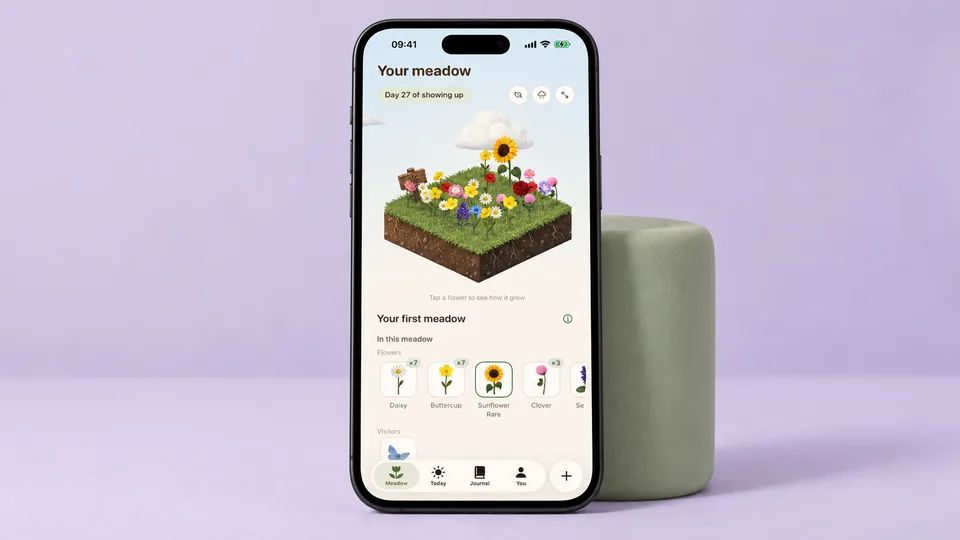
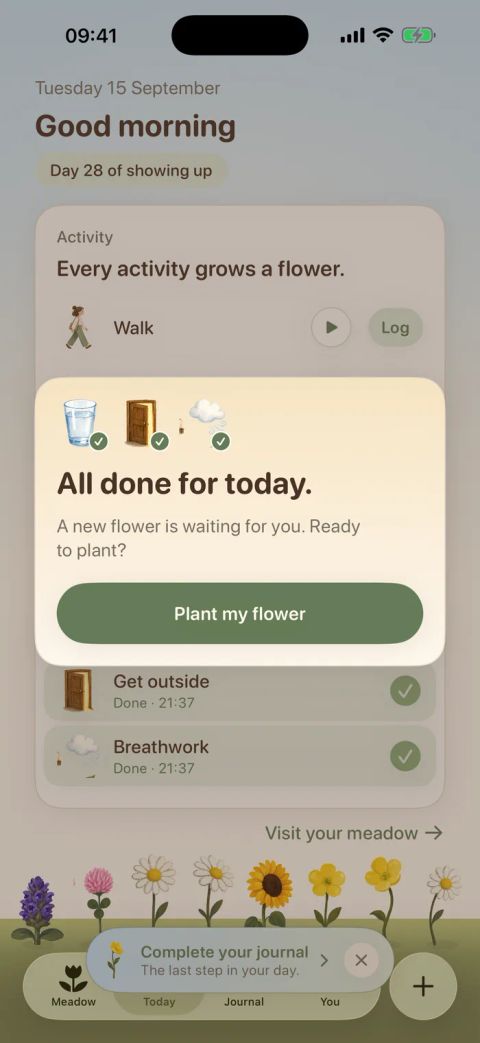
Some days you do the micro-habit and some days it's all you manage, and Meadow is built for exactly that. It's a gentle iPhone app from Wildcard Wellness where you tick off a small daily habit, log a little movement like a walk or some yoga, and note your mood and a daily win. Every day you show up grows a wildflower, so an action you can barely feel yourself doing slowly becomes something you can see. There are no streaks, so a missed day resets nothing and your flowers never wilt.
A few common questions
What's the difference between a micro-habit and a tiny habit? Not much, and the terms overlap. Tiny habits, as Fogg teaches them, come with a full recipe of anchor, action and celebration. Micro-habit is the word people use for the smallest end of that, the under-a-minute version you drop to when you want a floor low enough that skipping it feels absurd.
How many should I start with? One. Get it running by itself, then add a second. Setting up five at once splits your attention and usually ends with none of them holding.
How do I know my micro-habit is small enough? Ask whether you could do it on your worst day of the month, the one with a migraine or a broken night's sleep behind it. If the answer is no, shrink it until the answer is yes.
Do micro-habits add up? The single action doesn't do much on its own, and it isn't meant to. The point is the repetition. A glass of water every morning for a year is 365 glasses you'd otherwise have skipped, and the habit of turning up carries over to the bigger things you've been putting off.
Right now, finish one sentence: after an everyday moment you already have, one action that takes under a minute. Something like "after my morning coffee, one glass of water." Write it where you'll see it in the morning, and you've started.
AUTHOR
Co-founder of Meadow.
Ash is co-founder of Meadow, a habit and movement tracking app that turns small acts of self-care into a growing wildflower meadow.
Every little bit counts
Five minutes counts. So does a dance in the kitchen.
Log the movement you enjoy and the small habits that help you feel good, and watch them bloom into something you can see.
Download Meadow