Sitting burns roughly 70 to 140 calories an hour for most adults, so a full eight-hour day in a chair accounts for somewhere around 550 to 1,100 calories. That range sounds generous, and it is, because almost all of it is energy your body would spend anyway to keep you alive.
Body size is the biggest reason two people sitting side by side burn different amounts. A larger person burns more doing the exact same nothing, and no calculator can hand you a precise figure for your own day.
So treat every number here as an honest estimate, not a readout. Below is what a sitting day burns, a quick way to work out your own from your resting metabolism, and the part that changes the total far more than the chair does.
What a day of sitting burns
The clearest single figure comes from MedlinePlus, which puts a 170-pound (about 77kg) person at around 139 calories an hour sitting, 186 standing, and 324 walking at a moderate pace. Harvard Health, using lighter and heavier bodies, lands lower for quiet sitting, at roughly 70 to 95 calories an hour for people from about nine to thirteen stone.
Put those side by side and sitting works out at somewhere near 70 to 140 calories an hour for most adults. The spread is mostly down to weight.
Those are gross figures. They already fold in the energy of staying alive, so you can't add them on top of your resting burn.
And you don't sit for twenty-four hours. A working day of eight hours in the chair is the block most people picture, which is where the 550 to 1,100 estimate comes from. It's a wide window on purpose. Precision here would be false comfort.
How to estimate your own from resting metabolism
Most of what you burn on any day, sitting or not, is your resting metabolic rate, or RMR. It's the energy your body uses at rest to run your heart, brain, lungs and everything else, and it's the largest slice of your daily total by a good margin.
A review of hundreds of measurements put the average RMR at about 0.86 calories per kilogram of body weight per hour, a little lower in women, a little higher in men, and falling with age. You can use that for a back-of-envelope estimate of a mostly still day.
A worked example, 70kg (about 11 stone) adult
Resting rate: 0.86 × 70 × 24 hours = roughly 1,450 calories a day at complete rest.
A day spent mostly sitting and pottering: very roughly 1,700 to 2,000 calories, most of it that resting figure with a small amount on top.
Swap in your own weight and you'll get a ballpark. Do not trust it to the calorie. The old shorthand that everyone burns one calorie per kilogram per hour overstates the real figure by 10 to 30 percent for most people, and the main driver of the difference is muscle. More muscle, a higher resting burn, which is one reason two people of the same weight can differ.
Standing helps a little, walking helps a lot
Standing instead of sitting does add something, but less than the upright-desk marketing suggests. Pooling 46 studies and 1,184 people, Harvard Health reports standing burns about 0.15 calories a minute more than sitting, which works out at roughly 54 extra calories across a six-hour standing day. Men in that analysis burned about twice what women did when they stood, probably because they carried more muscle.
Fifty-odd calories is worth having. It won't move the scales on its own.
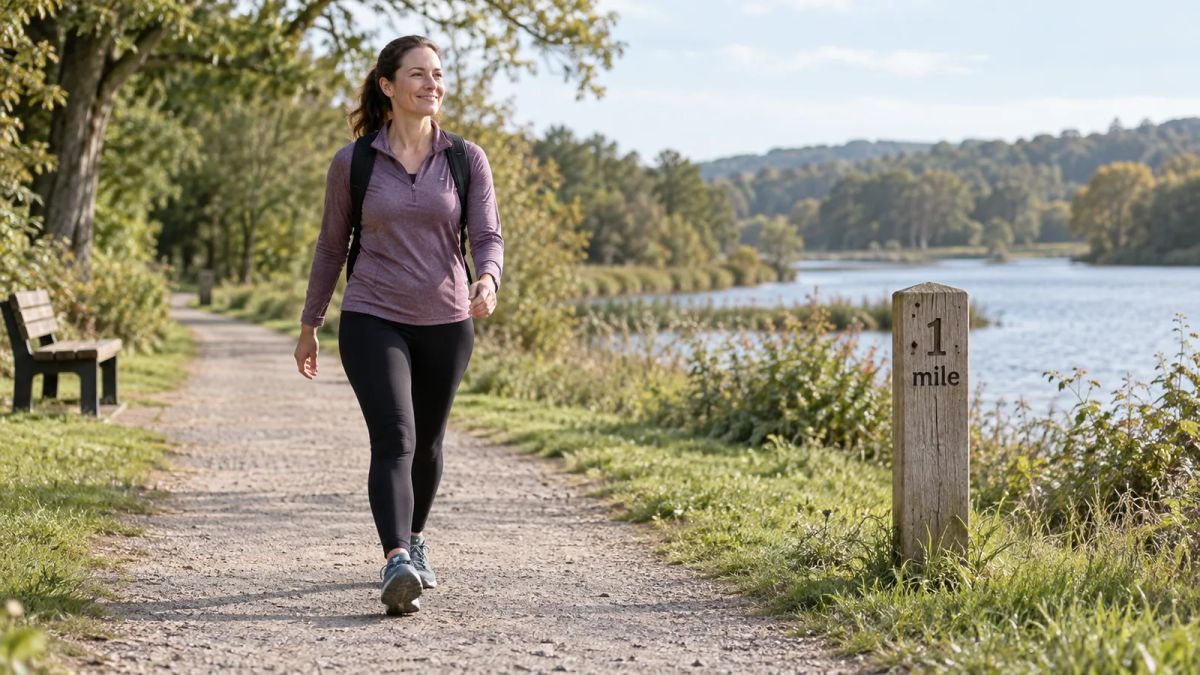
Walking is a different order of thing. That same 170-pound person burns about 324 calories an hour walking at a moderate pace, against 139 sitting, so being on your feet and moving roughly doubles or trebles the rate. A brisk ten-minute walk is worth somewhere around 35 to 55 calories for most people, and unlike a standing desk it gets your legs, heart and lungs working.
The real lever is the movement you don't plan
There's a name for all the movement that isn't sleep, meals or deliberate exercise: non-exercise activity thermogenesis, or NEAT. Dr James Levine coined the term at the Mayo Clinic in 1999 while studying why some people gain weight and others don't, and his work found NEAT can vary by up to 2,000 calories a day between two people of similar size. The difference is walking, standing, fidgeting and general pottering.
The size of that gap is the point. Levine's earlier lab work measured fidgeting while seated raising energy use by about 54 percent over lying still, and fidgeting while standing nearly doubling it. Adding around two and a half hours of standing and light moving across a day can lift your burn by roughly 350 calories.
Here's the sobering flip side. One planned hour at the gym can't undo the effect of sitting through the other fifteen waking hours, so scattering movement through the day does more for you than a single workout bolted onto a still day. Small and frequent beats big and rare.
Simple ways to add movement calories through the day
None of these is a workout. They're the low-grade movement that quietly lifts the daily total, and the trick is to pin each one to something you already do so it survives a busy day.
- Walk while you talk. Take phone calls on your feet or pacing a room. A few calls a day can add fifteen or twenty minutes of standing and strolling without carving out any time.
- Break up every long sit. Once an hour, stand up and do a lap of the room, the office or the garden. Our guide to desk exercises you can do at work has a five-minute routine you can run without changing your clothes.
- Use short bursts on purpose. A minute of stairs, ten squats by the kettle, a quick march on the spot. These exercise snacks are tiny efforts that add up across a day far more than one big session does.
- Turn errands into steps. Park further away, get off a stop early, take the long way to the printer or the shop. The everyday case for this is in our piece on the benefits of walking.
- Fidget freely. Tapping a foot, shifting in your seat, standing to read something. It looks like nothing and it's the cheapest movement you own.
- Stand for the easy stuff. Emails, a podcast, folding washing. You won't burn much, but standing beats sitting and it breaks the long, still stretches that do the real harm.
Somewhere to log the movement

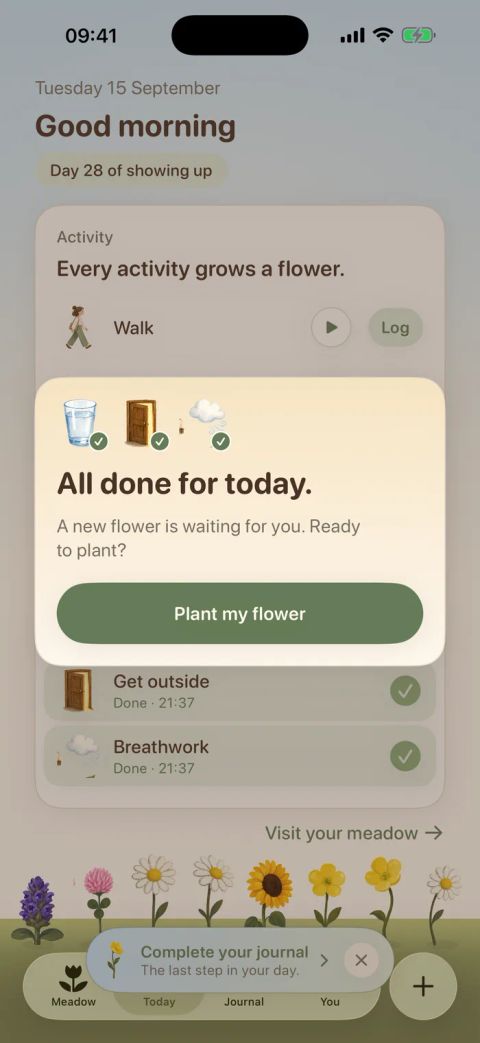
Counting calories from a sitting day is a losing game, so it helps to track the thing you can change instead, which is how often you get up and move. Meadow is a gentle habit app for iPhone from Wildcard Wellness where you log a walk or a few minutes of movement with a timer, tick off small daily habits like getting outside, and note your mood and energy as the day goes. Every day you show up grows a wildflower in your own meadow. There are no streaks, so a head-down day glued to the chair resets nothing you've built, and you pick it back up whenever you're ready.
Common questions
Does sitting all day burn any calories at all? Yes, and more than you'd guess, because your resting metabolism runs the whole time. For most adults a sitting day still burns somewhere around 1,500 to 2,200 calories in total, the great bulk of it keeping your body ticking over rather than the sitting itself.
Do standing desks help you lose weight? Only a little. Standing burns about 0.15 calories a minute more than sitting, so a six-hour standing day adds roughly 54 calories. That's a small, real bonus and a decent way to break up sitting, but it isn't a weight-loss plan on its own.
How accurate are online calorie calculators? Treat them as rough guides. They estimate from weight and a fixed rate, and they can't see your muscle mass, age or how much you fidget, all of which shift the real number. The variation between people of the same weight can run to hundreds of calories a day.
Can you out-exercise a day of sitting? Not fully. Research suggests a single daily workout doesn't cancel the metabolic effect of sitting through the rest of the day, which is why spreading movement across the hours does more than one concentrated effort. If weight or health is your goal, it's worth talking it through with your GP, since sitting is only one piece of a much bigger picture that includes what you eat.
Right now, before you close this, stand up and walk to fill a glass of water. That's the first break in the sitting, and everything above starts with getting out of the chair once more than you would have.
AUTHOR
Co-founder of Meadow.
Ash is co-founder of Meadow, a habit and movement tracking app that turns small acts of self-care into a growing wildflower meadow.
Every little bit counts
Five minutes counts. So does a dance in the kitchen.
Log the movement you enjoy and the small habits that help you feel good, and watch them bloom into something you can see.
Download Meadow