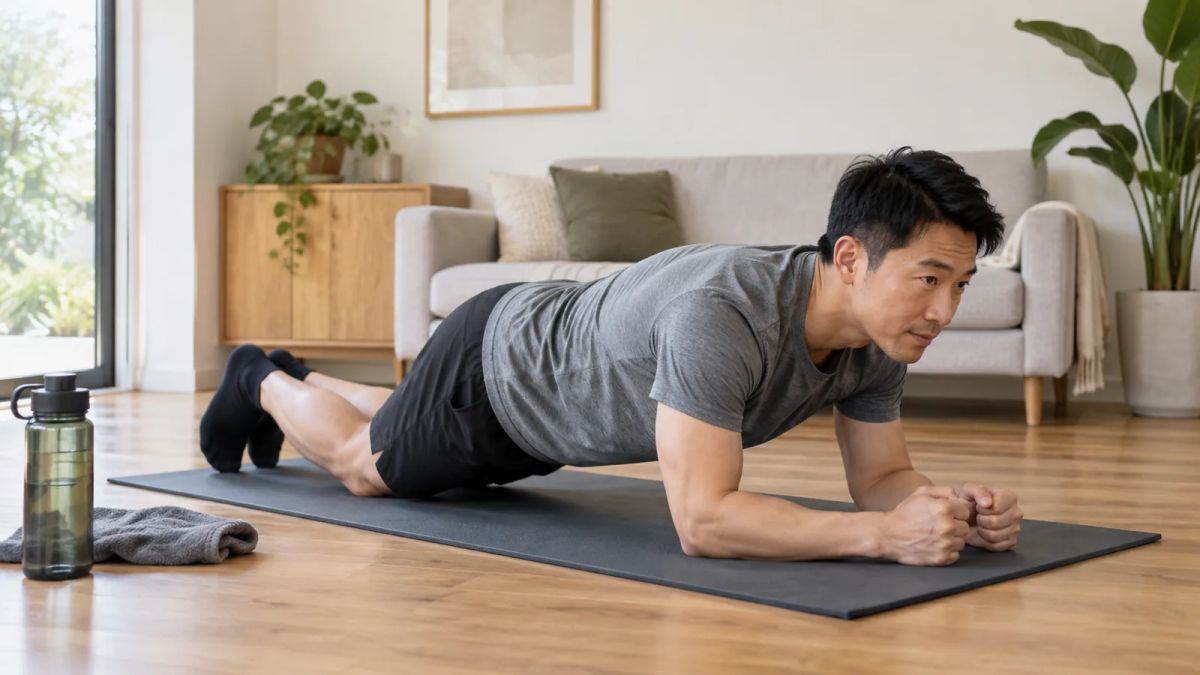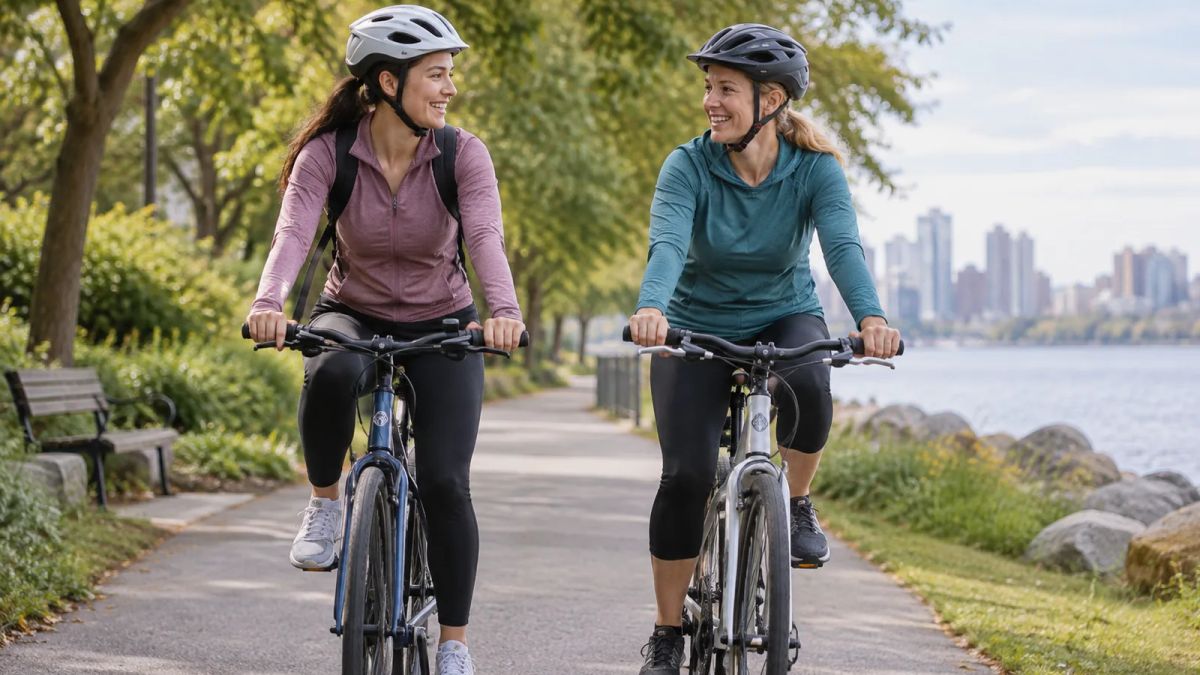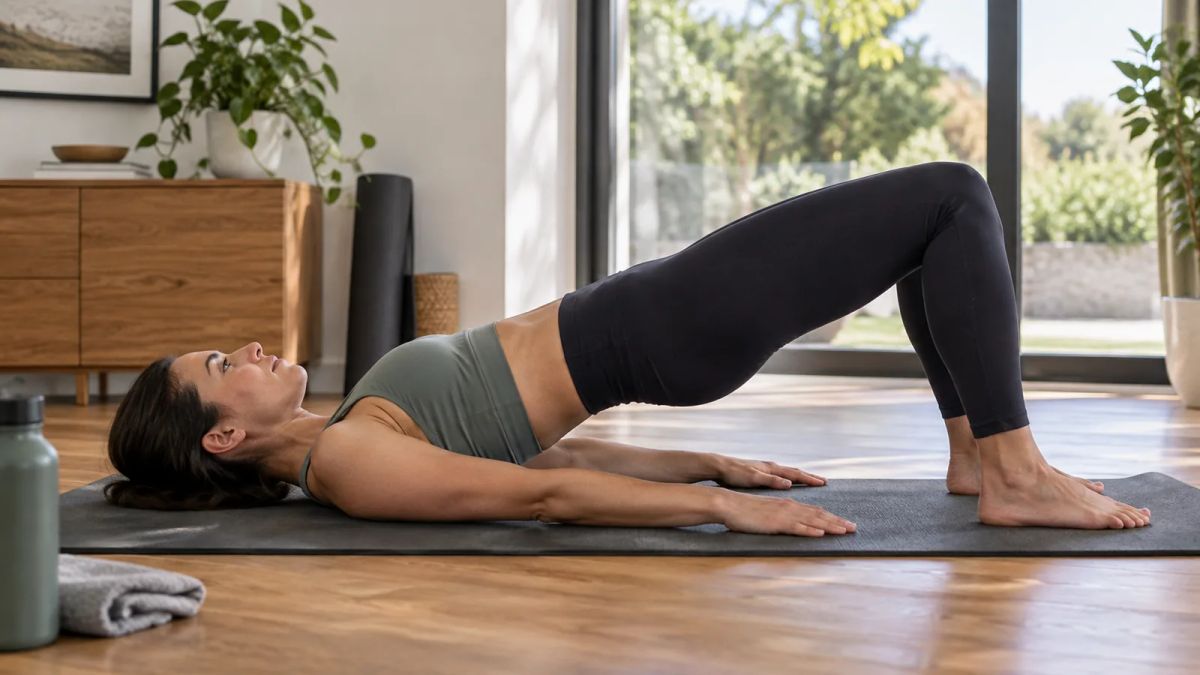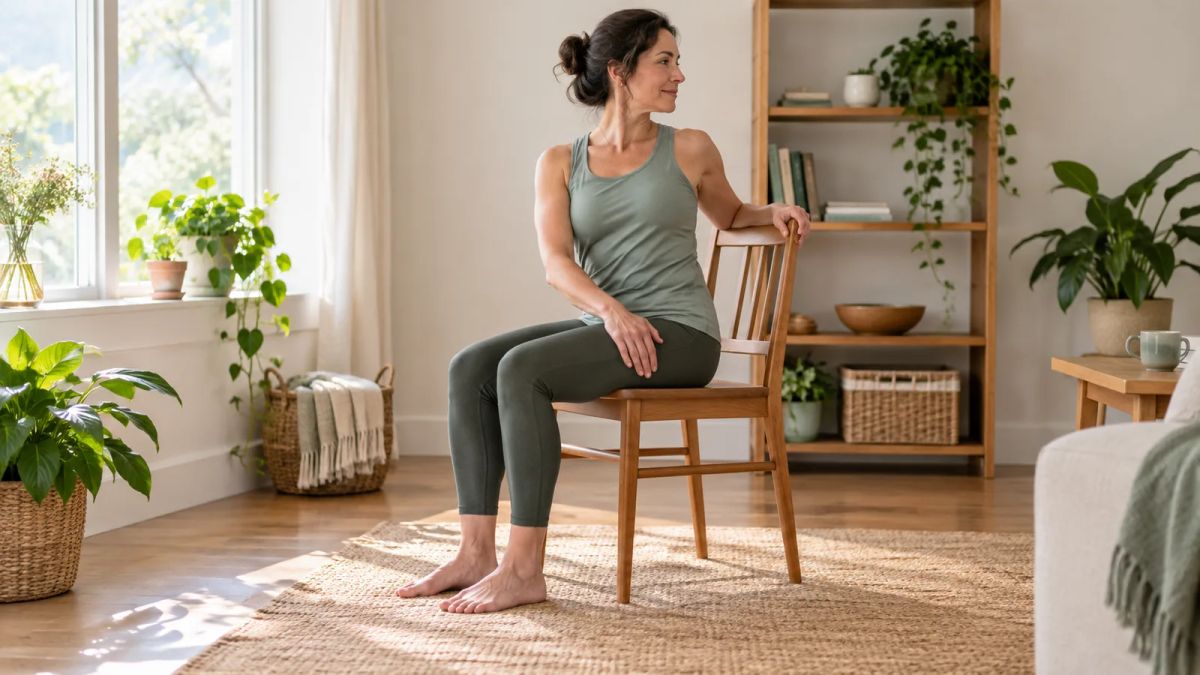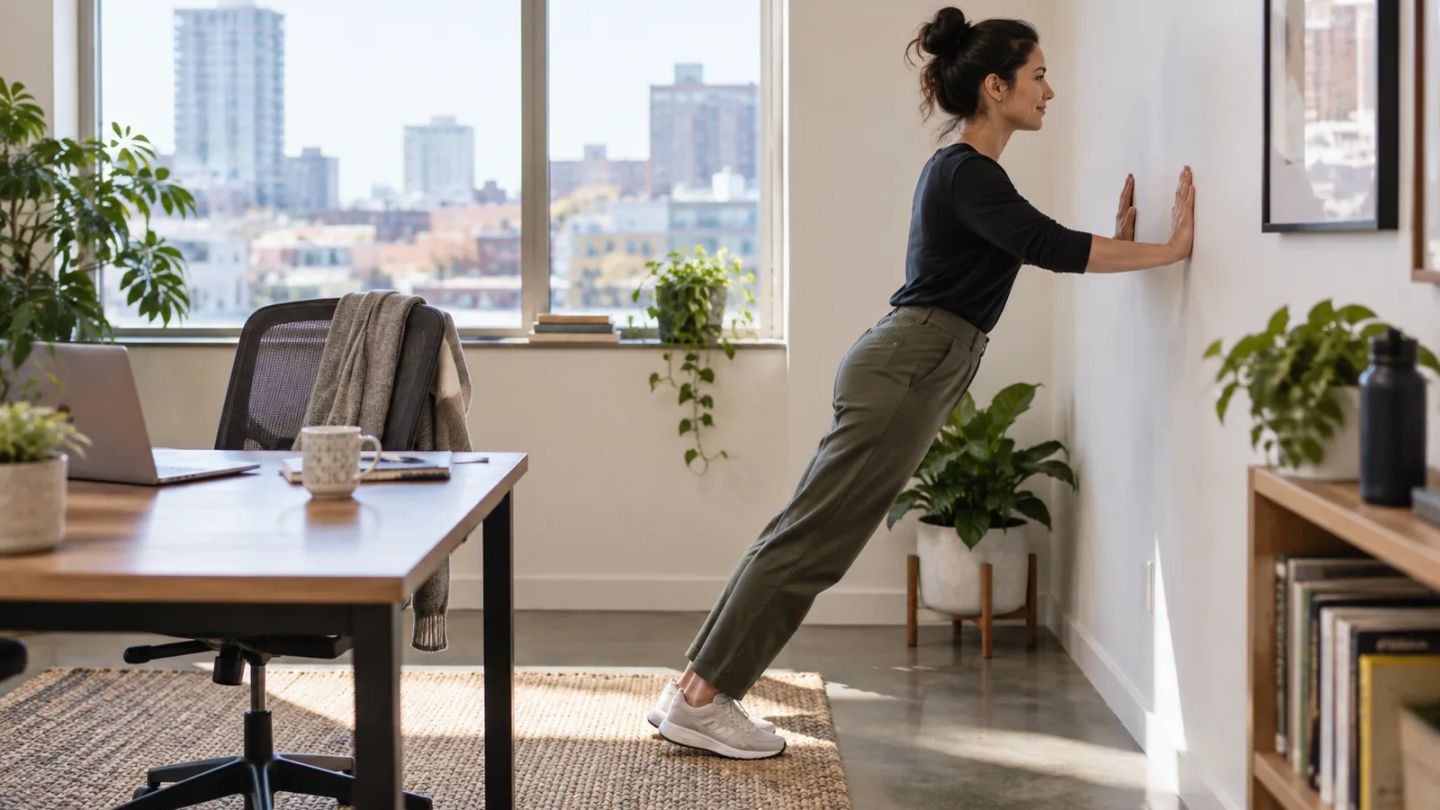
Exercise snacks are short bursts of movement, usually under a minute of something that leaves you a little breathless, done a few times across the day instead of in one block. Climb a flight of stairs quickly on a work break, do a set of squats while the kettle boils, march briskly to the end of the road and back. Each one is small enough to fit a gap you already have, and the idea is that several of them across a day, most days, add up to something your body responds to.
The name is a play on snacking. You wouldn't sit down to one enormous meal a week, and the same logic works for movement. Small portions, often.
This guide covers what an exercise snack is and how it differs from a stretch break or a general "move more" plan, what the research shows and what it doesn't, a menu of snacks to pick from, how to slot them into an ordinary day, and how to keep them going once the novelty wears off.
What counts as an exercise snack
The researchers who study this use a fairly tight definition. A 2025 review of the field describes exercise snacks as short bouts of a minute or less at a vigorous intensity, spread throughout the day. Two things make a snack a snack. It's short, and it's done at an effort that gets your heart going, not a gentle potter.
That effort is what separates snacks from two neighbouring ideas.
A stretch or mobility break at your desk is about loosening a stiff body and interrupting long spells of sitting, at a low and comfortable effort. If that's what you're after, our guide to desk exercises you can do at work is the better fit. An active lifestyle is the broader habit of weaving ordinary movement, walking, stairs and chores, through your day so the weekly total climbs, most of it at an easy pace, which our guide to building an active lifestyle covers in full. An exercise snack sits alongside both and does a different job: a brief, deliberate push, hard enough to nudge your fitness.
You don't need equipment, a change of clothes or a gym. A staircase, a wall or a bit of floor will do.
What the evidence shows, and what it doesn't
Start with fitness. In a study at McMaster University, a group of sedentary adults climbed a three-flight staircase vigorously three times a day, three days a week, for six weeks, and came out fitter and stronger than a group who carried on as normal. A review of the research put that gain at around 5% in aerobic fitness, from snacks that amounted to only a few minutes of hard effort a week. Pool the studies together and the pattern holds. A 2025 systematic review and meta-analysis of 27 studies and 970 people found exercise snacks brought a moderate-to-large improvement in VO2 max, the standard measure of cardiorespiratory fitness.
Blood sugar is the other area with decent support. In a real-world crossover study, 31 inactive adults with type 2 diabetes did four one-minute bouts of bodyweight movement, step-ups and the like, spread through the day after meals. Over 48 hours their post-meal glucose peaks and their glucose swings shrank, though their average glucose barely moved. That same meta-analysis found a modest drop in fasting blood glucose across studies, and no measurable change in body weight. So snacks work on fitness and blood sugar, and you shouldn't expect them to move the scales.
There's a population-level hint too, and it needs the biggest pinch of salt. Tracking 25,241 adults who did no formal exercise, researchers found that about four to five minutes a day of brief, vigorous everyday movement, such as bursts of stair-climbing or fast walking, was associated with lower rates of death in the years that followed. That's an observational finding, so it shows a link and not proof that the movement caused it, and the people racking up those bursts may differ in other ways. Read it as encouraging, not as a promise.
Two honest limits sit over all of this. The intervention studies are mostly small and short, run over a few weeks, not years, so the long-term picture is thinner than the headlines suggest. And "vigorous" has to mean vigorous for you. A snack done at a stroll won't do what these studies describe.
If you have a heart condition, a joint problem, or you're coming back from a long stretch of no activity, have a word with your GP before you start pushing into vigorous efforts.
A menu of exercise snacks
Pick a couple that suit your space and your body, and leave the rest. Each should take somewhere between 20 seconds and a minute, at an effort where talking gets difficult.
1. Stair climbing
Go up a flight or two as briskly as you safely can, then walk back down to recover. This is the movement most of the research is built on, and a staircase at home or work makes it the easiest snack to repeat.
2. Bodyweight squats
Stand in front of a chair, lower until you nearly touch the seat, and stand back up. Do as many as you can in 30 to 60 seconds with good control. A wall or worktop nearby gives you something to steady on.
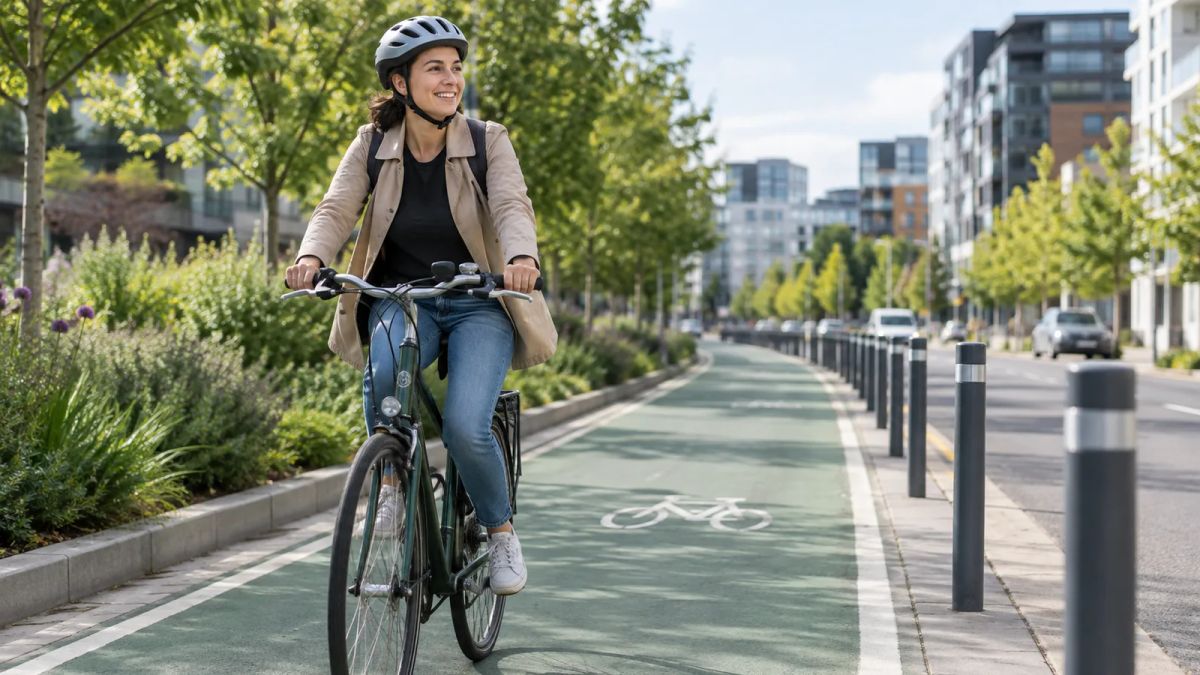
3. A brisk one-minute walk
Walk fast enough that you can still talk but not sing, the NHS marker for a brisk pace. A minute out the front door and back, or a lap of the office floor, counts.
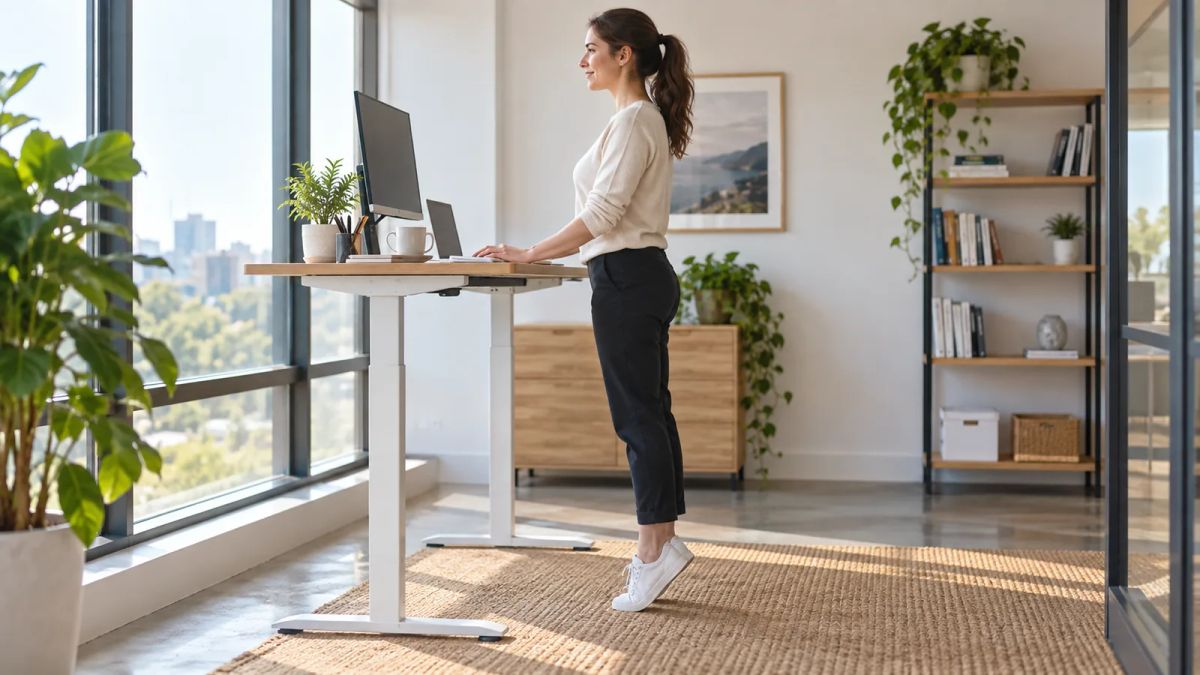
4. Calf raises
Stand tall, rise onto the balls of your feet, hold for a second, then lower slowly. A set of 15 to 20 gets the lower legs working, and you can rest a hand on a wall for balance.
5. Step-ups
Use a sturdy bottom stair or a low, solid step, and step up and down at a pace that gets you breathing hard. Swap your leading leg halfway through.
6. Marching or jogging on the spot
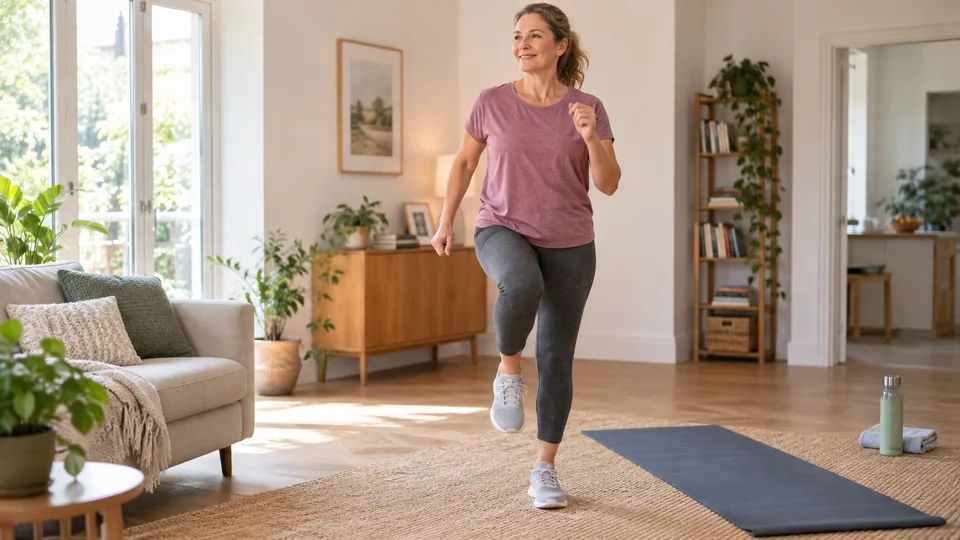
No stairs and no room? Drive your knees up and pump your arms for 30 to 60 seconds, speeding up until it feels like work.
Warm the body for ten or twenty seconds before the harder efforts, a slower version of the move itself, so you're not going from a chair to a sprint cold.
Fitting snacks into a day
Open our free printable: Plan your movement breaks (PDF). Save or print it to use alongside this guide. No sign-up needed.
Finding time isn't the obstacle. Remembering is. A snack that rides on something you already do tends to survive, while one you mean to fit in later tends to vanish.
Anchor each snack to a moment that repeats. The kettle boiling, the end of a meeting, the ad break, the walk back from the bin, your first coffee of the morning. The CDC now counts any bout of activity towards the weekly target of 150 minutes of moderate or 75 minutes of vigorous movement, having dropped the old rule that it had to come in ten-minute blocks. So a scatter of snacks does add to your total, and because vigorous minutes count roughly double, one minute of hard effort is worth about two of moderate.
Three snacks a day, most days, is a sensible starting dose and matches what several of the studies used. Here's a plan you can copy onto a sticky note. There's a blank version to fill in and a worked example under it.
Snack 1: after ____________________ , I will ____________________
Snack 2: after ____________________ , I will ____________________
Snack 3: after ____________________ , I will ____________________
Here's one filled in:
Snack 1: after my first coffee, I will climb the stairs twice, briskly
Snack 2: after lunch, I will walk fast round the block for a minute
Snack 3: after the evening news starts, I will do a minute of squats
Keep the efforts short and let the recovery between them be real. These are meant to be spread across the hours of a day, not stacked into one session.
Keeping the habit going
The reason snacks tend to stick better than a workout plan is the low bar. You can talk yourself out of an hour at the gym. A single flight of stairs is much harder to argue with.
The American Heart Association's advice for making any habit hold is to tie the new action to a routine you already have, so your existing day does the remembering. That's the part willpower is worst at, and it's why the cue does the heavy lifting. You were going to boil the kettle anyway.
Decide your smaller version before you need it. On a flat, hectic day, one snack still counts, so shrink the plan to a single flight of stairs and leave it there. A shrunken snack done beats a full set skipped.
And you will miss days. Everyone does. Exercise snacks aren't a streak you can break, so a missed morning or a written-off week undoes nothing you've built. The next flight of stairs picks it straight back up. For more on choosing habits that last and getting going again after a gap, our guide to building healthy habits goes deeper.
Somewhere to log the snack
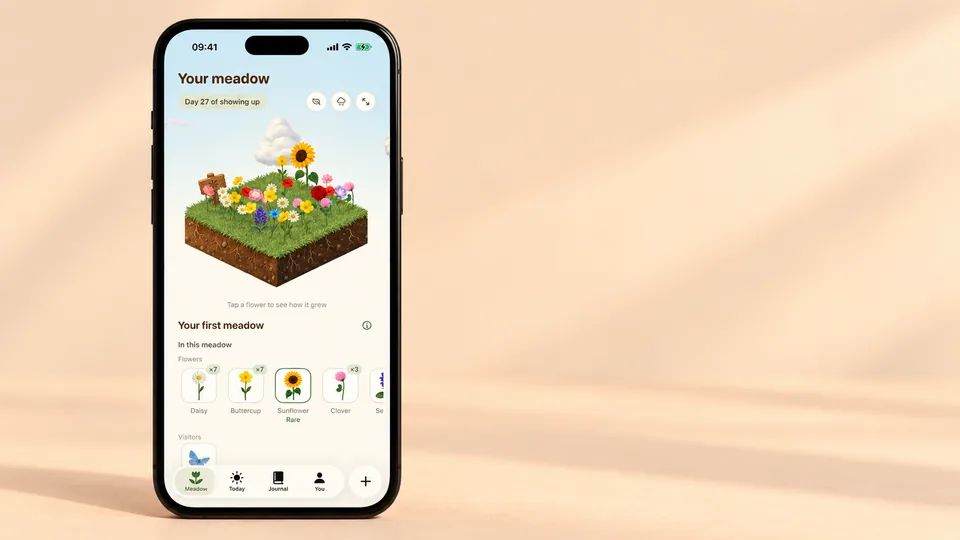
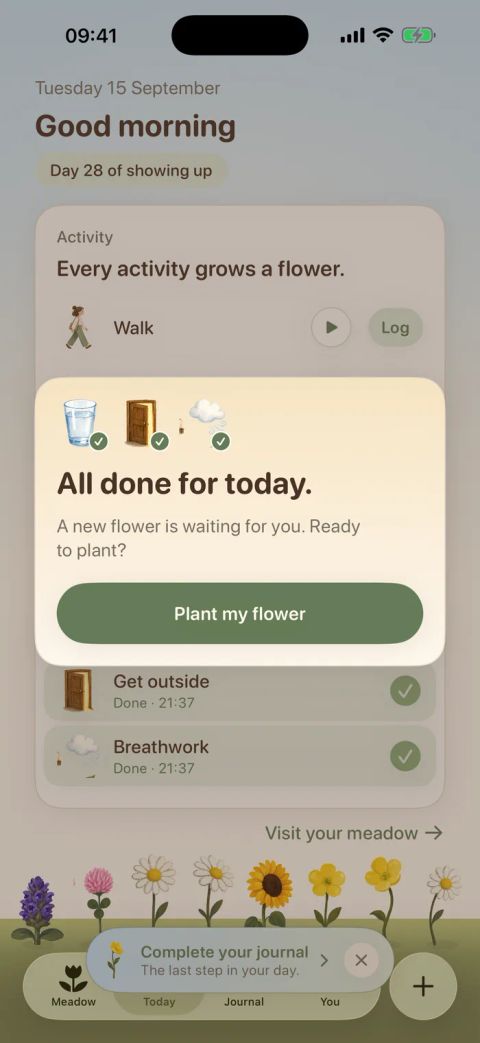
If you like to watch a habit build up, Meadow gives your snacks somewhere to land. It's a movement and habit app for iPhone from Wildcard Wellness where you log the movement you enjoy with a timer, a quick set of stairs or a brisk minute outside, tick off small daily habits, and note your mood and energy. Every day you show up grows a wildflower in a meadow that's yours alone, and because it rewards turning up rather than perfect weeks, there are no streaks, so a day with no snacks at all resets nothing you've grown.
Common questions
How long should an exercise snack be? Usually a minute or less of vigorous effort, with some as short as 20 seconds. The short length is the point, because it's what lets you repeat a snack several times a day.
How many should I do a day? Three is a good starting number and matches what a lot of the studies used. Space them out by an hour or more so each one is a fresh effort and not one long session chopped up.
Do exercise snacks help you lose weight? Not on their own in any meaningful way. The research shows gains in fitness and some blood-sugar markers but no real change in body weight. If weight is your goal, snacks are a small helper alongside broader food and activity changes, and it's worth talking to your GP about a plan that fits you.
Are they as good as a proper workout? For raising cardiorespiratory fitness in people who currently do little, small studies suggest they can hold their own against longer sessions. They're no replacement for strength training or the full weekly activity target, but for a sedentary week they're a real step up from nothing.
What counts as vigorous? An effort where holding a conversation gets hard and you'd sooner stop talking. If you can chat comfortably through it, speed up or add a flight.
One thing to do now
Stand up and climb the nearest flight of stairs, as briskly as is safe for you, then walk back down. That's your first snack. While you catch your breath, pick the cue you'll hang tomorrow's first one on, and you've started.
AUTHOR
Co-founder of Meadow.
Ash is co-founder of Meadow, a habit and movement tracking app that turns small acts of self-care into a growing wildflower meadow.
Every little bit counts
Five minutes counts. So does a dance in the kitchen.
Log the movement you enjoy and the small habits that help you feel good, and watch them bloom into something you can see.
Download Meadow