The best exercise for perimenopause is a mix, and strength training is the piece doing the most work, because the years around menopause are when muscle and bone start slipping faster than before. Around that core you want some walking and weight-bearing movement, a little higher-intensity effort when you have the energy, and a few minutes of mobility and pelvic-floor attention to keep the whole thing comfortable.
Movement can take the edge off some symptoms. Broken sleep, low mood and stiff joints often ease when you move regularly. It won't switch those symptoms off, and it's no substitute for talking to your GP about what you're going through.
Here's how the pieces fit together, and a weekly shape you can keep even on the weeks that fall apart.
What's changing under the surface
Perimenopause is the stretch when oestrogen starts to fall and your periods change before they eventually stop. That drop reaches further than hot flushes.
Muscle gets harder to hold onto. A review of exercise beyond menopause puts the loss at about half a pound of muscle a year as women move through and past this stage, and falling testosterone makes muscle harder to build back. Bone thins in the same window, as the protective effect oestrogen had on your skeleton fades.
Joints feel it too. The Menopause Charity explains that joints have oestrogen receptors, so as levels drop inflammation can rise, and many women find their joints suddenly stiff and sore. No single kind of movement covers all of that at once. That's why the plan below spreads across a few.
Strength training earns top billing
If you can protect only one habit, protect this one. Working your muscles against resistance is the type of exercise that pushes back on the muscle loss and the bone loss together.
The Royal Osteoporosis Society describes two kinds of exercise that build bone: impact exercise, where you add force through your bones while you're on your feet, and strength exercise, where you move your muscles against resistance to make them stronger. The menopause review lands in the same place, concluding that strength training and impact activities help offset the decline in bone mineral density and prevent osteoporosis.
How often? The NHS asks adults for strengthening work on at least two days a week across the major muscle groups, which it lists as legs, hips, back, abdomen, chest, shoulders and arms. The CDC gives the same two-day target. For menopause in particular, the NHS suggests focusing on weight-bearing and resistance exercise to help protect weakening bones.
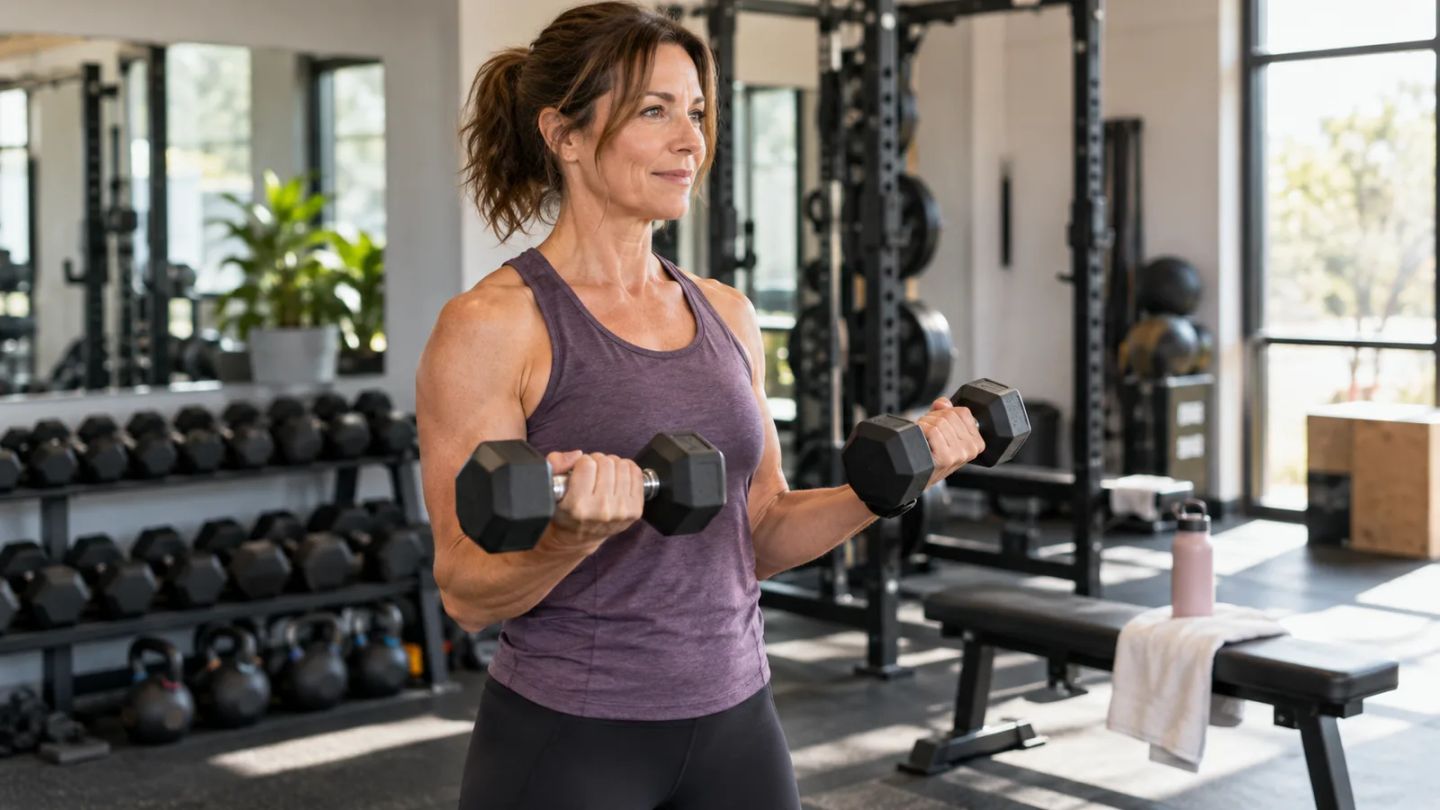
Two short sessions do it. Cover a squat, a hinge, a push and a pull and you've reached most of those muscle groups. Start with your own bodyweight, sit-to-stands and wall push-ups, and add dumbbells or a resistance band once that feels easy. Nudge the difficulty up slowly over weeks, a rep here, a little more weight there, so your body has time to catch up. If you'd like a full routine to follow, our strength training for beginners over 40 guide walks through one.
While you're building strength, spend a few seconds on balance too. Stand on one leg while the kettle boils, holding the counter if you need to, then swap sides. Stronger legs and steadier footing are what keep a stumble in later life from turning into a fall, and they cost you nothing extra in time.
Walking and weight-bearing movement
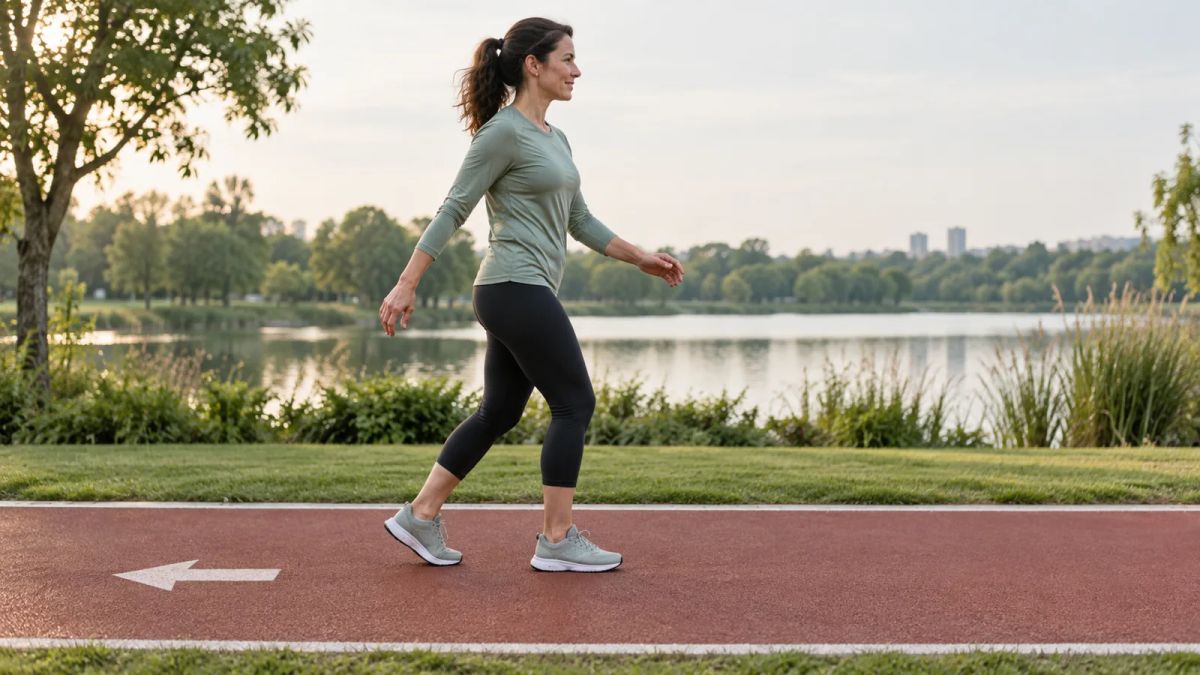
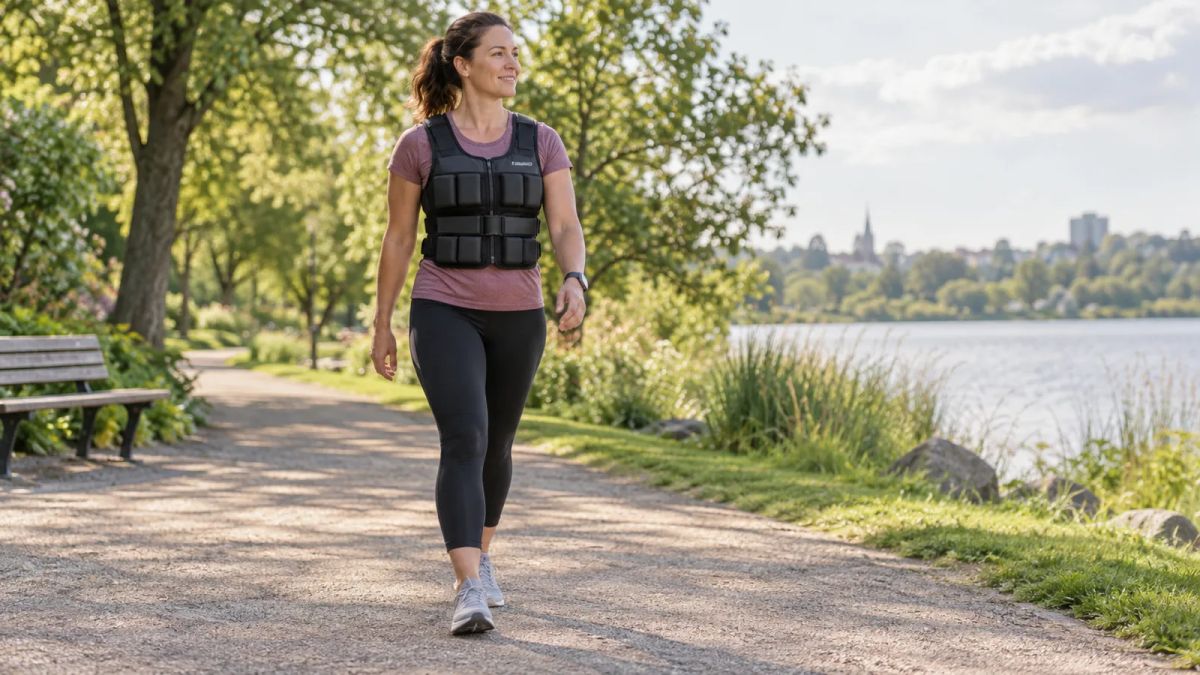
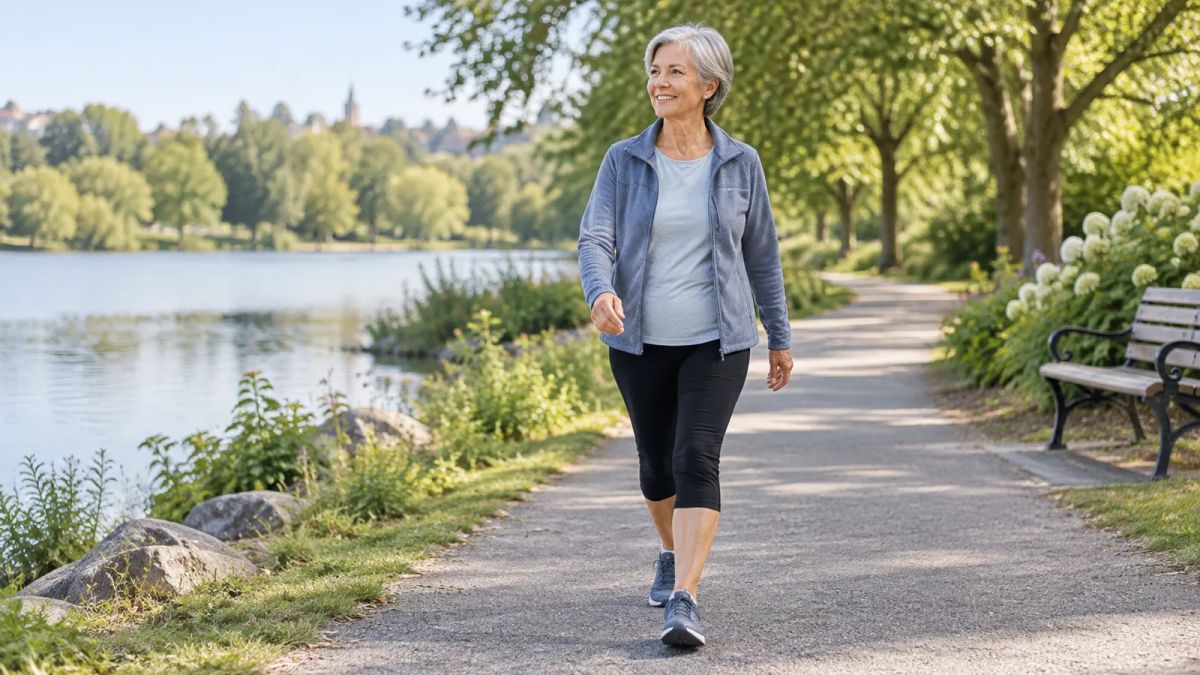
Walking is the easiest weight-bearing habit to keep going. Each step sends a small load through your legs, hips and spine, the kind of force that helps bone hold its strength, and it counts towards your weekly aerobic total at the same time.
It helps elsewhere too. In a 12-week study of 100 perimenopausal women, moderate aerobic exercise three times a week improved sleep quality and lowered anxiety scores, while a comparison group who didn't exercise saw no real change. On a flat day a ten-minute walk still counts. Our guide to the benefits of walking has more if you want reasons to get out the door.
A little higher-intensity effort
Health guidance asks for 150 minutes of moderate activity a week, or 75 minutes of vigorous. Brisk walking, where you can talk but not sing, sits in the moderate band. Add short faster bursts, a hill, a jog between two lamp posts, and you nudge into vigorous, which lets you bank the same benefit in less time.
Be honest about what harder work does, though. A systematic review of randomised trials found exercise cut overall perimenopausal symptom scores by about 15.7% on average, with aches, headache, fatigue, tingling, irritability and insomnia easing the most. The same reviewers stayed sceptical about hot flushes and saw no significant change in depression. So pick up the pace when you feel up to it, and don't expect intervals to settle a hot flush.
Keeping joints moving
Stiff, achy joints can put you off exercise, and that starts a loop: less movement, more muscle loss, stiffer joints still. The Menopause Charity describes exactly that cycle, and movement is what breaks it.
A few minutes of mobility work keeps your joints travelling through their full range. Circle the hips, shoulders and ankles, roll slowly through your spine, and your strength days feel better for it. Our mobility exercises for seniors work as a warm-up whatever your age, and they're gentle enough for a sore morning.
Pelvic-floor awareness
The pelvic floor often weakens as hormone levels fall, something The Menopause Charity flags alongside the other muscle changes of this stage. It can show up as a leak when you cough, laugh, sneeze or run.
Fold a few squeezes into your day. Draw the muscles up as if you're stopping yourself weeing, hold for a few seconds, then let go fully, and you can do it sitting at your desk without anyone knowing. If leaks are already bothering you, a women's-health physiotherapist can check you're doing them right and rule out anything that needs more attention.
What movement will and won't do
It's worth being clear-eyed here, so you know what you're getting.
Regular aerobic movement tends to help sleep and anxiety. Strength and mobility work often ease aches and stiffness. Mood is more mixed, and the trial evidence didn't show a reliable lift in depression from exercise alone. Hot flushes are stubborn and may not budge much at all. Movement is one lever among several, sitting alongside sleep, food, and for many women a conversation with a GP about HRT. Treat it as one of the things that helps, not the thing that fixes everything.
A weekly shape you can keep
Open our free printable: My weekly movement mix (PDF). Save or print it to use alongside this guide. No sign-up needed.
You don't need a complicated plan. Here's a shape that covers the mix in a normal week, with a version for the days it all goes sideways.
Two strength days (say Monday and Thursday): 20 minutes, one squat, one hinge, one push, one pull
Most days: a walk, anything from ten minutes up
One or two of those walks: pick up the pace or add a few faster bursts
A few minutes daily: mobility circles and a set of pelvic-floor squeezes
Bad-day version: one short walk and five slow pelvic-floor squeezes, and that's a win
Make it yours by deciding these in advance, so a chaotic week has an answer ready.
My two strength days: ________ and ________
My walk cue (something I already do daily): ________
My bad-day version: ________
Miss a week and you've lost nothing worth worrying about. Bone and muscle respond to what you do over months, not to one skipped Tuesday, so pick the plan back up on the next ordinary day.
Somewhere to watch the mix add up

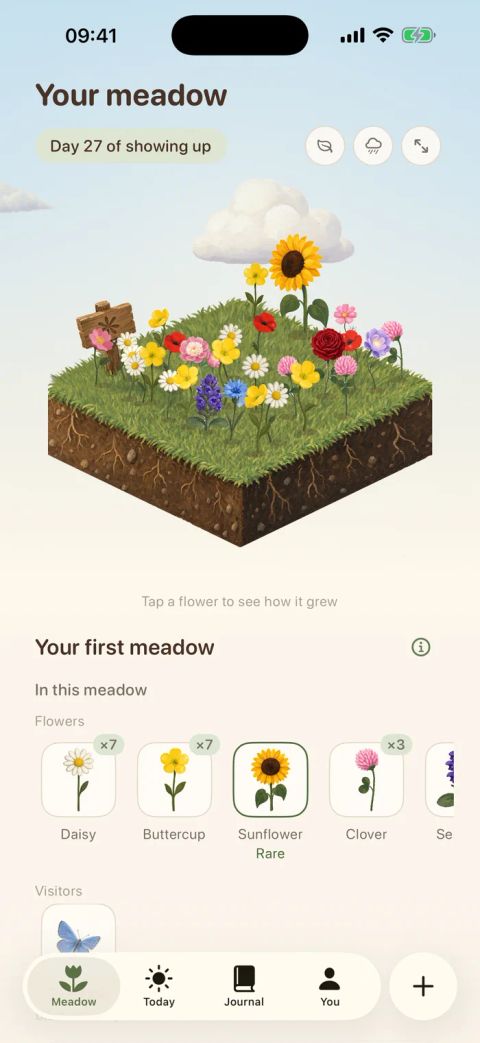
Spreading your effort across strength, walking and mobility gives you a lot to keep an eye on, and it helps to see it building in one place. Meadow is a movement and habit app for iPhone that turns each day you show up into a wildflower in a meadow that's yours. You can log a strength session or a walk with a timer, tick pelvic-floor squeezes off as a daily habit, and note how your mood and energy sit that day. It's built for consistency, so there are no streaks to protect: a fortnight lost to a rough patch resets nothing you've grown, and you carry on when you're ready.
When to see your GP or a menopause specialist
Most people can start gentle movement at home today. Some should have a word first.
The NHS advises speaking to your GP before you begin if you haven't exercised for a while or have a medical condition or concern. The Royal Osteoporosis Society adds that if you've had several broken bones or a spinal fracture, a doctor or physiotherapist should tell you which exercises are safe for you before you start.
Exercise is only part of perimenopause care. A GP or menopause specialist can talk through your symptoms and the treatments that might help, HRT among them. Book an appointment if symptoms are wearing on your daily life, if you're worried about your bone density, or if new joint pain doesn't settle. Stop and get advice if a session brings on chest pain, dizziness or unusual breathlessness.
Common questions
Can exercise replace HRT? No. Movement can ease some symptoms, like poor sleep and stiff joints, but it isn't a swap for medical treatment. Talk to your GP about what fits your situation.
Is it too late to protect my bones? No. Bone responds to being loaded at any age, and strength plus impact activities help offset the bone loss of the menopause transition. Starting now still counts.
What if joint pain makes exercise hurt? Work in a range that doesn't hurt, lean on lower-impact options like walking and water-based exercise on sore days, and build strength around the joint so it has more support. Take sharp or new pain to your GP or a physiotherapist.
How much should I aim for in a week? 150 minutes of moderate activity or 75 minutes of vigorous, plus strength work on at least two days. Walking, housework and dancing all count towards the aerobic side.
Will exercise stop my hot flushes? Probably not on its own. The trial evidence for exercise easing hot flushes is weak, so treat any improvement there as a bonus and raise persistent flushes with your GP.
What if I'm short on time? Protect the two strength sessions first, then walk when you can. Twenty minutes of strength twice a week does more for the muscle and bone changes of this stage than an hour of walking would, and the walking then tops up your heart, sleep and mood on the days around it.
This week, put two strength days in your calendar and do the first one at bodyweight, one squat, one hinge, one push and one pull. That first session is where the mix begins.
AUTHOR
Co-founder of Meadow.
Ash is co-founder of Meadow, a habit and movement tracking app that turns small acts of self-care into a growing wildflower meadow.
Little and often, with Meadow
Consistency, not intensity.
Meadow turns the movement you enjoy and the habits that help you feel good into a meadow of wildflowers. No streaks to break, and your flowers never wilt.
Download Meadow