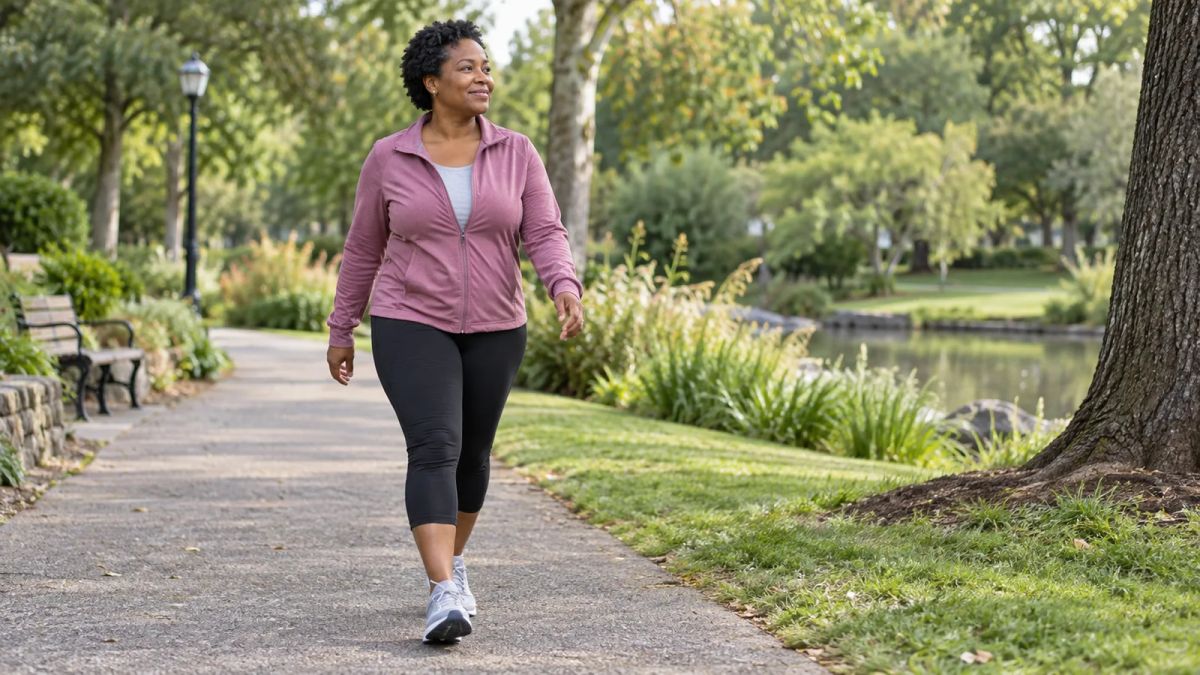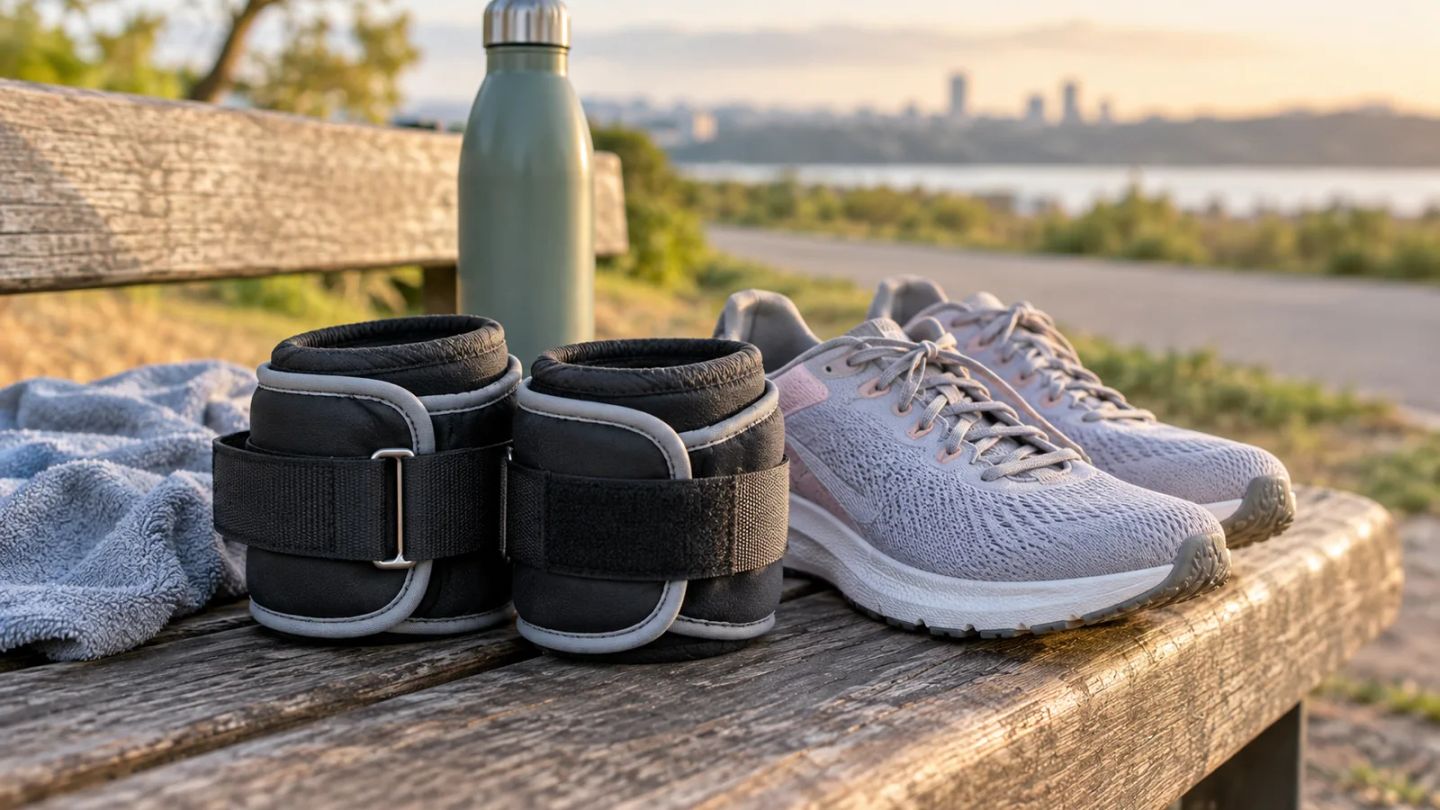
Strapping a weight to each ankle before a walk does two things: it makes your legs work a little harder per step, and it changes the way you walk. The first is the appeal. The second is why most physiotherapists will tell you a walk is the wrong place for them.
That doesn't make ankle weights useless. Used for the right exercises, in the right amount, they're a cheap and effective way to load your hips and legs. The trouble is specifically walking, where thousands of repeated steps turn a small load in the wrong place into real strain on your knees, ankles and lower back.
Below is what ankle weights do on a walk, the modest benefits, the risks worth taking seriously, who might use them and how, and the safer ways to make a walk harder.
What ankle weights do to your stride
An ankle weight is a padded cuff, usually 0.5 to 1.5 kg (about 1 to 3 lb) a side, that sits low on your leg, as far from your centre of gravity as a load can get. That distance is the whole story.
Karena Wu, a physiotherapist and owner of ActiveCare Physical Therapy, puts the mechanism plainly: "The ankle weight is set far from the trunk, which leads to increased forces and increased intensity." A weight on your torso rides over your centre of mass and barely disturbs your stride. A weight at your ankle hangs off the end of a long lever, so your body has to generate much more force to swing each leg through.
That extra force has to come from somewhere, and it changes which muscles do the work. Harvard Health notes that ankle weights "force you to use your quadriceps... and not your hamstrings," and warns that this "causes a muscle imbalance" over time.
A loaded walk, then, is a slightly different movement, driven by different muscles, repeated for every step you take.
The benefits, kept honest
There is a real effect, and it's worth being clear about what it is.
Your lower-leg and hip muscles work harder. "When you wear ankle weights, your body has to work harder to lift and move your legs," says trainer Stephanie Mansour. "This can lead to increased muscle activation, particularly in the legs and glutes." More muscle work means a slightly higher heart rate and a few more calories burned over the same distance.
The same experts also list better balance and lower-limb strength among the potential upsides, at least for people who can carry the load without their walking pattern falling apart.
Keep the size of it in proportion. We're talking a modest bump in effort from a kilo or so a side, not a transformation, and no one walk out-earns your overall diet and activity. The muscle-activation benefit is also the source of the trouble, because the muscles working harder are the ones being pulled out of their normal pattern.
The risks physios keep flagging
Nearly every clinician who talks about ankle weights and walking lands on the same short list.
The first is your gait. A weight swinging off each ankle alters your natural walking pattern, and Mansour's rule of thumb is the one to remember: "If you notice any pain or discomfort, or if your gait becomes awkward or unnatural, the weights are likely too heavy." An altered gait does more than waste effort. It feeds the other risks.
The second is your joints. Because the weight pulls down on the ankle at the end of every swing, Harvard Health warns it can cause "tendon or ligament injuries to the knees, hips, and back." Mansour is blunter about where you feel it first: ankle weights put "extra stress on your joints, especially your ankles and knees." Multiply that by the thousands of steps in a single walk and a small load becomes a lot of repeated stress.
The third is falls. Wu warns that ankle weights "can cause muscle imbalances, loss of balance and strain muscles and joints due to the increased load." Extra weight low on the leg makes each step a little less stable, which is a bigger problem for exactly the people drawn to gentle exercise.
That leads to a clear list of who should leave them off entirely. Wu says people with "significant balance issues, severe osteoarthritis, recent and active injuries in the legs, and postpartum mothers (unless cleared by their physician) should not use ankle weights." Add anyone with existing knee, hip, ankle or back problems, and anyone new to exercise, for whom Mansour says the fall risk alone makes them a poor idea.
Who might use ankle weights, and how
Ankle weights earn their keep in slow, controlled strength work, where you can hold your form and stop the moment it slips.
This is where clinicians recommend them. Harvard Health says ankle weights help "for exercises that target the leg and hip muscles, like leg lifts," because the muscles have to work harder to move the load against gravity. W. Zach Smith, a physiotherapist and founder of HIDEF Physical Therapy, points out how much they add in that position: "three to five pounds at the ankle is equivalent to adding 10 to 15 pounds near the thigh," so a little goes a long way.
If you want to use a pair you already own, use them like this rather than on a walk:
- Start with the lightest cuffs you have, 0.5 to 1 kg (1 to 2 lb) a side. Smith notes that "even five pounds each is a lot for most people and most exercises."
- Do the movements standing still or lying down, so a wobble can't turn into a fall.
- Keep the reps slow and controlled, and stop the set the moment your form gets sloppy.
- Add weight only once you can finish every rep comfortably, and change one thing at a time.
A short lower-body set that suits ankle weights:
Side-lying leg raises: lie on one side and lift the top leg slowly, 10 to 12 a side
Standing hip abductions: hold a chair, lift one leg out to the side, 10 to 12 a side
Glute kickbacks: on hands and knees, press one heel back and up, 10 to 12 a side
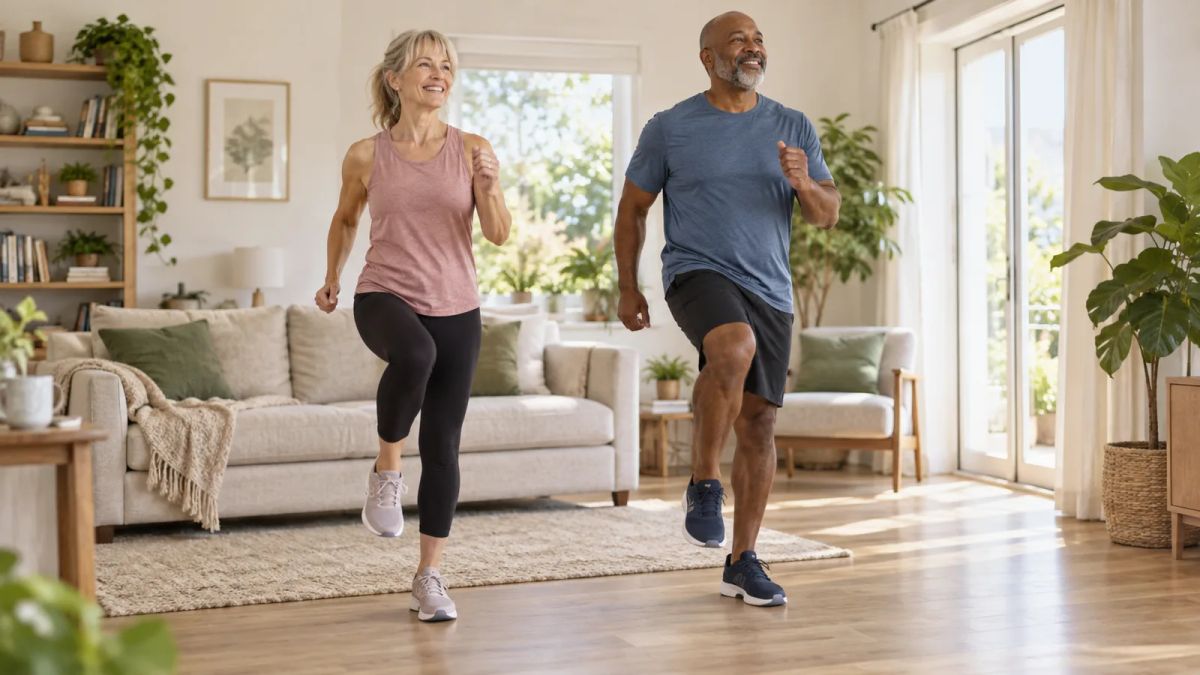
Standing marches: hold a chair, drive one knee up to hip height, 10 to 12 a side
Two or three rounds, two or three times a week, is plenty to start.
Wu's dosing holds even here: keep sessions short, "no more than 15-30 minutes to start," and make sure the cuffs are snug, because a loose weight shifts as you move and raises the injury risk.
Safer ways to make a walk harder
If the goal is a harder walk, the fix is to add load where your body can carry it, or to change the walk itself.
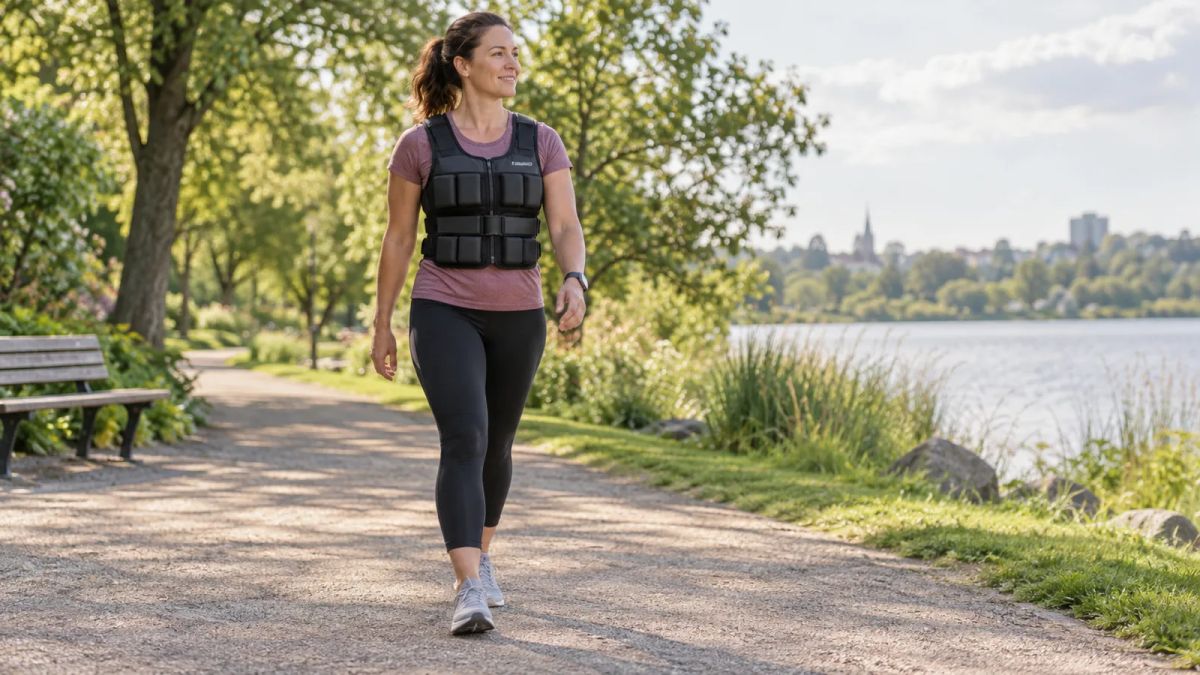
The most reliable swap is a weighted vest. It sits over your torso, close to your centre of gravity, so it adds resistance while leaving your stride intact, which is why clinicians treat it as the walking-friendly option. Jessica Tomazic, a sports medicine physician at Cleveland Clinic, says "walking and running are two safe ways to start using weighted vests," and advises "a vest that is 5 to 10% of your body weight." We cover the full case, including where the evidence is thinner than the headlines suggest, in our guide to the benefits of walking with a weighted vest.
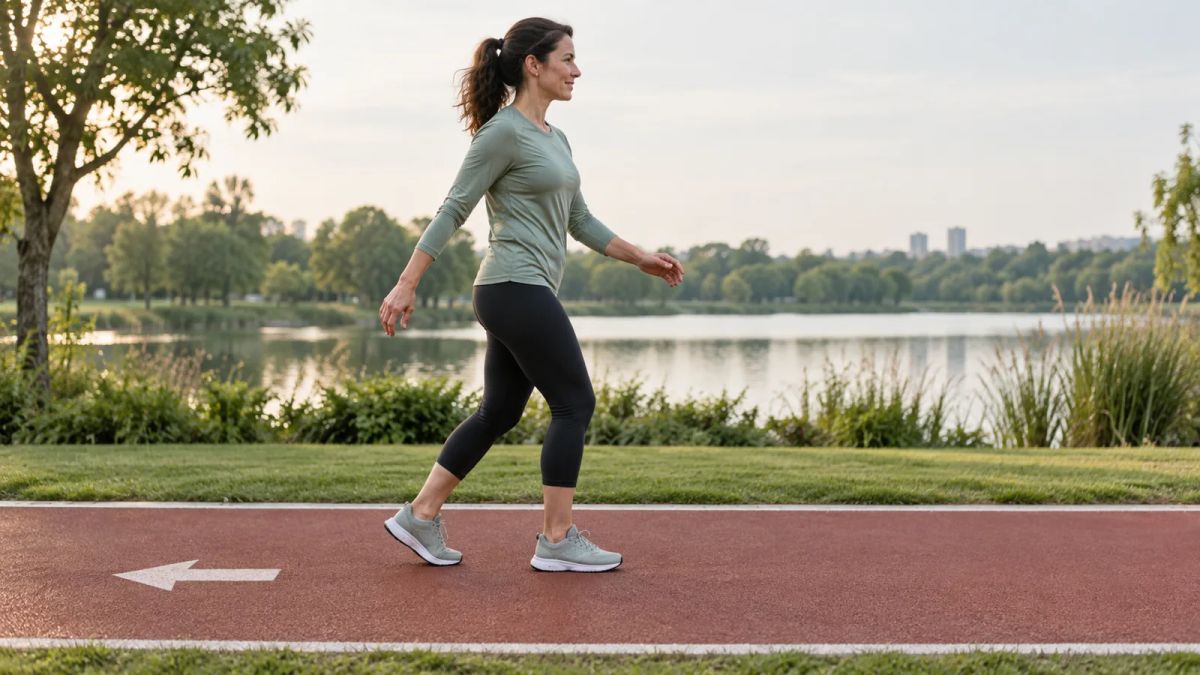
You can also make the plain walk work harder. Walk faster until you reach a brisk pace, which the NHS describes as being able to "still talk but cannot sing the words to a song," or find a hill and let the incline do the work. Both raise the demand without hanging anything off your joints, and both scale down on a bad day. If you're building the habit up from scratch, our guides to the benefits of walking and how many steps a day are a gentler place to start.
Keep the sessions somewhere you'll see them

Strength work pays off when you come back to it, and that's easier when you can see it adding up. If you'd like to keep the record on your phone, Meadow lets you log a short strength session or a walk in a few seconds, tick off small daily habits, and note your mood and energy as you go. It's a gentle habit app for iPhone from Wildcard Wellness, and each day you show up grows a wildflower in your own meadow, with rare flowers and the odd animal visitor turning up as it fills in. It counts consistency, so there are no streaks, and a session you skip because your knees are grumbling resets nothing you've built.
Ankle weights and walking FAQ
Do ankle weights help you lose weight when walking?
Only at the margins. A kilo or so a side raises the calories a walk burns by a small amount, and no one walk outweighs your overall diet and activity. If weight is the aim, walking a bit longer or faster does the same job with far less strain on your joints.
Are ankle weights bad for your knees?
They can be. The load pulls on the ankle at the end of every step, and Harvard Health warns this risks "tendon or ligament injuries to the knees, hips, and back." Anyone with existing knee trouble should skip them for walking and ask a physiotherapist about safer options.
How heavy should ankle weights be?
Start at 0.5 to 1.5 kg (1 to 3 lb) a side and no heavier, and use them for controlled exercises rather than walking. Physiotherapists put the ceiling low here because the weight sits so far from your centre of gravity that a little feels like a lot.
What can I use instead of ankle weights on a walk?
A weighted vest keeps the load over your torso and your stride normal, or you can walk faster or uphill for the same effect with no kit at all.
Are ankle weights ever a good idea?
Yes, for slow, controlled leg and hip exercises like side-lying leg raises and standing hip work, where you can hold your form and stop if it slips. That's the setting clinicians recommend them for.
One thing to try today
Take the ankle weights off the idea of your walk, and try them on a single set of side-lying leg raises instead, ten slow lifts a side with the lightest cuffs you have. Notice how hard the muscle has to work when the movement is slow and your foot isn't taking your body weight. That's ankle weights doing the job they're built for. For the walk itself, keep it plain and let a brisk pace or a hill be the challenge, and check in with your GP or a physiotherapist before adding load if your knees, hips, ankles or back give you trouble.
AUTHOR
Co-founder of Meadow.
Ash is co-founder of Meadow, a habit and movement tracking app that turns small acts of self-care into a growing wildflower meadow.
Every little bit counts
Five minutes counts. So does a dance in the kitchen.
Log the movement you enjoy and the small habits that help you feel good, and watch them bloom into something you can see.
Download Meadow