A beginner plank routine takes about ten minutes and needs nothing but a patch of floor. Hold a plank a few times a week with decent form and you train the deep muscles that keep your spine steady, the ones that make standing tall and carrying shopping feel easier.
That is the honest promise. A plank strengthens your core. It will not flatten your stomach on its own, and holding one for five minutes proves little except that you can suffer.
Here is what a plank does for you, how to hold one without hurting your back, gentler versions for your first day, and a five-move routine with real holds and reps you can start this week.
Why a strong core helps your posture and back
Your core is more than the muscles you can see. Cleveland Clinic describes the plank as a full-body hold that works the abs, the obliques down your sides, the deep transversus abdominis, and the glutes, hamstrings and lower back all at once. Those muscles wrap around your middle and brace your spine every time you stand, bend or reach.
When that brace is weak, your lower back tends to take the load instead. Train it and the everyday stuff gets steadier: better posture, easier balance, less grumbling from your back when you lift something awkward. Cleveland Clinic puts it plainly, that the core needs to be strong to protect the spine.
The back-pain evidence is encouraging and worth keeping in proportion. A meta-analysis in PLOS One pooled five trials with 414 people who had chronic low back pain and found core stability exercise beat general exercise for pain and function in the short term. Over six and twelve months the two evened out, and the reviewers rated the studies as low quality with a high risk of bias. So a core routine is a fair thing to try for a niggly back, not a cure for one. If you have an ongoing back problem, are pregnant, or are recovering from an injury, check with a GP or physiotherapist before you start.
If slow, controlled core work appeals, Pilates is built around the same muscles and worth a look.
How to hold a plank correctly
Form is the whole game with a plank. Get it right and the exercise protects your back. Get it wrong and you hand the work to the wrong muscles.
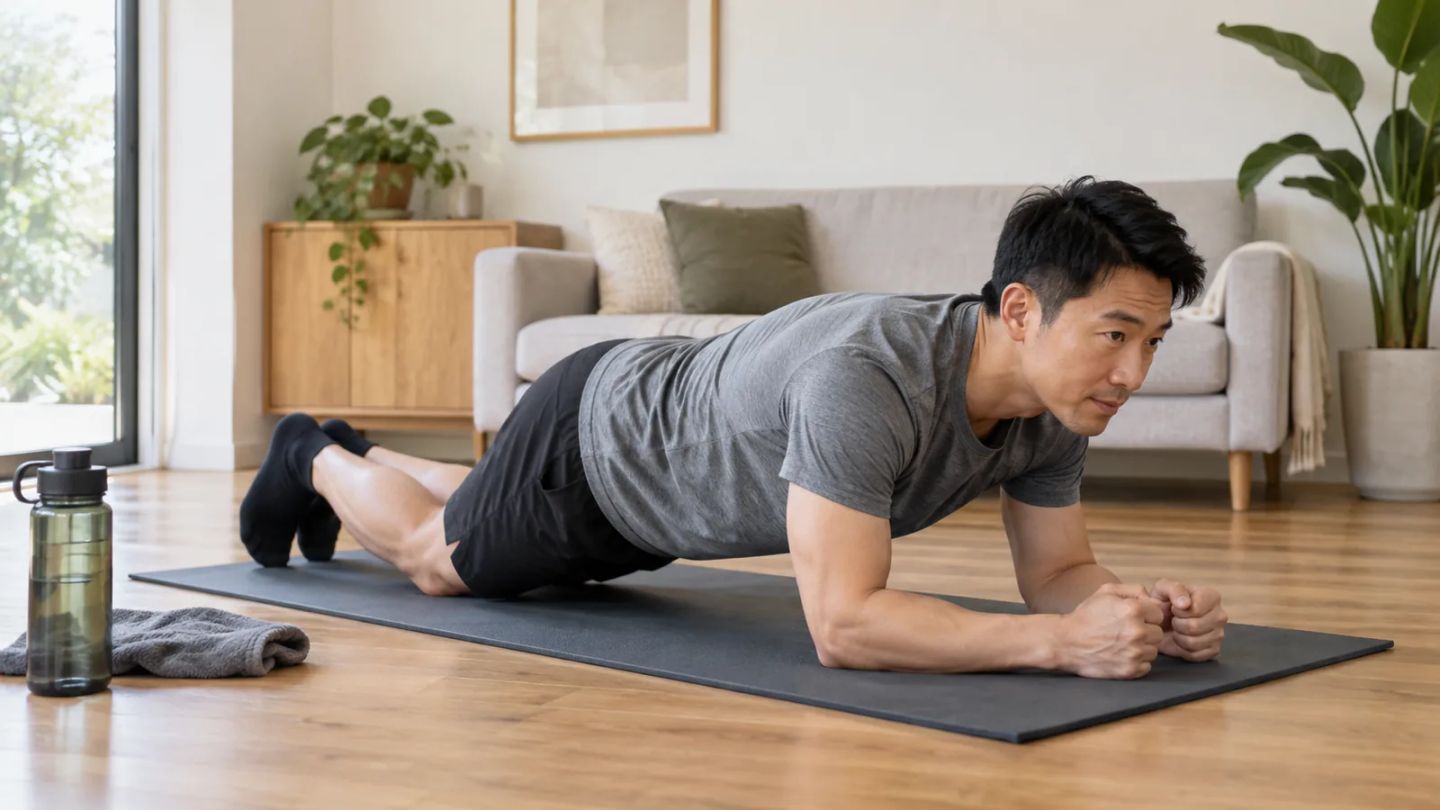
Here is the forearm plank, step by step:
- Lie face down and set your forearms on the floor, elbows directly under your shoulders, hands pointing forward.
- Tuck your toes under and lift your body so you are resting on forearms and toes.
- Draw your belly button gently towards your spine and squeeze your glutes.
- Hold a straight line from the top of your head to your heels, gaze on the floor a little in front of your hands.
Two mistakes cause most plank back pain, and both are fixable. The first is letting your hips sag towards the floor, which arches your lower back. Harvard Health is direct about it, saying not to let your hips rise or sag so your body forms a straight line from head to feet. The second is dropping or craning your head, which strains your neck.
Stephanie Mansour, a certified trainer writing for TODAY, warns that arching the back means "the core is not engaged", so the hold does nothing useful, and that good form "will reduce the risk of back pain and injury". Keep the top of your head reaching forward and your eyes down.
One more thing people forget. Keep breathing. Holding your breath spikes the pressure in your torso and makes you lightheaded, so breathe slow and steady the whole way through.
Easier versions for your first day
If a full forearm plank drops your hips within a few seconds, you are not failing at it. You need a gentler starting point, and there are two good ones.
Drop to your knees. Keep everything else the same, forearms down, straight line from head to knees, core tight, and you take a big chunk of weight off the hold while training the same muscles.
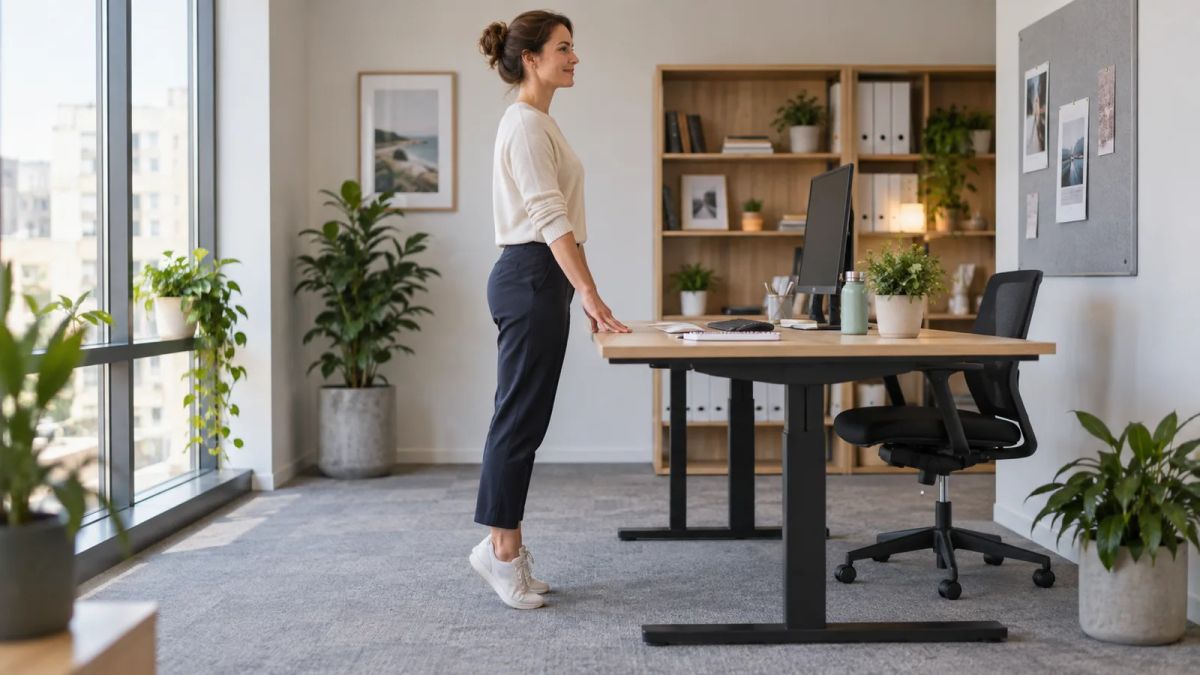
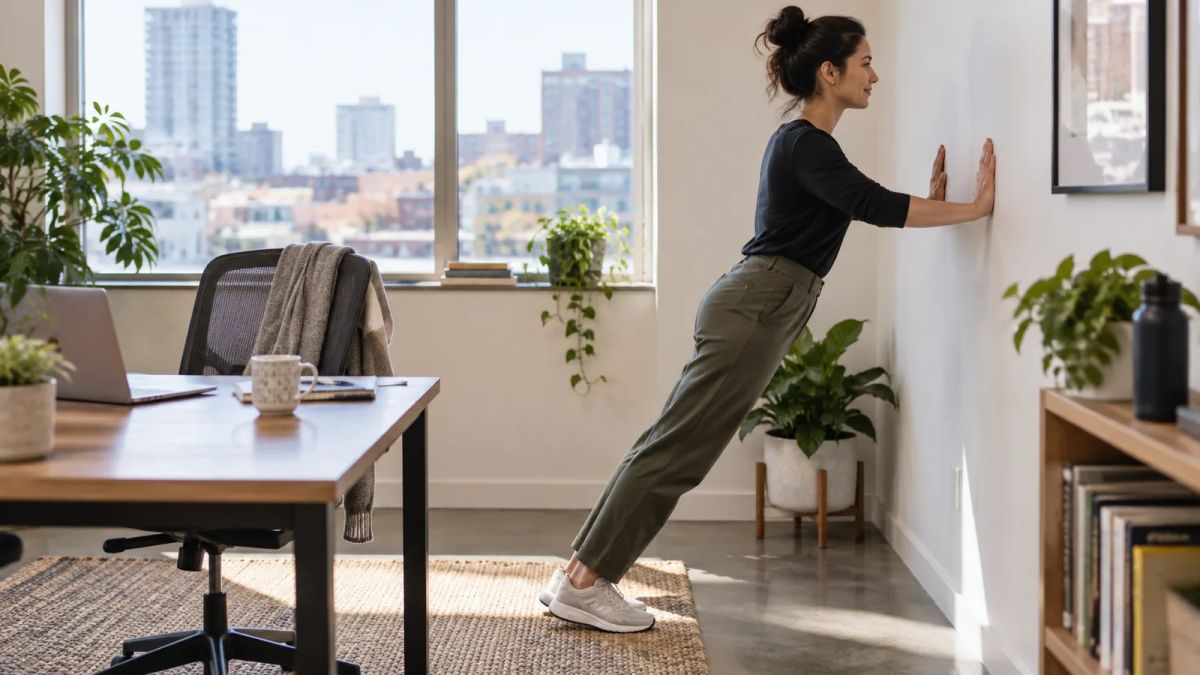
Or stand up and use a kitchen counter. Harvard Health suggests leaning against a counter so your body sits at roughly a 45-degree angle, which is the kindest way in if getting down to the floor is hard or your back is sensitive. The higher the surface, the easier the hold, so a wall is gentler still.
Start where you can keep good form for ten seconds. That is the real starting line, not a number someone else can do.
The beginner core routine
Open our free printable: Your beginner core card (PDF). Save or print it to use alongside this guide. No sign-up needed.
Five moves, about ten minutes, done slowly. Pick the plank version you can hold with a straight back, rest 30 to 60 seconds between moves, and stop any exercise that brings sharp pain.
1. Forearm plank
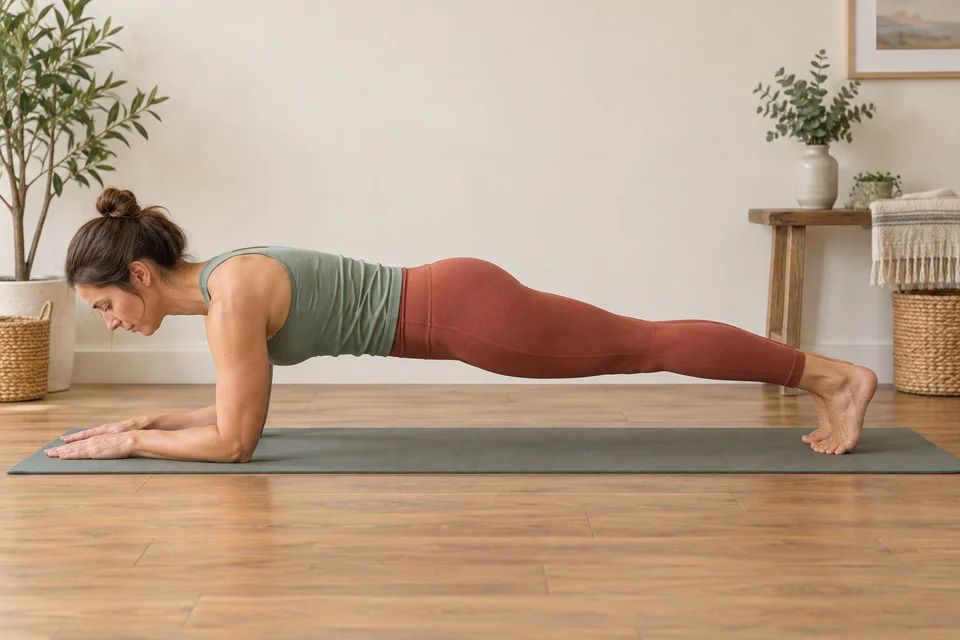
Hold 10 to 20 seconds, then rest, for 2 to 3 rounds. Build towards 30 seconds over a few weeks. Harvard Health notes you gain little past two minutes, so length is not the point.
2. Knee plank
If the full plank is too much, do this as your plank instead, holding 20 to 30 seconds for 2 rounds. It is the same brace with less load through your back.
3. Side plank on your knees
Lie on your side, forearm down and elbow under your shoulder, knees bent behind you. Lift your hips so your shoulder, hip and knee make a line. Hold 10 to 15 seconds each side, 2 rounds. This one trains the obliques down your sides.
4. Dead bug
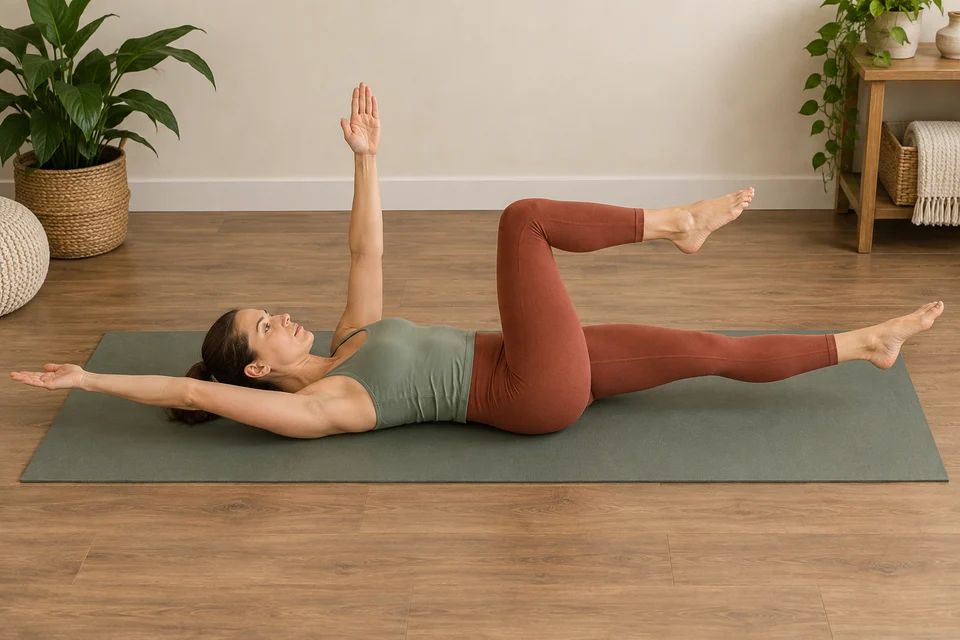
Lie on your back, arms pointing at the ceiling, knees bent above your hips. Draw your belly button down so your lower back stays flat on the floor. Slowly lower one arm overhead and the opposite heel towards the floor, touch lightly, and bring them back. Alternate sides for 8 to 10 reps each. ACE describes keeping the abdominal hollowing and breathing throughout, so your back never lifts.
5. Bird dog
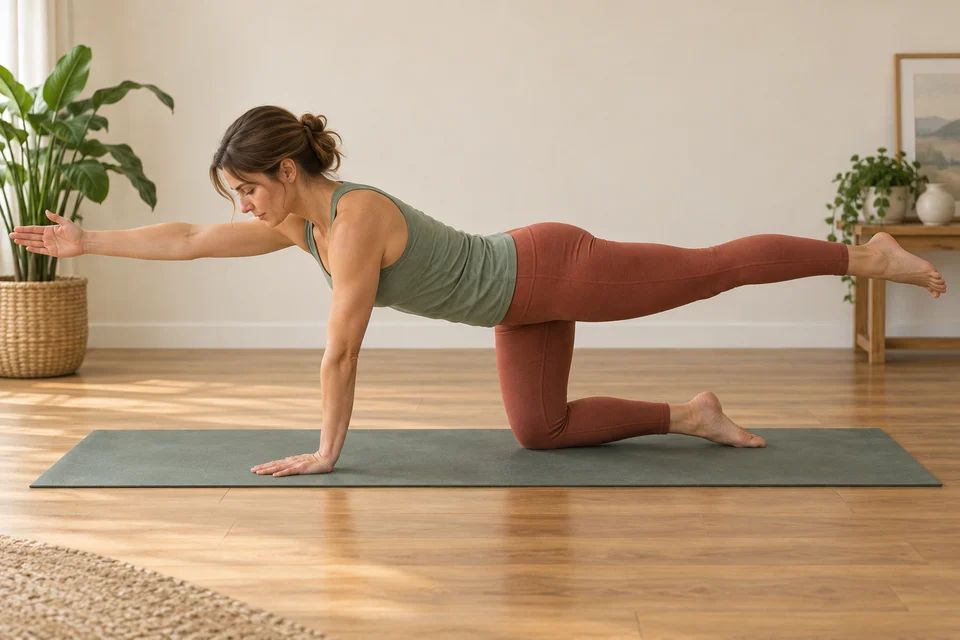
Kneel on all fours, hands under shoulders and knees under hips, spine neutral. Brace your core and reach one arm forward and the opposite leg back until both are level with your body, then lower with control. ACE notes the range you extend is set by how well you can stop your lower back moving. Do 8 to 10 reps each side.
That is one round of the routine. As it gets easier, add a second round of the whole thing before you add seconds to the holds.
How often, and how to progress
Two to four sessions a week is plenty, with a rest day or an easy walk between them. Cleveland Clinic suggests planking two to four times a week and building your holds in five to ten second steps.
Progress the plank by adding a few seconds, not minutes. Once a 30-second forearm plank feels steady, Harvard Health suggests lifting one leg an inch off the floor for a second or two, then the other, which makes your core fight to keep you level. Moving from a knee plank to a full one, or a counter plank down to the floor, counts as progress too.
If you are new to exercise in general, our guide to how to start exercising covers easing in gently.
Consistency does more here than any single hard session. A short routine you come back to most weeks builds a steadier core than an ambitious plan you drop by the second week.
Keep the routine going on your phone

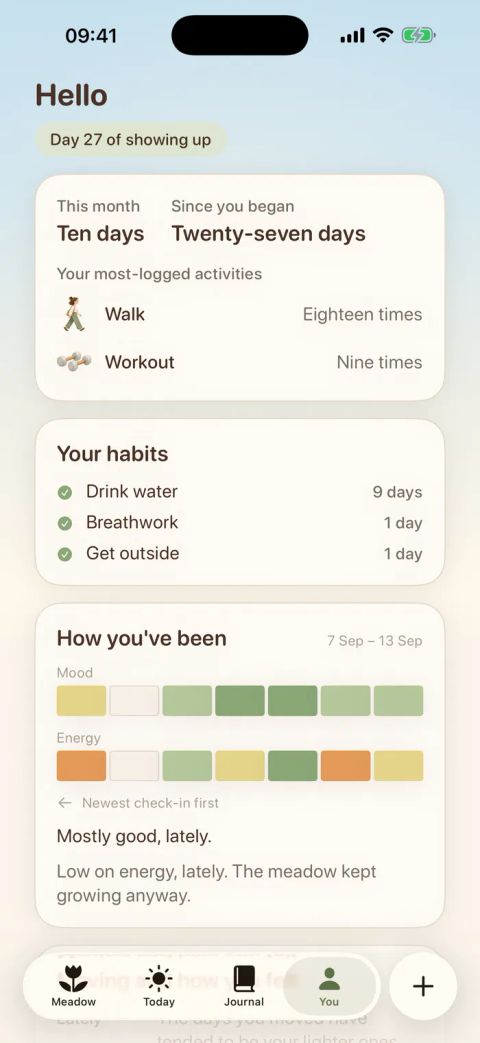
A ten-minute routine lives or dies by whether you come back to it, and a small nudge can help with that. Meadow is a gentle movement and habit app for iPhone where you log the movement you do, a core session, a walk, a few minutes of stretching, with a timer, and tick off small daily habits alongside it. Every day you show up grows a wildflower in your own meadow. There are no streaks, so the week you skip your planks resets nothing and your flowers stay put until you pick it up again.
Frequently asked questions
How long should a beginner hold a plank?
Start with 10 to 20 seconds and stop the moment your hips sag or your back arches. Harvard Health suggests working up to around 30 seconds for two or three sets, and there is little extra benefit beyond two minutes. Good form for ten seconds beats a shaky minute.
How often should I do this routine?
Two to four times a week, with rest between sessions. Your core adapts on the days off, so daily hard planks are not the aim. If you want to move on the days between, a walk is ideal.
Will planks give me a flat stomach?
No exercise flattens a stomach on its own. Planks build and strengthen the core underneath, and how your middle looks comes down far more to your overall eating and activity than to any one move. Treat this routine as building a steadier core, and let the rest follow from a broader active week.
My lower back hurts during a plank. What am I doing wrong?
Usually your hips are sagging and your back is arching, which loads the spine instead of the abs. Try a knee or counter plank, draw your belly button in, squeeze your glutes and keep the line straight. If the pain carries on or is sharp, stop and see a GP or physiotherapist.
Is a plank enough on its own?
It is a strong core exercise, not a whole fitness plan. Pair this routine with regular walking or other low-impact movement and, over time, some wider strength work.
Pick one plank version you can hold with a straight back, set a timer for ten seconds, and do three rounds straight after something you already do each morning. That is your whole routine for week one, and it is enough to start.
AUTHOR
Co-founder of Meadow.
Ash is co-founder of Meadow, a habit and movement tracking app that turns small acts of self-care into a growing wildflower meadow.
See how far you've come
Your habits, moods and little wins, all in one place
Meadow keeps track of the walks, the water and the good days, so you can look back and watch your effort add up.
Download Meadow