Incline walking burns more calories than the same walk on flat ground, so it can help with fat loss when the rest of your week adds up to an overall calorie deficit. It also works your glutes harder than flat walking, though the effect leans towards tone and endurance more than the size you'd build lifting heavy.
Neither of those is the myth people usually have in mind.
The myth is that a hill can strip fat off your bum in particular, or grow it the way a loaded squat does. It can't do either. What it can do is raise the effort of an ordinary walk, and that turns out to be worth a fair bit.
This is the fat-versus-glutes question in full. If you want the wider picture, the benefits and the 12-3-30 routine, our guide to incline walking covers that ground. Here we're settling what a hill does for fat and for your glutes, how it stacks up against flat walking, whether it counts as cardio, and how to build it in without wrecking week one.
Does incline walking burn more fat?
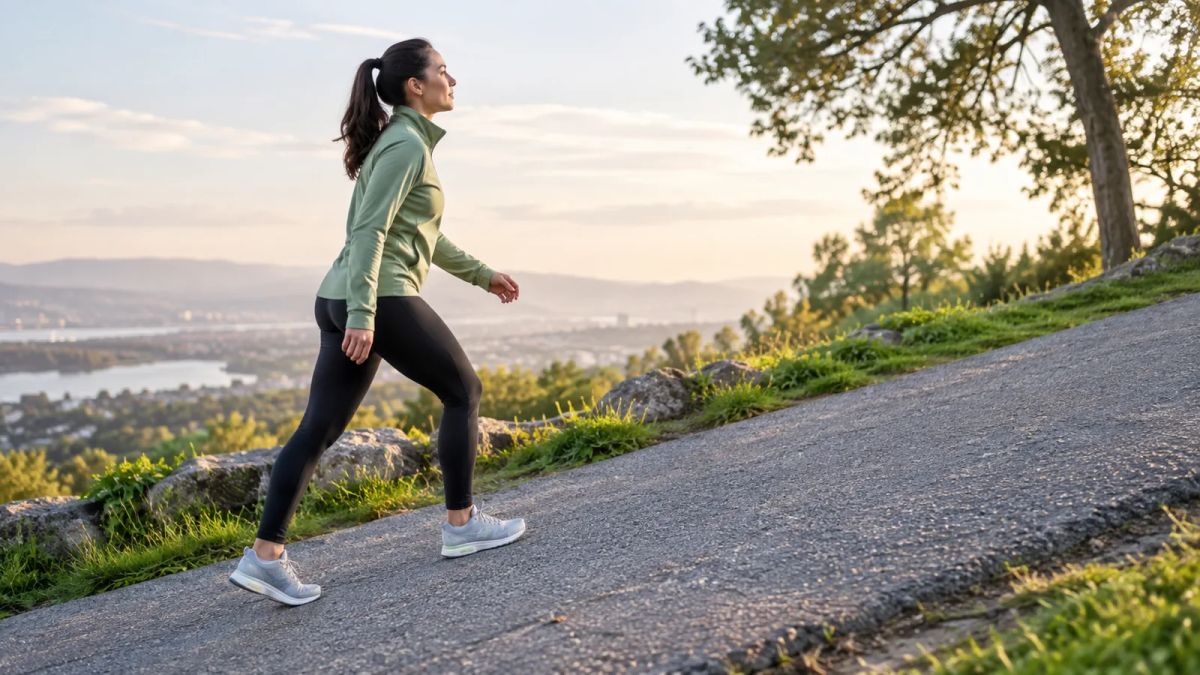
Tilt the ground and every step has to lift your body weight as well as carry it forward. Cleveland Clinic puts the calorie burn at a 12 per cent incline at nearly double a flat walk at the same speed. Same half hour, more energy out.
More energy out is the part that helps a fat-loss goal. Your body sheds fat when it runs on less energy than it takes in, and the CDC is blunt that most of that gap comes from the kitchen. Its line is that "most weight loss occurs from decreasing calories," with activity earning its keep by keeping the loss off. A steeper walk widens the gap on the movement side. It doesn't close it on its own.
Two ideas tend to get in the way here. The first is the "fat-burning zone," the notion that a gentle uphill walk melts fat because it draws a bigger share of its fuel from fat. Easy effort does lean more on fat for fuel, but the total burn is small, and what reshapes your body over months is the calorie gap across the whole day, not the fuel mix of one session.
The second is spot reduction, the hope that walking uphill trims fat from your legs or belly because that's where you feel the work. Fat doesn't leave that way. The University of Sydney states it plainly: "spot reduction is a myth, we can't control where our bodies lose fat." Its summary of a 2021 review of 13 studies with more than 1,100 people found that training one part of the body did nothing to the fat sitting on it. Fat comes off everywhere, in an order your genes mostly set.
Put plainly, incline walking raises the calories you spend, which helps fat loss when your eating leaves room for it. It won't target a body part, and it won't rescue a poor diet. If weight is your main aim, our guide to walking for weight loss covers how the habit and the plate fit together.
Does incline walking build your glutes?
Yes, more than flat walking does, and the reason is straightforward. Every uphill step asks your hip to extend against gravity, and hip extension is the main job of your gluteus maximus.
Researchers have measured it. In a treadmill study comparing level walking with a 20 per cent incline, gluteus maximus activation rose sharply, its integrated EMG climbing from around 12 per cent of the muscle's working range on the flat to roughly 19 per cent uphill. Your hamstrings and calves take on more of the load too.
That's activation, though, not a heavy training stimulus. A brisk uphill walk keeps your glutes switched on at a modest, steady level for a long stretch, and that suits endurance and firmness. Building noticeably bigger glutes usually calls for the opposite pattern of heavy load and low reps, the sort of resistance a walk can't hand you. Harvard Health frames the hill fairly, saying walking uphill "adds resistance that can improve endurance by building your leg muscles," naming the quadriceps, hamstrings and calves. Firmer and stronger, yes. A squat-rack transformation, no.
If glute growth is your goal, use incline walking to complement resistance work, not stand in for it.
Incline versus flat walking, side by side
At the same speed, the hill changes four things:
- Calorie burn: higher, up to close to double at a steep grade.
- Glute, hamstring and calf work: more than flat ground.
- Heart rate and effort: up, without you walking any faster.
- Joint impact: still low, close to ordinary walking.
Flat walking earns its place all the same. It's easier to keep up every day, kinder to stiff ankles, and the better choice on a recovery day. Think of the incline as a way to get more from the same block of time when you want it, not a swap for the everyday walk.
Is incline walking good cardio?
It is, and usually better cardio than a flat stroll. Because your heart works harder to haul you up, a moderate grade lifts an easy walk into the moderate-intensity range that health guidance is built around. The NHS suggests adults aim for 150 minutes of moderate activity a week, and brisk or uphill walking counts towards it. A quick gauge is the talk test. At a moderate effort you can still talk but not sing.
How to program incline walking
Open our free Your incline walking week (PDF). Save or print it to use alongside this guide. No sign-up needed.
Match it to what you're after. For fat loss the lever is total calories across the week, so more walking minutes plus a sensible plate beats one brutal session. For glutes the lever is the grade, since a steeper hill asks more of your hips.
A starting week that holds up looks like this:
- Walk on an incline two or three days, beginning at a gentle 3 to 5 per cent grade for 10 to 20 minutes.
- Keep your usual comfortable pace. The hill supplies the effort, so you don't need speed on top.
- Add a percentage point or a few minutes only once the last session felt manageable.
- On the other days, keep an ordinary flat walk going for the daily habit.
- If glutes are the priority, add two short strength sessions a week, because heavy load builds muscle in a way a walk can't.
On a bad day, drop the grade and the clock. Five minutes at 3 per cent still counts, and it beats skipping. Miss a day outright and there's nothing to make up. You pick the hill back up tomorrow.
Keep the hills adding up

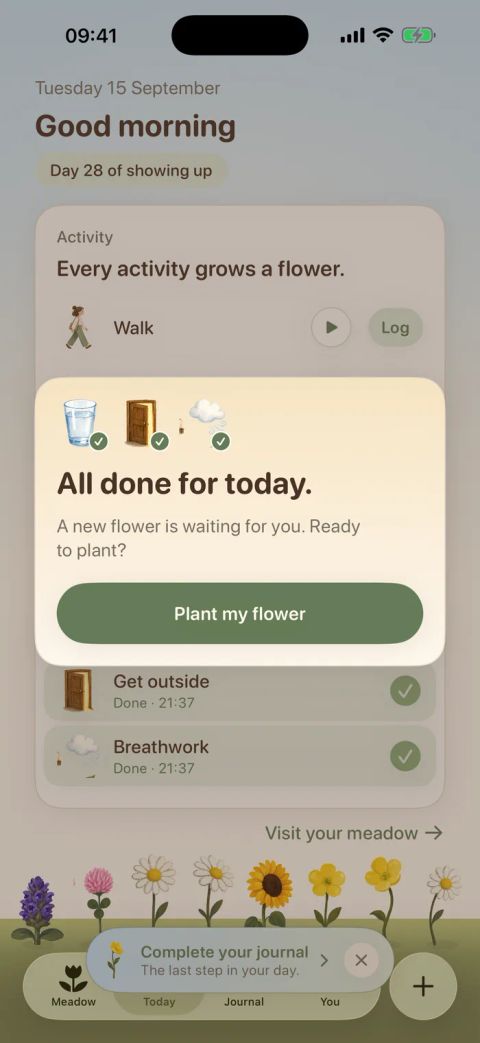
Watching your walks stack up is often what keeps the habit alive when motivation is thin. Meadow lets you log a walk in a few seconds, incline or flat, so an uphill session takes its place in the record without any fuss. It's a gentle habit app for iPhone made by Wildcard Wellness, and each day you move grows a wildflower in your own meadow, with rare flowers and the odd animal visitor turning up as it fills in. There are no streaks, so a hill you skip when it's pouring resets nothing, and your flowers never wilt. You can find it at Meadow.
Staying safe on the incline
A hill loads your calves, achilles and lower back more than flat ground, so a little care early pays off. Warm up with a few flat minutes before you tilt anything. Build the grade and the time gradually, the way the NHS advises for walking in general, rather than leaping to a steep setting in week one. Stand tall and resist the urge to hang off the treadmill rails, which cancels much of the work you came for. Stop if something hurts in a way that feels wrong, not the ordinary burn of effort. And if you've been inactive for a while, are carrying a health condition, or are coming back from illness, have a quick word with your GP before you take on anything more strenuous than a gentle walk.
Incline walking, fat and glutes FAQ
Will incline walking give me a bigger bum?
It firms and strengthens your glutes more than flat walking, since a 20 per cent incline roughly raised gluteus maximus activation from about 12 to 19 per cent of its working range in one treadmill study. Noticeable growth, though, usually needs the heavy load of resistance training. Treat the hill as a helper, not the main event.
Does incline walking burn belly fat?
It burns calories, and a calorie deficit reduces fat across your whole body over time. It can't aim at your belly, because spot reduction is a myth. Where you lose fat first is mostly down to your genes.
Is incline walking better than flat for weight loss?
It burns more calories per minute, so minute for minute it does more. What decides weight, though, is your total weekly energy balance, and the CDC notes that most weight loss comes from eating less. The best incline is the one you'll keep doing.
What incline is best for glutes?
Steeper grades ask more of your hips, so more of the work lands on your glutes. Many people feel a clear difference somewhere in the 6 to 12 per cent range. Comfort and safety come first, so start gentle and build up.
Is incline walking cardio or strength?
Mostly cardio, with more lower-body muscle involved than a flat walk. It's a fine way to raise your heart rate at low impact, and a poor substitute for proper strength training if muscle is your goal. If you want the broader case for everyday walking, our guide to the benefits of walking makes it.
One thing to try today
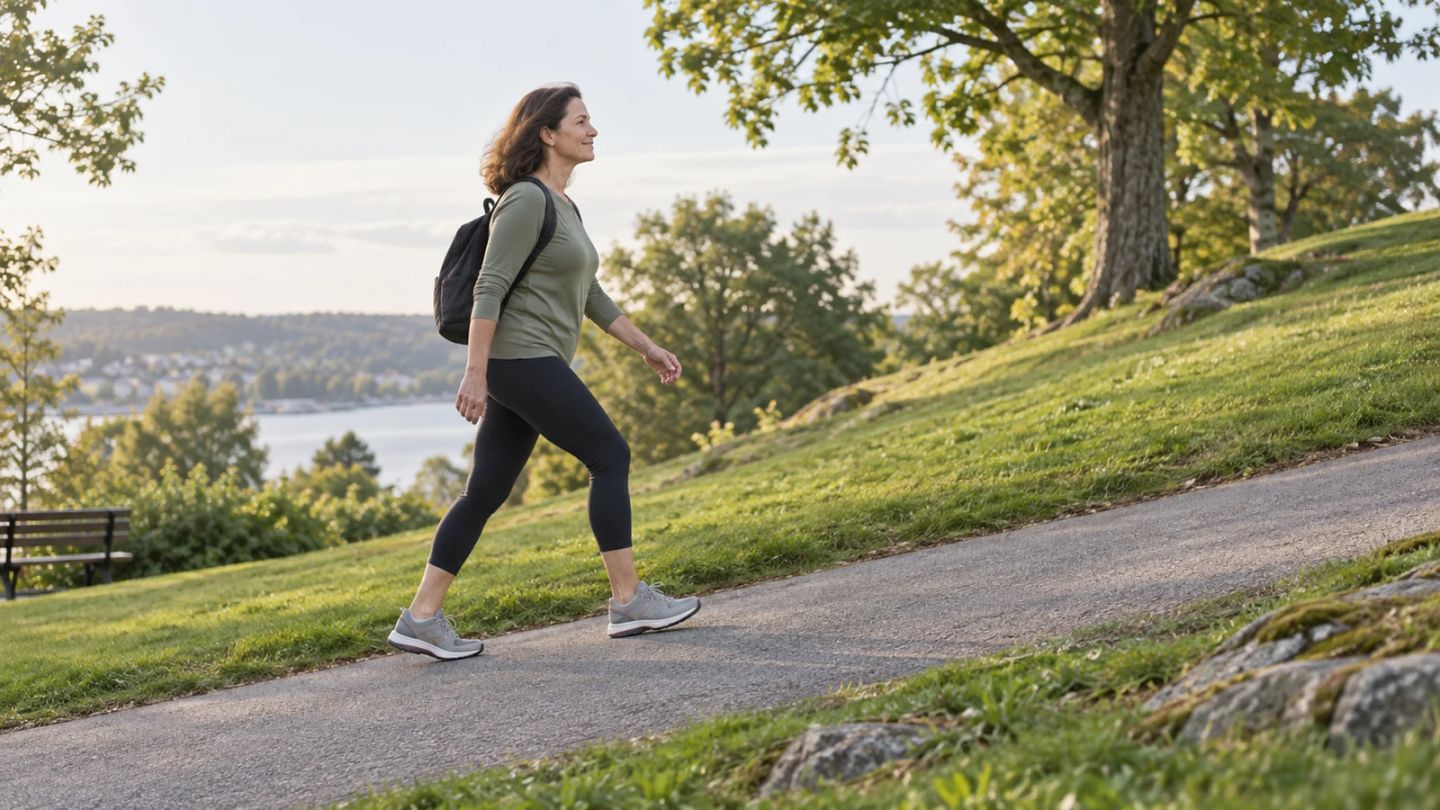
On your next walk, find a slope, a hilly street, a car park ramp, or nudge a treadmill to 5 per cent, and hold your usual pace for five minutes. Notice your breathing lift and your glutes switch on while your feet barely change speed. That's the answer to both questions, felt in five minutes. More effort for the same walk, spread across your whole body, and not aimed at any one part of it.
AUTHOR
Co-founder of Meadow.
Ash is co-founder of Meadow, a habit and movement tracking app that turns small acts of self-care into a growing wildflower meadow.
Every little bit counts
Five minutes counts. So does a dance in the kitchen.
Log the movement you enjoy and the small habits that help you feel good, and watch them bloom into something you can see.
Download Meadow