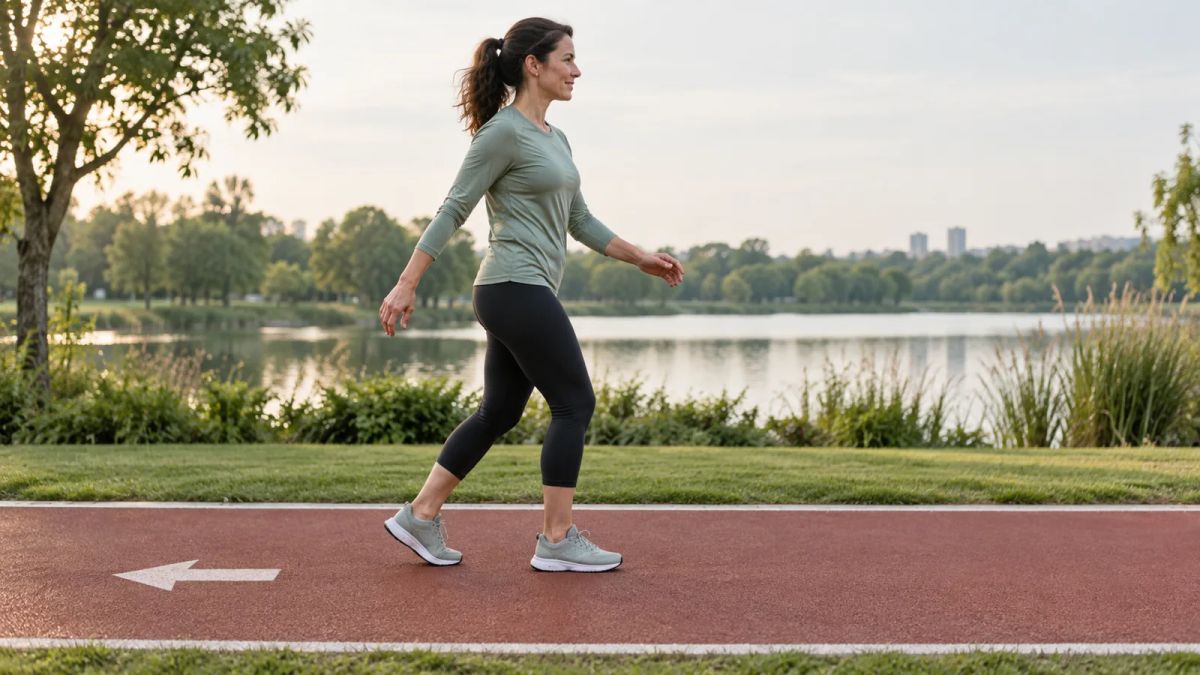
For most people a brisk walk can sit in zone 2, the easy, conversational pace at roughly 60 to 70 per cent of your maximum heart rate. Whether your walk gets there depends on your fitness, so the same flat stroll that puts one person squarely in zone 2 can leave a fitter walker in the easier zone below it.
That is the honest answer, and it is more useful than a flat yes.
Zone 2 is the second of five training zones coaches use, an easy effort you can hold a conversation through. It has become the pace everyone online swears by for building fitness while barely raising a sweat. Walking is the most reachable way in, but "is my walk zone 2" comes down to how hard you are working, not the fact that you are walking. Here is how to tell, how to lift a walk that falls short, and where the claims run ahead of the evidence.
How to tell if your walk is zone 2
You do not need a heart-rate strap to answer this. The quickest check is your own breath.
Walk at a pace where you can speak a full sentence but could not sing it. The NHS uses that exact gauge for a brisk walk, a pace where you can still talk but cannot sing the words to a song. If you are gasping between words, you have climbed above zone 2. If you could belt out a chorus without a wobble, you are probably still in the easier zone below and need to pick it up.
The talk test holds up better than its simplicity suggests. Research published by the American Council on Exercise, led by the exercise physiologist John Porcari, found that comfortable speech is possible below the ventilatory threshold, becomes patchy right at it, and breaks down above it. Across healthy people, cardiac patients and athletes, the talk test tracked that threshold closely, and as someone's fitness improved, the pace at which speech got difficult rose with it. Your breathing is a decent live readout of your effort.
If you like a number to go with the feeling, here is a rough heart-rate check.
- Estimate your maximum heart rate as 220 minus your age. A 45-year-old gets about 175 beats a minute.
- Work out 60 and 70 per cent of that. For 175, that is roughly 105 to 123 beats a minute.
- Check your pulse or a wrist tracker mid-walk. If you are inside that window, your walk is in zone 2.
Treat those numbers loosely. Harvard Health calls the 220-minus-age sum a ballpark figure, since genetics and your baseline fitness shift the real maximum, and it suggests rate of perceived exertion as a more personal gauge, scoring how hard the effort feels out of ten. Zone 2 is a comfortable three or four. When the talk test and that feel agree, trust them over the formula.
Why the same walk is zone 2 for one person and not another
This is the part the "get out and walk" advice skips. The pace that reaches zone 2 depends on the walker, not the walk.
Cleveland Clinic pegs a brisk walk at around 15 to 20 minutes a mile on flat ground, and for a lot of people that lands squarely in zone 2. For a fit person, the same flat pace can sit in zone 1, a walk their heart barely notices. Cleveland Clinic is blunt that a wander round the block will not do it, in its words a stroll around the neighbourhood in zone 1 will not get the job done.
Age, fitness, heat, hills and even how well you slept all shift where your heart rate lands for a given pace. A walk that leaves an unfit friend puffing might leave you barely warm. That is not a flaw in walking. It means the useful question is narrower than "is walking zone 2". It is whether your walk, at today's pace, gets you there, and the talk test answers that every time.
Walking is only one route into the zone. If you want the fuller picture, our guide to zone 2 cardio examples lists the easy bike rides, swims and rows that fit the same band.
How to nudge a walk into zone 2
If your walk falls short, you do not need to break into a jog. You need a little more work per step, and there are three easy ways to add it.
- Pick up the pace. The plainest lever. Walk faster until you can still talk but would not want to sing, and hold it there. That 20-minute mile is a common landmark for reaching zone 2 on the flat.
- Take on a hill. Tilt the ground and every step has to lift your body weight as well as move it forward, so your heart rate climbs while your feet barely change speed. A treadmill incline does the same job indoors, which makes it an easy way for a fitter walker to reach zone 2 without running. Our guide to incline walking covers how the slope does the work.
- Carry some weight. A loaded rucksack or a weighted vest adds resistance to every step, lifting a walk that is too easy up into the zone. Start light and build the load over weeks, not days.
Any one of these turns an easy stroll into a zone 2 walk. You do not need all three, and the talk test will tell you the moment you have done enough.
How much zone 2 walking, and how often
For general health, the figure most guidance points to is 150 minutes of moderate activity a week, which Harvard Health gives and Cleveland Clinic echoes from the American Heart Association. A zone 2 walk counts towards every minute of it.
Cleveland Clinic notes the endurance gains build from sustained efforts of 30 minutes or more, so a few longer, steadier walks tend to do more here than a scatter of quick ones. Aim for the half hour when you can.
On a day when 30 minutes will not fit, shrink the walk instead of skipping it. Ten minutes at a talking pace still counts, and it keeps the habit alive on the days that would otherwise break it. Three short walks across a day add up to the same minutes as one long one.
If a whole week slips by, do not try to claw it back with one punishing march. Pick up where you are, at an easy pace, and let the minutes rebuild. The walk you will come back to is worth more than the perfect plan you abandoned. Our guide to the benefits of walking makes the wider case for keeping the everyday walk going.
The hype, and the honest limits
Zone 2 is often sold as the pace your health hinges on, the one intensity that adds years. The science is more cautious than the marketing.
A 2025 narrative review in the journal Sports Medicine looked hard at those claims. Storoschuk and colleagues found that zone 2's reputation as the optimal intensity for your muscles' fat-burning machinery mostly traces back to observational data on elite endurance athletes, who log enormous volumes of easy training. That is a long way from someone fitting in three walks a week. Their conclusion, put plainly: current evidence does not support zone 2 as the optimal intensity, and higher-intensity efforts appear to count for a great deal, especially when your total training time is low.
None of that makes a zone 2 walk pointless. It is a low-strain, joint-friendly way to hit your weekly activity minutes, and consistency is where most of the payoff sits. It does mean you need not keep every walk easy. A brisker push now and then covers more ground than staying gentle all the time.
Two honest caveats. These findings describe averages across groups, not a promise for any one person, and easy walking is a way to support your health, not a treatment for any medical condition. If you have been inactive for a while, are managing a health condition, or are coming back from illness, have a quick word with your GP before you build up the effort.
See the easy walks add up

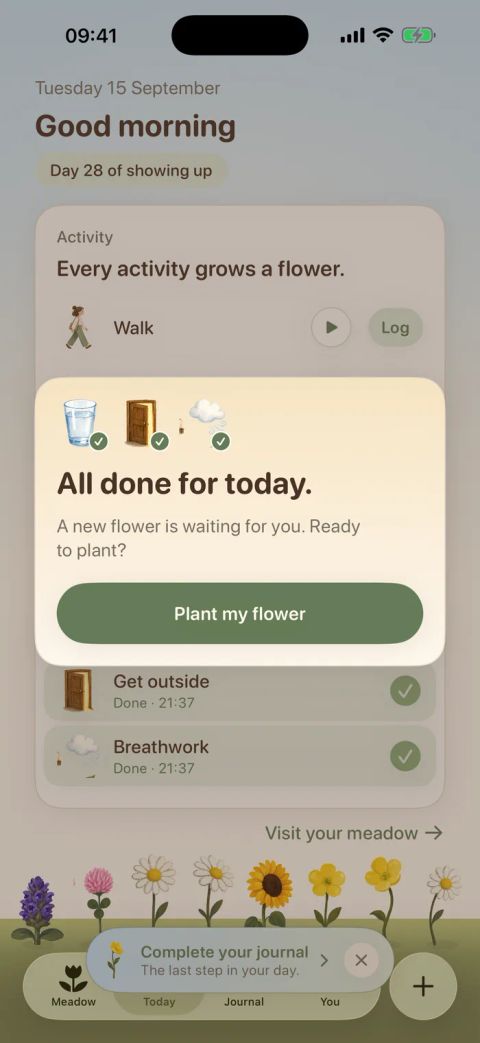
The easy walks are the ones you forget you did, which can make a steady habit feel like it is going nowhere even when it is not. Meadow gives each walk somewhere to land. It is a gentle movement and habit app for iPhone from Wildcard Wellness where you log a walk with a timer, tick off small daily habits, and note your mood and energy, and each day you show up grows a new wildflower in your own meadow, with rare flowers and the odd animal visitor turning up as it fills in. It counts consistency over perfect weeks, so there are no streaks to protect and a rained-off walk resets nothing you have built.
Walking and zone 2 FAQ
Is walking zone 2 cardio?
Often, yes. For most people a brisk, purposeful walk lands in zone 2, especially on a hill or a treadmill incline. If you are very fit, flat walking may sit in the easier zone 1, and you would need a quicker pace, a slope or some added weight to lift it. The talk test tells you which side of the line you are on.
What heart rate is zone 2 when walking?
Roughly 60 to 70 per cent of your maximum heart rate, which Harvard Health places in the moderate range. To estimate it, take 220 minus your age for your rough maximum, then aim for 60 to 70 per cent of that during the walk. The number is a guide, not a rule, so let the talk test override it.
Is zone 2 walking good for weight loss?
It uses more energy than sitting still and draws more of that energy from fat during the walk, but burning fat in a session is not the same as losing body fat, which depends on your overall diet and activity far more than one walk does. A zone 2 walk supports a weight goal. It does not guarantee one.
How long should a zone 2 walk be?
Cleveland Clinic notes endurance gains come from sustained efforts of 30 minutes or more, so a half hour is a good target when you can manage it. On busier days a 10-minute walk still counts towards your weekly minutes. Build the length before you push the pace.
Should I do zone 2 walks or faster ones?
Both earn a place. Zone 2 builds your aerobic base with low strain, while brisker efforts drive some fitness gains more strongly, which is why the Sports Medicine review warns against dropping harder work altogether. If your week is tight on time, a mix beats going all-in on either.
One thing to try today
Head out for a 15-minute walk and, halfway through, say a full sentence out loud. If the words come in one easy breath, pick up the pace or find a slope until saying that sentence takes a bit of effort. That effort is your zone 2, and now you can find it again without checking a thing.
AUTHOR
Co-founder of Meadow.
Ash is co-founder of Meadow, a habit and movement tracking app that turns small acts of self-care into a growing wildflower meadow.
Every little bit counts
Five minutes counts. So does a dance in the kitchen.
Log the movement you enjoy and the small habits that help you feel good, and watch them bloom into something you can see.
Download Meadow