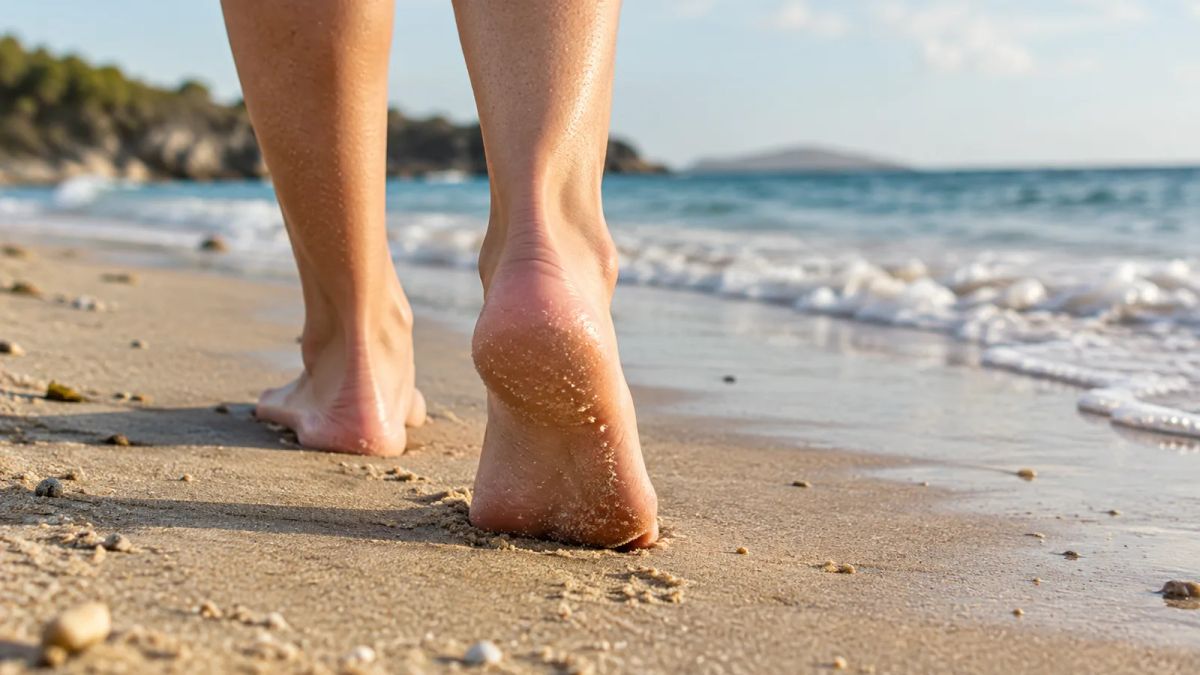
Time outdoors is linked to better mood, lower stress and steadier health, and the clearest number we have suggests the benefits start to show once you reach about two hours a week. That figure comes from a large English study, and it holds whether you get your two hours in one long walk or a handful of short ones.
The honest caveat sits right next to it. Most of this research shows an association, not proof that nature caused the change, and the size of the effect depends a lot on what you do and how the study was run.
This guide walks through what the evidence says about nature for stress, mood, attention and physical health, where it is solid and where it is thin, how much seems to help, and simple ways to get more of it even if you live in the middle of a city.
What the evidence shows
The most quoted finding comes from a 2019 study in Scientific Reports. Researchers looked at 19,806 adults in England and found that people who spent at least 120 minutes in nature during the past week were more likely to report good health and higher wellbeing than people who got none. Below two hours, the benefit did not show up. It climbed from there and levelled off somewhere between 200 and 300 minutes.
Two details make it more useful than the headline. It did not matter whether the two hours came in one visit or several shorter ones, so a daily fifteen minutes counts the same as one long Sunday walk. And the link held even after the researchers accounted for how much exercise people did, which suggests the nature itself is doing something, not the walking alone.
Here is the part the headlines skip. The study is cross-sectional, a snapshot of one week, so it cannot rule out that healthier, happier people go outside more anyway. The authors say as much. Treat 120 minutes as a sensible target with good evidence behind it, not a dose that guarantees anything.
Stress, mood and a calmer body
The stress effect is the one you can feel fastest. UCLA Health points to research suggesting that 20 minutes in a natural setting can lower cortisol, the main stress hormone, whether or not you usually run high. That fits what a lot of people notice after a short walk in a park. The knot in your chest loosens a little, even when nothing about the day has changed.
For mood, the strongest recent picture comes from a 2021 meta-analysis in SSM - Population Health. Pooling 50 studies of nature-based activities like gardening and outdoor exercise, the authors found large drops in depression and anxiety scores and a clear rise in positive feelings against comparison groups.
Those numbers look impressive, so read the small print with them. The trials varied a lot, many carried a moderate to high risk of bias, and the physical health results were much weaker, with no real change in blood pressure or cholesterol. The mental side is where the signal is strongest, and even there the quality of the studies means the true effect is probably smaller than the averages suggest.
None of this asks nature to replace treatment. If low mood or anxiety has hung around for more than a couple of weeks or is getting in the way of daily life, that is a conversation for your GP, and time outdoors sits alongside whatever they suggest.
Attention and a clearer head
The idea that nature restores tired attention has a name, attention restoration theory, put forward by Rachel and Stephen Kaplan. The thinking goes that focused work drains a finite pool of directed attention, and gentle natural scenes let it refill because they hold your gaze without demanding effort. It explains why a walk between tasks can leave your head clearer than scrolling your phone at your desk did.
It is a lovely theory, and the evidence for it is patchier than its popularity suggests. A 2016 systematic review from the University of Exeter concluded it is unclear how much hard evidence backs it, largely because studies measured attention in so many different ways that the results are hard to compare. So the honest read is that a break in green surroundings may sharpen your focus, and plenty of people find it does, but the science is still catching up to the claim.
The physical health side
The mental benefits are the clearest, and the physical picture is more mixed but still worth having. Living near green space is linked to lower blood pressure and lower rates of heart and respiratory problems, and time outdoors gets you moving and into daylight, which helps sleep.
NHS England now runs green social prescribing, where a link worker connects people to nature-based activities like walking schemes, community gardening and conservation volunteering to support mental and physical health. Between 2021 and 2023 more than 8,500 people were referred, with an 85 per cent uptake when it was offered. A health service does not build a programme like that on nothing, though the same caution applies. Much of the underlying evidence is observational.
How much nature, and does the type matter
The two-hours-a-week target is a good anchor because it came from a large sample and did not depend on doing it all at once. Fifteen to twenty minutes on most days gets you there without carving out a big block of time you probably do not have.
The kind of green space seems to count for less than the fact of getting into it. Wilder, more varied places may do a little more, but the English study found benefits for people who sat on a bench or had a picnic, not for hikers alone. Water helps too. So-called blue spaces, a river, a canal, the sea, show up in the research alongside green ones.
For your body as well as your head, pairing the outdoors with movement is a fair bet. Our guide to the mental health benefits of exercise covers how walking and other activity lift mood, and doing that walking outside seems to add something on top.
Ways to get more nature, even in a city
You do not need a national park or a free weekend. The two-hour target is built from small, ordinary contact, so the trick is to stitch it into a normal week.
- Take one walk a day past something green. A park, a tree-lined street, a churchyard, a canal path. Fifteen minutes most days clears the 120-minute bar on its own.
- Move a daily habit outdoors. Drink your morning coffee on the step, take a phone call while walking a loop of the block, eat lunch on a bench instead of at your desk.
- Use the edges of your commute. Get off a stop early and walk the last stretch through the greenest route you can find, even if it adds five minutes.
- Find your nearest blue space. A short walk along a river or canal counts, and the sound of water is part of the draw.
- Bring nature indoors on the days you can't get out. A couple of plants on the windowsill, a chair by the window with a view of the sky or a tree, birdsong through an open window. It is a weaker dose than the real thing, but on a grey, packed day it beats nothing.
- Try a slow, senses-first walk now and then. Forest bathing is not exercise. It is walking slowly and paying attention to what you can see, hear and smell, and it is one gentle way to reach the soft, effortless attention the theory talks about.
A short record helps you see whether the outdoor time is adding up, and most people are surprised by how quickly the small bits reach two hours. Jot down the minutes and tick the days you managed something green.
Nature this week: aim for 120 minutes Today: _ mins, where: _
Mon ☐ Tue ☐ Wed ☐ Thu ☐ Fri ☐ Sat ☐ Sun ☐
A real week is rarely tidy. A filled one might look more like this, gaps and all.
Nature this week: 135 minutes Best bit: the canal on Thursday
Mon ☑ 15 Tue ☐ Wed ☑ 20 Thu ☑ 40 Fri ☐ Sat ☑ 35 Sun ☑ 25
A pocket of calm on the days you can't get out
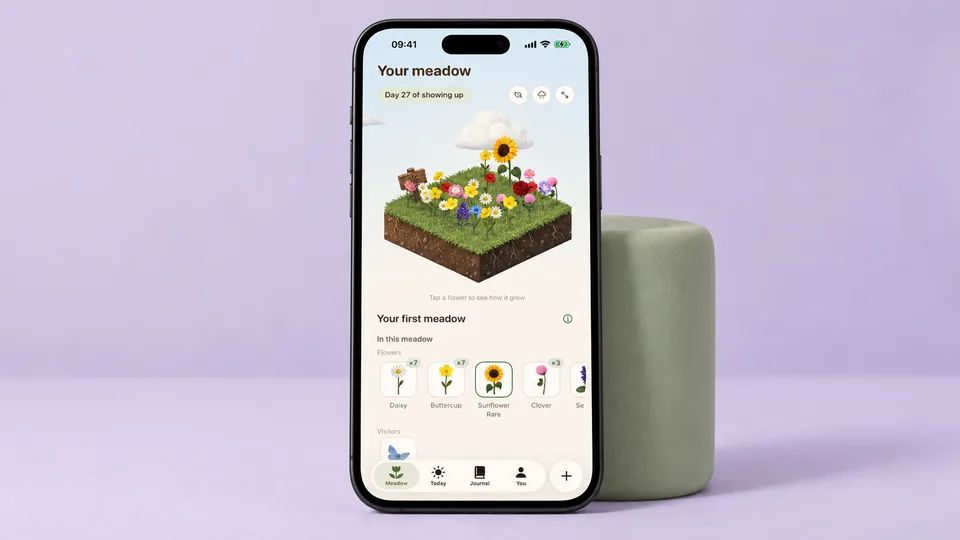
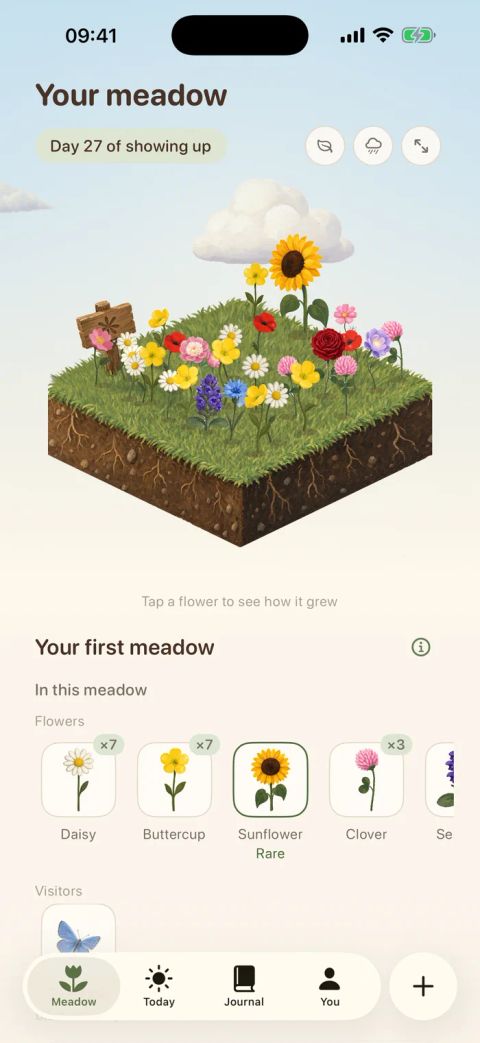
Some weeks the weather wins and you barely make it past the front door. Meadow gives you a small daily dose of the calm that outdoor time brings, wherever you are. Its built-in breathwork lets you slow your breathing beside a wildflower meadow you have grown yourself, and each day you show up, log a walk or tick off a habit, another flower blooms in it. There are no streaks, so a rained-off week resets nothing and your meadow keeps growing when you come back to it.
When you want more than a stroll
If a short daily walk has become easy and you want a bigger dose of the outdoors, a proper day out in the hills is worth building towards. Our guide to hiking for beginners covers how to start without overreaching, and there are gentler options too. For ideas beyond walking, outdoor activities for adults has a range that suit different energy levels and budgets.
Frequently asked questions
How much time in nature do I need?
About two hours a week is the figure with the best evidence, from a study of nearly 20,000 people in England. It works whether you get it in one go or spread it across the week, so fifteen minutes on most days is enough.
Does it have to be a big walk or a forest?
No. The benefits showed up for people sitting on a bench or having a picnic, not for hikers alone. A local park, a tree-lined street or a canal path all count.
Is the evidence solid or overstated?
Both, in a sense. There is a lot of consistent research linking nature to better mood and lower stress, but most of it shows association rather than proof of cause, and the strongest study is a one-week snapshot. Take the benefits as likely and worth chasing, not guaranteed.
Can time in nature help with anxiety or low mood?
It seems to help as one part of the picture. Pooled trials of nature-based activities found real reductions in anxiety and depression scores. It is support, not a substitute for care, so see your GP if low mood or anxiety lasts more than two weeks.
What if I live in a city with no garden?
City parks, street trees, canals and even a window with a view all count, and you can top them up with a couple of plants indoors. The goal is regular contact, however small, more than any single perfect green place.
Does nature improve focus?
Many people find a green break sharpens their attention, and there is a theory that explains why. The formal evidence is still mixed, so treat a walk as a good bet for clearing your head, not a certain fix.
The one thing to do today is take a fifteen-minute walk somewhere you can see something green, and note how you feel before you leave and when you get back.
AUTHOR
Co-founder of Meadow.
Ash is co-founder of Meadow, a habit and movement tracking app that turns small acts of self-care into a growing wildflower meadow.
Little and often, with Meadow
Consistency, not intensity.
Meadow turns the movement you enjoy and the habits that help you feel good into a meadow of wildflowers. No streaks to break, and your flowers never wilt.
Download Meadow