If your hips feel stiff and locked when you stand up after a long stretch at your desk, a few minutes of targeted stretching most days will loosen them. Below is a six-stretch plan you can work through in about ten minutes, with hold times and the one form cue that decides whether each stretch lands on the hip or on your lower back.
First, what you're stretching. Your hip flexors are the muscles at the front of the hip that lift your knee towards your chest. The main one is the psoas. Cleveland Clinic describes it as two long ribbons of muscle that run from the lower spine, through the pelvis, down to the top of the thigh bone, flexing the hip and helping to stabilise the spine as you stand and move.
Why sitting makes your hip flexors tight
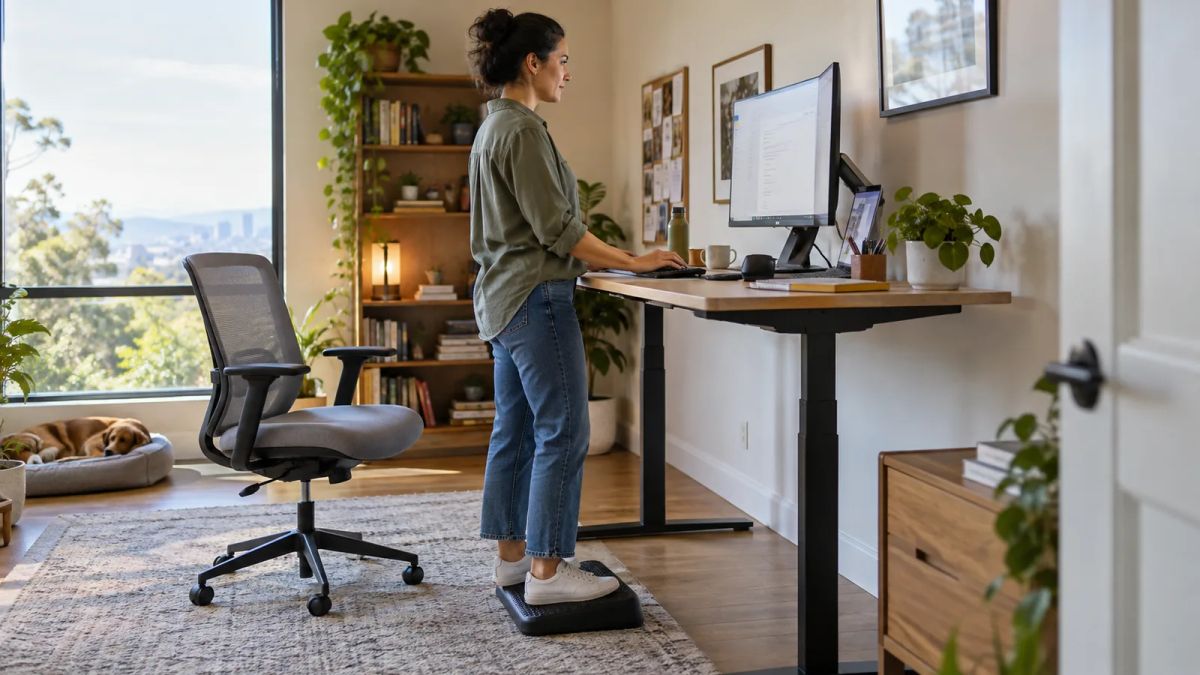
Sitting folds the hip shut. Your knee sits below your hip, the front of the hip stays bunched up, and the flexors spend hours in a shortened position. Harvard Health puts it plainly: sitting for long periods causes the hip flexors to tighten and shorten, which leads to stiffness and discomfort when you get up.
Hold a muscle short for long enough and it settles at that length. The physiotherapist Dawn Lorring told Cleveland Clinic that after a long spell of sitting the psoas can feel angry when you try to stand, and that a muscle left unused tends to weaken. That means the tightness you feel is partly a short muscle and partly a muscle that has half forgotten how to work through its full range.
The link to your lower back
The hip flexors attach to the pelvis and lower spine, so when they shorten they pull on that area. Harvard Health notes that tight hip flexors make it harder for the pelvis to rotate properly and may contribute to low back pain. Cleveland Clinic adds that weak or irritated psoas muscles often show up as pain in the lower back or the front of the hips.
This is an association, not a promise. Loosening your hip flexors may ease some lower-back stiffness, and for a lot of desk workers it does. If your back pain is sharp, spreading down a leg, or not shifting, see a GP or physiotherapist before you self-treat.
Six hip flexor stretches to work through
Do these on a soft surface with something padded under any kneeling knee. Ease into each one until you feel a pull at the front of the hip or thigh, never a sharp pain, and keep breathing normally. The order runs from easiest to deepest, so start at the top and stop wherever your hip has had enough.
1. Standing lunge stretch
Step one foot well forward and bend that front knee, keeping the back leg straight behind you with the heel lifted. Squeeze the glute on the back leg, tuck your tailbone under a touch, then ease your hips forward until you feel it across the front of the back hip. Hold for 30 seconds each side. This is the friendliest place to start because you stay upright and in control the whole time.
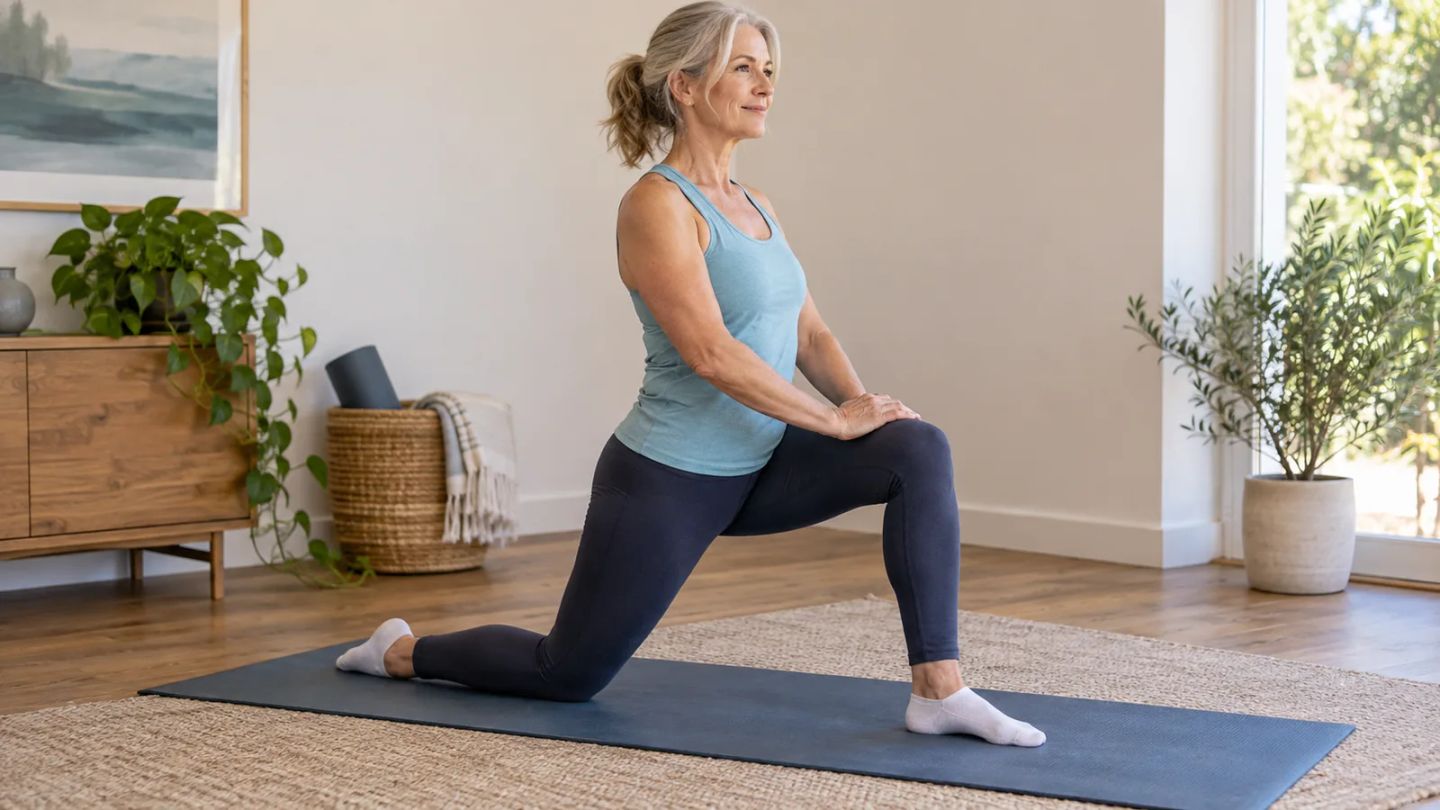
2. Half-kneeling lunge
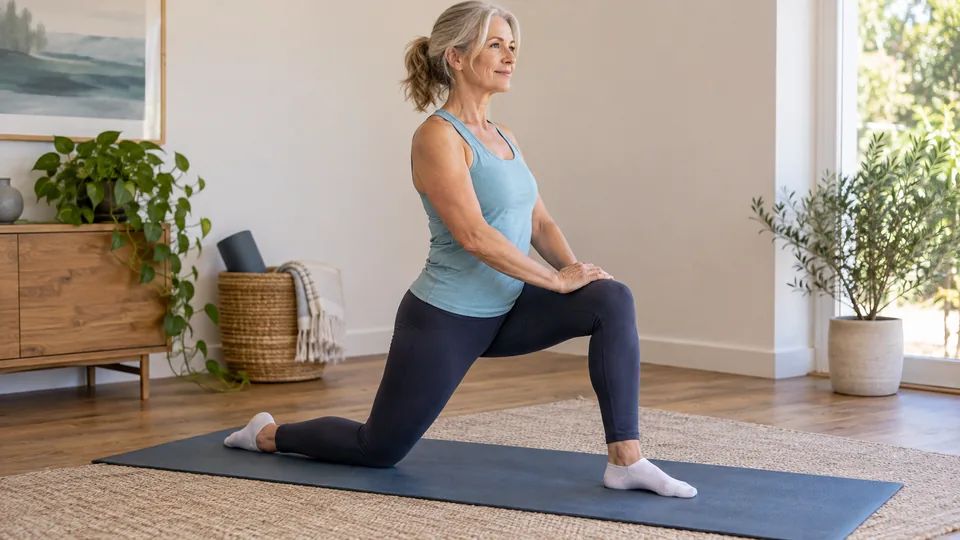
Kneel on one knee with the other foot flat in front, front knee at about 90 degrees, hands resting on the front thigh. Tuck the tailbone under, squeeze the back glute, and press the hip of the kneeling leg forward. HSS suggests holding for 30 seconds a side, and Harvard Health suggests building up to about 60 seconds in total on each side. Slide a cushion or folded towel under the down knee.
3. Low lunge with a reach
From the half-kneeling position, sink the hips down and reach both arms overhead to lengthen the whole front of the body. Keep reaching up, not back, so your lower spine stays long. Hold for up to a minute each side. Healthline lists this as a hip opener you can hold comfortably for that long.
4. Couch stretch
Kneel with the shin of one leg against a wall or the base of a sofa, toes pointing up, and bring the other foot flat on the floor in front of you. Sit tall and squeeze the back glute. Healthline flags that this one is not a lunge, so keep a straight line from the back knee up through the hip and resist drifting forward. Cushion the back knee, hold for at least 45 seconds each side, and skip it altogether if you have knee trouble. It's the deepest stretch here.
5. Reclined figure-four pigeon
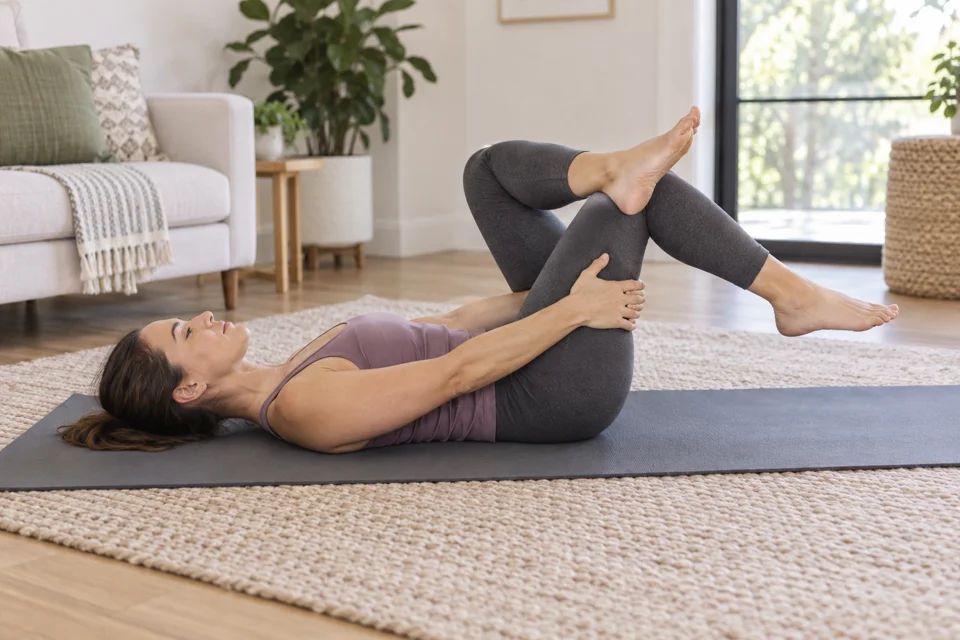
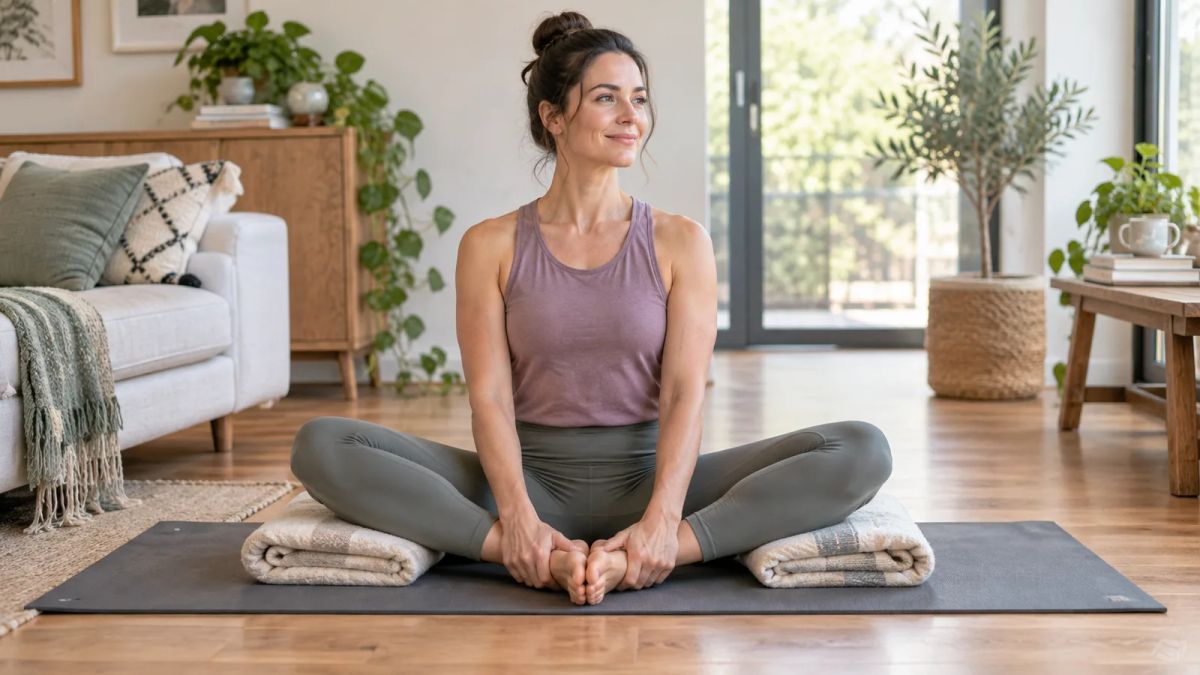
Lie on your back with both knees bent and feet flat. Cross your right ankle over your left thigh, then draw the left knee towards your chest and hold behind the thigh. This opens the hip and the outer glute while your spine stays supported on the floor. Hold for up to a minute each side, then swap.
6. Dynamic leg swings
Stand tall, hold a wall or chair for balance, and swing one leg forward and back like a pendulum. Start small and let the swings grow as the hip loosens, keeping your torso still so the movement comes from the hip. Do 10 to 15 swings a leg. Summit Ortho's advice for warming the hips up is to start with small movements and stay in a pain-free range, which is what makes swings a good primer before a walk rather than a long hold.
Getting the form right
Two cues do most of the work. Tuck your tailbone under and squeeze the glute on the side you're stretching. Physiotherapists call this a posterior pelvic tilt, and HighBar Health describes it as the thing that stops you arching your lower back and points the stretch at the hip flexor where you want it. Skip it and you tend to lean back and feel the pull in your spine instead.
The second cue is to protect the knee you kneel on. A cushion, folded towel or exercise mat takes the edge off a hard floor and lets you relax into the position. Ease in slowly. As Cleveland Clinic's Dawn Lorring puts it, good form beats a big range, and an angry muscle won't tolerate being forced.
What stretching can and can't fix
Stretching lengthens a short muscle, and done often it keeps some room in the hip. That's worth having if you sit most of the day. It won't undo eight hours of sitting on its own, though, and if the tightness keeps returning the muscle may not be the whole story.
HighBar Health's physios make the point that chronic hip flexor tightness is rarely a short muscle alone. Weak glutes and a sleepy core can leave the hip flexors overworking to hold you upright, so they feel tight because they never switch off. When that's the pattern, strengthening the glutes and core alongside stretching does far more than stretching by itself. The most useful fix of all is also the dullest, which is getting up and moving more often through the day.
How often to do them
Most of these are fine daily. HSS recommends the kneeling stretch for around 30 seconds a side, two to three times, at least twice a day if you're stuck at a desk. A workable routine is one short session in the morning, a stretch or two on a break, and a longer run-through in the evening. If daily feels like a lot, the deeper holds like pigeon sit happily at three or four times a week.
Consistency beats intensity here. A minute most days will loosen a stiff hip faster than one heroic 20-minute session on a Sunday.
On a busy day, or after you've dropped off
When you've no floor space and no time, one standing lunge stretch held for 30 seconds each side while the kettle boils still counts. It keeps the habit alive and takes the worst of the stiffness off.
If you've not stretched in weeks, don't try to make up for lost ground. Start again with the two easiest moves, the standing lunge and the leg swings, and add the deeper holds back once the hip feels less cranky. A gap doesn't cancel the progress you built before it.
Somewhere to keep the habit going
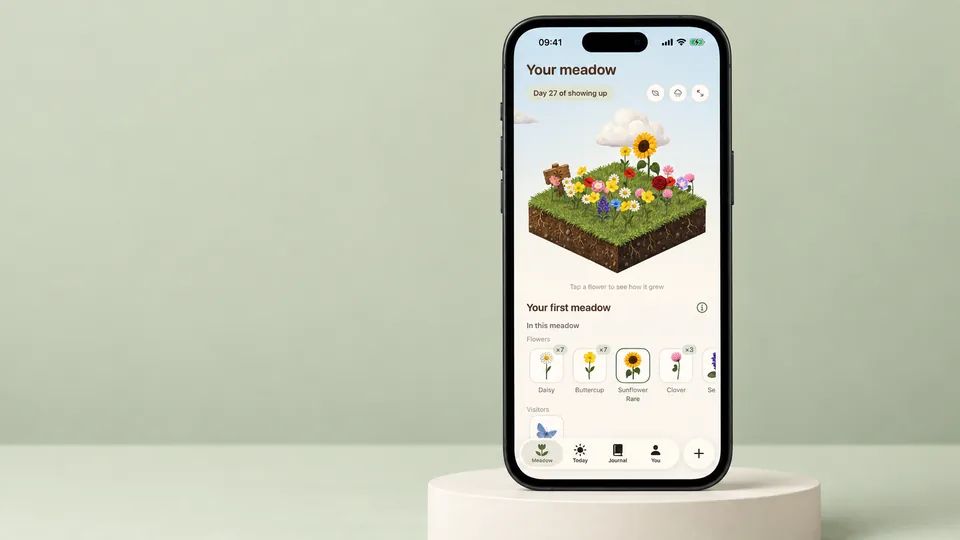
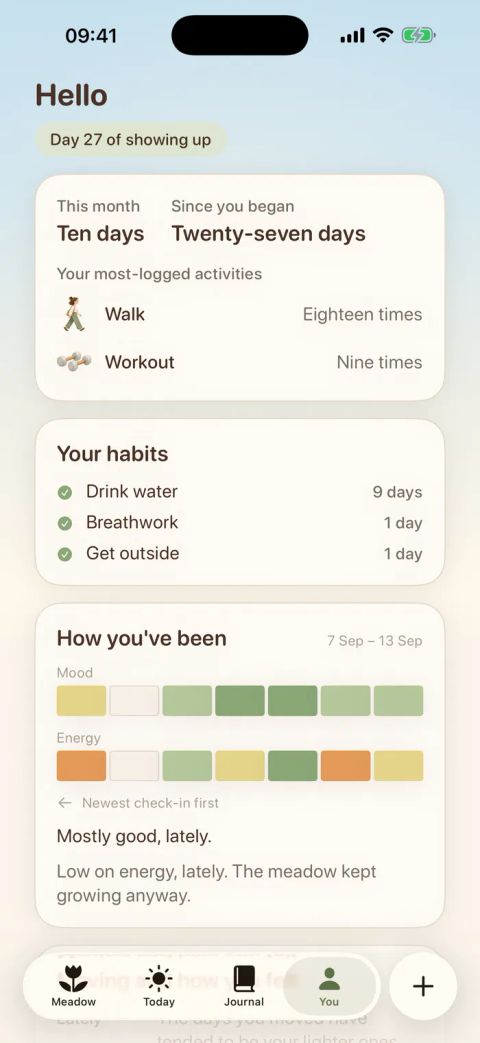
The hard part with hip stretches is remembering to do them on the days your hip feels fine. Meadow is a habit app for iPhone built around that kind of quiet consistency. You log a few minutes of stretching or a short walk, tick off small daily habits, and each day you show up a new wildflower blooms in your own meadow. There are no streaks to break, so if a week gets away from you nothing resets, and your meadow is waiting when you come back. You can find it at growyourmeadow.com.
Where this fits with your other hip work
Stretching lengthens the hip flexors at the front of the hip. That's a different job from hip mobility work, which moves the joint through active ranges to build control, and from glute stretching, which targets the muscles at the back and side of the hip. The three overlap and work well as a set.
To build active range and strength around the joint, the hip mobility exercises guide covers drills like controlled rotations and 90/90 work. For the muscles behind the hip that tend to go tight alongside the flexors, see stretches for glutes. And if long days at a desk are the root of it, stretches for sitting all day has a wider set of moves for the whole body.
Common questions
How long until tight hip flexors loosen?
You'll often feel more room in the hip within a single session, though that eases off again. Lasting change comes from doing the stretches most days for a few weeks while you also sit less. There's no fixed timeline, and it varies from one person to the next.
Should I stretch my hip flexors every day?
Daily is fine for the lighter stretches like the standing and kneeling lunges. The deeper holds such as pigeon are comfortable at three or four times a week. Let how the hip feels set the pace.
Can stretching a tight muscle make it worse?
Forcing it can. If a stretch brings sharp pain, shaking, or an ache that lingers afterwards, back off. Cleveland Clinic's advice is to start gently, because an irritated muscle won't tolerate a hard stretch. Sharp or spreading pain is a reason to see a physiotherapist.
Pick one stretch to try now while you're thinking about it. The standing lunge is the easiest, so stand up, step one foot forward, and hold it for 30 seconds each side.
AUTHOR
Co-founder of Meadow.
Ash is co-founder of Meadow, a habit and movement tracking app that turns small acts of self-care into a growing wildflower meadow.
See how far you've come
Your habits, moods and little wins, all in one place
Meadow keeps track of the walks, the water and the good days, so you can look back and watch your effort add up.
Download Meadow