Tight glutes usually turn up as a deep ache in the buttock, a stiff feeling when you stand after a long sit, or a pull that spreads into the hip or lower back. These six stretches loosen that off. The set takes about ten minutes, needs no kit, and you can do most of it lying on the floor.
Your glutes are the big muscles across your backside, and they do more than you might think. They drive you up out of a chair, push you up a hill, and keep your pelvis level with every step. Tucked underneath them sits a smaller muscle, the piriformis, which turns the hip outward and, when it's cranky, causes trouble of its own.
The stretches below reach the glutes from a few angles. Most are variations on one idea, opening the hip so the muscle at the back can lengthen, and a couple add a gentle twist. Go through them in order, or pick the two or three that land on the spot you feel it.
Why glutes get tight, and how it links to your hips and back
Most of it is sitting. Cleveland Clinic points out that nearly 1 in 4 American adults sit for more than eight hours a day, and the muscles around the hip can become too tight when you're inactive, which leads to stiffer, more limited movement.
Then there's the knock-on. A physiotherapist at the Hospital for Special Surgery describes the piriformis as a deep gluteal muscle that helps external rotation of the hip, and explains that when the glutes or piriformis are weak, it forces the hip flexors to take over some of the job of stabilising the spine and pelvis. So tight, sleepy glutes seldom stay a glute problem alone. The load shifts, usually onto the hip flexors at the front or the lower back.
That deep muscle sits in an awkward spot. Cleveland Clinic notes the piriformis muscles sit deep in your buttocks right beside the sciatic nerve, and when the piriformis is tight it can aggravate that nerve and send numbness or a radiating ache down the leg. It's most common in people who sit for long periods. Giving the glutes room takes pressure off that muscle, which is why a stretch aimed at the buttock can quiet something you feel further down the leg.
There's a slower cost too. A biomechanics study in the Journal of Biomechanics found that older adults averaged about 30% less hip extension than younger adults, and lacked the range to walk with as open a stride. Hip extension is the backward reach of the leg that gives a walk its length, and stiff glutes and hip flexors are part of what shortens it over the years.
Warm up first, then work within your range
Cold muscles don't like being pulled hard. Harvard Health warns that stretching muscles before they're warmed up can hurt them, so move a little first. A few minutes of walking on the spot, or the first stretch done softly, is plenty.
Every stretch here should feel like a firm pull, never a sharp or electric one. The NHS gives the same steer for flexibility work, to move as far as is comfortable and build the holds up slowly. If a position sends pain shooting down your leg, back off.
Check with a professional first if you have reason to. Cleveland Clinic's line for telling ordinary soreness from something more is a useful one. Some discomfort as you start is expected, but if you get sharp, pinpoint pain, or pain that persists for more than a few hours, contact a healthcare provider or physiotherapist. A buttock or leg pain that has been there for weeks is one to have looked at rather than stretched through.
The six stretches, with holds
Work through these breathing slowly and evenly. Where a stretch is one side at a time, do both. Hold the static positions for around 30 seconds, which is the 30-second hold the HSS physiotherapist uses, or count five to eight slow breaths instead, as Cleveland Clinic suggests.
1. Supine figure-four
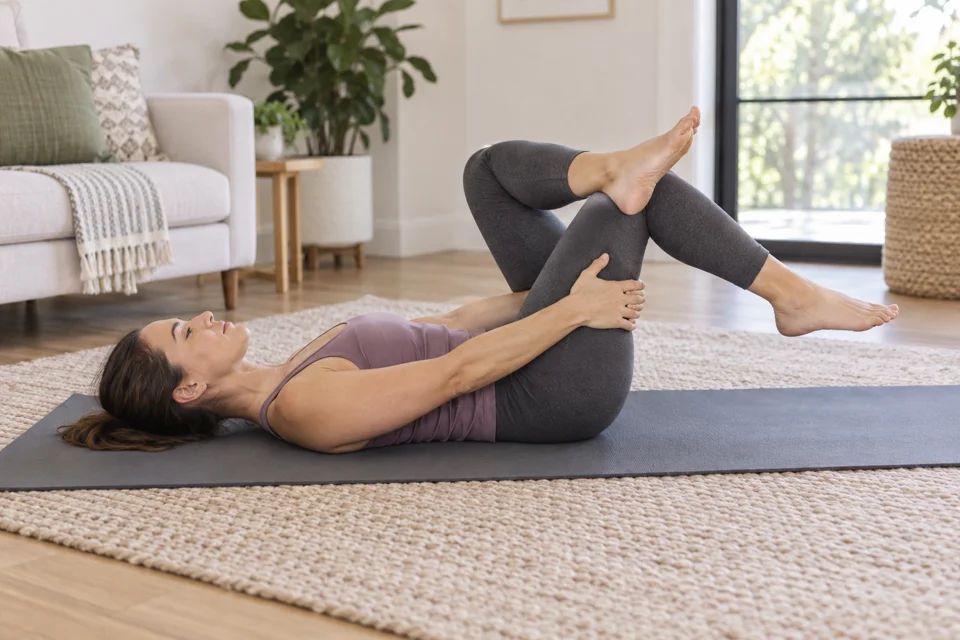
Lie on your back with both knees bent and feet flat. Cross your right ankle over your left thigh, above the knee, so the right knee opens out to the side. Reach through the gap, take hold behind your left thigh, and draw it towards your chest until you feel the stretch deep in the right buttock. Hold, then swap. Cleveland Clinic uses this same shape, a supine figure-four held for 30 seconds each side, for the piriformis.
2. Seated figure-four
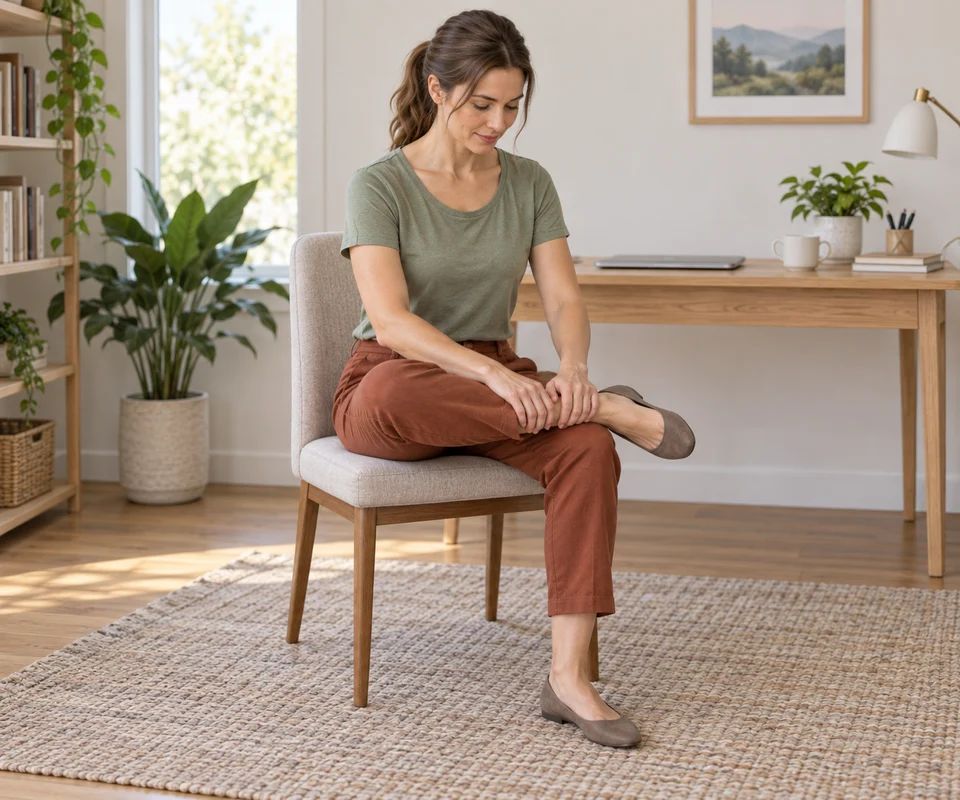
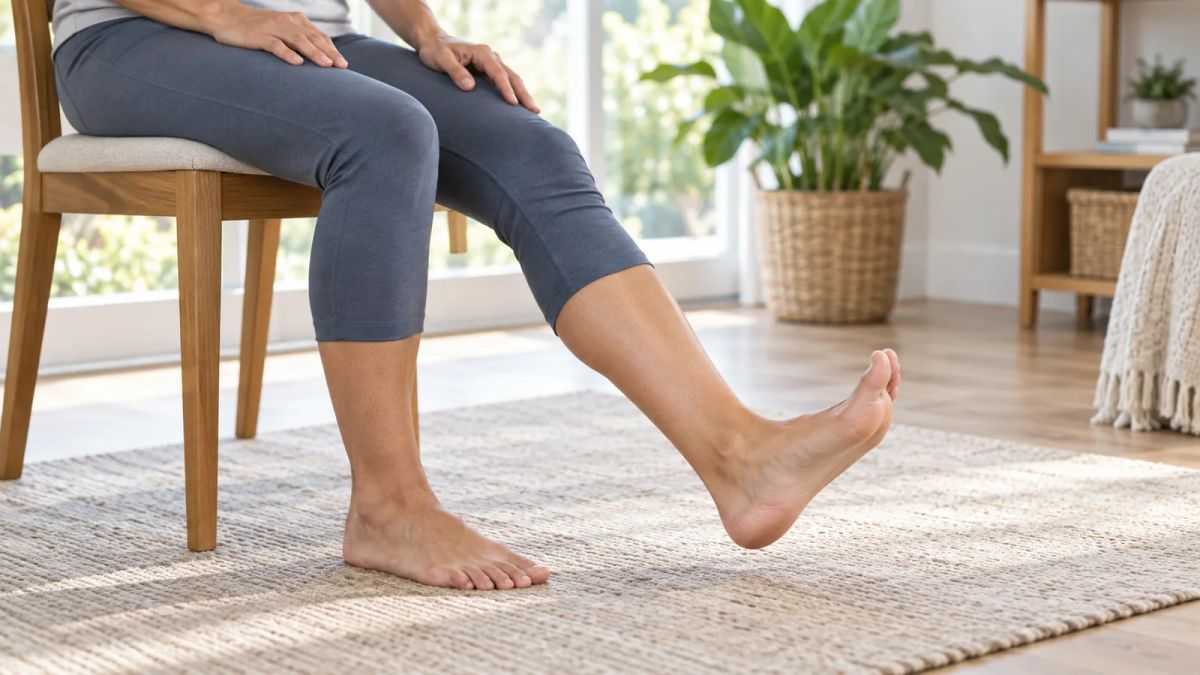
The same shape works in a chair, which makes it easy at a desk. Sit tall, cross your right ankle over your left knee, let the crossed knee sink towards the floor, then hinge forward from the hips until the buttock opens. Keep your back long, not rounded. Hold, then change sides.
3. Pigeon pose
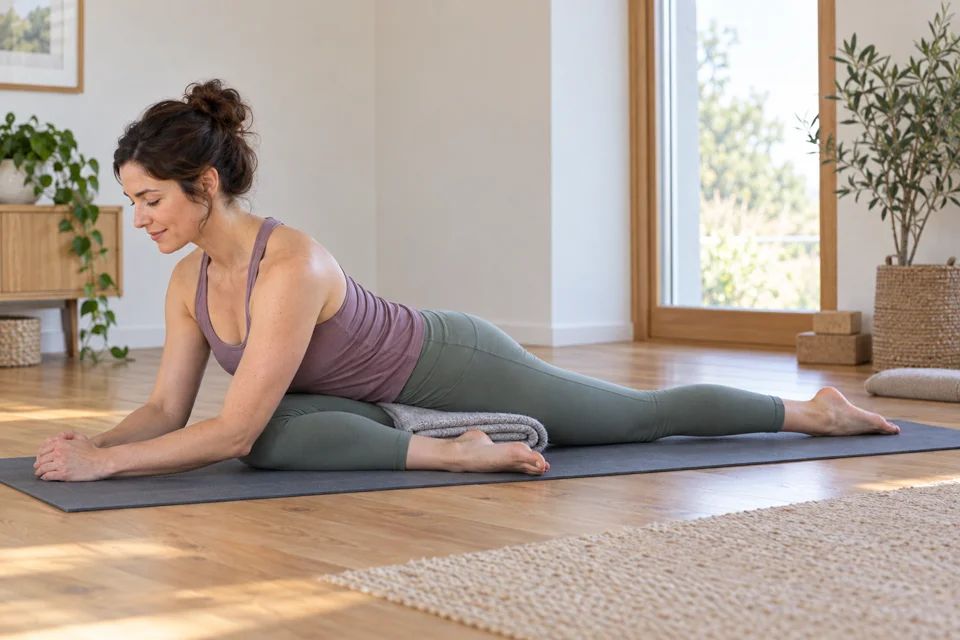
From all fours, slide your right knee forward towards your right wrist and angle the shin across your body. Lower the outside of that thigh to the floor, keep your hips level, then walk your hands forward and let your chest sink over the front leg. This one reaches the outer glute deeply. Hold for up to a minute and swap. If it presses on the knee, put a cushion under the right hip, or do the supine figure-four instead.
4. Knee-to-chest
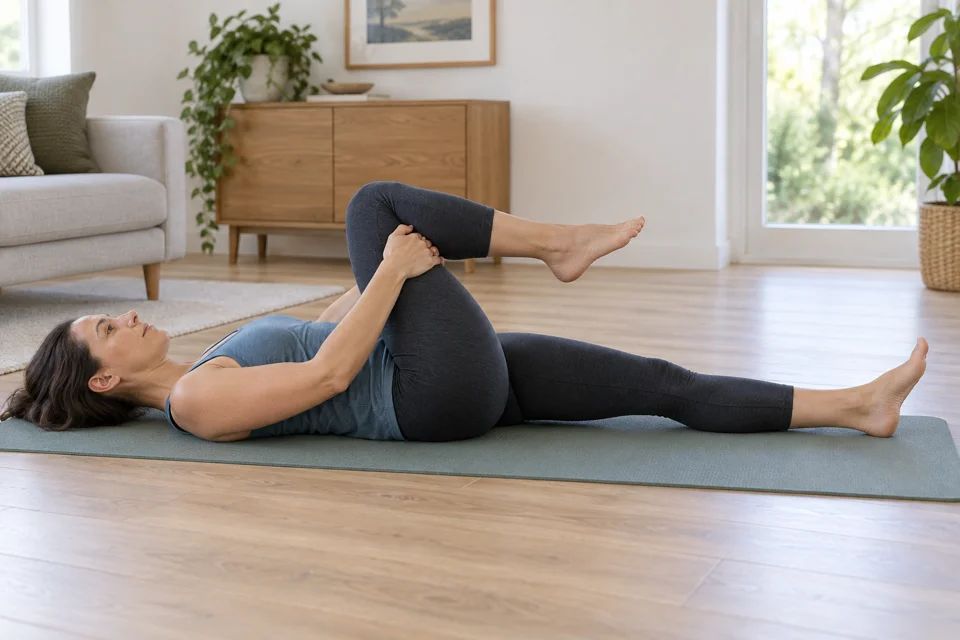
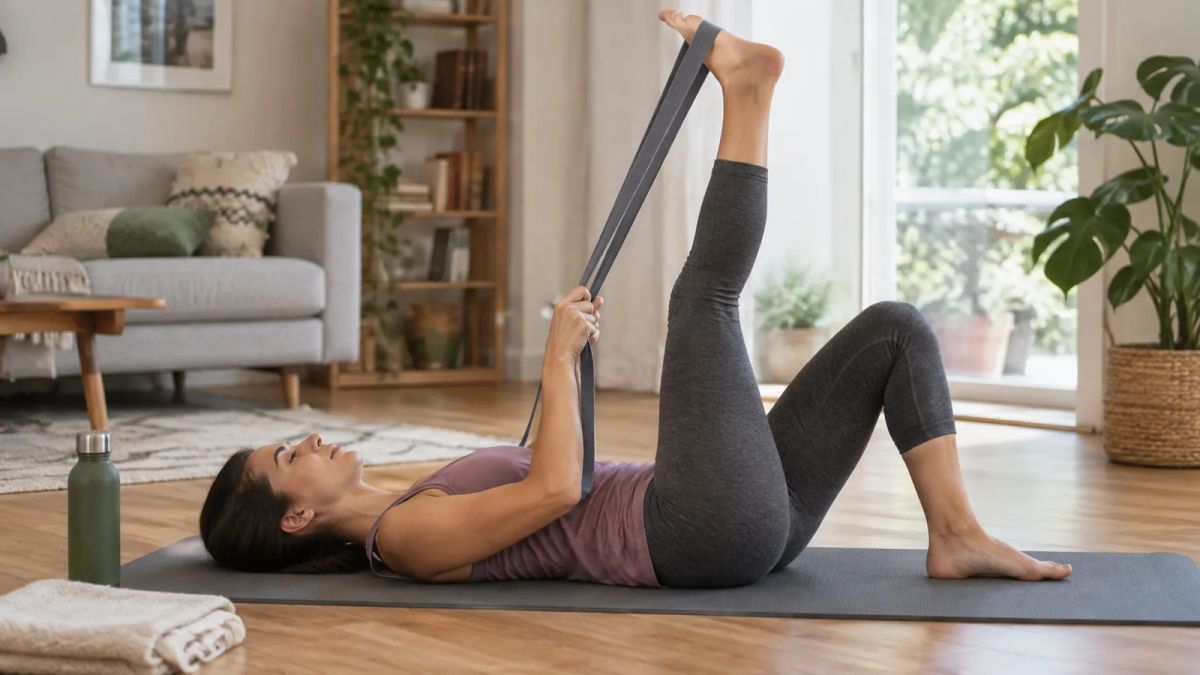
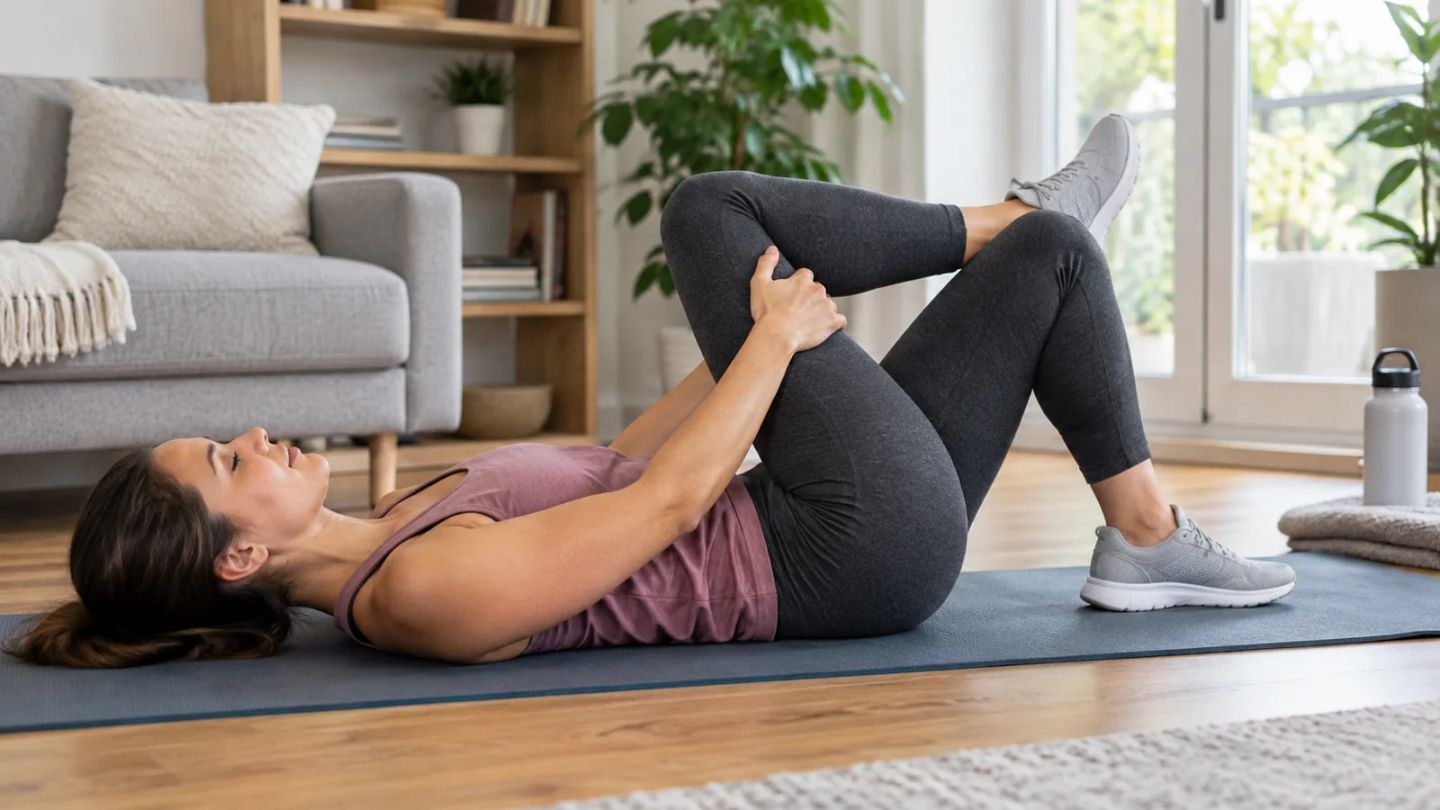
Lie on your back with your legs long. Draw one knee up and hug it in towards your chest, keeping the other leg relaxed on the floor. It's a milder stretch that reaches the lower glute and the small of your back. Hold, swap legs, then hug both knees in together if that feels good.
5. Standing figure-four
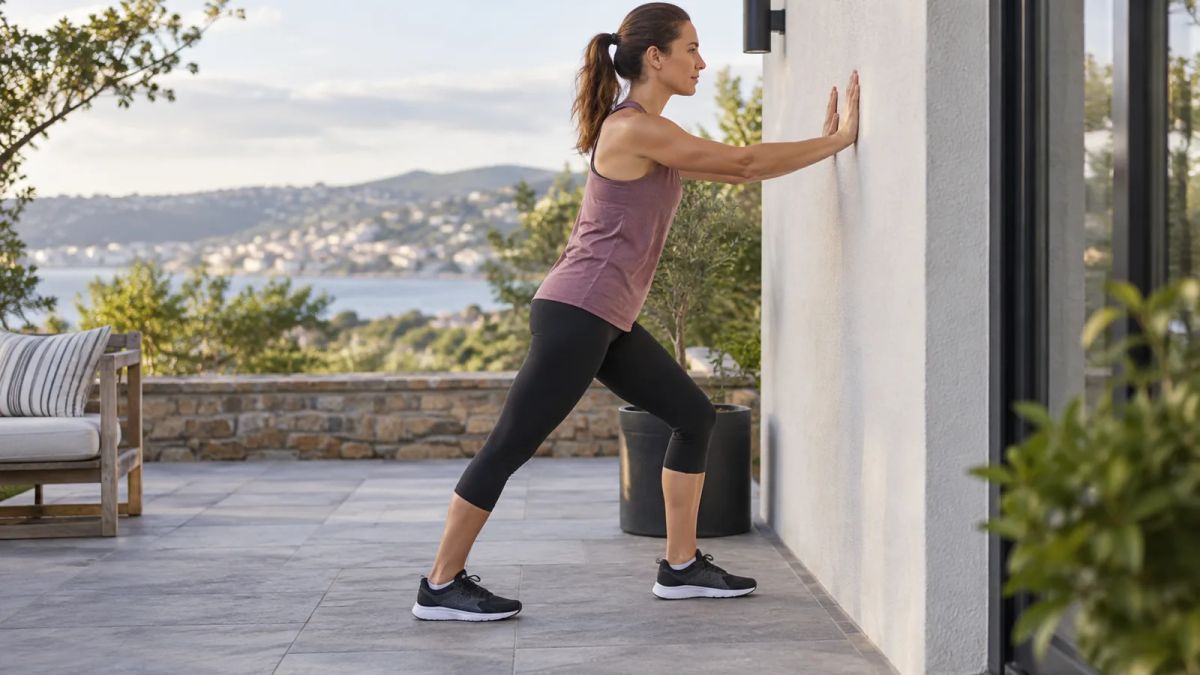
Hold a worktop or a sturdy chair back. Cross your right ankle over your left thigh, then push your hips back into a small one-legged squat, as if perching on a low stool, until the right buttock stretches. Hold for 20 to 30 seconds. This is the one to reach for when getting down to the floor is a faff.
6. Supine spinal twist

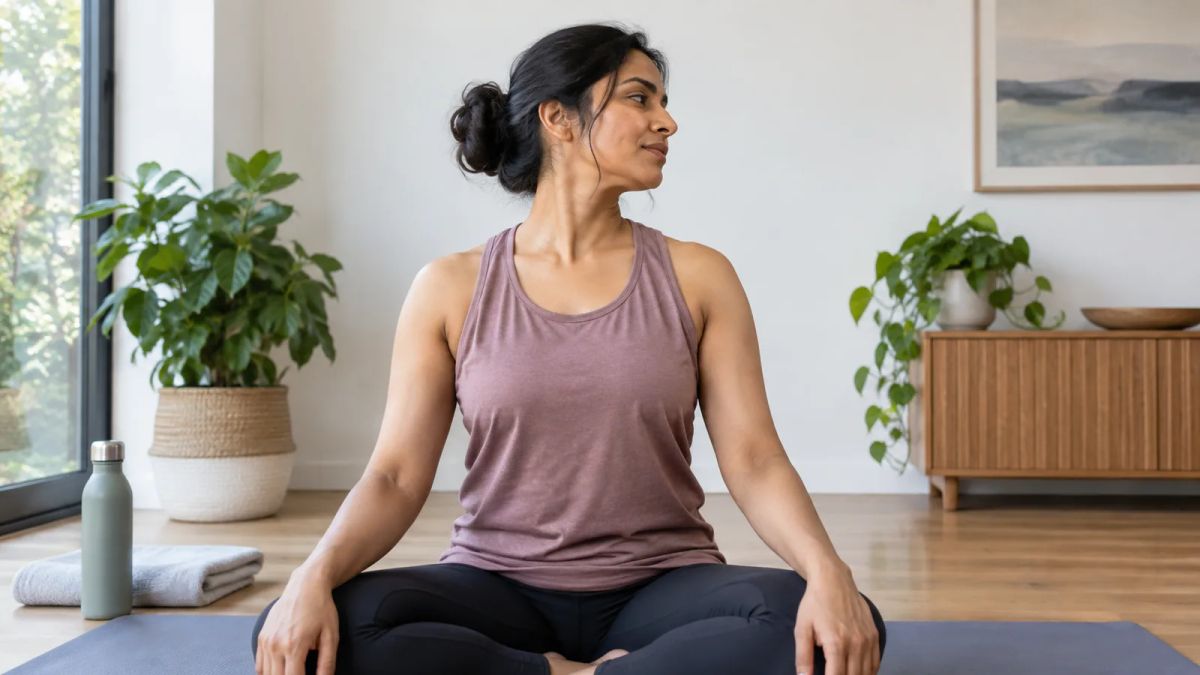
Lie on your back with your arms out to the sides in a T. Draw both knees up, then let them drop together to the right while you turn your head to the left, keeping both shoulders on the floor. It opens the outer glute and the lower back at once. Hold, then let the knees fall the other way.
How often, and what to expect
Little and often beats one big push. For a tight piriformis, Cleveland Clinic suggests the figure-four style stretch three times, twice daily, though once a day is a fine place to start and still builds up.
Be patient with the payoff. Harvard Health is clear that becoming more flexible takes weeks to months of regular work, and that you have to keep it up to hold onto any gains. A session leaves you looser for an hour or two. The lasting change is a slow build, not an overnight switch.
There's a limit to what stretching sorts out, and it's worth being straight about it. If a buttock or leg pain isn't settling, Cleveland Clinic advises that when you're not feeling better after about a month of consistent stretching, check in with your provider, because piriformis trouble can look like other problems. Stretching helps a tight, overworked muscle relax. It won't fix a disc issue, a hip joint problem or a nerve pinched higher up, and those need a proper look.
Where these fit with the rest
Glute stretches sit well beside work on the muscles around them. Tight glutes and tight hamstrings often travel together, since both shorten from sitting, and loosening one makes the other easier to reach. If your stiffness is more about the joint than the muscle, a hip mobility routine covers the range side of things. And on a day you want to ease off head to toe, a full-body stretching routine folds these glute moves into a longer sequence.
See the habit take root

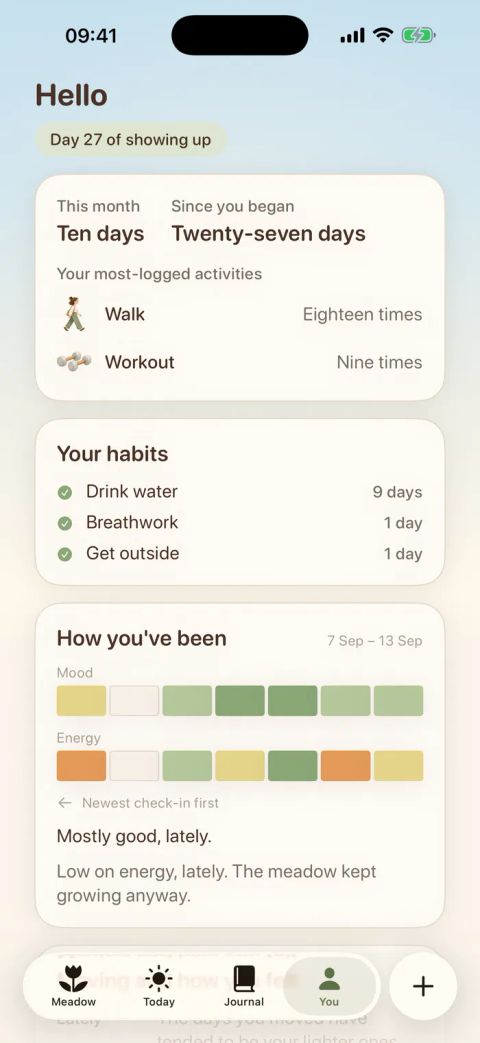
A stretch you mean to get to at some point rarely happens. Meadow gives it a home on your phone, where you log the few minutes you spend on the floor, tick off other small daily habits, and note your mood and energy as you go. Each day you show up grows a wildflower in a meadow that's yours, and rare flowers and the odd little animal visitor turn up as it fills in. There are no streaks, so a stiff day you skip resets nothing and your flowers never wilt. You can find it at Meadow.
On a busy day, and after a gap
Decide your smaller version before you need it. On a rushed or achy day, one figure-four hold per side, done on the floor or in your chair, keeps the thread going. Two minutes still counts.
After a gap, nothing is undone. Stiffness after a week off is the result of sitting still, not a mark against you, and the way back is the same as ever. Pick the next day, warm up, and start with the supine figure-four again.
Today, cross one ankle over the other knee and hold the figure-four for 30 seconds a side. That's the whole habit, started.
AUTHOR
Co-founder of Meadow.
Ash is co-founder of Meadow, a habit and movement tracking app that turns small acts of self-care into a growing wildflower meadow.
See how far you've come
Your habits, moods and little wins, all in one place
Meadow keeps track of the walks, the water and the good days, so you can look back and watch your effort add up.
Download Meadow