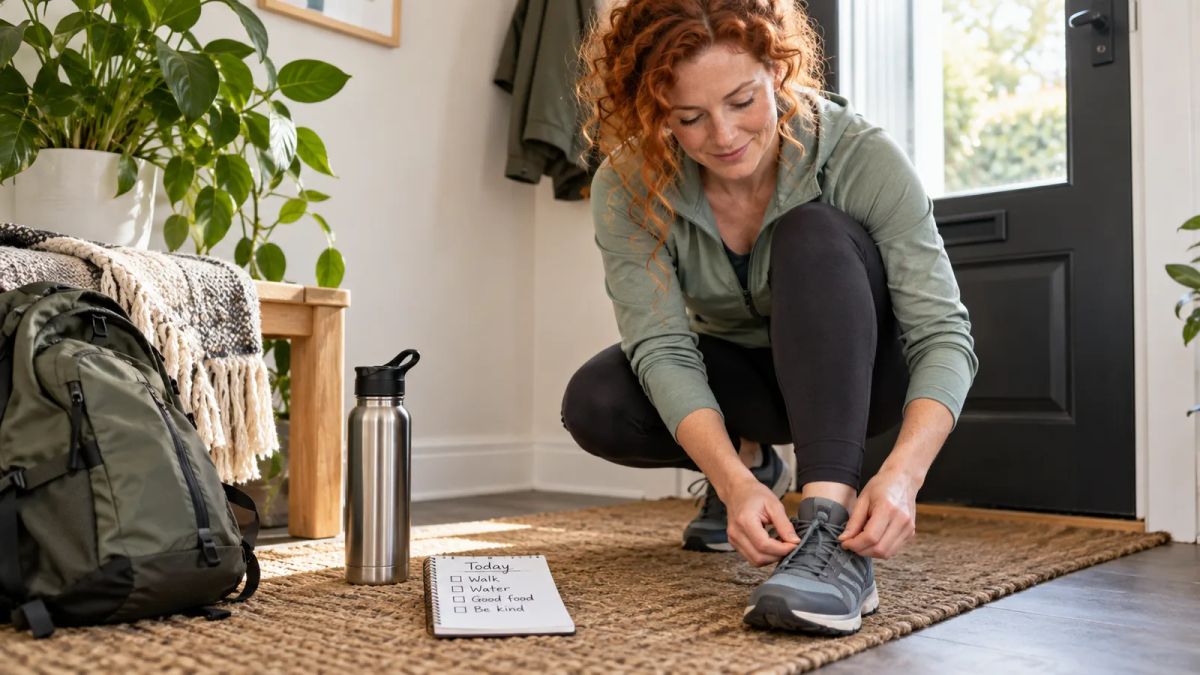
Most New Year's resolutions fade by February because they are built too big and run on willpower, and willpower runs out. A small habit you can keep on a bad day will carry you further than a grand resolution you abandon in week two.
So this is a guide to new year habits, not resolutions. Below is a menu of small, keepable habits across movement, mind, sleep and connection, plus how to pick one or two, how to use the new year's push without leaning on it, and what to do on the day you miss.
The new year is a fine time to start something. The trouble is what most of us start: a resolution shaped for our best self, not the tired, busy, ordinary self who has to carry it out on a wet Tuesday in January.
Why most resolutions don't survive January
A resolution is usually a wish with a deadline. "Get fit," "read more," "lose weight." It names an outcome but not the daily action, so there is nothing to do on Monday morning except feel the size of the gap.
The bigger problem is that big changes lean on motivation, and motivation is the one thing you cannot count on. It runs high on the first of January and low by the second week, when the weather is grim and the novelty has worn off. When the plan needs willpower every single day, the first flat day breaks it.
There is decent evidence that resolutions can work when they are framed and supported well. In a study of more than a thousand people, 55% still counted themselves successful a year on, and those who set an approach goal, something to move towards, did better than those chasing an avoidance goal, something to cut out (58.9% against 47.1%). That gap is worth holding onto. "Walk after lunch" beats "stop being lazy," because it points at an action you can start rather than a version of yourself you have to police.
What a habit does that a resolution can't
A habit is small, specific and tied to a moment that already exists in your day. That last part does a lot of the work. The American Heart Association's advice for making a new behaviour stick is to attach it to something you already do, so the old routine becomes the reminder and you are not relying on a burst of resolve to prompt you.
Compare the two. A resolution says "exercise more this year." A habit says "after I make my morning coffee, I do three stretches." One is a mountain with no path. The other is a single step you can take today, tomorrow, and the day after, until it stops feeling like a decision.
This is the shift the whole piece rests on. Pick the action, shrink it, and anchor it. The outcome you were resolving towards tends to arrive on its own once the small thing is running.
A menu of small habits to choose from
Here are habits that fit real days. None takes long. Read them as a menu, not a checklist, and pick the one or two that fit the life you already have.
Movement
- A ten-minute walk after lunch
- Three stretches while the kettle boils
- Taking the stairs instead of the lift once a day
- Getting off the bus one stop early
Mind
- Three slow breaths before you open your laptop
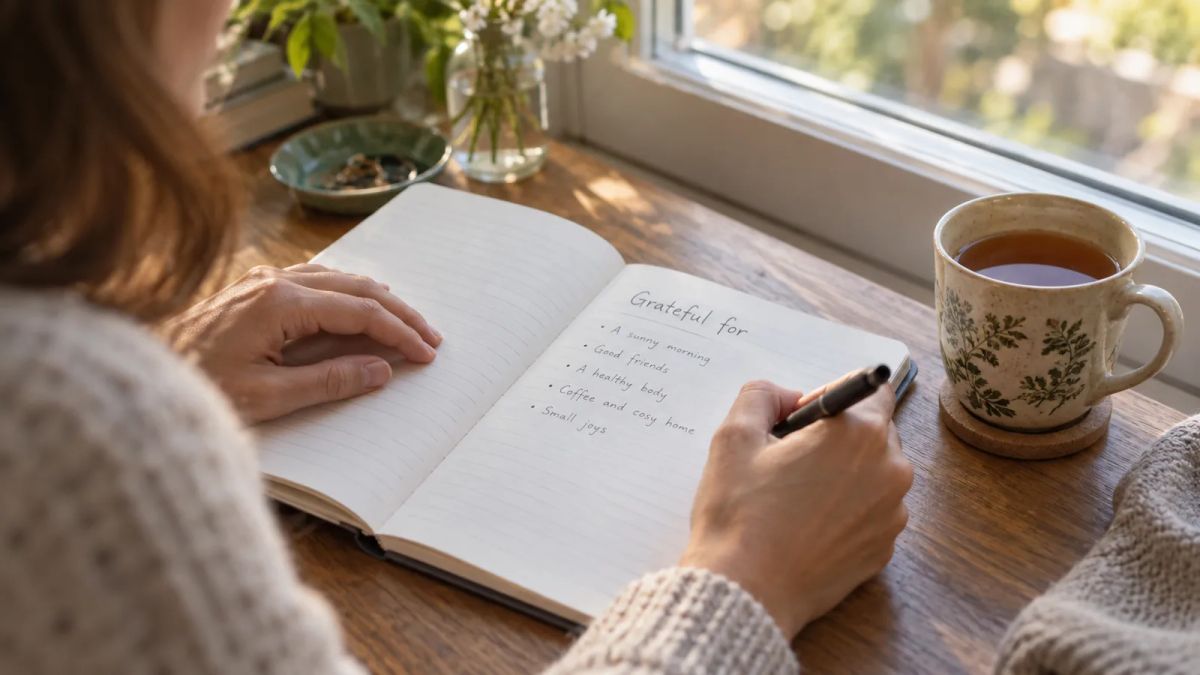
- One line in a notebook at night about how the day went
- A two-minute tidy of one surface
- Naming one good thing before you sleep
Sleep
- The same wake-up time, weekends included
- Phone charging outside the bedroom
- A glass of water by the bed for the morning
- Lights lower an hour before bed
Connection
- One message to a friend you keep meaning to text
- Asking a colleague a real question and listening to the answer
- A short walk with someone instead of a scroll on your own
- Saying one thank-you out loud each day
Notice how ordinary these are. That is the point. A habit small enough to do on your worst day of the month is one that survives, and if there is a spare bit of energy on a good day, most of these stretch on their own. Ten minutes becomes twenty. One stretch becomes five. You allow the growth, you don't demand it.
If you want more starting points, our round-up of tiny habits works through the method behind this menu, including how to make an action almost too small to skip.
How to pick one or two, not ten
The urge in January is to fix everything at once. Resist it. One habit you keep for a year beats ten you drop by the third week, and a single behaviour tied to a single cue is easy to remember and easy to keep honest.
Choose by asking two things. Which of these would make the most difference to how you feel day to day? And which could you do even on a rough day? The habit that scores well on both is your one to start.
Some habits also pull others along behind them. A regular morning walk can nudge your sleep, your mood and what you reach for at lunch, all without a separate plan for each. These are worth choosing first, and we go into them in our guide to keystone habits.
Once you have picked, write it as a single sentence that names the cue and the action.
After I ________, I will ________.
A filled-in version might read:
After I pour my morning coffee, I will do three stretches.
After I put my work laptop away, I will write one line about the day.
Keep the action tiny even when you feel ambitious. The official target stays small, and everything above it is a bonus, so a busy day still ends with the thing done.
Use the new year's push, but don't lean on it
The new year does help, and it is worth knowing why. Researchers call it the fresh-start effect: people are more likely to pursue a goal right after a temporal landmark such as the first of January, the start of a month, or a Monday. A landmark like New Year's Day puts a little distance between you and the version of you who did not manage it last year, and that distance makes starting feel possible.
Here is the catch. The push is real but short. The same lift that gets you to the gym on the second of January has faded by the second week, which is roughly when most people quietly stop. So treat the fresh start as a launch, not an engine. Use the January energy to set the cue and shrink the action while motivation is high, then let the anchor and the small size keep the habit going once the buzz is gone.
One freeing thing falls out of this research. The new year is not the only fresh start on offer. If January slips past, the first of February works, so does next Monday, so does the morning after a bad week. You do not have to wait a whole year to begin again.
When you miss a day, and you will
You will miss a day. A cold, a late night, a diary that fell apart. This is normal and it is not the failure it feels like.
The real damage is rarely the missed day. It is the story that follows it, the "well, I've blown it now" that turns one skipped walk into a fortnight of nothing. Naming that spiral is half of beating it. One gap does not undo the weeks behind it.
The research backs this up. In a study tracking how everyday habits form, a single missed day had little effect on how automatic the behaviour eventually became. The same study found people took anywhere from 18 days to the better part of a year to reach their peak, so there is no fixed deadline you are failing to hit. If the timing question is nagging at you, we cover it properly in how long it takes to build a habit.
Decide now what the habit looks like on a day when even the small version is too much. If your habit is a ten-minute walk, the bad-day version might be stepping out of the front door and back in. It sounds almost silly. It also keeps the thread unbroken, which is the whole game.
Somewhere a new habit can survive a missed day
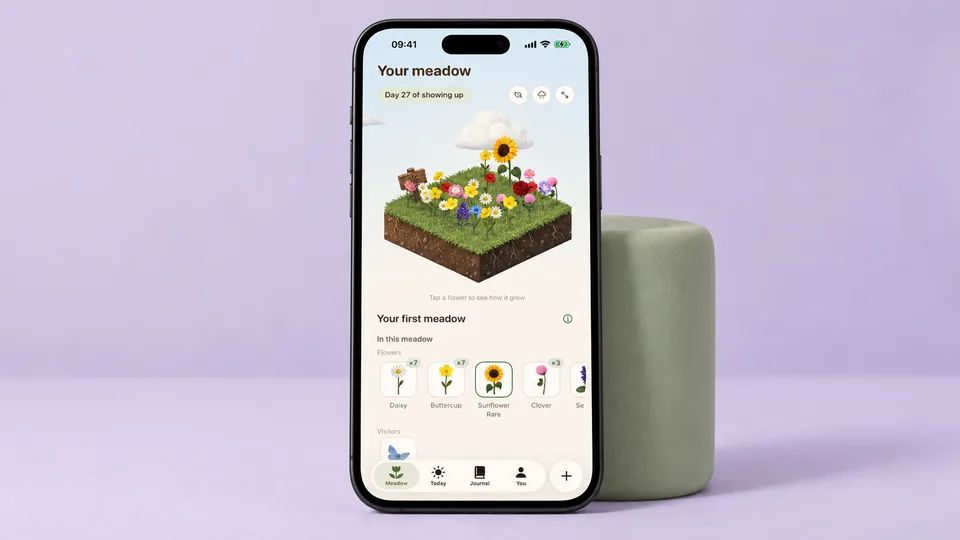
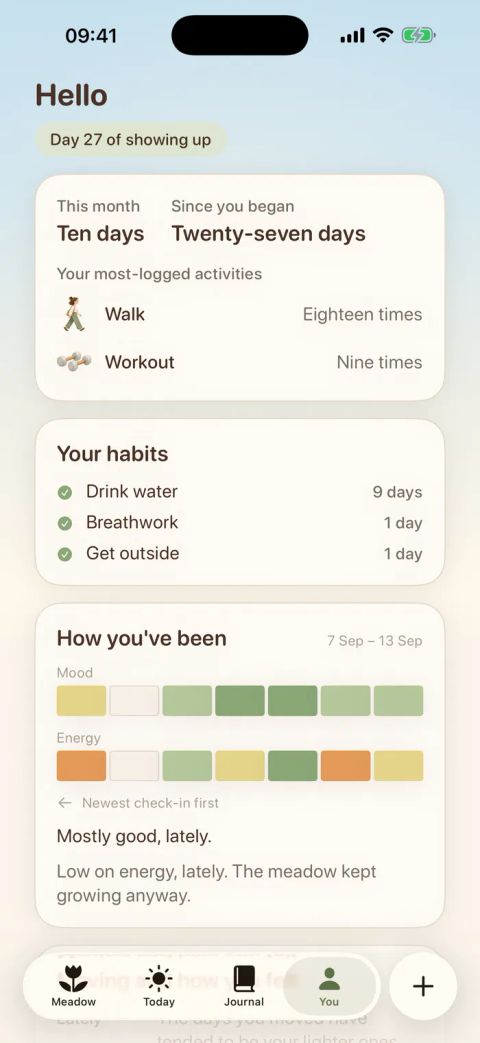
If you would like to keep the habit on your phone, Meadow is built for the version of January where some days go to plan and some do not. It is a gentle iPhone app from Wildcard Wellness where you tick off a small daily habit, log a walk or a few minutes of movement, and note your mood and one good thing from the day. Each day you show up grows a wildflower, so a new-year habit you can barely feel yourself doing slowly becomes a meadow you can see. There are no streaks, so a missed day early on resets nothing and your flowers never wilt, which is a kinder fit for a habit you are only starting to build.
Keep a simple record
Open our free One small habit to begin (PDF). Save or print it to use alongside this guide. No sign-up needed.
A small daily mark and a small daily habit go well together. The mark gives you a moment of "done," and over weeks it shows you the pattern you have built. A meta-analysis of 138 studies found that prompting people to monitor their progress towards a goal improved how often they reached it, so a tick is worth the few seconds it takes.
Use whatever you will look at again. A cross on the wall calendar by the kettle, a line in a notebook, a note on your phone. The best format is the one that sits where the action happens.
Common questions
Are New Year's resolutions worth making at all? Yes, if you turn the wish into a habit. The date gives you a useful nudge to start. What carries you past January is a specific action tied to a cue, not the resolution itself.
How many habits should I start with? One, maybe two. Get the first running on its own before you add another. Trying to install five at once splits your attention and usually ends with none of them sticking.
What if I miss the first week? Start again on the next ordinary day. A fresh start is available any Monday, any first of the month, any morning. The calendar is not keeping score.
Should I set a goal or a habit? Set both, but do the work at the level of the habit. A goal like "walk more" gives you a direction. The daily habit, "after lunch, a ten-minute walk," is the thing that gets done.
Is January the best time to start? It is a good time because the fresh-start feeling makes beginning easier. It is not the only time, and it is not a reason to wait. If you are reading this in March, today works.
Pick one habit from the menu above and write it as a single sentence right now: after an everyday moment you already have, one small action. Something like "after my morning coffee, I do three stretches." That sentence is your whole new-year plan, and it is small enough to start today.
AUTHOR
Co-founder of Meadow.
Ash is co-founder of Meadow, a habit and movement tracking app that turns small acts of self-care into a growing wildflower meadow.
See how far you've come
Your habits, moods and little wins, all in one place
Meadow keeps track of the walks, the water and the good days, so you can look back and watch your effort add up.
Download Meadow