A morning yoga routine is a short, ordered flow of poses you move through with your breath, first thing, to loosen a stiff body and clear a foggy head before the day gets going. This one runs about ten minutes, needs nothing but a bit of floor, and asks for no flexibility you don't already have.
You've been lying still for hours. Your joints have settled, your muscles have cooled, and the first steps across the room can feel creaky. A slow flow eases you out of that, gets your breath moving, and leaves you a little looser and more awake than a cup of tea does on its own.
What follows is a six-pose flow you can do beside the bed, with breath cues for each shape, an honest look at what a morning practice can and cannot do, and how to keep it going on the mornings you'd rather not.
Before you start: work within your range
Cold muscles don't like being forced. That's why this flow opens with soft, mobilising shapes and only eases into a deeper stretch once you've warmed up a little. Every pose should feel like a mild, comfortable pull, never a sharp or pinching pain. If a movement hurts, come out of it.
Yoga is generally a safe way to move, and the US National Center for Complementary and Integrative Health says so while adding a sensible line for newcomers: avoid extreme practices such as headstands, shoulder stands, the lotus position and forceful breathing. None of those appear below. The NCCIH also advises that people who are pregnant, older, or living with a health condition talk over how to adapt their activity with a healthcare provider and, if they're in a class, the instructor.
If you're pregnant, new to exercise, or managing something like high blood pressure or a back problem, have a quick word with your GP before you start. Harvard Health makes the same point, advising that you check with your doctor before beginning any new exercise. That comes before getting every pose textbook-perfect.
The 10-minute morning flow
Open our free printable: Your gentle morning yoga card (PDF). Save or print it to use alongside this guide. No sign-up needed.
Move slowly and in order, and let your breath set the pace. Where a pose works one side at a time, do both. If a shape doesn't suit your body today, skip it and rest in the child's pose from step 1 instead.
1. Child's pose, to settle and breathe
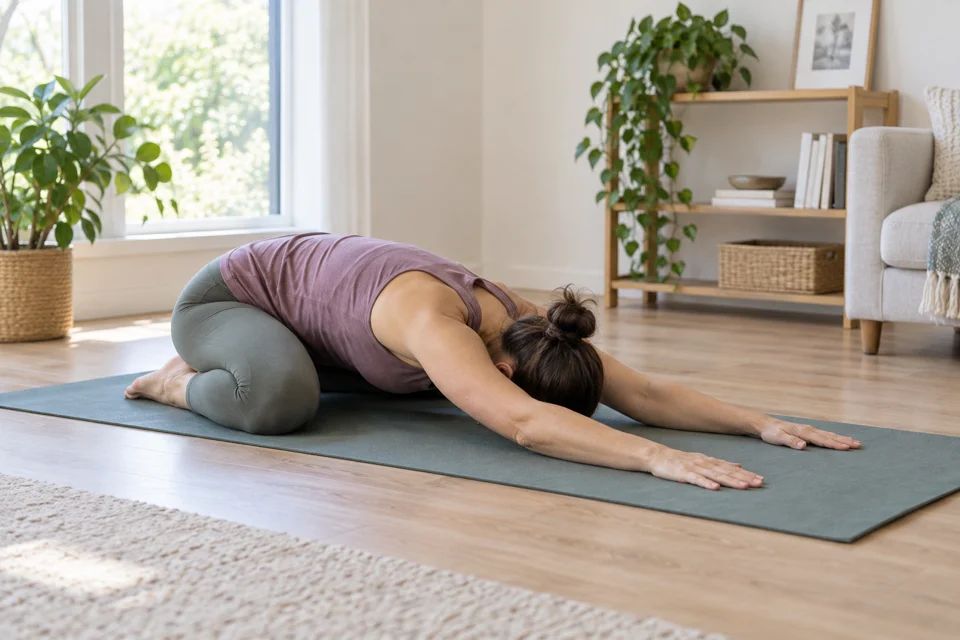
Kneel, bring your big toes together, widen your knees, and sit your hips back towards your heels as your arms stretch forward and your forehead rests on the floor or the bed. Stay for five slow breaths, letting each out-breath soften your lower back. This is your home base for the whole flow, so come back to it any time.
2. Cat-cow, to warm the spine
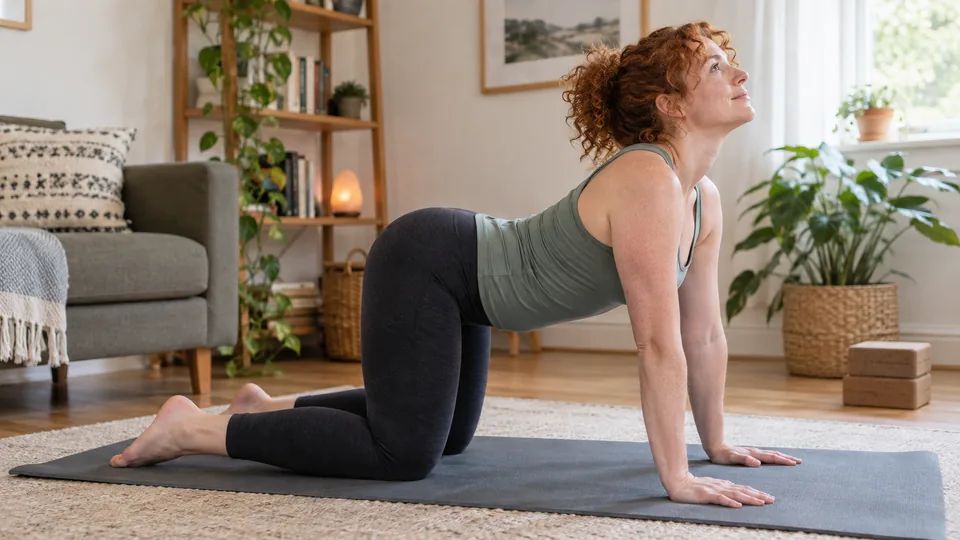
Come onto all fours, wrists under shoulders, knees under hips. Breathe in and let your belly drop as you lift your chest and gaze. Breathe out and round the other way, tucking your chin and drawing your navel up so your upper back curves. Move with your breath for six to eight slow rounds. This wakes up a spine that's been folded in one position all night.
3. Downward-facing dog, to lengthen the back of the body
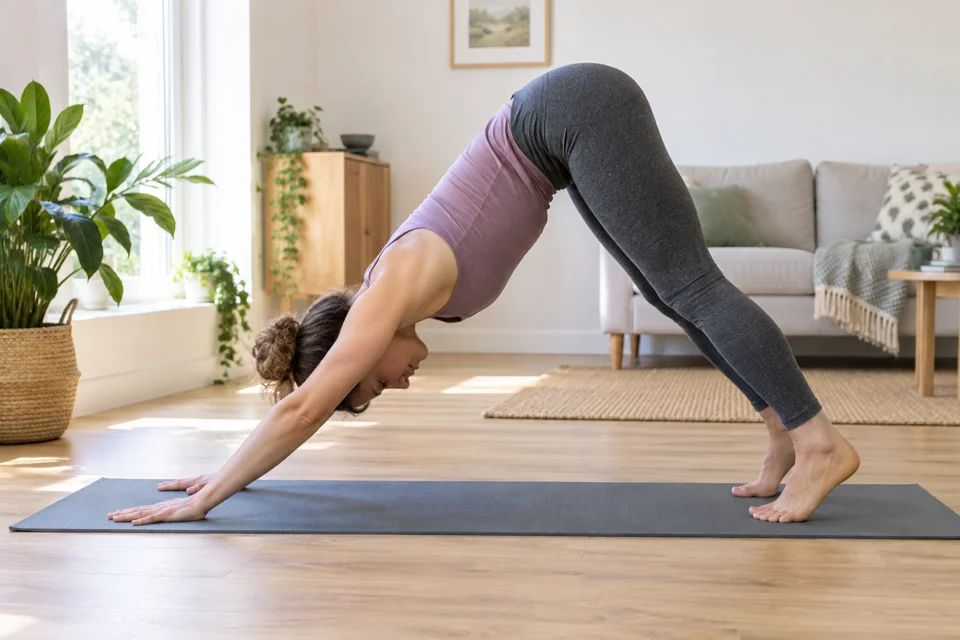
From all fours, tuck your toes and lift your hips up and back so your body makes a loose upside-down V. Keep a generous bend in your knees, let your head hang, and press the floor away for four or five breaths. If that's too much first thing, stay on all fours and press your hips back towards your heels instead, or put your hands on a worktop and walk your feet back into a gentle L-shape. Bent knees are the beginner-friendly version, so don't chase straight legs.
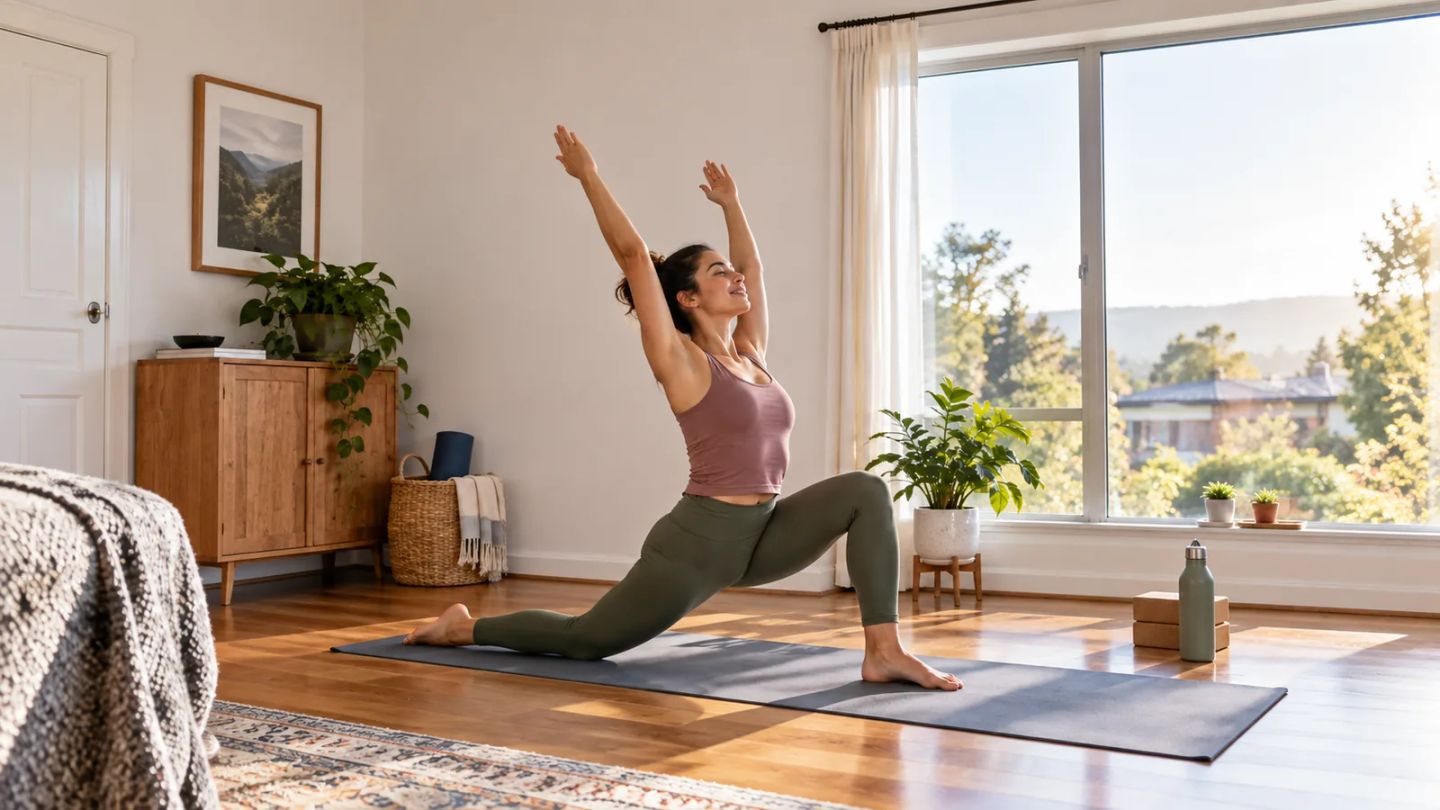
4. Low lunge, to open the hips
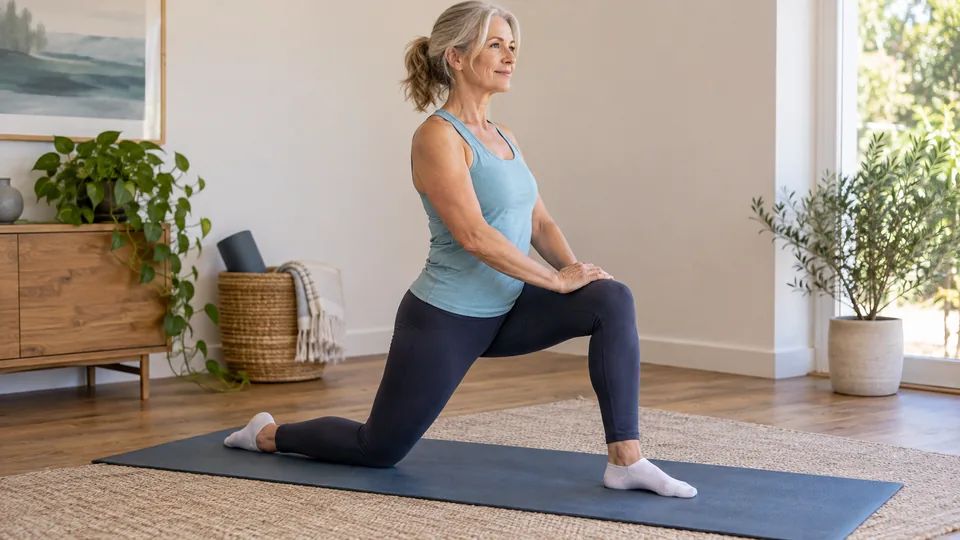
Step one foot forward between your hands, then lower your back knee to the floor and sink your hips forward and down until you feel a stretch across the front of the back thigh and hip. Lift your chest, rest your hands on your front knee, and breathe for four or five rounds before swapping sides. Tight hips are a big part of why standing up first thing feels stiff, and this is the pose that eases them.
5. Standing forward fold, to release the legs and back
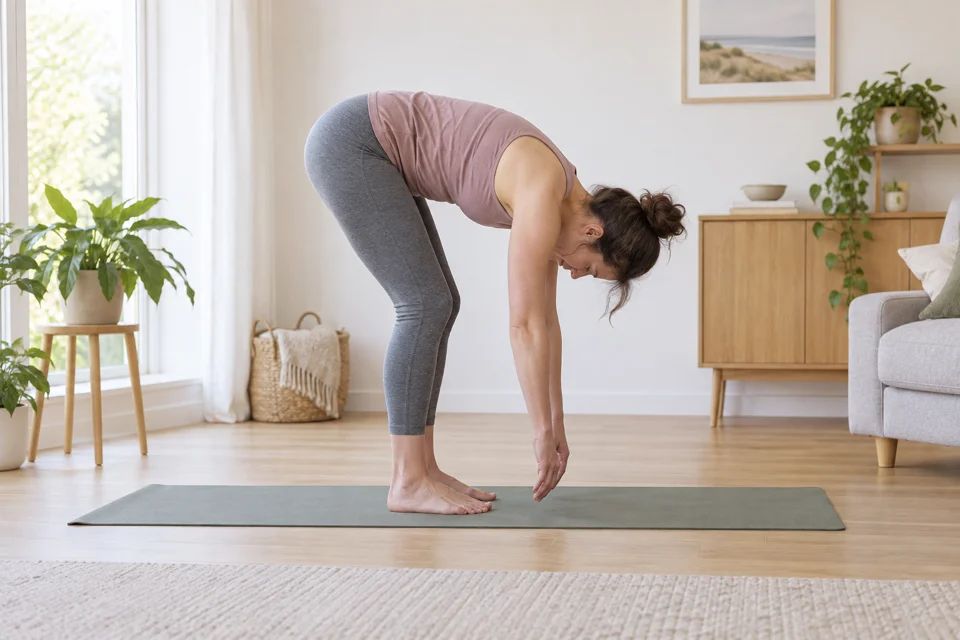
Stand tall, then hinge forward from the hips with a soft bend in your knees, letting your head, neck and arms hang heavy. Sway a little if it feels good, and hold for a few breaths before rolling up slowly, one vertebra at a time. Keep it shallow, or skip it, if your blood pressure tends to drop when you stand.
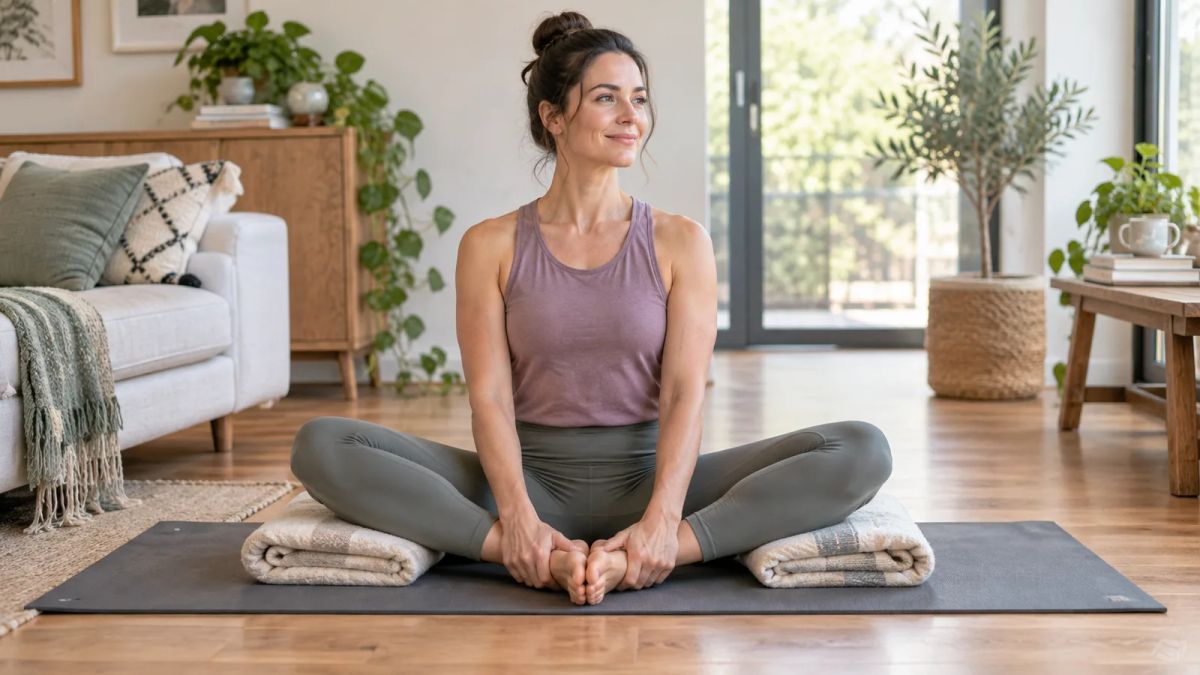
6. Seated twist, to unwind
Sit tall, cross-legged on the floor or upright on the edge of the bed. Rest one hand on the opposite knee and the other behind you. Breathe in to lengthen up through the crown of your head, then breathe out as you turn gently towards your back hand, letting your gaze follow. Hold for three or four breaths, then unwind and repeat the other way. Keep the turn easy and led by your breath, not forced from the shoulders.
Finish by sitting or lying still for a minute with your eyes closed and your breath slow. That short pause, the rest yoga calls savasana, lets everything settle before you get on with the morning.
What a morning practice can and cannot do
Yoga has been studied a fair amount, and the findings are encouraging without being a cure-all. Harvard Health reports that after eight weeks of practising at least twice a week, people had more muscle strength and endurance, better flexibility and fitness, and that yoga can help lower blood pressure in those with hypertension and soothe tension and anxiety. The NCCIH adds that research links yoga to lower perceived stress, better sleep, some improvement in balance for older adults, and general wellbeing.
Does the morning timing itself do anything? There's early evidence that it might. A randomised controlled trial followed 82 postgraduate students in Bengaluru who did an hour of the same yoga either in the morning or the evening, five days a week for four weeks. The morning group's sleep scores improved more, they reported fewer night-time disturbances, and their body clock shifted a little towards being an earlier riser. It's one small study of healthy young adults, so treat it as a hint rather than a rule, but a slow flow at dawn plausibly nudges your body clock and your sleep in a helpful direction.
These are associations and averages, not promises for any one person. A morning flow also counts towards staying active in general. The NHS lists yoga among the muscle-strengthening activities adults are encouraged to do on at least two days a week, on top of 150 minutes of moderate activity across the week, so the ten minutes is doing more than one job.
Be clear about the limits too. Ten minutes of yoga won't transform your fitness, fix a longstanding joint problem, or replace treatment for a condition that needs one. Flexibility comes slowly, over weeks and months of turning up, not in a single good session. Most people notice how it feels long before any of that: a body that moves more easily and a head that starts the day a notch calmer. That's a fair reason to do it on its own.
On a rushed morning, and after a missed day
Decide your smaller version now, before the hectic morning arrives. Two rounds of cat-cow and five breaths in the child's pose still count, and a minute of movement keeps the thread going far better than skipping it and meaning to do double tomorrow.
Miss a day, or a week, and nothing is undone. Stiffness after a gap is the result of staying still, not a mark against you, and the fix is the same as ever. Pick the next morning and start with the child's pose again. Beginning small after a break is more reliable than trying to win back lost ground in one long stretch.
How to make it a morning habit
A practice you mean to fit in somewhere tends to slip. One tied to a fixed point in your morning tends to survive.
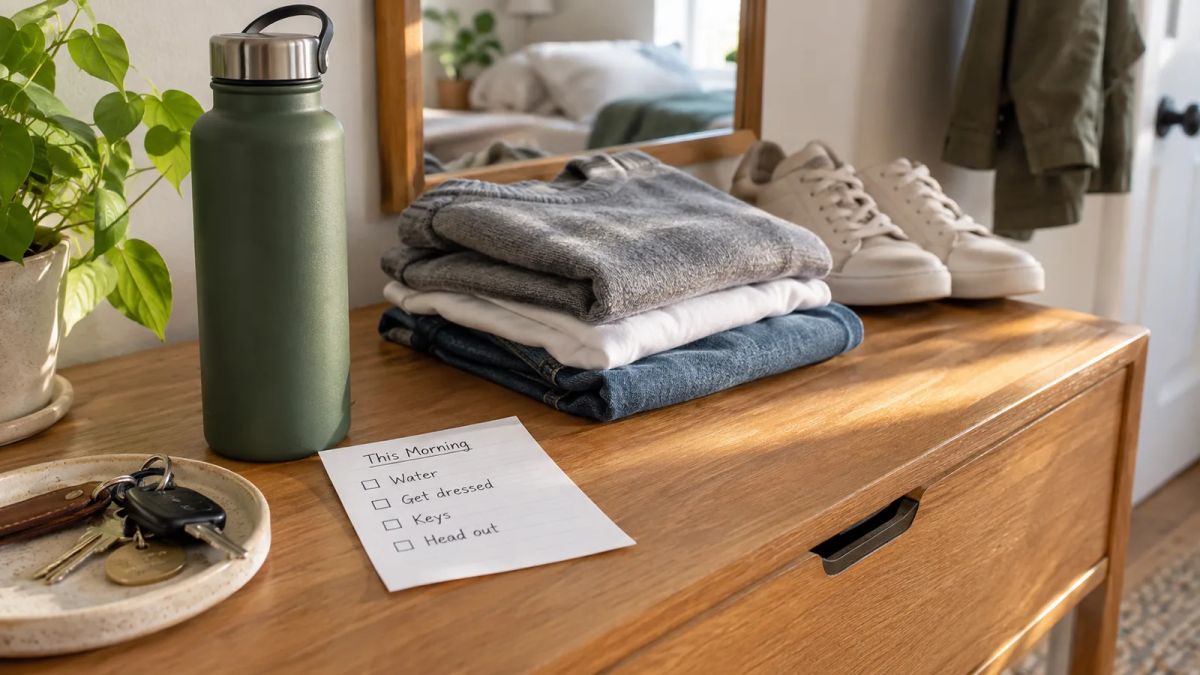
The American Heart Association suggests attaching a new action to a routine you already have, so it rides along with something automatic instead of asking for a fresh decision each day. Pick the moment that happens every morning without fail, the kettle going on, feeding the cat, the first light through the curtains, and let the flow follow it. "While the coffee brews, I do child's pose, cat-cow and a low lunge" is the kind of plan that holds, because the cue is already built into your day.
If you'd like something with a bit more structure behind it, our yoga for beginners guide covers styles, kit and a first sequence in full. And on the mornings you want to move but not step onto a mat, the morning stretch routine works from neck to calves in about the same time.
Somewhere to log the morning practice

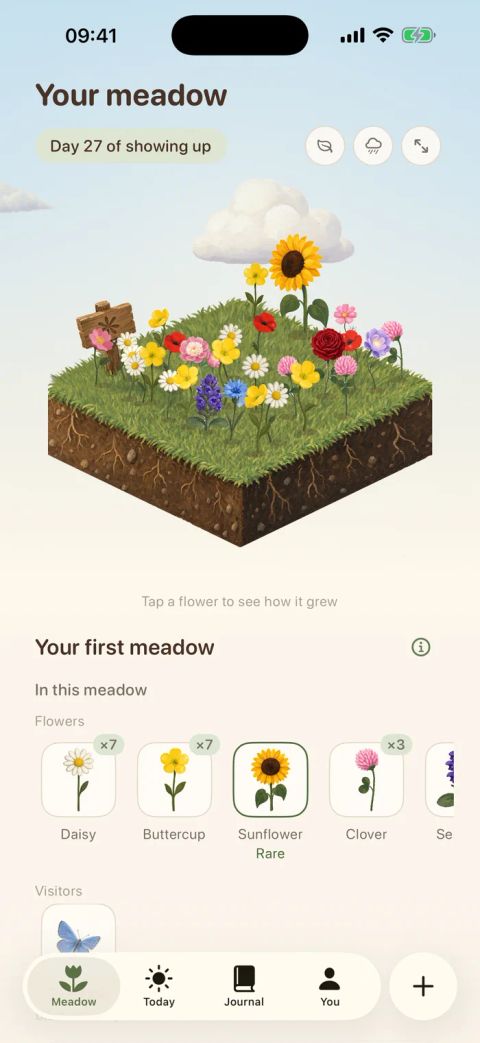
If you like to see a habit build up, Meadow gives the morning flow a place to land. It's a gentle iPhone app from Wildcard Wellness with yoga as one of its activities, so you can log a session with a timer after your chosen cue, tick off small daily habits, and note your mood and energy. Every day you show up grows a wildflower in your own meadow, with rare flowers and small animal visitors turning up as it fills in. There are no streaks, so a morning you skip resets nothing and your flowers never wilt.
Frequently asked questions
Is it safe to do yoga first thing, on cold muscles?
Yes, as long as you start gently, which is why this flow opens with soft, mobilising shapes before any deeper stretch. Keep every pose to a comfortable pull and skip anything that pinches. The NCCIH advises newcomers to steer clear of extreme poses like headstands, and none of those feature here.
Do I need to be flexible to start?
No. Flexibility is one of the things a regular practice slowly gives you, not something you need in advance. Bent knees in downward dog and a hand on a worktop are proper beginner options, not shortcuts.
How long until I notice a difference?
It varies from person to person. Many people feel looser and a little clearer within the first week or two of practising most mornings, while changes in strength and flexibility take a couple of months. There's no fixed timeline, so treat any promise of a set number of days with caution.
Is morning or evening yoga better?
Both are worth doing, and the best time is the one you'll keep to. One small trial found morning practice edged out evening for sleep and body-clock benefits in young adults, but that's a hint from a single study. If evenings are when you have ten quiet minutes, take them.
How is this different from a morning stretch?
A stretch routine moves through one area at a time to loosen you up. This flow links yoga poses together with your breath, so it wakes the body and settles the mind at once. If you want the pure loosening version, the morning stretch routine covers it.
Tomorrow morning, pick your cue, the kettle or the first light through the curtains, and do child's pose, a few rounds of cat-cow and one low lunge on each side while it happens. That's enough to begin.
AUTHOR
Co-founder of Meadow.
Ash is co-founder of Meadow, a habit and movement tracking app that turns small acts of self-care into a growing wildflower meadow.
Little and often, with Meadow
Consistency, not intensity.
Meadow turns the movement you enjoy and the habits that help you feel good into a meadow of wildflowers. No streaks to break, and your flowers never wilt.
Download Meadow