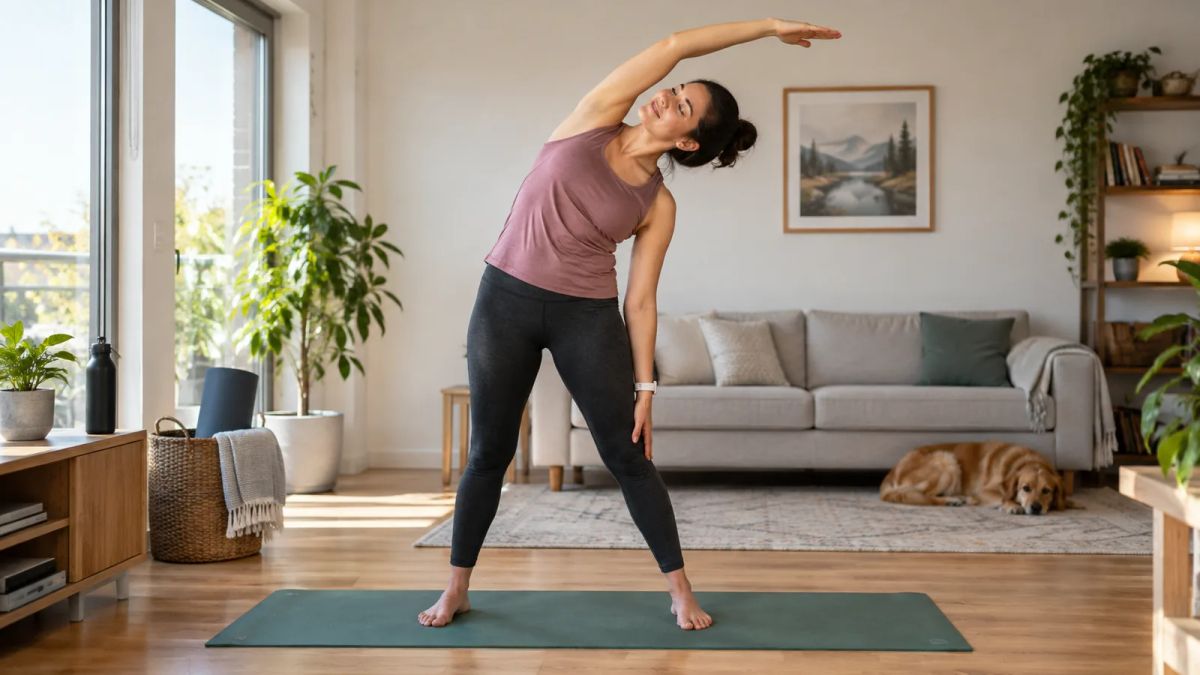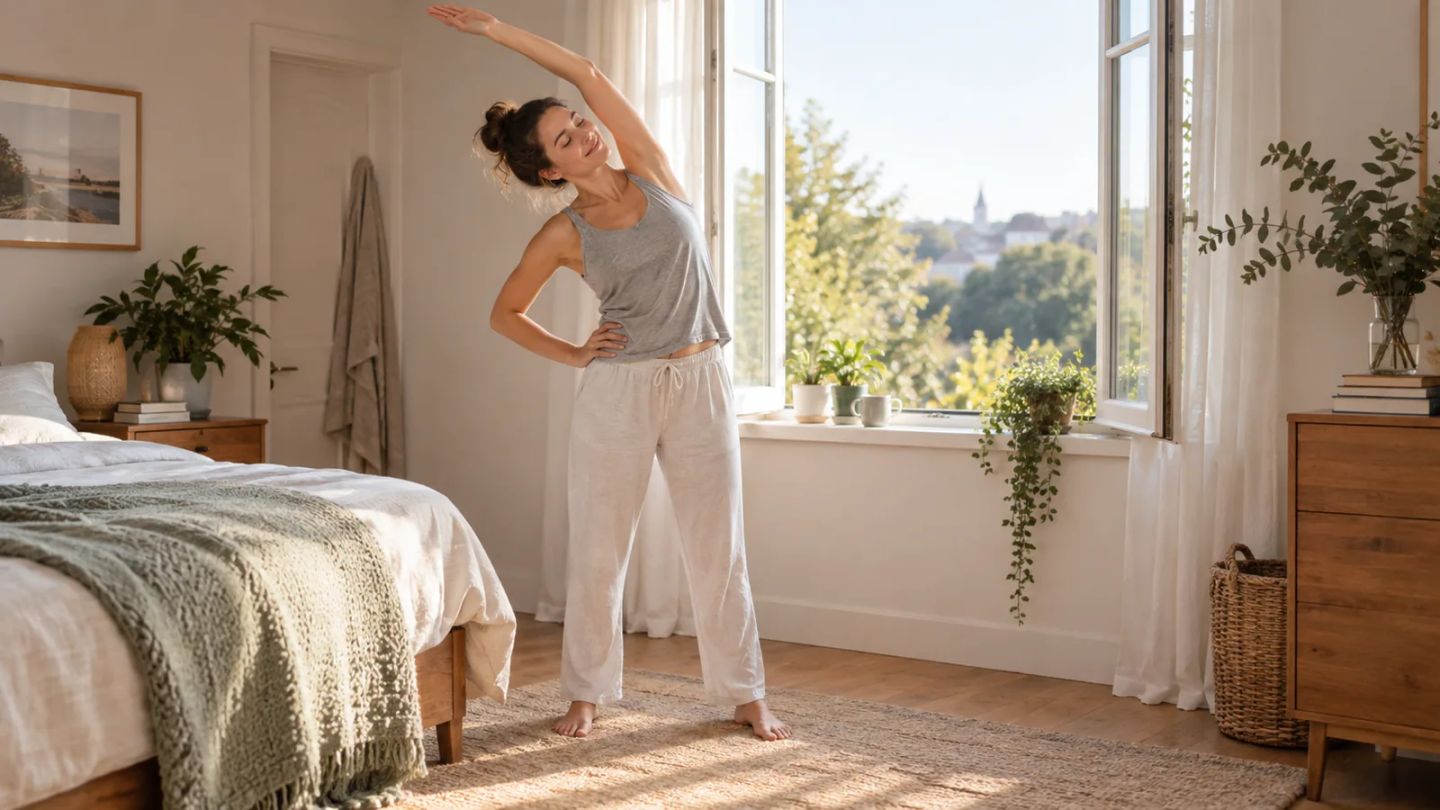
A good-morning stretch is a handful of slow, easy movements you do the moment you wake, starting in bed and finishing on your feet. This one takes about three to five minutes, needs no kit, and asks for no flexibility you do not already have.
Think of it as a way to shake off the overnight stiffness before you have to stand up and get on with things. You have been lying still for hours, your joints have settled, and the first few steps across the bedroom can feel creaky. A little gentle movement, done softly, warms you up and eases that in.
It is deliberately short. If you have more time and want a longer sequence that works you from neck to calves, there is a fuller morning stretch routine for that. This is the quick wake-up version for the mornings you have three minutes, not thirty.
Move within your range, and stop if it hurts
Every movement here should feel like a mild, comfortable pull and nothing more. If something pinches or sharpens into pain, come out of it. Your muscles are cool first thing, which is exactly why this routine stays gentle and mobilising instead of pushing into deep, forceful holds.
The NHS gives the same steer in its flexibility guidance, telling you to move as far as is comfortable and build up slowly over time. Medical News Today puts the safety point plainly too, advising that if any stretch causes pain you stop immediately and avoid overdoing it.
One more thing before you start. If you have a joint problem, a recent injury, or a condition that changes how you move, check with your GP or a physiotherapist first so you know these movements suit you. Getting that right comes before getting every stretch textbook-perfect.
The quick routine: three stretches in bed, three on your feet
Do these slowly and in order. Breathe steadily, keep each stretch to a mild pull, and where a movement works one side at a time, do both. Start while you are still lying down.
In bed
1. Full-body lengthen
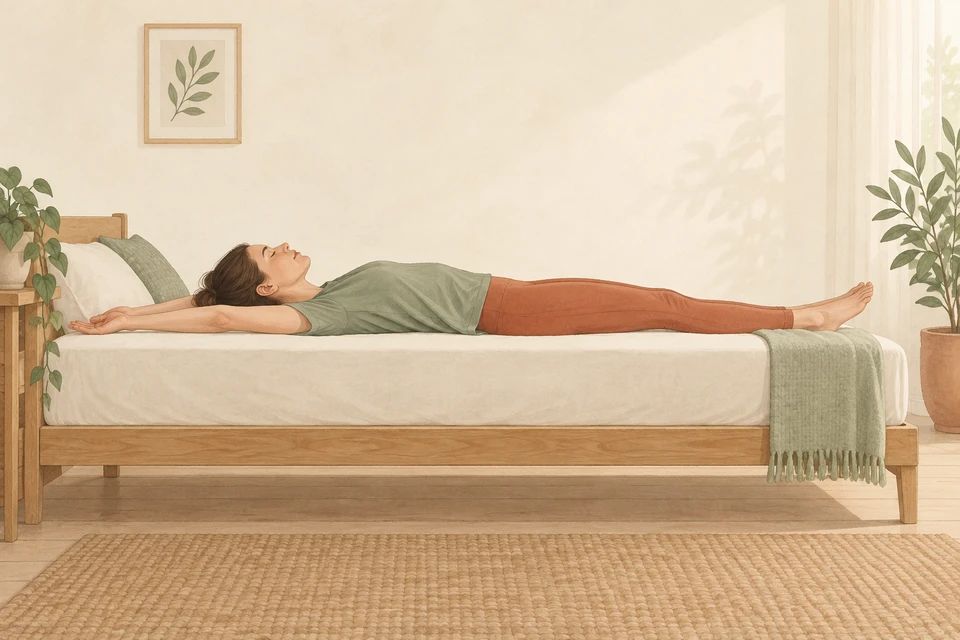
Lie on your back, reach both arms up past your head, and gently point your toes away so you stretch from fingertips to feet. Hold for five to ten seconds, feel the pull along your whole front, then release. Do it two or three times. This is the wake-up stretch your body often reaches for on its own, so let it be big and slow.
2. Knees to chest
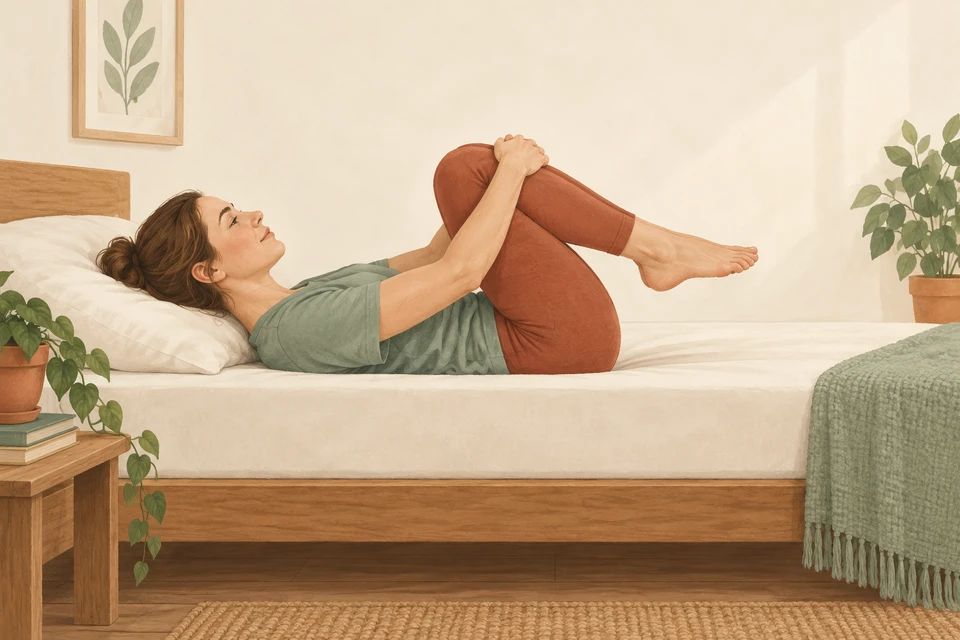
Draw both knees up towards your chest and wrap your arms around your shins. Hold for 20 to 30 seconds, breathing easily, and rock a little side to side if that feels good. This eases the lower back after a night lying flat. If both knees at once feels like too much, bring one up at a time.
3. Gentle spinal twist
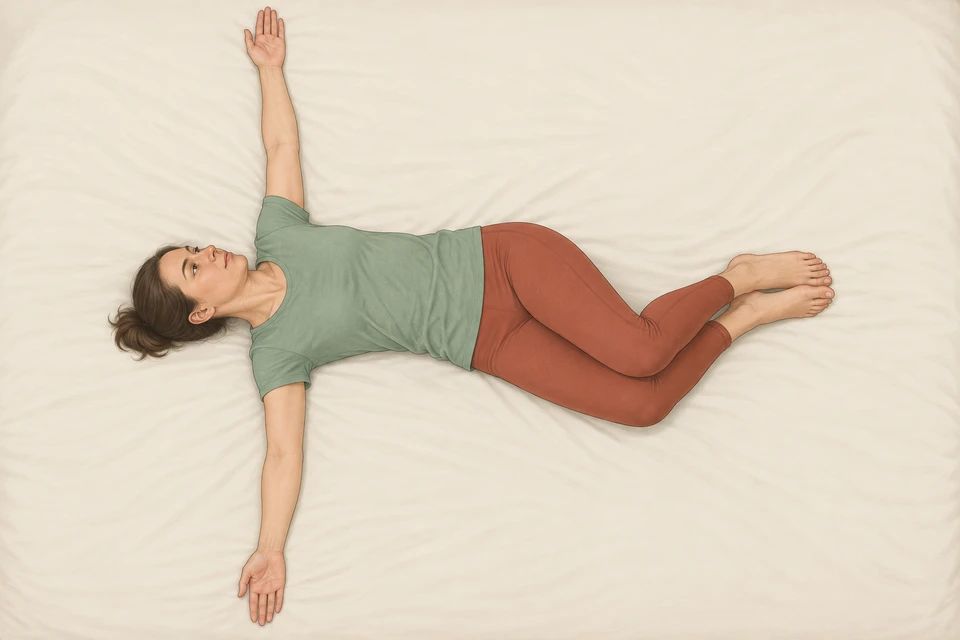
With knees bent and feet on the bed, let both knees drop slowly to one side while you turn your head the other way. Keep your shoulders resting down. Hold for 20 to 30 seconds each side. It should feel like a soft wring-out through the middle of your back, never a crank.
On your feet, beside the bed
4. Standing reach and side bend
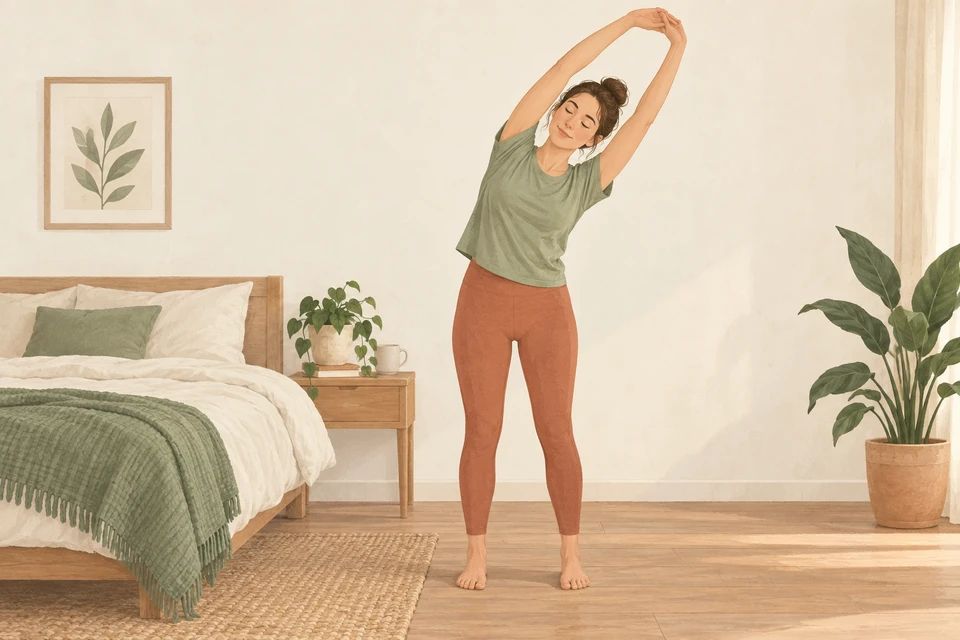
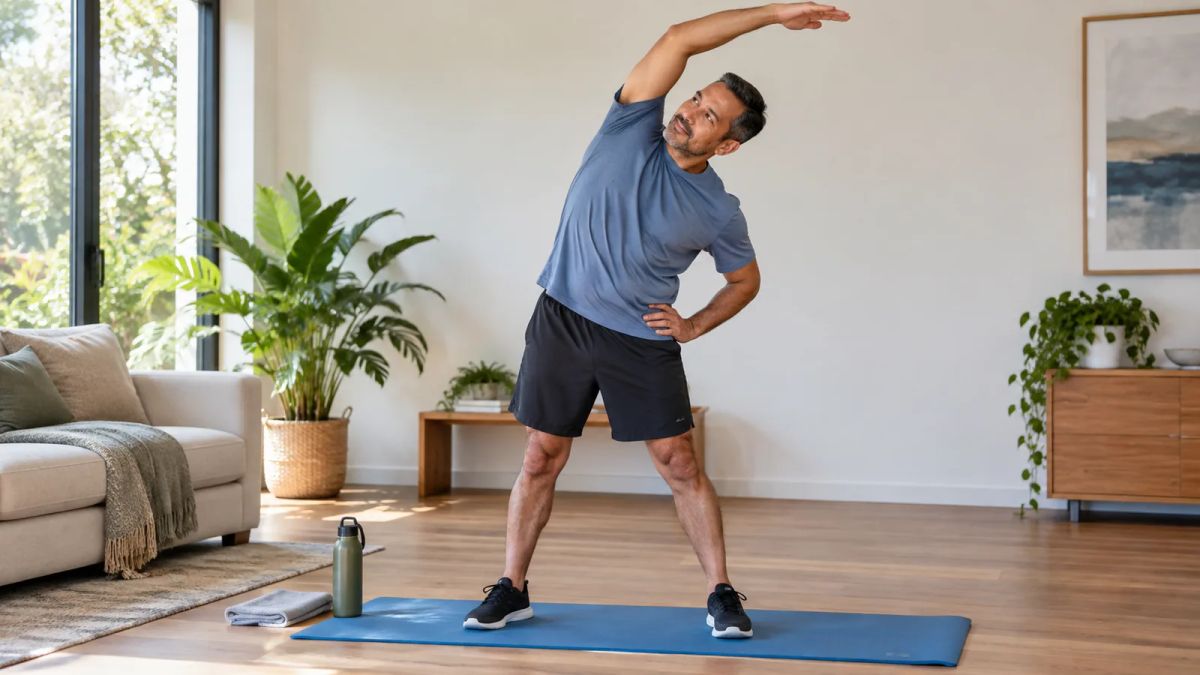
Stand up, reach both arms overhead, and lengthen tall. Then lean gently to one side until you feel a stretch down your opposite flank, hold for around 15 seconds, and swap. Keep it small and controlled with no twisting. This opens the ribs and the long muscles either side of your spine.
5. Chest opener

Clasp your hands behind your lower back, or rest them there lightly, and draw your shoulder blades together so your chest opens. If clasping is awkward, press the backs of your hands into a doorframe at shoulder height instead. Hold for 20 to 30 seconds and breathe into the front of your chest. A night curled on your side rounds the shoulders forward, and this counters it.
6. Ankle and calf wake-up
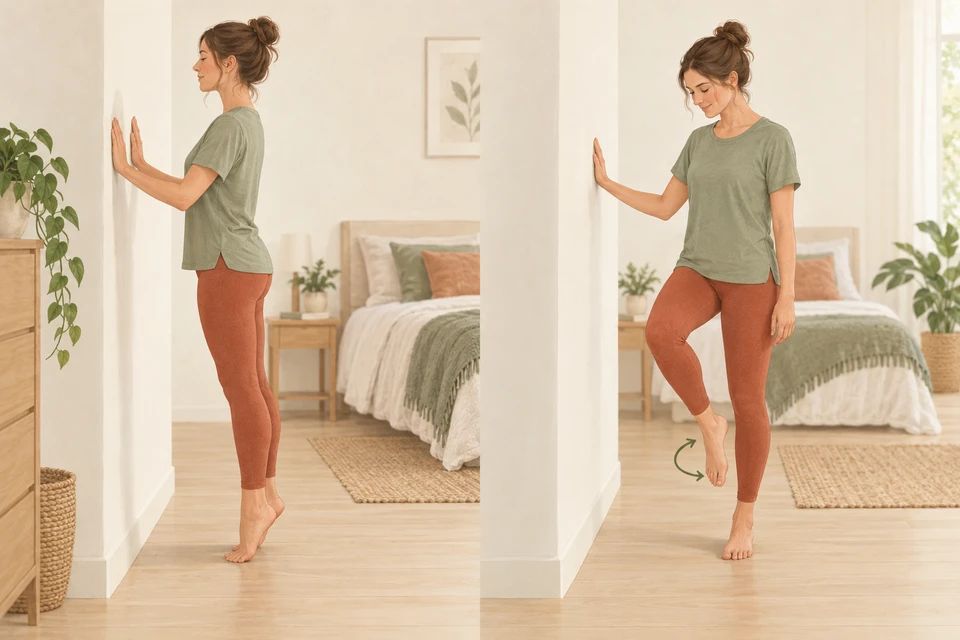
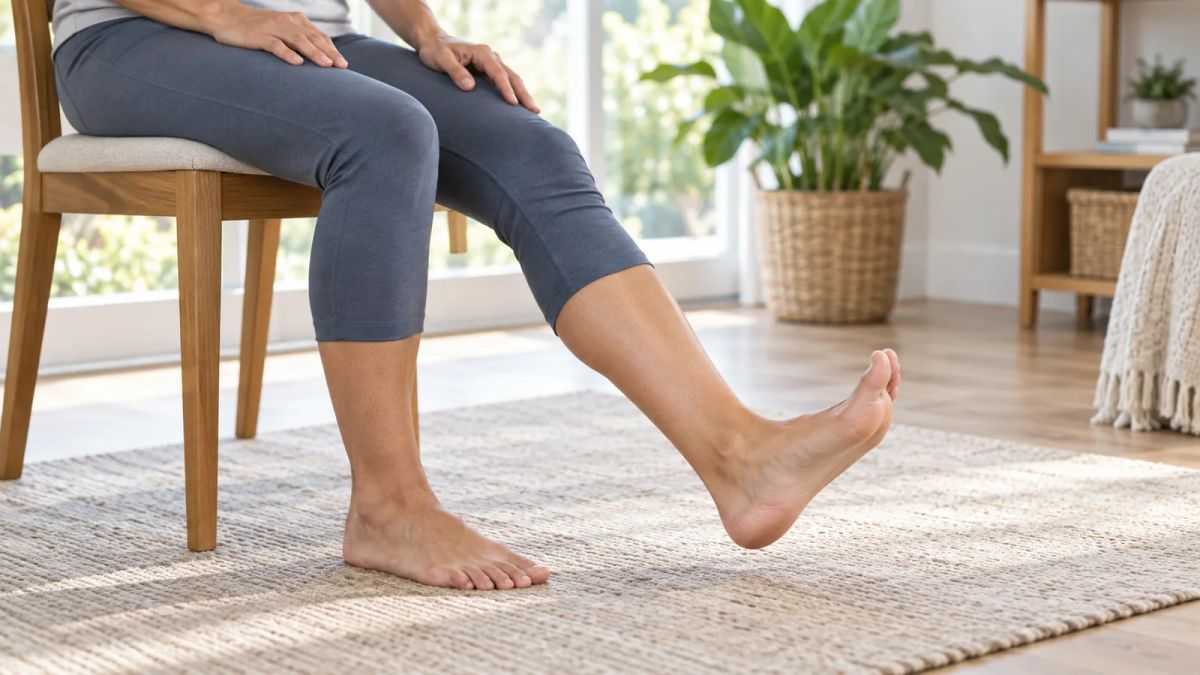
Hold the edge of the bed or a wall, rise onto the balls of both feet, then lower slowly. Do eight to ten slow rises. Finish by circling each ankle a few times in both directions. Calves and ankles stiffen overnight, and this gets them ready for those first proper steps.
That is the lot, top to bottom, in three to five minutes. On the held stretches, Cleveland Clinic lands in a familiar place, suggesting static stretches held for around 20 seconds with a short routine of ten to fifteen minutes being plenty. Harvard Health uses a similar hold of about 30 seconds and warns against bouncing, so keep every movement smooth.
Why a morning stretch feels good, and what it won't do
Most of the appeal is the feeling. A slow stretch when you first wake gets you breathing, gets a little blood moving, and shifts you out of that heavy, half-asleep stiffness. That is a fair reason to do it on its own, and it is why so many of us reach and yawn before we have even thought about it.
Kept up over time, gentle stretching can help you move a bit more freely. A study of community-dwelling older adults found that a ten-week programme increased ankle range of motion by around nine degrees, a sizeable gain, though the researchers put it down to better tolerance of the stretch rather than any change in the tissue itself. Cleveland Clinic frames the everyday payoff well, noting that stretching can help with ordinary jobs like climbing stairs and standing up from a chair.
Now the honest limits. The research on morning stretching in particular is thin. Medical News Today is upfront that little study has focused on it and much of the case rests on anecdotal evidence, even though the general benefits of stretching are better established. So treat the wake-up glow as real and welcome, but do not expect a three-minute routine to fix a sore back or a longstanding joint problem.
Flexibility also comes slowly. Harvard Health notes it takes weeks to months of regular stretching to see change, and you have to keep it going to hold on to any gains. None of this replaces proper advice about a specific condition, so if an area has been sore for a while, take it to your GP.
The two-minute version, and picking it back up
Decide your shorter version now, before the morning you need it. On a rushed, stiff, or low day, the full-body lengthen in bed, one round of knees to chest, and a few ankle rises when you stand still count. A minute of movement keeps the thread going, and keeping the thread going is what turns this into something your body starts to expect.
If you skip a day, or a week, nothing is lost. Stiffness after a gap comes from staying still, not from any failure on your part, and the fix is the same as always. Pick tomorrow morning and do the lengthen and knees to chest again. Starting small after a break holds up far better than trying to make up for it with one long session.
How to make it stick
A stretch you mean to fit in somewhere tends to slip. A stretch pinned to something you already do every morning tends to survive.
James Clear calls this habit stacking, and the formula is simple: after a current habit, I will do the new one. You are borrowing a cue that is already wired in rather than trying to remember a fresh one each day. Because this routine begins in bed, the easiest cue is waking itself. "When I open my eyes, before I reach for my phone, I lengthen and pull my knees in" is the kind of plan that lasts, because the trigger happens whether you feel like it or not.
If your mornings are calmer with a bit of structure around them, it sits well inside a wider morning routine. And if you would like something with a touch more to it than stretching, gentle chair yoga covers similar ground with a little more shape.
Somewhere to mark the habit

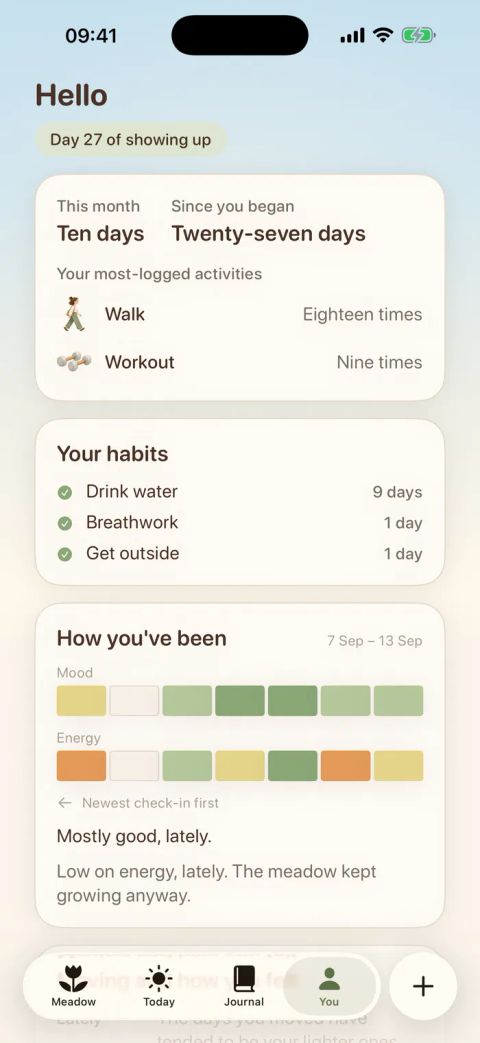
A few minutes of stretching counts as movement, and Meadow gives you a spot to log it. It is a gentle habit app for iPhone from Wildcard Wellness where you record the movement you enjoy with a timer, a stretch, a walk or a little yoga, and tick off small daily habits beside it. You can note your mood and energy and jot a daily win, and each day you show up grows a wildflower in your own meadow. There are no streaks, so a morning you sleep through resets nothing and your flowers never wilt.
Tomorrow, before your feet hit the floor, do the full-body lengthen and pull your knees to your chest. That is enough to start.
AUTHOR
Co-founder of Meadow.
Ash is co-founder of Meadow, a habit and movement tracking app that turns small acts of self-care into a growing wildflower meadow.
See how far you've come
Your habits, moods and little wins, all in one place
Meadow keeps track of the walks, the water and the good days, so you can look back and watch your effort add up.
Download Meadow