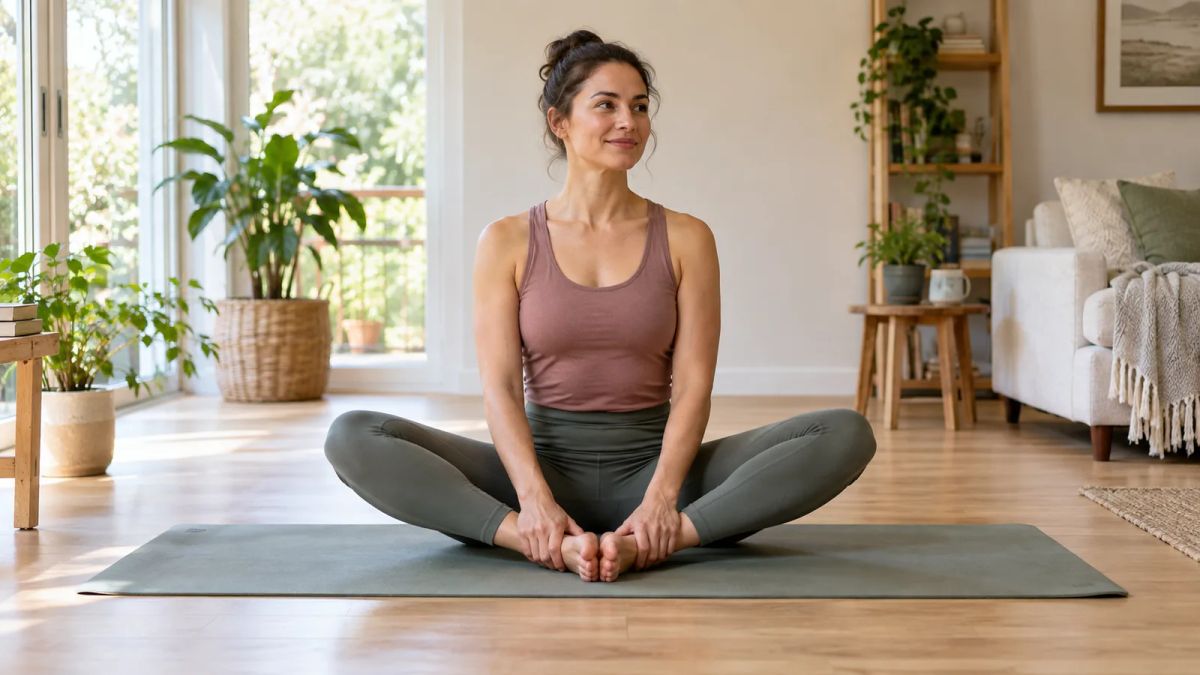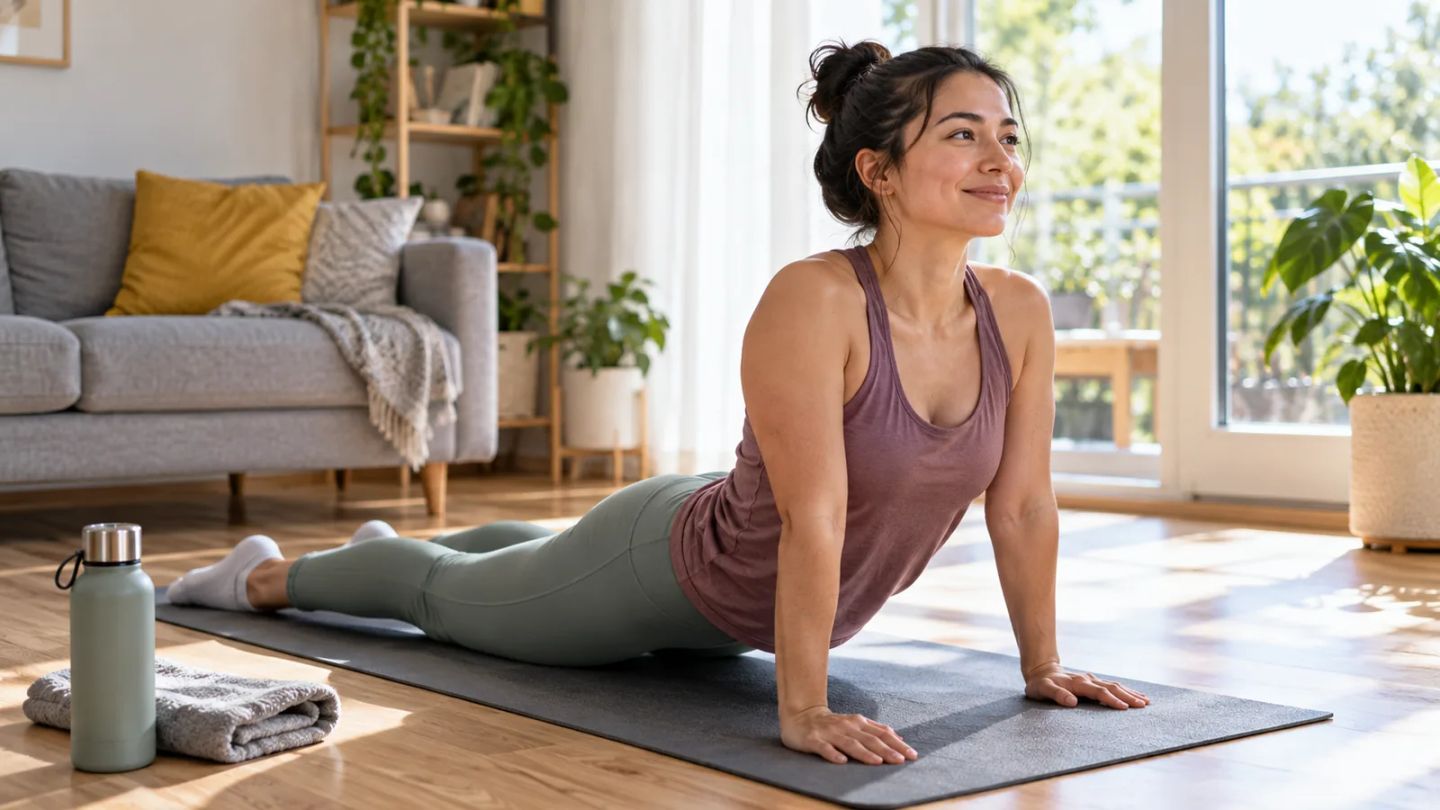
A morning workout routine is a short set of movements you do soon after waking, to loosen a stiff body and get some real exercise in before the day fills up. This one takes about 20 to 25 minutes from the first arm swing to the last stretch, needs no equipment, and asks for no more floor than a bath towel covers.
It comes in three parts. A short warm-up to get the blood moving, a bodyweight circuit that works your whole body, and a few slow stretches to finish. You can do the lot in your pyjamas beside the bed, and on a flat-out morning you can trim it to fifteen minutes and still count it.
Is morning exercise better?
You've probably read that morning workouts are the best kind. The honest answer is more useful than that. There isn't a time of day that's clearly best for everyone, and what shapes your results over months is whether you keep turning up. Cleveland Clinic puts it plainly, saying consistency is the most important variable and is most strongly linked to achieving the best results, and that the best time to train is the one that fits your life so you'll do it regularly.
Mornings do have a couple of things going for them. Fewer meetings, errands and tired evenings get in the way, so a lot of people find an early session easier to protect. Cleveland Clinic notes morning exercise has been linked to lower blood pressure, better sleep and greater weight loss, while evening workouts bring stronger performance from warmer muscles. Both are worth doing. If your quiet slot is 7pm, take it.
Treat the morning timing as a helpful bonus. The routine below works whenever you do it.
Before you start
Most people can begin gentle bodyweight movement today. If you've been inactive for a long time, are pregnant, or you're managing something like a heart condition, joint trouble or high blood pressure, have a quick word with your GP first. The NHS advises speaking to your GP if you haven't exercised for some time or have any health concerns, and to make sure the activity and its intensity suit you. That comes before worrying about perfect form.
You can do this before breakfast. A short, easy-to-moderate circuit like this is fine for most healthy adults on an empty stomach, and there's some evidence that morning exercise before eating nudges up fat burning a little. Healthline points to research where 24-hour fat burn was highest when people exercised in the morning before breakfast, while noting it helps to keep your blood sugar steady through the session. If you feel shaky, dizzy or weak on an empty stomach, or you have diabetes or take medication that affects your blood sugar, eat something small first, like half a banana, and check with your GP if you're unsure.
Every movement should feel like effort, not pain. A sharp or pinching pain means stop. Some mild stiffness a day or two after a new routine is normal and passes.
The warm-up: five minutes to wake the body up
Don't skip this part. Your muscles have been cold and still for hours, and moving them through their range first makes the circuit safer and easier. Harvard Health recommends taking at least five minutes to prepare your body and reduce your risk of injury, using movement that takes your joints through a full range rather than holding still.
Move through these gently, one after another. Nothing here is held.
- March on the spot, one minute. Lift your knees, swing your arms, and build from a slow amble to a brisk march. This gets your heart rate up and your circulation going.
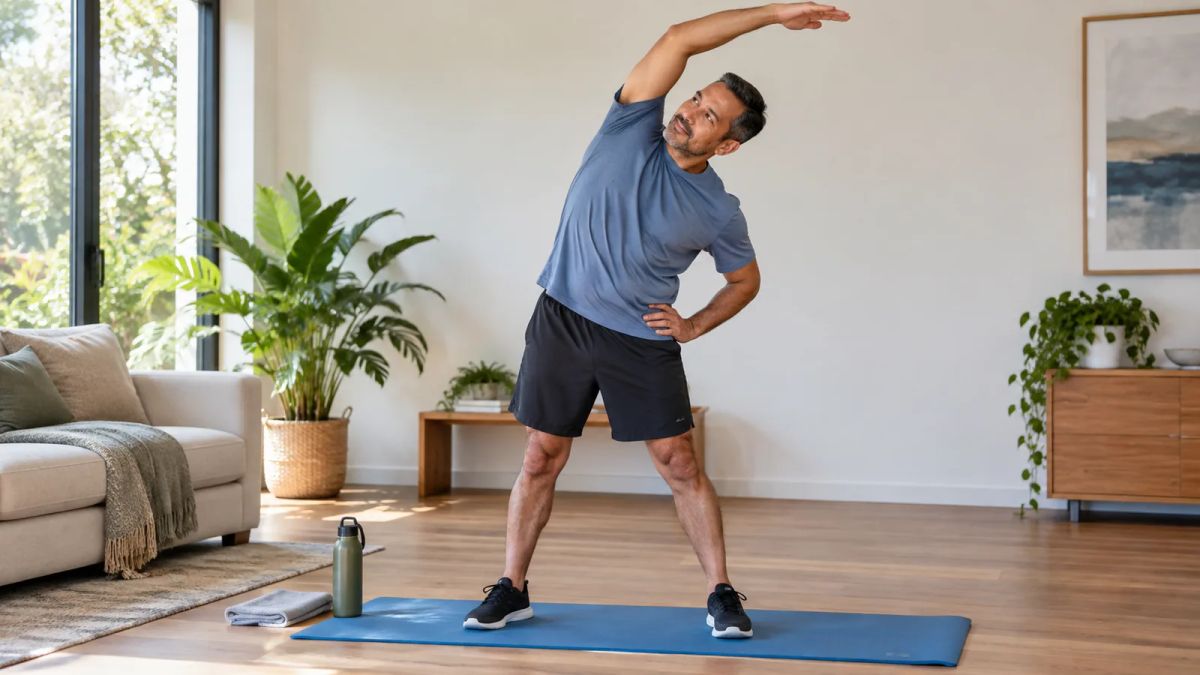
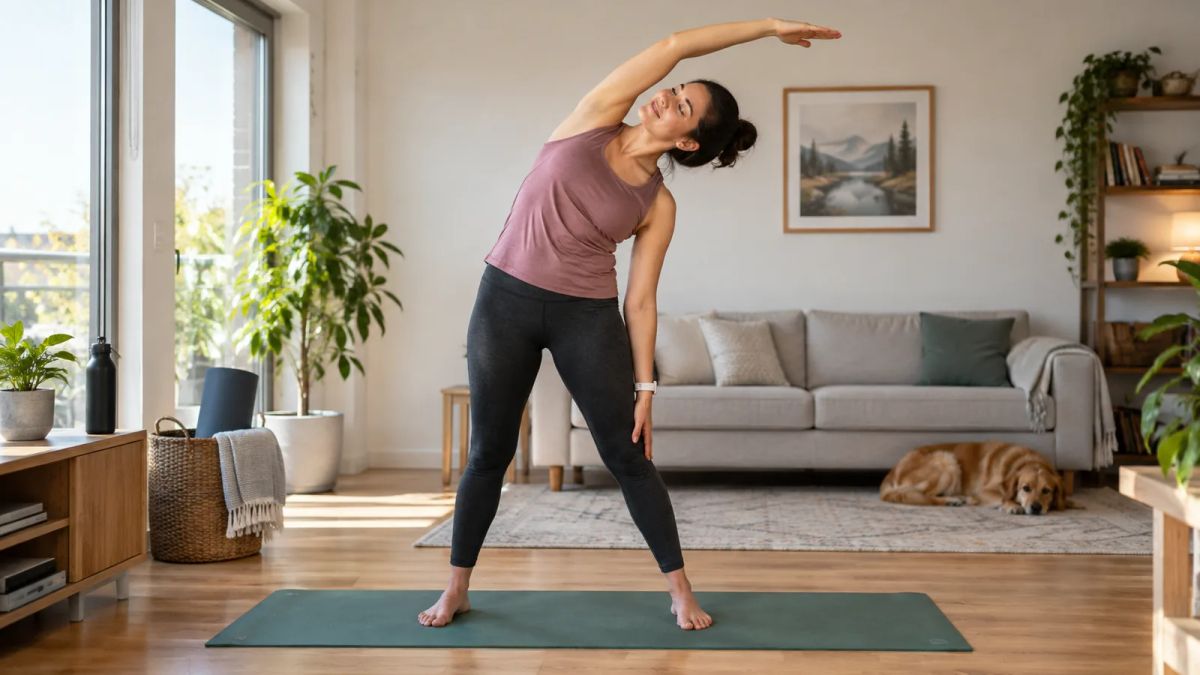
- Shoulder rolls and arm circles, 30 seconds. Roll your shoulders back a few times, then draw slow circles with both arms, forwards then backwards. A night on your side stiffens the shoulders, so this loosens them.
- Standing knee lifts, 30 seconds. Bring one knee up towards your chest, lower it, then the other, at a steady pace. Hold a wall if your balance needs it.
- Hip circles, 30 seconds. Hands on hips, feet apart, circle your hips slowly one way then the other, like you're using a hula hoop.
- Gentle torso twists, 30 seconds. Soft knees, let your arms swing loosely round your middle from side to side.
- Slow half-squats, one minute. Sit back and down to about halfway, then stand, at an easy pace. This warms the biggest muscles in your legs and rehearses the real squats to come.
By the end you should feel warmer and a little out of breath.
The circuit: a 15-minute bodyweight workout
Open our free printable: Your morning workout card (PDF). Save or print it to use alongside this guide. No sign-up needed.
This is a full-body circuit you repeat. Do each move in turn for about 40 seconds, then rest for 20 while you set up the next one. When you've done all six, that's one round. Rest for a minute, then go again. Two rounds is a solid start, three if you've got the time and the legs for it, which lands you between twelve and eighteen minutes.
Every move has an easier version. Use it without a second thought. The best circuit is the one you finish.
1. Bodyweight squats
Feet about shoulder-width apart, sit your hips back and down as if lowering onto a low chair, then stand tall. Keep your chest up and your weight in your heels. Easier: don't go as deep, or touch a chair with your bottom each rep and stand back up.
2. Incline push-ups
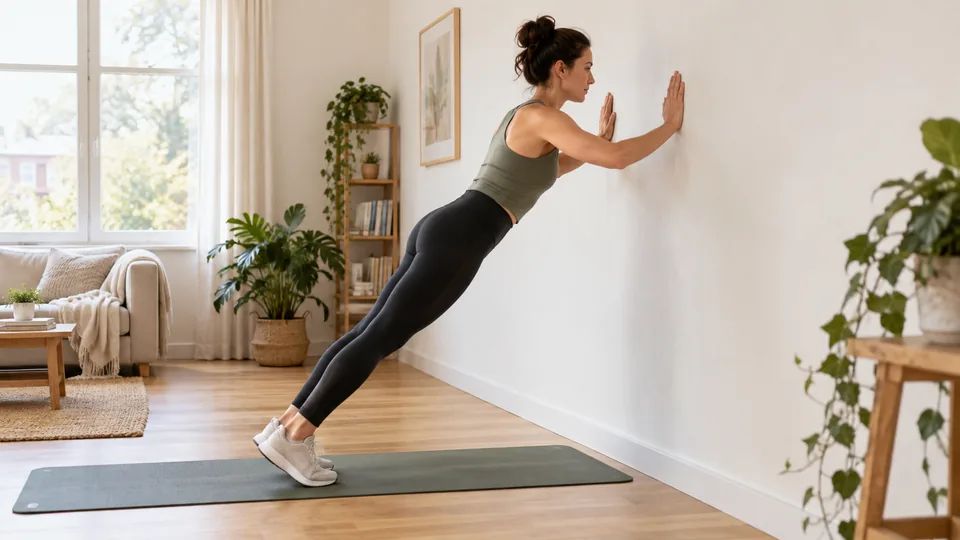
Hands on the edge of a kitchen worktop or a sturdy windowsill, body in a straight line, lower your chest towards it and press back up. The higher the surface, the easier it is. Easier still: push against a wall. Harder: hands on the floor, from your knees or your toes.
3. Reverse lunges
Step one foot back and lower your back knee towards the floor, keeping your front knee over your ankle, then step back together. Alternate legs. Stepping backwards is kinder on the knees than stepping forwards. Easier: hold a wall or a chair back for balance and go shallow.
4. Glute bridges
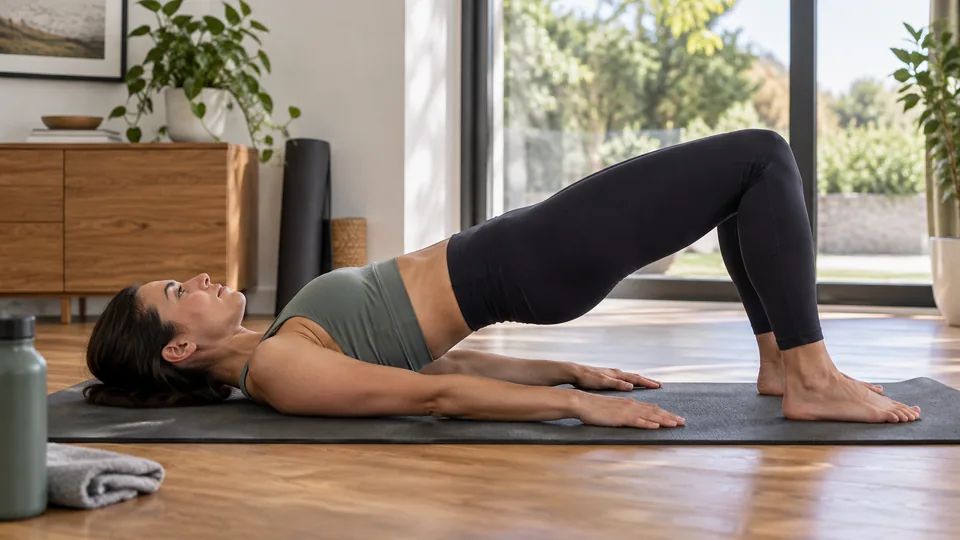
Lie on your back, knees bent, feet flat and close to your bottom. Squeeze your backside and lift your hips until your body makes a straight line from knees to shoulders, then lower slowly. This wakes up muscles that switch off after a night in bed.
5. Plank
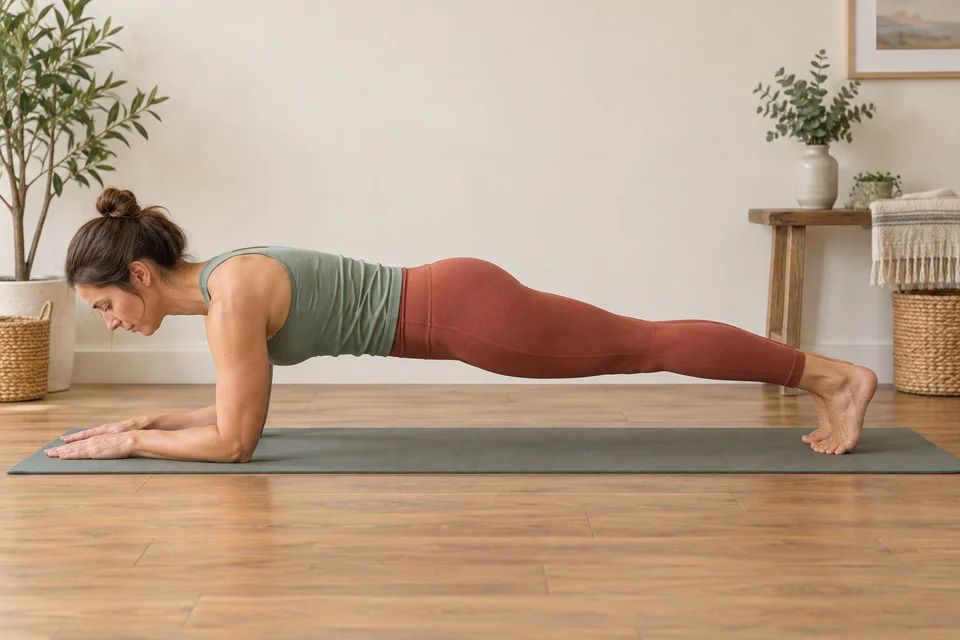
Forearms and toes on the floor, body in one straight line, belly gently drawn in. Hold steady and breathe. Easier: drop to your knees, or do it leaning on the worktop from step 2. Don't let your hips sag or hike up.
6. Marching or step jacks
For a gentler finish, march hard on the spot with high knees. For more of a push, step one foot out to the side and raise your arms overhead, then the other, like a slow star jump without the impact. This keeps your heart rate up to round off the circuit.
If a round leaves you unable to speak, you've gone too hard for a morning. Ease the pace so you could get a short sentence out. The CDC counts this kind of session towards the at least two days a week of muscle-strengthening activity adults are encouraged to do, on top of 150 minutes of moderate movement across the week, so a few mornings like this pull real weight.
The stretch: five minutes to finish
Cooling down with a few held stretches while you're warm feels good and eases you into the day. Hold each one for 20 to 30 seconds, breathing slowly, and swap sides where you need to.
1. Standing forward fold
Feet hip-width, soft knees, hinge forward from the hips and let your head and arms hang heavy. Feel the back of your legs lengthen. Roll up slowly.
2. Quad stretch
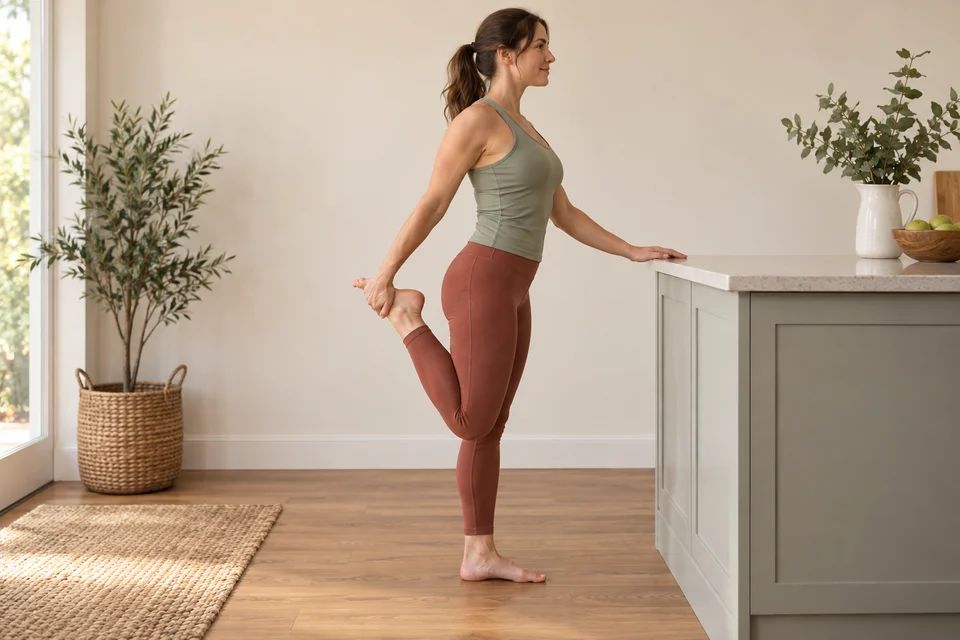
Stand tall, hold a wall with one hand, bend one knee and draw that foot towards your bottom until you feel a stretch down the front of the thigh. Swap sides.
3. Chest and shoulder opener
Clasp your hands behind your back and gently lift them, drawing your shoulder blades together so your chest opens. This undoes the round-shouldered slump of the circuit and of sleep.
4. Seated or lying twist
Sit tall and turn gently towards one side, or lie on your back and let both knees drop to one side. Breathe into it, then unwind and go the other way.
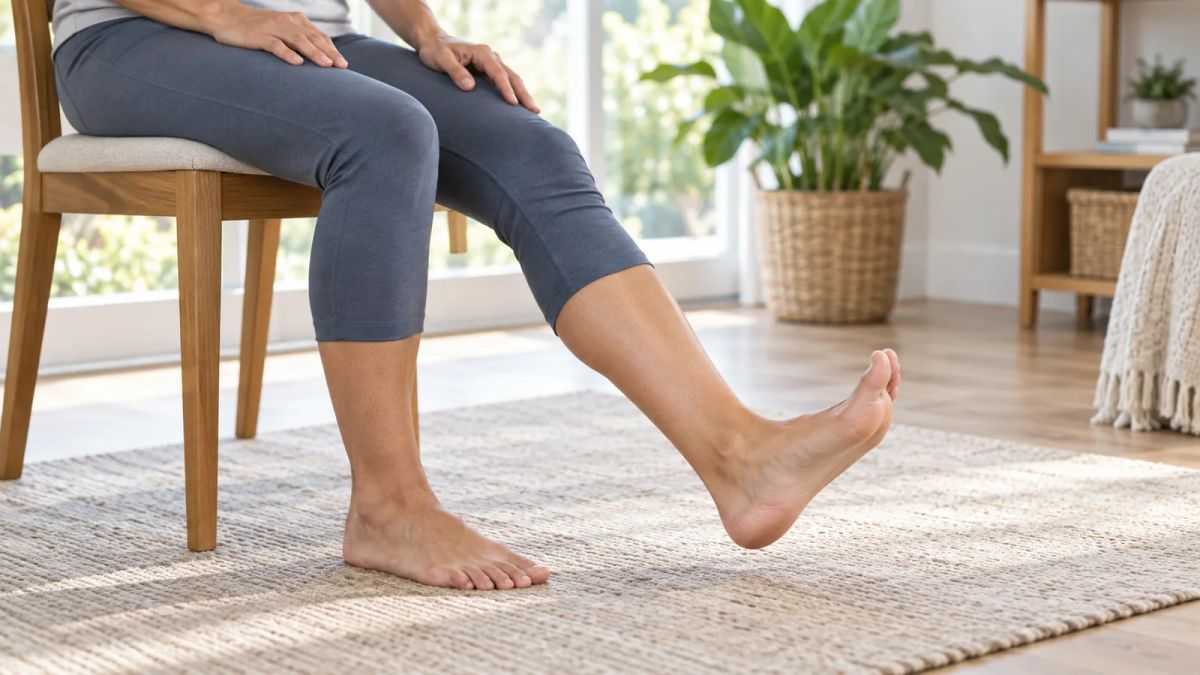
5. Calf stretch
Hands on a wall, step one foot back with the heel pressed down and the leg straight, and lean in until you feel the back of your lower leg lengthen. Swap sides.
That's the whole thing, warmed up, worked and stretched off, all before the kettle's cold.
Making it stick on dark mornings
The hard part isn't the workout. It's getting yourself moving when it's black outside and the bed is warm. A few small things make the difference between a routine that lasts a fortnight and one that lasts.
Tie it to something you already do every morning. The American Heart Association suggests attaching a new habit to a routine you've already got, so it rides along with something automatic instead of asking for a fresh decision in the dark. Pick the fixed point that always happens and let the workout follow it.
After the kettle goes on, I do my warm-up and one round of the circuit.
Lay it out the night before. Clothes on the chair, a bit of clear floor, curtains you can open in one pull. Switching a bright lamp on the moment you wake helps your body accept it's morning. The fewer decisions between you and the first squat, the more likely you are to start.
Keep the bad-day version tiny and decide it now. On a rough, dark, running-late morning, the warm-up plus a single round is plenty, and even the warm-up on its own keeps the thread going. The CDC is clear that you don't have to do it all at once and can break activity into smaller chunks, so five honest minutes still counts as a morning you showed up.
And when you miss, and you will, don't write off the week. Nothing you've built is undone by a skipped day. Pick the next morning and do the small version. Getting going again quickly is far more reliable than waiting for a fresh Monday.
If you're brand new to all this, our guide on how to start exercising walks through building from almost nothing. And on the mornings you'd rather move softly than sweat, the morning stretch routine loosens you from neck to calves, and the morning yoga routine links slow poses to your breath in about ten minutes.
Somewhere to log the morning workout

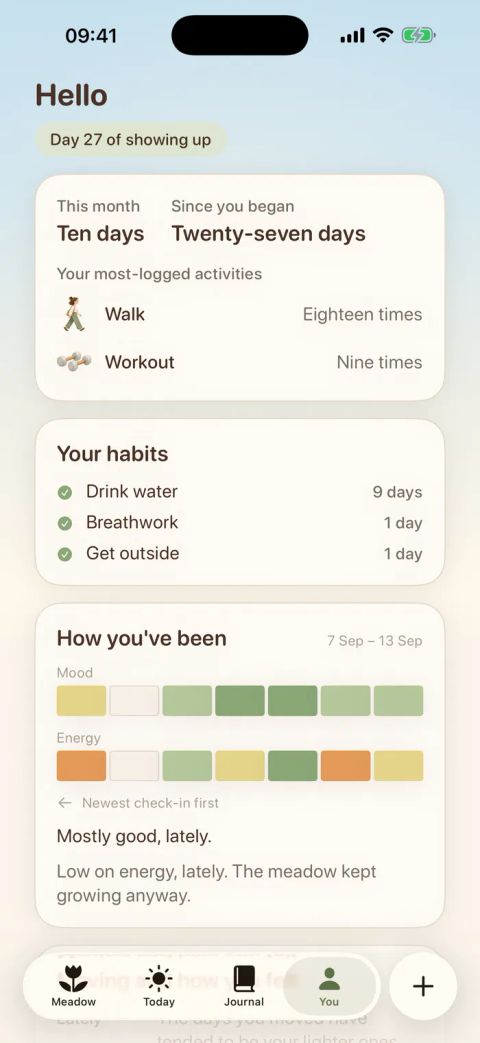
If you like to see the mornings add up, Meadow gives this routine a place to land. It's a gentle movement and habit app for iPhone where you log a workout with a timer, tick off small daily habits alongside it, and note your mood and energy. Every day you show up grows a wildflower in your own meadow, with rare flowers and little animal visitors turning up as it fills in. There are no streaks, so a dark morning you sleep through resets nothing and your flowers never wilt, which suits the stop-start reality of a British winter.
Frequently asked questions
Do I need to eat before a morning workout?
Not for a short, gentle circuit like this one. Most healthy adults are fine moving before breakfast. If you feel shaky or weak on an empty stomach, or you're managing your blood sugar, have a small snack first and speak to your GP if you're unsure.
How long should a morning workout be?
This one runs about 20 to 25 minutes with the warm-up and stretch included, and you can cut the circuit to a single round for a fifteen-minute version. A shorter session you do most days beats a long one you dread and skip.
How many mornings a week should I do this?
Three or four is a good target for a full-body circuit, leaving a day between the harder sessions so your muscles recover. On the days in between, a walk or a few stretches keeps things ticking over.
Is it bad to work out first thing on cold, stiff muscles?
Only if you skip the warm-up. Cold muscles don't like being loaded straight away, which is why the five-minute warm-up comes first and takes your joints through their range before any real effort. Never jump into squats or push-ups cold.
Will 20 minutes a morning get me fit?
It's a genuine start. A regular bodyweight circuit builds strength and stamina, and it counts towards the muscle-strengthening activity health bodies recommend. It won't transform your fitness in a week, but a few mornings like this, kept up over months, add up to a lot.
Tomorrow morning, pick your cue, the kettle or the first lamp you switch on, and do the five-minute warm-up plus one round of the circuit while the day gets going. That's the whole start.
AUTHOR
Co-founder of Meadow.
Ash is co-founder of Meadow, a habit and movement tracking app that turns small acts of self-care into a growing wildflower meadow.
See how far you've come
Your habits, moods and little wins, all in one place
Meadow keeps track of the walks, the water and the good days, so you can look back and watch your effort add up.
Download Meadow