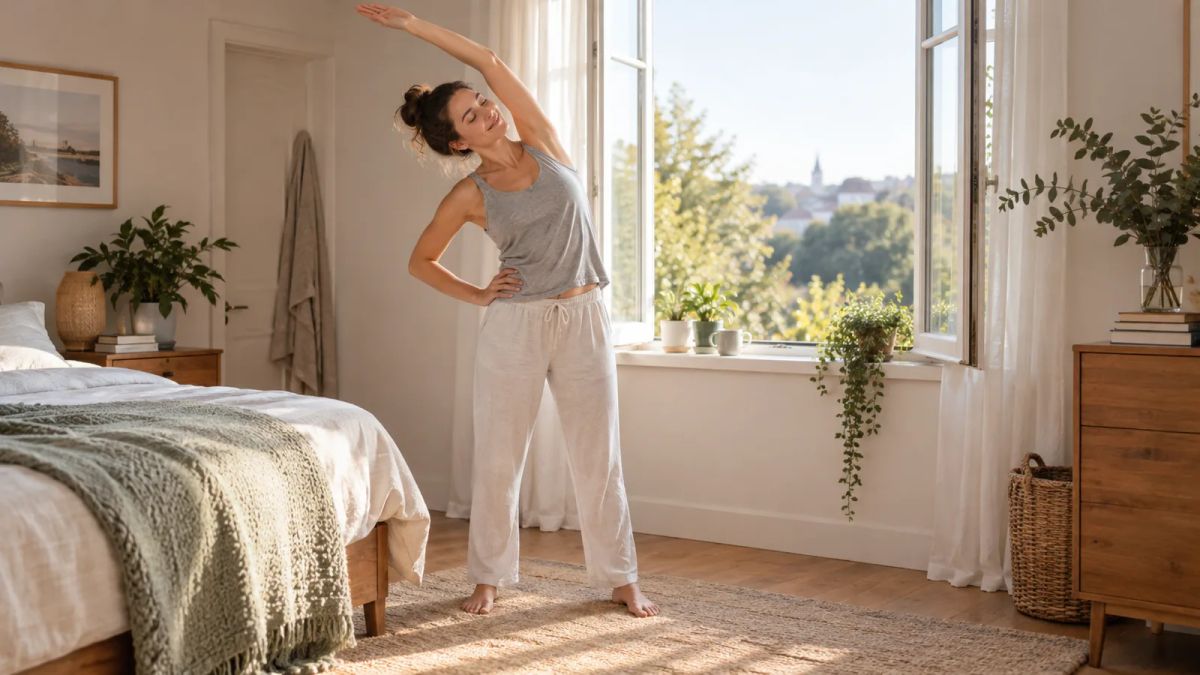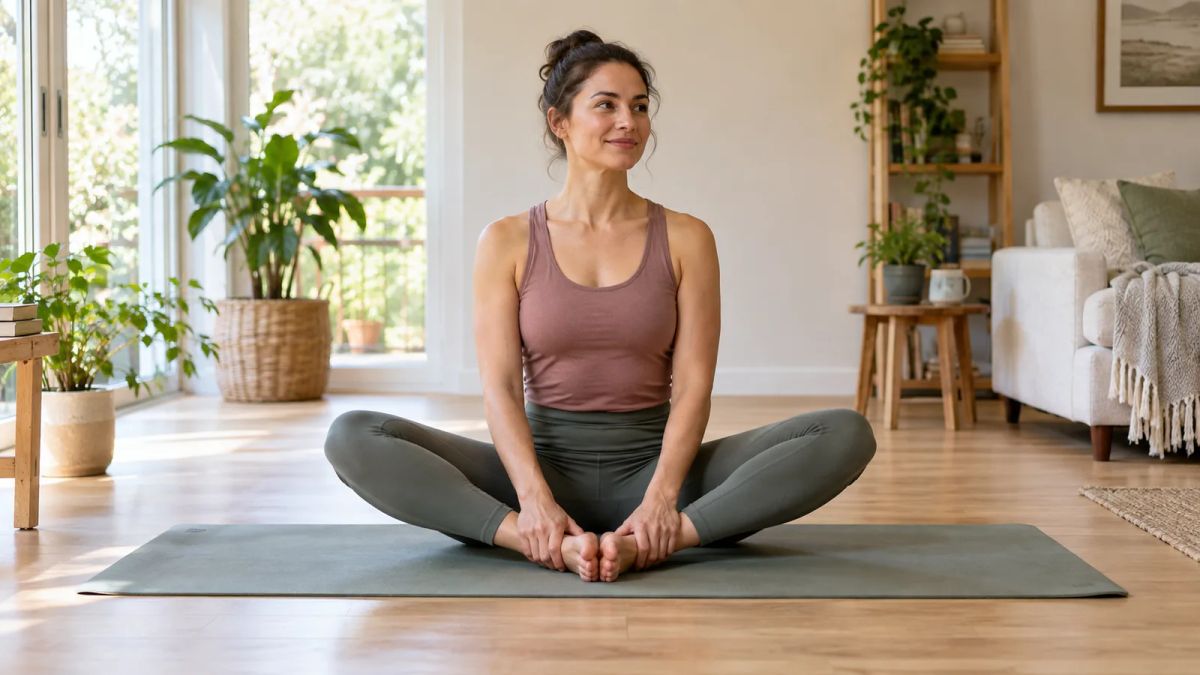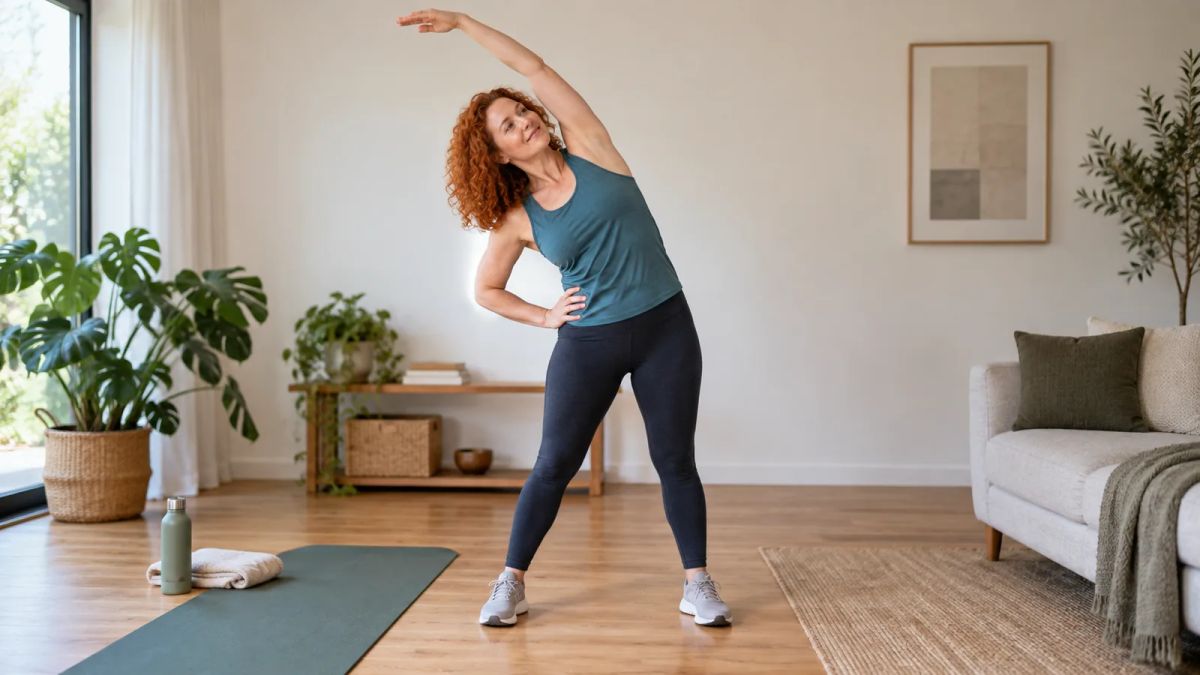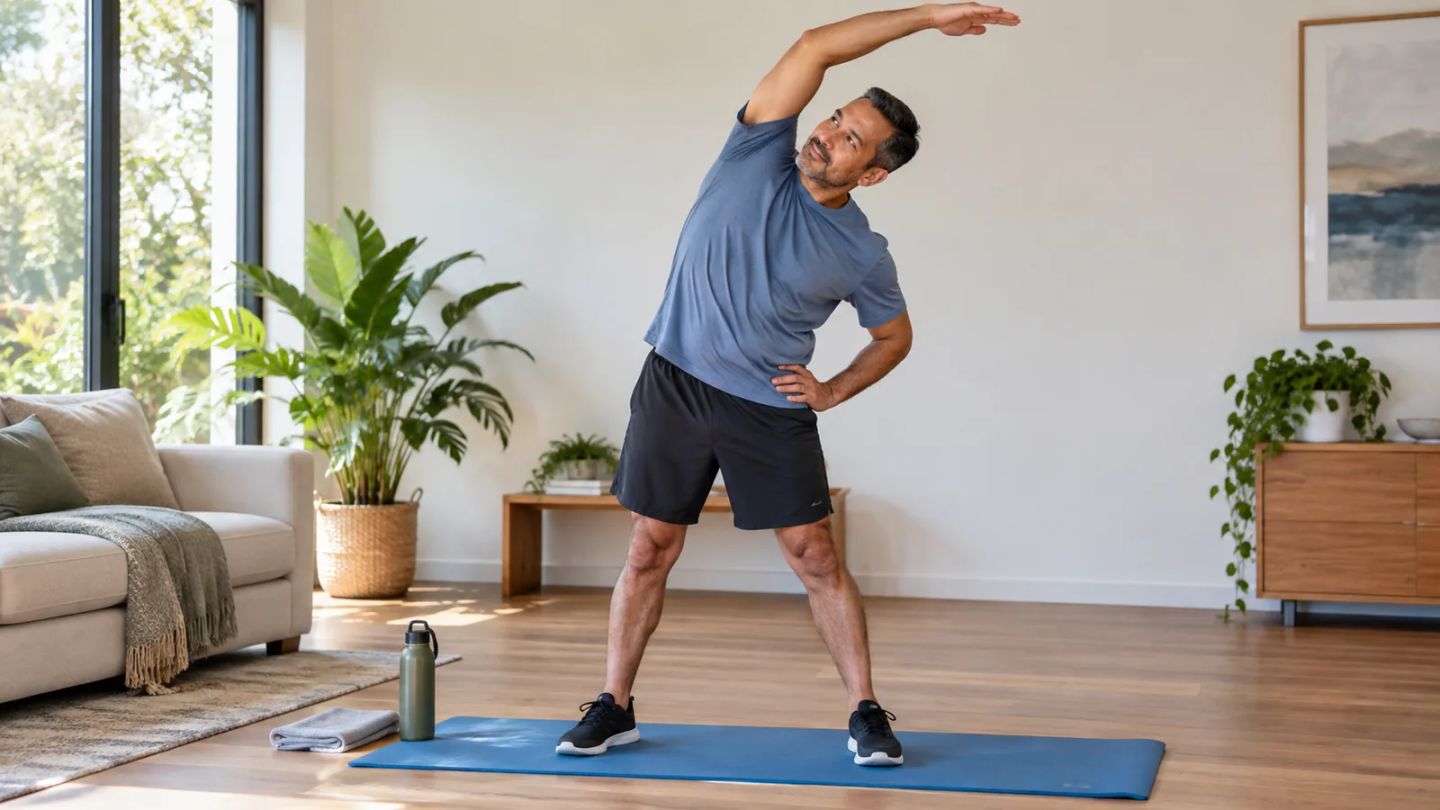
A cool-down is the few minutes after a workout when you let your body wind down instead of stopping dead. It does two jobs. First you bring your heart rate and breathing down slowly, usually by easing off whatever you were already doing, and then you stretch the muscles you have worked while they are still warm.
The whole thing takes eight to twelve minutes and needs no equipment beyond a wall and a patch of floor. What follows is how to do each part, a full-body stretch sequence of eight holds covering the major muscle groups, and an honest account of what a cool-down will and will not do for you. A lot of what people expect from cooling down turns out not to be true, so that part gets its own section below.
Why a cool-down is worth the few minutes
When you exercise, your heart is beating faster and harder, your blood vessels are wide open, and a lot of your blood is being pumped through your working muscles. Stop all at once and that system gets caught out.
Cleveland Clinic puts the main job plainly. A cool-down brings down your heart rate, blood pressure and respiratory response gradually instead of abruptly. UCLA Health describes the same thing from the muscles' side, noting that easing off slowly reduces the demands you have been making on your muscles, and thus on your heart, which lets your heartbeat slow and your blood pressure settle.
The practical reason to bother is what happens when you skip it. Standing still straight after hard effort lets blood pool in your legs, and that can leave you dizzy or lightheaded. Cleveland Clinic warns that a sudden stop can cause dizziness or lightheadedness due to abrupt drops in blood pressure and heart rate, and Harvard Health lists the same, saying a slow wind-down helps prevent muscle cramps and dizziness while gradually slowing your breathing and heart rate.
So a cool-down is mostly a controlled landing after effort. That is worth keeping in mind before we get to the stretches, because it changes what you should expect from them.
Stage one: bring your heart rate down slowly
Do this part first, and do not skip straight to the floor stretches. The point is to keep moving at a lower and lower intensity until your breathing has settled and you can talk in full sentences again.
The simplest version is to carry on with whatever you were doing, only gentler. Cleveland Clinic suggests three minutes as an absolute minimum so you can watch your heart rate come down slowly, with the whole cool-down running longer after harder sessions. Harvard Health lands on five to 10 minutes of slow movements.
In practice that looks like this. After a run, drop to a jog, then a brisk walk, then an ordinary walk. After a bike ride, keep pedalling with the resistance right down. After a strength session or a class, march on the spot or walk around the room. UCLA Health describes it as slowing the pace of a run, jogging for a bit as you get your breath back, and winding down to a few minutes of brisk walking.
You will know you are ready for the stretches when your breathing is close to normal and you are no longer red in the face. That usually takes about five minutes. The harder the workout, the longer you give it.
Stage two: stretch the muscles you have worked
Open our free printable: Your cool-down stretch card (PDF). Save or print it to use alongside this guide. No sign-up needed.
Now that you are warm and your heart rate has come down, this is the good time to stretch. Warm muscle lengthens more easily, and you have already done the warming.
Hold each stretch still and breathe through it. Aim for around twenty to thirty seconds a hold, which sits inside the 10 to 30 seconds Harvard Health suggests. Every stretch should feel like a mild pull and never a sharp or pinching pain. Where a stretch works one side at a time, do both. This sequence starts with the legs, since they take most of the load in walking, running and cycling, then works up to the shoulders and neck.
1. Standing quad stretch
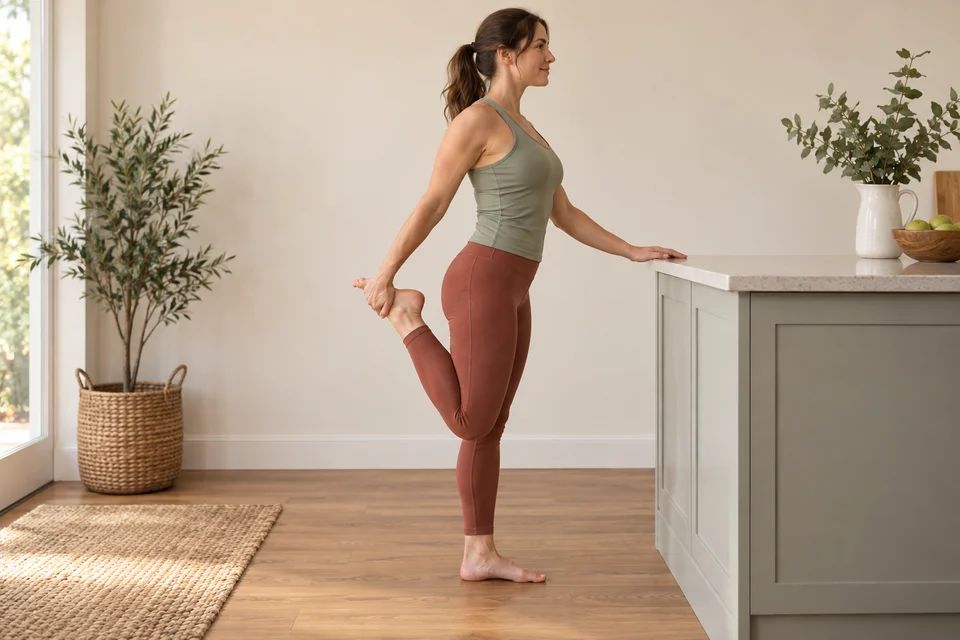
Stand near a wall for balance, bend one knee, and take hold of that ankle behind you, drawing the heel gently towards your buttock. Keep your knees together and stand tall. You should feel it down the front of the thigh. Hold, then swap. If reaching your ankle is awkward, loop a towel around it.
2. Standing hamstring stretch
Rest one heel on a low step or a sturdy chair with that leg straight. Stand tall and hinge forward from your hips, chest leading, until you feel a stretch up the back of the raised leg. Hold, then swap. Move from the hips, not by rounding your back.
3. Calf stretch
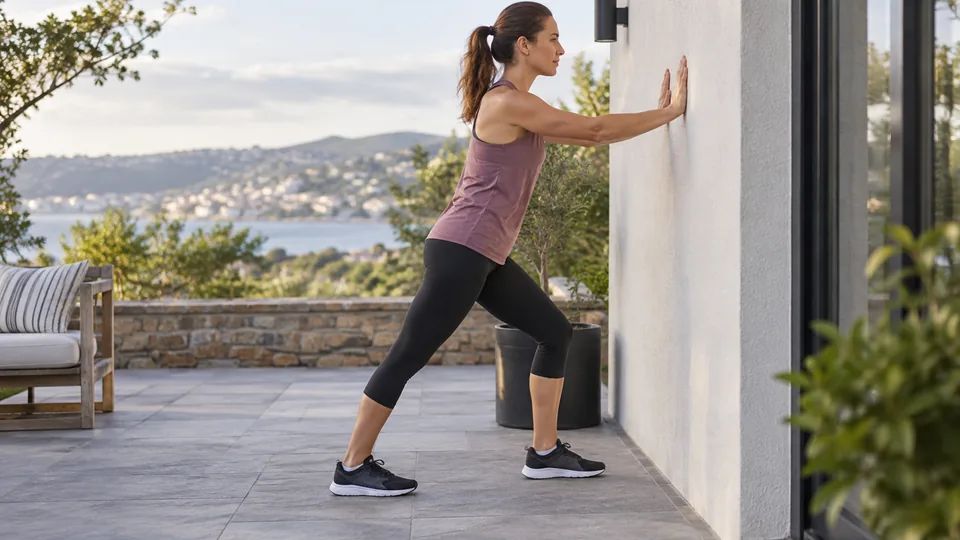
Face a wall, step one foot back with the heel pressed down and the leg straight, and lean forward until you feel the stretch up the back of your lower leg. Hold, then swap. Bend the back knee a fraction and hold again to shift the stretch lower towards the Achilles.
4. Kneeling hip flexor stretch
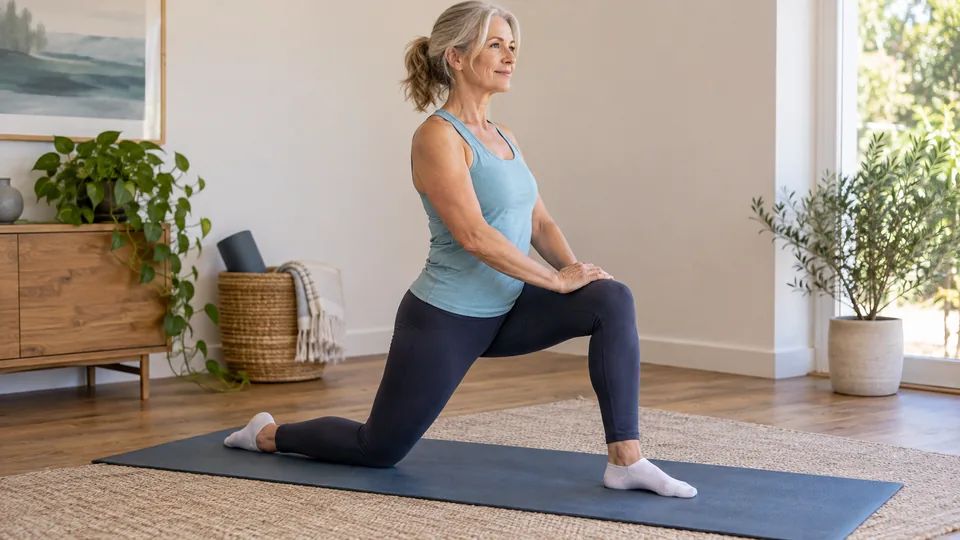
Kneel on one knee with the other foot flat in front, in a lunge shape. Tuck your tailbone under and press your hips forward until you feel a stretch across the front of the back leg's hip and thigh. Hold, then swap. Running and cycling both keep these muscles short, so most people feel this one quickly.
5. Figure-four glute stretch
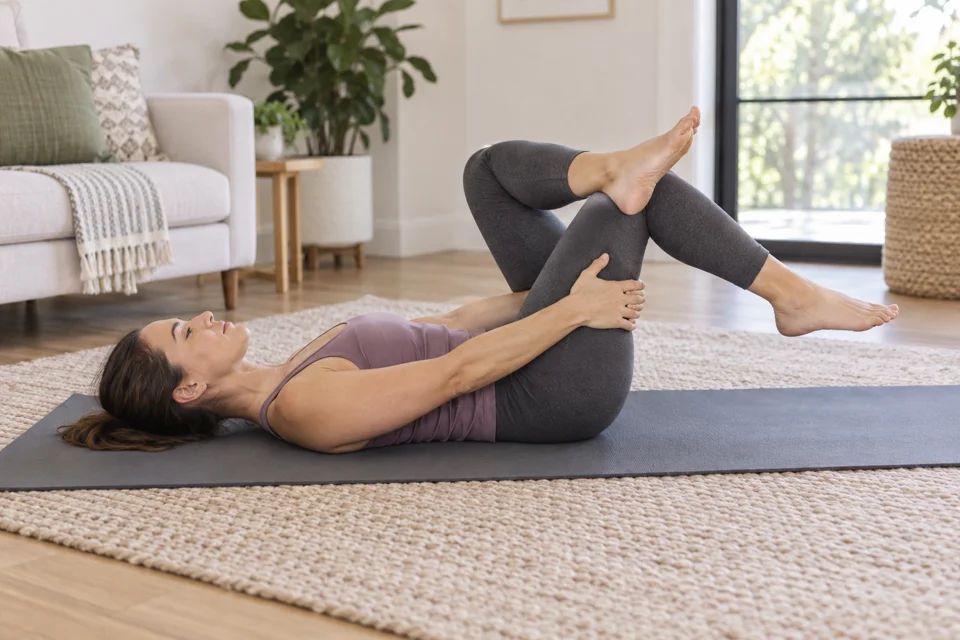
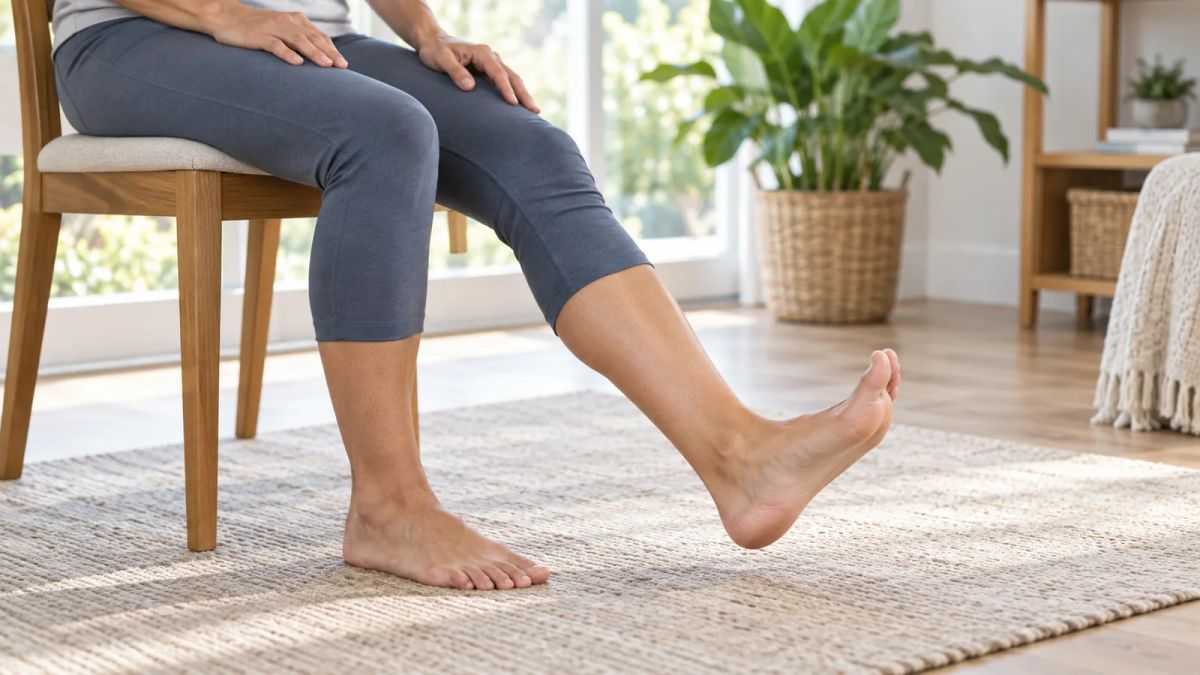
Lie on your back, cross one ankle over the opposite thigh, and draw that thigh in towards your chest until you feel a stretch deep in the buttock and outer hip. Hold each side. You can do the same sitting on a chair, leaning forward gently instead.
6. Chest and shoulder opener
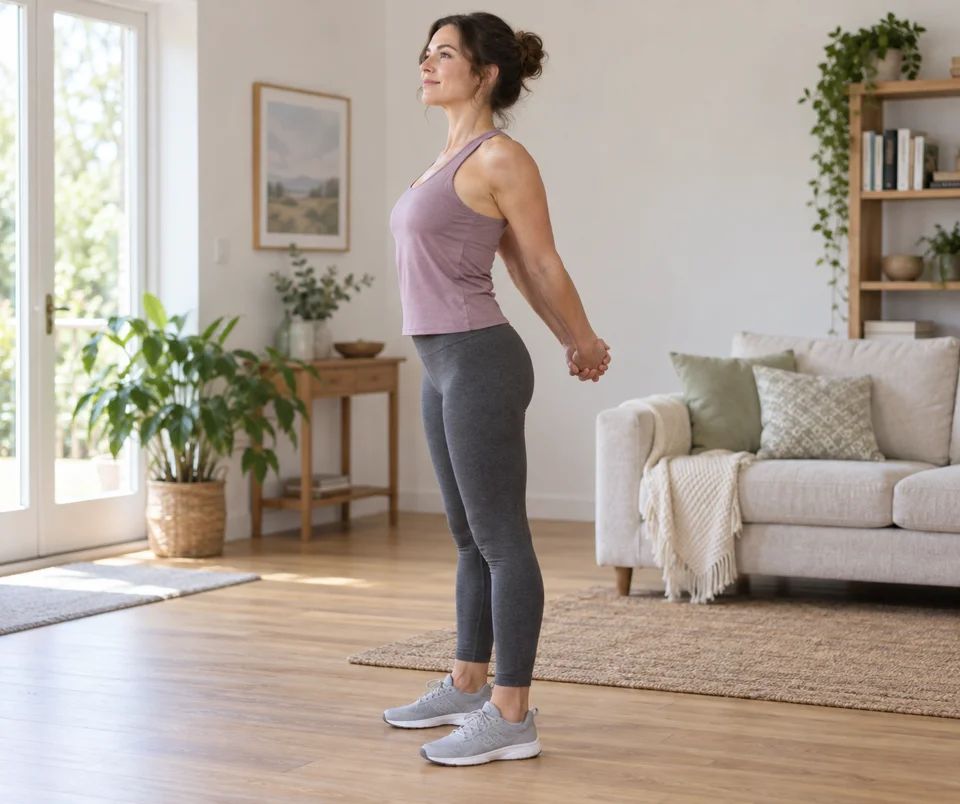
Clasp your hands behind your lower back and draw your shoulder blades together so your chest opens. If clasping is awkward, press the backs of your hands against a doorframe at shoulder height and step through. Hold, breathing into the front of your chest.
7. Overhead triceps and side reach
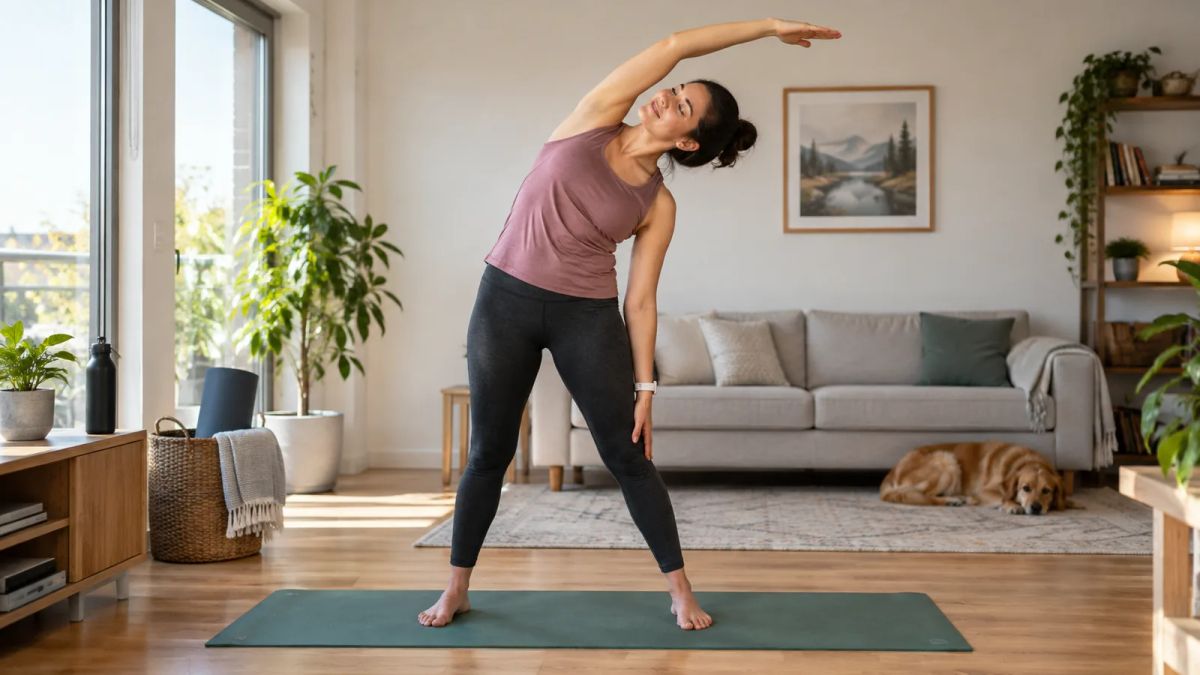
Reach one arm up and bend it so your hand drops behind your head, then use the other hand to ease the elbow back until you feel a stretch down the back of the upper arm. Let your torso lean gently the other way to lengthen the side of your body too. Hold, then swap.
8. Neck release
Sitting or standing tall, drop one ear towards that shoulder until you feel a light stretch down the opposite side of your neck. Keep your shoulders down and relaxed. Hold, then swap. This is where a lot of tension collects during a tough set.
Here is the whole cool-down at a glance, if you want something to follow while you go:
Stage one, 3 to 10 minutes: slow whatever you were doing down to a walk or gentle movement until your breathing settles.
Stage two, hold each for 20 to 30 seconds, both sides: quad, hamstring, calf, kneeling hip flexor, figure-four glute, chest and shoulder opener, overhead triceps, neck release.
Total: about 8 to 12 minutes.
For a version you can also do on non-workout days, a standalone full-body stretching routine covers the same ground without the workout in front of it. If your legs are always the tight part, targeted stretches for your hamstrings go deeper than a general pass can.
What a cool-down does, and what it doesn't
Here is the part most guides skate over. A cool-down will not stop you aching two days after a hard session.
That ache is delayed onset muscle soreness, and it comes from tiny amounts of damage to muscle fibres that then need time to repair. Stretching does not speed that up. A 2021 systematic review and meta-analysis of randomised trials found that, set against ordinary rest, post-exercise stretching produced no recovery effect on delayed onset muscle soreness at 24 hours, and no effect on strength recovery either. An earlier review reached the same verdict, concluding that stretching before or after exercise does not protect against muscle soreness, with only small and non-significant reductions.
The old idea that stretching clears out lactic acid or wards off injury does not hold up well either. Patrick Vignona, a physiotherapist at the Hospital for Special Surgery, is candid that stretching helps but doesn't mean you'll totally avoid injury, and that holding one stretch for a long time isn't going to change the structure or flexibility of the muscle on its own.
None of that makes the cool-down pointless. It does the thing it is for. Your heart rate and breathing come down under control, you are far less likely to feel faint, and a slow stretch through warm muscle is a pleasant way to close a session and get you out of go-mode. Over time, stretched regularly, those muscles do gain a little range. Expect that, and the few minutes feel well spent. Expect it to erase tomorrow's soreness, and you will be let down.
If you want the soreness itself to ease, the honest answers are less exciting. Give it a day or two, keep moving gently, and go easier on that muscle group next time.
When to cool down, and who should be careful
Cool down whenever you have raised your heart rate for a stretch of time, whether that was a run, a spin class, a strength session or a brisk walk. The harder the effort, the more the wind-down earns its place. After a very light stroll you can more or less skip stage one, since you were barely revved up to begin with.
Some people should treat the cool-down as non-negotiable. If you have high blood pressure, diabetes, or any heart condition, the gradual come-down keeps your blood pressure from dropping too fast, and stopping suddenly is more likely to leave you feeling unwell. If you are pregnant, recovering from an injury, or new to exercise after a long gap, the same care applies. Check with your GP if you are unsure how activity suits you, and stop and get advice if a cool-down ever brings on chest pain, real breathlessness or faintness rather than settling them.
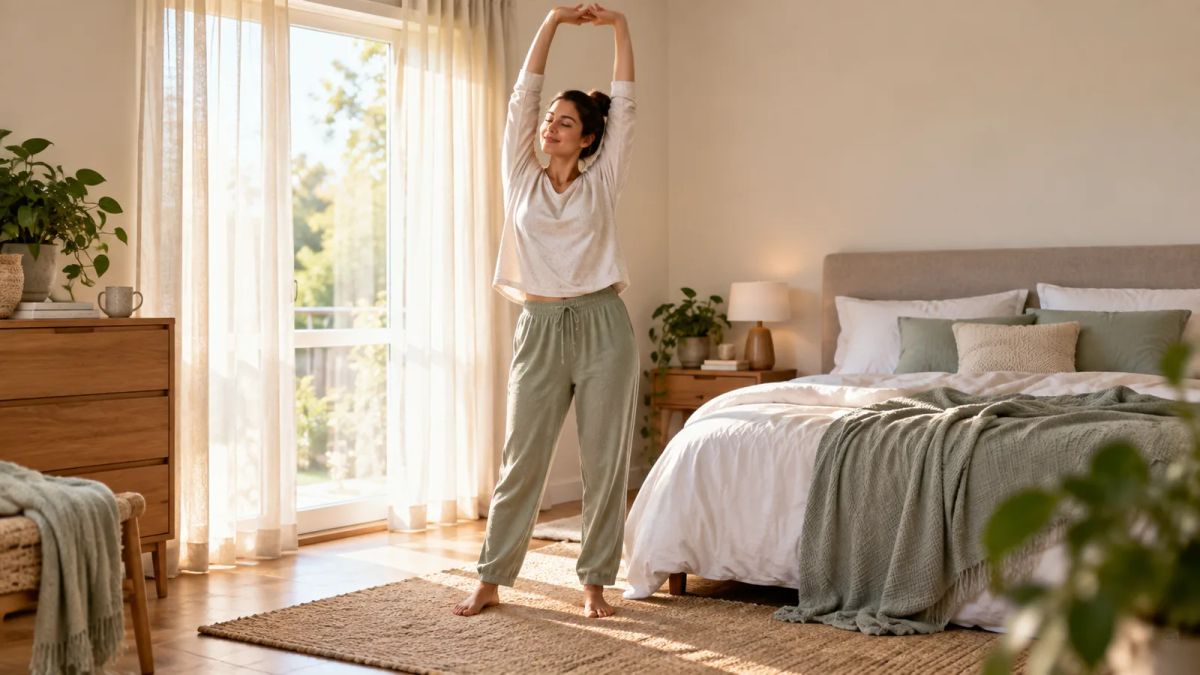
The nice thing about a cool-down as a habit is that the cue is already built in. You do not have to remember it at some random point in the day. It hangs off the end of the workout you have finished, which is the easiest kind of habit to keep, because the trigger happens on its own. A morning practice takes more planning, and a short morning stretch routine is a good companion for the days you want to loosen up before anything else.
Log the session while you catch your breath

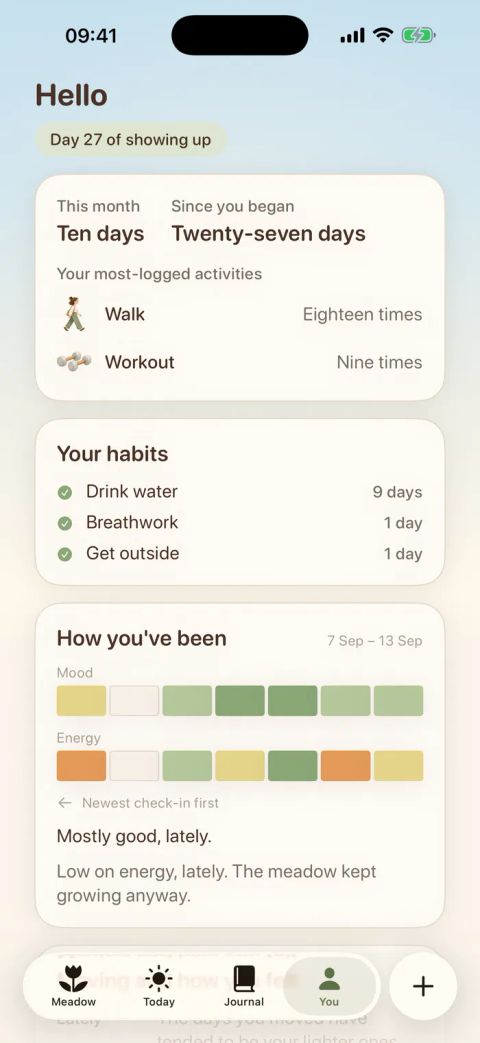
Some workouts you will remember to record and some you will finish and forget. Meadow makes the recording quick, so the cool-down is a natural moment to open it while your breathing settles. It is a habit app for iPhone from Wildcard Wellness where you log the movement you enjoy with a timer, a walk, a stretch or a little yoga, and tick off small daily habits alongside it. Every day you show up grows a wildflower in your own meadow, and there are no streaks, so a session you skip or a week off resets nothing you have grown.
On a rushed day, and after a missed one
Decide your shortest version now, so a tired evening does not decide it for you. When you have no time for the full sequence, two minutes of slowing down plus the quad, hamstring and calf holds still do the important part. Those three cover the muscles you have leaned on most, and a short cool-down beats stopping dead.
If you have been finishing workouts by flopping straight onto the sofa, nothing is lost and there is no backlog to clear. Start the wind-down at the end of your next session and carry on from there. It is a habit you rebuild one workout at a time, the same way you built it.
After your next session, before you sit down, walk slowly for three minutes until your breathing settles, then hold the quad, hamstring and calf stretches for a slow count of thirty on each side. That is a cool-down.
AUTHOR
Co-founder of Meadow.
Ash is co-founder of Meadow, a habit and movement tracking app that turns small acts of self-care into a growing wildflower meadow.
See how far you've come
Your habits, moods and little wins, all in one place
Meadow keeps track of the walks, the water and the good days, so you can look back and watch your effort add up.
Download Meadow