Moving your body is one of the better-studied ways to lift a low mood and take the edge off anxiety, and some of the effect shows up the same day. Reviews that pool hundreds of trials put the benefit for depression and anxiety in the moderate range, real and worth having, though exercise works best alongside therapy and medication rather than in place of them.
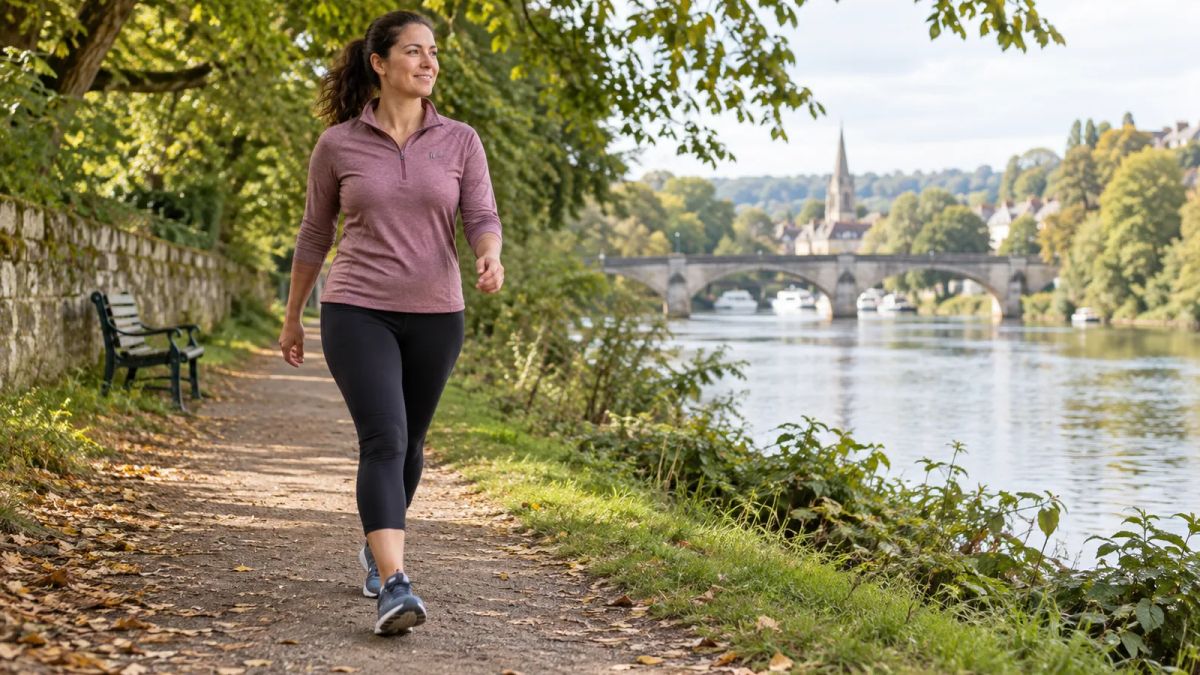
The smallest useful amount is smaller than most people expect. A ten-minute walk counts. On a flat day it might be the most sensible thing you do for your head.
This guide covers what movement does to your mood in the moment, what the research shows for depression and anxiety and where it is thin, the knock-on effects on stress and sleep, how much and what kind to aim for, how to start when you have no spare energy, and where all of this fits next to professional care.
What movement does to your mood
Start moving and the chemistry in your brain shifts within minutes. Cleveland Clinic describes exercise releasing serotonin, dopamine and endorphins, the feel-good messengers, while bringing down cortisol, the main stress hormone. That is part of why a brisk walk can leave you calmer than you were when you set off, even when nothing about the day has changed.
There is more to it than a chemical hit. Better Health Channel points to several routes at once: exercise can boost your mood, concentration and alertness, it distracts you from the loop of negative thoughts, it improves your sense of control and coping, and doing it with other people brings a bit of social contact when you might otherwise stay in.
None of this asks you to enjoy it in the moment. The mood lift tends to arrive after you stop, which is worth remembering on the days when lacing up your shoes feels like the last thing you want.
Depression and anxiety: what the research shows
This is where it pays to be straight about the numbers, because exercise is both well supported and oversold.
The largest recent picture for depression comes from a 2024 network meta-analysis in the BMJ. Researchers pooled 218 studies and 14,170 people and found moderate reductions in depression symptoms across several kinds of movement, measured against control groups. Walking or jogging came out around a Hedges' g of -0.62, yoga at -0.55, strength training at -0.49, and tai chi and qigong at -0.42. In plain terms, those are moderate effects, the sort of size that shows up as a noticeable difference in how someone feels, not a miracle and not nothing.
For anxiety, the signal points the same way. An overview of many reviews found medium-sized reductions in anxiety symptoms from physical activity, close to the effect seen for depression.
Prevention shows up too. A review of long-running cohort studies found that people with high activity levels had a lower risk of developing depression than the least active, with a similar pattern for anxiety. That is an association, not proof that the exercise caused the lower risk, and the studies leaned on people reporting their own activity, which is rough. Still, the direction is consistent.
Now the honest caveats. The BMJ authors rated their confidence in the depression findings as low, and lower still for some types of movement, because most of the trials had a high risk of bias and few blinded the people taking part. People who volunteer for an exercise study, and know they have been assigned to exercise, tend to expect to feel better. So treat the effect sizes as encouraging, not exact.
On the comparison people ask about most: for mild to moderate depression, Better Health Channel notes that physical activity can be as effective as antidepressants or psychological treatment. That is a reason to take movement seriously as part of a plan, not a reason to stop anything a doctor has prescribed. For moderate to severe depression, exercise is an addition to treatment, not a swap for it.
Stress, sleep and a clearer head
The benefits spill past mood. Regular activity is one of the more reliable ways to sleep better, and sleep and mental health pull each other along, so a better night tends to mean a steadier day. Better Health Channel lists improved sleep among the everyday effects of exercise, and Cleveland Clinic notes it can help with sleep problems as well as anxiety and low mood.
There is a thinking-and-memory angle as well. Cleveland Clinic describes exercise raising brain-derived neurotrophic factor, or BDNF, which one of its doctors calls fertiliser for your brain, supporting the growth and health of brain cells. That is part of why a walk can leave your head feeling clearer and your focus a little sharper an hour later.
The stress effect is the one you can feel most quickly. Movement burns off some of the physical charge that stress leaves in the body, which is why people reach for a walk or a workout after a hard meeting or a rough phone call.
How much, and what kind
The UK guideline is a useful floor: aim for 150 minutes of moderate activity a week, or 75 minutes of vigorous activity, plus muscle-strengthening work on two days, spread across the week. Moderate means you can talk but not sing. The NHS also suggests speaking to your GP first if you have not exercised for a long time or have a health condition.
Do not let the target put you off if you are starting from nothing. The mental health benefits do not wait for you to hit 150 minutes. The BMJ review found that even light activity gave a worthwhile lift, with stronger effects as intensity rose, so the first ten minutes are doing real work.
Type matters less than sticking with it. Walking, running, yoga, strength work and tai chi all showed up with decent effects for depression, so the best choice is the one you will keep coming back to. If walking is your way in, our guide to the benefits of walking covers how to build it into an ordinary day.
When starting feels impossible
The cruel part of low mood and anxiety is that they take away the energy and motivation you would need to do the thing that helps. So shrink the ask until it is almost too small to refuse.
Cleveland Clinic suggests starting with something doable and using exercise snacks, short bursts of movement scattered through the day instead of one big session. Two minutes of stretching by the kettle, a lap of the garden, a walk to the end of the road and back. On the hardest days, the win is going outside at all, and that counts.
Decide your smaller version now, while you feel able to think about it. When a walk is beyond you, three slow breaths and standing at an open door might be the whole of it, and that keeps the thread alive for tomorrow. Our guide to breathwork has calming techniques for the moments when even a short walk feels like too much.
If you miss a day, or a week, nothing is lost. You have not undone anything. Pick the next ordinary moment and start again, without the self-scolding, because guilt is not the thing that gets you back out the door. For more small practices to build in around movement, self-care ideas has a range that ask very little.
A short record helps you notice the link between moving and feeling better, which is often clearer on paper than in memory. Write down the movement and how your mood sat before and after, and tick the days you managed something.
Move: ten-minute walk Mood before to after: _ /10 to _ /10
Mon ☐ Tue ☐ Wed ☐ Thu ☐ Fri ☐ Sat ☐ Sun ☐
A real week rarely looks tidy. A filled one might run like this, gaps and all.
Move: ten-minute walk Mood before to after: 4/10 to 6/10
Mon ☑ Tue ☑ Wed ☐ Thu ☑ Fri ☐ Sat ☑ Sun ☑
Notice how movement shifts your mood

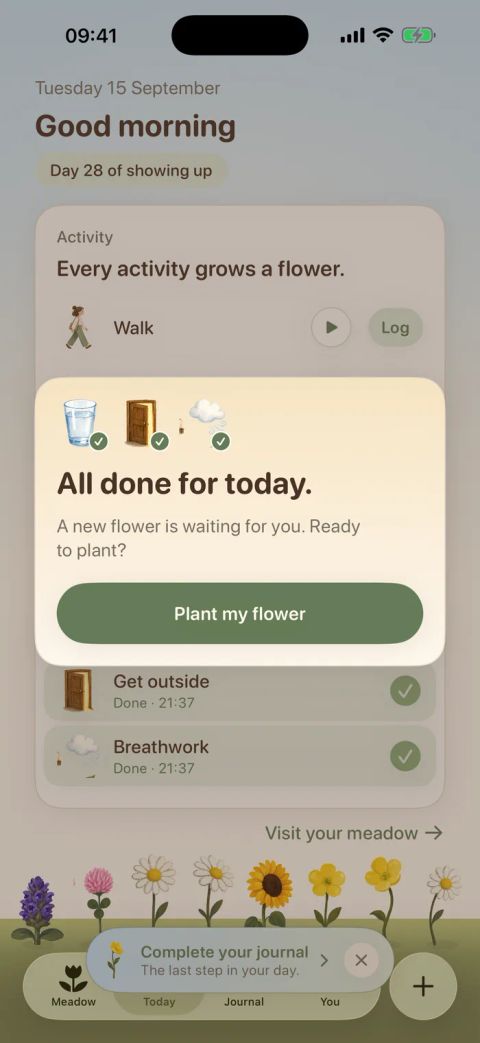
If you would rather keep that record on your phone, Meadow lets you log a walk or a few minutes of movement and note your mood and energy on the same day, so the connection between the two builds up where you can see it. Meadow is a gentle movement and habit app for iPhone, and alongside the mood check-in you can write down one good thing from the day and tick off small habits. Every day you show up grows a wildflower in your own meadow, and there are no streaks, so a week you barely move resets nothing and your flowers never wilt.
Where exercise fits alongside other care
Movement is a support, not a substitute. Cleveland Clinic is clear that exercise will not be the only treatment and asks people to check with their care team about how it fits the rest of their plan. Better Health Channel puts it the same way, as a valuable addition to other options.
Keep an eye on how long a low patch lasts. The NHS says to see a GP if you have had a low mood for more than two weeks, if you are struggling to cope, or if the things you are trying yourself are not helping. In England, adults can also refer themselves to NHS talking therapies without going through a GP first. Reaching out is a sensible step, not a sign the walking has failed you.
Frequently asked questions
Does exercise help with depression and anxiety?
Yes, with limits. Pooled research shows moderate reductions in symptoms of both, and people who are more active have a lower risk of developing depression. The effect is real and worth having, though the studies vary in quality and exercise is one part of care rather than the whole of it.
Is exercise as good as antidepressants?
For mild to moderate depression, physical activity can be about as helpful as antidepressants or talking therapy, according to Better Health Channel. That is not a reason to stop prescribed medication. Any change to treatment is a conversation to have with your doctor.
How much do I need for my mental health?
The UK guideline is 150 minutes of moderate activity a week plus strengthening on two days, but the mood benefits start well below that. A daily ten-minute walk is a solid place to begin, and even light activity helps.
What type of exercise is best for my mood?
Walking, jogging, yoga, strength training and tai chi all show good effects for depression, so the best type is the one you will keep doing. Consistency beats picking the theoretically perfect workout.
I have no energy. Where do I start?
Make it small enough that refusing feels silly. Two minutes of stretching, a short walk to the corner, or a few breaths at an open door. Short bursts through the day count as much as one long session.
Can exercise replace therapy or medication?
No. It sits alongside them. If low mood or anxiety lasts more than two weeks, gets in the way of daily life, or feels like more than you can manage, speak to your GP.
The one thing to do today is a ten-minute walk, and note how your mood sits before you go and after you get back.
AUTHOR
Co-founder of Meadow.
Ash is co-founder of Meadow, a habit and movement tracking app that turns small acts of self-care into a growing wildflower meadow.
Every little bit counts
Five minutes counts. So does a dance in the kitchen.
Log the movement you enjoy and the small habits that help you feel good, and watch them bloom into something you can see.
Download Meadow