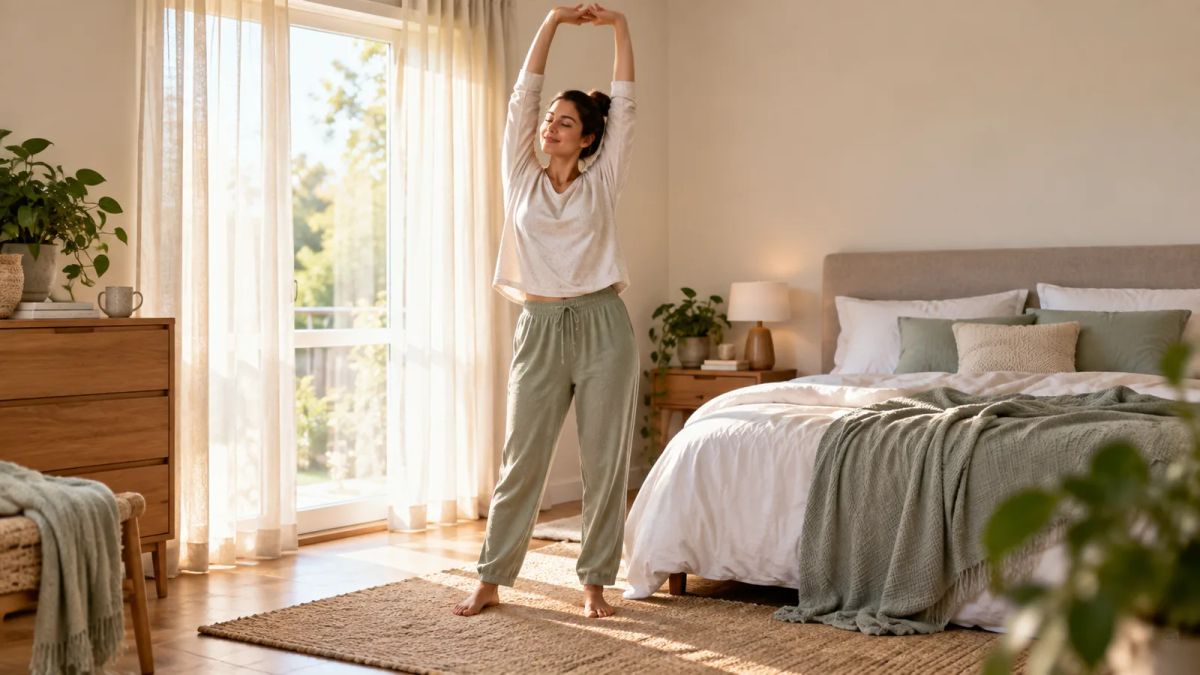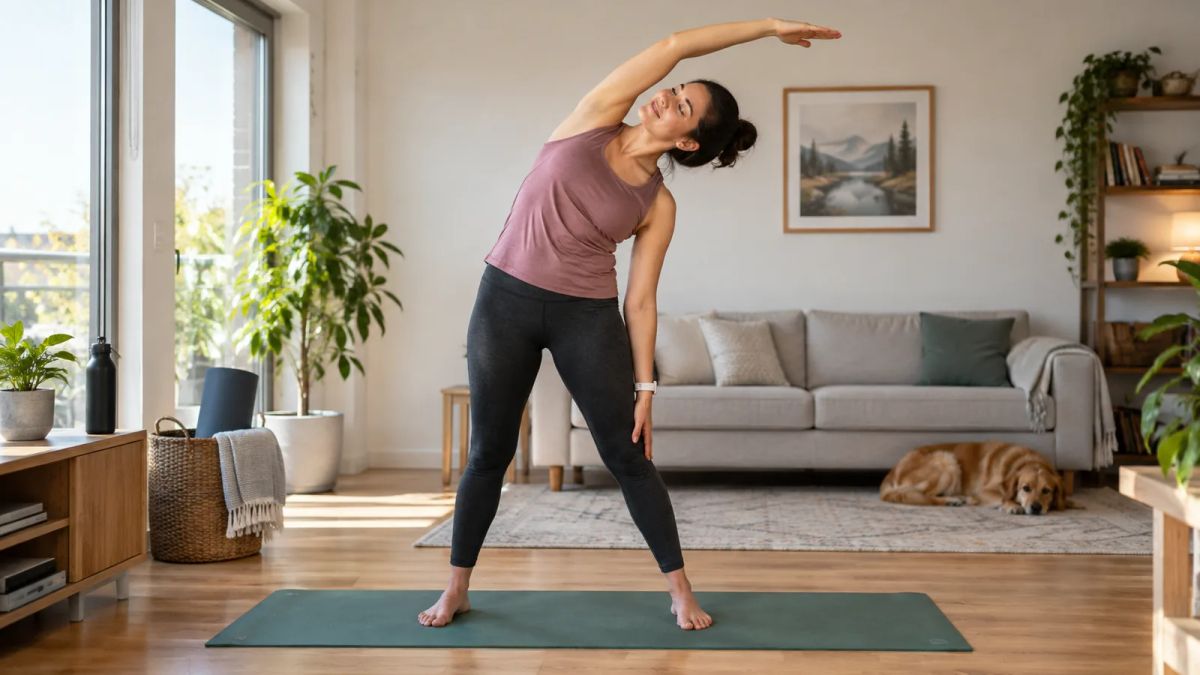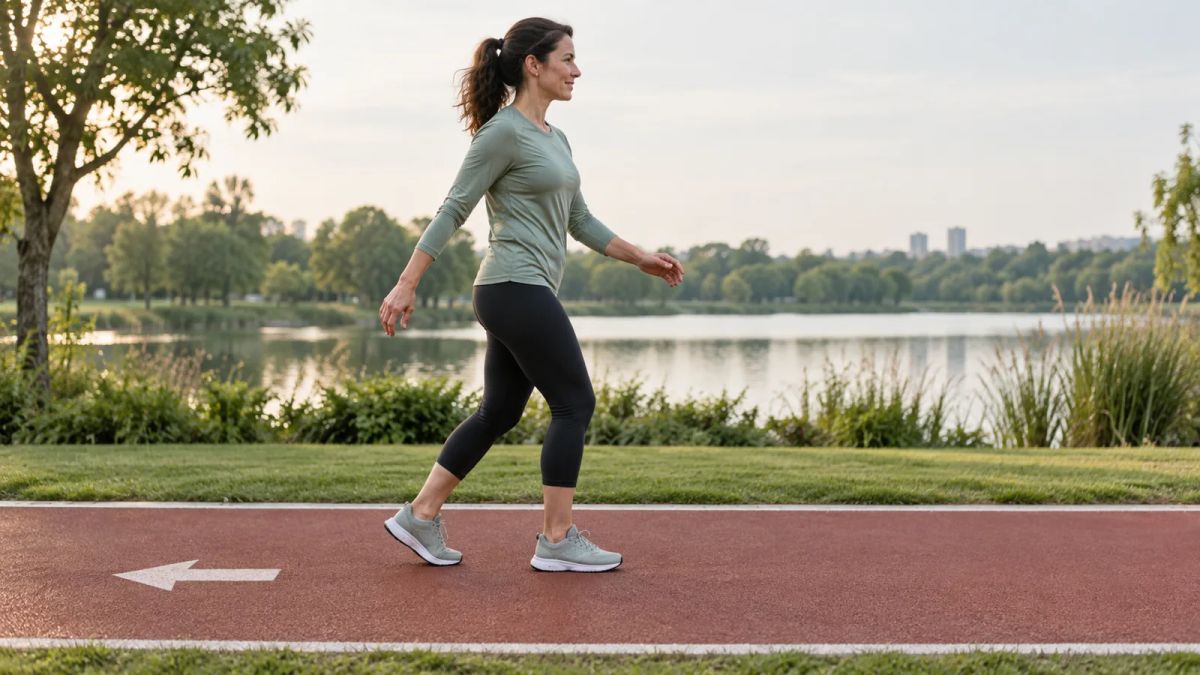
Starting a stretching routine from scratch takes about five minutes a day and a handful of moves you can learn in one sitting. This guide walks you through why to bother, what stretching will and will not do, the two kinds of stretching and when each belongs in your day, how long to hold and how often, and a first set of six stretches to begin with tonight.
You do not need to be flexible to start. That is the point of starting. Nothing here needs a mat, a class, or any bendiness you do not already have, and you can do most of it beside the bed or by the kettle.
Why stretch, and what it will not do
The everyday case for stretching is modest and real. Stretched regularly, your muscles let you move a little further with less effort, and that shows up in ordinary tasks. Cleveland Clinic points to things like climbing stairs and standing up from a chair getting easier. Most people also notice how it feels more than any measurement. A slow stretch gets you breathing, gets a little blood moving, and shifts you out of stiffness, and that alone is a fair reason to do it.
Now the honest part, because a lot of guides oversell this. Stretching is not a shield against injury. Patrick Vignona, a physiotherapist at the Hospital for Special Surgery, puts it plainly, saying stretching helps but doesn't mean you'll totally avoid injury. A large review of the evidence reached the same conclusion, that stretching has not been shown to be effective at reducing the incidence of overall injuries.
It will not erase soreness either. That deep ache a day or two after unusual effort comes from tiny amounts of damage to muscle fibres, and stretching does not clear it. One review found stretching before or after exercise does not prevent muscle soreness, with only small and non-significant reductions.
So start a stretching habit to move more comfortably and feel looser, not to bulletproof yourself. Kept up over weeks, it earns its five minutes. Loaded with expectations it cannot meet, it disappoints.
Static and dynamic stretching, and when to use each
There are two kinds, and knowing which is which saves you doing the wrong one at the wrong time.
Static stretching is the kind you picture. You take a muscle to the end of its comfortable range and hold it there, like reaching for your toes and staying. Cleveland Clinic describes it as holding a pose without moving so the muscle can relax and slowly get longer. This is the kind you hold for a count.
Dynamic stretching is movement. You take a limb through its full range and back, several times, without holding at the end. Arm circles, shoulder rolls and slow leg swings are dynamic.
The timing is where it counts. If you are stretching before something active like a run or a workout, dynamic moves fit better, and the long static holds are best saved for afterwards. Cleveland Clinic recommends dynamic stretches before a workout and static stretching as part of the cool-down. There's a practical reason. A long static hold on a cold muscle right before you sprint or lift can briefly dampen your power, an effect the physio review calls stretch-induced strength loss.
If your plan is a stretching session on its own, which is what most beginners want, the deep static holds are exactly right. Warm up a little first, which the next part covers.
Warm up first, ease rather than force
Cold muscles do not stretch well, and pushing them can do harm. Harvard Health is blunt about it, warning that stretching the muscles before they're warmed up can hurt them, because the cold fibres are not ready and can be damaged. Five to ten minutes of light movement fixes this. A brisk walk does it. So does marching on the spot, or doing your stretching straight after a workout while you are still warm.
The other rule is gentleness. Every stretch should feel like a mild, tolerable pull and never a sharp or pinching pain. If a move hurts, back off and come out of it. The NHS gives the same steer in its flexibility advice, to move as far as is comfortable and build up the repetitions slowly over time. There's no prize for forcing your nose to your knees on day one, and forcing is how people put themselves off.
One more thing before you start. If you have a joint problem, a recent injury, or a condition that affects how you move, check with your GP or a physiotherapist first, so you know the moves suit your body. That comes before getting every stretch textbook-perfect.
How long to hold, and how often
For a static stretch, somewhere around twenty to thirty seconds is the sensible hold. Cleveland Clinic uses 20 seconds in its examples and Harvard Health suggests 30 seconds without bouncing. You do not need to go longer than that. The physio review notes the greatest change in range happens between 15 and 30 seconds of holding, so extra time adds little.
Frequency is where the results live. To get more flexible you have to stretch often, and Harvard Health recommends daily stretches, or at least three or four times a week. A short session most days beats a long one now and then.
Be patient with the timeline too. Harvard Health is honest that it takes weeks to months to get flexible, and that you have to keep at it to hold on to any gains. A single session loosens you for the day. The lasting change is slow, and it fades if you stop, which is the reason to build it as a habit and not a one-off push.
Your first routine: six stretches to start tonight
Here is a compact set to begin with. It covers your neck and shoulders down to your calves, needs no floor and no kit beyond a wall, and takes about five to eight minutes. Warm up first with a minute or two of marching or a quick walk. Hold each static stretch for a slow count of twenty to thirty seconds, breathe steadily, and where a move works one side at a time, do both.
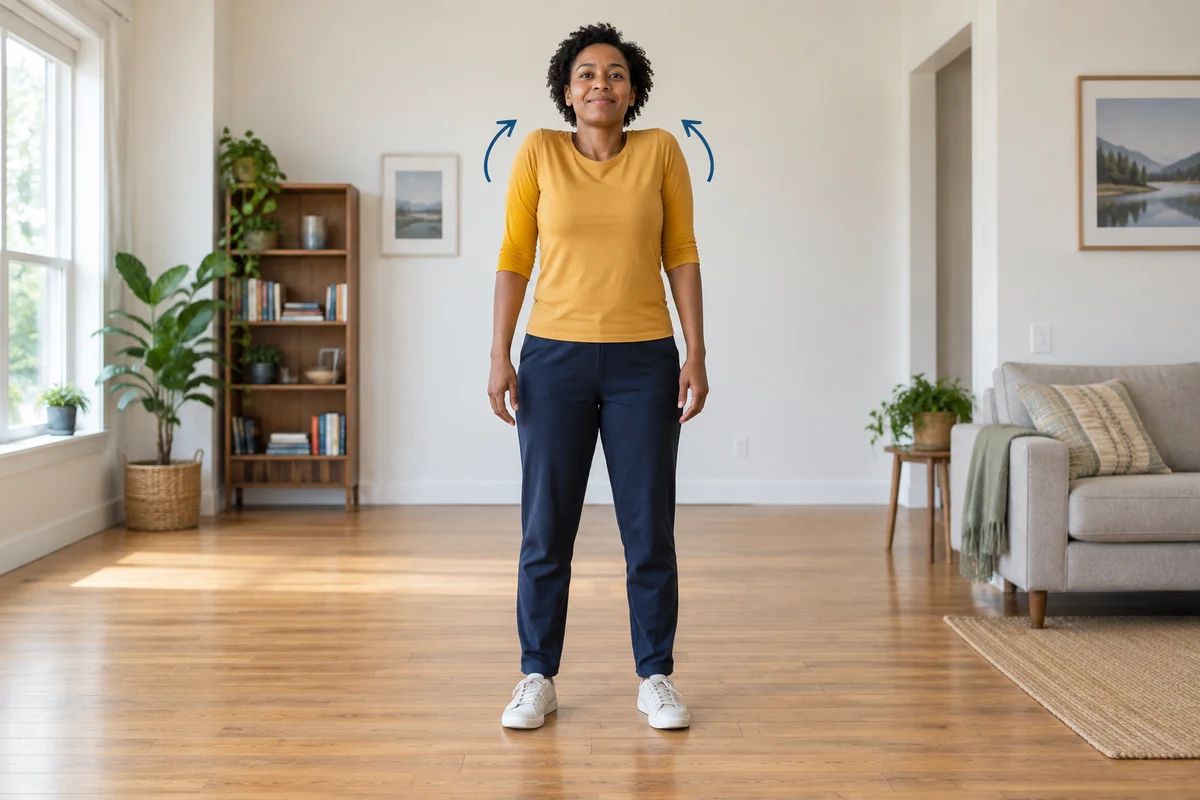
- Shoulder rolls. Lift both shoulders towards your ears, draw them back, and let them fall in a slow circle. Roll backwards eight times, then forwards a few. This one is a loosener, so there's nothing to hold, and it doubles as part of your warm-up.
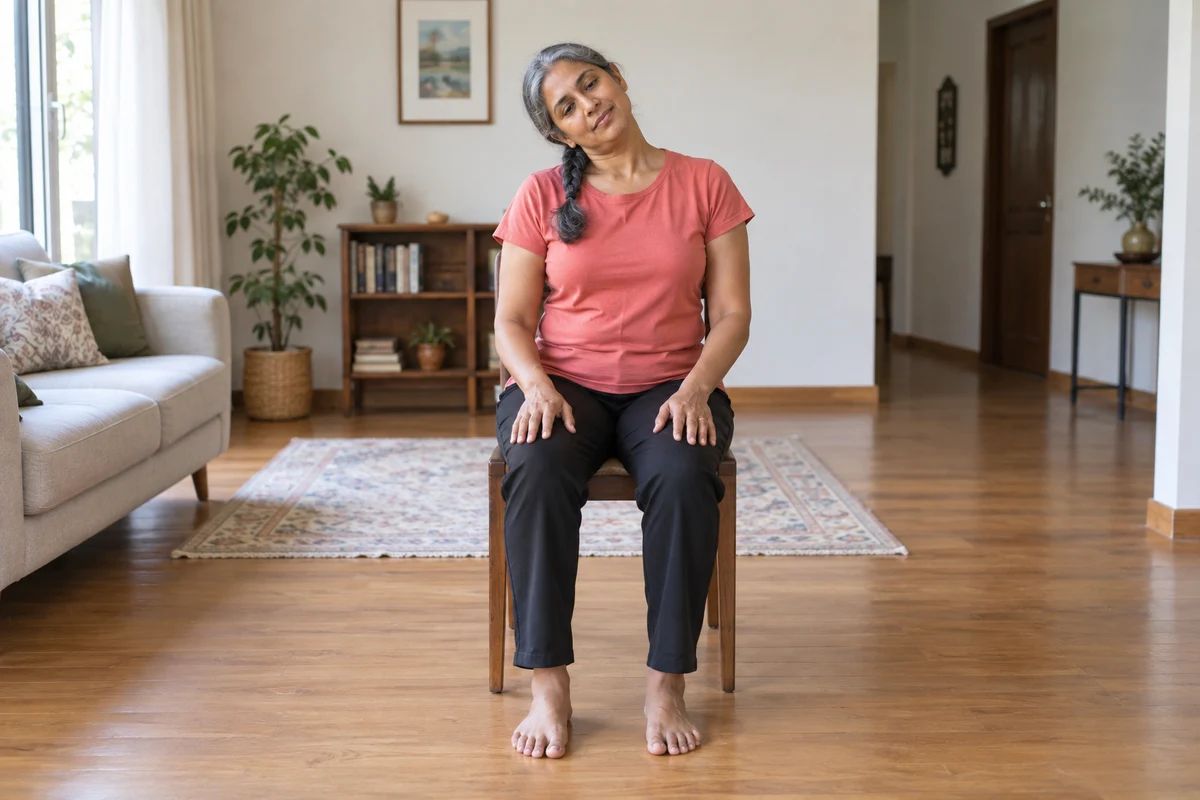
- Neck side stretch. Sitting or standing tall, drop one ear gently towards that shoulder until you feel a light stretch down the opposite side of your neck. Keep your shoulders down and relaxed. Hold, then swap sides. This is where a lot of desk and phone tension collects.
- Chest opener. Clasp your hands behind your lower back and gently draw your shoulder blades together so your chest opens. If clasping is awkward, press the backs of your hands into a doorframe at shoulder height and step through. Hold, breathing into the front of your chest. Hours hunched forward round the shoulders, and this counters it.
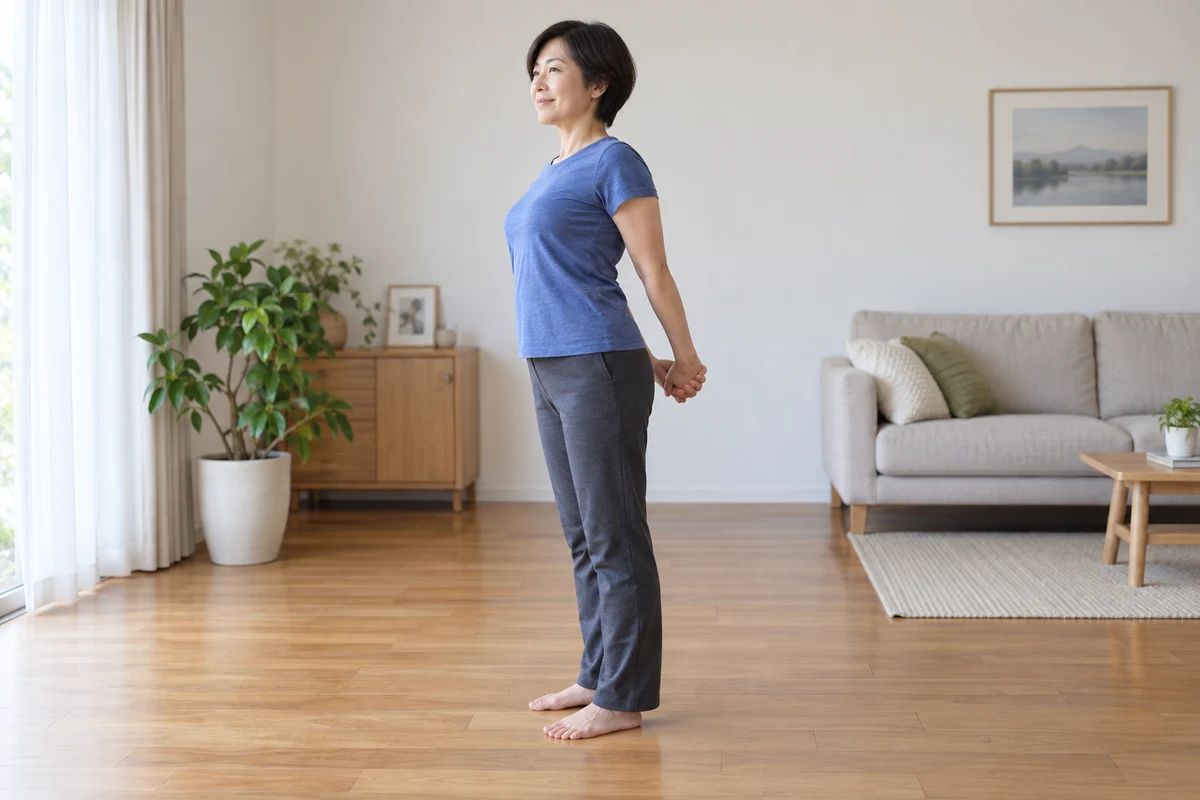
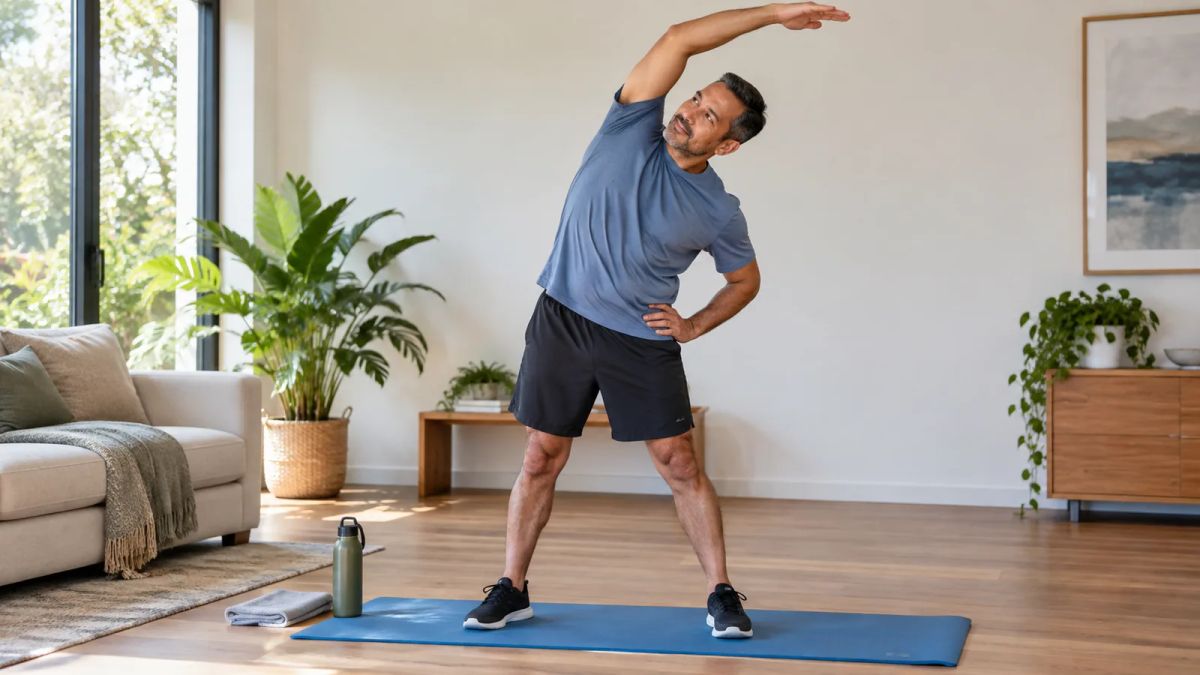
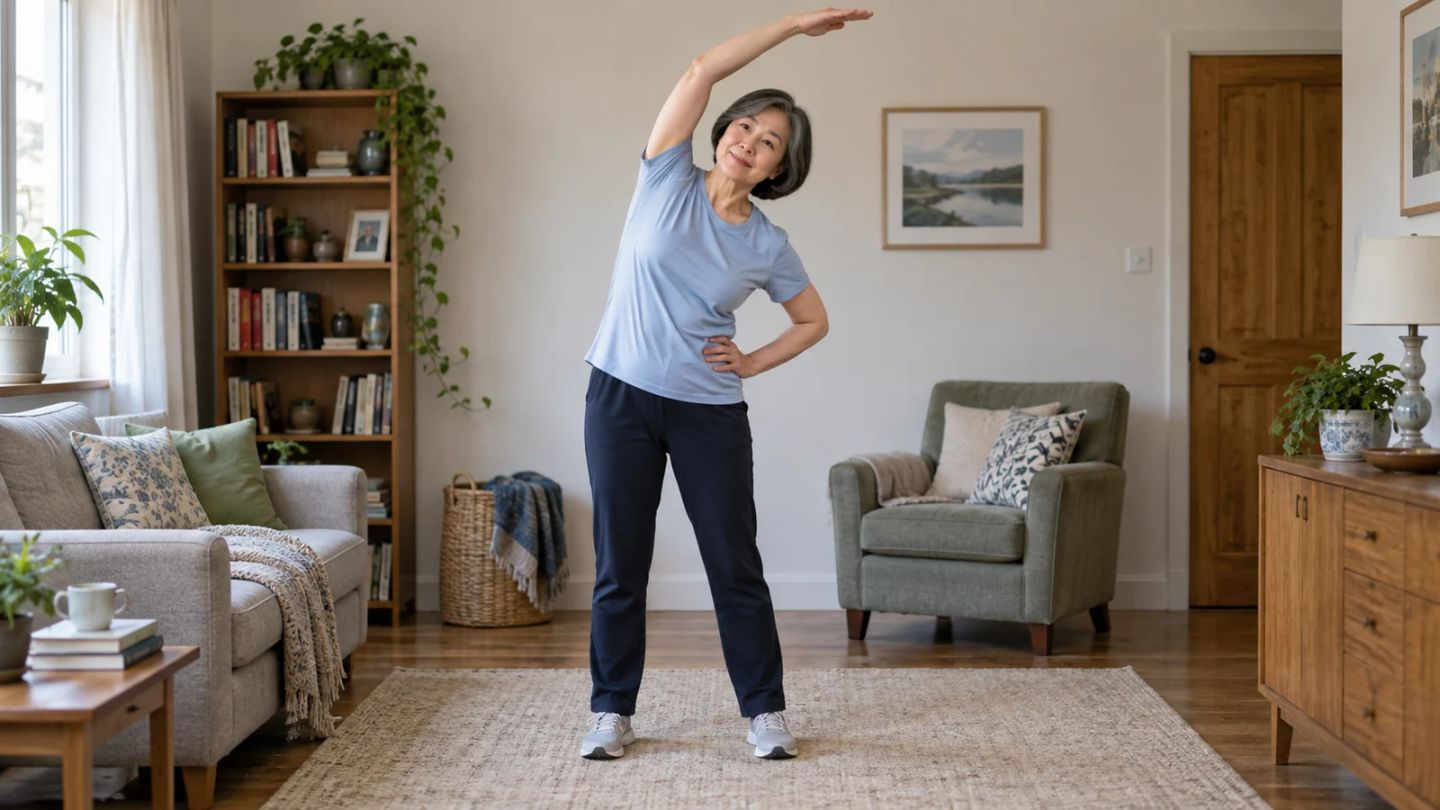
- Standing side bend. Reach one arm up and over towards the opposite side, and lean gently until you feel a stretch along your flank and ribs. Keep it small and controlled, with no twisting. Hold each side. This opens the long muscles either side of your spine.

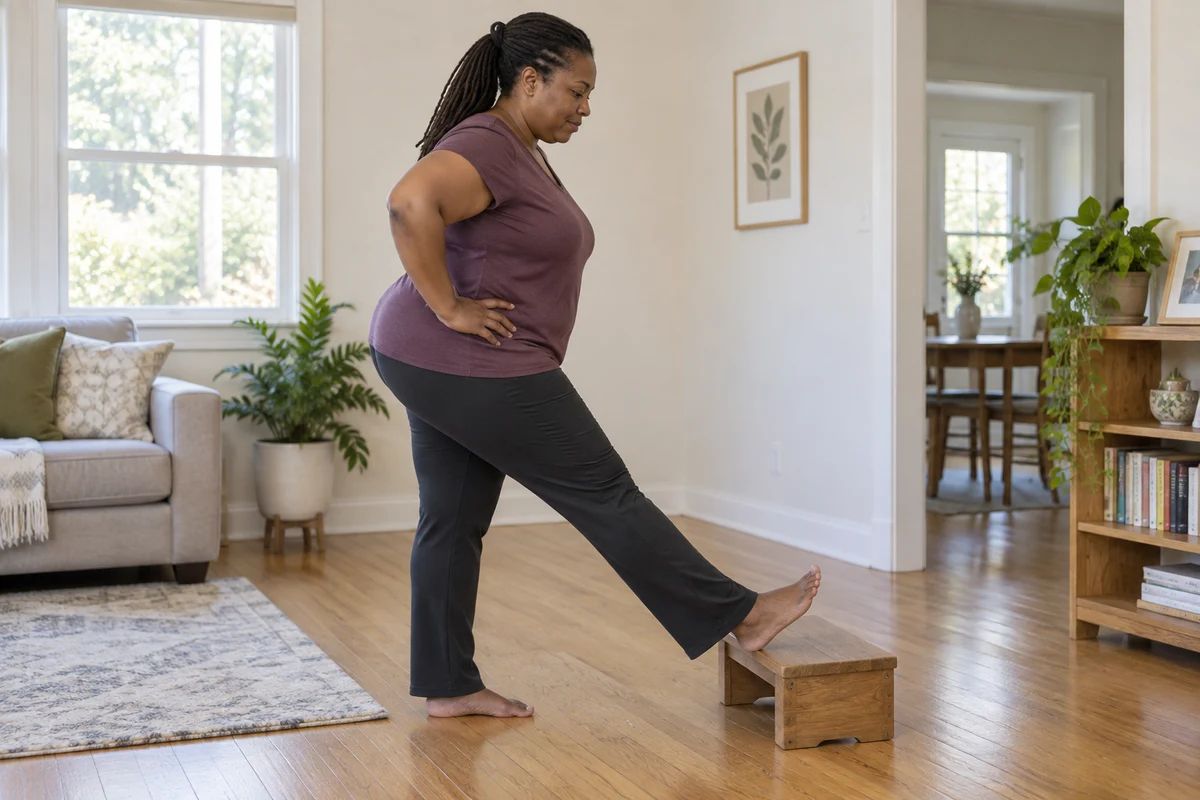
- Standing hamstring stretch. Rest one heel on a low step or a sturdy chair with that leg straight, toes up. Stand tall and hinge forward from your hips, chest leading, until you feel a stretch up the back of that leg. Hold, then swap. Move from the hips, not by rounding your back, and do not force it.
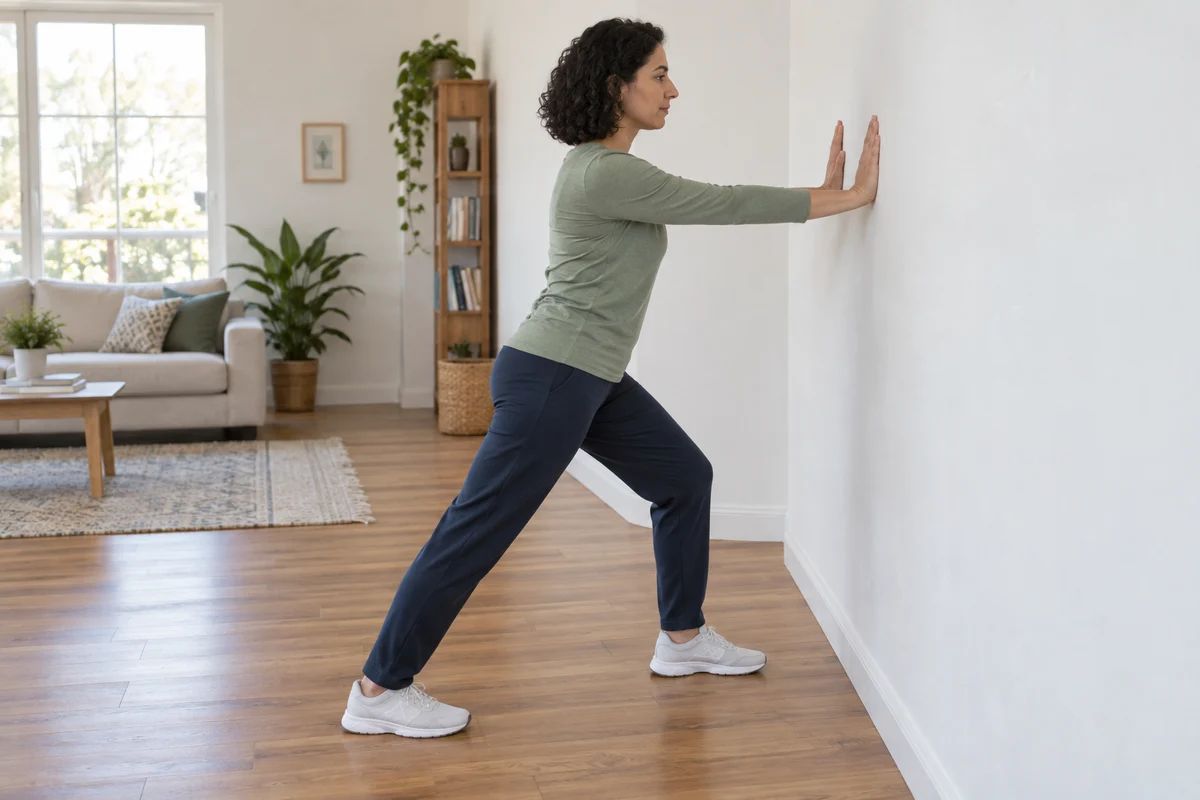
- Calf stretch. Face a wall, step one foot back with the heel pressed down and the leg straight, and lean forward until you feel the stretch up the back of your lower leg. Hold, then swap. A wall is worth using here for balance.
That is your whole first routine. Once it feels familiar, you can grow it. A fuller full-body stretching routine adds the hips, glutes and quads, a short morning stretch routine is built for loosening overnight stiffness by the kettle, and a cool-down stretching routine slots onto the end of a workout.
Open our free Stretching starter plan (PDF). A six-move reference and a weekly planning page for a gentle stretching habit. Choose the movements and timing that suit you. Save or print it; no sign-up needed.
Build it into a routine you'll keep
A stretch you mean to fit in somewhere tends to slip. A stretch pinned to a fixed point in your day tends to survive.
The trick is to hang it off something you already do without thinking. The American Heart Association suggests tying a new action to a routine you already have, so it rides along with something automatic instead of asking for a fresh decision each day. Pick a reliable anchor. While the kettle boils, after your evening shower, or once you've brushed your teeth. "After I brush my teeth at night, I do my six stretches" is the kind of plan that holds, because the cue is already built into your day.
Start smaller than feels ambitious. Five minutes, once a day, is plenty to begin. The habit you are building is the act of showing up, and a short routine you keep up beats a long one you keep putting off. You can always add stretches later, once turning up is automatic.
A gentle place to keep count

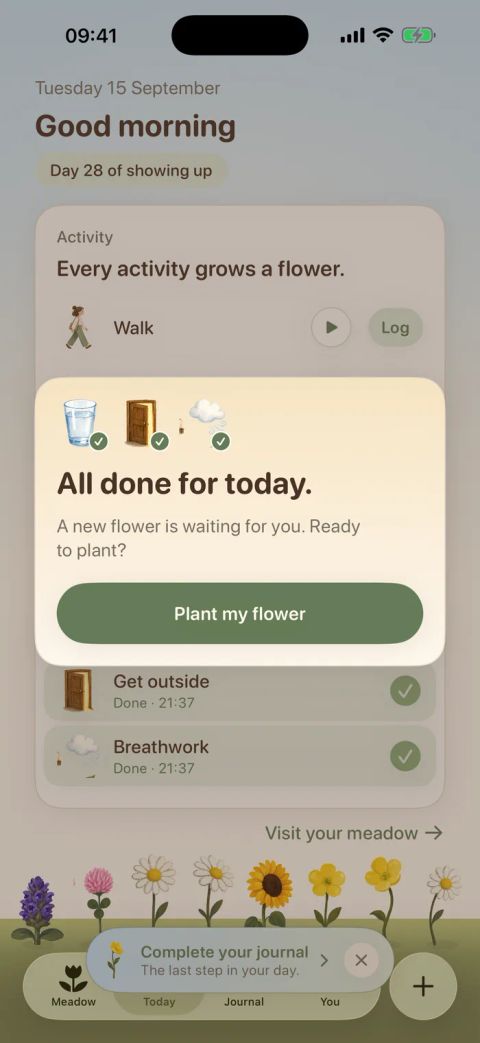
When you're building a habit from nothing, watching it add up is what keeps you going. Meadow gives that a home. It's a gentle habit app for iPhone from Wildcard Wellness where you log the movement you enjoy with a timer, a stretch session, a walk or a little yoga, and tick off small daily habits alongside it. Every day you show up grows a wildflower in your own meadow, and there are no streaks, so the day you skip resets nothing and your flowers never wilt. For a habit meant to build slowly over weeks, that forgiveness is the useful part.
On a hard day, and after a missed one
Decide your shorter version before you need it. On a tired or rushed evening, the neck, the hamstrings and the calves alone still count. Three stretches keep the thread going, and keeping the thread going is what turns this into something your body expects, not a chore you argue yourself into.
If you miss a day, or a fortnight, nothing is undone. Flexibility fades slowly with a gap, not overnight, and it builds back the same way it built in the first place, one short session at a time. There's no lost ground to make up in a single long stretch, so don't try. Pick the next evening and do your six.
Tonight, warm up with a minute of marching, then run through the shoulder rolls, neck stretch and calf stretch, holding each for a slow count of thirty. That is a stretching routine, and you have started.
AUTHOR
Co-founder of Meadow.
Ash is co-founder of Meadow, a habit and movement tracking app that turns small acts of self-care into a growing wildflower meadow.
Every little bit counts
Five minutes counts. So does a dance in the kitchen.
Log the movement you enjoy and the small habits that help you feel good, and watch them bloom into something you can see.
Download Meadow